

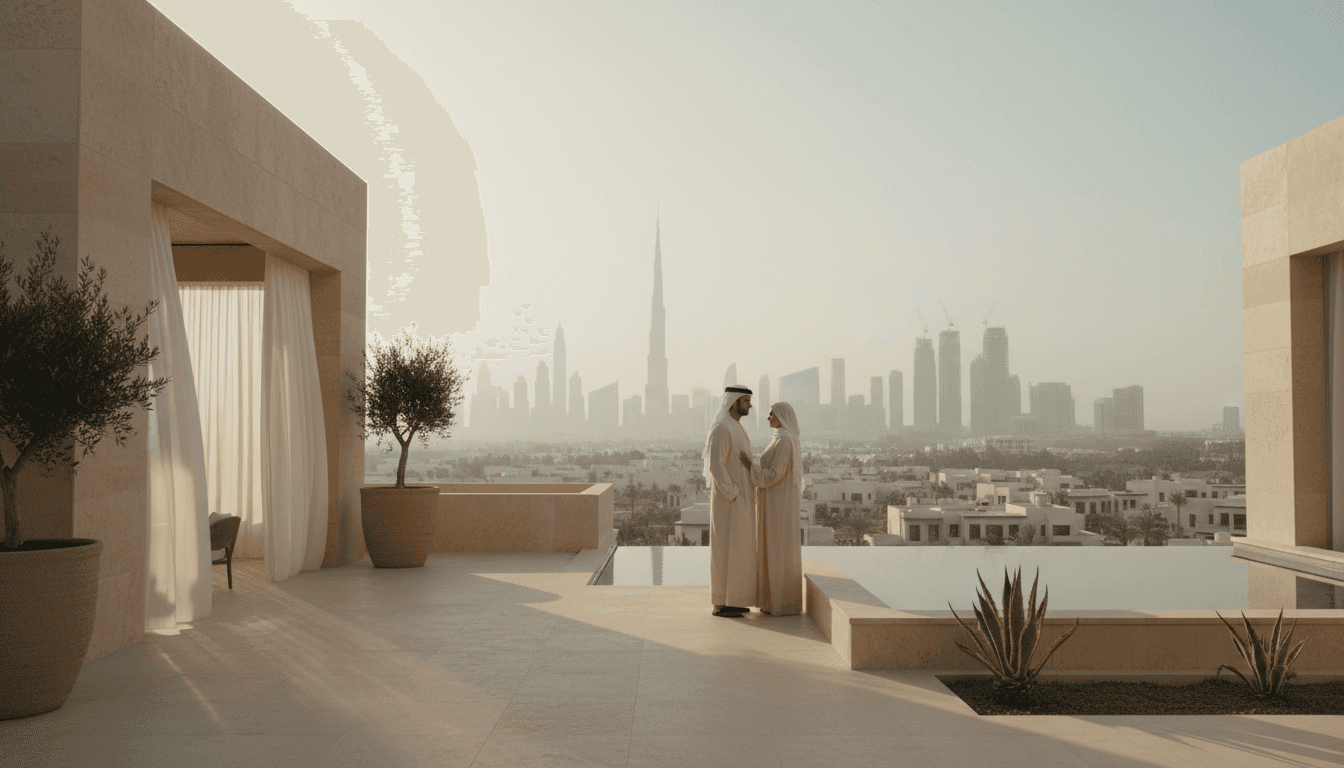
Developer Due Diligence: The Critical Check for Dubai Buyers
In Dubai's dynamic property market, the glossy brochure is just the start. I'll explain why a developer's track record and financial health are now the most critical factors for any smart buyer or investor.

In a market as fast-moving as Dubai's, it is easy to get swept up in the excitement of a new launch. The architectural renders are stunning, the payment plans seem attractive, and the promise of a lifestyle is sold with masterful precision. But the single most important factor determining the long-term value and livability of your property is often buried in the fine print: the developer.
Here's what we'll explore:
- The shift from a speculative market to one focused on quality and delivery.
- Why a developer's track record is your best predictor of future value.
- How to assess the financial stability of a developer, even private ones.
- Common post-handover issues and how to spot the red flags early.
- A practical checklist for your own developer due diligence.
- The crucial role of RERA, Escrow accounts, and the Oqood system.
- The difference in mindset between Tier-1 giants and emerging boutique firms.
- My final verdict on how to weigh risk against opportunity.
The New Market Reality: Quality Over Hype
For years, Dubai's property narrative was dominated by rapid, speculative growth. The primary question was often "how quickly can it be built?" and "how fast will its value appreciate?". Buyers, both local and international, were sometimes willing to overlook potential issues with build quality or community management in the pursuit of high capital gains. That era, in my view, has decisively ended. The market has matured. Today's buyers are more discerning, often end-users planning to live in the properties they purchase, or long-term investors focused on sustainable rental yields. This shift changes the calculus entirely. The focus is no longer just on location and price, but on longevity, livability, and the total cost of ownership.
This is where a developer's DNA becomes paramount. A developer isn't just a builder; they are a community-maker and a long-term custodian of your asset. Their philosophy on quality control, their choice of materials, their approach to landscaping, and their commitment to fair and efficient post-handover management will directly impact your daily life and the resale value of your home years down the line. We've seen this play out time and again. A well-built apartment in a meticulously maintained community by a reputable developer will always command a premium over a comparable unit in a poorly managed building, even if the latter is in an adjacent plot. The market now prices in reputation.
This is why the conversation around Dubai developer reputation has moved from a niche concern to a mainstream filter for any serious buyer. The market has bifurcated. On one end, you have established players like Emaar Properties, Nakheel, and Aldar (in Abu Dhabi but with a growing Dubai presence), whose brands are synonymous with a certain standard of master community planning and delivery. When you buy in Downtown Dubai, Arabian Ranches, or the Palm Jumeirah, you're not just buying a villa or an apartment; you are buying into an Emaar or Nakheel ecosystem. The premium you pay is, in part, an insurance policy on the quality of the roads, parks, and retail that surround you.
On the other end, you have a vibrant and expanding field of private and boutique developers. Some, like Omniyat and Sobha Realty, have carved out a niche in the ultra-luxury space, building a formidable reputation for world-class design and finishing. Others are newer entrants, often with aggressive pricing and innovative concepts. It’s here that rigorous due diligence developer Dubai becomes absolutely non-negotiable. The potential for finding a hidden gem is real, but so is the risk of encountering a developer who over-promises and under-delivers. The glossy brochure looks the same for both; the outcome can be vastly different.
Track Record: The Best Predictor of Future Performance
 Featured project
When I advise clients, I always stress that past performance is the most reliable indicator of future results in real estate development. A developer who has consistently delivered projects on time and to a high standard over the last decade is statistically more likely to do so again. This isn't just about avoiding catastrophic failures like abandoned projects — which are now thankfully rare due to Dubai's robust regulatory framework, but about the thousand small details that separate a good home from a great one.
How do you evaluate a track record? It starts with a simple portfolio review. Go beyond the current off-plan launches and look at what the developer handed over two, five, or even ten years ago. Visit these older communities. How have they aged? Are the common areas clean and well-maintained? Speak to residents if you can. Ask them about their experience with the developer's facilities management. Are issues resolved quickly? Are the service charges reasonable for the level of amenities provided? This is the real-world test that no marketing material can replicate. A visit to an older Nshama project like Town Square, for example, gives you confidence in their ability to deliver and manage their newer launches.
Let’s get specific. Consider the difference in delivered quality across the market. A Tier-1 developer's project will typically feature high-quality materials from known international brands for things like kitchen appliances, bathroom fixtures, and tiling. Their MEP (Mechanical, Electrical, and Plumbing) systems will be robust and designed for longevity. In contrast, a developer cutting corners might use unbranded, lower-grade materials that look fine on handover day but degrade quickly. Leaky pipes, faulty air conditioning units, and cheap paint are classic signs of a cost-cutting approach. These post-handover issues Dubai can turn the dream of homeownership into a nightmare of endless maintenance calls and unexpected expenses.
Beyond the physical building, look at the developer's history of community creation. Did they deliver the promised parks, swimming pools, and retail outlets on schedule? Or were these amenities delayed or scaled back after residents moved in? Emaar Beachfront is a prime example where the master plan's promise of a private beach lifestyle was central to the concept and was delivered as envisioned. This holistic approach builds trust and underpins property values. A developer with a history of delivering incomplete communities should be a major red flag. Their promises for the next project are less credible, regardless of how appealing the renders are.
Assessing Developer Financial Stability
This is perhaps the trickiest part of vetting Dubai property developers, as most are privately held companies and don't publish audited financial statements. However, you don’t need to be a forensic accountant to get a strong sense of a company's financial health. The key is to look for indirect signals and to understand the financial mechanics of project development in Dubai.
A primary indicator is their development pipeline and land bank. A developer that is consistently launching new projects, securing prime land plots (which are incredibly expensive), and announcing strategic partnerships is showing signs of financial strength. For example, a developer like Binghatti has demonstrated a rapid expansion and a consistent ability to launch projects in key areas like Business Bay, which signals strong financial backing and market confidence. Conversely, a developer whose projects have been stalled for years or who has a history of selling land plots rather than developing them might be facing financial strain. The Dubai Land Department (DLD) portal and the Dubai REST app can be valuable tools here, allowing you to search for a developer's registered projects and their official status.
Another crucial element is the quality of the partners they work with. Financially healthy developers can afford to hire Tier-1 contractors, renowned architectural firms, and leading engineering consultants. When you see a project's hoarding list names like ALEC, Dutco, or Shapoorji Pallonji as the main contractor, it's a positive sign. These major construction firms have their own rigorous due diligence processes and are unlikely to partner with a developer who cannot guarantee payment. A developer using unknown or lower-tier contractors may be doing so to cut costs, which can be a symptom of financial weakness and a precursor to quality issues.
“The most powerful tool a buyer has is not the brochure, but the developer's back catalogue. Go and visit their five-year-old buildings; they will tell you everything you need to know about your future home.”
Finally, the structure of their payment plans can offer clues. While attractive post-handover payment plans are a common marketing tool, an overly generous plan (e.g., 10% down and the rest over 10 years post-handover) from a lesser-known developer could be a sign of desperation to generate sales and cash flow. Established developers with strong balance sheets are less reliant on extreme payment plans to fund construction. They are confident the market will meet them at standard payment terms (e.g., 60/40 or 70/30) because their reputation for delivery is assured. Always question *why* a deal seems too good to be true. The developer financial stability Dubai relies on is their ability to fund construction through a healthy mix of equity, debt, and manageable off-plan sales, not through risky financial engineering.
Red Flags: Common Post-Handover Problems
Understanding the potential pitfalls is key to avoiding them. The period immediately following handover is when a developer's true colours are revealed. For a good developer, this is the start of a long-term relationship. For a poor one, it's the end of their obligation. Based on my experience in the market, the most common post-handover issues Dubai buyers face can be grouped into a few key areas.
First and foremost is build quality and defects. This is the most immediate and frustrating problem. It can range from minor cosmetic issues like sloppy paintwork and scratched floors to major structural and systemic problems. I've seen cases with persistent leaks from ceilings, inadequate soundproofing between apartments, and air conditioning systems that are either underpowered for the Dubai heat or constantly breaking down. A developer's commitment to quality is tested during the one-year Defect Liability Period (DLP). A reputable developer will have a dedicated and responsive team to address these snagging issues promptly. A less scrupulous one will be slow, unresponsive, or may even argue that the issues are normal 'wear and tear'.
Second is the management of service charges and common areas. Service charges are a fact of life in Dubai property ownership, covering the maintenance of pools, gyms, security, and cleaning of common areas. They are calculated per square foot and must be approved by the Real Estate Regulatory Agency (RERA). However, a developer's own facilities management company can sometimes inflate costs or provide subpar service. Red flags include a sudden, sharp increase in service charges after the first year, or a visible decline in the cleanliness and maintenance of the building. Before buying, we at Gaia Living always help our clients find out the approved service charges for a developer's other buildings to see if they have a history of being fair and transparent. For example, typical charges in a community like JVC might range from AED 12-18 per sqft, depending on the building's amenities. If a developer's project is charging AED 25 for similar facilities, you need to ask why.
Third is the failure to deliver promised amenities. This is a classic bait-and-switch. The brochure showed a state-of-the-art gym, a landscaped park, and a vibrant retail promenade. A year after handover, the gym has second-rate equipment, the park is a patch of sand, and the retail spaces are all vacant. This not only diminishes your lifestyle but also directly impacts your property's rental and resale value. This is why vetting a developer's track record on delivering the *entire* master plan is so important. Look at their past projects: did the reality match the render? Developers like Sobha Realty have built a strong reputation by often delivering amenities that exceed the initial promises, creating immense resident loyalty and value appreciation.
Your Due Diligence Checklist
Knowledge is power. To help you structure your research, here is a practical checklist for vetting Dubai property developers. This is the process our own agents at Gaia Living follow when evaluating a new project for our clients.
Developer & Project Verification:
- RERA Registration: Is the developer officially registered with RERA? You can verify this on the Dubai REST app.
- Project Registration & Escrow Account: Is the specific project you are interested in registered? Does it have a RERA-compliant Escrow account? Ask for the Escrow account number and verify it. This is a non-negotiable legal requirement.
- Title Deed & Land Ownership: Does the developer hold the title deed for the project land? Is the land fully paid for, or is it mortgaged? The DLD can provide information on this.
- Master Plan Approval: Has the master plan been fully approved by the relevant authorities (Dubai Municipality, RTA, DEWA)? This ensures there won't be issues with infrastructure and access later on.
Track Record & Quality Assessment:
- Portfolio Review: Create a list of all the developer's previously completed projects.
- Site Visits: Visit at least two or three of these completed projects, including one that is over five years old. Assess the build quality, maintenance, and atmosphere.
- Talk to Residents: If possible, speak with current homeowners or tenants. Ask about their experience with snagging, maintenance, and the Owners Association.
- Service Charge History: Research the historical service charge rates in their other buildings. Are they stable and reasonable for the amenities offered?
- Contractor & Consultant Check: Who is the main contractor? Who are the lead architects and engineers? Research their reputations as well. A project built by a top-tier contractor is a significant mark of quality.
Financial & Reputational Health:
- Market Presence: Is the developer actively launching and handing over projects? Do they have a visible and professional presence in the market?
- News & Media Search: Conduct a thorough search for any news related to the developer, looking for reports of significant delays, legal disputes with buyers, or financial difficulties.
- Agent Feedback: Ask an experienced and independent brokerage (like us at Gaia Living) for their candid opinion. We see which developers consistently deliver and which ones create problems for our clients.
- Payment Plan Scrutiny: Analyse the payment plan. If it seems unusually back-ended or relies heavily on post-handover payments, question the developer's underlying financial strategy.
Completing this checklist provides a 360-degree view that goes far beyond the brochure, empowering you to make a decision based on facts, not fantasy.
RERA, Escrow, and Oqood: Your Safety Net
It's important to state that Dubai has one of the most regulated and transparent property markets in the region, thanks largely to the Dubai Land Department and its regulatory arm, RERA. These bodies have implemented a framework specifically designed to protect off-plan buyers and ensure developer financial stability Dubai projects require. Understanding these tools is a core part of your due diligence.
The most critical protection is the Escrow Account Law (Law No. 8 of 2007). This law mandates that all funds paid by an off-plan buyer must be deposited into a dedicated, RERA-approved Escrow account. The developer cannot access these funds freely. Money is only released by the Escrow agent (an approved bank) in stages, corresponding to verified construction progress. An independent consultant must visit the site and sign off on a milestone — for example, the completion of the foundation, before RERA authorises the bank to release the associated funds. This system prevents developers from using your money to fund other projects or for non-construction expenses. It is the single biggest safeguard against project failure.
When you commit to buying an off-plan property, your initial contract is registered with the DLD through a system called Oqood (which means 'contracts' in Arabic). This generates an Oqood certificate, which is your initial proof of ownership before the final Title Deed is issued upon completion. Registering on Oqood is crucial. It formally logs your interest in the property in the government's official register, preventing the developer from selling the same unit to multiple buyers. The fee for Oqood registration is 4% of the property price, the same as the DLD transfer fee for secondary properties. This registration provides legal standing and security from day one.
Beyond that, RERA has implemented systems to monitor and classify developers. While not always a simple public-facing 'rating', RERA's internal classifications of developers, contractors, and consultants influence which projects get approved and how they are monitored. A developer with a poor track record will face much greater scrutiny and may struggle to get new projects or Escrow accounts approved. This regulatory oversight acts as a powerful filter, weeding out weaker players and forcing all developers to adhere to minimum standards of financial and operational conduct. When you use the Dubai REST app, you are tapping directly into this ecosystem of official data, providing a layer of verification that is essential for any purchase.
Tier-1 Giants vs. Boutique Visionaries: A Different Mindset
When conducting your due diligence developer Dubai, you'll quickly notice the market is not monolithic. The approach you take should vary depending on whether you're looking at a project by a master developer like Emaar or a new building by an emerging boutique firm. Buying from Emaar in a community like Dubai Hills Estate is a different proposition from buying in a standalone tower in Arjan from a developer with only two previous projects.
With a Tier-1 developer, the brand itself is the primary assurance. Their scale is immense, their finances are robust (many are publicly listed), and their reputation is their most valuable asset. They are highly unlikely to risk damaging their brand by cutting corners on a single project. The due diligence here is less about the developer's survival and more about the specifics of the project. Is this particular tower in the best location within the master community? Are the layouts and finishes an improvement on their previous launches? Is the price point justified relative to their other projects and the secondary market? The risk is not project failure, but rather overpaying or choosing a sub-optimal unit within a large, safe ecosystem.
With boutique developers, the focus of your due diligence shifts. These firms are often more agile, more design-led, and can sometimes offer better value as they have lower overheads. A developer like Muraba on the Palm Jumeirah, for instance, focused on creating a single, exceptional building with a unique architectural vision. The risk and reward are both higher. Here, the track record of the *founders and key personnel* becomes critical. What did they build before starting this new company? Who is their chosen contractor? Is their funding secure? With boutique firms, you are betting on the vision and execution capability of a much smaller team. The potential upside is a unique, high-quality property that stands out from the crowd. The potential downside is a greater risk of delays, quality compromises, or management issues if the team is inexperienced.
Here’s a practical cost breakdown for a hypothetical 1-bedroom apartment in a developing area like Al Furjan from a mid-size developer:
- Purchase Price: AED 1,200,000
- DLD Fee (4%): AED 48,000
- Oqood Registration Fee: AED 5,250 (incl. VAT)
- Agency Fee (2% + VAT): AED 25,200
- Initial Down Payment (e.g., 20%): AED 240,000
Total Upfront Cost: AED 318,450
This simplified example shows that nearly AED 80,000 in fees are payable on top of your down payment. A financially unprepared buyer can be caught off guard. This is before considering the costs upon handover, such as service charge advances and utility connections. Understanding the full financial picture is a vital part of your preparation.
In today's market, your investment is not just in the square footage of your apartment, but in the reputation and reliability of the company that built it. A thorough approach to developer due diligence is no longer optional; it is the fundamental basis of a sound and secure property investment in Dubai.
My Verdict: Balancing Risk and Reputation
So, where does this leave the modern Dubai property buyer? It leaves you in a position of unprecedented empowerment, provided you are willing to do the homework. The tools and transparency offered by the DLD and RERA, combined with on-the-ground research, allow you to make an informed decision and significantly mitigate risk. My advice is to adopt a balanced scorecard approach.
Don't be swayed by marketing alone, but also don't be afraid of new entrants if they tick the right boxes. A new developer founded by seasoned professionals from a top-tier firm, using a reputable contractor and offering a thoughtfully designed project in a great location, can be an excellent investment. Conversely, a tired-looking project from a well-known developer in a poor location may not be the safe bet it appears to be. Every project must be judged on its own merits, but against the backdrop of the developer's history.
At Gaia Living, our role is to provide this context. We don't just show you properties for sale; we help you dissect the opportunity. We analyse the developer's track record, compare service charges, and provide our candid assessment of the project's long-term potential. In a market rich with choice, clarity is the ultimate luxury. The best deals are rarely the ones with the flashiest brochures or the lowest price tags. They are the ones built on a foundation of quality, by a developer you can trust to deliver on their promises, not just for today, but for the lifetime of your investment.
Sources
- Dubai Land Department (DLD): dubailand.gov.ae
- Real Estate Regulatory Agency (RERA): Part of the DLD ecosystem.
- Dubai REST App (Real Estate Self Transaction): Available on app stores.
- UAE Government Portal (Property Laws and Regulations): u.ae
Questions, answered
- Why is a developer's track record so important in Dubai?
- A developer's track record indicates their ability to deliver on time, to the promised quality, and to manage a community post-handover. It's the best predictor of your future experience as a homeowner, helping you avoid delays, poor finishing, and high service charges.
- How can I check a Dubai developer's financial stability?
- While direct financial statements are rare for private firms, you can assess stability indirectly. Look for consistent project launches and handovers, the use of Tier-1 contractors, and their ability to secure prime land plots. You can also verify the project's RERA registration and Escrow account details on the Dubai REST app.
- What are common post-handover issues with bad developers?
- Common issues include subpar finishing that requires immediate repair, defective MEP (mechanical, electrical, plumbing) systems, and poorly managed common areas. Other problems can be inflated service charges and a slow or non-existent response from the developer's facilities management team.
- Are new developers in Dubai a bad idea?
- Not necessarily, but they require extra scrutiny. A new developer may offer innovative designs or competitive pricing. However, you must carefully vet the founding team's prior experience in construction and real estate, and assess the quality of their chosen consultants and contractors.
- What is a RERA Escrow account and why does it matter?
- A RERA-approved Escrow account is a mandatory protection for off-plan buyers in Dubai. Your payments go into this dedicated project account, and funds are only released to the developer upon reaching specific construction milestones verified by an independent consultant. This ensures your money is used for its intended purpose.
- Can I find an official rating for Dubai developers?
- The Dubai Land Department has a system for classifying developers, contractors, and consultants, which can be checked via the Dubai REST app. While not a simple star rating for the public, it provides an official layer of verification for a project's key stakeholders, which a good agent can help you interpret.

Omar tracks the announcements that move the market — new launches, regulation, mega-projects, and developer moves — and tells you what they actually mean for buyers.
Related stories
Refinancing for Rental Cash Flow in Dubai
As Gaia Living's yield analyst, I'll walk you through the numbers on how to use refinancing to extract equity, reduce monthly costs, and boost your net rental income in Dubai's property market.
How to Read a Developer Payment Plan
A developer's payment plan is more than a schedule of dates and percentages; it's a strategic document that reveals their confidence, cash flow, and the true cost of your investment. Here’s how to decode it and avoid the traps.
Dubai's Best Villas for Babies & Toddlers
I explore the Dubai villa communities best suited for families with young children, focusing on safety, amenities, and practical layouts that make life with little ones easier.
Echoes, in your inbox
One thoughtful email a month. Market insight, new launches, no spam.