

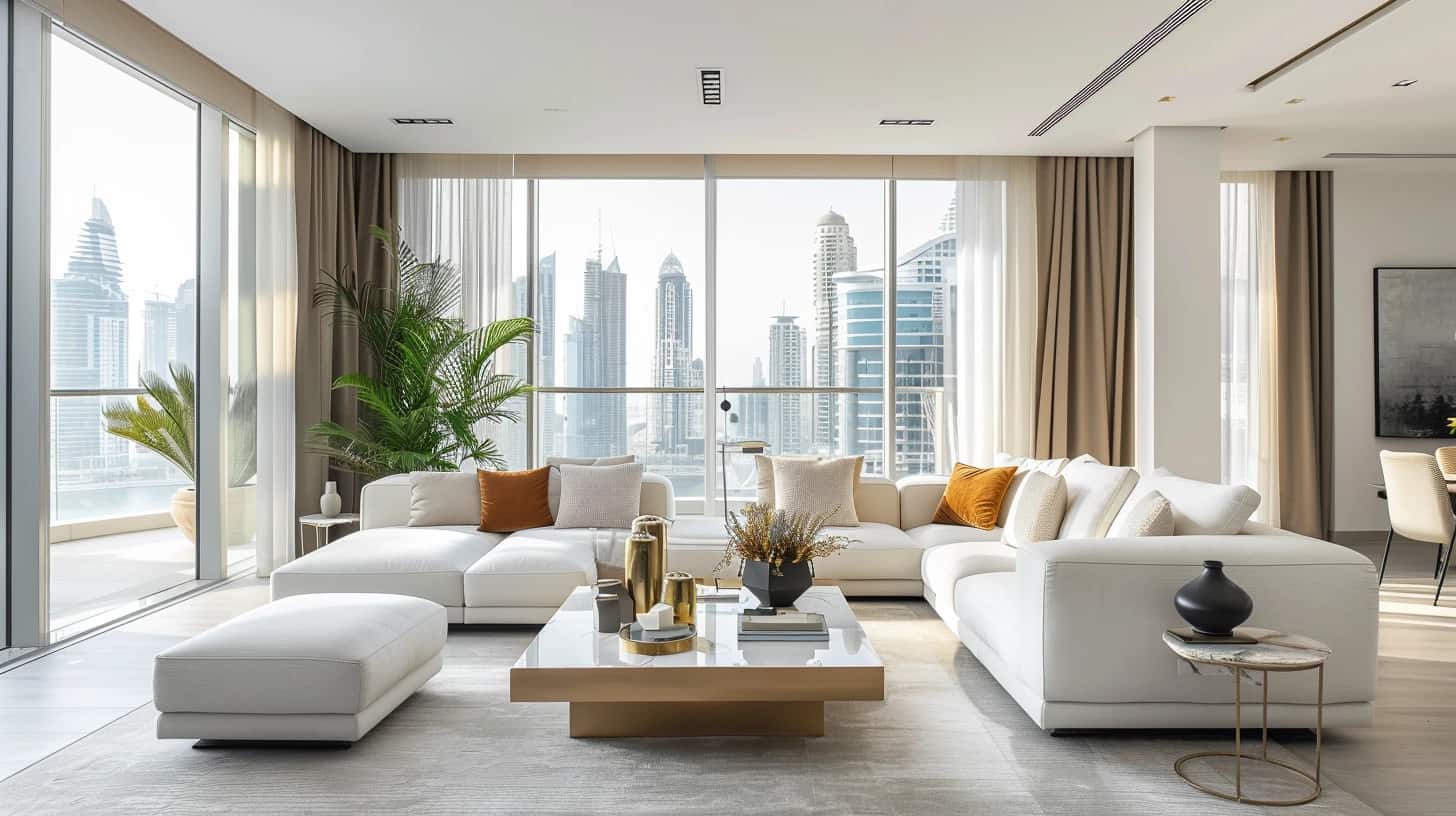
Creating a Forever Home in Dubai: Design and Lifestyle Ideas That Actually Work
The great majority of people who move to Dubai plan on staying there for at least two years. Then, as time passes, that two-year period becomes five, and that five-year period becomes ten.
The great majority of people who move to Dubai plan on staying there for at least two years. Then, as time passes, that two-year period becomes five, and that five-year period becomes ten. It is at this point that the apartment that was originally rented begins to feel more and more like a compromise rather than a temporary living situation.
This is the beginning of the concept of the “forever home.” Not in the sense of something romantic or idealistic, but in the sense of something that is designed with living in mind, as opposed to something that was designed with living in mind at the time of move in. A home that earns its existence on a daily basis, as opposed to on special occasions or when the sunlight filters through the window and onto the living room floor at just the right angle.
Dubai is one of the best locations in the world to design a forever home because of its sunshine, its indoor and outdoor living options, its variety of property sizes and styles, and its interior design and decorating industry, which has grown exponentially in the past decade or so. It is a common mistake that people make when buying property in Dubai that they think of their home as a financial investment and not as a living environment. It is the forever homes in Dubai that are the direct opposite of this that are the most successful and enduring. This article will discuss the design and lifestyle aspects of creating a forever home in Dubai that will function well in the long term. It will not be an article about interior design per se, as that is too general and does not apply specifically to Dubai and its unique characteristics. It will be an article about the aspects that are most important to Dubai specifically and how its climate, culture, and environment determine what decisions will have the most impact on a home that will be purchased or renovated.
Understanding Dubai's Climate and Designing Around It
Everything about designing a great Dubai home starts here. The climate is the single biggest influence on how space should be configured, where you spend time across the year, and what features are worth spending money on versus what looks good in a brochure and goes unused.
Dubai has two meaningful seasons. The cool season from roughly October to April, which is genuinely pleasant, with daytime temperatures between 20°C and 30°C, low humidity, and evenings that are perfect for outdoor living. And the hot season from May to September, when daytime temperatures regularly exceed 40°C, humidity in coastal areas climbs significantly, and outdoor activity concentrates in early mornings and evenings only.
A forever home in Dubai needs to work beautifully for both. That sounds obvious but most apartments and many villas are designed for the brochure photograph rather than the full twelve months of actual use.
Here's what that means in practical design terms:
- Covered outdoor space is more valuable than open outdoor space. A shaded terrace or pergola-covered garden area that you can use eight months of the year is worth ten times an exposed balcony that's only comfortable from November to March. When you're evaluating a property or planning a fit-out, prioritise covered outdoor square footage over uncovered.
- East and north-facing outdoor spaces outperform west and south-facing ones for usability during the warm season. A west-facing terrace catches the full force of the afternoon sun from spring through autumn. An east-facing one gets morning light and stays shaded and usable by late morning. This sounds like a minor point. It isn't.
- Ceiling height matters more than floor area. High ceilings create a sense of space and, more practically, allow hot air to rise and keep living areas feeling cooler even with air conditioning running. If you're choosing between a larger apartment with standard 2.6 metre ceilings and a smaller one with 3 metre or higher ceilings, the high-ceilinged option will feel better to live in almost every day.
- Cross-ventilation matters even in an air-conditioned climate. During the cool season, the ability to open windows on two sides of a room and create a natural breeze is a genuine quality-of-life feature. Units with windows or doors on only one external wall lose this entirely.
- Blackout capability in bedrooms is non-negotiable. Dubai sunrise starts before 6am in summer and the light intensity is significant even through good curtains. Proper blackout blinds or shutters are not a luxury. They're a basic requirement for sleep quality.
Outdoor Living: Making the Most of Dubai's Best Asset
Dubai's cool season is extraordinary. Six months of weather that most European cities would consider exceptional summer conditions. Creating a home that makes full use of that weather is one of the highest-return investments you can make in your living environment.
The outdoor living setup that works best in Dubai has a few consistent elements regardless of whether you're working with a villa garden, a rooftop terrace, or an apartment balcony.
Shade first. Always shade first. A pergola with climbing plants, a shade sail over a seating area, a permanent cover structure over a dining space. Whatever your outdoor space allows, addressing shade is the first thing to do. Without it, outdoor furniture gathers dust for six months of the year.
After shade, think about how you actually want to use the space. Dubai outdoor living tends to fall into three modes depending on the household:
- Morning coffee and breakfast spot from October to May, quiet, east-facing if possible, simple and comfortable
- Evening entertainment space for cooler-season gatherings, this is where the investment in decent outdoor furniture and lighting pays back quickly
- Pool or water feature access, the psychological and practical value of having water in a Dubai garden or terrace is disproportionately high, even a small plunge pool or a water wall feature changes the feel of a space significantly
Sarah Davey, founder of Dubai-based interior design studio Roar, has spoken in multiple design publications about the importance of what she calls "the indoor-outdoor blur" in Dubai homes. Her point is that the most liveable Dubai homes don't treat indoor and outdoor as separate spaces with a door between them, but as a continuous living environment where the boundary is deliberately minimised through consistent flooring materials, similar colour palettes, and openable walls rather than fixed glazing.
That philosophy is harder to execute in an apartment than in a villa, but the principle holds at any scale. Even on a small balcony, treating it as an extension of the living room rather than a separate outside area, with consistent flooring, appropriate furniture, and a planted screen for privacy, makes a real difference.
Interior Design for Dubai: What Works and What Doesn't
Dubai has no shortage of interior design inspiration. The city's architecture magazines, Instagram feeds, and showrooms are full of beautiful spaces. Some of them are genuinely liveable. Some of them look extraordinary in photographs and are exhausting to live in day-to-day.
A forever home needs to be both beautiful and genuinely comfortable for the specific way you live. Here are the design choices that consistently separate the two in Dubai's residential market.
Materials and finishes:
Dubai's light is intense and its interiors benefit from it if handled well. Natural stone, warm wood tones, and textured plaster walls all respond beautifully to the quality of light here. White walls look clinical in Dubai's harsh midday light. Off-whites, warm creams, and natural limestone tones are more flattering and more liveable year-round.
Marble floors, while beautiful in showroom settings, are cold in air-conditioned rooms and can feel institutional if they cover every surface. A mix of materials, stone in living areas, wood or large-format porcelain in bedrooms, and a rug programme that adds warmth and acoustic softening, tends to produce interiors that feel good to live in rather than just impressive to walk into.
Here are the specific material choices that tend to work well in Dubai forever homes:
- Limestone or travertine flooring in main living areas, warm and elegant without being cold
- Engineered oak or walnut flooring in bedrooms, warm underfoot and acoustically softer than stone
- Limewash or microcement wall finishes as an alternative to paint, they age beautifully and respond to light in a way flat paint doesn't
- Linen, cotton, and natural fibre upholstery rather than velvet or heavy wool, which trap heat and require more careful maintenance in Dubai's dusty environment
- Brass and bronze hardware over chrome, they patina naturally and look warmer in Dubai's light
- Biophilic elements throughout, plants, natural wood, stone, and water features, which have measurable effects on stress and wellbeing and look genuinely beautiful in Dubai's light
Space planning for Dubai life specifically:
A forever home in Dubai needs to account for how people actually entertain and live here, which is different from how they live in European or North American cities.
Hospitality is central to Dubai life across most cultural backgrounds. Large dining tables that can seat ten or twelve are not oversized in Dubai the way they might feel in a London flat. A kitchen that opens to the living area and allows the host to be part of the gathering rather than separated by a wall is worth prioritising. A dedicated guest bedroom or space that can flex between an office and a guest room, because visitors from home are frequent for most expat families, is a real practical need rather than a nice-to-have.
Storage is chronically underestimated in Dubai properties. Outdoor equipment, travel gear, seasonal items, kitchen appliances, the general accumulation of a family's life in a city with excellent retail access. Built-in storage designed into a renovation, floor-to-ceiling wardrobes, a properly designed utility room, kitchen cabinetry that goes to the ceiling, is almost always worth the investment.
Our Original Research: What Dubai Homeowners Actually Prioritise When Designing Forever Homes
We spoke with fifteen homeowners across Dubai who had undertaken significant renovation or custom fit-out projects in the last three years and asked them what they wished they'd known before starting, and what single decision had made the most difference to daily life.
The responses clustered consistently around a handful of themes:
Most impactful single investment made:
- Better air conditioning system or upgrading to a 4-pipe fan coil unit system: mentioned by 6 of 15 homeowners as the single decision that most improved daily comfort
- Covered outdoor space or pergola addition: mentioned by 5 of 15 as the highest-return outdoor investment
- Blackout window solutions in bedrooms: mentioned by 4 of 15 as something they wished they'd done from day one
- Kitchen renovation or open-plan kitchen conversion: mentioned by 7 of 15 as the renovation that changed how they used the home most
Biggest regrets or things they would do differently:
- Underestimating storage needs from the start: mentioned by 9 of 15
- Choosing white or very light walls that showed dust and required frequent repainting: mentioned by 6 of 15
- Not investing in proper outdoor furniture and shade from the beginning: mentioned by 8 of 15
- Buying a west-facing unit without fully understanding the summer sun exposure: mentioned by 4 of 15
What made them feel the home had become genuinely "theirs":
- Personalised artwork and objects collected over time from travels: mentioned by 11 of 15
- Plants, specifically a properly planned indoor plant scheme: mentioned by 7 of 15
- A dedicated space that served one person's specific passion, a music room, a proper home office, a cooking-focused kitchen: mentioned by 9 of 15
The air conditioning insight is worth dwelling on. Dubai's standard residential properties often come with split AC units or older ducted systems that are functional but not optimised for year-round comfort across a whole home. A 4-pipe fan coil system allows simultaneous heating and cooling in different zones, which matters more than it sounds during the shoulder season when some rooms need cooling and others need warming. Several homeowners described upgrading the AC system as unglamorous but transformative.
Building a Home That Grows With You
A forever home in Dubai isn't static. The city changes fast. Families grow and shift. Working patterns evolve. A home that works perfectly for a couple in their thirties may need to adapt significantly by the time children are teenagers, or when parents come to stay for extended periods, or when work-from-home becomes a permanent rather than occasional arrangement.
Designing for flexibilty from the start is smarter than designing for a specific moment in life that may last five years and then shift dramatically.
Here are the design decisions that build in the most useful long-term flexibilty:
- A spare room that is genuinely multi-purpose from day one, built-in bed with decent storage, a desk that works properly as a workspace, and neutral enough decor to function as guest room, office, or teen bedroom without a full renovation
- A living space that can reconfigure for different group sizes, modular sofas that can be rearranged, a dining table that extends properly, lighting that can be dimmed and directed rather than fixed overhead only
- Kitchen infrastructure that anticipates evolution, a double oven rough-in even if you start with one, additional electrical circuits for appliances you might add, a pantry or dry storage area that can expand with a growing household
- Smart home infrastructure installed during initial fit-out even if you're not using all of it immediately, the cost of running conduit and wiring during a renovation is a fraction of doing it retroactively
- Outdoor spaces that can evolve from a low-maintenance adult space to a family-focused one without major structural changes, grass or artificial turf areas that can become play spaces, planters that can be reconfigured
Jamie Durie, the internationally recognised landscape designer and garden architect who has worked on projects across the UAE, has spoken about Dubai outdoor spaces needing to function as "a third room" that transitions across the day and across the seasons. His approch to Dubai projects emphasises shade structures that double as architectural features, planting that provides privacy and greenery without heavy water requirements, and materials that age gracefully in Dubai's climate rather than deteriorating rapidly.
The Neighbourhood Question: Forever Home Means Forever Location
The design of the home itself is also important. However, a perpetual home in Dubai means a perpetual location as well, and this is just as important as all the interior design considerations.
The neighborhoods in Dubai all have their own unique characteristics and do not grow at the same rate as the people living in them. A neighborhood that is ideal for a young couple in their late twenties may not be ideal when children require schools and peers within walking distance. Similarly, a villa community that is ideal for a young couple with children in their early years may be too isolated when the children grow up and want to venture out to the city.
The following factors in a location are most important in choosing a long-term home in Dubai:
- Schooling, not only what is currently available but what will be available in the coming decade of your children’s education
- Walkability of the community; the best communities in Dubai for a long-term home have a level of walkability, including a park, a café, and a small retail center that can be walked to
- Planned infrastructures around the community such as expansions of the Metro, new retail outlets, and upcoming developments that could either complement or detract from community character
- The community’s character and age profile; communities with a mix of families, professionals, and long-term residents are likely to develop a social fabric that makes a community livable and not just a collection of buildings
- The community’s proximity to areas of Dubai that you use most frequently, be it your office, your kids’ schools, or your favorite beaches and entertainment outlets that form part of your regular weekend activities
Established communities such as Dubai Hills Estate, Arabian Ranches, and Jumeirah Golf Estates have developed a community character that makes them livable and not just a collection of buildings and developments meant for long-term stay and not for short-term investments. The community character of newer communities is still in the making and is yet to be determined.
If you're at the stage of choosing both a community and thinking about the forever home design within it, or if you want to explore what's currently available across Dubai's established residential areas, we have listings across the communities that consistently score highest for long-term liveability. And if you want to talk through which community fits your specific lifestyle and family situation, our team is happy to help you think it through.
Related stories
Dubai's Established Charm: The Case for Older Homes
In a city focused on the future, I believe the smartest move for many buyers is to look back. Dubai's seasoned communities offer space, character, and surprising value that new builds often can't match.
The True Cost of Owning a Dubai Property
Beyond the purchase price, your annual budget for a Dubai home must account for service charges, utilities, and maintenance. I'll break down every ongoing expense you need to plan for.
Calculating ROI on Dubai Rental Upgrades
As a landlord in Dubai, you can't just follow trends. I'll show you how to calculate the precise ROI of minor property upgrades to genuinely increase your rental yield.
Echoes, in your inbox
One thoughtful email a month. Market insight, new launches, no spam.