

International City Dubai: Budget Living Done Right or Compromise Too Far
International City studios start at AED 320k with yields of 7-8% net. Here's the cluster-by-cluster honest take on whether the trade-offs work for you.
One thing that sets International City apart is the fact that this is, without a doubt, the cheapest neighborhood among those considered "significant" in the Dubai real estate market. Starting prices in International City are around AED 320,000 for studio apartments, with one-bedders available for AED 450,000 and yearly rentals not exceeding AED 35,000 in select projects. Such prices are not normally seen when dealing with property in actual, functional residential neighborhoods anywhere in Dubai. Buyers or tenants with very limited budgets will find it impossible to get into the Dubai property market with any other postcode, irrespective of price.
That said, the reputation of International City can be somewhat justified, partially undeserved, and biased depending on each specific cluster within the area. There is definitely some truth to some criticisms: the area infrastructure is somewhat outdated, some buildings indeed require more maintenance, the traffic during the peak periods to and from the place can be an issue, and the number of services available in the area – retail, entertainment, restaurant facilities – still lags behind that of the majority of other parts of Dubai. However, the area has significantly changed during the last five years, with some clusters being properly maintained by now, with new facilities developed, and the population demographics stabilized. Furthermore, some criticism may well be based purely on classism – the area is not very popular with buyers who have never set foot here but heard second-hand or even third-hand comments about it.
As for us, we've accumulated years of experience in selling property and handling tenants in International City, and we know the majority of its main clusters inside and out. Our opinion of the place is much more complex than "either you like or hate International City"; in fact, whether it is good or bad largely depends on your own profile and preferences and on how much compromise are you willing to accept for the cheapest entrance price in the market.
In this article, we will provide you with the factual information about what International City consists of in 2026, give you a candid analysis of the area's main clusters, take a look at current pricing and yields, talk about what kind of people this neighborhood will suit, and list the realistic trade-offs, comparing the area to other places with similar prices.
What International City Actually Is in 2026
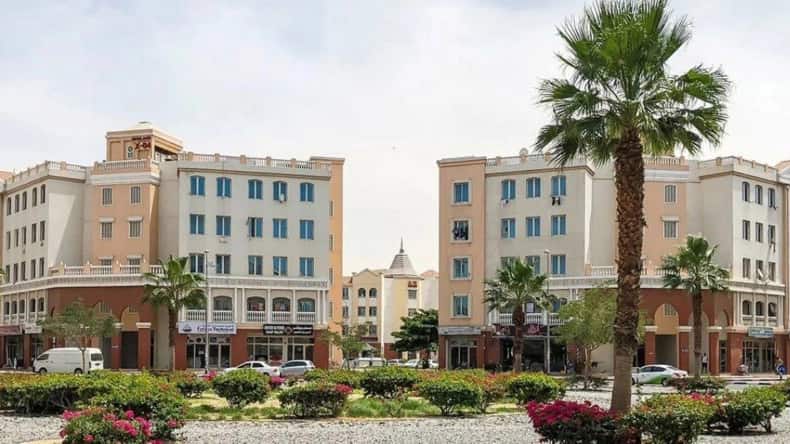
International City was launched by Nakheel in the early 2000s as a themed master-planned community. The original concept divided the area into country-themed clusters, each named after a different nation and originally intended to reflect that country's architectural style. The themed approach was partially executed and partially abandoned, leaving a community where the cluster names (China, England, Spain, France, Italy, Russia, Greece, Persia, Morocco, etc.) often outweigh any visible architectural distinction.
The community sits in the eastern part of Dubai, between Dubai Outlet Mall to the south and the Al Awir district to the east. It's accessed primarily via Sheikh Mohammed bin Zayed Road and connects to broader Dubai through Emirates Road and the Dragon Mart area. The total population is estimated at over 100,000 residents, making it one of the most densely populated areas in Dubai despite its budget pricing.
The product mix is overwhelmingly low-rise apartment buildings (4 to 6 stories typically) with limited high-rise inventory. Studios and 1-bedrooms make up the bulk of the residential stock. 2-bedrooms exist but are less common. There are very few villas or townhouses in International City itself, though the surrounding areas (Warsan, Al Warqa) have some villa product.
International City Phase 2 (also referred to as the new International City extension) and the Warsan area immediately adjacent represent newer inventory with somewhat better build standards and more contemporary product. These areas trade at modest premiums to the original International City clusters.
Average price per square foot across International City sits at around AED 600 to AED 850 in early 2026, depending on cluster and building age. That's roughly half the price per square foot of JVC and around a third of the price per square foot of Marina or Business Bay. The discount is real and substantial.
The community has matured infrastructure-wise. Dragon Mart 1 and 2 are major retail destinations that serve both International City residents and a broader regional market. Multiple supermarkets, basic medical clinics, mosques, schools, and the standard retail strip exist within the community. Public transport access is limited (no metro station within the community itself) but bus services connect to broader Dubai, and the road network is functional outside peak hours.
Cluster-by-Cluster Assessment of International City
The clusters within International City vary meaningfully and the cluster you buy into matters more than the area average. Here's the honest assessment.
China Cluster. One of the largest and most active clusters. Mixed reputation. Significant rental demand from the Chinese expatriate community and from broader budget-conscious tenants. Some buildings are well-maintained. Others have chronic issues. Active rental market with reliable tenant flow. Studios trade at AED 320,000 to AED 420,000. 1-beds at AED 450,000 to AED 600,000.
England Cluster. Generally one of the better-maintained clusters. Slightly more residential feel than the more commercial-adjacent clusters. Tenant demographic is mixed. Build quality varies but the better buildings are noticeably cleaner and better-managed than the worst China Cluster examples. Studios AED 340,000 to AED 440,000. 1-beds AED 480,000 to AED 620,000.
Spain Cluster. Quieter than China or England. Generally well-maintained. The cluster has aged reasonably well. Tenant pool is stable. Pricing similar to England. A reasonable choice for buyers prioritising peace and stability over absolute lowest pricing.
France Cluster. Smaller cluster, generally well-maintained. Mid-range within International City pricing. Stable rental performance. Has some of the better building stock in the original community.
Italy Cluster. One of the more residential-feeling clusters. Better than average maintenance in many buildings. Slight premium over the cheapest International City pricing. Tenant pool tends toward longer-tenure professionals rather than transient renters.
Russia Cluster. Quieter cluster with mixed building quality. The pricing reflects the cluster's mid-tier position within International City. Generally functional but unremarkable.
Greece Cluster. Smaller cluster, generally lower-density than China or England. Reasonable build quality in most buildings. Pricing toward the lower end of International City ranges.
Persia Cluster. Quieter and somewhat better-maintained than the busiest clusters. Decent rental performance. Pricing in line with mid-range International City levels.
Morocco Cluster. Smaller and quieter cluster. Mostly residential feel. Pricing varies but generally accessible.
Forbidden City. A premium-positioned development within International City, with somewhat better build standards and amenities than the original community. Pricing at AED 950 to AED 1,150 per square foot, which is meaningfully above the International City average. Targeted at buyers who want the International City pricing advantage but with somewhat better product.
International City Phase 2. Newer inventory with better build standards. Pricing at AED 850 to AED 1,050 per square foot. The newer construction shows in the unit layouts, finishes, and building amenities. A genuinely better product than original International City for buyers willing to pay the modest premium.
Warsan and Al Warsan. Adjacent communities with similar pricing and demographic mix. Some better-maintained product. Worth considering alongside International City for buyers focused on this part of Dubai.
The general pattern is that the cluster matters but the building within the cluster matters more. There are well-maintained buildings in even the most criticised clusters, and there are poorly-maintained buildings in the more reputable clusters. Building-level due diligence is essential.
Original Research: International City Yield and Tenant Tenure 2024 to 2025
We tracked rental performance across 78 International City units we either managed directly or had visibility into through partner property managers during 2024 and 2025. The aggregate gross yield came in at 8.4% across the sample. Net yield, after service charges, agency fees, and a realistic vacancy assumption of 4 weeks per year, landed at 6.8%.
Cluster-level breakdown:
- China Cluster (well-maintained buildings): gross yields 8.6% to 9.4%, net 7.0% to 7.8%
- England Cluster: gross yields 8.2% to 9.0%, net 6.6% to 7.4%
- Spain Cluster: gross yields 8.0% to 8.8%, net 6.4% to 7.2%
- Italy Cluster: gross yields 7.8% to 8.4%, net 6.2% to 6.8%
- Forbidden City: gross yields 6.8% to 7.4%, net 5.4% to 6.0%
- International City Phase 2: gross yields 7.4% to 8.0%, net 5.8% to 6.4%
The yield numbers are genuinely strong and represent some of the highest gross and net yields available in Dubai at scale. The trade-offs are on the operational and capital appreciation sides rather than the income side.
Specific data points from 2025 tracking:
- A studio in China Cluster (well-maintained building) rented at AED 32,000 against a purchase price of AED 360,000, hitting 8.9% gross
- A 1-bedroom in England Cluster rented at AED 48,000 against a purchase price of AED 540,000, hitting 8.9% gross
- A 1-bedroom in Spain Cluster rented at AED 50,000 against a purchase price of AED 580,000, hitting 8.6% gross
- A 1-bedroom in Forbidden City rented at AED 75,000 against a purchase price of AED 1.05M, hitting 7.1% gross
- A 1-bedroom in International City Phase 2 rented at AED 62,000 against a purchase price of AED 820,000, hitting 7.6% gross
Average tenant tenure in our managed International City portfolio was 24 months in 2024 to 2025, which is slightly above the citywide average. Tenants who choose International City tend to do so for budget reasons, and once they're in place they tend to stay because alternatives at the same price point are limited. This stability supports the net yield economics.
Time-to-let for fairly-priced units ranged from 2 to 6 weeks, depending on building quality and market timing. The lower end of the price range (AED 30,000 to AED 45,000 annual rent) tends to find tenants quickly. The higher end (AED 75,000+) takes longer because tenants at that budget level have alternatives in JVC, Discovery Gardens, or other Dubai sub-markets.
What's Genuinely Worth Knowing About International City Living
Beyond the headline numbers, the lived experience of International City has several characteristics that buyers and tenants should understand clearly.
The community is genuinely diverse demographically. International City has one of the most ethnically and nationally varied resident populations in Dubai. The original concept of country-themed clusters has resulted in an actual mixing of cultures that's harder to find in more demographically clustered Dubai areas. For some residents this is a positive lifestyle factor.
The traffic in and out of the community is genuinely problematic at peak times. The road network connecting International City to broader Dubai gets seriously congested during morning and evening rush hours. Adding 30 to 60 minutes to a normal commute during peak times is realistic. This is one of the most consistent complaints from International City residents.
The retail and food infrastructure is functional but limited. Dragon Mart serves as the major retail anchor, supplemented by community-level shopping centres and the various retail outlets distributed across the clusters. Restaurants are predominantly mid-tier and budget-focused. Premium dining or entertainment options are basically nonexistent within the community.
Schools within or near International City are functional but limited in choice. Multiple Indian curriculum schools operate in the area along with some British and other curriculum options. Families with specific school preferences may need to look outside International City for education, which adds to the daily logistics.
Medical care is available through several clinics and a few small hospitals in the area, with major medical facilities accessed in adjacent or central Dubai areas. For most routine medical needs, the local infrastructure is adequate.
Public transport is limited. The metro doesn't currently serve International City directly, though future expansion plans may change this. Bus services connect to broader Dubai but with limited frequency. Most residents rely on private cars or ride-sharing.
The community has its own social rhythms that work well for residents who engage with them. Weekend markets, community events at Dragon Mart, and various cultural and religious community activities create a meaningful sense of community for many residents. Other residents experience International City as more of a place to sleep and go to work elsewhere, with their social life happening in other parts of Dubai.
According to Property Monitor's market data, International City accounts for a meaningful share of Dubai's lower-budget residential transactions, with consistently strong volume across the budget-conscious buyer segment. The transaction liquidity at the lower price points is genuinely good, which means investors who need to exit can typically find buyers within reasonable time horizons.
Who International City Property Actually Suits in 2026
The buyer and tenant profile that does well in International City is specific. The area suits some profiles genuinely well and is a poor fit for others.
International City is genuinely well-suited for:
- Yield-focused investors comfortable with active or competent third-party management who want net yields of 6.5% to 7.5% on entry capital of AED 350,000 to AED 700,000
- Budget-conscious tenants prioritising affordable accommodation over premium lifestyle infrastructure
- First-time UAE property buyers with very limited capital who want property ownership and the new lower-threshold visa qualification
- Mid-career professionals working in the eastern Dubai zone, Sharjah, or northern Emirates who value the location relative to those work centres
- Investors building diversified portfolios who want to add a yield-heavy entry-level component
- Long-term tenants who've found a building they like and want to stay in a stable rental situation
- Residents from specific cultural communities that have established themselves in International City and find genuine community there
International City is genuinely not well-suited for:
- Buyers prioritising lifestyle, walkability, or amenity diversity. The community is functional but not lifestyle-focused
- Investors looking for capital appreciation. International City has appreciated modestly over the years but it's not a strong appreciation play
- Buyers who specifically dislike high-density living. The community is among the most densely populated parts of Dubai
- Anyone with a daily commute to Marina, Downtown, JBR, or western Dubai. The traffic out of International City to these destinations is punishing during peak hours
- Buyers wanting newer, more contemporary product. Most International City building stock is 15+ years old
- Families specifically prioritising premium school options. The school landscape is functional but more limited than central Dubai areas
- Short-term rental investors. STR demand in International City is low compared to tourist-friendly central postcodes
- Anyone who values a more polished living environment. International City is functional but the visual character of the community is variable and some clusters look tired
Be honest with yourself about which category you're in. Buyers who buy in International City based on the price advantage but actually need a more lifestyle-rich living environment typically end up frustrated and looking to exit within 2 to 3 years. Buyers who match the area's profile and accept the trade-offs typically end up satisfied with the economics they captured.
What's Changed in International City Over the Last 24 Months
Several shifts in International City matter for new buyers and tenants in 2026.
Pricing has firmed considerably. International City had a long period of relatively flat pricing in the late 2010s, but the broader Dubai market strength of 2022 to 2025 has lifted prices in the area meaningfully. Studios that traded at AED 240,000 in 2021 now trade at AED 320,000 to AED 380,000. The appreciation is real even if it's not on the scale of Marina or Dubai Hills.
The new visa rules have been particularly significant for International City. The recent removal of the AED 750,000 minimum property value for the 2-year property investor residence visa means that a substantial portion of International City inventory now qualifies for residency through ownership. A AED 450,000 1-bedroom that previously didn't qualify now does, provided the buyer is the sole owner. This has injected new investor demand into the area that didn't exist 12 months ago.
Building maintenance has improved in some clusters. Several owners associations have invested in major refurbishments, lift replacements, and facade work over the last few years. The improvements are uneven across the community but the trajectory in several buildings is clearly positive.
Newer adjacent inventory (Warsan, the Phase 2 areas) has expanded the budget-conscious buyer's options without dramatically altering the International City core market. This has created more choice for buyers in the budget segment without significant cannibalisation of the established International City inventory.
Demographic mix has continued to evolve. The community remains highly diverse but specific clusters have seen meaningful shifts in tenant nationality concentrations. China Cluster has seen continued strong demand from the Chinese expatriate community. England and Italy clusters have seen growing presence of Eastern European and CIS tenants. The general pattern is that the area attracts genuinely international tenants in proportions that match Dubai's overall demographic mix.
Dragon Mart continues to expand and attract regional shopping traffic. The retail anchor remains a meaningful asset for the community and supports the local economy beyond just the residential population.
Public infrastructure spending in the broader eastern Dubai zone has been steady, with road upgrades, the Hatta highway improvements, and ongoing investment in the Al Awir freight corridor all contributing positively to the connectivity of the broader area, even if the metro hasn't yet reached International City directly.
How International City Compares to Real Alternatives at the Budget End in 2026
For buyers and investors operating at the budget end of the Dubai market, International City competes with several alternatives.
Discovery Gardens offers similar pricing with somewhat better landscaping and slightly newer building stock. Yields are similar. The lifestyle is slightly more curated but still budget-focused. Best for buyers wanting a slightly more polished feel than International City at similar price points.
Dubai Production City (IMPZ) and Dubai Sports City are mid-tier alternatives with somewhat higher pricing but newer product and more lifestyle infrastructure. Yields are slightly lower than International City. Best for buyers willing to pay 30% to 50% more for newer buildings and slightly better amenities.
JVC older buildings offer higher per-square-foot pricing but with more central location, deeper retail and lifestyle infrastructure, and more diverse tenant pool. Best for buyers willing to pay AED 700,000+ for studios and AED 900,000+ for 1-beds in exchange for the JVC community advantages.
Dubai South residential offers similar pricing to International City for newer product with longer commutes from current Dubai work centres but the airport expansion thesis. Best for buyers prioritising newer construction and long-term thesis-driven appreciation.
A short comparison for budget-conscious buyers:
- International City: lowest pricing, established community, highest gross yields
- Discovery Gardens: slightly higher pricing, more curated feel, similar yields
- Dubai Production City: mid-tier pricing, newer product, lower yields
- JVC older buildings: meaningfully higher pricing, central location, deeper community
- Dubai South: similar pricing, newer product, longer commute, growth thesis
The value proposition of International City versus these alternatives is consistently the same. Lowest entry pricing. Highest gross yields. Most established community. The trade-offs are also consistent. Less premium feel. More variable building maintenance. More traffic friction. The buyer needs to decide whether the economic advantages outweigh the lifestyle and aesthetic compromises.
The Bottom Line on International City Property in 2026
The International City in 2026 is one of those propositions that come from Dubai that generates mixed reviews. The correct conclusion can only be formed when taking into account the investor himself and his objectives.
Firstly, if there are people who care about yields alone and understand the investment they make along with having good property management skills, then the International City is a great place where the yields will be the highest compared to others. There will be net yields of 6.5%-7.5% from the initial investment made of between AED 350,000 and AED 600,000.
Secondly, if there are people who have very little capital and cannot afford expensive apartments and are interested in investing in Dubai but do not know how to go about it, then the International City is probably their best choice of all other districts that exist. With studios starting from AED 320,000, they can actually get into Dubai properties, and the prices reflect the new visa requirements as well.
Thirdly, for end-user residents who have limited funds and want something cheap but still fitting their lifestyles, the International City might be a place to move to since it has everything required for that, albeit it is not perfect. The buyer might sacrifice certain aspects but live a life that is comfortable in many ways. However, for end-users looking for more luxury options with additional amenities and better lifestyle, this place is not going to work.
Investors who seek growth in capital should probably avoid moving to this area since this is not something this place is built for. Appreciation here has not been too great throughout the years, and it should be viewed from the perspective of yield generation.
Some additional notes that should be kept in mind while deciding on whether or not to buy a property here. Firstly, buildings within the clusters should be considered as seriously as the clusters themselves. Some buildings have problems despite being located in the best clusters, while some do fine even in those that are less reputable. It is highly recommended to see in person which property the client wants and perhaps talk to existing tenants if possible. Also, one needs to check the OA position and get information about service charge history.
To conclude, International City is a community that provides budget living with yields that cannot be found anywhere else. People who come here with realistic expectations will enjoy their time here, while people who come here thinking that this is something it is not will regret their decision immediately. Should you need a walkthrough with specific products and pricing and yields for each one of them, please be informed that we address such inquiries on a weekly basis. Browse what's currently available across Dubai or reach out and we'll take it from there.
Related stories
Dubai's Established Charm: The Case for Older Homes
In a city focused on the future, I believe the smartest move for many buyers is to look back. Dubai's seasoned communities offer space, character, and surprising value that new builds often can't match.
The True Cost of Owning a Dubai Property
Beyond the purchase price, your annual budget for a Dubai home must account for service charges, utilities, and maintenance. I'll break down every ongoing expense you need to plan for.
Calculating ROI on Dubai Rental Upgrades
As a landlord in Dubai, you can't just follow trends. I'll show you how to calculate the precise ROI of minor property upgrades to genuinely increase your rental yield.
Echoes, in your inbox
One thoughtful email a month. Market insight, new launches, no spam.