

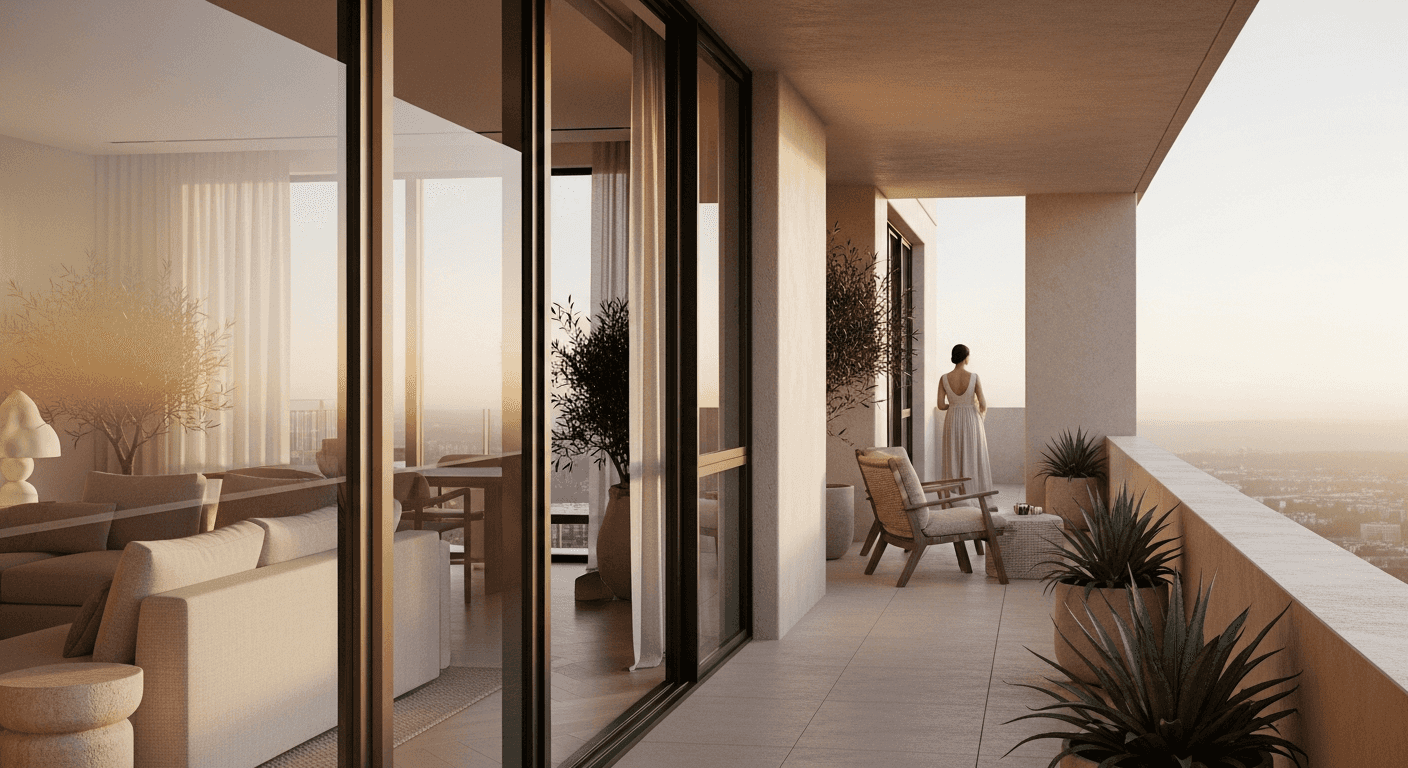
Compact Luxury: Dubai's Smartest Property Investment?
I explore why small, high-end apartments in Dubai's best districts are outperforming expectations, offering a potent mix of high rental yields and capital growth potential for savvy investors.

When you think of luxury property in Dubai, your mind might conjure images of sprawling penthouse apartments or vast villas in Arabian Ranches. For years, the metric for premium living was square footage. Today, a quieter, more strategic investment class is gaining serious traction: the compact luxury apartment. These are not your average studios or one-bedrooms; they are meticulously designed, high-specification homes in the city's most desirable postcodes, and in my view, they represent one of the most compelling opportunities in the market right now.
This is a deep dive into the investment case for going small but staying prime. Here's what we'll explore:
- Redefining Luxury: What 'compact luxury' actually means in the Dubai context.
- The Demand Drivers: Who is renting these properties and why they'll pay a premium.
- Prime District Analysis: Where to find the best opportunities, from Downtown to the Dubai Marina.
- The Financial Case: A full, line-by-line cost breakdown of a typical purchase and yield calculation.
- Service Charges vs. Value: Why a high service charge isn't always a bad thing.
- Off-Plan vs. Secondary: Weighing the strategic options for acquisition.
- Risks & Mitigation: A clear-eyed look at the potential downsides.
Redefining Luxury: The Power of the Prime Postcode
For too long, the property conversation in Dubai has been dominated by a 'bigger is better' philosophy. This has led many first-time investors to chase square footage in emerging communities, hoping to secure a 'good deal' on a larger unit. The problem with this approach is that it overlooks the single most important factor in real estate value: location. A large apartment in a secondary location with few amenities will always struggle to compete with a smaller, perfectly formed unit in the heart of the action. This is where the concept of the compact luxury apartments Dubai investment comes into its own.
So, what defines this asset class? It’s a studio or one-bedroom apartment, typically ranging from 450 to 850 square feet. But the size is where the modesty ends. These properties are located exclusively in prime, high-demand, high-energy neighbourhoods. Think of buildings that offer direct access to the beach, a short walk to a metro station, or a lobby that opens into a bustling financial centre. The unit itself features high-end finishes that rival a five-star hotel: marble countertops, German appliances, smart home technology, and floor-to-ceiling windows with protected views. The building's amenities are the final piece of the puzzle — resort-style swimming pools, state-of-the-art fitness centres, 24/7 concierge and security, and often, residents-only lounges and business centres.
Developers like Emaar Properties have perfected this model in Downtown Dubai, where a one-bedroom apartment in a tower like the Address or Vida offers a complete lifestyle package. Similarly, developers such as Select Group have transformed the Dubai Marina skyline with towers that pack incredible amenities and finishes into their smaller units, making them magnets for high-income tenants. The fundamental shift is from selling space to selling a lifestyle. The buyer or tenant of a compact luxury unit is making a conscious trade-off. They are saying, "I am willing to forgo a second bedroom or a formal dining room in exchange for walkability, convenience, prestige, and a hassle-free, amenity-rich life."
This shift in consumer preference is a global phenomenon, but it finds its most potent expression in Dubai. The city attracts a transient, ambitious, and discerning population of professionals who value their time above all else. They don't want to be stuck in traffic for an hour to get to the gym or a good restaurant. They want to step out of their building and have the best of the city at their fingertips. This powerful demand from a specific, high-earning demographic is what underpins the entire investment case. It creates a moat around these properties, insulating them from the broader market's fluctuations and the chronic oversupply issues that can plague less-desirable locations.
The Demand Drivers: Who Rents a Compact Luxury Apartment?
 Featured project
Understanding the target tenant is the most critical part of any buy-to-let investment analysis. For compact luxury apartments, the tenant profile is not just strong; it's deep and diversified. These are not properties aimed at the mass market. They cater to specific niches of the population who are less sensitive to price and more focused on quality and location. This is a crucial distinction that drives both high occupancy and premium rental rates.
First, there is the high-earning single professional or couple. Think of the lawyer at a firm in DIFC, the marketing director in Dubai Media City, or the senior consultant flying in and out of DXB every week. For them, a long commute from a suburban villa is a non-starter. They need to be close to their office, clients, and the social hubs where they network and unwind. They are time-poor and cash-rich. The ability to walk to work, host a client for coffee downstairs, and use a world-class gym without leaving the building is not a luxury; it's a necessity for their demanding lifestyle. They will happily pay AED 150,000 a year for a perfectly located 700 sq ft one-bedroom over paying AED 120,000 for a 1,200 sq ft unit that requires a 30-minute commute.
Second, the rise of flexible work and new visa categories has created another powerful demand stream. The Golden Visa, for example, allows talented professionals and investors to establish a long-term base in Dubai without being tied to a single employer. These individuals often arrive with a global perspective and high standards. They are looking for a turnkey, high-quality home to land in, and a luxury studio apartments Dubai investment in a building with a strong reputation is an easy choice. They want the 'Dubai dream' from day one, and that dream is more about a view of the Burj Khalifa from their balcony than it is about mowing a lawn in a distant suburb.
Finally, there's the high-end corporate and tourism market. This includes business travellers on extended assignments, consultants on project work, or affluent families visiting for a month or two who prefer the privacy and space of an apartment over a hotel suite. This segment is particularly lucrative. They are not just renting an apartment; they are renting a serviced living experience. Buildings with excellent concierge services, housekeeping options, and proximity to major attractions can command significant premiums for short-to-medium term lets. While the regulations around short-term rentals require careful management and licensing through the Dubai Department of Economy and Tourism (DET), the potential for higher yields is undeniable for investors willing to put in the work. This constant churn of demand from different sources creates a resilient rental market that is less exposed to the fortunes of a single industry.
Location, Location, Location: Pinpointing Prime Districts
While the concept of compact luxury is compelling, it only works in a handful of truly prime districts where the three pillars of demand — business, lifestyle, and tourism, converge. Investing in a 'luxury' studio in a remote location is a recipe for disappointment. As an investor, your focus must be laser-sharp. At Gaia Living, when we advise clients on this strategy, we concentrate on four key areas.
Downtown Dubai: This is the epicentre. Developed by Emaar Properties, it is arguably the most famous square kilometre in the Middle East. It’s home to the Burj Khalifa, The Dubai Mall, and the Dubai Opera. For a high-end 1-bedroom investor guide Dubai, Downtown is ground zero. The demand here is relentless, driven by executives working in Emaar Square and the surrounding business hubs, as well as a constant flow of tourists. The key is to look at buildings that are integrated into this ecosystem. Towers along the Mohammed Bin Rashid Boulevard, or those directly connected to the mall or metro, carry a significant premium for a reason. A one-bedroom apartment in a building like The Address Residence Fountain Views or Opera Grand can command rents that are simply unachievable elsewhere, because tenants are paying for unparalleled access. The trade-off is a higher entry price, but the rental stability and potential for capital appreciation are, in my opinion, unmatched.
Dubai International Financial Centre (DIFC): If Downtown is the heart of Dubai's leisure and tourism, DIFC is its commercial and financial brain. It's a free zone with its own legal framework, and home to the world's leading banks, law firms, and asset managers. For the thousands of professionals who work here, living within DIFC is the ultimate convenience. Developments like Index Tower, Central Park Towers, and the newer Gate Avenue offerings provide a true 'live-work-play' environment. An investor buying a one-bedroom here is tapping into a captive audience of tenants who value a sub-five-minute walk to their desk above all else. The architecture is more sober and corporate than in Downtown, but the quality is exceptionally high, and the yields are very robust due to the 24/7 demand cycle within this self-contained city.
Dubai Marina & Jumeirah Beach Residence (JBR): This is the lifestyle choice. For those who dream of sea views and stepping out onto a vibrant promenade filled with cafes and shops, the Dubai Marina and its beachfront cousin, JBR, are the gold standard. It's a more established area, so as an investor, you need to be more selective. The original Emaar 6 towers in the Marina still command immense respect for their build quality and location. Newer towers by developers like Select Group have raised the bar with incredible amenities and finishes. The key here is proximity to the beach, the metro, or Marina Walk. A one-bedroom with a full marina view will always have a waiting list of tenants. The demographic is slightly younger and more lifestyle-focused than in DIFC, but just as willing to pay for the privilege of living in one of Dubai's most dynamic communities.
Bluewaters Island: A more recent addition, but one that perfectly encapsulates the compact luxury ethos. Developed by Meraas, Bluewaters Island is a man-made island adjacent to JBR, home to Ain Dubai. It offers a more exclusive, resort-like feel than the bustling Marina. The residential buildings are low-rise, the finishes are exceptional, and the entire island is pedestrian-friendly. Buying a one-bedroom apartment here gives a tenant access to a private beach, high-end restaurants, and stunning views, all in a more serene environment. It has quickly become a favourite for high-net-worth individuals seeking a discreet but centrally located home. It's a prime example of a prime district small luxury investment, demonstrating how a well-executed master plan can create immense value and demand from scratch.
“The premium tenant in Dubai isn't just renting square feet; they're renting a postcode, a lifestyle, and a level of convenience that only a handful of buildings can provide.”
The Numbers Game: A Worked Example
Theory and strategy are important, but for an investor, it all comes down to the numbers. Let's walk through a realistic, line-by-line breakdown of what it costs to purchase a compact luxury apartment and what kind of returns you can expect. This transparency is essential. At Gaia Living, we believe an informed client is a successful one, and that means looking at all the costs, not just the attractive headline price.
Let's use a hypothetical case study: a high-floor, 800 sq ft one-bedroom apartment in a premium, five-year-old tower in Dubai Marina with a full marina view. This is a classic example of the asset class we are discussing.
Purchase Price: AED 1,800,000
This is the price agreed upon with the seller. However, this is not the total amount you will need to write a cheque for. Here are the mandatory upfront costs involved in a secondary market transaction, regulated by the Dubai Land Department (DLD).
Upfront Costs Breakdown: - DLD Transfer Fee: 4% of Purchase Price = AED 72,000 - DLD Admin Fee: A fixed fee, currently AED 4,200 (for properties over AED 500k) - Property Registration Fee (Trustee Office): Fixed fee, AED 4,200 - Real Estate Agency Fee: 2% of Purchase Price + 5% VAT = AED 36,000 + AED 1,800 = AED 37,800 - No Objection Certificate (NOC) Fee: Paid to the developer to certify there are no outstanding liabilities. This varies. Let's budget AED 1,500. - Total Upfront Costs: AED 72,000 + 4,200 + 4,200 + 37,800 + 1,500 = AED 119,700 - Total Capital Outlay: AED 1,800,000 + AED 119,700 = AED 1,919,700
This is the true cost of acquisition. Any investor must have this full amount available (or factor it into their mortgage financing). Note that if you are using a mortgage, you will also have bank arrangement fees and valuation fees to consider, and under Central Bank of the UAE rules, a resident expatriate will need at least a 20% down payment (AED 360,000 in this case).
Now, let's look at the returns. Based on current market data for a comparable property, a realistic annual rent would be AED 140,000. The other crucial figure is the annual service charge. For a premium Marina tower, a rate of AED 22 per sq ft is realistic. For our 800 sq ft apartment, this is 800 * 22 = AED 17,600 per year. Now we can calculate the yields.
- Gross Yield: (Annual Rent / Purchase Price) x 100 (AED 140,000 / AED 1,800,000) x 100 = 7.78%
This looks fantastic, but it's a vanity metric. It doesn't account for your costs. The number that truly matters is the net yield.
- Net Yield: ( (Annual Rent - Annual Service Charge) / Total Capital Outlay ) x 100 ( (AED 140,000 - AED 17,600) / AED 1,919,700 ) x 100 = 6.38%
A net cash-on-cash return of over 6% is an exceptional result for a stable asset in a prime location in a global city. This is the core of the investment case. It comfortably outperforms typical returns from stock market dividends or bonds, with the added potential for capital appreciation over the long term.
Understanding Service Charges and Amenities
For many new investors in Dubai, the term 'service charge' is a source of anxiety. I often get asked, "Ravi, isn't AED 22 per square foot too high? I saw another building with charges of only AED 14." It's a fair question, but it stems from a misunderstanding of what service charges are and the value they provide, especially in the luxury segment. My answer is always the same: a low service charge is often a red flag, not a bargain.
Service charges are the lifeblood of a well-maintained building. They are fees collected from all owners to cover the cost of managing, operating, and maintaining the common areas. This includes everything from the salaries of the 24/7 security and concierge team, to the electricity for the common areas, the maintenance of the elevators, the chemicals for the swimming pool, the cleaning of the lobby and corridors, and the insurance for the building itself. In Dubai, this process is highly regulated by the Real Estate Regulatory Agency (RERA) through the Mollak system, which ensures transparency and requires developers and owners' associations to submit audited financial reports to justify the charges.
In the context of a compact luxury apartments Dubai investment, high-quality, well-funded amenities are not an expense; they are a core part of the product. The premium tenant you are targeting is not just choosing your apartment; they are choosing the building. When they see a stunning, resort-style infinity pool with cabanas and a lifeguard, a state-of-the-art gym with the latest Technogym equipment, a plush residents' lounge, and a friendly, professional concierge who can handle their deliveries, they see value. They are willing to pay a higher rent for that experience. The building with the AED 14/sqft service charge might have a small, basic gym in the basement and a pool that looks tired. It will not attract the same calibre of tenant, and it will not command the same rent.
Therefore, when you evaluate a potential investment, you should analyse the service charge in relation to the amenities provided. Ask for the breakdown. Visit the building at different times of the day. Is the lobby immaculate? Are the elevators fast and clean? Does the gym equipment work? A service charge of AED 25/sqft for a building with amenities that rival a five-star hotel is a good investment. A charge of AED 18/sqft for a building with a dirty pool and apathetic security is money down the drain. The higher service charge, when properly managed, directly protects your rental income and the long-term capital value of your property. It's the cost of maintaining the 'luxury' in compact luxury.
Off-Plan vs. Secondary Market: Which Path to Take?
Once you've decided on the strategy and the location, the next big decision is how to acquire the property: should you buy a ready unit on the secondary market, or invest in a new project off-plan directly from a developer? Both paths have distinct advantages and disadvantages, and the right choice depends on your financial situation, risk tolerance, and investment timeline.
Buying on the secondary market offers the significant advantage of certainty. What you see is what you get. You can walk through the actual apartment, inspect the quality of the finishes, check the view with your own eyes, and assess the building's amenities and general state of repair. You can speak to existing residents. Crucially, the income stream is immediate. You can list the property for rent the day after the transfer is complete and start generating cash flow. We can look at the building's rental history on the Dubai REST app and predict your likely income with a high degree of accuracy. The downside is primarily financial. You typically need the full purchase price plus all associated fees (the ~8% we calculated earlier) available upfront, or you'll need to qualify for a mortgage, which comes with its own set of hurdles and costs. The process involves more parties — seller, buyer, agents, banks, trustee offices, and can feel more complex than dealing directly with a developer.
Buying off-plan, on the other hand, offers a different set of temptations. The biggest draw is the payment plan. Developers like Damac or Binghatti often structure deals where you pay a small down payment (5-20%), followed by instalments during construction, with a large final payment of 40-60% due on handover. This allows you to secure a prime asset with less initial capital. There's also the potential for capital appreciation during the 2-3 year construction period; if the market rises, you could be in a positive equity position before you even get the keys. You also receive a brand-new property with a one-year developer warranty against defects. The risks, however, are not to be taken lightly. You are buying a promise. Construction delays are common, and the final quality of the finishes or the view might not perfectly match the glossy brochure. There's also market risk: if prices fall during the construction period, you are still obligated to complete the purchase at the agreed price. Mitigating this risk comes down to one thing: developer reputation. Sticking with Tier 1 master developers like Emaar, Nakheel, and Meraas provides a significant layer of security.
My verdict for most investors looking at this specific asset class is to lean towards the secondary market if they have the capital. The ability to generate immediate income and the certainty of the asset's quality and location are powerful advantages. However, for those with a longer investment horizon who can stomach the construction risk, a carefully chosen off-plan unit from a top-tier developer in a master-planned community like Creek Harbour or Dubai Hills can be a very effective way to build wealth.
Mitigating the Risks: A Sober Look
No honest investment guide would be complete without a frank discussion of the risks. While I firmly believe the investment case for compact luxury apartments is one of the strongest in the Dubai market, it is not a guaranteed path to riches. A smart investor understands the potential pitfalls and has a strategy to mitigate them.
First and foremost is market risk. The Dubai property market is famously cyclical. While prime, central locations tend to be far more resilient than secondary or suburban areas, they are not completely immune to downturns. Prices can and do fluctuate. The mitigation strategy here is to get out of the short-term 'flipping' mindset. This is a cash-flow investment, not a speculative play. By focusing on achieving a strong net yield (like the 6.38% in our example), you create a durable income stream that can carry you through any market softness. You are not forced to sell at a low point because the rent is covering your costs and providing a return. Your holding power becomes your greatest strength.
Second is the risk of oversupply. This is the most common critique levelled at the Dubai market, and it's not without merit in certain segments. However, the key to this strategy is its specificity. There is a general oversupply of mediocre apartments in inconvenient locations. There is, in my professional opinion, a distinct *undersupply* of well-designed, high-quality, amenity-rich compact apartments in genuinely prime, walkable, vibrant districts. The demand for the lifestyle offered by a one-bedroom in City Walk or Bluewaters Island is a different universe from the demand for a generic apartment in a remote, car-dependent community. By targeting this top 5% of the market in terms of quality and location, you effectively sidestep the worst of the city-wide supply pressures.
Finally, there is the execution risk. Choosing the right building, negotiating the right price, and finding a quality tenant are all critical steps. This is where professional advice becomes invaluable. An experienced agent who specializes in these prime districts will know which towers have maintenance issues, which layouts are most in-demand, and what constitutes a fair market rent. They can help you avoid the common mistakes that trap novice investors. At Gaia Living, this is precisely the value we bring. We help our clients navigate the process from initial search to tenancy, ensuring they have the information and support needed to make a successful investment. The risk is not in the market itself, but in trying to navigate it without a competent guide.
In my experience, the investment case for compact luxury apartments in Dubai's prime districts is robust and compelling. It's a strategy that moves away from the old obsession with size and focuses on the enduring value drivers of location, quality, and lifestyle. By targeting a discerning tenant base with a premium product, investors can achieve superior net rental yields and benefit from the long-term resilience of Dubai's best real estate. It requires capital, diligence, and a focus on quality, but for those who get it right, it's the smartest way to own a piece of this dynamic city.
Sources
- Dubai Land Department (DLD): https://dubailand.gov.ae/en/
- Dubai REST (Real Estate Self Transaction) app: https://dubairest.gov.ae/
- Central Bank of the UAE (CBUAE): https://www.centralbank.ae/
- The Official Portal of the UAE Government: https://u.ae/en/
Questions, answered
- What is a compact luxury apartment in Dubai?
- It's a high-specification studio or one-bedroom apartment, typically 400-800 sq ft, located in a prime district. The value comes from premium finishes, hotel-grade amenities, and an unbeatable location, not from sheer size.
- Which Dubai districts are best for investing in small luxury apartments?
- Prime, high-energy districts like Downtown Dubai, DIFC, Dubai Marina, and Bluewaters Island are ideal. These areas attract high-earning professionals and tourists who prioritise lifestyle and convenience, ensuring strong rental demand.
- What is a realistic rental yield for a luxury studio or 1-bed in Dubai?
- Gross yields can range from 6% to over 8% in the right building and location. Net yields, after accounting for service charges and other costs, typically fall between 5% and 7%, which is very strong for a prime global city.
- Are service charges high for these types of apartments?
- Yes, service charges can be higher than average, ranging from AED 18-30 per square foot annually. However, these fees fund the premium amenities (resort-style pools, state-of-the-art gyms, concierge services) that attract high-paying tenants and protect your investment's value.
- Is it better to buy off-plan or a ready compact luxury apartment?
- Buying a ready (secondary market) apartment allows for immediate rental income and you know exactly what you're getting. Off-plan offers attractive payment plans and the potential for capital appreciation during construction, but comes with completion risks.
- What are the main upfront costs when buying a property in Dubai?
- Expect to pay the purchase price plus an additional 7-8% in fees. This includes the 4% Dubai Land Department (DLD) transfer fee, a 2% agency fee, and various administrative and registration charges.

Ravi lives and breathes apartment living — from studio yields in JVC to branded residences on the Palm. Floor plans, service charges, and view lines are his love language.
Related stories
Dubai's Established Charm: The Case for Older Homes
In a city focused on the future, I believe the smartest move for many buyers is to look back. Dubai's seasoned communities offer space, character, and surprising value that new builds often can't match.
The True Cost of Owning a Dubai Property
Beyond the purchase price, your annual budget for a Dubai home must account for service charges, utilities, and maintenance. I'll break down every ongoing expense you need to plan for.
Calculating ROI on Dubai Rental Upgrades
As a landlord in Dubai, you can't just follow trends. I'll show you how to calculate the precise ROI of minor property upgrades to genuinely increase your rental yield.
Echoes, in your inbox
One thoughtful email a month. Market insight, new launches, no spam.