

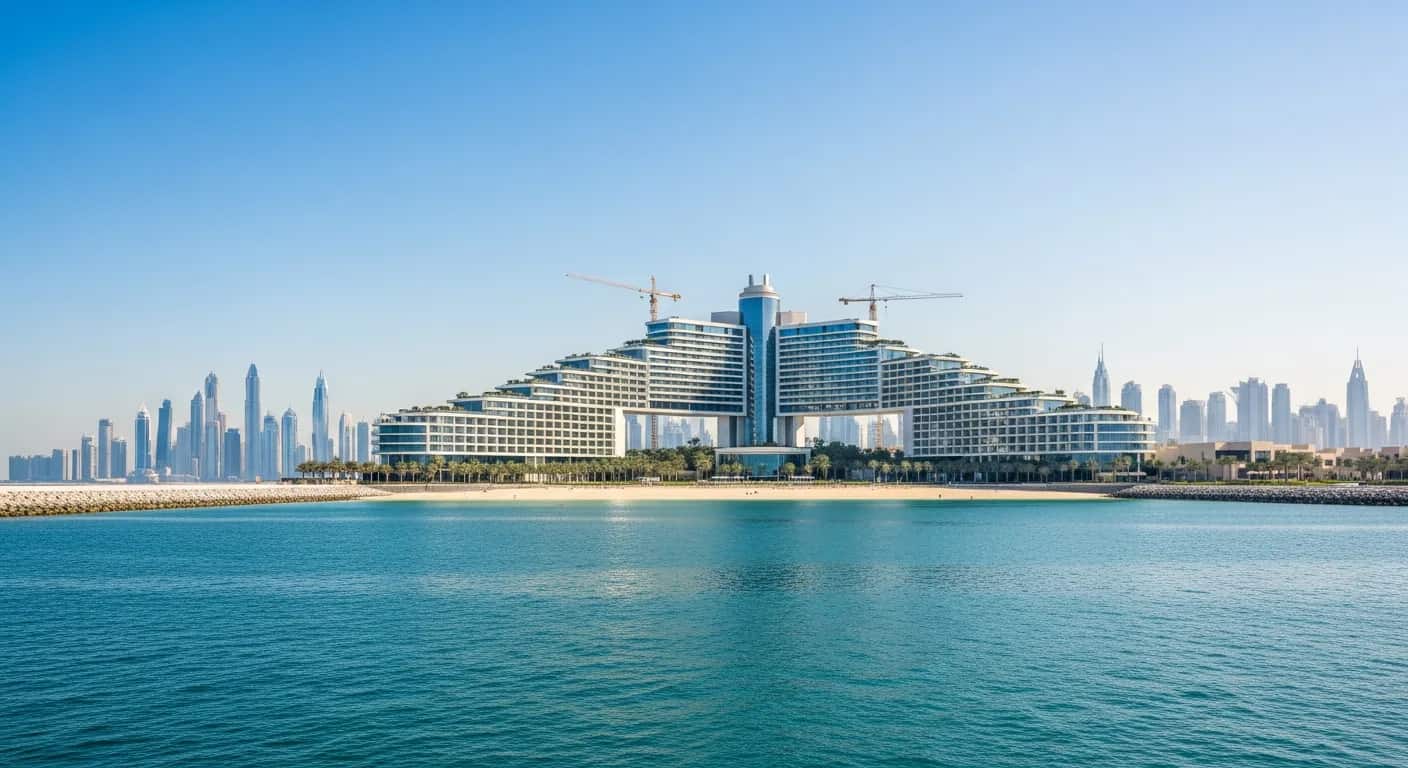
Branded Residences: Value vs Hype in Dubai
Dubai's skyline is filling with famous luxury names, but does a brand on a building guarantee a better investment? I'll cut through the marketing to reveal the true financial picture.

From Bugatti to Bvlgari, Armani to Aston Martin, it seems every luxury brand now has a residential tower in Dubai. This surge in branded residences has redefined the city's premium property market, but it also presents a complex choice for discerning buyers and investors. My role here isn't to be swayed by the glossy brochures; it's to help you separate the genuine investment value from the marketing hype.
Here’s the analytical framework we'll use to dissect the proposition:
- Defining 'Branded Residences': What the term actually means in practice.
- Quantifying the 'Brand Premium': How much extra are you paying, and why?
- The Investor's Calculus: Does the premium translate to better capital growth and yield?
- The True Cost: A detailed, line-by-line breakdown of all associated expenses.
- Branded vs. Non-Branded: A direct comparison in prime Dubai locations.
- The Lifestyle Equation: Moving beyond numbers to the user experience.
- My 'Hype Meter' Checklist: Red flags and critical questions to ask before you buy.
- Final Verdict: My considered opinion on who should buy, and when.
What Exactly Is a ‘Branded Residence’?
At its core, a branded residence is a formal partnership between a real estate developer and a brand — typically one from outside the property sector. The brand grants the developer a license to use its name, logo, and design ethos in a residential project. In exchange, the developer pays a licensing fee and must adhere to strict brand standards for design, quality, and, most importantly, service. It’s a far more integrated concept than simply naming a building 'The Luxury Tower'. It implies a specific, contractually obligated level of quality and experience. This is the foundation of the entire `luxury property Dubai value` proposition.
There are three main models you'll encounter in the Dubai market. The most common and, in my view, most valuable is the hotel-integrated model. Here, the residences are co-located with a hotel from the same brand, like The Residences at Mandarin Oriental or the Four Seasons Private Residences. Residents get full access to the hotel’s amenities — spa, restaurants, housekeeping, concierge, and a smooth, five-star living experience. These properties can often be placed into the hotel's rental pool, offering a turnkey management solution for investors. Examples of this are widespread across Palm Jumeirah and Business Bay.
The second model is the standalone residence with hotel-brand management. These buildings are not attached to a hotel but are managed by a hospitality company, which provides the services. Jumeirah Living in Dubai Marina is a prime example. You get the concierge, housekeeping, and management standards of a Jumeirah hotel, but in a purely residential building. This offers a bit more privacy than a hotel-co-located property. The key here is that the brand is actively involved in the day-to-day operation of the building, which is where the real value lies.
Finally, we have the most recent and, I would argue, most speculative category: the non-hospitality brand. This is where fashion, automotive, or jewellery brands like Bvlgari, Bugatti, or de GRISOGONO lend their names to projects. Bvlgari has partnered with Meraas to great success on Jumeira Bay Island, but they also have a hospitality arm, which provides the service backbone. The newer partnerships, such as Bugatti with Binghatti, are more novel. Here, the value proposition is based on design, exclusivity, and brand affiliation rather than a proven service model. As an investor, you must ask: what tangible, long-term service is being provided once the building is complete? Is it a true service ecosystem, or just an exercise in interior design and marketing? The answer separates a durable investment from a fad.
The ‘Brand Premium’ Quantified
 Featured project
The first thing any potential buyer notices is the price. Branded residences command a significant price premium over comparable non-branded properties in the same location. This isn't a perception; it's a market reality. While there is no official index, market analysis and our own transaction experience at Gaia Living suggest this premium typically ranges from 25% to 40%. However, for ultra-luxury, first-of-its-kind projects in prime locations, this premium can soar to 100% or even higher compared to the neighbourhood average. This is the entry fee for the `high-end real estate Dubai analysis`.
So, what are you paying for? The premium is a composite of tangible and intangible factors. The tangible part is easier to justify. It includes higher-quality finishes and materials specified by the brand, a much more extensive list of amenities (think private cinemas, resident-only lounges, golf simulators, world-class spas), and the cost of the professional staff — concierge, valet, security, who provide the five-star service around the clock. These things have a real cost, which is passed on to the buyer. The developer also has to pay a significant licensing fee to the brand, which is factored into the unit price.
Then there's the intangible value, which is harder to quantify but equally important to the buyer profile these projects attract. This is the value of the brand itself: the prestige, the assurance of quality, and the sense of belonging to an exclusive club. For a global high-net-worth individual, buying a Four Seasons residence is a known quantity. They understand the level of service they will receive, whether they are in London, New York, or Dubai. This 'peace of mind' and consistency is a powerful sales driver. There's also a 'trophy asset' component; owning a home designed by a famous architect and branded by an iconic name has an emotional and social value that, for some, justifies the price tag.
However, as an analyst, I urge caution. It's crucial to deconstruct this premium. Is the 30% premium on a property in Downtown Dubai truly justified by superior construction and services, or are you paying 20% for the brand name and 10% for the actual substance? For example, comparing a branded residence to a top-tier unbranded building by a developer like Emaar Properties in the same area is a vital exercise. Emaar's luxury towers like those in the Opera District offer exceptional quality and amenities. The 'brand premium' is the difference between that Emaar tower and the branded one next door. You need to be convinced that the additional services and brand association are worth that specific delta to you, whether as an end-user or an investor.
The Investor's Calculus: Does the Premium Pay Off?
This is the million-dollar — or rather, multi-million-dirham, question. For an investor, the brand premium is only justified if it leads to superior financial returns, either through higher capital appreciation, stronger rental yields, or both. The answer is nuanced and depends heavily on the specific project and market conditions. This is where we must compare `branded vs non-branded property Dubai` from a purely financial perspective.
Let's first look at capital appreciation. The common argument is that a strong brand makes a property more resilient during market downturns and helps it appreciate faster in upswings. There is some truth to this. The scarcity and prestige of top-tier branded projects mean they tend to have a flight-to-quality appeal. When the market softens, buyers become more selective, and a trusted brand can be a key differentiator. However, I would argue that location and developer reputation are still the primary drivers of long-term capital growth in Dubai. A branded residence in a secondary location will not outperform a high-quality non-branded building in a prime spot like City Walk or Bluewaters Island. Beyond that, the high premium you pay upfront means the property has to appreciate significantly just for you to break even on that premium when you sell. The next buyer must also be willing to pay that premium, which is not always guaranteed.
Rental yield is where the investment case for branded residences can be more compelling, but it requires careful analysis. On the surface, the potential for higher rental income is clear. These properties command higher rents due to their luxury finishes, extensive amenities, and the brand's marketing power. If the property is part of a hotel's rental pool, it benefits from the hotel's global distribution system and corporate client base, often leading to higher occupancy rates than a standard residential lease. A short-term rental model, managed by the hotel, can generate significantly higher gross revenue than a one-year tenancy contract. This is a key component of the `branded residences Dubai investment` strategy.
However, you must look at the *net* yield, not the gross. This is where many investors get tripped up. Branded residences come with two major costs that eat into your returns. First, as we'll explore in the next section, service charges are substantially higher. Second, if you place your property in the hotel rental pool, the management fee is not a nominal amount. The operator typically takes a revenue share, which can be anywhere from 40% to 60% of the gross rental income. This fee covers all marketing, management, housekeeping, and operational costs. So, while your apartment might generate AED 600,000 in gross annual rent, after the operator takes their 50% cut, you are left with AED 300,000, from which you still need to pay your service charges. The headline rental figures are enticing, but the net figure in your bank account is what matters.
“The real test of a branded residence isn't the name on the door, but the net operating income it generates after the brand has taken its sizable cut.”
The True Cost of Branded Living: A Line-by-Line Breakdown
To truly understand the investment, you must move beyond the purchase price and calculate the total cost of acquisition and ownership. The marketing materials will highlight the glamour, but the Sales and Purchase Agreement (SPA) and the community management statements reveal the true financial commitment. Let's create a realistic, line-by-line cost breakdown for a hypothetical AED 10 million branded apartment in a prime Dubai location, purchased on the secondary market.
Upfront Acquisition Costs: This is a non-negotiable list of costs mandated by Dubai law and market practice. When we at Gaia Living prepare a closing statement for a client, these are the exact figures we work with.
- Purchase Price: AED 10,000,000
- Dubai Land Department (DLD) Transfer Fee: 4% of the purchase price = AED 400,000
- DLD Admin Fees: Approximately AED 4,200 (for properties over AED 500k)
- Real Estate Agency Fee: 2% of the purchase price + 5% VAT = AED 210,000
- Trustee Office Fee: For the transfer registration, typically AED 4,200
- Developer's No-Objection Certificate (NOC) Fee: This can range from AED 500 to AED 5,000, payable to the master developer.
Total Upfront Cost: Approximately AED 10,619,400. This means your initial cash outlay is over 6% higher than the property's ticket price. This is before any mortgage-related fees if you are financing the purchase. For off-plan launches, the structure is different (DLD fees are paid, but agency fees are often covered by the developer), but the principle remains.
Ongoing Ownership Costs: This is where branded residences diverge most sharply from their non-branded counterparts. The service charges are the most critical figure to examine.
- Service Charges: For a standard high-quality apartment building in Dubai, you might expect service charges of AED 15-25 per square foot per year. For a branded residence, this figure is often between AED 30 and AED 60, and can sometimes be even higher. Let's assume a rate of AED 40 per sq. Ft. for our example apartment of 2,000 sq. Ft.
- Annual Service Charge: 2,000 sq. Ft. x AED 40/sq. Ft. = AED 80,000 per year.
- Management/Rental Pool Fees: If you opt into the managed rental program, this is the largest ongoing cost. As mentioned, a 50/50 revenue split with the hotel operator is common. This is not a fee on top of rent; it's a division of the top-line revenue.
- Other Costs: You are also responsible for standard utilities (DEWA), and any maintenance inside your apartment that isn't covered by the service charge or rental management agreement.
When you run the numbers, you can see how the high ongoing costs can significantly impact your net yield. An AED 80,000 annual service charge is a substantial hurdle to overcome before you see a profit. This financial diligence is the most important part of any serious `high-end real estate Dubai analysis`.
Branded vs. Non-Branded: An Apples-to-Apples Comparison
To make this tangible, let's move from the hypothetical to a real-world scenario. Consider the area around Downtown Dubai and Business Bay, a hotspot for the `Dubai premium residential market`. Here, you have a dense concentration of both branded and non-branded luxury towers, giving us a perfect laboratory for comparison.
Let’s compare two similar high-floor, two-bedroom apartments of around 1,500 sq. Ft. with Burj Khalifa views. One is in a well-known hotel-branded tower in Business Bay, and the other is in a premium, non-branded tower by Emaar, like IL Primo or Opera Grand in the Opera District, which is part of Downtown. The Emaar building is still the gold standard of luxury, with incredible amenities, build quality, and location. It's the perfect control subject for our experiment.
First, the price. The apartment in the branded tower might be listed for, say, AED 6 million. The comparable apartment in the Emaar tower might be listed for AED 4.8 million. That's a 25% brand premium of AED 1.2 million right at the start. As a buyer, you must ask what that AED 1.2 million buys you. The branded residence will offer services like in-room dining, daily housekeeping (at a cost), and a more globally recognized concierge service. The Emaar building will have a fantastic pool, gym, and its own high-quality concierge, but it won't have the integrated hotel services.
Next, let’s examine the ongoing costs. The Emaar tower's service charges might be around AED 22 per sq. Ft., amounting to AED 33,000 per year for our 1,500 sq. Ft. apartment. The branded residence's service charges are likely closer to AED 35 per sq. Ft., totaling AED 52,500 per year. That's an extra AED 19,500 every year, just to keep the lights on for the enhanced amenities.
Now, let's model the rental returns. The Emaar apartment might rent for AED 300,000 per year on a standard tenancy. After service charges, your gross income is AED 267,000, a gross yield of 5.5% on your AED 4.8M purchase. The branded residence, perhaps using a short-term rental model, might generate a gross revenue of AED 450,000. This looks fantastic on paper. But then the hotel operator takes their 50% cut (AED 225,000). Your revenue is now AED 225,000. From that, you pay your AED 52,500 service charge, leaving you with a net income of AED 172,500. This is a net yield of just 2.8% on your AED 6M investment. In this scenario, the non-branded property, with its lower purchase price and running costs, provides a superior investment return. The convenience and gross income of the branded unit came at a very high price.
The User Experience: Are You Buying a Home or a Hotel Suite?
So far, our analysis has been financial. But for many, especially end-users, the decision to buy a branded residence is emotional and lifestyle-driven. If the numbers are so challenging, why is demand so high? Because for a certain type of buyer, the value proposition transcends spreadsheets. The `luxury property Dubai value` is not just financial; it's experiential.
For the busy executive, the frequent traveller, or the high-net-worth family looking for a turnkey vacation home, a branded residence offers unparalleled convenience. It's the concept of 'lock and leave' perfected. You can leave your property for six months, knowing it is secure, maintained, and will be pristine when you return. The concierge can handle everything from stocking your fridge before you arrive to booking restaurant reservations and managing deliveries. This hassle-free lifestyle is, for many, the ultimate luxury, and they are willing to pay the premium for it.
These properties also offer a curated community. You are living among peers who value the same level of service and discretion. The resident-only lounges, pools, and events foster a sense of community that is different from a standard apartment building. It’s an environment designed for privacy and comfort, which is a significant draw. The built-in amenities mean your home extends far beyond your front door. The spa, the gym, the fine-dining restaurants — they are all part of your living space.
However, this lifestyle isn't for everyone. There are trade-offs to consider. Living in a hotel-integrated development can sometimes feel transient and impersonal. You may have less privacy, with a constant flow of hotel guests in the shared areas. There are often stricter rules and regulations regarding renovations, decorations, and even guest policies, as the brand must maintain a consistent aesthetic and experience. If you are someone who wants to put a unique stamp on your home, a branded residence might feel restrictive. You are buying into a specific, pre-packaged version of luxury, not creating your own. This is a crucial point for potential buyers to consider: are you looking for a home to personalize, or a high-end service platform to live in?
My ‘Hype Meter’ Checklist: Red Flags to Watch For
As a prospective buyer navigating this complex market, you need a filter to distinguish genuine opportunities from cleverly marketed liabilities. Over the years, I've developed a mental checklist to evaluate any `branded residences Dubai investment`. I advise our clients at Gaia Living to use this same critical lens.
Here are the key questions you must ask:
- Who is the developer? This is always my first question. The brand is the sizzle, but the developer is the steak. A world-class brand cannot save a building constructed by a developer with a poor track record of quality or delivery. Look for established names with a history of delivering exceptional projects on time, like Emaar Properties, Meraas, or Nakheel. Their reputation underpins the long-term structural integrity and value of your asset.
- What is the nature of the brand partnership? Is it a deeply integrated management agreement with a proven hospitality operator like Four Seasons, Mandarin Oriental, or Jumeirah? Or is it a more superficial licensing deal with a fashion or automotive brand that has no experience in managing properties? The former provides tangible, ongoing service value. The latter may just be a marketing gimmick that fades over time.
- Is the location A+? Real estate fundamentals never change. A premium brand cannot compensate for a sub-par location. The most successful branded residences are in irreplaceable locations: waterfront, with iconic views, or at the heart of a vibrant district. A branded tower in a developing area carries significantly more risk.
- Have you read ALL the fine print? You must scrutinize the SPA and all associated documents. What are the exact service charges, and what is the mechanism for increasing them? What are the terms of the rental management agreement? What are the revenue splits, and what costs are you responsible for? Crucially, what is the duration of the branding agreement, and what happens if the brand pulls out?
- How does it stack up against non-branded alternatives? Do the apples-to-apples comparison we discussed earlier. Go and visit the best non-branded building in the same neighbourhood. Understand its quality, amenities, and costs. Only then can you make an informed decision about whether the brand premium for the other property is truly worth it.
The most successful branded residence investments are those where a world-class hospitality brand partners with a top-tier developer in an irreplaceable location. Anything less than that trifecta significantly increases the risk that you are overpaying for marketing hype.
Final Verdict: Is a Branded Residence in Dubai a Smart Investment?
After dissecting the premiums, the costs, and the lifestyle, what is my final verdict? As with most significant investments, the answer is not a simple yes or no. It is, and always will be, 'it depends'. But it depends on a very specific set of criteria that I can now lay out clearly.
For the pure end-user, the high-net-worth individual or family for whom the ultimate convenience, security, and luxury service are the primary goals, a branded residence can be an excellent choice. If the financial premium is a rounding error in your wealth and the value you place on a hassle-free, five-star lifestyle is paramount, then yes, it is absolutely worth it. You are buying a service and an experience as much as you are buying real estate. For this buyer profile, the top-tier projects from brands like Four Seasons, The Ritz-Carlton, or One&Only in prime locations like the Palm Jumeirah or near the Dubai Marina represent the pinnacle of Dubai living.
For the pure investor, whose sole objective is to maximize financial returns, the picture is far more complex. The high entry premium and substantial ongoing costs can significantly compress net yields and create a higher hurdle for capital appreciation. In my professional opinion, a shrewd investor can often achieve a better pure ROI by purchasing a high-quality, non-branded property from a Grade-A developer in the same prime location. The lower acquisition cost and more manageable service charges often lead to a healthier net yield and a more favourable risk/reward profile for capital growth.
The sweet spot, the scenario where a branded residence makes sense for an investor, is a specific niche. It's for the investor who also wants personal use of the property, who values the turnkey management solution, and who is buying into the very best-in-class projects. The investment works when the brand is a top-tier hospitality operator, ensuring the property can command high occupancy and rates in the rental pool. It works when the developer is unimpeachable, guaranteeing the asset's quality. And it works when the location is iconic and supply is limited. When these three elements align, the brand premium is justified by a degree of scarcity and operational excellence that is difficult to replicate, potentially leading to both a wonderful lifestyle asset and a solid long-term investment.
Ultimately, the decision rests on understanding exactly what you are buying. You are not just buying a name. You are buying a specific bundle of location, quality, amenities, and, most importantly, services. The key to a successful investment in this segment is to look past the brand on the facade and analyze the substance of the operation within. Do that, and you'll be investing, not speculating.
Sources
- Dubai Land Department (DLD): dubailand.gov.ae
- Real Estate Regulatory Agency (RERA): rera.gov.ae
- UAE Central Bank (for mortgage regulations): centralbank.ae
- The Official Portal of the UAE Government: u.ae
Questions, answered
- What is the 'brand premium' for a branded residence in Dubai?
- The brand premium is the extra amount buyers pay for a branded property compared to a similar non-branded one in the same area. This can range from 20% to over 100% for ultra-luxury brands, reflecting the cost of services, amenities, and brand association.
- Are service charges higher in branded residences?
- Yes, service charges are significantly higher in branded residences. This is to cover the extensive five-star amenities, concierge services, and higher maintenance standards. Expect to pay anywhere from AED 25 to over AED 60 per square foot annually, compared to AED 15-25 for high-quality non-branded buildings.
- Do branded residences in Dubai offer better rental yields?
- They can achieve higher gross rental income due to premium branding, services, and access to hotel rental pools. However, the net yield can be lower than anticipated after accounting for higher service charges and hefty revenue-share management fees (often 40-50%). A careful calculation of all costs is essential.
- Is the developer or the brand more important when investing?
- In my view, the developer's track record is more critical. A reputable developer like Emaar or Meraas guarantees a certain level of quality and delivery, which underpins the long-term value of the asset. The brand adds a layer of service and desirability, but it cannot compensate for a poorly constructed or managed building.
- What happens if the brand management agreement ends?
- This is a critical risk to consider. If the contract between the developer and the brand is terminated, the property could lose its 'branded' status, potentially impacting its value and rental appeal. It's crucial to review the terms of the management agreement in the SPA to understand its duration and exit clauses.
- Can I get a mortgage for a branded residence in Dubai?
- Yes, branded residences are eligible for mortgages, subject to the same UAE Central Bank regulations as other properties. This typically means a minimum 20% down payment for residents and 50% for non-residents on the first property, though lenders may have stricter criteria for ultra-high-value units.

Omar tracks the announcements that move the market — new launches, regulation, mega-projects, and developer moves — and tells you what they actually mean for buyers.
Related stories
Dubai 2040: A Land Use and Investment Blueprint
A deep dive into the Dubai 2040 Urban Master Plan, analysing specific zoning changes and land use designations to reveal the next generation of property investment hotspots.
Beyond the Blueprint: The Retail Value Multiplier
It's a simple truth of Dubai real estate: proximity to quality retail and leisure isn't just a perk, it's a powerful driver of property value. I'll explain how operational hubs are creating measurable premiums for investors and residents.
Your Dubai Home Setup Guide
A step-by-step guide for new Dubai homeowners on connecting utilities, setting up essential services, and integrating into your new community.
Echoes, in your inbox
One thoughtful email a month. Market insight, new launches, no spam.