

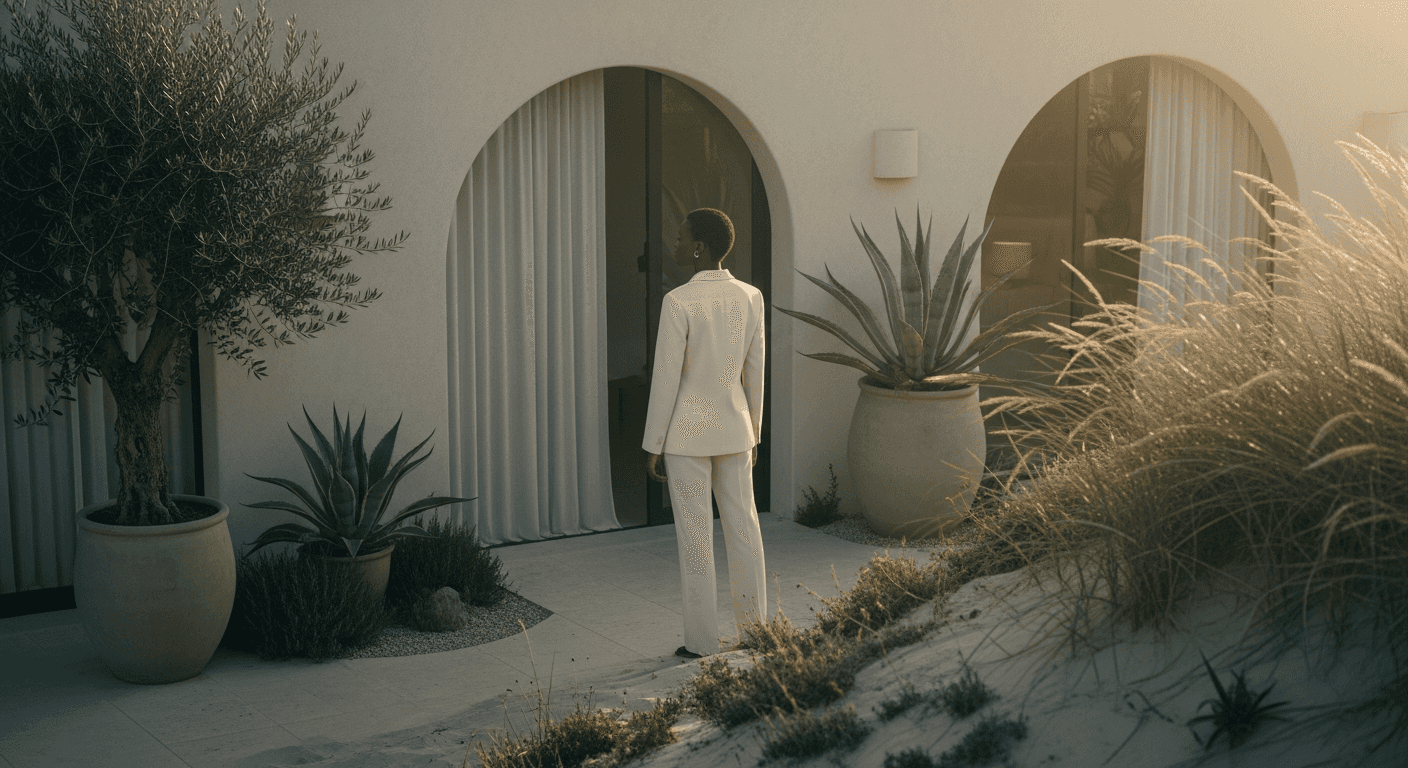
Boutique Living: High Fashion Meets Your Front Door
For a new class of Dubai resident, luxury is no longer just about square footage. It's about living in a world where your front door opens directly into the city's most exclusive retail and lifestyle experiences.

I’ve spent years watching Dubai’s definition of luxury evolve. What once was a simple equation of size and exclusivity — a sprawling villa behind high walls, has transformed into something far more nuanced. Today, for a discerning group of buyers, true luxury is about proximity, curation, and the smooth fusion of life and style. It's about living in a home that isn’t just near the best a city has to offer, but is an active participant in it. This is the world of boutique living, where Dubai's high fashion truly meets your front door.
Here's what we'll explore in this deep dive:
- The core concept of 'Boutique Living' beyond just a good location.
- A look at Downtown Dubai: The original blueprint for integrated luxury.
- The urban chic appeal of City Walk and its human-scale design.
- The waterfront elegance of Bluewaters Island and its resort-style retail.
- Branded residences: The ultimate fusion of fashion, hospitality, and real estate.
- The financial reality: A line-by-line analysis of the premium for this lifestyle.
- My personal verdict: Is the convenience and atmosphere worth the significant cost?
Redefining Luxury as Curated Experience
For many of us in the property world, the most interesting conversations are about the 'why' behind a client's choice. Increasingly, I find that 'why' is less about owning a piece of the skyline and more about owning a piece of a specific, curated lifestyle. This is the essence of boutique living. It’s a philosophy of place-making where every element — from the architecture and interior finishes to the cafes, galleries, and shops at your doorstep, is meticulously planned to create a cohesive, high-quality experience. You aren't just buying an apartment; you are buying into a neighbourhood that functions like a private club.
This marks a fundamental shift from Dubai's earlier development models. The classic suburban communities like Arabian Ranches or Jumeirah Golf Estates offer fantastic family living, space, and greenery, but they are built on a car-centric model of connectivity. You live there, but you drive elsewhere for high-end shopping, dining, and culture. The new model of `fashion district living Dubai` collapses that distance. It presumes that for its target resident, access to premium retail and F&B isn't an occasional outing; it's an integral part of their daily or weekly rhythm. It's the ability to decide on a whim to browse the new collection at a favourite designer, meet a friend for coffee at a chic cafe, or walk to a world-class dinner, all without getting in a car.
Developers like Emaar Properties and Meraas have become masters of this universe-building. They don't just build towers; they build ecosystems. They understand that the value of an apartment in one of their projects is intrinsically linked to the quality and appeal of the public realm they create around it. This is why they invest so heavily in landscaping, public art, event programming, and attracting the right mix of retail tenants. It’s a holistic approach that creates a powerful sense of place and, for residents, a powerful sense of belonging. The home becomes a sanctuary within a vibrant, amenity-rich campus, offering both privacy and unparalleled `premium retail access`.
The Epicenter: Downtown Dubai's Integrated Kingdom
If you want to understand the blueprint for large-scale integrated living in Dubai, you have to start with Downtown Dubai. What Emaar created here over the last two decades is nothing short of a city within a city. It’s the benchmark against which all other `high-end retail districts property` is measured. The genius was not just building the world's tallest tower and the world's largest mall; it was weaving them into the fabric of a residential community. The Dubai Mall isn't just a shopping centre for residents; it's their town square, their pantry, their entertainment hub, and their extended living room.
Living in a tower like the Burj Vista or Opera Grand redefines convenience. An air-conditioned walkway connects you directly to Fashion Avenue's hundreds of luxury brands. Your concierge can book a table at one of the dozens of restaurants with a view of the Dubai Fountain. The Dubai Opera is a short walk away. This level of integration creates a frictionless lifestyle that is incredibly attractive. You eliminate commute times for leisure, replacing them with more time to actually enjoy the amenities you're paying a premium for. This is what attracts a global audience, from the international executive who needs a turnkey lifestyle to the family that wants urban living without sacrificing convenience.
Of course, this kingdom comes at a royal price. A one-bedroom apartment in a prime Downtown tower can range from AED 1.8 million to over AED 2.5 million, with two-bedrooms easily commanding AED 3 million to AED 5 million or more, depending on the view and the building's prestige. The ongoing costs are also significant. Service charges in premium Downtown towers are typically in the range of AED 25 to AED 35 per square foot annually. For a 1,200 sq. Ft. two-bedroom apartment, that's an annual bill of AED 30,000 to AED 42,000. However, as we at Gaia Living always explain to our clients, you have to look at what you get for that fee: world-class swimming pools, state-of-the-art gyms, 24/7 concierge and security, and the immaculate maintenance of the entire Downtown ecosystem. You are paying for a five-star living standard, and the service charges reflect that reality.
The Urban Village: City Walk's Boutique Charm
If Downtown Dubai is the grand, operatic performance of integrated living, then City Walk is the intimate, jazz club version. Developed by Meraas, this district took the lessons from Downtown and reinterpreted them on a more human scale. It swaps soaring skyscrapers for chic, low to mid-rise residential buildings, and trades the sheer scale of the Dubai Mall for a curated collection of boutique shops, edgy brands, and unique concept restaurants set along open-air, walkable boulevards. It has a distinctly European feel, fused with a contemporary, artistic Dubai spirit.
The atmosphere here is completely different. It's less about overwhelming spectacle and more about discovering hidden gems. The street art, the central park area, the seasonal pop-ups — it all contributes to a sense of a living, breathing neighbourhood. This appeals to a demographic that I find is often younger, more design-conscious, and values a certain understated cool over overt glamour. They are buying into a community that reflects their aesthetic tastes. The residences themselves, particularly in newer phases like Central Park at City Walk, are designed to merge smoothly with the green spaces, creating an oasis in the heart of the city.
This curated cool commands a premium that is very much in line with its prime Jumeirah location and unique proposition. A one-bedroom apartment in City Walk will typically start north of AED 2 million, while two-bedroom units can range from AED 3.5 million to AED 4.5 million. The rental market is equally robust, attracting well-compensated professionals and creatives who want a turnkey lifestyle. What's interesting here is the trade-off. You might not have a direct view of the Burj Khalifa's fireworks, but your 'backyard' is a beautifully landscaped park, and your 'local shop' is a high-end French patisserie or a niche Japanese fashion label. For the right person, that trade is more than worth it. It’s an environment that encourages you to live locally, to walk, to explore, and to feel like a resident of a village rather than just an inhabitant of a tower.
You're not just buying square footage near a mall; you're buying a membership to a lifestyle where the city's best is your lobby.
The Island Retreat: Bluewaters and Waterfront Retail
Taking the concept of an integrated lifestyle destination to its next logical step, Meraas created Bluewaters Island. Here, the boutique living experience is given an exclusive, resort-like wrapper. It’s an entire island dedicated to a high-end residential, hospitality, and leisure experience, physically separate from the mainland yet smoothly connected. The presence of the Ain Dubai provides a spectacular visual anchor, but the real draw is the atmosphere of cloistered, waterfront calm combined with vibrant, sophisticated retail and dining at The Wharf.
Living on Bluewaters is a different proposition entirely. It’s for the buyer who wants the `Dubai luxury shopping homes` experience but with a dose of seaside serenity. The residential offerings consist of premium low-rise apartment buildings, penthouses, and a handful of townhouses, nearly all of which offer stunning views of the sea, the marina skyline, or the Ain Dubai itself. The feeling is one of being on a permanent holiday. Your morning walk is along a pristine promenade, your local beach club is the world-renowned Cove Beach, and your evening dining options range from Michelin-starred concepts to casual chic eateries overlooking the water. It’s an incredibly compelling package for high-net-worth individuals seeking a primary or secondary home in Dubai.
This level of exclusivity and waterfront living is positioned at the top of the market. A two-bedroom apartment on Bluewaters can easily trade for between AED 4.5 million and AED 7 million, while larger units and penthouses command significantly more. This is one of the city's most `exclusive shopping neighbourhoods`, where the residential offering is inseparable from the leisure experience. The island’s connection via a pedestrian bridge to Jumeirah Beach Residence also adds another layer of appeal, offering residents easy access to the bustling energy of The Walk and The Beach, should they desire it. In my view, Bluewaters represents a masterclass in creating a self-contained luxury ecosystem. It caters to those who want the best of both worlds: the peace of an island retreat and the vibrancy of a world-class retail destination just steps away.
The Ultimate Statement: Branded Residences
At the absolute peak of the fusion between lifestyle and property are branded residences. This is where a luxury brand — be it from the world of high fashion, jewellery, hospitality, or even automotive, lends its name, aesthetic, and service standards to a residential development. This is more than a simple marketing gimmick; it's a deep collaboration that influences everything from the architectural design and lobby scent to the materials used in your kitchen and the training of the concierge staff. It is the ultimate expression of `fashion district living Dubai`.
Dubai is a global leader in this space. Think of the Armani Residences inside the Burj Khalifa, where Giorgio Armani himself oversaw every detail of the design to reflect his minimalist, elegant philosophy. Or consider the Bvlgari Residences by Meraas in Jumeira Bay, which come with access to the exclusive Bvlgari Yacht Club and resort facilities. More recently, we’ve seen a surge of new entrants, like the Cavalli Tower by Damac with its opulent, high-fashion interiors, and even concepts like the Mercedes-Benz Places by Binghatti, which aim to translate the principles of automotive engineering and luxury into a living space. These projects are not just homes; they are collectible assets, physical embodiments of a brand's ethos.
The buyer for a branded residence is unique. They are often brand loyalists or ultra-high-net-worth individuals who value the turnkey nature, the guaranteed quality, and the unparalleled level of service that comes with the name. They are paying a significant premium — often 20% to 35% or more compared to a non-branded property of similar size and location, for this assurance and exclusivity. Here’s a quick look at the trade-offs:
Pros and Cons of Branded Residences
- Pro: Unmatched Quality & Design: Interiors and finishes are typically specified by the brand, ensuring a high and consistent standard.
- Pro: 5-Star Hotel Services: Residents enjoy amenities like in-residence dining, dedicated concierge, valet, and housekeeping, managed to the brand's exacting standards.
- Pro: Status and 'Trophy' Asset Value: Ownership confers a certain prestige and the property is often seen as a stable store of value, much like a piece of art.
- Con: The Significant Price Premium: You pay a hefty surcharge for the brand name and the associated services.
- Con: Extremely High Service Charges: The cost of maintaining hotel-level services 24/7 is passed on to residents, leading to some of the highest service fees in the city.
- Con: Potential for Design Lock-in: The strong aesthetic of the brand might not be to everyone's taste and can be restrictive if you prefer to personalize your space heavily.
For the right individual, these are not homes in the traditional sense. They are fully serviced private suites within a larger luxury ecosystem, offering the ultimate in convenience and status.
The Bottom Line: A Cost Analysis of Premium Access
It’s easy to get swept up in the lifestyle, but my job is to ground the dream in financial reality. The premium for this level of integrated living is real, and it appears in both the upfront purchase price and the ongoing running costs. To understand this clearly, let's walk through a hypothetical purchase of a two-bedroom apartment in a prime community like City Walk. This exercise is crucial for any serious buyer to understand the total capital outlay beyond the sticker price.
Let’s assume a purchase price of AED 3,500,000. The associated government and administrative fees, mandated by Dubai's transparent regulatory framework, are non-negotiable.
Sample Upfront Cost Breakdown for a Resale Property:
- Purchase Price: AED 3,500,000
- Dubai Land Department (DLD) Fee (4%): AED 140,000. This is the standard government transfer fee, as stated by the Dubai Land Department (DLD).
- DLD Registration Fee: AED 4,200 (for properties over AED 500,000).
- Real Estate Agency Fee (2% + 5% VAT): AED 73,500. This is a standard market rate for the service we provide in sourcing, negotiating, and managing the transaction.
- Trustee Office Fee: AED 4,200 (including VAT). This is for handling the title deed transfer.
- Developer No-Objection Certificate (NOC) Fee: Typically between AED 1,000 and AED 5,250 (including VAT). We'll use AED 5,250 for this example.
- Total Upfront Cost:AED 3,727,150
This shows that you need to budget for approximately 6.5% on top of the purchase price for immediate costs. If you are securing a mortgage, you also need to factor in the down payment. Under regulations from the Central Bank of the UAE, an expatriate buying a property under AED 5 million must provide a minimum 20% down payment, which in this case would be AED 700,000. So, your immediate cash outlay would be the down payment plus all the fees.
The costs don't end there. The annual service charges are the price of maintaining that pristine, curated environment. In a place like City Walk, charges might be around AED 22 per square foot. For a 1,600 sq. Ft. apartment, this amounts to AED 35,200 per year. In a more service-intensive branded residence or a prime Downtown tower, this could be AED 30-40 per sq. Ft., pushing the annual cost to AED 48,000 - AED 64,000. This premium is what pays for the exceptional maintenance, security, and world-class amenities. Compared to a high-quality but standalone tower in a less-integrated area like Business Bay — where service fees might be AED 16-20 per sq. Ft., the difference is clear. You are paying for the lifestyle, not just the apartment.
My Verdict: Paying for a Smooth Life
After walking through the districts, the properties, and the finances, we arrive at the ultimate question: is it worth it? From my perspective, there is no single answer. The value proposition of these boutique communities is not a universal one. For a pure investor focused solely on maximising net rental yield, the high purchase prices and substantial service charges in these areas can sometimes compress returns compared to more affordable, mid-market communities. The numbers can still work, especially given the strong rental demand and potential for capital appreciation, but it requires careful analysis.
However, these homes are not primarily built for the spreadsheet-driven investor. They are designed and built for the end-user. They are for the individual or family who measures value not just in dirhams and fils, but in time, convenience, and quality of life. For this buyer, the premium is not an expense; it's an investment in a better daily experience. It’s the value of a five-minute walk to a world-class restaurant instead of a 30-minute drive in traffic. It’s the luxury of having a beautifully maintained park as your garden, without any of the personal upkeep. It’s the security of living in an environment where every detail is managed to an impeccable standard.
In my opinion, if your life and work are centered around these dynamic parts of the city, and if you genuinely value walkability, design, and immediate access to culture and retail, then the premium is absolutely justified. You are making a conscious choice to buy into a specific, curated world that makes life easier, more enjoyable, and more beautiful. The trend towards developing these holistic, experience-driven communities is only going to accelerate. As Dubai continues to mature as a global city, the demand for this kind of thoughtful, integrated urbanism will only grow. It represents the future of luxury living, not just here, but around the world.
Key takeaway: The significant premium for homes in Dubai's premier retail-integrated districts is a direct payment for an unparalleled lifestyle. For the end-user who values convenience, community, and curated experiences, this cost provides a return on investment that transcends a simple price-per-square-foot calculation.
## Sources - Dubai Land Department (DLD) Fee Structure: https://dubailand.gov.ae/ - Central Bank of the UAE (CBUAE) Mortgage Regulations: https://www.centralbank.ae/
Questions, answered
- What defines a 'boutique living' neighbourhood in Dubai?
- These are master-planned communities prioritising a walkable, highly curated lifestyle. They feature smooth integration between residences and high-end retail, dining, and cultural venues, as seen in places like City Walk, Bluewaters Island, and Downtown Dubai.
- Are properties near major malls like Dubai Mall more expensive?
- Yes, properties with direct or walkable access to premier retail hubs command a significant price premium, often 20-30% or more. This reflects the unparalleled convenience and lifestyle benefits that come with such prime locations.
- What are the typical upfront costs when buying a luxury apartment in Dubai?
- Beyond the purchase price, you must budget for fees that total roughly 7-8% of the property's value. This includes the 4% Dubai Land Department transfer fee, a 2% real estate agency fee, plus various administrative and registration costs.
- Are branded residences like Armani or Bvlgari a good investment?
- They are considered ultra-luxury trophy assets that appeal strongly to brand loyalists and can hold their value well. However, due to their substantial price premium and high service charges, they are often purchased for the exclusive lifestyle rather than for maximising rental yield.
- How much are annual service charges in these premium retail districts?
- Service charges are notably higher than the city average to maintain the exceptional standards of the community. Expect to pay anywhere from AED 22 to over AED 40 per square foot annually, which covers superior amenities, concierge services, and meticulous upkeep of common areas.

Yusuf writes about how Dubai actually lives — waterfront mornings, community dining, walkability, and the lifestyle premium built into an address.
Related stories
Dubai's New Demographics: Reshaping Property Demand
Dubai's population is not just growing, it's changing profoundly. I'll break down how new resident profiles are shifting demand from studios to larger family homes, and what this means for investors and homebuyers.
A First-Timer's Guide to Vetting Dubai's Developers
Buying off-plan in Dubai requires more than just loving the renders. This guide walks you through the essential steps for vetting a developer's track record to protect your first property investment.
Living in the Limelight: Dubai's Cultural Neighbourhoods
Discover the premium you'll pay and the lifestyle you'll gain when you buy a home near Dubai's top arts and culture hubs. From Al Quoz to Downtown, we explore what it truly costs to live a creative life.
Echoes, in your inbox
One thoughtful email a month. Market insight, new launches, no spam.