

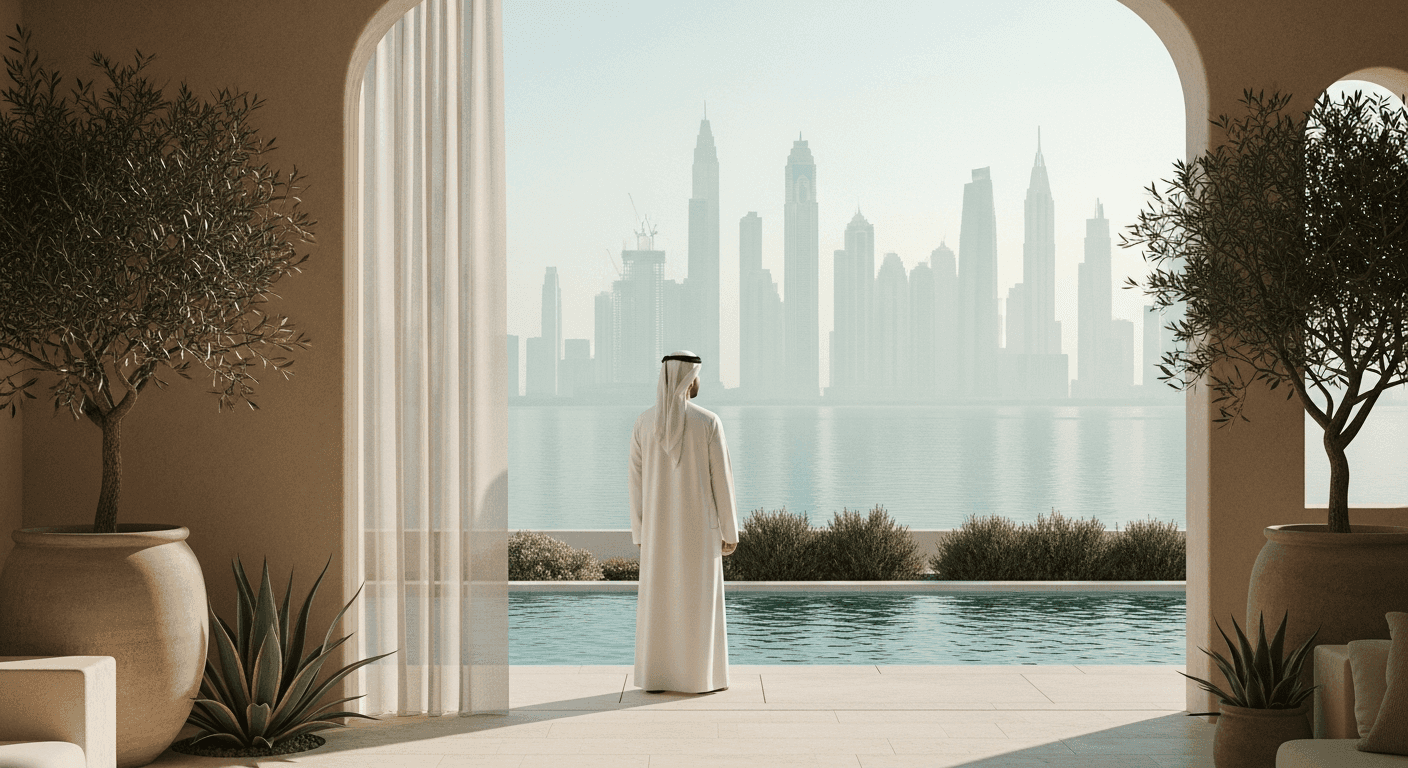
Beyond the Megatower: Dubai’s Boutique Development Scene
As Dubai's property market matures, a new class of small-scale, design-led buildings is emerging. I assess the niche appeal and investment potential of these exclusive projects.

For two decades, the Dubai property narrative was written in superlatives — the tallest, the biggest, the most audacious. But as the market matures, a quieter and more refined story is unfolding in the shadows of the megatowers. I’m talking about the rise of boutique developments, a segment that prioritizes craftsmanship, exclusivity, and design over sheer scale.
Here’s what we will explore:
- What ‘boutique’ really means in the context of the Dubai property market.
- The key market forces driving the demand for these smaller, more exclusive projects.
- The powerful appeal for end-users: why discerning residents are seeking them out.
- The investment case for *niche property investment Dubai*, from rental premiums to capital growth.
- A complete, line-by-line cost breakdown for purchasing a boutique apartment.
- A spotlight on the pioneering developers and specific projects defining this space.
- The risks and potential downsides that every serious investor must consider.
- My final verdict on whether this growing niche is the right fit for your portfolio.
Defining 'Boutique' in a City of Superlatives
First, we need a clear definition. In a city where a standard project can house thousands of residents, what makes a building 'boutique'? The term is often misused by marketing departments, but for me, and for the discerning clients we work with at Gaia Living, it signifies a clear and distinct philosophy. It is not simply about being small, although a low unit count — typically under 100 and sometimes as few as 10 or 20, is a fundamental characteristic. The true essence of a boutique development lies in its intentionality and its rejection of the mass-market formula.
Think of it as the property equivalent of haute couture versus ready-to-wear. The large-scale master developers like Emaar Properties or Nakheel are masters of creating vast, successful communities with a consistent, replicable, and highly efficient model. A boutique developer, on the other hand, is more of an artisan. Their projects are often born from a singular vision, focusing on creating a unique living experience. The architecture is bespoke, not template-driven. Interior finishes that would be considered ‘upgrades’ in a master development are standard specifications here. Layouts are more varied and thoughtful, designed to maximize light, views, and liveability rather than simply fitting the maximum number of units onto a floor plate.
Consider a project like Muraba Residence on the eastern crescent of the Palm Jumeirah. Developed by Muraba, it contains just 46 apartments and 4 penthouses. Its design, by Pritzker Prize-winning architects RCR Arquitectes, is minimalist and meticulously focused on framing the sea and skyline views. Every detail, from the light filtering through the building to the smooth transition between indoor and outdoor space, is deliberate. This is a prime example of *design-led properties Dubai*. Similarly, Omniyat has carved a powerful identity in this space, with iconic projects like The Opus in Business Bay, designed by the late Zaha Hadid, or One at Palm Jumeirah. These buildings are architectural statements first and residential buildings second.
The Market Shift: Why Small is Suddenly Big
 Featured project
The emergence of the boutique segment isn't an accident; it's a direct response to the evolution of Dubai's market and its buyers. For years, the city’s growth was driven by a transient population and investors focused on yield and rapid capital gains. The product mix reflected this: vast communities of relatively standardized apartments and villas that were easy to rent and trade. Today, the demographic landscape is profoundly different, and that change is fuelling the demand for a more sophisticated product.
The most significant driver, in my view, is the increasing number of long-term residents and high-net-worth individuals choosing to make Dubai their primary home. Initiatives like the Golden Visa have been instrumental, providing stability and encouraging people to put down deeper roots. These residents aren't just looking for an investment asset; they are searching for a home. Their priorities are different. They value privacy, community, and a quality of life that can sometimes be diluted in a sprawling development with thousands of neighbours. They are often second- or third-time buyers in Dubai, having already experienced life in a larger tower and now seeking something more exclusive.
This maturing buyer profile has created a clear gap in the market. While the major developers continue to cater brilliantly to the mainstream, they have left an opening for smaller, more agile firms to serve this discerning niche. These boutique developers can't compete on scale, but they can win on quality, design, and attention to detail. They can take on infill plots in prime, established locations — a small parcel on the Dubai Water Canal or a rare empty spot in Jumeirah, that would be too small or complex for a mega-project. This allows them to deliver unique properties in highly desirable, supply-constrained areas, which is a powerful combination.
Finally, the post-pandemic world has accelerated this trend globally, and Dubai is no exception. We saw a dramatic shift in buyer priorities towards more space, better amenities, and a stronger sense of home. A boutique building, with its lower density and more intimate feel, directly addresses these desires. The idea of sharing a gym, pool, and lobby with hundreds of other residents has lost some of its appeal for those who can afford an alternative. The boutique proposition — premium quality in a low-density environment, has become more compelling than ever.
The End-User Appeal: Exclusivity, Design, and Community
For an end-user, the decision to choose a boutique residence over a conventional apartment is driven by a desire for a fundamentally different living experience. It's a move away from anonymity towards a more personal and curated environment. At Gaia Living, when we consult with clients considering these properties, three core themes consistently emerge: exclusivity, design, and community.
Exclusivity is perhaps the most tangible benefit. Living in a building with 50 units versus one with 500 transforms daily life. The swimming pool isn't crowded on a Friday afternoon. There is no queue for the elevator during peak hours. The concierge knows you by name. This sense of privacy and personal space is a form of luxury that is becoming increasingly sought-after in a bustling city like Dubai. It provides a sanctuary from the urban hustle, a place that feels genuinely private and controlled. This low-density living is a core part of the value proposition.
Design is the second pillar. *Design-led properties Dubai* are not about generic luxury; they are about a specific aesthetic and an uncompromising commitment to quality. Developers in this space often collaborate with world-renowned architects and interior designers to create something truly unique. The materials are top-tier — think Italian marble, German appliances, and custom millwork as standard. The layouts are often more generous and innovative, with features like double-height living rooms, expansive terraces, and thoughtful zoning that separates public and private spaces within the home. This focus on architecture and interior craftsmanship appeals to a buyer who sees their home not just as a place to live, but as an object of beauty and a reflection of their personal taste.
Lastly, there's the element of community. While it may seem counterintuitive that a smaller building would foster a stronger community, that's often exactly what happens. In a mega-tower, you can live for years without knowing your neighbours. In a boutique building, a natural sense of community tends to form among a smaller, often like-minded group of residents. You see the same faces at the pool or in the lobby, leading to a more familiar and neighbourly atmosphere. For many, particularly families or individuals moving to Dubai, this built-in sense of belonging is a significant draw, making a large city feel much more intimate and welcoming.
The Investment Thesis: Unpacking the Numbers
While the liveability of boutique buildings is clear, what about the case for *niche property investment Dubai*? As an investor, you need to look past the beautiful renderings and analyse the hard numbers. My analysis suggests that while the entry point is higher, the investment fundamentals for well-executed boutique projects are compelling, particularly for those with a long-term perspective.
The first part of the thesis rests on rental premiums. A unique, high-quality apartment in a low-density building commands a significant rental premium over a standard unit in the same area. The target tenant is not the average renter; it's a C-suite executive, a business owner, or a creative professional who values design and privacy and is willing to pay for it. In my experience, a well-positioned boutique two-bedroom apartment can achieve a 15-25% rental premium over a comparable-sized unit in a nearby mass-market tower. This helps offset the higher purchase price and can lead to very respectable net yields, especially when considering the quality of the tenant.
Capital appreciation is the second key factor. Scarcity is a fundamental driver of value in real estate. By definition, *unique apartment buildings investment* involves an asset with a finite, low supply. When it comes time to sell, your property isn't competing with dozens of identical listings in the same building. This lack of internal competition can make the asset more resilient during market downturns and position it for stronger growth during upswings. The very uniqueness that defines the property becomes its economic moat. Buyers looking for this specific type of product have very few alternatives, giving the seller significant pricing power.
Finally, the investor profile for these properties is different. This isn't typically a market for flippers or short-term speculators. It attracts patient capital — investors who understand they are buying a trophy asset. This leads to a more stable ownership base within the building, reducing turnover and helping to preserve the building's exclusive character and value over the long term. The combination of premium rental income, strong capital appreciation potential driven by scarcity, and a high-quality tenant profile makes a powerful case for including a boutique property in a diversified Dubai real estate portfolio.
“The true value of a boutique property isn't just its address or its square footage; it's its irreplaceability.”
A Worked Example: The True Cost of Buying a Boutique Apartment
To make this tangible, let's walk through the real costs of acquiring a boutique property. High-level discussions are useful, but as an investor, you need to budget for every line item. Let's assume you've identified a two-bedroom apartment in a new, high-quality boutique building in a prime canal-front location in Business Bay.
Property Details: - Property Type: 2-Bedroom Apartment - Size: 1,800 sq. Ft. - Purchase Price: AED 7,000,000
Here is a realistic breakdown of the upfront costs you would face for a secondary market transaction. These fees are largely regulated and non-negotiable.
Upfront Purchase Costs (Cash Buyer): - Purchase Price: AED 7,000,000 - Dubai Land Department (DLD) Transfer Fee: 4% of the purchase price. This is the single largest ancillary cost. The fee is mandated by the Dubai Land Department (DLD). - *Cost: AED 280,000* - DLD Administration Fees: A fixed fee for processing the transfer. - *Cost: AED 4,200 (including VAT)* - Property Registration Fee: Paid to the DLD to issue the new Title Deed in your name. - *Cost: AED 4,200 (including VAT)* - Real Estate Agency Fee: Typically 2% of the purchase price, plus 5% VAT on the fee itself. - *Cost: AED 140,000 (fee) + AED 7,000 (VAT) = AED 147,000* - Developer's No Objection Certificate (NOC) Fee: The original developer must issue an NOC to confirm there are no outstanding service charges or other liabilities. The fee varies. - *Cost: Approx. AED 1,000 to AED 5,000. Let's budget AED 1,575 (including VAT).*
Total Upfront Cost (Cash Buyer): `AED 7,000,000 (Price) + AED 280,000 (DLD) + AED 4,200 (Admin) + AED 4,200 (Reg) + AED 147,000 (Agency) + AED 1,575 (NOC) =` AED 7,436,975
As you can see, the total cash required is nearly AED 437,000 over and above the property's price. If you were using a mortgage, you would also have to factor in a mortgage registration fee (0.25% of the loan amount paid to the DLD) and bank fees. This illustrates why it is critical to have a clear understanding of all associated costs before committing to a purchase.
Spotlight on Key Players and Emerging Hubs
The boutique development landscape in Dubai is populated by a mix of established pioneers and dynamic new entrants. Understanding who is behind a project is just as important as the project itself. At the highest end of the market, Omniyat stands out. For years, they have focused exclusively on creating limited-edition, design-centric masterpieces. Projects like The Lana Residences, One at Palm Jumeirah, and AVA at Palm Jumeirah are benchmarks for *small-scale luxury projects*, often featuring collaborations with world-class hotel brands and celebrity architects.
Another key player who helped define this segment is Muraba, whose Muraba Residence on the Palm is a masterclass in understated, minimalist luxury. Their focus on light, space, and clean lines offers a distinct alternative to the more opulent styles often seen in Dubai. On the man-made island of Jumeirah Bay, you find projects that epitomize exclusivity, often with a very limited number of villas and mansions, creating one of the most prestigious addresses in the city.
Beyond these ultra-luxury pioneers, a new wave of developers is applying the boutique philosophy to more accessible price points and emerging neighbourhoods. We're seeing developers like Nabni with their Avenue Residence projects, or firms like Burtville Developments, focusing on creating higher-quality, design-focused low-rise buildings in areas like Arjan and Al Furjan. These projects stand out from the standard G+4 buildings common in these areas by offering superior finishes, more thoughtful layouts, and better amenities. For an investor, these can represent an interesting opportunity — buying a best-in-class product in a neighbourhood poised for growth. It’s a strategy of owning the premium asset in a developing location, which can pay significant dividends as the area matures.
The Downsides and Risks: A Reality Check
No investment is without risk, and the boutique segment has its own specific set of challenges that every prudent investor must weigh. My job is to provide a balanced view, and it's crucial to go into this niche with your eyes open. The allure of exclusivity and design can be strong, but it must be balanced against some hard financial and logistical realities.
The most obvious factor is the higher price per square foot. You are paying a premium for the design, the finishes, the low density, and the prime location. This is not a strategy for bargain hunters. Your entry cost will be significantly higher than for a standard apartment, which means your capital is more concentrated. This premium must be justified by the project's quality and the developer's reputation.
Service charges are another critical consideration. With fewer units to share the costs of maintaining premium amenities — a statement lobby, a temperature-controlled pool, 24/7 concierge, and lush landscaping, the annual service charge per square foot is invariably higher. While a standard tower in Business Bay might have service charges of AED 18-22 per sq. Ft., a boutique building in the same area could be AED 28-35 or even higher. For the AED 7,000,000 apartment in our example, this could mean an annual bill of AED 54,000 (at AED 30/sqft), a significant ongoing cost that impacts your net yield.
Here's a quick checklist for your due diligence:
- Developer Track Record: With smaller developers, this is paramount. Have they delivered projects before? Visit them. Scrutinise the build quality. Are they known for delivering on their promises?
- Escrow Account Compliance: Ensure the project is registered with RERA and that your payments are going into a protected escrow account. This is a non-negotiable safeguard against project failure.
- Resale Liquidity: A niche asset has a niche market. While scarcity can drive value, it can also mean a smaller pool of potential buyers when you decide to sell. Selling a unique AED 7M apartment may take longer than selling a generic AED 2M apartment. You need to be prepared for a potentially longer sales cycle.
- Location Fundamentals: Even the most beautiful building in a poor location is a poor investment. Ensure the boutique project is situated in an area with strong underlying fundamentals — connectivity, infrastructure, and future growth potential.
My Verdict: Is a Boutique Investment Right for You?
So, after weighing the pros and cons, what's my final take on boutique developments in Dubai? My view is that they represent a compelling and sophisticated evolution in the market, but they are not a one-size-fits-all solution. This is a targeted strategy for a specific type of buyer and investor.
If you are an end-user planning to make Dubai your long-term home, and you value privacy, quality, and design, then a boutique building should be at the very top of your list. The enhanced quality of life, the sense of community, and the pride of owning something truly special are powerful intangibles that, for many, will far outweigh the premium price tag. It's an investment in your lifestyle as much as it is in a financial asset.
As an investor, the case is more nuanced. If your primary goal is to maximise short-term rental yield or to flip a property quickly, this is likely not the right segment for you. The high entry cost and niche market demand a longer-term perspective. However, if you are a patient investor looking to add a high-quality, resilient, and scarce asset to your portfolio, the boutique segment offers a powerful proposition. The potential for strong capital appreciation driven by scarcity, combined with the ability to attract premium, stable tenants, makes for a solid long-term hold.
For the right profile — a discerning end-user or a patient, quality-focused investor, Dubai's boutique developments offer a chance to own a piece of the city that is as unique and individual as they are. It is a move away from the commodity market and a step into the world of collectible, legacy assets.
Sources
- Dubai Land Department (DLD): https://dubailand.gov.ae/
- Real Estate Regulatory Agency (RERA): https://www.rera.gov.ae/
- UAE Government Portal (u.ae): https://u.ae/
Questions, answered
- What defines a 'boutique development' in Dubai?
- A boutique development in Dubai is typically a small-scale project, often under 100 units, with a strong focus on unique architecture, high-end interior design, privacy, and exclusivity. It's defined more by its bespoke nature and curated living experience than by its size alone.
- Are boutique properties a good investment in Dubai?
- They can be a very good long-term investment. Their scarcity can lead to strong capital appreciation and command premium rental rates from discerning tenants. However, they come with a higher purchase price and potentially higher service charges, so they suit investors with a long-term horizon.
- Are service charges higher in boutique buildings?
- Yes, service charges are often higher per square foot in boutique buildings. This is because the costs of premium amenities, maintenance, and staff are shared among fewer residents compared to a large tower, though the quality of service is also typically superior.
- Which areas in Dubai have boutique developments?
- Prime areas like the Palm Jumeirah, Jumeirah Bay, and along the Dubai Water Canal in Business Bay are popular for high-end boutique projects. We are also seeing design-led buildings emerge in developing communities like Arjan and Al Furjan, offering a different investment entry point.
- What are the main risks of investing in a smaller Dubai developer?
- The primary risks involve project completion and quality control. It's crucial to verify the developer's track record, inspect their previous projects, and confirm the project's funds are secured in an escrow account managed by the Dubai Land Department (DLD). Sticking to developers with a proven history of delivery is the safest approach.

Omar tracks the announcements that move the market — new launches, regulation, mega-projects, and developer moves — and tells you what they actually mean for buyers.
Related stories
Dubai's Established Charm: The Case for Older Homes
In a city focused on the future, I believe the smartest move for many buyers is to look back. Dubai's seasoned communities offer space, character, and surprising value that new builds often can't match.
The True Cost of Owning a Dubai Property
Beyond the purchase price, your annual budget for a Dubai home must account for service charges, utilities, and maintenance. I'll break down every ongoing expense you need to plan for.
Calculating ROI on Dubai Rental Upgrades
As a landlord in Dubai, you can't just follow trends. I'll show you how to calculate the precise ROI of minor property upgrades to genuinely increase your rental yield.
Echoes, in your inbox
One thoughtful email a month. Market insight, new launches, no spam.