

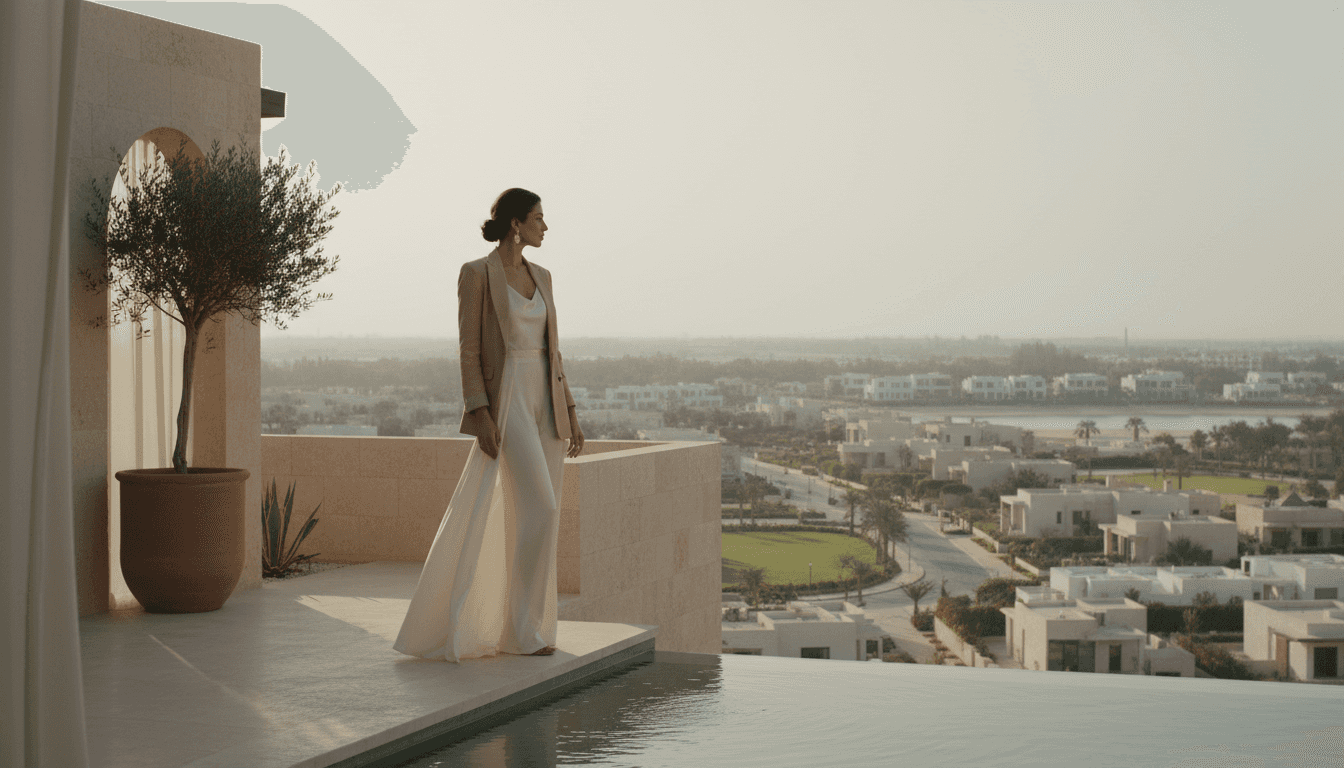
Beyond the Brochure: How Residents Shape Dubai's Best Villas
A developer's master plan is only the beginning. I explore how resident engagement creates Dubai's most sought-after villa communities, adding value far beyond the initial build.

As a communities correspondent, I've walked through countless show villas with glossy brochures in hand. But the true test of a neighbourhood isn't in the renders or the marketing slogans; it's in the lived-in reality years after the handover keys have cooled.
Here’s what I’ll be exploring:
- The legal framework: How Owners Associations empower residents.
- Case study of a mature, resident-led community.
- The tangible impact on service charges and property values.
- Fostering engagement: How communities build spirit from the ground up.
- The challenges and pitfalls of community management.
- A checklist for buyers seeking a true neighbourhood, not just a house.
- My final verdict on the 'X-factor' of community living.
The Bedrock of Engagement: Understanding Owners Associations
Before we can talk about farmers' markets and neighbourhood watch groups, we need to understand the legal structure that makes it all possible. In Dubai, the governance of shared spaces in property developments is regulated by the Dubai Land Department (DLD) and its regulatory arm, the Real Estate Regulatory Agency (RERA). The key instrument here is Law No. (6) of 2019 Concerning the Ownership of Jointly Owned Real Property in the Emirate of Dubai. This law moved the needle from a developer-centric model to one that empowers homeowners through legally constituted Owners Associations (OAs).
An OA is essentially the collective voice of the homeowners. It's a non-profit legal entity responsible for the management, operation, and maintenance of the common areas of a community. Think of the parks, swimming pools, internal roads, security gates, and even the street lighting. If you own a villa, you are automatically a member of the OA for your community. This isn't an optional club; it's a fundamental part of your property rights and responsibilities. The OA's primary role is to ensure the community is well-maintained and that the funds collected for this purpose — the service charges, are spent wisely and transparently.
So, how does it work in practice? The OA is run by a board, which is elected by and from the homeowners themselves at an Annual General Meeting (AGM). This board acts as the residents' representative, working with a licensed OA management company that handles the day-to-day operations. The management company proposes an annual budget, but it is the owners — through the OA, who must approve it. This is where the power lies. An engaged and knowledgeable board can scrutinise proposed expenses, question contracts, and ensure that residents are getting value for money. This is the core of what makes active residents associations Dubai so critical; they are the financial and operational stewards of the community's shared assets.
In my experience, the difference between a community with an active, professional OA and one with a passive or non-existent one is night and day. In the former, you see continuous improvements, well-kept amenities, and a clear sense of resident pride. In the latter, you often find deteriorating facilities, escalating service charges with little to show for them, and a general feeling of helplessness among residents. The legal framework provides the opportunity, but it is the residents who must seize it. This is the foundation upon which true resident-led communities Dubai villas are built.
A Masterclass in Community: Arabian Ranches
 Featured project
When clients ask me for an example of a community that truly embodies this spirit of resident engagement, my mind almost always goes to one place first: Arabian Ranches. Developed by Emaar Properties, it's one of Dubai's original freehold villa communities, and its maturity is one of its greatest assets. Over two decades, the residents of Arabian Ranches have cultivated a culture of involvement that serves as a benchmark for others. This isn't just about a few vocal individuals; it's a deep-seated part of the community's identity, nurtured over years of AGMs, community events, and countless discussions on neighbourhood WhatsApp groups.
What does this look like on the ground? It's the meticulously maintained parks and lakes, which are a direct result of residents demanding and voting for high standards of landscaping. It's the active sports leagues — tennis, football, cricket, often organised by residents for residents. It's the seasonal markets, the community-wide garage sales, and the holiday celebrations that feel genuinely local, not corporate. This is the essence of community spirit villas Dubai. The developer laid the groundwork with a beautiful master plan, but the residents have been the dedicated gardeners, tending to the social fabric of the neighbourhood and making it flourish.
This engagement translates into real influence. The Arabian Ranches OA is known for its robust debates and detailed scrutiny of the annual budget. Residents on the board, many of whom are professionals in finance, engineering, or law, bring their expertise to the table. They challenge the management company on everything from security contracts to the cost of pool maintenance chemicals. This rigorous oversight ensures that service charges, while not the cheapest in Dubai, offer demonstrable value. Residents can see where their money is going, and they have a direct say in how it's spent. This level of transparency and control is a powerful incentive for homeowners to stay involved.
This long history of engagement has created a powerful feedback loop. Because the community is so well-run and desirable, it attracts buyers who value that stability and are often willing to get involved themselves. This self-selection process reinforces the community's character. When we at Gaia Living list a property in Arabian Ranches, we're not just selling a house with a certain number of bedrooms and a garden; we're selling access to this entire ecosystem. It's a key part of the value proposition, and it’s something that newer, less established communities strive to replicate.
The AED Impact: How Engagement Affects Your Wallet
It’s lovely to talk about community spirit and neighbourhood picnics, but for most homeowners, the bottom line matters. How does all this resident engagement translate into tangible financial benefits? The answer lies primarily in the management of service charges. These annual fees are a significant and recurring cost of property ownership in Dubai, and an active OA is the single most effective tool homeowners have to control them.
Let’s break down what service charges cover in a typical villa community:
- Management: Fees for the licensed OA Management company.
- Security: Staffing for gates, patrols, and CCTV monitoring.
- Landscaping: Maintenance of parks, verges, and all common green areas.
- Pools & Amenities: Cleaning, chemicals, lifeguards, and upkeep of gyms, sports courts, etc.
- Maintenance: General repairs, pest control, and upkeep of common infrastructure.
- Utilities: DEWA bills for street lighting, irrigation, and common area A/C.
- Insurance: Master insurance for the community's common assets.
- Sinking Fund: A crucial long-term savings account for major future replacements (e.g., re-paving roads, replacing pool pumps).
Without resident oversight, these costs can easily spiral. A management company might renew contracts without seeking competitive bids, or a developer-controlled board might approve a budget that includes unnecessary overheads. An engaged OA, however, can put a stop to this. They can demand multiple quotes for major contracts, audit expenses, and challenge any line item that seems inflated. The result isn't always lower fees — quality maintenance costs money, but it is almost always better *value*. You know your AED 4.50 per square foot is being spent efficiently, rather than disappearing into a black box.
Consider this simplified, hypothetical example of a service charge breakdown for a 4,000 sq. Ft. plot in a well-run community, with an annual charge of AED 4.00/sq. Ft.:
- Total Annual Charge: 4,000 sq. Ft. x AED 4.00 = AED 16,000
- Security (25%): AED 4,000
- Landscaping & Cleaning (20%): AED 3,200
- Amenities (Pools/Gym) (15%): AED 2,400
- Management Fees (10%): AED 1,600
- Maintenance & Repairs (10%): AED 1,600
- Utilities (Common Area) (5%): AED 800
- Sinking Fund (15%): AED 2,400
An active OA might, for example, successfully lobby to renegotiate the security contract, saving 5%, which could then be reallocated to the sinking fund or used to upgrade the children's play area without increasing the overall fee. These small, incremental wins, compounded over years, make a huge difference to both the financial health and the physical appeal of a community. This direct financial stewardship is a powerful driver of long-term property value. A well-managed community with stable, transparent service charges is simply a more attractive investment and a better place to live.
From Handover to Home: Nurturing a New Community
While mature communities like Arabian Ranches offer a fantastic blueprint, what about new developments? How do you build that spirit from scratch? This is a challenge I see many new homeowners facing. They've bought into a beautiful vision, but on moving day, they find themselves in a collection of houses rather than a community. The journey from handover to a truly thriving neighbourhood is a delicate one, and it relies heavily on the initiative of the first wave of residents. This is where neighbourhood initiatives Dubai play a pivotal role, often starting small and organically.
It usually begins online. A resident sets up a WhatsApp or Facebook group for the new community. This becomes the digital town square, the place for sharing contractor recommendations, asking about the best local takeaway, or organising the first informal meet-up in the park. These digital connections are the seeds of real-world relationships. From these groups, the first leaders often emerge — the organisers, the communicators, the people who are passionate about making their new neighbourhood a better place. They might organise a petition for a new speed bump, coordinate a clean-up day, or arrange a simple weekend BBQ for everyone on their street.
Developers are increasingly recognizing the importance of this. Some, like Nshama in Town Square or Nakheel in communities like Al Furjan, actively facilitate this process with welcome events and dedicated community apps. However, in my view, the most authentic and lasting initiatives are resident-driven. A developer-sponsored fun day is nice, but it's the weekly parents-and-tots group organised by a resident mum, or the running club started by a fitness enthusiast, that truly weaves the social fabric. This grassroots family engagement communities Dubai is the lifeblood of a new development.
Once the development is legally ready for an official OA (a process that can take a couple of years post-handover), these early leaders are the natural candidates for the first board. Their early efforts have already built trust and demonstrated their commitment. Their challenge is to transition from informal organisers to a formal governance body, learning the intricacies of RERA law, budget management, and contract negotiation. It’s a steep learning curve, but for a new community, having a passionate and dedicated founding OA board is the single most important factor in determining its long-term trajectory.
The Politics of the Playground: Challenges and Pitfalls
Of course, it's not all sunshine and community barbecues. Running a community by committee can be fraught with challenges. The very passion that drives residents to get involved can also lead to conflicts, disagreements, and what I affectionately call 'the politics of the playground'. In any group of hundreds or thousands of homeowners, you will have a wide range of opinions, priorities, and personalities. Reaching a consensus can be a slow and often frustrating process.
One of the most common friction points is the budget. One group of residents might want to invest heavily in new, state-of-the-art gym equipment, which would mean an increase in service charges. Another group, perhaps older residents on fixed incomes, might vehemently oppose any increase, arguing for a more frugal approach. The OA board is caught in the middle, trying to balance competing desires and make decisions for the greater good of the entire community. These debates can become heated, playing out in tense AGMs and acrimonious social media threads. A successful board needs not only financial acumen but also a great deal of diplomacy and communication skills.
Another significant challenge is volunteer burnout. The members of the OA board are unpaid volunteers. They are giving up their evenings and weekends to pour over spreadsheets, deal with resident complaints, and attend long meetings, all while juggling their own careers and family lives. It is a demanding and often thankless job. After a few years, even the most dedicated volunteers can grow weary, and finding new residents willing to step up and take their place can be difficult. A community that relies too heavily on a small handful of individuals is vulnerable; if those key people move away or step down, the OA can quickly lose its effectiveness.
“The most successful communities are those that build systems and a culture of participation that outlast any single individual or board.”
This is why building a sustainable structure is so important. This includes having clear governance rules, transparent communication channels, and a pipeline for identifying and encouraging new volunteers. It also means setting realistic expectations. The OA's role is strategic oversight, not micro-management. They should set the policy and hold the management company accountable, not get bogged down in arguments about the precise shade of paint for the clubhouse wall. Avoiding these pitfalls requires maturity, professionalism, and a shared commitment to the long-term health of the community, even when you disagree on the details.
The Buyer's Checklist: Finding Your Community
If you're in the market for a villa in Dubai, how can you look beyond the marble finishes and landscaped gardens to gauge the health of a community's social infrastructure? It's a crucial piece of due diligence that many buyers overlook. As part of our service at Gaia Living, we encourage clients to think like sociologists as well as investors. Here's a practical checklist I often share with families looking for their forever home:
1. Ask for the Financials: Don't be shy. As a serious buyer, you can request the community's recent audited financial statements and the approved budget for the current year. Look at the service charge rate, but more importantly, look at the sinking fund. A healthy sinking fund is a sign of responsible, long-term planning. A low or non-existent one is a major red flag.
2. Read the Minutes: Ask the seller or agent for the minutes of the last few AGMs. This is where you'll find the unvarnished truth. Are the meetings well-attended? Are the debates constructive? What are the recurring issues and complaints? The AGM minutes are a direct window into the health and concerns of the community.
3. Digital Eavesdropping: Find the community's main Facebook or social media group and scroll through the posts. Is it full of angry complaints about broken amenities and poor service? Or is it a mix of event announcements, friendly questions, and positive interactions? The tone of the online conversation is often a very accurate barometer of the real-world atmosphere.
4. The Weekend Visit: Don't just view the property on a quiet weekday afternoon. Visit the community on a Friday or Saturday. Are the parks full of children? Are people out walking their dogs and chatting with neighbours? Are the pools busy? An empty, silent community on a weekend can be a sign of a lack of social cohesion.
5. Talk to a Resident: This is the golden rule. While on your weekend visit, stop and talk to someone walking their dog or pushing a pram. Ask them what they love about living there and, just as importantly, what they wish they could change. People are often surprisingly candid, and a five-minute conversation can give you more insight than a dozen brochures.
Taking these steps requires a little extra effort, but it can save you from making a huge financial and emotional mistake. A house in a dysfunctional community can quickly become a source of stress and regret, no matter how beautiful it is. Conversely, finding a home in a vibrant, engaged, and well-managed community is one of the surest paths to happiness and a sound investment.
A developer provides the canvas, but it's the residents who paint the masterpiece. The long-term value and livability of any Dubai villa community are directly proportional to the engagement of its homeowners. For buyers, looking beyond the property line to assess the health of the Owners Association and the strength of the community spirit is not just advisable; it's essential.
My Verdict
After years of watching Dubai's communities evolve, I am more convinced than ever that the secret ingredient to a successful neighbourhood is its people. The master plan, the quality of construction, and the list of amenities are all hugely important, but they are just the starting point. They create a space, but they don't create a *place*.
A place is created through shared experiences, through the collective effort of residents who care enough to get involved. It’s built in the AGM debates over the budget, in the parent-led organisation of a school bus route, and in the simple act of a neighbour bringing over a welcome cake. These are the things that transform a cluster of villas into a genuine community, fostering a sense of belonging that is, in my opinion, the ultimate luxury.
For anyone looking to buy a property in Dubai, my advice is simple: don't just assess the house, assess the neighbourhood's heartbeat. Look for the signs of an active, engaged population. Find the communities where residents aren't just passive consumers of services, but active participants in their own governance. These are the places where your investment is most secure and where your family is most likely to thrive. It takes more work than simply looking at listings, but finding a home in a community with true spirit is an investment that pays dividends for years to come.
Sources
- Law No. (6) of 2019 Concerning the Ownership of Jointly Owned Real Property in the Emirate of Dubai - Dubai Land Department (DLD)
- Mollak System for Owners Associations - Dubai Land Department (DLD)
Questions, answered
- What is a Jointly Owned Property Owners Association (OA) in Dubai?
- An OA is a legal entity, mandated by RERA, that represents all homeowners in a building or community. It is responsible for managing, maintaining, and supervising the common areas, with decisions made by a board elected from among the owners.
- Can residents really influence their service charges in Dubai?
- Yes. A well-run and active Owners Association can scrutinise budgets proposed by the community management company, challenge unnecessary expenses, and vote on special levies. This direct oversight gives residents significant influence over their service charges.
- Which Dubai villa communities are known for strong resident engagement?
- Mature Emaar communities like Arabian Ranches, The Springs, and The Meadows have long-established and very active resident groups. Newer communities are also developing this spirit, often driven by proactive homeowners.
- How can I get involved in my Dubai community?
- Start by attending your Owners Association's Annual General Meeting (AGM). You can also join community-specific social media groups, volunteer for events, or even stand for election to the OA board to have a more direct impact.
- Does a strong community spirit affect property values?
- Absolutely. A well-maintained, safe, and vibrant community with a good reputation tends to attract more buyers and tenants, which supports stronger property values and rental yields over the long term.
- What are typical service charges for a villa in Dubai?
- Service charges for villas can range from AED 2.50 to AED 6.00 per square foot on the plot area, per year. The exact amount depends on the community's age, size, amenities (pools, parks, security), and the efficiency of its management.

Sophia profiles Dubai's villa communities — schools, commute times, green space, and the intangible feel of a neighbourhood. She writes for families putting down roots.
Related stories

The Productive Address in Dubai
The line between home and work has blurred for good. Discover the Dubai properties and communities designed for the focus, flexibility, and balance that modern professionals demand.
The Mortgage Effect: Your Guide to Dubai Rental Yields
Financing is the engine of your property investment. As a yield analyst, I'll walk you through how different mortgage structures can either supercharge your net cash flow or quietly erode your returns in the Dubai market.
Dubai Off-Plan Delays: Your Legal Rights
When your Dubai off-plan property is delayed, understanding your legal rights is critical. This guide details RERA's framework, options for contract breaches, and practical steps to protect your investment.
Echoes, in your inbox
One thoughtful email a month. Market insight, new launches, no spam.