

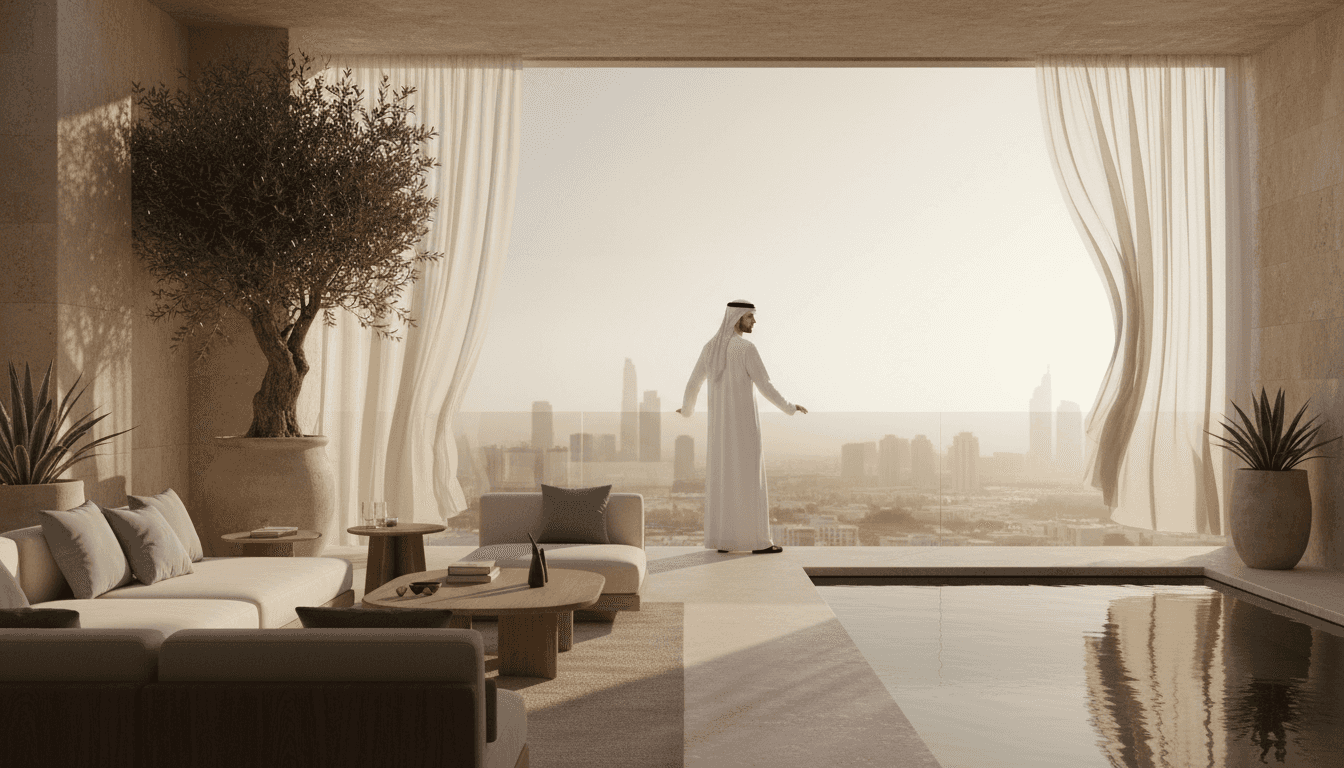
Beyond the Balcony: Dubai's Best Outdoor Living Spaces
In a city known for its spectacular interiors, true luxury is found outdoors. I explore the Dubai properties that offer exceptional private terraces, gardens, and rooftops, from sprawling villa courtyards to penthouse pools.

In my years navigating Dubai's property market, I've found that clients often start with a checklist of interiors: square footage, marble finishes, smart home systems. But the conversation always turns to something more elemental. A breath of fresh air. A patch of sky to call their own. The true measure of luxury in this vertical city isn't just what's inside the four walls, but the quality of the space just beyond them.
Here's what we'll explore:
- The shift in buyer priorities towards meaningful outdoor space.
- Defining an 'exceptional' outdoor area beyond just size.
- The best communities for apartments with standout terraces and rooftops.
- An in-depth look at villas with superior gardens and courtyards.
- The real cost of outdoor space: a full financial breakdown.
- How to design and upgrade your outdoor area, with costings.
- My final verdict on whether the premium for outdoor living is justified.
The New Priority: Beyond the Juliet Balcony
For a long time, the standard Dubai apartment balcony was a token gesture. A small, tiled rectangle, often too narrow for a chair, serving mainly as a place to dry laundry or house an air conditioning unit. It ticked a box on a developer’s feature list but offered little in the way of actual living. The market was driven by a transient mindset, where the home was a base and life was lived out in the city’s malls, restaurants, and beach clubs. The pandemic was a powerful catalyst for change, but the trend was already well underway. As Dubai matured from a temporary stop to a permanent home for many, priorities shifted.
People started looking for homes, not just addresses. They wanted spaces that could adapt to their lifestyle, and a key part of that was a private connection to the outdoors. The demand for private garden residences Dubai and villas with room for children to play soared. In the apartment sector, buyers began scrutinising floor plans not just for internal layout but for the size and usability of the terrace. A simple balcony was no longer enough; they wanted space to dine, to entertain, to create a small garden, or simply to sit and watch the city lights without being buffeted by wind and noise. It became a crucial differentiator.
This shift forced developers to rethink their designs. We started seeing more creative use of building footprints, with staggered facades creating larger, more private terraces. Penthouses became defined not just by their high-floor position, but by their expansive rooftop garden apartments Dubai. In the villa market, the focus moved from maximising the built-up area to creating a smooth flow between indoor and outdoor spaces. Developers like Emaar Properties and Nakheel began marketing the lifestyle of the garden as much as the house itself. It's a fundamental change in the definition of a premium property here. It's no longer just about the view, but what you can do while you're enjoying it.
At Gaia Living, we see this every day. Clients are willing to trade a bit of internal square footage for a genuinely usable terrace. A family might choose a slightly smaller villa in Arabian Ranches if it has a more private, better-oriented garden. This isn't just a lifestyle choice; it's a savvy investment. In the secondary market, properties with exceptional outdoor spaces command a significant premium and tend to sell or rent faster. They possess an emotional appeal that a standard unit, however well-finished, simply cannot match. This quest for a better quality of life is reshaping the city's architecture from the ground up.
What Makes an Outdoor Space 'Exceptional'?
 Featured project
Square footage is the easiest metric to quote, but it's a poor indicator of a truly great outdoor space. I have stood on 1,000-square-foot terraces that were virtually unusable — long, narrow corridors battered by wind, with no privacy and awkward access. Conversely, I’ve seen brilliantly designed 300-square-foot spaces that feel like a genuine extension of the home. So, what are the defining characteristics of exceptional luxury outdoor living Dubai real estate?
First is usability and flow. The space must be easily accessible from the main living area, ideally through wide-opening sliding or bi-fold doors that blur the line between inside and out. The shape is critical. A squarer, deeper terrace is almost always superior to a long, thin one. It allows for zoning: a dining area here, a comfortable lounge set there. It needs to feel like a room, not a walkway. The flooring should be high-quality and non-slip, and there should be ample provision for electricity and water. Without these basics, its potential as an entertainment space is immediately capped.
Second is privacy. In a dense city like Dubai, this is the ultimate luxury. A terrace that is directly overlooked by dozens of neighbours will rarely be used, no matter its size. The best designs use architectural elements — fins, staggered layouts, high parapet walls, or integrated planters, to shield the space from view without sacrificing light or scenery. In villa communities, this translates to plot positioning. A corner plot or one backing onto a park is vastly preferable to one that is back-to-back with another home. I always advise clients to visit a potential property at different times of day to understand how light, shadow, and sight lines change.
Finally, there's the microclimate. A terrace facing the full force of the afternoon sun with no shade is a furnace for six months of the year. The best spaces offer a mix of sun and shade. This could be a deep overhang from the floor above, a well-designed pergola, or mature trees in a garden. Wind is another factor, especially in high-rise towers. Some of the most spectacular penthouse terraces can be unpleasant on a windy day. The ideal space offers shelter, allowing you to enjoy the fresh air comfortably. When these three elements — usability, privacy, and a pleasant microclimate, come together, you have a space that genuinely enhances your life and the value of your property.
Apartment Living, Elevated: Terraces and Rooftops
For those who prefer the convenience of apartment living, finding a property with a truly great outdoor space requires a discerning eye. The search for private terrace properties Dubai often leads to the premium end of the market, but there are gems to be found across different price points if you know where to look.
On Palm Jumeirah, this concept is part of the island's DNA. Buildings like Muraba Residences by Muraba or One at Palm Jumeirah by Omniyat were designed with outdoor living at their core. Their terraces are deep, private, and smoothly integrated with the living spaces, offering incredible views back towards Dubai Marina or out to the Arabian Gulf. These are not afterthoughts; they are fundamental to the design philosophy. Similarly, Bluewaters Island offers apartments where the terraces are substantial enough for dining sets and lounge furniture, creating genuine outdoor rooms with stunning perspectives on Ain Dubai and JBR. The premium for these units is significant, but for buyers prioritising this lifestyle, it's a price worth paying.
It's not all about the ultra-luxury segment, though. In communities like JVC, some developers have been innovative. You'll find mid-rise buildings with large, wraparound terraces on the corner units or expansive private rooftops on the duplex penthouses. These offer a villa-like sense of space without the associated maintenance. The key is to look at the building's design. Is it a simple, monolithic block, or does it have a more complex, articulated facade? The latter is more likely to yield interesting outdoor spaces. Newer communities like Creek Harbour are also incorporating larger balconies and terraces as standard, responding to the clear market demand. Projects by Emaar in this area often feature units with terraces that overlook the central park and the creek, combining views with usable space.
My advice for apartment hunters is to look beyond the standard two-bedroom floor plan. Often, the most interesting terraces are found in duplexes, lofts, or podium-level apartments. A podium apartment might lack a high-floor view, but it can compensate with a vast terrace, sometimes large enough for a plunge pool or a substantial garden. These are often overlooked but can represent excellent value. When viewing, take a tape measure. Visualise your furniture in the space. Is there room to walk around it? Is there a water point for plants? Is the area shaded for at least part of the day? Asking these practical questions is how you find a terrace that you will actually live on, rather than just look at.
The Villa Advantage: Gardens, Courtyards, and Pools
For the ultimate private outdoor experience, nothing compares to a villa. The ability to step directly from your living room into your own private garden is a luxury that defines family life for many in Dubai. The market for villas with large courtyards Dubai is diverse, ranging from the compact townhouses of Nshama's Town Square to the palatial mansions of Emirates Hills.
In my view, the gold standard for family-oriented garden communities remains areas like Arabian Ranches, The Meadows, and the newer Dubai Hills Estate. These master-planned communities by Emaar were designed around the outdoor lifestyle. The plots are generally a good size, and the landscaping is mature, providing a sense of greenery and privacy that is hard to replicate. Within these communities, there is huge variation. A villa on a corner plot might have a garden 50% larger than its neighbour. One backing onto a park offers tranquility and borrowed scenery. These premium locations command higher prices, but they also hold their value exceptionally well because the supply is fixed. The key is to understand the plot map of the community you're interested in.
Beyond these established favourites, we're seeing a new wave of design in communities like Al Barari and Tilal Al Ghaf. Al Barari is in a league of its own, a botanical paradise where the landscaping is the main event. The villas here are designed to be enveloped by nature, with huge gardens, private pools, and rooftop terraces that look out over dense foliage. It’s less a suburb and more a private nature reserve. Tilal Al Ghaf by Majid Al Futtaim takes a different approach, focusing on a connection to water with its central recreational lagoon. The villas here often feature courtyards and spaces designed for outdoor entertainment spaces homes Dubai, blending modern architecture with functional family living.
One of my personal favourite villa styles, which is seeing a resurgence, is the courtyard home. Found in communities like Jumeirah Islands and some custom-built villas in Jumeirah, this design places the garden or pool at the heart of the home, with the rooms wrapping around it. This creates an incredibly private and secure outdoor space that is sheltered from the elements and becomes a visual centrepiece for the entire property. It’s a design that is perfectly suited to the climate, offering a cool, shaded retreat in the hotter months. When considering a villa, don't just look at the total plot size. Look at the orientation, the privacy, and the potential to create the kind of outdoor life you envision.
“The most valuable square footage in Dubai isn't measured by a surveyor's laser; it's the space where you can feel the evening breeze and see the stars.”
The Cost of Space: Calculating the Premium
An exceptional outdoor area is not a free upgrade; it comes at a tangible cost, both in the purchase price and in ongoing maintenance. Understanding these costs is essential for making an informed decision. The premium can vary dramatically, but as a rule of thumb, a property with a genuinely superior and usable outdoor space can command a 15-30% premium over a comparable property without one. This is not a formal valuation rule, but a consistent observation from my experience in the market.
Let’s illustrate this with a hypothetical example. Consider two three-bedroom apartments in the same building in Dubai Marina. Both are 1,800 sqft internally. Apartment A has a standard 150 sqft balcony. Apartment B, a corner unit, has a 600 sqft wraparound terrace. If Apartment A is valued at AED 3.5 million, it would not be unusual for Apartment B to be listed at AED 4.2 million or more. The additional 450 sqft of outdoor space is contributing AED 700,000 to the price — that's over AED 1,500 per square foot for the terrace alone, a clear demonstration of the value the market places on this feature.
For villas, the calculation is based on plot size and location. In a community like The Meadows, two identical four-bedroom villas could have a price difference of over AED 1 million simply because one has a standard 6,000 sqft plot and the other sits on a premium 8,000 sqft plot backing onto a lake. This premium reflects not just the extra land but the enhanced lifestyle and privacy it affords. Ongoing costs are also a factor. Service charges in villa communities are typically calculated on the plot area, so a larger garden means a higher annual fee. In Dubai, these charges can range from AED 2 to AED 5 per sqft of plot area per year. For an 8,000 sqft plot, that's an annual bill of AED 16,000 to AED 40,000, which covers security, community maintenance, and amenities. This is before you even consider the specific costs of maintaining your private garden and pool.
Here’s a simplified breakdown of the upfront costs for purchasing that AED 4.2 million apartment with the large terrace, assuming a mortgage for a first-time expatriate buyer:
- Purchase Price: AED 4,200,000
- Down Payment (20%): AED 840,000
- Dubai Land Department (DLD) Fee (4%): AED 168,000
- DLD Admin Fee: AED 4,200
- Property Registration Fee: AED 4,000
- Real Estate Agency Fee (2% + VAT): AED 94,080
- Mortgage Arrangement Fee (up to 1%): AED 33,600 (loan amount is AED 3,360,000)
- Mortgage Registration Fee (0.25% of loan): AED 8,400
- Property Valuation Fee: Approx. AED 3,000
- Total Upfront Cost: AED 1,165,280
These figures, governed by bodies like the Dubai Land Department (DLD) and the Central Bank of the UAE, show that the initial outlay is substantial. Buyers must factor these transaction costs into their budget. While the premium for outdoor space is significant, the enduring demand for these properties suggests that for many, it's an investment that pays dividends in both lifestyle and long-term value.
Designing and Budgeting for Your Dream Oasis
Securing a property with a great 'blank canvas' of outdoor space is just the beginning. Transforming it into a functional and beautiful oasis requires careful planning and a realistic budget. The cost of landscaping and furnishing an outdoor area in Dubai can range from a few thousand dirhams to hundreds of thousands, depending on your ambition.
For an apartment terrace, the priorities are typically shade, comfortable seating, and greenery. A high-quality, retractable awning or a sturdy pergola can cost anywhere from AED 10,000 to AED 50,000+. Outdoor furniture needs to be durable enough to withstand the sun and humidity; expect to pay AED 15,000 to AED 40,000 for a good quality dining and lounge set. Then there's lighting, which is crucial for creating evening ambience. A professionally installed system with a mix of functional and decorative lights might cost AED 5,000 to AED 15,000. Finally, planters and plants: a collection of large, stylish pots with mature, climate-appropriate plants can easily add another AED 5,000 to AED 20,000.
For a villa garden, the scale and costs are much larger. Here's a checklist of potential expenses for developing a standard villa garden from scratch:
- Landscaping Design: A professional plan can cost between AED 5,000 and AED 25,000, but is invaluable for getting the layout right.
- Swimming Pool: This is the biggest single expense. A standard 8m x 4m pool can cost from AED 80,000 to AED 150,000+, depending on the finish and features like heating/cooling.
- Hardscaping (Patios, Decking, Pathways): Using materials like travertine tiles or composite decking can cost AED 300 to AED 600 per square metre installed. A 50 square metre patio could therefore cost AED 15,000 to AED 30,000.
- Irrigation System: Essential for any garden in Dubai. A fully automated system costs roughly AED 5,000 to AED 15,000 depending on the garden size.
- Lawn and Plants: Preparing the soil and laying a high-quality lawn costs around AED 40-60 per square metre. Mature trees and shrubs can vary wildly, from a few hundred dirhams for small plants to over AED 10,000 for a single mature palm tree.
- Outdoor Kitchen/BBQ Area: A built-in station with a grill, sink, and storage can range from AED 20,000 to over AED 100,000 for high-end setups.
Before undertaking any major works, especially structural ones like building a pergola or installing a pool, you must get a No Objection Certificate (NOC) from your developer and/or community management. This is a critical step governed by RERA (Real Estate Regulatory Agency) rules to ensure safety and maintain the aesthetic of the community. Ignoring this can lead to fines and orders to remove the unapproved work. My advice is to engage a reputable landscaping contractor who understands the local regulations and can manage the approval process for you. This initial investment in professional help saves significant headaches down the line.
My Verdict: An Investment in Living
So, is the significant premium for a home with exceptional outdoor space worth it? After years of watching the market and listening to my clients, my answer is an unequivocal yes. But it comes with a condition: the space must be genuinely usable. The premium is justified not by the square footage itself, but by the tangible improvement it brings to your quality of life. In a city as dynamic and fast-paced as Dubai, having a private sanctuary — a place to decompress, connect with nature, and create memories with family and friends, is invaluable.
From a financial perspective, the argument is just as strong. In a competitive resale market, properties with standout features are the ones that capture buyers' attention. A stunning terrace or a beautifully landscaped garden is a powerful emotional draw that can set your property apart. These homes consistently achieve higher valuations and spend less time on the market. They appeal to a discerning segment of buyers who are willing and able to pay for a superior living experience. This makes them a more resilient asset, particularly in a market that is increasingly geared towards end-users and long-term residents.
Ultimately, the decision comes down to personal priorities. If you see your home purely as a financial asset, then the calculation might be different. But if you see it as the backdrop to your life, then the value of a space that brings you joy and tranquility every day is immeasurable. My advice is to think about how you want to live. Do you dream of weekend barbecues, of having a morning coffee on a sunlit terrace, or of watching your children play on a soft lawn? If so, then prioritising a home with a great outdoor area isn't an extravagance; it's an investment in the life you want to build in Dubai.
In the Dubai real estate market, a property's outdoor space has evolved from a simple add-on to a central feature that drives value and defines a luxury lifestyle. While the upfront cost and ongoing maintenance are higher, a well-designed, private, and usable terrace or garden offers a profound return in both quality of life and long-term asset appreciation, making it one of the smartest investments a discerning buyer can make.
Sources
- Dubai Land Department (DLD): https://dubailand.gov.ae/en/
- Real Estate Regulatory Agency (RERA): Part of the DLD website.
- Central Bank of the UAE: https://www.centralbank.ae/en/
- UAE Government Portal (Property Laws): https://u.ae/en/information-and-services/business/real-estate
Questions, answered
- Which areas in Dubai are best for apartments with large terraces?
- Areas like Bluewaters Island, Palm Jumeirah, and Emaar Beachfront are known for apartments with significant terraces, especially in their penthouse and premium collections. Newer communities like Creek Harbour and some towers in Business Bay also offer generous outdoor spaces.
- Are private gardens in Dubai villas difficult to maintain?
- Maintenance can be demanding due to the climate, requiring regular irrigation and specialist care for plants to thrive. Most villa communities include basic landscaping in the service charges, but a sophisticated garden will require hiring a private landscaping company for a monthly fee, typically ranging from AED 500 to AED 2,000+ depending on size and complexity.
- How much value does a large terrace or garden add to a Dubai property?
- A well-designed and usable outdoor space can add a significant premium, often between 15% and 30% to the property's value compared to a similar unit without it. The exact premium depends on the size, view, privacy, and level of finishing of the outdoor area.
- Can I get a mortgage for a property with a large outdoor space in Dubai?
- Yes, mortgages are available. Banks will assess the property's total value, including the outdoor space, as determined by their appointed valuator. For expatriates, the Central Bank of the UAE mandates a minimum down payment of 20% for a first property under AED 5 million.
- What are the typical service charges for a property with a large private garden or terrace?
- Service charges are calculated on the total built-up area (BUA) or plot area, depending on the community. While the private space itself doesn't have a separate charge, its inclusion in the property's overall size means you will pay more. Expect villa service charges from AED 2-5 per sqft on the plot area, and apartment charges from AED 15-30 per sqft on the BUA.
- Are there any restrictions on what I can do with my private rooftop or garden in Dubai?
- Yes, you must adhere to the community's rules, managed by the owners' association and developer. These rules often govern structural changes (like adding a permanent pergola or pool), noise levels, and sometimes even the types of plants you can grow. Always obtain a No Objection Certificate (NOC) from the developer for any significant modifications.

Yusuf writes about how Dubai actually lives — waterfront mornings, community dining, walkability, and the lifestyle premium built into an address.
Related stories
The True Cost of a Tenant Default in Dubai
A single tenant default can erase an entire year's profit. As a yield analyst, I'll walk you through the precise calculation of financial loss, from missed rent to legal fees and recovery costs.
Pricing the Future: A Guide to Off-Plan Value Uplift
To forecast an off-plan property's future value, you must move beyond the brochure and systematically analyse planned infrastructure and community developments. I'll show you how to quantify these drivers.
Right-Sizing Your Dubai Villa for a New Chapter
As an empty nester or active retiree, your idea of the perfect Dubai home shifts. I explore the best villa communities that prioritise lifestyle and low-maintenance living over sheer size.
Echoes, in your inbox
One thoughtful email a month. Market insight, new launches, no spam.