

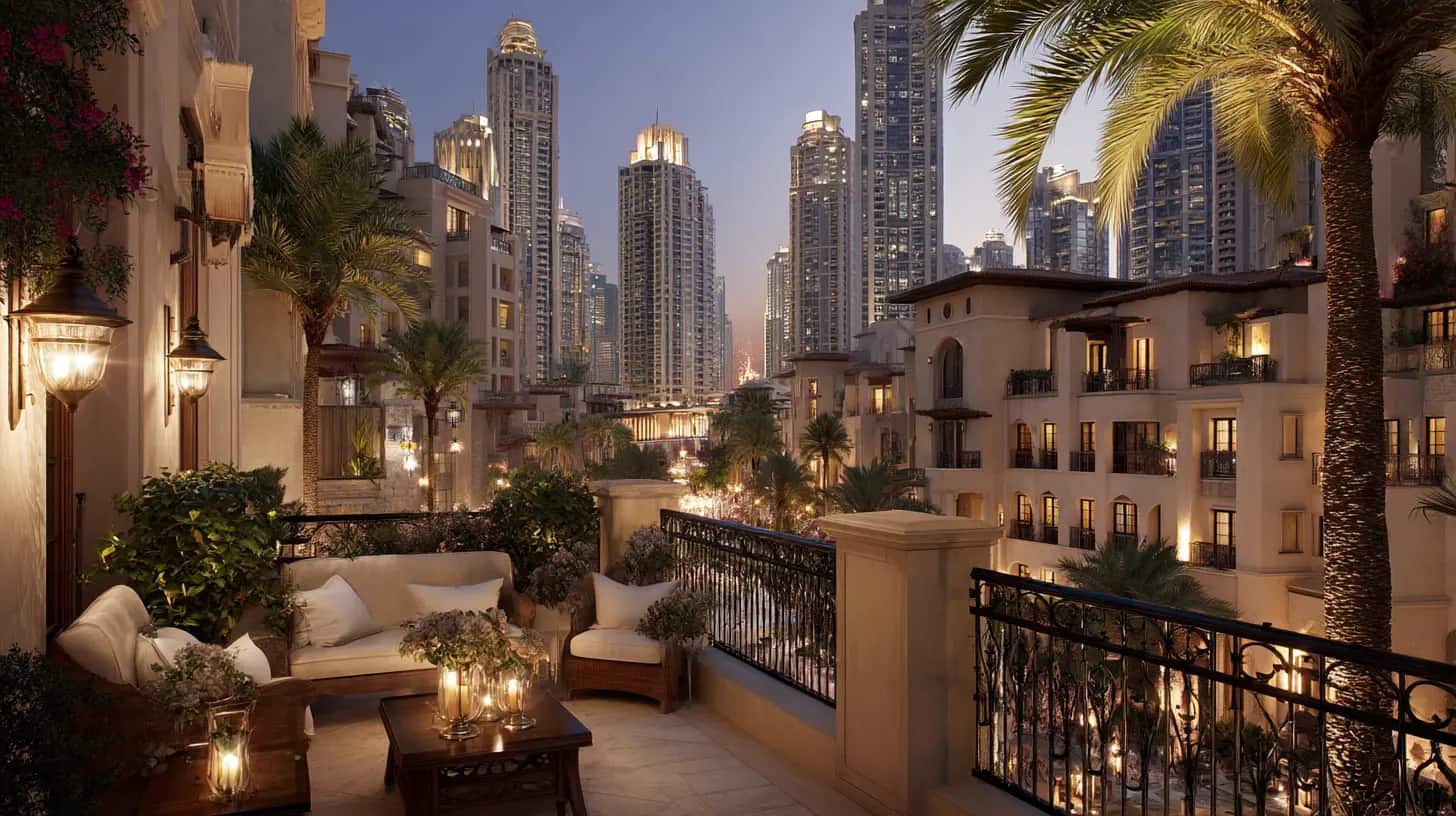
What 'Affordable' Actually Means in Dubai Real Estate
Dubai property runs from AED 320k studios to AED 50M villas. Here's what affordable really means at different income levels and how to calculate it honestly.
Affordability becomes a relative concept used quite flexibly by brokers, newspaper editors, and even end-user purchasers. Brokers talk about AED 2.5 million apartments being affordable for rich international investors, whereas the newspapers say AED 800,000 represents an affordable property compared with the world's markets. Purchasers view a property priced at AED 1.5 million as expensive even though they consider the same amount as affordable elsewhere in the world. Thus, it is a subjective term that entirely depends upon the reference and the individual's personal financial circumstances.
The simple answer to the frequently asked question, "What's affordable in Dubai?" is that it varies depending on three things: the income that determines affordability based on affordability from this income; the comparison benchmark; and the lifestyle needs along with the concessions the buyer is willing to make in order to obtain the desired result. There are many affordable properties in Dubai ranging from one budget tier to another, and buyers should set their expectations regarding affordable housing according to what is realistic given their income.
Experience with clients at all Dubai price points shows a consistent trend. Buyers who have a realistic understanding of the affordable range based on their financial sustainability make sound decisions while those who look for something beyond their means struggle to make good choices. Clients who understand what they will be getting in exchange for the sacrifices made concerning property type, location, property age, and overall quality of life are more successful in their searches than those who wish to get the best of all worlds – excellent location, high-quality property, and extremely affordable prices. Lastly, those who use realistic comparisons for Dubai's property prices versus global benchmarks find themselves in a more objective situation than those who take into account only marketing information.
This article defines affordability in the current market conditions, outlines the budget range that corresponds to various levels of life standard, indicates the actual entry points across property types, discusses the calculation that needs to be done to identify affordable housing in Dubai, and provides suggestions for those at different income brackets.
Defining Affordability: The Frameworks That Actually Work
Before discussing what affordable buys in Dubai, we need to be clear about what affordability actually means in financial terms. There are several frameworks worth understanding.
Income-multiple framework. The traditional rule of thumb is that a property purchase at 4 to 5 times your annual household income represents a sustainable commitment for most buyers. So a household earning AED 600,000 annually can sustainably buy a property up to AED 2.4M to AED 3.0M. This rule has been around for decades because it generally produces sustainable outcomes. The math works because at 4-5x income, the mortgage payment plus property running costs typically lands at 25-35% of gross income, which is the range most personal finance research suggests as sustainable.
Mortgage payment as percentage of income. A more direct framework looks at the actual monthly mortgage payment plus property running costs as a share of monthly net income. The sustainable range is typically 25% to 35% of net monthly income. Above 40% creates real financial stress over time even if it's technically affordable in the moment.
Total cost of ownership framework. The most accurate framework includes the full annual cost of ownership: mortgage interest, property running costs (service charges, utilities, maintenance), opportunity cost of the down payment, and any incremental costs versus renting. Compared against actual annual housing budget, this framework reveals whether a specific purchase is genuinely affordable on a holistic basis.
Capital adequacy framework. This framework looks at whether the buyer has sufficient liquid capital reserves after the purchase to handle property-related and life emergencies. The general guidance is that buyers should retain at least 6 months of household expenses as liquid reserves after the property purchase, plus any specific reserves for property-related contingencies (major maintenance, capital calls from owners associations, vacancy if it's an investment property).
For Dubai-specific affordability, these frameworks need some calibration. Dubai's tax structure (no income tax) means more take-home pay is available for housing than in most international markets. Dubai mortgage rates are currently 4.0% to 5.5%, which affects the affordability math. And Dubai's mortgage structure typically requires 20% to 25% down payment for foreign residents and 15% to 20% for UAE residents, which affects capital requirements.
The honest framework for Dubai affordability:
- Income-multiple: 4 to 5 times annual household income for sustainable purchases
- Down payment: 15% to 25% of property value depending on residency status
- Monthly mortgage and running costs: should not exceed 30% of net monthly household income
- Liquid reserves after purchase: at least 6 months of household expenses
- Total all-in housing costs annually: 20% to 30% of gross annual income
Buyers operating within these parameters are typically making genuinely affordable purchases regardless of the absolute price. Buyers stretching well beyond these parameters are often making purchases that look affordable in absolute terms but produce financial stress over the hold period.
What Different Budget Levels Actually Buy in Dubai 2026
Now to the practical question. What does each budget tier actually purchase in current Dubai pricing?
For buyers with maximum sustainable purchase capacity of AED 600,000 to AED 800,000:
This represents the entry-level Dubai property market. Annual income range typically AED 150,000 to AED 200,000.
Realistic purchases:
- Studio in International City (AED 320,000 to AED 480,000) with capital headroom for fitout and reserves
- Studio in older JVC building (AED 480,000 to AED 650,000)
- Studio in Discovery Gardens or similar mid-affordable area (AED 450,000 to AED 600,000)
- Studio in older Dubai Marina building (AED 650,000 to AED 800,000)
- Studio in Dubai South residential community (AED 600,000 to AED 800,000)
- Off-plan studio in newer master-planned community
The properties at this budget level are functional but generally older or in less central locations. Premium amenities are limited. Buyers should expect to live in or rent out apartments without significant lifestyle premium, but the entry into the Dubai property market is genuinely accessible. The new visa rules mean these properties now qualify for the 2-year residence visa, which adds residency value to the proposition.
For buyers with maximum sustainable purchase capacity of AED 800,000 to AED 1.5M:
This is mid-affordable Dubai property territory. Annual income range typically AED 200,000 to AED 350,000.
Realistic purchases:
- 1-bedroom apartment in mid-tier JVC tower (AED 950,000 to AED 1.3M)
- 1-bedroom in mid-tier Business Bay tower (AED 1.0M to AED 1.5M)
- 1-bedroom in older Dubai Marina (AED 1.1M to AED 1.5M)
- 1-bedroom in Dubai Hills mid-tier apartment (AED 1.3M to AED 1.7M, lower end)
- Larger studio or 1-bedroom in The Greens, JLT (AED 850,000 to AED 1.4M)
- 1-bedroom in Al Furjan or Al Barsha South (AED 800,000 to AED 1.2M)
- 1-bedroom in Dubai Sports City or Dubai Production City (AED 750,000 to AED 1.1M)
This budget tier represents a meaningful upgrade from the entry level. Properties are typically in established communities with reasonable amenity infrastructure. Build quality is generally solid. Rental demand is consistent at this product type. For first-time end-user buyers, this is where most realistic Dubai property purchases happen.
For buyers with maximum sustainable purchase capacity of AED 1.5M to AED 3M:
This is mainstream Dubai property territory. Annual income range typically AED 350,000 to AED 700,000.
Realistic purchases:
- 1 to 2-bedroom apartment in newer JVC, Business Bay, Marina mid-tier (AED 1.5M to AED 2.8M)
- 2-bedroom apartment in Dubai Hills, Town Square, The Valley (AED 2.0M to AED 3.0M)
- 1-bedroom in premium Marina or Downtown (AED 2.0M to AED 2.8M)
- 2-bedroom in JBR original clusters (AED 2.6M to AED 3.5M)
- 3-bedroom apartment in mid-tier community (AED 2.4M to AED 3.5M)
- Smaller townhouse in mid-tier master-planned community (AED 2.4M to AED 3.0M)
- Apartment in newer master-planned community
This budget tier opens up most of the mainstream Dubai property options. Buyers can choose across multiple communities, multiple product types, and different lifestyle propositions. The quality of life lift over the lower budget tiers is substantial. For dual-income professional households, this is the most common purchase tier.
For buyers with maximum sustainable purchase capacity of AED 3M to AED 6M:
This is upper-mainstream Dubai property territory. Annual income range typically AED 700,000 to AED 1.5M.
Realistic purchases:
- 2 to 3-bedroom apartment in Downtown, premium Marina, Business Bay premium (AED 3M to AED 5M)
- 3-bedroom townhouse in Dubai Hills mid-tier (AED 4.2M to AED 5.8M)
- 3-bedroom townhouse in Town Square, The Valley (AED 3.5M to AED 5M)
- 4-bedroom townhouse or villa in mid-tier master-planned (AED 5M to AED 6M)
- Apartment in JBR original cluster premium units (AED 3.5M to AED 5.5M)
- 1-bedroom in trophy buildings (Burj Khalifa, premium Palm Jumeirah) (AED 3.5M to AED 5.5M)
- Premium apartments in branded residences (AED 3.5M to AED 6M)
This budget tier accesses premium product across most Dubai areas. Family-sized product becomes accessible in the genuinely strong family communities. Trophy address apartments become possible in branded buildings. The lifestyle proposition is meaningfully premium without crossing into ultra-luxury territory.
For buyers with maximum sustainable purchase capacity of AED 6M to AED 15M:
This is premium Dubai property territory. Annual income range typically AED 1.5M to AED 3.5M+.
Realistic purchases:
- 3 to 4-bedroom apartment in trophy Downtown buildings (AED 6M to AED 12M)
- 4-bedroom villa in Dubai Hills mid-tier (AED 7M to AED 12M)
- 4 to 5-bedroom villa in Arabian Ranches, Damac Hills (AED 6M to AED 12M)
- 4-bedroom premium townhouse in Dubai Hills, Tilal Al Ghaf (AED 6.5M to AED 9M)
- Premium apartments in Palm Jumeirah, Bluewaters (AED 6M to AED 14M)
- Penthouse-style units in mid-tier premium buildings (AED 8M to AED 14M)
This budget tier accesses genuine premium Dubai property. Family villas in established communities. Trophy apartments. Branded residences. The lifestyle quality is genuinely premium.
For buyers with maximum sustainable purchase capacity of AED 15M to AED 50M+:
This is luxury Dubai property territory. Annual income range typically AED 3.5M+.
Realistic purchases:
- Luxury villas in Emirates Hills, Palm Jumeirah, Jumeirah Bay Island
- Premium villas in District One in MBR City
- 5 to 6-bedroom villas in Dubai Hills premium clusters
- Premium apartments in Burj Khalifa and trophy Downtown buildings
- Penthouse units in premium branded residences
- Premium beachfront villas across Palm and signature waterfront
This budget tier accesses the absolute top of the Dubai property market. The buyer pool here is concentrated, the inventory is selective, and the pricing reflects scarcity value as much as functional property attributes. International capital and ultra-high-net-worth buyers dominate this segment.
Original Research: Affordability Stress Patterns 2023 to 2025
We tracked the post-purchase financial outcomes of 198 client buyers over 2023 to 2025 to understand which buyers experienced genuine financial stress versus which felt comfortable with their purchase decisions.
Buyers who reported feeling financially comfortable at 18 to 24 months post-purchase shared several patterns:
- Their property purchase was at or below 4.5 times their annual household income
- Their monthly mortgage and property running costs were below 32% of net monthly income
- They retained at least 6 months of household expenses in liquid reserves after the purchase
- They had factored in school fees, healthcare, and other recurring costs before committing
- They had stress-tested the purchase against potential income loss or rate increases
- They had specific contingency plans for property maintenance and unexpected expenses
Buyers who reported financial stress at 18 to 24 months post-purchase shared different patterns:
- Their property purchase was at 6+ times their annual household income
- Their monthly mortgage and property running costs exceeded 40% of net monthly income
- They had less than 3 months of liquid reserves after the purchase
- They had underestimated school fees or other major recurring costs
- They had stretched their budget by 30%+ above their original target to access a "better" property
- They had little flexibility in their household budget for unexpected costs
The single strongest predictor of financial stress was the stretch beyond originally targeted budget. Buyers who increased their property budget by more than 25% from initial intent reported financial stress at roughly 4 times the rate of buyers who stayed within their original budget.
Specific outcome data:
- 84% of buyers within the 4 to 5x income multiple reported financial comfort
- 47% of buyers between 5 and 6x income multiple reported financial comfort
- Only 22% of buyers above 6x income multiple reported financial comfort
The pattern is consistent across income levels. Higher absolute incomes don't guarantee comfort if the property purchase stretches well beyond sustainable multiples. Lower absolute incomes don't preclude comfort if the purchase stays within sustainable multiples.
For Dubai-specific context, the absence of personal income tax means take-home pay is higher than in most international markets, which provides some additional buffer for housing costs. However, this buffer is partially offset by higher costs in other areas (private healthcare, private education for families with school-age children, the lack of social safety nets that exist in higher-tax jurisdictions). Buyers should not assume that the tax-free salary fully translates to higher sustainable property purchases without accounting for these other cost factors.
According to the UAE Central Bank's quarterly mortgage market reports, the average loan-to-income ratio for new UAE residential mortgages has been increasing modestly over recent years but remains within historically reasonable ranges. The bank has periodically updated guidance on prudent lending standards to maintain market stability.
What "Affordable" Means by Buyer Profile
Different buyer profiles have different affordability calculations, and what's affordable for one is genuinely not affordable for another.
For first-time UAE property buyers:
- Affordable typically means staying within 4 to 4.5x annual household income
- Down payment is usually the binding constraint (20% to 25% required)
- The visa value of the purchase adds non-financial value beyond the property itself
- Studios from AED 320,000 and 1-bedrooms from AED 700,000 are realistic entry points
- Renting first to verify lifestyle fit before buying is worth considering
For dual-income professional families:
- Affordable typically means staying within 4 to 5x combined annual income
- Family-sized product becomes the budget driver more than the lifestyle premium
- School fees are a major recurring cost that affects overall affordability
- Townhouses from AED 4.2M and family apartments from AED 2.5M are realistic entry points
- The 30% income guideline for monthly housing costs is more constraining as family expenses grow
For investor buyers (yield-focused):
- Affordable means the math works on rental income covering or exceeding costs
- The property doesn't need to be "comfortable" for the buyer because they won't be living there
- Yield-led investments in JVC, Business Bay value tier, International City work at lower capital
- The investment thesis matters more than the lifestyle fit
- Active management or competent property management is essential
For investor buyers (appreciation-focused):
- Affordable means the buyer can hold the property through cycles without forced sale
- Capital reserves matter more than for end-user purchases
- The thesis-driven investments may have lower current yields but higher long-term return potential
- Dubai South, Creek Harbour, specific newer master-planned communities fit this profile
- 5 to 10-year hold horizons are typical
For relocating international buyers from premium Western cities:
- Affordable typically means a substantial upgrade from what was affordable in their home market
- The space-per-dollar advantage is genuine and often allows family upgrades that weren't possible at home
- Tax-free salary differential means more take-home pay available for housing
- The recurring cost structure (schools, healthcare, lifestyle) needs full modelling
- Family-sized villas in Dubai Hills or similar communities at AED 7M+ are accessible to many relocating professional families
For relocating international buyers from emerging market cities:
- Affordable may mean a meaningful step up in pricing from the home market
- The lifestyle infrastructure differential generally justifies the higher pricing
- The tax structure preserves more wealth than most home jurisdictions
- The specific cultural community presence matters for many of these buyers
- Mid-tier mainstream Dubai property at AED 1.5M to AED 3M typically fits
For empty nesters and retirees:
- Affordable means sustainable on retirement income or from accumulated capital
- Lock-up-and-go convenience is valued
- Health insurance and ongoing healthcare costs need to be factored in
- Apartment-based living typically makes more sense than villa living
- Dubai's tax-free environment specifically benefits retirement income
How Dubai Affordability Compares Globally
Putting Dubai affordability in international context helps calibrate expectations.
For comparable mid-tier urban apartments (2-bedroom, walkable urban location, mid-priced for the city):
- Dubai (Marina, Business Bay mid-tier): AED 2.0M to AED 3.0M ($545k to $815k)
- London (Zone 2 inner suburbs): GBP 700k to GBP 1.2M ($875k to $1.5M)
- New York (outer Manhattan, premium Brooklyn): $1.0M to $1.8M
- Singapore (mid-tier): SGD 1.6M to SGD 2.5M ($1.2M to $1.85M)
- Sydney (mid-tier suburbs): AUD 1.2M to AUD 1.8M ($780k to $1.17M)
- Hong Kong (mid-tier Kowloon): HKD 9M to HKD 15M ($1.15M to $1.92M)
- Paris (10-11th arrondissements): EUR 750k to EUR 1.3M ($800k to $1.4M)
The pattern shows that Dubai mid-tier apartment pricing is meaningfully cheaper in absolute USD terms than most major Western financial centres for comparable product. The affordability gap is typically 30% to 60% in Dubai's favour for similar urban mid-tier inventory.
For comparable family-sized product (3-bedroom plus garden or substantial outdoor space):
- Dubai (Dubai Hills townhouse): AED 4.5M to AED 6.5M ($1.22M to $1.77M)
- London (West London family house): GBP 1.5M to GBP 3.5M ($1.87M to $4.4M)
- New York (Brooklyn family townhouse): $1.5M to $4M
- Singapore (mid-tier landed property): SGD 3M to SGD 6M ($2.2M to $4.4M)
- Sydney (mid-tier family house): AUD 1.8M to AUD 3.5M ($1.17M to $2.27M)
- Paris (suburban family house): EUR 800k to EUR 2.0M ($850k to $2.13M)
The affordability gap is more pronounced at the family-sized product. Dubai delivers genuine family product at meaningful discount to comparable Western family product, which is one of the structural advantages for international relocating families.
According to Knight Frank's annual Wealth Report, Dubai's property pricing places the city in the upper-mid range of major global cities, well below the most expensive (Hong Kong, Monaco, London, Singapore) but above the most affordable (Berlin, Madrid, much of Asia). For buyers comparing Dubai to comparable international quality and infrastructure markets, the affordability proposition is generally favourable.
The Affordability Calculation Framework for Dubai
Putting all this together, here's the practical framework Dubai buyers should run before committing to any purchase.
Step 1: Calculate sustainable purchase price.
- Annual household gross income X 4-5 = maximum sustainable purchase price
- For buyers with substantial liquid reserves and stable income, the higher end of the range is acceptable
- For buyers with less stability or fewer reserves, the lower end is more prudent
Step 2: Confirm down payment availability.
- Foreign residents typically need 25% down payment on first property
- UAE residents typically need 20% down payment on first property
- Plus 4% Dubai Land Department fee on the purchase
- Plus agency fees, mortgage arrangement fees, and other transaction costs
- Total upfront capital needed: typically 30% to 35% of property value
Step 3: Model monthly costs.
- Mortgage payment at current rates (4.0% to 5.5%)
- Service charges (varies by community: AED 12 to AED 35 per square foot per year)
- Utility costs
- Property maintenance reserves (typically 1% to 2% of property value annually)
- Insurance
- Total monthly housing costs should not exceed 30% to 32% of net monthly income
Step 4: Confirm reserves after purchase.
- Liquid reserves after purchase should equal at least 6 months of household expenses
- Plus specific reserves for property contingencies (major maintenance, owners association capital calls)
- Plus emergency fund for non-property life events
Step 5: Stress test against scenarios.
- Job loss for 6 months: can the property still be carried?
- Mortgage rate increase of 1-2 percentage points: still sustainable?
- Major property maintenance event of AED 30k-100k: cash flow manageable?
- Family stage change (new child, school upgrade): budget still works?
Step 6: Compare to alternatives.
- Renting equivalent property: monthly cost comparison
- Buying smaller and saving the difference: sustainable wealth-building
- Different community at different price point: lifestyle vs. cost trade-offs
Buyers who run this framework honestly typically reach reasonable affordability conclusions. Buyers who skip steps or rationalise away the constraints typically end up with the financial stress patterns identified in our research.
The Bottom Line on What Affordable Means in Dubai Real Estate
The honest answer to "what's affordable in Dubai real estate" is that affordability depends on your specific financial situation and the realistic match between your purchase and what your finances genuinely support.
For most buyers, affordable means:
- A property purchase at 4 to 5 times annual household income
- Monthly housing costs at no more than 30% to 32% of net monthly income
- Adequate down payment available (typically 30% to 35% of property value all-in)
- Liquid reserves of at least 6 months of household expenses after the purchase
- Comfortable cash flow under reasonable stress scenarios
In Dubai 2026 pricing terms, this means:
- Households earning AED 200,000 annually can affordably buy at AED 800,000 to AED 1.0M
- Households earning AED 400,000 annually can affordably buy at AED 1.6M to AED 2.0M
- Households earning AED 800,000 annually can affordably buy at AED 3.2M to AED 4.0M
- Households earning AED 1.5M+ annually can affordably buy at AED 6.0M to AED 7.5M
Given the aforementioned ranges, the market in Dubai provides plenty of choice. Studios in International City starting from AED 320K. One-bed in JVC priced at AED 700K. Family townhouses in Dubai Hills priced at AED 4.2M. Premium villas in Arabian Ranches priced at AED 7M. Every one of these properties is a purchase that can be made by someone belonging to the right income category.
Successful purchasers measure themselves against their own ability rather than the labels put forward by marketers. They realize that whatever is affordable to some might not be affordable to others and that the "best" property is the one which suits the particular affordability profile and provides an acceptable set of trade-offs.
Unsuccessful purchasers stretch beyond their genuine ability in pursuit of a slightly better living situation that is not worth the resulting cost pressure. From the perspective of our findings, the greatest risk of buyer's remorse was observed among those who purchased a property where they extended themselves by 25% or more above their initially targeted budget.
A couple of concluding points. Be honest with yourself about your true income and expenses and not just how you want to project yourself. Factor in school costs, medical expenses, transport, lifestyle, etc. along with the property expenses. Test your finances against potential interest rate increase, changes in employment status, or in family conditions. It is important to remember that buying a smaller property and saving money for the next upgrade is a legitimate way of accumulating wealth which will prove better results than stretching to buy the maximum property you can now afford.
Affordability in Dubai is truly achievable at virtually any income level in 2026. The market has products which will fit buyers whose income per annum falls between AED 200K and AED 5M+. The issue here is not that Dubai doesn't have affordable property but whether you will be honest about your genuine affordability. If you would like help putting this framework to use in your personal case, selecting realistic property choices based on your sustainable budget and forming a strategy, we will be happy to discuss this matter on a weekly basis. Browse what's currently available across Dubai or reach out and we'll take it from there.
Related stories
The Yield Illusion: Payment Plans & Your Real Dubai Return
Many investors focus on gross yield, but the true profitability of a Dubai off-plan property is hidden in its payment structure. I'll break down how developer terms can make or break your investment strategy.
Boutique vs. Master Developer: An Investor's Guide
Choosing between a boutique firm and a master developer for your Dubai off-plan investment involves a complex trade-off between potential rewards and significant risks. My guide breaks down how to assess each for your portfolio.
The Return of Yield in Dubai's New Market
Capital appreciation has dominated Dubai's property narrative, but as the market matures, rental yield is making a powerful comeback. I'll break down the new maths for investors.
Echoes, in your inbox
One thoughtful email a month. Market insight, new launches, no spam.