

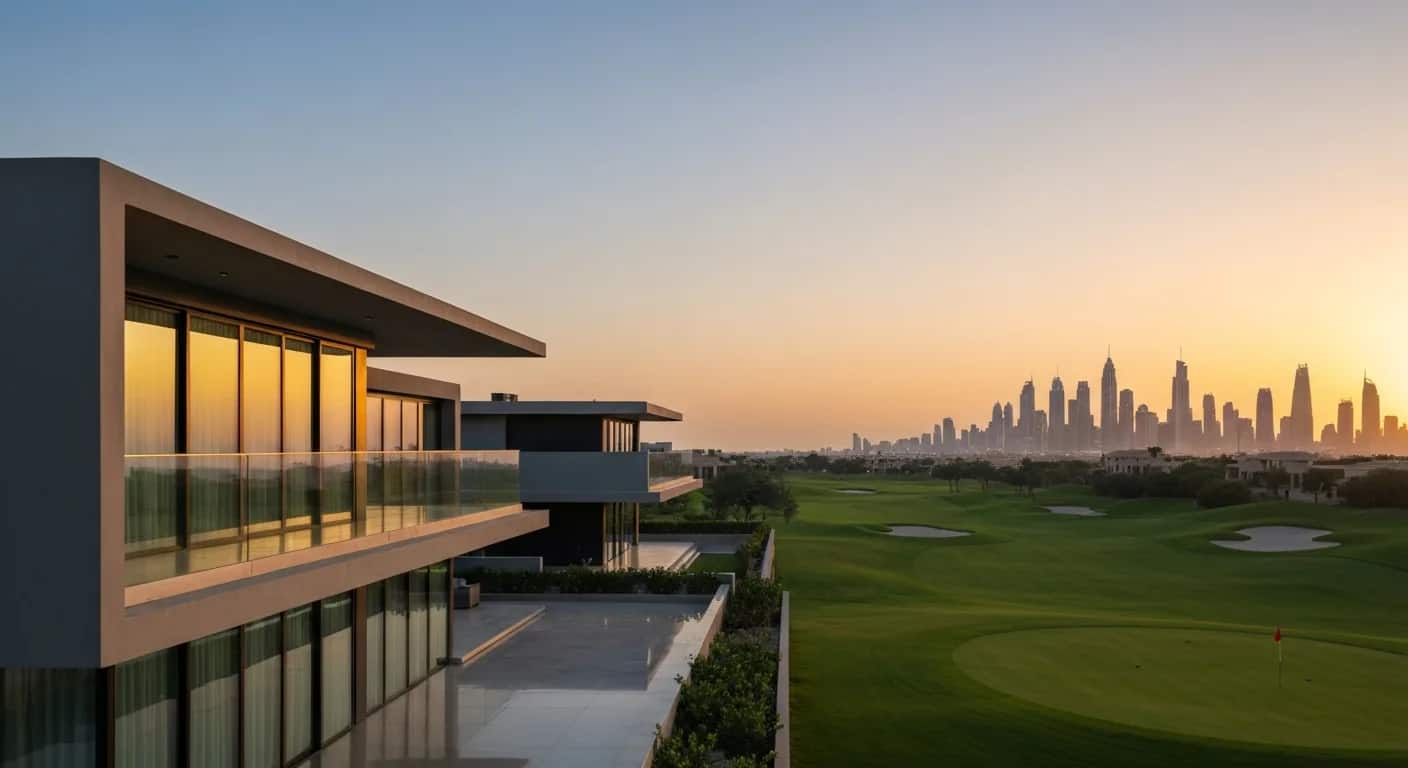
Arabian Ranches vs Dubai Hills: Family Villa Showdown
Arabian Ranches vs Dubai Hills: two of Dubai’s most recognisable family villa addresses offer distinct lifestyles. This guide weighs location, homes, schools, running costs and resale to help families choose.

Arabian Ranches vs Dubai Hills: pick the family villa that fits your life, not the Instagram photo. I’ve watched both communities grow into magnets for families; this piece cuts through image to the practical differences that matter for everyday living and ownership.
A clear thesis: who should favour which estate
Arabian Ranches vs Dubai Hills frames a simple choice: Arabian Ranches is the classic, low-density villa suburb for families who prize established greenery, larger private plots and a settled community rhythm; Dubai Hills is the contemporary masterplan for buyers who want modern design, closer access to central Dubai and amenities that read like a lifestyle catalogue. Both attract families, but they do so for different reasons. I argue that Arabian Ranches wins on privacy, quiet and a predictable family lifestyle; Dubai Hills wins on convenience, long-term liquidity and proximity to retail, healthcare and business nodes.
Why take a stance? Because picking a villa is primarily about trade-offs. A family moving with school-age children and a long-term view on garden play space will value Arabian Ranches’ matured landscape and neighbourly feel. A professional family who prioritises commute time, access to a high-street mall and the newer aesthetic will likely prefer Dubai Hills. That said, neither choice is universally better: your essential question is whether you want an established suburb or a modern urban-adjacent estate.
In the paragraphs that follow I’ll cover access and commute, the design and community feel, villas themselves and handover quality, schools and health provision, recurring costs and ownership mechanics, rental market and resale prospects, and finally my practical verdict with recommendations by family profile. I write as someone who visits both communities frequently, speaks with estate managers and brokers, and advises families weighing their next move in Dubai.
Location and commuting: how central is ‘family convenience’?
 Featured project
Arabian Ranches vs Dubai Hills is first and foremost a question of geography. Arabian Ranches sits deeper into Dubai’s villa belt: it was conceived as a desert-edge suburb with a strong inward-facing community layout. That inward focus yields quiet streets, larger private gardens and, for many families, a sense of stepping out of the city. The trade-off is distance: trips to central business districts, Downtown Dubai or Dubai Marina take longer by car, and daily commuting typically relies on major arterial routes. For parents who drive to schools and offices, Arabian Ranches remains convenient enough — especially for firms clustered along Sheikh Mohammed Bin Zayed Road — but commuting rhythms are different than living 10–15 minutes from a CBD.
Dubai Hills was designed to sit closer to central Dubai and to knit into the city’s transport arteries. Its location between Downtown/MBR City and Dubai Marina translates into shorter drive times to many corporate hubs and quicker access to major hospitals and premium retail. The estate benefits from a more connected road network, with Al Khail Road and Umm Suqeim access reducing travel times into the core. For families where commute time is a decisive factor — for example, two-income households with tight morning schedules — Dubai Hills often wins.
But commute is only part of the story: micro-access matters. Dubai Hills places residents within minutes of Dubai Hills Mall, golf and large parks, which makes everyday errands and weekend plans easier. Arabian Ranches, by contrast, trades proximity to big malls for a village feel and local amenities like community pools, local supermarkets and the Arabian Ranches Golf Club. If your life privileges walking to a café after school pickup, Dubai Hills’ many pocket retail and café nodes will feel more urban and convenient. If your life values driveway privacy, space for kids to ride bikes and a quieter evening environment, Arabian Ranches does that better.
Community design and lifestyle: village versus masterplan
Over time, community design shapes how families live. Arabian Ranches was conceived and built as a villa neighbourhood: low-density streets, cul-de-sacs, mature landscaping and community centres that emphasise family programming. You’ll find gated clusters and neighbourhood parks designed to serve residents without passing traffic. Those clusters create a strong sense of local identity — residents know each other, schools and sports clubs form the social backbone, and there’s a calmer tempo to everyday life. I often hear that Arabian Ranches feels like a British-style suburban community transplanted to the UAE: orderly, resident-oriented and built around outdoor family routines.
Dubai Hills, by contrast, reads as a contemporary urban masterplan that deliberately blends villas, townhouses, apartments, large parks and a central mall. The estate’s public realm — wide boulevards, a big central park, a championship golf course and integrated retail — is designed for activity and visibility. This produces a livelier, more metropolitan atmosphere. The public spaces are intentionally scaled to draw locals out: children’s playgrounds, jogging tracks, cafés and pet-friendly areas are all more concentrated. If you want the social life of a living street where school runs end with a coffee at a busy café, Dubai Hills is more likely to deliver that experience.
Beyond ambience, there are lifestyle consequences: Arabian Ranches’ low density means quieter nights and less footfall in front gardens, which many families prize for security and tranquillity. Dubai Hills’ denser mixed-use precincts create more foot traffic and a slightly more ’urban’ feel even within villa clusters. Which you prefer comes down to whether you want private retreat or public vibrancy — and I’m candid: I favour the settled calm of Arabian Ranches for young children, but I acknowledge Dubai Hills’ strong appeal for families seeking that modern communal energy.
Villas, architecture and handover quality: what you actually buy
When you step inside, the physical product reveals another layer of difference. Arabian Ranches’ villa stock largely comprises larger plots, often generous garden space and traditional villa architecture across several phases. Early phases were built with family living in mind: formal living and dining rooms, private gardens big enough for a pool, and layouts that prioritise privacy between neighbours. Handover quality from established developers has historically been solid; over time villas have matured and some owners invest in refurbishment. This means buyers should expect well-built homes with the occasional need for modernisation depending on the villa’s age.
Dubai Hills’ villas trend newer and more contemporary in architectural language. Plot sizes can be more varied: there are pockets of substantial villas with golf-course views and pockets with tighter plots designed for efficiency. Interior finishes tend to follow modern tastes — open-plan living, integrated kitchens and contemporary materials. Handover standards across the masterplan have generally been contemporary and buyer expectations are for modern built-in appliances and finishes. For buyers who prioritise move-in ready living with a modern aesthetic, Dubai Hills often requires less immediate refurbishment than older-phase villas.
Plot size and privacy are central to the decision. Arabian Ranches commonly offers larger outdoor space suitable for extended outdoor living, family barbecues and children’s play structures. Dubai Hills offers more choice: if you want a villa with a golf view and a boutique garden, you can find it; if you prefer a smaller villa with lower running costs, there are options too. From an ownership perspective, larger plots translate to higher running costs and potentially higher service charges; they also demand more maintenance. For my money, if you want a big private garden and aren’t daunted by upkeep, Arabian Ranches delivers that classic villa thing. If you want slick interiors, integrated amenities and variable plot choices, Dubai Hills will likely please.
Schools, healthcare and family amenities: the practical backbone
Families move to these communities because of the ecosystem around them: schools, clinics, parks and after-school provision. Arabian Ranches established its family credentials early by clustering family-friendly amenities and attracting long-standing schools and nurseries. Because the estate is mature, there’s a predictable set of after-school providers, community sports and social clubs. For parents, the predictability of school bus routes, well-worn after-school routines and neighbour networks is invaluable — you know where the activities are, where friends’ kids attend, and how the local community runs its calendar.
Dubai Hills intentionally sits closer to a larger cluster of premium services. The estate’s proximity to medical centres and a broader spread of international curriculum schools means that families can access a wider choice within a shorter drive. The presence of a major retail hub within the community reduces errands time and creates a one-stop feel: supermarket, medical centre, dentists and early-years nurseries are co-located and convenient for school pick-up runs. This density of choice is particularly useful for families who value options — a range of schools with different curricula, flexible nurseries and sports academies.
Neither community lacks for family amenities, but the character differs. Arabian Ranches’ amenities are familiar and embedded — the golf club, community pools, and sports academies have been present for years and are integrated with resident life. Dubai Hills’ amenities are newer, more varied and often designed to attract non-resident footfall, which changes the dynamic slightly, particularly around the mall and park. Practically, that means Arabian Ranches feels like an inward community where children largely socialize within the estate; Dubai Hills provides more external activity and more choices within short drives. If school commute or access to varied healthcare and extracurriculars matters, Dubai Hills has the edge; if long-term social stability and a known set of providers matter, Arabian Ranches is reassuring.
Running costs and ownership mechanics: what you pay and how you buy
Cost of ownership stretches beyond purchase price. Both estates fall within Dubai’s freehold framework for foreign buyers, and buying or investing follows standard procedures overseen by Dubai Land Department and RERA. For off-plan purchases, escrow and Oqood processes apply; resale transactions require NOCs and clearance from the developer where applicable. Mortgages are available from local banks but loan-to-value (LTV) and conditions differ by residency status and property type; banks also apply caps and affordability checks. My practical advice: secure pre-approval and talk to lenders early so you understand down payment requirements and whether you need special documentation for off-plan deals.
Service charges and community fees are important and vary by villa size, plot and community amenities. Larger plots generally carry higher community maintenance costs because there is more communal infrastructure to service, and estates with golf courses and expansive parks allocate costs proportionally to serviced areas. Expect the usual Dubai pattern — service charges levied annually and additional charges for utilities or specific community services. Because Arabian Ranches traditionally contains larger, mature villas, running bills and maintenance can be higher simply because of larger land area to maintain; Dubai Hills, with more variety in villa sizes, provides options to reduce running costs by choosing smaller plots or newer, more energy-efficient homes.
There are also administrative items to budget for: DLD transfer fees on resale, developer NOCs, agent fees and periodic upgrades that community management may propose. Dubai’s ownership environment is friendly but procedural — don’t skip the fine print on service charge apportionment, master community reserves and council decisions that affect communal works. If you’re relying on rental income to offset costs, factor in periods of vacancy, AED-denominated mortgage servicing and a contingency for repair bills that come with villa living.
Rental market, liquidity and investment considerations
Anyone weighing Arabian Ranches vs Dubai Hills should understand the rental market and resale liquidity. Villas appeal to family tenants — long-term expatriate families, diplomats and executives who seek privacy, outdoor space and proximity to certain schools. That tenant profile tends to produce lower turnover than apartments but, equally, a smaller pool of renters compared with the apartment market. Dubai Hills, because of its closer ties to central Dubai and the high visibility of its amenities, often achieves stronger rental interest from a wider segment of tenants — families who want a modern neighbourhood without a long commute.
Resale liquidity matters for owners who plan to sell. Arabian Ranches’ established reputation and large plots attract buyers who know the product; however, resale times can be slower simply because the market for big villas is narrower and buyers are generally matched to specific plot preferences. Dubai Hills benefits from the gravity of its retail and masterplan: a modern retail centre, visible public realm and newer product often translate into quicker market exposure and, for some parcels, stronger buyer interest. That said, market cycles and macro liquidity conditions in Dubai affect both communities; there are no guarantees and investors should assess local comparables and recent transaction activity rather than relying on anecdote.
Yield expectations for family villas are generally more modest than for apartments. The logic is straightforward: villas command higher absolute rents but also cost more to buy, and the yield calculated as rent divided by purchase price tends to compress. If your priority is rental yield and investment turnover, consider whether the villa class in either estate matches your return targets; if capital preservation, lifestyle occupancy and long-term family use are priorities, villa ownership makes sense and both estates are proven family addresses. My view is that Dubai Hills offers slightly better liquidity for shorter-term investors, while Arabian Ranches is better suited to long-hold, lifestyle-driven ownership.
Practical verdict: which one should you choose? (and for whom)
Make the decision by testing priorities. If you place a premium on larger private gardens, quieter evenings, a stable, mature community and established schools and clubs — and you accept a longer commute to central business districts — Arabian Ranches is the right call. It’s the community for families who want space and an inward-facing suburban rhythm. I favour this option for families with younger children who value outdoor play and established neighbourhood ties.
If you care most about proximity to central Dubai, faster commutes to business hubs, a sparkling new public realm, immediate access to a mall and a variety of schools and medical services within short drives, Dubai Hills will likely be a better fit. It’s the choice for families who want modern finishes, urban convenience and a community that functions a bit more like a small city. I recommend Dubai Hills for two-income households where commute time, retail access and a contemporary aesthetic are decisive.
There are smart middle-ground strategies too: consider resale villas in Dubai Hills if you want modernity and proximity without the new-build premium, or look at Arabian Ranches’ various phases (including AR2 and AR3) if you want different scales of villa and pricing. In every case, visit at different times of day, talk to parents and community managers, and request recent service charge statements and minutes of community association meetings before committing. Your decision should be tactical and practical, not only aspirational.
“The sharpest practical insight: choose the estate that solves your everyday friction — commute, school runs and after-school activities — rather than the one that wins on Instagram.”
Arabian Ranches for established, larger-plot villa living and a calmer family tempo; Dubai Hills for modern finishes, stronger day-to-day convenience and quicker resale liquidity. Your choice depends on whether private space or urban convenience is the higher priority.
As Sophia Al-Khoury, Communities Correspondent at Gaia Living, my final piece of advice: prioritise the aspects that shape your daily life — school commute, evening noise levels, and the way you want to use outdoor space — and let those pragmatic questions decide the winner in this family villa showdown. Schedule multiple visits, compare service charge details and speak to residents to validate the lived experience before you sign.
Questions, answered
- What is the primary distinction between Arabian Ranches and Dubai Hills for families?
- Arabian Ranches offers a settled, low-density suburban environment with established greenery and larger private plots, fostering a quiet community rhythm. Dubai Hills presents a contemporary masterplan with modern design, closer access to central Dubai, and integrated amenities for a more vibrant, urban-adjacent lifestyle.
- Which community provides better access to central Dubai and shorter commute times?
- Dubai Hills Estate is designed for closer proximity to central Dubai, offering shorter drive times to corporate hubs, Downtown Dubai, and Dubai Marina. Arabian Ranches is located deeper in Dubai's villa belt, resulting in longer commutes to these central areas.
- How do the community designs of Arabian Ranches and Dubai Hills differ?
- Arabian Ranches features low-density streets, cul-de-sacs, and mature landscaping, creating a quiet, resident-oriented village feel. Dubai Hills is a contemporary masterplan with wide boulevards, a large central park, golf course, and integrated retail, fostering a livelier, more metropolitan atmosphere.
- Which community is more suitable for families prioritizing privacy and quiet evenings?
- Arabian Ranches is generally better suited for families who prioritize privacy and quiet. Its low-density structure, larger private gardens, and inward-facing community clusters offer a calmer tempo and a more tranquil evening environment.
- Does Dubai Hills offer more integrated amenities and public spaces?
- Yes, Dubai Hills is designed with a high concentration of integrated amenities and public spaces, including Dubai Hills Mall, a championship golf course, large central parks, jogging tracks, and pet-friendly areas. This creates a more active and vibrant public realm for residents.

Sophia profiles Dubai's villa communities — schools, commute times, green space, and the intangible feel of a neighbourhood. She writes for families putting down roots.
Related stories
Dubai's Established Charm: The Case for Older Homes
In a city focused on the future, I believe the smartest move for many buyers is to look back. Dubai's seasoned communities offer space, character, and surprising value that new builds often can't match.

The True Cost of Owning a Dubai Property
Beyond the purchase price, your annual budget for a Dubai home must account for service charges, utilities, and maintenance. I'll break down every ongoing expense you need to plan for.
Calculating ROI on Dubai Rental Upgrades
As a landlord in Dubai, you can't just follow trends. I'll show you how to calculate the precise ROI of minor property upgrades to genuinely increase your rental yield.
Echoes, in your inbox
One thoughtful email a month. Market insight, new launches, no spam.