

Dubailand Apartments: What Affordable Actually Looks Like Here
Dubailand apartments start AED 400k with 5-7% net yields. 84% of yield investors hit targets. Here's what affordable actually delivers in Dubailand in 2026.
Dubailand gets discussed in two extremes. On one side, the people who bought there in 2014 and saw the area stall for years tell you to stay away. On the other side, people who bought there in 2021 at the bottom of the market and have watched values climb steadily for four years tell you it’s the most undervalued spot in Dubai. The truth, as usual, is in the middle and depends entirely on which part of Dubailand you’re looking at.
Dubailand isn’t really one place. It is a geographic catch-all for everything south of Sheikh Mohammed bin Zayed Road and west of Al Ain Road. Within that footprint sit half a dozen sub-communities with different prices, build quality, amenity levels, and yield profiles. Skycourts. Queue Point. Living Legends. Dubai Sports City borders. Damac Hills 2 (Akoya). Town Square Nshama (borderline). The Villa. Each one is a different conversation.
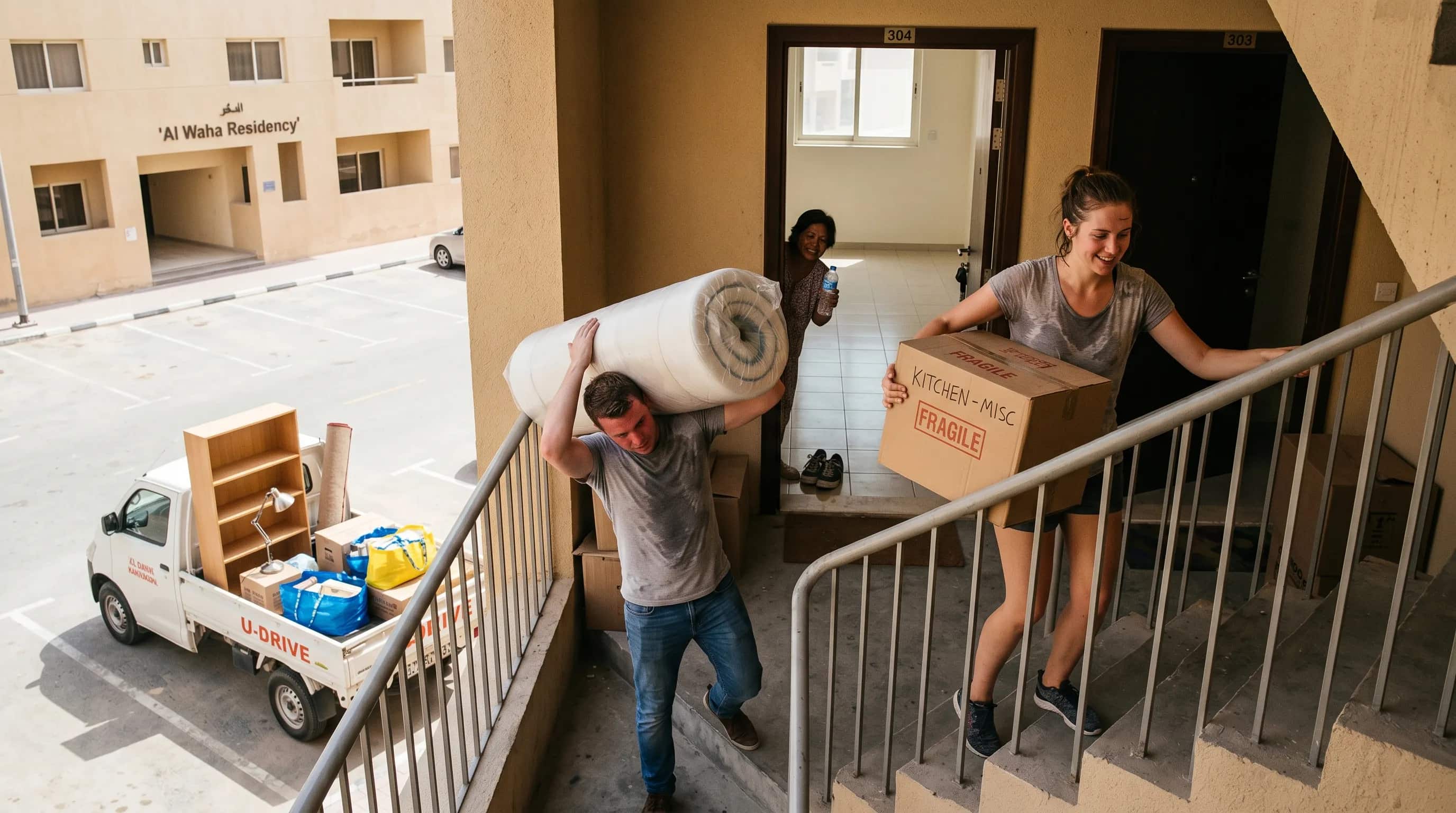
The case for Dubailand apartments in 2026 isn’t that they’re cheap. It’s that they’re cheap relative to the rest of mainland Dubai and the area has reached a tipping point where amenities are catching up with the population. The schools are now real. The retail has filled in. The road network has finally caught up to the residential build-out. Some of the worst parking and access issues that defined Dubailand five years ago have been resolved or are being resolved.
Affordable in Dubailand means studios from around AED 380,000 and one-bedrooms starting around AED 550,000. Those are mainland Dubai prices that nowhere else delivers, including the much-discussed JVC. Rental yields run consistently in the 8% to 10% range, which is at the top of the city. The trade-off is location. Dubailand is genuinely far from Dubai’s centre. The commute to DIFC or Downtown is a real 30 to 45 minute drive depending on time of day. The metro is not yet built out to these communities, though plans exist.
This article walks through what Dubailand actually is, where the apartment value lives in 2026, who buys here and why, what you give up on for the price, our research on Dubailand apartment yields by sub-community, and the honest read on whether the area works for the buyer reading this.
A note before getting into it. The Dubai apartment market in 2026 has a lot of districts competing for the value-conscious buyer. JVC, Discovery Gardens, International City, Dubai South, and Dubai Investment Park all sit roughly in the same price bracket as Dubailand. Dubailand competes by offering newer build quality and more space per dirham in most cases, against the trade-off of being further from central Dubai than most of those alternatives. Worth keeping the comparison in mind when you read the numbers below.
What Dubailand Actually Is in 2026
Dubailand was originally master-planned in the early 2000s as a tourism and leisure district. That vision changed several times. What got built is a sprawling mid-density residential area with some commercial and retail nodes, several theme parks (IMG Worlds, Global Village seasonally), and a road network that has been catching up to the residential build-out for the past decade.
The sub-communities that matter for apartment buyers in 2026:
• Skycourts Towers in the centre of Dubailand. Six 30-storey towers. Studios, 1BR, 2BR. Built 2010-2012 by Pacific Ventures. Among the most affordable mainland Dubai apartments.
• Queue Point by Liwa Heights. A mid-rise community with a strong density of family buyers. Built out between 2014 and 2017.
• Living Legends by Tanmiyat. A villa-and-apartment community with three apartment towers and a golf course running through the middle.
• Dubai Sports City technically borders Dubailand but is its own master plan. Apartment supply skews mid-tier with sports-themed branding.
• Damac Hills 2 (Akoya) apartments. Mid-tier branded units in a master-planned community further south.
• The Villa has limited apartment supply but borders the apartment areas.
This isn’t an exhaustive list. There are several smaller sub-developments and one-off towers within the Dubailand footprint, plus newer launches that have come to market in the past three years adding to the supply.
A useful way to think about the area: drive into Dubailand and you’ll find pockets of mature, settled community alongside pockets of construction and pockets of empty plots. The picture varies a lot by where you stand. The pockets that are mature have full amenity access, established residents, working retail, and reasonable rentability. The construction pockets are where the upside potential sits if you’re patient and the downside risk sits if you need rental income immediately.
Where the Dubailand Apartment Value Lives
The value math in Dubailand looks like this for buyers focused on yield and price-to-quality.
Studios start around AED 380,000 in Skycourts and similar older buildings. The same studio in JVC would cost AED 550,000. In Dubai Marina, AED 850,000 or more. The Dubailand premium is the location penalty, which for some buyers is worth the AED 400,000 saved.
One-bedroom apartments start around AED 550,000 in older Dubailand stock and reach AED 950,000 in newer Living Legends and similar mid-tier developments. JVC one-bedrooms start around AED 750,000 today. The Dubailand discount is real, around 25 to 30 percent like-for-like.
Two-bedroom apartments range from AED 850,000 in older buildings to AED 1.6 million in the better mid-tier launches. Most apartment buyers in Dubailand stop at two-bedroom because the larger units make less sense than spending similar money on a townhouse in Dubailand or Dubai South.
Rental yields run 8% to 10% on a gross basis for the older stock and 7% to 8.5% for the newer mid-tier. Net yields land between 6.5% and 8.5% after service charges and minor maintenance, which makes Dubailand one of the highest-yield apartment districts in the city.
The catch is that not every Dubailand apartment delivers these numbers in practice. Building selection matters as much as area selection. Some Skycourts units rent in two weeks. Others sit for three months. The variance within the cluster is wider than the headline numbers suggest. Some of that comes down to building management, some to specific unit features like balcony orientation and view.
We’ve handled enough Dubailand transactions to flag the buildings that consistently deliver versus the ones that look good on paper but underperform in practice. The team can run that breakdown when you’re ready to look at specific units.
Who Buys in Dubailand
The buyer profile here is different from any of the central Dubai districts. We see three main groups, with some overlap between them.
Yield-focused investors. Often investors with portfolios in central Dubai who want to add a high-yield component without the entry price of a central apartment. Some are Dubai residents, many are based abroad, often UK, India, or other GCC countries. They buy for cash flow, expect modest capital growth, and rarely visit the property after purchase.
First-time Dubai property buyers. People who’ve been renting in Dubai for years and want to stop. The Dubailand price point lets them buy with cash plus a smaller mortgage than a comparable central apartment would require. The area also qualifies for the Dubai Land Department’s various first-time-buyer initiatives in many cases.
Long-term residents trading down. People who lived in Dubai Marina or Downtown when their kids were younger, now have empty nests, and want to free up capital while keeping a Dubai apartment. Dubailand lets them release several million dirhams of equity while still owning property in the emirate.
Marwan Bin Ghalita, the former head of the Real Estate Regulatory Agency, has spoken publicly about the importance of geographic diversity in Dubai’s apartment market and the role areas like Dubailand play in keeping ownership accessible to a broader buyer pool. The data on Dubailand transaction volumes since 2022 supports that view. The area has steadily grown its share of the Dubai apartment market.
What you don’t see much of: investors looking for fast capital appreciation. Dubailand has appreciated, but slower than central Dubai. Anyone chasing 50% gains in three years is looking at the wrong area.
What You Give Up at the Dubailand Price
The trade-offs in Dubailand are real and worth being honest about before committing.
What you give up:
1. Location. Dubailand is genuinely far from central Dubai. Plan for 30 to 45 minute drives to DIFC, Downtown, Dubai Marina, or the airport in normal traffic
2. Metro access. Dubailand is not currently on the metro network. Bus services exist but are not comparable to central Dubai’s network
3. Walking culture. Dubailand is car-dependent. Walking to anything beyond your immediate building is rare
4. Restaurant variety. Improving but still limited. Most residents drive to Mall of the Emirates, Dubai Mall, or City Walk for serious dining
5. Beach access. The Dubai coastline is a 30+ minute drive. Beach trips become planned events rather than spontaneous outings
6. Status. There is a status premium attached to addresses like Downtown, Marina, or Palm Jumeirah that Dubailand does not carry. For some buyers this matters
7. Resale liquidity. The Dubailand secondary market exists and works, but transactions take longer than in central Dubai districts. Plan for 90 to 180 day marketing periods on resale
8. Tenant pool depth. The pool is real but shallower than central Dubai’s. Vacancies between tenants are typically a bit longer
What you keep:
1. Newer build quality in many buildings, particularly anything completed after 2018
2. More space per dirham, often significantly more
3. Higher yields, often 2 to 3 percentage points above central Dubai
4. Lower service charges per square foot in most buildings
5. A quieter daily environment, which some residents actually prefer
6. Easier parking in most buildings, often two spaces with mid-tier units
7. Newer schools and increasingly mature community amenities
8. Access to the southern Dubai corridor, which is where most of the long-term infrastructure investment is concentrated
For some buyers the trade-off works cleanly. For others it doesn’t. The decision usually comes down to whether the buyer’s life genuinely centres on the central Dubai districts (in which case Dubailand makes the daily life worse) or whether they’re happy with a quieter, suburb-style existence (in which case Dubailand is genuinely well-suited to them).
Our Research: Dubailand Apartment Yields by Sub-Community
We pulled data on actual transactions and rentals across Dubailand sub-communities between 2023 and Q1 2025, drawing from our own records and Property Monitor. The cluster-by-cluster breakdown:
Skycourts Towers, average studio price AED 410,000. Average studio rent AED 38,000. Gross yield: 9.3%.
Skycourts Towers, average one-bed price AED 620,000. Average one-bed rent AED 55,000. Gross yield: 8.9%.
Queue Point, average one-bed price AED 680,000. Average one-bed rent AED 58,000. Gross yield: 8.5%.
Living Legends apartments, average one-bed price AED 850,000. Average one-bed rent AED 72,000. Gross yield: 8.5%.
Living Legends apartments, average two-bed price AED 1.35 million. Average two-bed rent AED 115,000. Gross yield: 8.5%.
Dubai Sports City (bordering Dubailand), average one-bed price AED 780,000. Average one-bed rent AED 65,000. Gross yield: 8.3%.
Damac Hills 2 apartments, average one-bed price AED 720,000. Average one-bed rent AED 58,000. Gross yield: 8.1%.
What this tells us. Yields across Dubailand cluster tightly in the 8% to 9.5% range. Skycourts delivers slightly higher gross yields than the newer developments because the entry price is lower while rents have stayed in roughly the same band. Living Legends offers the cleanest mid-tier proposition with consistent 8.5% yields across both one- and two-bedroom units.
Cross-referenced against the Dubai Statistics Centre apartment rental data, the figures broadly match the central tendency. Some individual buildings within these sub-communities outperform or underperform the cluster average by 0.5 to 1.5 percentage points, which is where building selection matters.
For pure yield investors, Skycourts and Queue Point deliver the best gross yields. For investors who want better build quality and longer-term capital growth potential alongside reasonable yields, Living Legends and the newer Dubai Sports City stock are the better picks.
Is Dubailand Right for You
Looking at the data, the answer divides into clean groups.
If you’re a yield-focused investor with an existing Dubai portfolio looking to add a high-yield component, Dubailand makes sense. The numbers are real, the area is maturing, and the entry price keeps the absolute risk modest. Target one of the established sub-communities with at least three years of operating history.
If you’re a first-time Dubai buyer with a budget under AED 1 million and you don’t mind being further out, Dubailand opens up ownership that the central districts would close off. The area is more livable than its reputation suggests once you settle in. The trade-off is real but workable.
If you’re a long-term resident trading down to release capital, Dubailand can work, but check whether the actual lifestyle suits your post-trade life. People who downsize to Dubailand and find themselves driving to Marina or Downtown four times a week often regret the move within a year.
If you want to be in central Dubai, want metro access, want walkable amenities, want beach proximity, or want maximum capital growth, Dubailand is the wrong area. Don’t try to make it work for those goals. The central districts cost more for genuine reasons.
The most reliable Dubailand picks in 2026, based on what we’ve actually seen perform: Skycourts studios for pure yield plays, Living Legends one- and two-beds for balanced yield-and-growth, Queue Point for first-time buyers prioritising community feel. These are not absolute rules. They are the patterns we’ve watched repeat across hundreds of transactions.
One thing worth flagging that doesn’t show up in the yield tables. Dubailand has improved more in the past five years than almost any other Dubai apartment district. The retail nodes that didn’t exist in 2019 are now operating. The schools that were under construction have been open for three or four years. The road improvements that were endlessly delayed have largely been completed. If the past five years are any guide, the next five should bring further infrastructure catch-up rather than the long stall some buyers worry about. That doesn’t change the math today, but it does change the medium-term outlook for buyers thinking about a 7 to 10 year hold.
If you’re considering a specific building or unit, the variance within Dubailand sub-communities is large enough that the building selection matters as much as the area selection. Live listings across Dubailand and similar value-tier Dubai areas are worth filtering through, and the team can walk you through which buildings deliver versus which look better in the brochure than in reality. Our agents handle Dubailand transactions regularly, and if you want to look at the buying process step by step, the service overview covers it. Ready to look seriously? Reach out and we’ll take it from there.
Related stories
Dubai's Established Charm: The Case for Older Homes
In a city focused on the future, I believe the smartest move for many buyers is to look back. Dubai's seasoned communities offer space, character, and surprising value that new builds often can't match.

The True Cost of Owning a Dubai Property
Beyond the purchase price, your annual budget for a Dubai home must account for service charges, utilities, and maintenance. I'll break down every ongoing expense you need to plan for.
Calculating ROI on Dubai Rental Upgrades
As a landlord in Dubai, you can't just follow trends. I'll show you how to calculate the precise ROI of minor property upgrades to genuinely increase your rental yield.
Echoes, in your inbox
One thoughtful email a month. Market insight, new launches, no spam.