

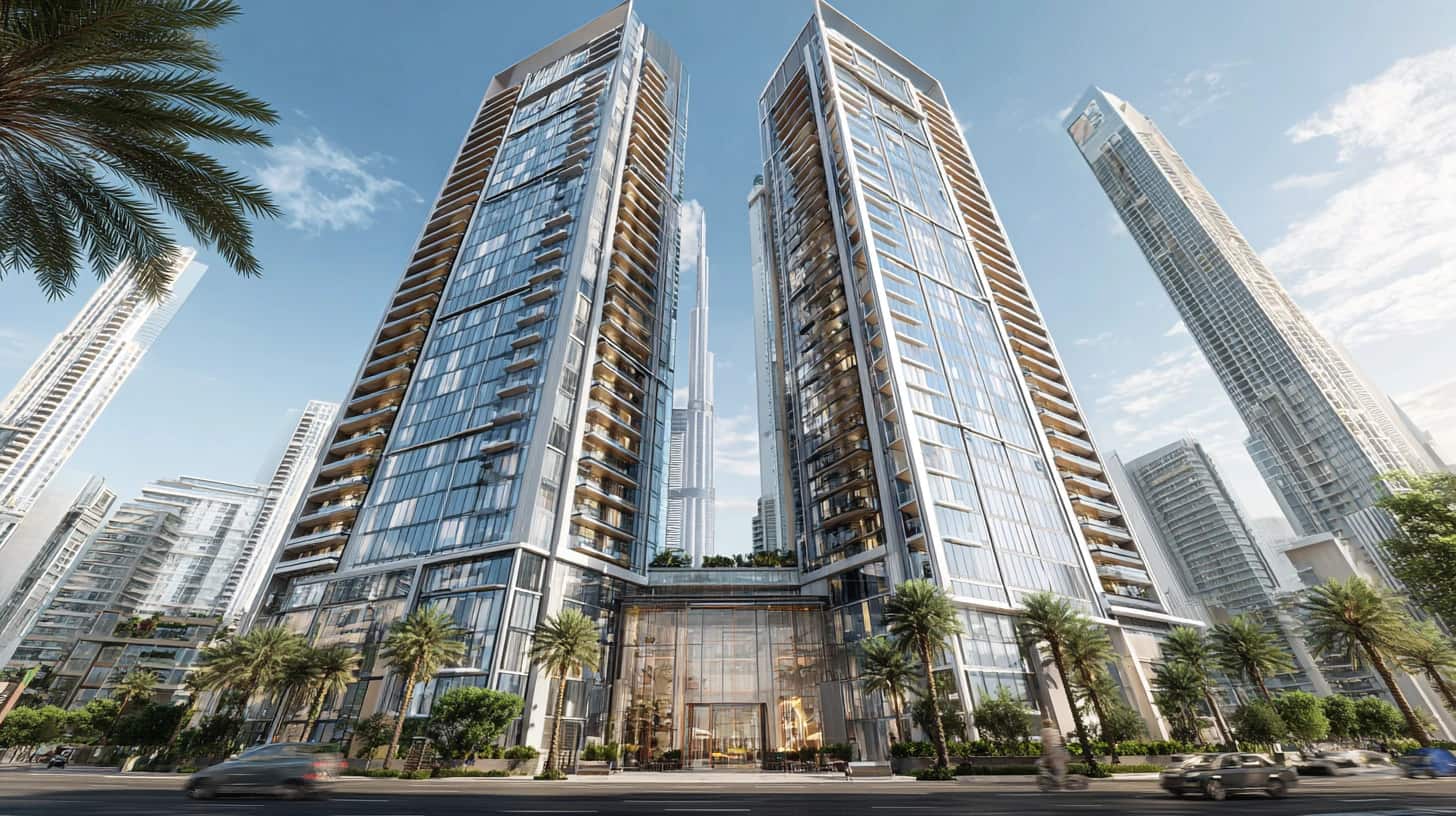
Buying Property in Dubai Without a Down Payment: What's Actually Possible
Zero down payment deals exist in Dubai but most come with conditions. Here's how developer payment plans, rent-to-own, and 2026 financing options actually work.
Zero Down Payment. This term is commonly used in Dubai property sales. It is a term that always grabs the reader’s attention. The reality is: it is true. At least, in certain situations. For certain developers. For certain projects. Not necessarily a defining characteristic of Dubai property sales. Not necessarily applicable to ready properties through conventional bank financing. And not necessarily accurately represented in terms of the full implications.
So, the honest assessment is: it is true. There are legitimate ways to buy in Dubai with zero down payment. All legitimate options will be discussed in this guide. There are options which sound good at first glance but are not necessarily as good when the full implications are understood. They will also be discussed.
By the end of this guide, you will understand whether it is true or not. You will understand whether it is true in terms of which options are legitimate. You will understand whether it is true in terms of who it is suitable for. And you will understand whether it is true in terms of how to make a proper assessment without getting caught out.
Why Zero Down Payment Exists in Dubai
It helps to understand why this exists before evaluating whether it works for you.
Dubai's off-plan market is enormous. Developers need to sell units years before they're built and they compete aggressively for buyers. One of the most effective tools in that competition is payment flexibility. A developer who can say "buy now, pay later" captures buyers who would otherwise wait until they've saved a deposit. That's good for the developer's cash flow and sales velocity and it's good for buyers who want to get into the market at today's prices rather than prices two or three years from now.
Standard UAE mortgage rules require a minimum 20% down payment for properties under AED 5 million for UAE residents, and 25% for non-residents. That's the Central Bank of UAE regulation and banks cannot waive it. So zero down payment in the traditional mortgage sense doesn't exist in Dubai.
What does exist is developer payment plans that defer the deposit requirement, post-handover payment structures where you move in before you've paid in full, and a small number of developer-backed financing schemes that use creative structuring to reduce or eliminate the traditional upfront payment. Understanding which of these you're looking at in any given offer is the critical first step.
"The phrase zero down payment means different things in different contexts," says Khalid Issa, a Dubai mortgage broker who has been structuring property financing deals for both residents and non-residents since 2014. "Sometimes it genuinely means you pay nothing upfront. Sometimes it means you pay 5% instead of 20%. Sometimes it means you pay a booking fee that gets called something else. Reading the actual payment schedule rather than the headline is always the first thing to do."
Option 1: Developer Payment Plans (The Most Common Route)
This is the most accessible and most common version of low or zero upfront buying in Dubai. Developers of off-plan projects routinely offer payment plans that push most of the cost to later in the construction period or to post-handover.
A typical structure might look like this: 5% on booking, 10% on signing the Sale and Purchase Agreement, then a series of installments tied to construction milestones, with the remaining 30% to 40% due on handover or spread over one to three years after handover.
Some developers go further. There are currently projects in Dubai where the booking deposit is 0%, the SPA payment is 5%, and the bulk of the cost is deferred to post-handover on a monthly installment basis. On paper that's close to zero upfront. In practice you're still committing to a total payment schedule that needs to fit your income over the full term.
The key questions to ask about any developer payment plan: What is the total amount paid before handover? What are the post-handover payments structured as? Is the post-handover portion interest-free or does it carry a financing charge? What happens if construction is delayed and milestone payments shift? What's the developer's track record on completing on schedule?
That last question matters more than almost anything else. A developer who delays completion by two years while you're sitting on a half-paid payment plan is a materially different situation from what you agreed to.
Common Developer Payment Plan Structures in Dubai (2024)
Standard
- Pre-handover: 40% to 60%
- On handover: 40%
- Post-handover: 0%
- Interest: None
60/40 Plan
- Pre-handover: 60%
- On handover: 40%
- Post-handover: 0%
- Interest: None
50/50 Plan
- Pre-handover: 50%
- On handover: 50%
- Post-handover: 0%
- Interest: None
Post-Handover Plan
- Pre-handover: 30% to 40%
- On handover: 10%
- Post-handover: 50% to 60% over 2 to 5 years
- Interest: Usually none
Near-Zero Upfront
- Pre-handover: 5% to 10%
- On handover: 10%
- Post-handover: 80% over 5 to 10 years
- Interest: Sometimes applies
Near-zero upfront structures with 5% to 10% before handover are available but typically limited to specific projects from developers with strong balance sheets. Aldar, Emaar, DAMAC, and Nakheel have all offered variations of this at different points.
Option 2: Rent-to-Own Schemes
Rent-to-own is a structure where your monthly rent payments count toward the eventual purchase price of the property. After a defined period, usually three to five years, you have the option to complete the purchase at a pre-agreed price using the accumulated rent credits as your deposit.
This structure genuinely does allow you to move into a property with no traditional upfront deposit. The catch is that the monthly rent in a rent-to-own scheme is typically higher than market rent for the same property, because the premium is essentially a savings mechanism being built into your payment.
The scheme works best for buyers who are confident they will want to complete the purchase at the end of the term and who have a stable long-term income. It works less well if your circumstances change mid-term, because the accumulated credits may be partially or fully forfeited if you exit the scheme before completion depending on the contract terms.
Rent-to-own schemes in Dubai are not as widely available as standard developer payment plans. They tend to appear during softer market periods when developers need to shift inventory. In the current market as of 2026, they're less common than they were in 2019 to 2021 but they do exist on specific developments worth asking about.
Option 3: Developer-Backed Mortgage Financing
A small number of developers have set up financing subsidiaries or partnerships with financial institutions that allow them to offer mortgage-style financing directly, bypassing the Central Bank's standard down payment requirements.
These schemes are structured so that the developer technically sells the property on a deferred payment basis rather than the buyer taking a bank mortgage. The Central Bank minimum down payment rules apply to bank mortgages, not to direct developer financing, which creates the legal space for these structures to exist.
The trade-offs are real. Developer-backed financing typically carries a higher effective interest rate than a bank mortgage. The consumer protections on bank-regulated products may not apply in the same way. And if the developer runs into financial difficulty during the repayment period, the situation can become complicated.
"Developer financing can work but you need a lawyer to look at the contract before you sign anything," says Khalid Issa. "The headline rate and the effective rate are not always the same thing, and the exit clauses need to be understood properly before you commit."
What the Risks Actually Are
It is important to realize that zero or low down payment arrangements are not free money. They are a form of cost deferral and, in some cases, a higher cost in return for a reduced deposit. It is sensible to realize the true commitment here.
Risk in Completion. Off-plan property purchases are the primary mechanism through which low deposit property purchases are made in Dubai. This poses a problem in the event the developer runs into issues. You are left in a position where you have a payment structure tied to a project which may never be completed. The developer’s completion history is a non-optional form of research.
Risk in Overvaluation. In some cases, zero deposit property arrangements overcharge for the property in return for the flexibility offered in the payment structure. This reduces the value proposition in making a low deposit property purchase.
Risk in Cash Flow. Payment structures tied to post-handover are a form of commitment after you have moved in or started renting the property.
We have current off-plan listings across Dubai from developers with strong delivery track records. Our team also handles mortgage services and can help you model the actual total cost of any payment structure before you commit to it. If you want to see what's currently available with flexible payment terms, reach out and we'll walk you through the options.
Related stories

Dubai's Established Charm: The Case for Older Homes
In a city focused on the future, I believe the smartest move for many buyers is to look back. Dubai's seasoned communities offer space, character, and surprising value that new builds often can't match.

The True Cost of Owning a Dubai Property
Beyond the purchase price, your annual budget for a Dubai home must account for service charges, utilities, and maintenance. I'll break down every ongoing expense you need to plan for.

Calculating ROI on Dubai Rental Upgrades
As a landlord in Dubai, you can't just follow trends. I'll show you how to calculate the precise ROI of minor property upgrades to genuinely increase your rental yield.
Echoes, in your inbox
One thoughtful email a month. Market insight, new launches, no spam.