

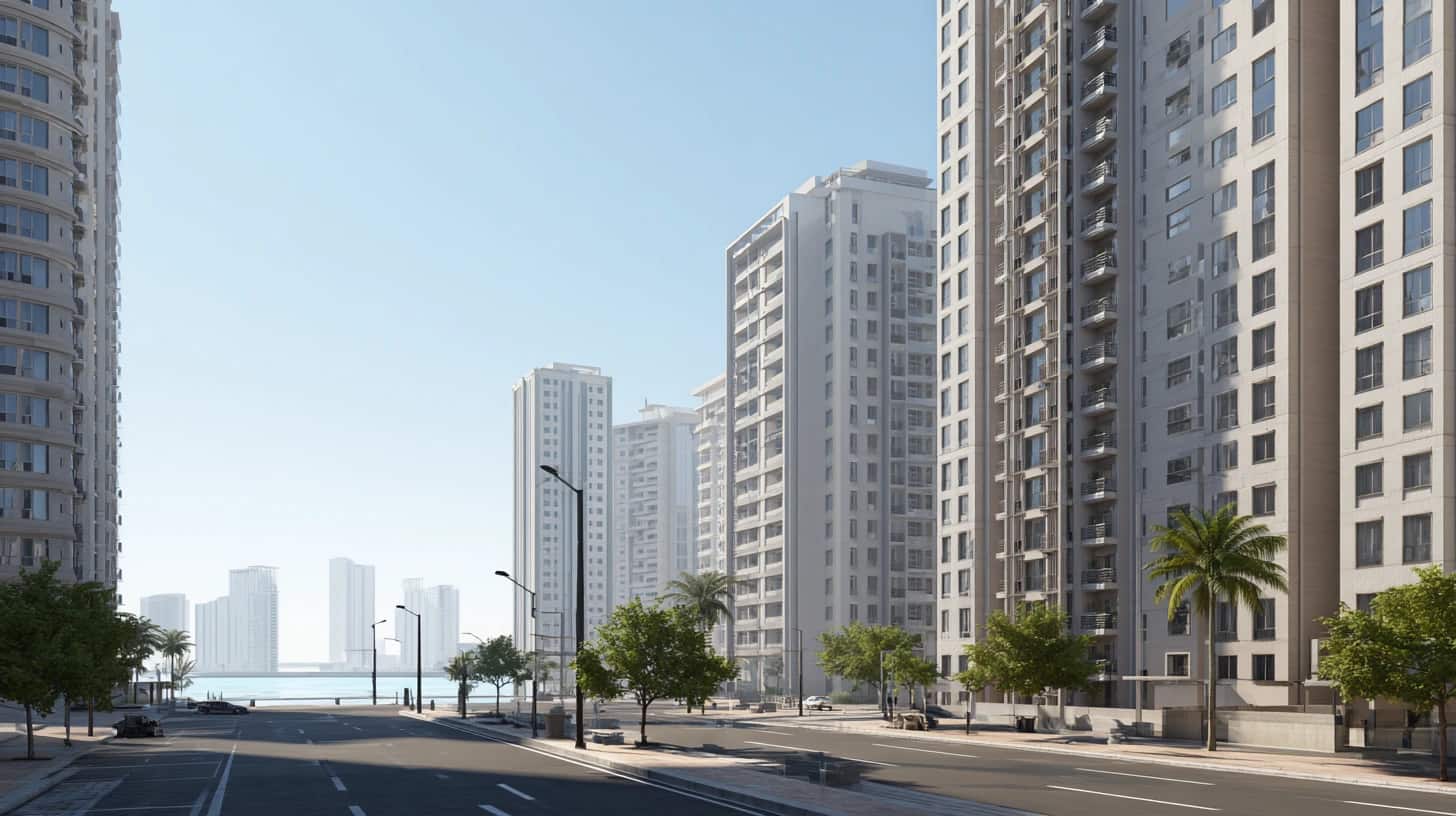
Affordable Housing in Ajman: What Your Money Actually Gets You Here
Ajman is not discussed in the same terms as Dubai. There are no magazine covers, no investment conferences, and no over-the-top announcements regarding the tallest structure in the world or…
Ajman is not discussed in the same terms as Dubai. There are no magazine covers, no investment conferences, and no over-the-top announcements regarding the tallest structure in the world or the largest development in the region. What there is, however, is a market in Ajman in which people buy property, quietly and consistently, year after year, because they recognize the investment potential in Ajman property based on the financial math. And the math is in favor of Ajman. This is no sales pitch; it is the undeniable reality when you divide a realistic rental return by an entry price that has not been inflated over a decade of international hype. If you have been priced out of Dubai, if you are tired of Sharjah’s leasehold issues, or if you are simply looking to understand where in the UAE you can buy a property at a reasonable price with a reasonable return, then Ajman should be a part of a comprehensive review. Not because it is without fault, but because it has some very real limitations which we will examine in detail. At the end of the day, it is a low-entry-price option with freehold ownership available to foreigners, a strong return relative to investment, and a very short distance from Dubai. Successful investors in Ajman are those who go in with a realistic expectation. They didn't expect Dubai; they expected Ajman and understood the implications thereof. They then found it meets their needs precisely. This is the level at which this guide will operate: the current pricing structure, which areas are viable, the state of the rental market, the state of ownership, and the state of the downsides.
Why Ajman Is Getting Serious Attention Right Now
The simple version is price. A two-bedroom apartment in Ajman that would cost AED 1.8 million in Dubai Marina or AED 1.1 million in central Sharjah can be found here for AED 450,000 to AED 650,000. For a first-time buyer, a retiree on a fixed income, or an investor trying to spread a budget across multiple income-generating units, that gap changes what's possible entirely.
But price alone doesn't make a market worth buying in. What makes Ajman interesting right now is that the gap between what you pay and what comes back in rent has been holding up better than most people expect. Gross yields across several established areas are running at 7% to 9%, which is competitive with Dubai's best-performing mid-market locations and significantly above what comparable stock in Abu Dhabi or Sharjah is delivering.
The emirate also extended freehold ownership rights to non-GCC nationals in designated areas several years ago, which opened the door to international buyers who previously had no legal route in, brought new demand into the freehold zones, and helped stabilise prices in the areas that matter most.
"Ajman has been quietly building a legitimate investment case for about five years now," says Leila Mansour, a real estate analyst covering the Northern Emirates who has tracked the Ajman market since 2019. "The fundamentals are there. Low prices, real yields, genuine freehold access. What it lacks is the marketing machine that Dubai has."
Bayut's Northern Emirates Property Report 2024 recorded Ajman's highest ever transaction volume, with residential deals up 31% year on year. Faster growth than both Dubai and Abu Dhabi on a percentage basis, for the third consecutive year. Propertyfinder's UAE Affordability Index Q4 2024 ranked Ajman as the most affordable emirate for residential purchase, with the lowest average price per square foot of any UAE market at AED 430 to AED 580 for established areas.
Ajman vs UAE Market Price Comparison (2024)
Average price per sq ft
- Ajman: AED 430 – 580
- Sharjah: AED 650 – 850
- Dubai: AED 1,400 – 1,600
Average 2-bed price
- Ajman: AED 500K – 700K
- Sharjah: AED 750K – 1.1M
- Dubai: AED 1.8M – 2.5M
Average gross rental yield
- Ajman: 7% – 9%
- Sharjah: 6% – 7.5%
- Dubai: 6.5% – 7.5%
Transaction growth YoY 2024
- Ajman: 31%
- Sharjah: 18%
- Dubai: 20%
Transfer fee
- Ajman: 2%
- Sharjah: 4%
- Dubai: 4%
Freehold for foreigners
- Ajman: Yes (designated zones)
- Sharjah: Limited
- Dubai: Yes (extensive)
That transfer fee gap is easy to overlook. On a AED 600,000 purchase it's AED 12,000 in Ajman versus AED 24,000 in Dubai or Sharjah. Small in absolute terms, meaningful relative to the purchase price and the overall return.
Which Areas Are Actually Worth Buying In
Not all of Ajman is the same. That sounds obvious but it's the thing people most often get wrong when researching from outside the emirate. There are parts of Ajman where prices are low because demand is genuinely low, and that is not the kind of low price you want. Then there are areas where prices are low relative to what you get, and those are the ones worth your attention.
Al Nuaimiya is the most established residential area in the emirate and the one with the most active secondary market. Close to Ajman's main commercial areas, well-connected by road to both Sharjah and Dubai, with a range of apartment stock from older buildings to newer mid-rise developments. Prices here run from AED 350,000 for a one-bedroom in an older building to AED 700,000 for a newer two-bedroom with decent finishes. Rents are steady and tenant demand is consistent because the location works for people commuting to either emirate daily.
Al Rashidiya comes up consistently in conversations about where to actually put money. Newer than Al Nuaimiya, generally higher build quality, attracts a slightly different tenant profile. Prices sit higher too, around AED 500,000 to AED 900,000 for two and three-bedroom units, but yields hold up because rents are correspondingly stronger.
Emirates City needs its own honest paragraph. It was heavily marketed, undersold on delivery, and had infrastructure that took years longer than promised. Vacancy rates were high for an extended period. Things have improved since then. It's not the problem asset it once appeared to be. But liquidity is lower than Al Nuaimiya or Al Rashidiya and resale takes longer. Not the first place we'd point a buyer.
Al Jurf is newer, getting attention for its proximity to the Ajman Corniche, and has some developer projects representing good value at current prices. Earlier in its cycle than the established areas, which means more upside potential and slightly more uncertainty.
"The distinction between Al Nuaimiya and Emirates City matters more than people who haven't spent time in Ajman realise," says Omar Khalil, a residential agent based in the emirate who works primarily with investors from Dubai and Abu Dhabi. "Location within Ajman changes the rental demand, the tenant quality, and how quickly you can sell."
What the Rental Market Is Really Doing
Yields look strong on paper. The question is always whether they hold up in practice. Mostly yes, with caveats worth understanding properly before you model anything.
One-bedroom apartments in Al Nuaimiya and Al Rashidiya are renting at AED 25,000 to AED 40,000 per year. Two-bedrooms are at AED 35,000 to AED 55,000. On a AED 500,000 purchase price a two-bedroom generating AED 42,000 per year is an 8.4% gross yield. That's real. You can actually achieve it in Ajman in a way you genuinely cannot in most of Dubai at current prices.
The caveats. Tenant turnover in Ajman is higher than in Dubai or Abu Dhabi. A significant portion of the tenant base is in lower to mid-income employment and circumstances change more frequently. Void periods of four to eight weeks between tenancies are not unusual. That needs to go into your net yield calculation.
Property management costs are also real here. Managing remotely means an agent fee of 5% to 8% of annual rent is realistic. That brings a headline 8% gross yield down to something closer to 6.5% to 7% net before maintenance and service charges.
"The yield in Ajman is real but it requires more active management than a Dubai investment in a good building," says Leila Mansour. "The tenant base turns over more frequently and the buildings are older on average. Buyers who factor that in do well. Buyers who model it like a Dubai investment sometimes get a nasty surprise."
Property Monitor's Northern Emirates Rental Report Q4 2024 confirmed rental values in Ajman increased 9.3% year on year in 2024, the strongest growth rate in the Northern Emirates and above the UAE residential average of 8.1% for the same period.
Ajman Rental Yield by Area (2024 Estimates)
Data from Bayut, Propertyfinder, and Property Monitor Northern Emirates reports:
- Al Nuaimiya 1-bed: AED 25K to 35K rent vs AED 320K to 450K price, yield ~8.5%
- Al Nuaimiya 2-bed: AED 35K to 48K rent vs AED 450K to 650K price, yield ~8.2%
- Al Rashidiya 2-bed: AED 40K to 55K rent vs AED 500K to 750K price, yield ~7.8%
- Al Rashidiya 3-bed: AED 55K to 70K rent vs AED 700K to 950K price, yield ~7.5%
- Emirates City 2-bed: AED 28K to 38K rent vs AED 350K to 500K price, yield ~7.6%
- Al Jurf 1-bed new build: AED 30K to 40K rent vs AED 380K to 520K price, yield ~8.0%
- Ajman Corniche area 2-bed: AED 42K to 58K rent vs AED 550K to 780K price, yield ~7.9%
Subtract 1.5% to 2% from the gross figures for a realistic net estimate after management fees and typical vacancy.
The Real Downsides. And They Are Real.
Infrastructure is the most frequently cited issue and it's fair. Parts of Ajman, particularly older areas and some of the larger master-planned developments, have road and utility infrastructure that hasn't kept pace with residential growth. The Sharjah-Ajman corridor during peak hours is genuinely difficult. If your tenant is commuting to Dubai daily, that commute is a real factor in whether they renew.
Building quality varies enormously. The gap between a well-maintained newer building and an older one with deferred maintenance in Ajman is wider than in Dubai where building standards have been more consistently enforced. Due diligence on the specific building matters here more than in most markets. Check the service charge history, ask about outstanding maintenance issues, speak to existing residents if possible.
Capital appreciation has been modest. Around 15% to 20% over the last four years in the better areas. Nothing like the 60% gains Dubai has seen. Ajman is an income play more than a capital growth story and buyers who approach it that way tend to come out happy.
Resale liquidity is lower than Dubai. Expect 60 to 90 days rather than 30 days for a realistic exit timeline.
How the Buying Process Works Here
Similar to the rest of the UAE in structure. A sale agreement signed by both parties, a 10% deposit, and registraton with the Ajman Real Estate Regulatory Agency. Transfer fee is 2% of the purchase price, one of the lowest in the UAE and significantly cheaper than Dubai or Sharjah at 4%.
Freehold ownership for non-GCC nationals is available in designated investment zones. Al Nuaimiya, Al Rashidiya, Al Jurf, and a few others. Before buying anything, confirm the specific building sits within a freehold zone. Most reputable agents handle this as standard but ask explicitly rather than assuming.
Mortgage financing is availble from UAE banks though the selection of lenders active in the Northern Emirates is smaller than in Dubai. LTV rules follow UAE-wide standards: up to 80% for residents on properties under AED 5 million, up to 50% for non-residents.
"Ajman is one of the few places in the UAE where a mid-income buyer can genuinely buy outright rather than stretching into a long mortgage," says Omar Khalil. "No debt service means your yield is your return from day one."
We have current listings across Ajman covering the main residential zones and most active freehold areas. For buyers who want to compare Ajman against other Northern Emirates options, Sharjah and Ras Al Khaimah both have distinct cases to make. Ras Al Khaimah in particular has been attracting serious investor attention, with prices on Al Marjan Island moving significantly since the Wynn resort announcement.
Is Ajman the Right Market for You
Depends entirely on what you're optimising for.
Highest potential for capital appreciation? Not in Ajman, but in Dubai. The difference is the international standing and infrastructure investment pipeline.
Genuine rental income on a modest budget? This is where Ajman scores best. Gross rental yields are amongst the highest in the UAE, costs are genuinely low, including the 2% transfer fee, and the freehold proposition is genuine. A prospective buyer with a budget of AED 600,000 to AED 800,000 and a requirement for a rental-generating asset without a need for high levels of debt will find more opportunities here than anywhere else in the UAE.
First-time buyers trying to break into the UAE property market? Well, Ajman is a proposition worth considering. Buying a two-bedroom property outright for under AED 700,000 in a decent location with a strong rental income is not so easy in Dubai or Abu Dhabi.
However, the key here is to understand what you are buying and to match your expectations with the proposition. Ajman is not Dubai, the infrastructure is not as developed, the tenant base is more transient, and the resale market is slower. However, none of these are deal-breakers, providing you are aware of them in advance and factor them into your overall pricing model.
If you want to talk through whether this market fits what you're actually trying to achieve, our team works across all UAE emirates and knows the specific buildings worth looking at in Ajman. Reach out and we'll take it from there.
Related stories
Dubai's Established Charm: The Case for Older Homes
In a city focused on the future, I believe the smartest move for many buyers is to look back. Dubai's seasoned communities offer space, character, and surprising value that new builds often can't match.

The True Cost of Owning a Dubai Property
Beyond the purchase price, your annual budget for a Dubai home must account for service charges, utilities, and maintenance. I'll break down every ongoing expense you need to plan for.

Calculating ROI on Dubai Rental Upgrades
As a landlord in Dubai, you can't just follow trends. I'll show you how to calculate the precise ROI of minor property upgrades to genuinely increase your rental yield.
Echoes, in your inbox
One thoughtful email a month. Market insight, new launches, no spam.