

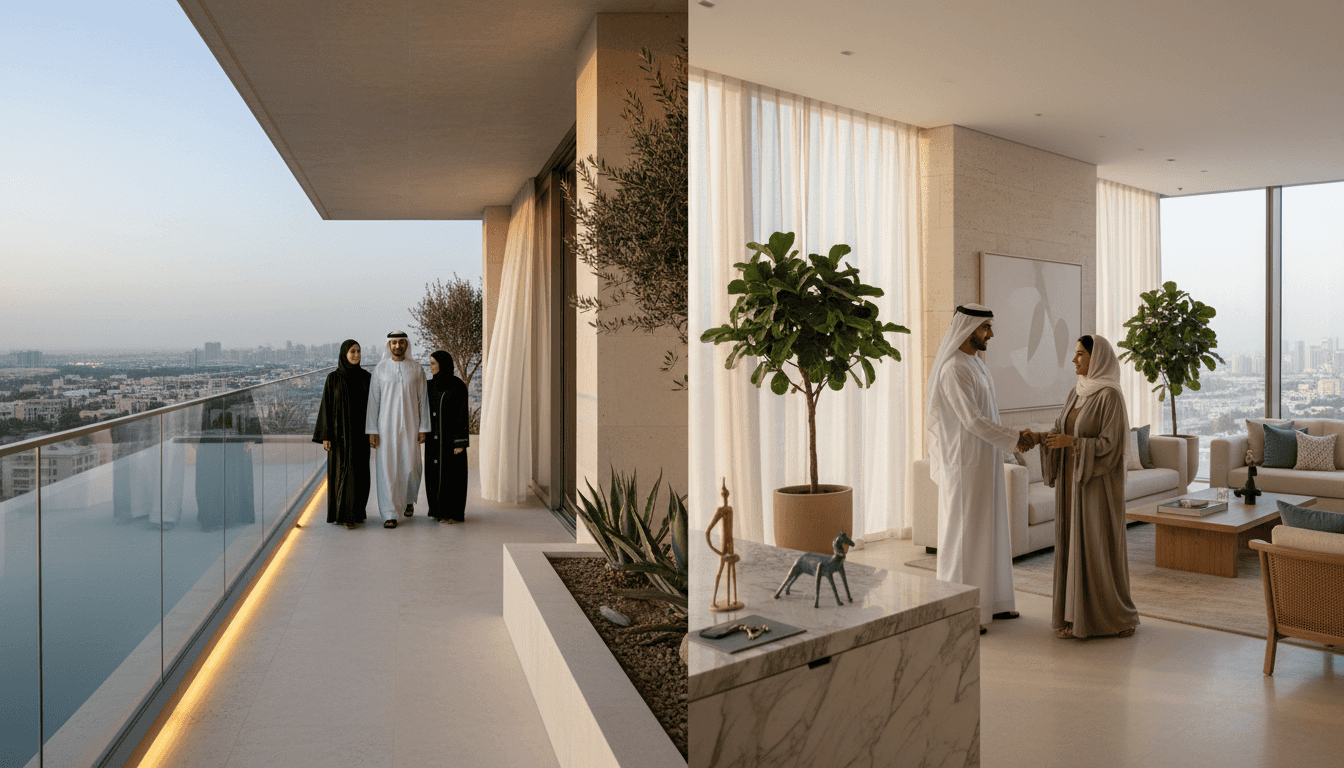
Accelerating Your Dubai Property Sale
Time is often the most critical factor in a property transaction. I'll walk you through the practical, proven strategies we use at Gaia Living to achieve an efficient and fast property sale in Dubai, from preparation to closing.

Selling a property in a market as dynamic as Dubai's isn't just about finding a buyer; it's about navigating the process efficiently. My focus in this guide is on speed and execution, helping you understand the levers you can pull for a fast property sale in Dubai, from initial preparation to the final handshake at the Trustee’s office.
Here's the ground we will cover to streamline your sale:
- The critical pre-listing groundwork that saves weeks of delays.
- How to price your property to attract immediate, serious interest.
- The power of presentation and strategic marketing.
- Navigating the legal paperwork and the role of Form A.
- Managing viewings and negotiating with pace and purpose.
- Understanding the buyer's position, whether they're a cash or mortgage client.
- The final steps: NOCs, Trustee appointments, and the closing process.
1. Pre-Listing: The Foundation for Speed
The fastest property sales are almost always the best prepared. The work you do before your property even hits the market is what prevents the common bottlenecks that can stall a transaction for weeks, or even cause it to collapse entirely. At Gaia Living, when we take on a new listing, our first priority is a thorough pre-listing audit. This isn't just about taking photos; it's about ensuring every piece of administrative and physical prep-work is complete, front-loading the effort to ensure a smooth, quick sale Dubai property owners expect.
First, let’s talk about documentation. Nothing slows a deal down faster than missing paperwork. Before we even draft a listing agreement, I ask my clients to gather a core set of documents. This simple checklist is your first step towards an efficient property sale in UAE. Having these on hand means that the moment a serious buyer emerges, we can proceed without delay. For a standard freehold property, you will need your original Title Deed, a copy of your passport and Emirates ID (if applicable), and if the property is managed by a developer like Emaar Properties or Nakheel, any relevant community documentation. If the property is mortgaged, you must contact your bank immediately to request a liability letter. This document, which states the exact outstanding balance on your loan, is non-negotiable for the buyer and their bank (if they are also using finance). Requesting this early is critical, as banks can sometimes take a week or more to produce it.
Next is the physical state of the property. I advise sellers to address all minor maintenance issues before the first viewing. A dripping tap, a flickering light, or a patch of peeling paint may seem insignificant, but to a buyer, they suggest a lack of care and can create doubt. This is not about undertaking a full renovation. It is about presenting a clean, functional, and welcoming home. A professional deep clean is mandatory in my book. It costs a few hundred dirhams but the return is immense. Consider a fresh coat of neutral paint, especially if your walls are marked or painted in bold colours. The goal is to create a blank canvas where potential buyers can envision their own lives. In communities with high turnover like Dubai Marina or Jumeirah Village Circle (JVC), where buyers have dozens of similar options, a pristine, move-in-ready apartment stands out and commands attention, directly reducing sale time in Dubai.
Finally, understand your obligations as a seller. If your property is tenanted, you need a clear strategy. Is the tenant staying? If so, you'll need a copy of the Ejari-registered tenancy contract and all addendums. The buyer will inherit the tenant under the same terms. If the buyer is an end-user who wishes to occupy the property, you must have issued a 12-month, notarised eviction notice through the proper legal channels. This cannot be an email or a verbal agreement; it must be a formal notice delivered by a notary public or registered post. Having this sorted out before listing prevents major legal and logistical headaches and makes your property far more attractive to the crucial end-user buyer segment. A property with a clear, legally sound vacancy path will always sell faster than one with a complicated tenancy situation.
2. Pricing Strategy: The Market's First Impression
 Featured project
Pricing is the single most powerful tool for achieving a fast property sale in Dubai. Get it right, and you attract a pool of qualified buyers within the first few weeks. Get it wrong, and your property can languish on the market for months, becoming stale and ultimately selling for less than it would have if priced correctly from the start. The first 30 days of a listing are golden. This is when your property is fresh, promoted heavily on portals, and receives the most attention from both agents and direct buyers. Wasting this period with an aspirational price is the most common mistake I see sellers make.
To expedite a Dubai property transaction, your asking price must be rooted in current, verifiable data, not emotion or outdated information. What you paid for the property, what you need to fund your next purchase, or what a neighbour anecdotally sold for six months ago are largely irrelevant to today’s buyer. A serious agent will prepare a Comparative Market Analysis (CMA). This isn't just a list of properties for sale; it's an analysis of *actual, recent transactions* for similar properties in your building or community. At Gaia Living, we use data from the Dubai Land Department's (DLD) REST app and other professional tools to identify properties that have transferred in the last 3-6 months. We compare square footage, view, floor level, condition, and any upgrades.
For example, if you're selling a two-bedroom apartment in Business Bay, we won't just look at other two-beds in the area. We'll narrow it down to your specific tower and those immediately surrounding it. We'll analyse the price per square foot of recent sales, noting the difference between a canal view and a road view, or a high floor versus a low floor. This detailed analysis allows us to establish a credible price bracket. My advice is always to price at the sharp end of this bracket, or even slightly below the most recent comparable sale if speed is your absolute priority. This strategy isn't about undervaluing your asset; it's about generating immediate momentum. An attractive price creates a sense of urgency and can even lead to multiple offers, sometimes pushing the final price back up to, or even above, the market value. It's a far more effective approach than starting high and making incremental price drops over several months.
It is also essential to understand the psychological price barriers. In Dubai, prices are often discussed in large brackets. For instance, there's a significant psychological gap between AED 1,995,000 and AED 2,000,000. Pricing just under these thresholds ensures your property appears in more online searches. A buyer searching for properties 'up to AED 2 million' will see your listing, whereas they would miss it at AED 2,010,000. This simple tactic widens your audience and increases the chances of a quick inquiry. Finally, be clear about what is included in the price. Are kitchen appliances part of the sale? Custom curtains? This clarity in the listing prevents misunderstandings and time-wasting negotiations later in the process.
3. The Power of Presentation and Marketing
Once your property is prepared and priced correctly, the next step in achieving a quick sale is presenting it in the best possible light. In a visually driven market like Dubai, high-quality photography and videography are non-negotiable. The first viewing a buyer has of your property is almost always online, and poor-quality images taken on a phone will get you swiped past in a heartbeat. Insist that your agent uses a professional photographer. The difference is night and day. A professional understands lighting, angles, and composition to make rooms look spacious and appealing. They can capture the key features, the view, and the lifestyle your property offers.
For premium properties, I strongly recommend a video tour or a 3D virtual tour. This is particularly crucial for attracting international or out-of-town buyers, a significant segment of the Dubai market. A well-produced video allows a potential buyer to get a genuine feel for the flow and layout of the home before they even schedule a viewing. This pre-qualifies them; by the time they request an in-person visit, they are already highly interested. This efficiency is key to reducing sale time in Dubai. It weeds out casual browsers and ensures that the people walking through your door are serious prospects. In my experience, listings with high-quality video content receive more qualified leads and spend fewer days on the market.
“The goal of marketing is not just to reach buyers, but to make them feel an emotional connection before they even step inside. That connection is what accelerates a decision from 'I'm interested' to 'I'll make an offer'.”
Beyond visuals, the written description matters. It should be concise, compelling, and focus on the benefits, not just the features. Instead of just stating "3 bedrooms, 4 baths", a good description might say, "A family-friendly layout with three spacious ensuite bedrooms, perfect for privacy, plus a separate guest powder room." Mention unique selling points. Is the community pool just steps away? Is there a new cafe opening downstairs? Does the balcony have a perfect sunset view over the Arabian Ranches golf course? These details help your property stand out. At Gaia Living, we also ensure our listings are syndicated across all major UAE property portals, as well as our own website and social media channels, to guarantee maximum exposure from day one. A multi-channel approach is fundamental to a swift and efficient property sale in the UAE.
4. Legalities and the Form A Agreement
To sell a property in Dubai, you cannot simply instruct multiple agents verbally and hope for the best. The entire process is regulated by the Dubai Land Department and its regulatory arm, RERA (Real Estate Regulatory Agency), to protect all parties. To formally list your property for sale, you must sign a RERA Form A with a registered brokerage. This is the official contract between you, the seller, and your agent. It’s a crucial step for an efficient transaction because it formalises the terms of the listing and empowers your agent to legally market the property.
There are different types of Form A agreements, and understanding them is key. The most common is an open agreement, where you can sign a Form A with multiple agencies. While this might seem like it casts a wider net, in my professional opinion, it often works against a quick sale. When multiple agents are competing with non-exclusive listings, they are less incentivized to invest significant time and marketing budget into your specific property. It can also lead to your property being listed at different prices across various portals, creating confusion and making buyers wary. It signals a lack of strategy and can look desperate.
For sellers who prioritize a fast and organized sale, I almost always recommend signing an exclusive Form A with a single, trusted agency. This might feel counterintuitive, but it creates accountability. When we have an exclusive listing at Gaia Living, we are fully committed. We invest in professional marketing, dedicate significant agent time, and control the narrative of the property. This ensures a consistent price, a high-quality presentation across all platforms, and a single point of contact for all enquiries. Buyers and their agents also prefer dealing with an exclusive agent because they know they have accurate information and a direct line to the seller's representative. This streamlined communication is vital for an expedited Dubai property transaction. An exclusive agreement typically lasts for 90 days, which is a reasonable timeframe to secure a serious offer if the property is priced and presented correctly.
Once the Form A is signed by both you and the agent, it is submitted to the DLD's Trakheesi system for approval. The agent will then receive a Trakheesi permit number, which must be displayed on all advertising for the property. This is a legal requirement. Any property advertised without a valid Trakheesi number is in violation of RERA regulations. Working with an agent who follows this process diligently is a sign of professionalism and ensures your sale starts on the right legal footing, preventing any compliance issues down the line.
5. Managing Viewings and Negotiations with Pace
Once the marketing is live, the focus shifts to managing viewings and handling negotiations. Efficiency here is about being responsive and prepared. When a viewing request comes in, we aim to accommodate it as quickly as possible. Buyers, especially in a fast-moving market, have short attention spans. A 24-48 hour delay in scheduling a viewing can mean they’ve already seen and fallen for another property. If the property is tenanted, this requires good coordination. Providing the tenant with ample notice and perhaps a small gesture of goodwill can make them more cooperative in allowing access for viewings.
During the viewing itself, the property should be in 'show-ready' condition. This means clean, tidy, and with good lighting. I always advise sellers to be absent during viewings. It allows buyers to speak freely with the agent, explore the space without feeling like they are intruding, and form their own unbiased opinion. The agent's job is to highlight the key selling points, answer questions about the community, service charges, and potential yield, and gauge the buyer's level of interest. A good agent listens more than they talk, understanding the buyer’s needs to better frame how the property meets them.
When an offer comes in, the negotiation phase begins. To speed up property closing, it's crucial to handle this with clarity and decisiveness. An offer should always be presented in writing, ideally on a formal Letter of Intent (LOI) or through a clear email, outlining the price, proposed payment terms (cash or mortgage), and any special conditions. Vague, verbal offers are a waste of time. As a seller, you should respond to offers promptly. Leaving a buyer waiting for days creates uncertainty and allows them time to second-guess their decision or look at other options. A quick response, even if it's a counter-offer, maintains momentum.
Be prepared to negotiate, but do so within the framework of your pricing strategy. If you've priced the property competitively, you are in a strong position to hold firm or negotiate minimally. If the offer is close to your target, don't risk losing a committed buyer over a small percentage. Time has a cost. Every month your property remains unsold, you are still liable for service charges, mortgage payments, and other running costs. A slightly lower offer that closes in three weeks can often be financially better than holding out for a higher price that may take three more months to achieve. Once you agree on a price and terms, the next step is to formalise it immediately with a Memorandum of Understanding (MOU) or Sale & Purchase Agreement (SPA), which we will discuss next.
6. Cash vs. Mortgage Buyer: Understanding the Timeline
Once you’ve accepted an offer, the buyer’s financial position becomes the primary determinant of the transaction timeline. The process and duration of a sale to a cash buyer versus a mortgage buyer are significantly different. Understanding this from the outset helps you manage expectations and prepare for the required steps, which is crucial for reducing sale time in Dubai.
A cash buyer offers the fastest route to closing. With no bank involvement on the buyer’s side, the process is streamlined and can be completed in as little as 10-14 business days, though 3-4 weeks is a more typical timeframe. The process is straightforward:
1. MOU & Deposit: You and the buyer sign the MOU (often RERA's Form F) and the buyer provides a deposit cheque, typically 10% of the purchase price, held by the agency. 2. NOC Application: You apply for the No-Objection Certificate (NOC) from the developer. This confirms you have no outstanding service charges or other liabilities. 3. DLD Transfer: Once the NOC is issued, you and the buyer meet at a registered Dubai Land Department Trustee office. The buyer provides the final payment via manager's cheque, you provide the Title Deed, and the transfer is executed. The DLD issues a new Title Deed in the buyer's name, and you receive your funds.
In contrast, a transaction with a mortgage buyer is more complex and takes longer. A realistic timeline is 6-8 weeks from the signing of the MOU. The involvement of the buyer's bank adds several mandatory steps. The bank needs to protect its investment, so it will conduct its own due diligence on both the buyer and the property. The process looks like this:
1. MOU & Deposit: The process starts the same, with a signed MOU and a 10% deposit cheque. 2. Bank Valuation: The buyer’s bank will instruct an independent company to value your property. You must provide access for this valuation. The final loan amount offered to the buyer is based on this valuation, not the sale price. If the valuation comes in lower than the agreed price, it can create a financing gap for the buyer, which may require renegotiation or could even collapse the deal. This is another reason why accurate initial pricing is so important. 3. Final Offer Letter (FOL): If the valuation is successful and the buyer's finances are in order, the bank issues a Final Offer Letter. This is the bank's formal commitment to lend. 4. Seller's Mortgage Clearance: If your property is mortgaged, you must now use the buyer's commitment to get a liability letter from your bank and proceed to clear your own mortgage. The buyer’s bank will often coordinate directly with your bank to settle the outstanding loan. 5. NOC & Trustee Appointment: Only after the mortgages are sorted can you apply for the developer NOC and then book the final transfer appointment at the Trustee office.
While a cash offer is always faster, you should not automatically dismiss a pre-approved mortgage buyer. A buyer with a valid mortgage pre-approval from a reputable UAE bank is a serious contender. At Gaia Living, we vet buyers carefully, asking to see their pre-approval letter to ensure they are qualified before we even present their offer to you. This diligence helps to ensure that a mortgage-backed offer has a high probability of success.
7. The Final Stretch: NOC, Trustee, and Closing Costs
The final stage of the sale begins after the MOU is signed and the buyer has their finances in order. This phase is about administrative execution. The key documents are the No-Objection Certificate (NOC) and the final transfer at the Trustee office. Navigating this efficiently is the last step to speed up property closing. The NOC is a document issued by the master developer (e.g., Emaar, Meraas, Damac Properties) or the building's owners' association manager. It certifies that you, the seller, have settled all outstanding service charges and have no other liabilities related to the property. You cannot transfer the property at the DLD without this document.
The process for obtaining the NOC involves submitting an application, usually online, and paying a fee. This fee can range from AED 500 to AED 5,000 (+VAT), depending on the developer. The developer will then conduct their own inspection of the property to ensure no unauthorized modifications have been made. If they find any alterations that violate their regulations (e.g., removed walls, unapproved extensions), they may require you to rectify them before issuing the NOC. This is why it’s critical to have addressed any such issues during your pre-listing preparation. The issuance time for an NOC can vary from a few days to a couple of weeks, so it's wise to apply for it as soon as the MOU is signed and the buyer’s financing is confirmed.
Once the NOC is in hand, the final step is the transfer meeting at a DLD-approved Trustee office. These are private service centers authorized to handle property transfers. Your agent will book this appointment. All parties — seller, buyer, and their respective agents, must attend. If there are mortgages involved, bank representatives will also be present. At this meeting, the final exchange of funds and documents takes place. The buyer will provide manager's cheques for the balance of the sale price payable to you, and for the various fees. As a seller, your primary costs at this stage are typically the agency fee and the NOC fee you already paid. The buyer customarily bears the bulk of the closing costs. Here's a typical breakdown of costs paid at the Trustee office, usually by the buyer:
- DLD Transfer Fee: 4% of the purchase price.
- DLD Knowledge & Innovation Fee: AED 580.
- Trustee Office Fee: Approximately AED 4,200 (for properties over AED 500k).
- Agency Fee: 2% of the purchase price (+ 5% VAT), often split between buyer and seller depending on the deal, but the seller is responsible for their agent's fee.
You will hand over the original Title Deed and the keys, and the Trustee office will process the transaction. The DLD system is highly efficient. Within hours, a new digital Title Deed is issued in the buyer's name and emailed to them. You will receive your manager's cheque at the meeting itself. This concludes the sale. Being prepared with all your documents and having a proactive agent who books appointments and coordinates with all parties is the key to making this final, crucial step a smooth and speedy conclusion to your property sale.
The speed of your Dubai property sale is not a matter of luck; it is the direct result of a deliberate strategy. From meticulous preparation and data-driven pricing to clean legal paperwork and decisive negotiation, every step you take before and during the listing process compounds to create an efficient, predictable, and fast transaction.
Sources
- Dubai Land Department (DLD): https://dubailand.gov.ae/en/
- Real Estate Regulatory Agency (RERA): Part of the DLD, regulations accessible via the DLD portal.
- UAE Government Portal (Property Regulations): https://u.ae/en/information-and-services/business/dubai-business-licences-and-permits/real-estate-and-properties-permit
- Central Bank of the UAE (Mortgage Regulations): https://www.centralbank.ae/
Questions, answered
- What is the single biggest factor for a fast property sale in Dubai?
- Pricing your property correctly from day one is the most critical factor. An overpriced property will languish on the market, while a price aligned with current, comparable data attracts serious buyers immediately and accelerates the entire process.
- What documents do I need to prepare for a quick property sale?
- To expedite the sale, have your Title Deed, passport/Emirates ID copies, and any NOCs from the developer ready. If the property is mortgaged, you'll also need a liability letter from your bank stating the outstanding amount. Being prepared prevents significant delays.
- How long does a typical property sale in Dubai take?
- A straightforward cash-to-cash transaction can take 3-4 weeks from the signing of the sales agreement (MOU) to the final transfer. A sale involving a mortgage buyer typically takes 6-8 weeks due to bank valuation and approval processes.
- Can I sell my Dubai property if it's currently rented?
- Yes, you can sell a tenanted property. You must either transfer the existing tenancy contract to the new owner, or provide the tenant with a 12-month notarised eviction notice if the buyer intends to occupy it themselves. This must be handled correctly to avoid legal issues.
- What are the main costs for a seller in Dubai?
- The primary costs for a seller are the real estate agency fee (typically 2% + VAT), the No-Objection Certificate (NOC) fee from the developer (AED 500 - 5,000), and any mortgage settlement fees. The 4% Dubai Land Department transfer fee is customarily paid by the buyer.
- Is professional staging really necessary to sell my property faster?
- In my experience, professional staging makes a significant difference, especially in competitive segments. It helps buyers emotionally connect with the space and can lead to faster, higher offers, making it a worthwhile investment for an efficient sale.

Daniel covers both sides of the deal — how to buy well and how to sell for more. He's obsessed with process, timelines, and the fees nobody warns you about.
Related stories

Your Guide to Property Handover in Dubai
Receiving the keys to your new off-plan property in Dubai is an exciting moment. As a first-time buyer specialist, I’ll walk you through every step of the developer handover process, from the final payment to the moment you step inside your new home.

The True Cost of Early Resale in Dubai
Selling an off-plan property in Dubai before completion is a popular investment strategy, but the financial implications of assignment sales go far beyond the headline profit. We break down the real costs and processes involved.

Corporate Leases vs. Individual Tenants: A Net Yield Analysis
A detailed, numbers-first breakdown comparing the true net rental yield for Dubai landlords from corporate leases versus individual tenants.
Echoes, in your inbox
One thoughtful email a month. Market insight, new launches, no spam.