

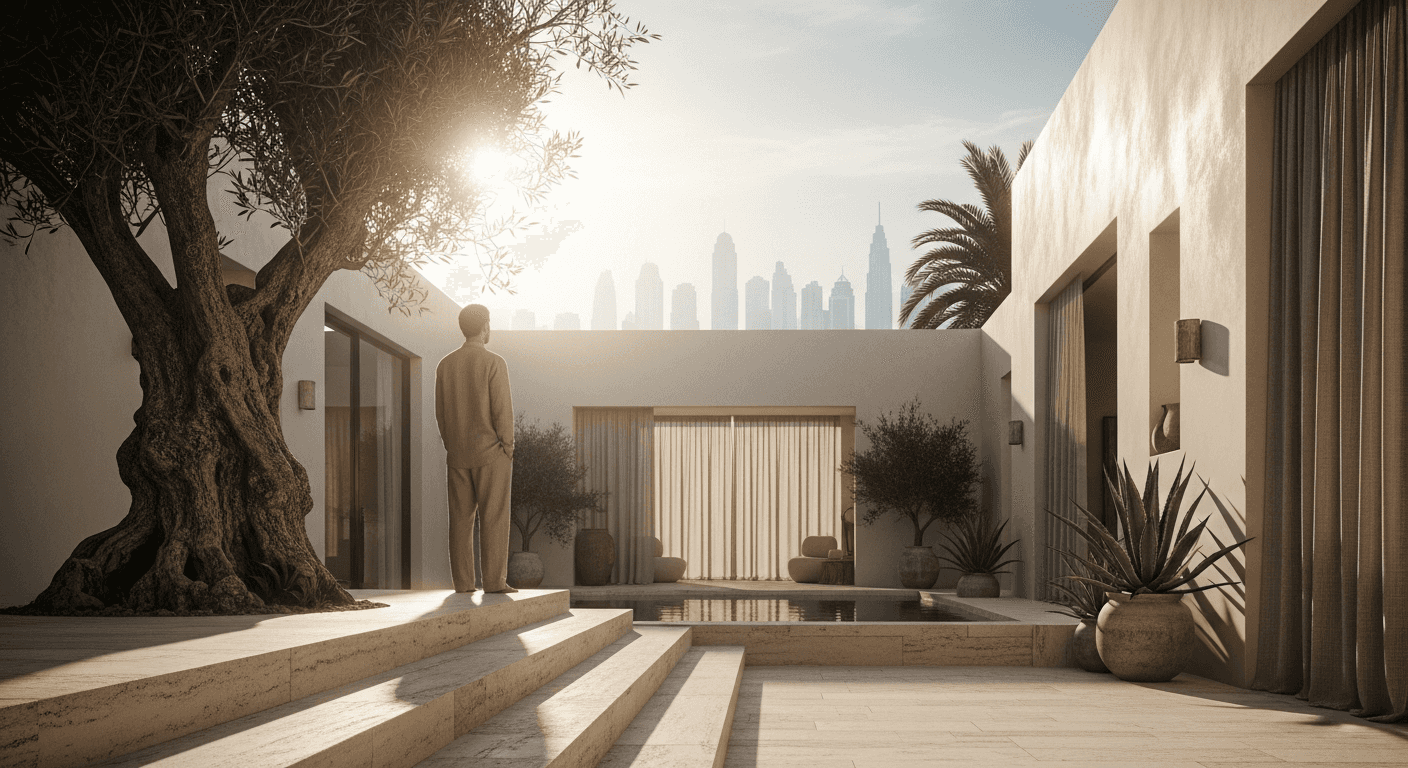
Villa vs. Apartment: Why Dubai's Markets Move Apart
Dubai's residential property segments are not a monolith. I'll explain the distinct demand drivers, supply dynamics, and performance metrics that cause villa and townhouse prices to move differently from apartments.

Dubai’s property market is often discussed as a single entity, but this is a fundamental misreading. The two core residential property segments — villas/townhouses and apartments, operate on different tracks, driven by distinct buyer profiles, supply constraints, and economic sensitivities.
Here's what I'll explore in detail:
- The core thesis: two markets, not one
- Demand Drivers: The End-User vs. The Investor
- Supply Dynamics: Elasticity, Land, and Speed to Market
- Price and Rental Performance: A Tale of Two Indices
- The Townhouse Segment: A Unique Hybrid Market
- A Practical Cost Comparison: Unpacking the Full Financial Picture
- Future Outlook: What Will Shape These Segments Next?
The Thesis: Two Markets, Not One
As the head of market research at Gaia Living, my role is to look beyond the headline figures and understand the mechanics that truly drive value. One of the most persistent oversimplifications I encounter is the treatment of Dubai’s residential market as a single, homogenous whole. When you read about the “Dubai property market” rising by a certain percentage, that single number obscures two very different stories. The reality is that we have at least two distinct markets operating in parallel: the market for apartments and the market for villas and townhouses. Lumping them together is like averaging the climate of a rainforest and a desert; the resulting figure describes neither place accurately.
An investor considering a one-bedroom apartment in JVC is operating with a completely different set of assumptions, risks, and goals than a family looking to purchase a five-bedroom villa in Dubai Hills. Their financing is different, their holding period is different, and what they define as a successful outcome is different. The forces of supply and demand that act upon these two assets are not the same. For anyone looking to browse properties for sale in Dubai, recognising this divergence is the first step toward making a sound strategic decision. It prevents you from applying the logic of one market to the other, a mistake that can lead to misaligned expectations and poor investment outcomes.
This analysis is grounded in years of observing these patterns and is supported by public data from official sources like the Dubai Land Department. Throughout this report, I will break down why these residential property segments Dubai offers behave so differently. We will examine the profile of the typical buyer for each, the stark contrast in their supply pipelines, and how this translates into divergent trends in price and rental performance. Understanding the bifurcation of the market isn't just an academic exercise. It is the essential framework for accurately assessing opportunities and risks, whether you are an end-user searching for a family home or a global investor seeking to allocate capital effectively into one of the world's most dynamic real estate environments.
Demand Drivers: The End-User vs. The Investor
 Featured project
The most fundamental difference between the villa and apartment markets lies in the primary source of demand for each. While there is always some overlap, the centre of gravity for each segment is a distinct buyer profile with a unique set of motivations. The apartment market, particularly for studios, one-, and two-bedroom units, is predominantly the domain of the investor. These buyers are often rational, numbers-driven, and geographically diverse. They are attracted to Dubai for its strong rental yields, potential for capital appreciation, and its status as a global safe-haven. Their key metrics are return on investment (ROI), net yield, and ease of management. An investor in Singapore or London can purchase an apartment in Dubai Marina, have it managed by a local firm, and generate a relatively predictable income stream.
This investor-led demand makes the apartment segment highly sensitive to global financial conditions, currency fluctuations, and, crucially, rental market performance. The target tenants for these units are typically young professionals, couples, and expatriates on short- to medium-term contracts who value proximity to business hubs like DIFC or lifestyle destinations. The transient nature of a portion of this tenant base means that rental demand can be fluid, directly impacting investor sentiment. Consequently, the apartment market often acts as a barometer for the health of the broader economy and its ability to attract and retain talent. It's a market defined by spreadsheets and yield calculations, where the asset is primarily a financial instrument.
In stark contrast, the villa and townhouse market is overwhelmingly driven by end-users. Here, the primary motivation is not financial yield but utility and quality of life. The typical buyer is a family, either new to Dubai or upgrading from a smaller property, seeking to put down long-term roots. The key driver is the powerful, emotional pull of the family home demand Dubai has seen accelerate in recent years. These buyers are looking for space, privacy, a garden for their children, and access to community amenities like parks, schools, and clinics. Their purchase is a lifestyle decision first and an investment second. This is why established villa communities like Arabian Ranches or Jumeirah Golf Estates remain perpetually in demand.
This end-user dominance makes the villa market less reactive to short-term financial volatility and more closely tied to deeper demographic trends: population growth, family formation, and wealth migration. Government initiatives like the long-term Golden Visa have been a massive catalyst here. The increased residency security gives high-net-worth families the confidence to make multi-million-dirham commitments to a primary home. This demand is less about chasing a 7% rental yield and more about securing a permanent, high-quality life in the city. The decision-making process is longer, more emotional, and focused on factors that don't appear on a spreadsheet, like the reputation of a nearby school or the feel of a community park.
Supply Dynamics: Elasticity, Land, and Speed to Market
The second critical point of divergence is supply. The physical and economic realities of constructing apartments versus villas are worlds apart, leading to vastly different supply elasticities. The supply of apartments is relatively elastic, meaning it can respond more quickly and in greater volume to shifts in demand. A developer like Emaar Properties can acquire a single, moderately sized plot in an area like Business Bay and launch a tower containing hundreds of residential units. The vertical nature of apartment construction allows for immense density on a small footprint. This makes the delivery of new apartment stock a faster and more scalable process.
This elasticity acts as a natural moderator on price growth. When demand for apartments surges, the visible pipeline of new towers launching and under construction gives the market a clear path to absorbing that demand over the medium term. While a surge in demand will still cause prices to rise, the potential for a large volume of new supply to eventually come online tends to create a psychological ceiling. We have seen this play out in communities like JVC and Business Bay, where tens of thousands of units have been delivered over the last decade, meeting robust demand but also ensuring the market remains competitive. This continuous pipeline is a key reason why apartment price growth, while healthy, has generally been more measured than that of villas in the recent cycle.
Conversely, the supply of villas and townhouses is highly inelastic. These properties are land-intensive by definition. A single villa occupies a plot that could potentially house dozens of apartments in a high-rise. To build a new villa community with hundreds of homes, a developer like Nakheel requires a vast tract of land. In a maturing city like Dubai, such large, well-located parcels are increasingly scarce and expensive. As a result, new villa communities are often located further from the city centre, in developing areas like Dubai South or the outer reaches of Dubailand. This inherent scarcity of prime, developable land for villas is the segment's most important and enduring characteristic.
This inelasticity means that when a wave of demand hits the villa market — as it did during the global 'flight to space' post-2020, supply simply cannot respond in the short to medium term. It takes years to plan, service, and build out a large villa community. This creates a significant lag between a demand shock and a supply response. The result is that the existing, finite stock of villas in established, desirable communities absorbs the entirety of this new demand. This dynamic is the primary engine behind the explosive villa price growth Dubai has experienced. With too much capital and too many families chasing too few homes, prices in the secondary market are driven up sharply. This supply-side constraint is a structural feature of the villa market and a key consideration for any long-term investment thesis.
“The debate isn't about which property type is 'better'. It's about understanding that you're investing in two different economic engines: one powered by yield-seeking global investors, the other by families putting down roots in Dubai.”
Price and Rental Performance: A Tale of Two Indices
The differences in demand and supply naturally translate into divergent performance trajectories for price and rent. Analysing the market cycle since 2020 provides a clear illustration of this phenomenon. Following the initial lockdowns, we witnessed a paradigm shift in housing preferences globally, and Dubai was at the forefront of this trend. The demand for more space, home offices, and private outdoor areas became paramount. This shift disproportionately benefited the villa and townhouse segment. As a result, both sales prices and rental rates for villas began to accelerate at a pace that far outstripped the apartment segment. Major public property indices consistently showed villa price appreciation running at double or even triple the rate of apartments during the peak recovery phase.
This rapid appreciation in the villa segment was a direct consequence of the supply and demand mechanics I've outlined. A surge of end-user and high-net-worth demand crashed into a market with a fixed, inelastic supply of ready homes. Families who could afford it were willing to pay a significant premium for the immediate utility of a larger home with a garden. This created intense competition for available listings and drove the market upwards. In contrast, while the apartment market also recovered strongly, its performance was more subdued. The more elastic supply and a demand base more focused on investment yields meant that price growth was robust but not as explosive. The Dubai villa vs apartment investment equation tilted heavily towards capital growth for villas during this period.
However, the story for rental yields is the inverse. Historically and currently, apartments almost always offer a higher gross rental yield than villas. The reason is simple mathematics. While a villa's absolute rent in dirhams is higher, its purchase price is proportionally much higher still. An investor can often acquire two or three well-located apartments for the price of one villa, and the combined rental income from those apartments will typically exceed the income from the single villa. For example, it is common to find apartments in high-demand rental areas offering gross yields of 6-8% or even higher, whereas villas in prime family communities might yield 4-6%. This makes apartments the clear choice for investors whose primary objective is maximizing passive income and cash flow.
This creates the classic investor dilemma. Do you prioritize strong, immediate cash flow, which the apartment market provides? Or do you prioritize the potential for higher capital appreciation, a feature the villa market has demonstrated powerfully in the recent cycle? There is no single correct answer; it depends entirely on the investor's individual strategy, risk appetite, and time horizon. An investor building a retirement portfolio might favour the predictable income from a diversified portfolio of apartments, while a high-net-worth individual might see a luxury villa on Palm Jumeirah as a long-term store of value with significant growth potential.
The Townhouse Segment: A Unique Hybrid Market
Sitting strategically between the two poles of the market is the townhouse segment. In my view, townhouses represent one of the most interesting and dynamic parts of Dubai's residential landscape. They are a hybrid product that captures desirable attributes from both apartments and villas, creating a unique value proposition. For buyers, a townhouse offers a clear step up from apartment living, providing multiple floors, a private entrance, and often a small garden or patio. It delivers the sense of a 'house' and the community feel that families crave, fulfilling much of the same emotional and practical needs as a villa. However, it does so at a more accessible price point than a larger, detached villa, and with lower running costs and less maintenance.
This balanced profile makes townhouses exceptionally appealing to a broad and growing demographic. They are a perfect fit for young families buying their first home, professional couples who want more space than an apartment allows, and even downsizers coming from large villas who want to remain in a ground-oriented home without the upkeep. This deep and diverse demand base has been a key factor in the segment's strong performance. The prevailing townhouse market trends Dubai has witnessed show this segment often tracks the price performance of villas more closely than apartments, benefiting from the same 'flight to space' but at a price that a larger portion of the population can afford.
Developers have been quick to recognise this market sweet spot. Master developers have made townhouses a central component of their new communities, creating entire neighbourhoods dedicated to this property type. Areas like Town Square, Maple and Sidra in Dubai Hills, and large parts of Damac Hills and Damac Hills II are proof of the success of this model. These communities are designed from the ground up with the townhouse resident in mind, featuring shared pools, parks, jogging tracks, and retail centres that create a self-contained and desirable living environment. For investors, townhouses can represent a compelling middle ground, offering a blend of the capital appreciation potential seen in villas and more robust rental yields than their larger counterparts, making them a popular choice for those with a long-term outlook. You can explore many of these options on our property-launches page.
A Practical Cost Comparison: Unpacking the Full Financial Picture
To make the distinction between these markets concrete, it's essential to break down the actual costs involved. The headline purchase price is only one part of the story. Upfront fees and ongoing running costs differ significantly and must be factored into any investment decision. Let's walk through two realistic, hypothetical scenarios: the purchase of a two-bedroom apartment in a premium building and a three-bedroom townhouse in a popular family community.
First, the upfront transaction costs. These are mandated by the Dubai Land Department (DLD) and are a fixed percentage of the purchase price, meaning a more expensive property incurs significantly higher fees. The single largest cost is the DLD transfer fee, which stands at 4% of the property value. Let's compare:
Upfront Costs for a Hypothetical AED 2,500,000 Apartment: - Purchase Price: AED 2,500,000 - DLD Transfer Fee (4%): AED 100,000 - DLD Admin Fees: approx. AED 4,200 - Real Estate Agency Fee (2% + 5% VAT): AED 52,500 - Trustee Office Fee for transfer: approx. AED 4,200 - Developer's No Objection Certificate (NOC) Fee: approx. AED 1,575 - Total Upfront Fees (approx.): AED 162,475 - If mortgaged, a 20% down payment would be AED 500,000, and a mortgage registration fee of 0.25% of the loan amount (AED 2M) would add AED 5,000.
Upfront Costs for a Hypothetical AED 3,500,000 Townhouse: - Purchase Price: AED 3,500,000 - DLD Transfer Fee (4%): AED 140,000 - DLD Admin Fees: approx. AED 4,200 - Real Estate Agency Fee (2% + 5% VAT): AED 73,500 - Trustee Office Fee for transfer: approx. AED 4,200 - Developer's No Objection Certificate (NOC) Fee: approx. AED 2,625 - Total Upfront Fees (approx.): AED 224,525 - If mortgaged, a 20% down payment for a resident would be AED 700,000, and the mortgage registration fee on a loan of AED 2.8M would be AED 7,000.
Beyond the initial purchase, the ongoing running costs also diverge, primarily due to service charges. Service charges are annual fees paid by homeowners to cover the maintenance and management of common areas. For apartments, these charges are calculated per square foot and cover the upkeep of the lobby, elevators, hallways, building facade, swimming pool, gym, and security. They are typically higher, ranging from AED 15 to over AED 35 per square foot in premium buildings. For a 1,500 sq. Ft. apartment at AED 22 psf, this would be AED 33,000 annually. For villas and townhouses, service charges are much lower — often between AED 3 and AED 8 per square foot. They cover the maintenance of community roads, landscaping, parks, and security. On a 2,500 sq. Ft. townhouse, a charge of AED 5 psf would be AED 12,500 annually. However, the villa owner is then personally responsible for all maintenance of their own property, including the structure, garden, and private pool, which must be budgeted for separately. This difference in cost structure is a critical factor in calculating the true net yield of an investment property.
Future Outlook: What Will Shape These Segments Next?
Looking ahead, I expect the fundamental divergence between these two markets to persist, though the pace of change may normalize. For the villa and townhouse market, the era of extreme, rapid price growth is likely behind us. A period of more stable, sustainable growth is a more probable and healthier scenario. The core demand drivers remain firmly in place. Dubai's economic agenda continues to attract businesses and talent, fuelling population growth. The city's appeal as a safe, modern hub for families is stronger than ever. These factors will sustain the deep-seated demand for family homes. Supply will remain the key variable. While developers are launching new villa and townhouse projects, they are largely in emerging areas. The finite stock of villas in prime, central locations like those developed by Meraas or Emaar will likely see continued value preservation and steady growth, acting as a true store of value.
For the apartment market, I believe the future is bright, particularly in the prime and branded residence segments. As villa prices have risen, they have hit an affordability ceiling for many potential buyers. This will inevitably cause demand to spill over into the next best alternative: large, well-appointed apartments in desirable locations. A three or four-bedroom apartment in a luxury tower in Downtown Dubai or on Emaar Beachfront offers a compelling lifestyle for families who value amenities and location over a private garden. We are already seeing this trend play out, with strong demand for premium, family-sized apartments. The market for smaller, investor-grade units will continue to be tied to rental performance and global economic sentiment. As long as Dubai's economy thrives and attracts talent, the rental demand that underpins this segment will remain robust.
Ultimately, the future of Dubai's residential market will be shaped by the continued implementation of progressive government policies and the vision of its master developers. The Dubai Economic Agenda (D33), which aims to double the size of the city's economy, is the single most important factor. If successful, this will translate into a significant increase in population, creating demand for all types of housing. The challenge and opportunity for developers will be to create integrated, master-planned communities that cater to this growing and diversifying population. We will see more mixed-use developments that blend apartments, townhouses, and villas with retail, commercial, and green spaces, creating complete ecosystems where people can live, work, and play. This thoughtful, long-term approach to urban planning is what will continue to set Dubai apart and support the health of all its residential property segments.
The Dubai property market has bifurcated. Apartments are largely driven by investor metrics like rental yield and are sensitive to global capital flows. Villas and townhouses are driven by end-user fundamentals like family formation and quality of life, with price movements dictated by a chronic scarcity of prime, landed supply. Your investment strategy must begin by choosing which of these two distinct markets you wish to enter.
Sources
- Dubai Land Department (DLD) - https://dubailand.gov.ae
- Central Bank of the UAE - https://www.centralbank.ae
- UAE Government Portal - https://u.ae
Questions, answered
- Which is a better investment in Dubai, a villa or an apartment?
- It depends entirely on your goals. Apartments often offer higher rental yields and lower entry prices, appealing to investors seeking cash flow. Villas cater to end-user families, offering strong capital appreciation potential driven by demand for space, but require a larger capital outlay.
- Why have villa prices grown faster than apartment prices recently?
- Post-pandemic shifts in lifestyle preferences created a surge in demand for space, privacy, and community amenities. This family home demand in Dubai, coupled with a relatively limited supply of new villas, led to the significant villa price growth the market has seen.
- Are townhouses a good middle-ground investment in Dubai?
- Yes, townhouses can offer an excellent balance. They provide more space and community feel than apartments at a more accessible price point than detached villas, making them attractive to both end-user families and long-term investors.
- What are the typical service charges for villas versus apartments in Dubai?
- Apartment service charges are higher on a per-square-foot basis, ranging from AED 15 to AED 35+, covering building maintenance, pools, and security. Villa service charges are much lower, often AED 3 to AED 8 per square foot, as they only cover community infrastructure, with the owner responsible for the individual property's upkeep.
- How does supply affect the villa and apartment markets differently?
- The supply of new apartments is more elastic and can be delivered in large volumes within high-rise towers. Villa development requires significantly more land, making new supply scarcer and slower to come to market, which can amplify price movements when demand is high.
- Does the Golden Visa program impact both property segments equally?
- The Golden Visa program boosts demand across all residential property segments. Its impact is particularly noticeable in the villa and luxury apartment markets, as high-net-worth individuals and families relocating to Dubai often seek larger, premium homes for long-term residency.

Amara translates DLD transaction data, supply pipelines, and macro signals into clear calls on where Dubai's market is heading. She writes the numbers most brokers only feel.
Related stories
Calculating ROI on Dubai Rental Upgrades
As a landlord in Dubai, you can't just follow trends. I'll show you how to calculate the precise ROI of minor property upgrades to genuinely increase your rental yield.

Off-Plan vs Ready: The Real Cost of Capital
I analyse the fundamental trade-off every Dubai investor faces: the lure of off-plan capital growth versus the security of immediate rental income from a ready property.

Beyond the Gates: Dubai's Boutique Villa Sanctuaries
I'm exploring the small, exclusive villa communities that offer a real sense of place, moving beyond the well-trodden path of Dubai's famous megaprojects to find homes with genuine character.
Echoes, in your inbox
One thoughtful email a month. Market insight, new launches, no spam.