

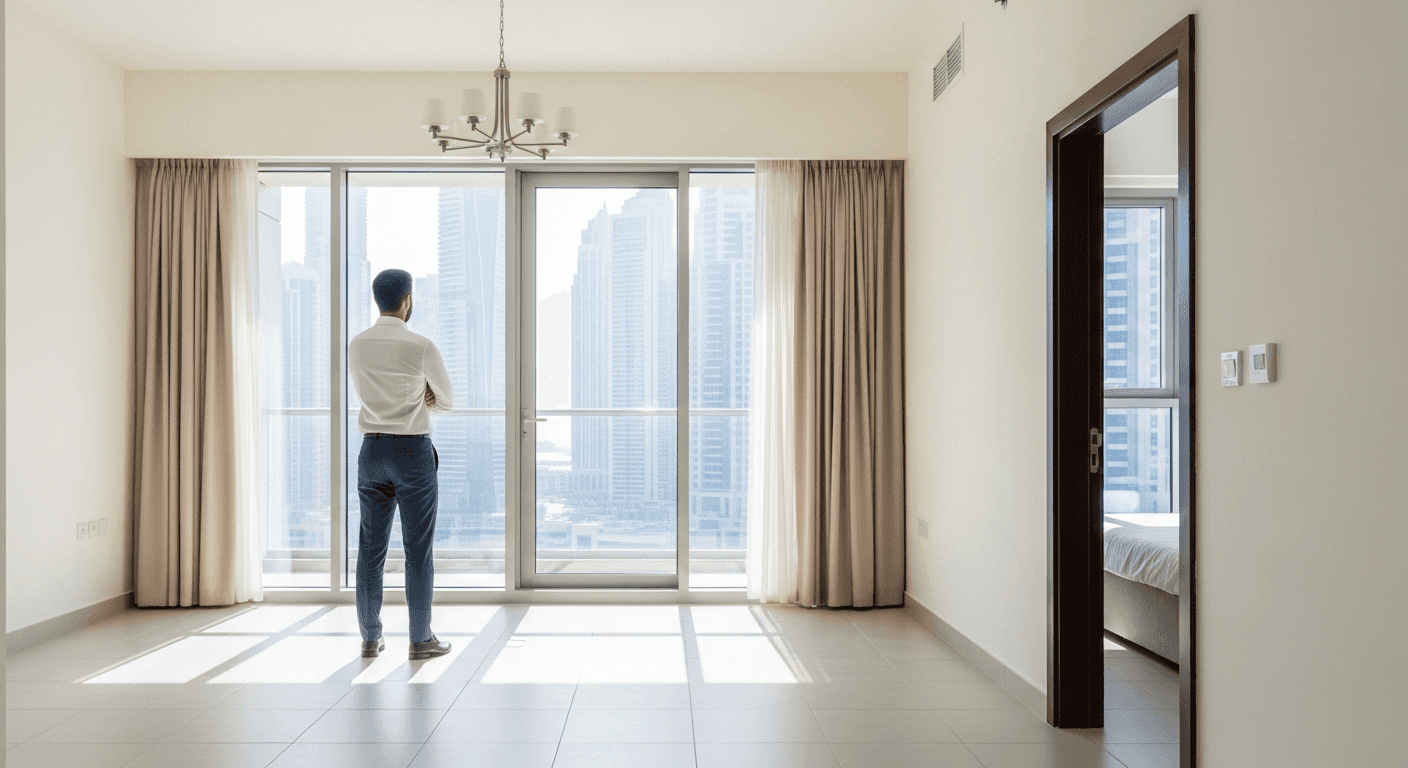
Vacancy: The Silent Killer of Your Dubai Rental Yield
Vacancy is more than just lost rent; it's a cascade of costs that can decimate your net yield. This is my numbers-first guide to calculating the true financial damage of an empty property and the strategies to ensure it never happens to you.

As a yield analyst, I see investors make the same critical error time and time again: they fall in love with a gross yield calculation. They see a 7% or 8% figure on a spreadsheet and their eyes light up, but this number is a fantasy. The reality of your return is net yield, and the most efficient destroyer of that number is vacancy. A single empty month doesn't just cost you one month's rent; it triggers a domino effect of expenses that can wipe out a huge portion of your annual profit. Understanding the **rental vacancy cost Dubai** landlords face is the first step toward building a truly resilient property portfolio.
Here's what we'll explore in this deep-dive analysis:
- The full spectrum of costs incurred during a void period, beyond just lost rent.
- A line-by-line calculation showing the brutal impact of vacancy on net yield.
- The common, avoidable mistakes landlords make that lead to empty properties.
- Proactive renewal strategies to keep good tenants and guarantee income continuity.
- How to use data to price your rental for minimum downtime.
- The non-negotiable standards for property presentation and marketing.
- A pragmatic comparison of short-term vs. Long-term rental models through the lens of vacancy.
- The financial case for professional property management as a yield-protection tool.
The Anatomy of Vacancy: More Than Just Lost Rent
When a landlord thinks about an empty apartment, their mind immediately goes to the missing rent cheque. If the rent is AED 10,000 a month, a month of vacancy costs AED 10,000. Simple. Except, it's not. This is the tip of the iceberg. The true financial picture of a void period is far bleaker because of the costs that are either ongoing or newly triggered by the tenant's departure. This is the Dubai landlord downtime that eats into your returns from multiple directions. Thinking the cost is just the rent is a dangerous oversimplification that leads to poor decision-making, like holding out for an unrealistically high rent for weeks on end.
The first category is the direct cost: lost potential income. Every day the property sits empty is a day's worth of rent you will never get back. It is an irrecoverable loss. But the analysis can't stop there. The second, more insidious category is the ongoing fixed costs. Your obligations as an owner do not pause just because you don't have a tenant. The largest of these is the service charge. Whether you own a studio in Jumeirah Village Circle or a villa in Dubai Hills, these fees are due quarterly or annually, regardless of occupancy. A vacant property still needs basic utilities; you must keep the DEWA account active to run the air conditioning periodically to prevent mould and to allow for viewings, incurring minimum monthly charges.
Then there's the third category: turnover costs. These are the expenses directly associated with finding a new tenant. They begin the moment your old tenant gives notice. You will likely have to pay for some level of marketing, whether it's fees for premium placement on property portals or the commission for the agent who finds your new tenant, which is typically 5% of the annual rent. Before you can even market the property, you must prepare it. This almost always involves a full repaint, a professional deep cleaning service, and any minor repairs that have come to light. These are not optional if you want to attract a quality tenant quickly. Cumulatively, these direct, fixed, and turnover costs create a financial vortex that makes every additional day of vacancy exponentially more damaging to your bottom line.
The Brutal Math: Quantifying the Net Yield Impact of Vacancy
 Featured project
To truly appreciate the destructive power of vacancy, we have to run the numbers. Let's move away from abstract concepts and into a concrete, real-world scenario. First, it is essential to distinguish between the two metrics investors often confuse: Gross Yield and Net Yield. Gross yield is the simple, seductive calculation often used in marketing materials. It's simply the total annual rent divided by the property's purchase price. Net yield is the metric that matters to your bank account. It's your actual profit after *all* expenses are deducted, divided by your *total* capital outlay (including purchase costs like DLD fees).
Let's model a typical one-bedroom apartment in a popular area like Dubai Marina. I'll use realistic, conservative figures:
Property & Investment Details: * Purchase Price: AED 1,500,000 * Upfront Costs (4% DLD fee, 2% agency fee, trustee fees, etc.): approx. AED 95,000 * Total Initial Investment: AED 1,595,000 * Expected Annual Rent: AED 120,000 (AED 10,000 per month)
From this, the Gross Yield is (120,000 / 1,500,000) * 100 = 8.0%. This looks fantastic on paper. Now, let's calculate the Net Yield, assuming a perfect scenario with zero vacancy.
Annual Operating Costs (No Vacancy): * Service Charges (approx. 900 sq ft @ AED 20/sq ft): AED 18,000 * Property Management Fee (5% of rent): AED 6,000 * Maintenance Fund (prudent to set aside 2% of rent): AED 2,400 * Total Annual Costs: AED 26,400
Net Annual Income = AED 120,000 - AED 26,400 = AED 93,600 **Net Yield (0% Vacancy): (93,600 / 1,595,000) * 100 = 5.87%**
Already, the reality of operating costs has brought our yield down from a rosy 8% to a more realistic 5.87%. Now, let's introduce just one month of vacancy between tenants. The picture changes dramatically.
The Cost of One Month's Vacancy: * Lost Rent: AED 10,000 * Turnover Maintenance: Repaint (AED 2,000), Deep Clean (AED 500), AC Service (AED 350) = AED 2,850 * New Tenant Agent Fee (leasing commission): 5% of AED 120,000 = AED 6,000 * Ongoing Costs During Void Month (Service Charge, DEWA minimums): approx. AED 1,700 * Total Cost of Vacancy Event: 10,000 + 2,850 + 6,000 + 1,700 = AED 20,550
That one-month gap didn't cost AED 10,000; it cost over AED 20,000. Your net income for the year is no longer AED 93,600. It's now AED 93,600 - AED 20,550 = AED 73,050. Let's recalculate the yield:
**Net Yield (1 month Vacancy): (73,050 / 1,595,000) * 100 = 4.58%**
Just four weeks of downtime has vaporised 1.29% of your annual yield, a 22% reduction in your expected profit. This is the net yield impact vacancy has in the real world. When you see the maths laid out like this, the idea of holding out for an extra AED 500 in monthly rent at the cost of a three-week void period becomes financial lunacy. Maximising your return is not about squeezing every last dirham from the rent; it's about ruthlessly minimizing void periods.
Common Landlord Mistakes That Invite Void Periods
Vacancy is rarely a matter of bad luck. In my experience, it's almost always a direct consequence of specific, avoidable landlord behaviours. Understanding these common pitfalls is the first step to ensuring your property isn't the one gathering dust on the portals. The most frequent and damaging mistake I see is setting an unrealistic rent. A landlord sees a few optimistic listings for similar units in their building, anchors their expectation to the highest price, and refuses to budge. This ignores the crucial difference between asking price and achieved price. The only data that matters is the price on signed, registered tenancy contracts, which is available via the Dubai Land Department's resources. An overpriced property gets no calls. While the landlord holds out for a fantasy number, correctly priced units are being rented, and the vacancy clock is ticking, racking up the costs we just calculated.
A close second is neglecting the property's condition. Dubai's rental market is incredibly competitive. Tenants, especially those with families looking at communities like Arabian Ranches or those seeking a premium lifestyle in Downtown Dubai, have a huge amount of choice. They will not choose a property with dated finishes, scuffed walls, a tired bathroom, or a grimy kitchen when a pristine alternative is available next door for the same price. I've seen landlords lose a great tenant over a refusal to spend a few thousand dirhams on a simple repaint and deep clean. It's a classic case of being penny-wise and pound-foolish, as the cost of the eventual prolonged vacancy will far exceed the initial savings.
Then there's the issue of responsiveness, or lack thereof. A landlord who is slow to respond to viewing requests, takes days to consider an offer, or is inflexible during negotiations will consistently lose out to more agile owners. The best tenants are decisive. They are often viewing multiple properties in a single day. If they make an offer on your apartment and don't hear back within a few hours, they will have already moved on and likely signed a contract for another unit by the next morning. This sluggishness also impacts tenant retention. An owner who is difficult to reach and slow to approve essential maintenance during the tenancy is creating a reason for that tenant to leave at renewal. The temporary inconvenience of fixing a leaking pipe is nothing compared to the financial headache of finding a whole new tenant.
Finally, poor marketing is a self-inflicted wound. In the digital age, your property's first viewing happens online. Dark, blurry photos taken on a smartphone, a single-line description, and no floor plan are the hallmarks of a listing that is destined to be ignored. Professional photography is not a luxury; it is a fundamental requirement. A compelling description that highlights the unique selling points of the property and its location, and a clear floor plan are essential tools. Listing with a non-specialist agent who doesn't understand the building or the target demographic is equally ineffective. All these mistakes add up, creating friction in the leasing process and extending the costly period of Dubai landlord downtime.
The Proactive Renewal: Your First Line of Defence
The single most effective strategy for maximizing rental occupancy is to eliminate the vacancy period altogether. This means retaining your existing tenant. A successful renewal is the most profitable outcome for any landlord, as it sidesteps all the turnover costs — agent fees, marketing, repainting, and cleaning, that we've detailed. The Dubai legal framework, governed by RERA, provides a clear structure for this process. A landlord must give a tenant 90 days' notice of any new rent terms, including an increase, before the contract's expiration. This 90-day window should be seen not as a deadline, but as the end-point of a conversation that you should have initiated much earlier.
In my view, the ideal time to begin the renewal process is 120 days before the lease expires. This is not about sending a cold, legalistic notice. It is about opening a channel of communication. A simple, friendly check-in with the tenant (or via your property manager) can reveal a wealth of information. Are they happy in the property? Have they had any maintenance issues that need addressing? What are their intentions for the coming year? This initial contact does two things: it makes the tenant feel valued, and it gives you, the landlord, crucial intelligence. If the tenant is planning to leave, you now have an extra 30 days to prepare your marketing strategy and minimise the coming void.
If the tenant wishes to stay, you can then present a renewal offer that is both fair and financially astute. This is where data, not emotion, should guide you. Use the RERA Rental Index calculator, available on the Dubai Land Department (DLD) website, as your starting point. This tool will tell you what, if any, rent increase is legally permissible. Supplement this with current market data for comparable transacted rentals in your building and area. A good agent can provide this in minutes. The key is to balance the potential for a higher rent against the guaranteed cost of a vacancy. As our earlier math showed, even if the market allows for a 5% increase, risking a month's vacancy to achieve it is a losing proposition. Offering a modest 2-3% increase, or even a renewal at the same rent if the market is flat, can be the most profitable move when it guarantees another 12 months of uninterrupted income.
This proactive approach transforms the renewal from a confrontational negotiation into a collaborative process. Small gestures of goodwill in the months leading up to renewal — such as promptly authorising a minor repair or agreeing to a professional AC cleaning, can pay huge dividends. They build a positive relationship and signal that you are a responsible landlord worth staying with. A happy tenant is a long-term tenant, and a long-term tenant is the ultimate shield against the yield-destroying impact of vacancy.
Data-Driven Pricing: Setting Rent for Maximum Occupancy
When a renewal isn't possible and you're facing a vacant property, the single most critical factor in minimizing void periods is setting the correct asking price from day one. Every day you spend overpriced is a day you are paying for your own mistake. The goal is not to achieve the highest possible rent; the goal is to secure a quality, paying tenant in the shortest possible time. This requires a surgical, data-driven approach, completely detached from emotion or anecdote. The common landlord refrain, "But my neighbour gets AED X for his apartment," is one of the most dangerous phrases in property investment. It's irrelevant. You don't know the specifics of your neighbour's unit, its condition, the terms of the deal, or even if the claim is true.
Your pricing strategy must be built on a foundation of hard data from verifiable sources. The gold standard is the official data on registered tenancy contracts from the Dubai Land Department. This information can be accessed through the Dubai REST application and other DLD resources. This tells you what properties are *actually* renting for, not what landlords are *hoping* to get. This is your reality check. The second source is an analysis of your direct competition: the active listings on major property portals. This data should be handled with caution. These are asking prices, and many will be inflated. However, they show you what a prospective tenant will see when they search. Your aim is to position your property to be the most compelling value proposition among them.
Once you have this data — the floor provided by recent transactions and the ceiling set by current listings, you can formulate a pricing strategy. My advice is simple: price your property to be at or slightly *below* the median market price for identical, available units. If five similar apartments in your tower are listed between AED 110,000 and AED 115,000, listing at AED 108,000 or AED 109,000 is the smartest move you can make. This tactic is not about being the cheapest; it is about being the most attractive. It ensures your property is on the shortlist of every serious tenant. It generates a high volume of enquiries and viewings in the first 48-72 hours, creating a sense of competition and allowing you to choose the best-qualified applicant rather than being forced to accept the first lowball offer that comes along after weeks of silence.
Consider the financial trade-off. Let's say you price your property at AED 115,000 and it takes four weeks to find a tenant. Your total rent for the year is 11 x 115,000 / 12 = AED 105,416 for that period. If you had priced it at AED 109,000 and rented it in the first week, your rent for the same period would be roughly AED 109,000. The slightly lower monthly rent is completely eclipsed by the gain from almost a full month of additional occupancy. The market has no patience for vanity pricing. Price it right, price it to move, and you will always come out ahead on your net yield.
“Vacancy is not an event that happens *to* a landlord; it is the result of choices a landlord makes.”
The Art of Presentation: Making Your Property Irresistible
Once you've set a competitive price, the next step in compressing your vacancy period is ensuring the property presents flawlessly. In a market as saturated with choice as Dubai, tenants will dismiss a property in seconds for reasons that are entirely within the landlord's control. A successful leasing campaign is won or lost on presentation. This starts long before the first viewing, with the quality of your online marketing. Professional photography is not a negotiable expense. It is the single most important marketing investment you will make. Bright, wide-angled, high-resolution images that accurately represent the space are your ticket to getting a potential tenant to even consider a viewing.
Alongside professional photos, a comprehensive marketing package must include a detailed floor plan with measurements and a video walkthrough. In an international city like Dubai, many potential tenants begin their search from overseas. A video tour can be the deciding factor that gives them the confidence to make an offer, sight unseen. The written description is equally important. It should be concise, accurate, and focus on the benefits, not just the features. Don't just say "large balcony"; say "spacious balcony with sunset views over the marina." Highlight unique selling points, recent upgrades, and building amenities. This is your chance to tell a story and help a tenant imagine themselves living in the space.
For physical viewings, the property must be in what I call "hotel-ready" condition. This is non-negotiable. Before listing, the property needs a thorough turnover maintenance cycle. This should always include:
- Painting: A fresh coat of neutral-coloured paint (like Jotun's Eggshell White) makes a space feel clean, bright, and new. At a minimum, all scuffs and marks should be addressed.
- Professional Deep Cleaning: This goes beyond a simple domestic clean. It includes windows (inside and out), balconies, grout, AC vents, and behind appliances.
- AC & Systems Check: The AC must be serviced and blowing cold. Nothing kills a viewing in July faster than a stuffy, hot apartment. All lightbulbs must work, and there should be no dripping taps or running toilets.
- Pest Control: A preventative service is a wise investment, ensuring no unwelcome surprises for the new tenant.
For the viewings themselves, the property should be prepared. The AC should be switched on at least 30 minutes beforehand to ensure a cool, comfortable environment. All lights should be on, and blinds or curtains should be open to maximise natural light. The property should smell clean and fresh. These may seem like small details, but they create a powerful first impression. A tenant who walks into a bright, cool, clean, and fresh-smelling apartment immediately feels more confident about the property and the landlord behind it. This attention to detail communicates quality and care, making your property stand out and leading to faster, better offers.
Short-Term Lets vs. Long-Term Leases: A Yield-Focused Comparison
Many investors, particularly those new to the Dubai market, are drawn to the allure of short-term letting. The nightly rates advertised for holiday homes in prime areas like Palm Jumeirah or Jumeirah Beach Residence (JBR) seem to promise astronomical returns compared to a standard annual lease. However, when viewed through the critical lens of vacancy and net yield, the picture becomes far more complex. It's crucial to understand that in the short-term rental business, vacancy isn't a bug; it's a feature. The entire business model revolves around managing and pricing for empty nights. An 80% occupancy rate is considered excellent, which means the property is guaranteed to be empty and generating zero income for 73 nights a year.
The gross revenue can certainly be higher. A two-bedroom apartment that rents for AED 200,000 annually (AED 16,667/month) might achieve an average of AED 1,000 per night on the short-term market. At 80% occupancy, that's AED 292,000 in gross revenue. This appears to be a clear win. However, the cost side of the equation is dramatically different. Short-term rentals carry a huge operational and financial burden that simply doesn't exist with a long-term lease. The landlord is responsible for all utilities (DEWA, internet, TV), which are consumed at a much higher rate. The property must be fully furnished to a high standard, which is a significant upfront capital expense. Then there are the commissions paid to platforms like Airbnb or Booking.com (15-20%), the fees for a licensed holiday home management company (another 15-20%), DTCM permit fees, and tourism dirham collection and remittance.
Beyond that, the wear and tear on a short-term rental is substantially higher. Furniture, appliances, and linens need to be replaced far more frequently. Professional cleaning is required after every single guest, which can add up to thousands of dirhams every month. When you meticulously subtract all these additional costs from the higher gross revenue, the resulting net yield is often surprisingly similar to, or even lower than, that of a well-managed long-term lease. The workload and risk, however, are exponentially greater. You are effectively running a small hotel, with daily operational demands and constant exposure to seasonal fluctuations in tourism. For a passive investor seeking stable, predictable returns, a long-term lease with a focus on maximizing rental occupancy through tenant retention remains, in my professional opinion, the superior strategy. It provides a steady income stream with far fewer variables and significantly less hands-on management.
The Agent as Your Asset: Reducing Downtime with Professional Management
Throughout this analysis, a common thread has emerged: minimizing vacancy requires time, expertise, data, and proactive effort. For many private landlords, especially those based overseas or with busy professional lives, managing these elements effectively is a significant challenge. This is where many investors make a final, critical miscalculation: viewing a property manager's fee as a mere cost to be avoided rather than a strategic investment in yield protection. A professional property management team is your front-line defence against the financial drain of vacancy. The fee, typically between 5-8% of the annual rent, is often dwarfed by the cost of a single, poorly managed void period.
Let's revisit our earlier calculation. The total cost of a one-month vacancy on our AED 1.5M apartment was AED 20,550. The annual property management fee was AED 6,000. By avoiding just that one month of vacancy, the property manager has paid for their fee more than three times over. How do they achieve this? First, through expert pricing. At Gaia Living, we don't guess; we use real-time transactional data to price your property with surgical precision from day one, eliminating the weeks of stagnation caused by wishful thinking. Second, through superior marketing. We maintain a database of qualified, pre-screened tenants and use a multi-channel marketing strategy that ensures your property gets maximum exposure to the right audience, not just a passive listing on one portal.
Third, and perhaps most importantly, is process efficiency. We have a dedicated team to handle enquiries and conduct viewings 7 days a week. When an offer is made, we have the systems in place to conduct due diligence and present it to you for a decision within hours, not days. We handle the entire contracting and Ejari registration process, ensuring it's done quickly and correctly. This speed is critical for securing the best tenants before they are snapped up by the competition. Finally, we manage the entire tenant relationship, including the proactive renewal strategy I outlined earlier. By serving as a professional and responsive point of contact for the tenant, we handle maintenance requests efficiently and foster the goodwill that leads to long-term occupancy.
An empty property is not just a dormant asset; it is an active liability, costing you money every single day. The most successful investors in Dubai are not those who chase the highest possible gross yield on paper, but those who obsess over maximising their net yield in reality. They understand that the key to this is not just owning property, but managing it with a relentless focus on minimising the silent killer of returns: vacancy.
Ultimately, your property's net yield is a direct reflection of your strategy towards vacancy. A proactive approach built on data-driven pricing, impeccable presentation, and strategic tenant retention is not just best practice — it is the only path to sustainable, long-term returns in Dubai's competitive rental market.
Sources
- Dubai Land Department (DLD): https://dubailand.gov.ae/
- Real Estate Regulatory Agency (RERA): Part of the DLD website.
- UAE Government Portal (Rental Information): https://u.ae/
Questions, answered
- How much does one month of vacancy really cost a Dubai landlord?
- A single month of vacancy costs far more than one month's rent. You must also factor in turnover costs like agent fees, painting, and cleaning, plus ongoing expenses like service charges and utilities. On a typical AED 1.5M apartment, this can easily total over AED 20,000 and slash your net yield by 1-1.5%.
- What is the single biggest cause of long vacancy periods in Dubai?
- Unrealistic rent expectations are the primary cause. Landlords who price their property based on aspirational listings rather than actual, transacted data from the DLD will see their property sit empty while more competitively priced units are rented quickly.
- Is it better to accept a slightly lower rent to keep a tenant?
- In almost all cases, yes. The financial cost of a vacancy period — including lost rent, marketing fees, and maintenance, is typically far greater than the small annual gain from a maximum rent increase. Retaining a good, paying tenant is usually the most profitable strategy.
- How can a property manager help reduce vacancy?
- A good property manager reduces vacancy through data-driven pricing, professional marketing, efficient tenant screening, and proactive renewal management. Their fee is often offset by avoiding just a few weeks of a void period, effectively paying for themselves by protecting your net yield.
- What is a typical vacancy rate to budget for in Dubai?
- For a well-managed, correctly priced long-term rental in a desirable area, a prudent investor should budget for a vacancy factor of around 2-4% annually (about 1-2 weeks). For short-term lets, the vacancy rate is much higher, with 20-30% (70-80% occupancy) being a common target, and this is highly seasonal.

Marcus is all about cash flow — gross vs net yields, short-term vs long-term lets, and the RERA rental index. He writes for landlords and income investors.
Related stories

The Productive Address in Dubai
The line between home and work has blurred for good. Discover the Dubai properties and communities designed for the focus, flexibility, and balance that modern professionals demand.

The Mortgage Effect: Your Guide to Dubai Rental Yields
Financing is the engine of your property investment. As a yield analyst, I'll walk you through how different mortgage structures can either supercharge your net cash flow or quietly erode your returns in the Dubai market.

Dubai Off-Plan Delays: Your Legal Rights
When your Dubai off-plan property is delayed, understanding your legal rights is critical. This guide details RERA's framework, options for contract breaches, and practical steps to protect your investment.
Echoes, in your inbox
One thoughtful email a month. Market insight, new launches, no spam.