

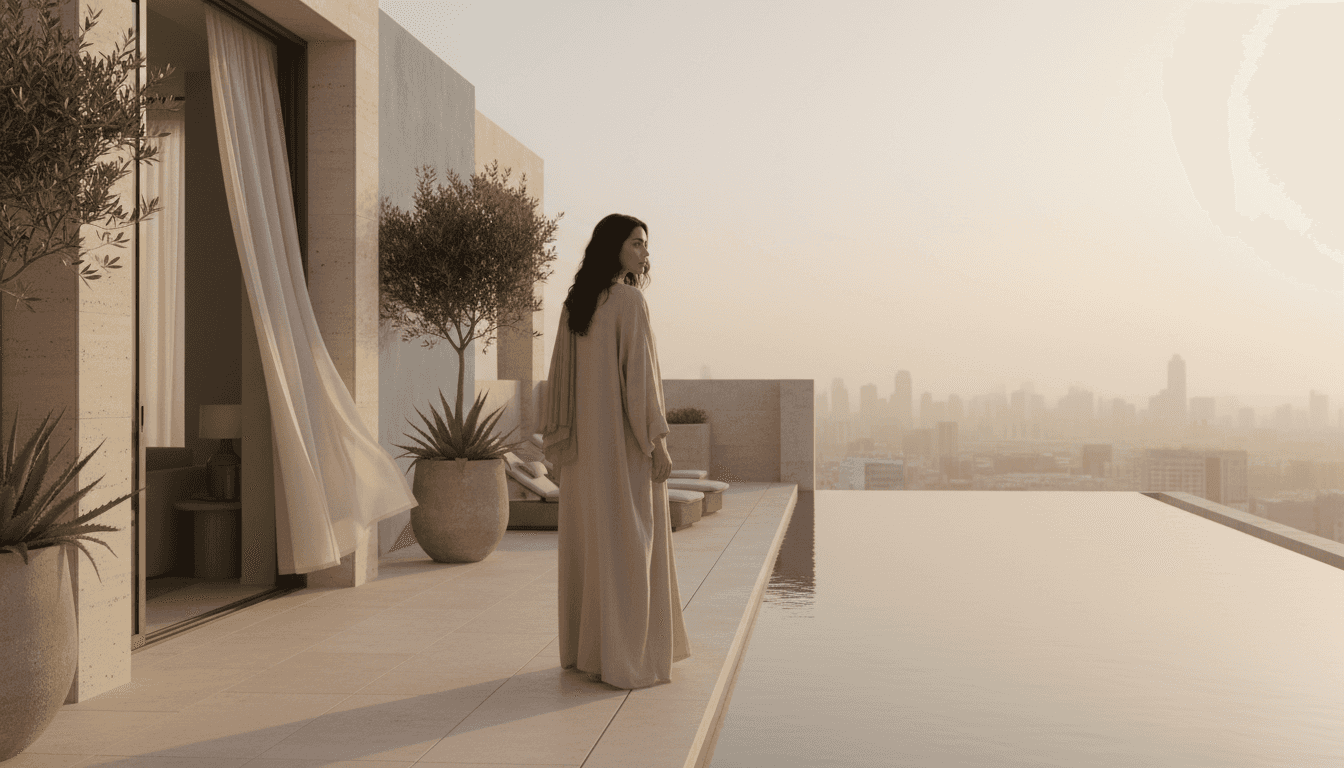
The View Premium: More Than Just a Pretty Picture
In Dubai's dynamic property market, a 'full sea view' is just the beginning. Understanding the subtle hierarchy of views and their tangible impact on an apartment's value is crucial for any serious buyer.

As the Apartments Editor at Gaia Living, the most common three-word descriptor I hear from new clients is 'full sea view'. It's the gold standard, the ultimate prize in Dubai real estate. But in my experience, focusing only on that label is a critical oversimplification. The world of apartment view valuation in Dubai is far more nuanced, with a clear hierarchy that has a direct, measurable, and sometimes surprising impact on price, rentability, and long-term capital appreciation. A view isn't just a feature; it's a core asset class in its own right.
Here's what we'll explore in this detailed guide:
- The established hierarchy of views in Dubai, from the sea to the skyline.
- The mathematics of the view premium and how it's calculated.
- Real-world case studies from prime Dubai communities.
- The single biggest risk to any view: future construction and blockage.
- How to properly conduct due diligence on an apartment's view.
- My final verdict on what makes a view a truly great investment.
The Hierarchy of Views in Dubai
When we talk about Dubai apartment view types, it’s not a simple binary of 'good' or 'bad'. There’s a distinct pecking order that every seasoned investor and agent understands. At the absolute pinnacle sits the protected, panoramic sea view. Think of the front-facing apartments on the fronds of the Palm Jumeirah or the prime units in Emaar Beachfront looking straight out to the open Arabian Gulf. This is the Tier 1, AAA-rated view. It’s unobstructed, expansive, and offers the daily spectacle of sunrise or sunset over water. This type of view isn't just pleasant; it's a powerful emotional driver that translates into the highest premiums.
Running a very close second, and in some circles even surpassing the sea view, is the direct, full landmark view. In Dubai, this primarily means one thing: the Burj Khalifa. An apartment in Downtown Dubai or Business Bay with a direct, centred view of the world's tallest building and the Dubai Fountain is an asset of global significance. This is a dynamic, glittering vista that screams 'Dubai'. It’s a city skyline view property on an entirely different level. Other major landmarks like the Ain Dubai on Bluewaters Island or the future tower at Creek Harbour also create their own localised view premiums, but the Burj Khalifa remains the undisputed icon.
Below these top two tiers, the hierarchy diversifies. A 'partial sea view' is a category that requires careful scrutiny. Does it mean a sliver of blue between two towers, or a generous angled view from a corner balcony? The difference in value can be enormous. After that comes the full marina view, which I personally rate very highly. Looking over the superyachts and twinkling promenades of Dubai Marina is a captivating, 24/7 spectacle. It's an active, vibrant view that many end-users prefer over a static sea view. Then you have golf course views, as seen in communities like Damac Hills or Emirates Hills, which offer a sense of green, manicured tranquillity. Finally, we have 'community views' — looking over pools, parks, and landscaping, and the least desirable, a direct road or building-to-building view.
The Mathematics of the View Premium
 Featured project
So how does this hierarchy translate into actual dirhams? The concept of apartment view valuation in Dubai is not an exact science, but there are established market conventions. The premium for a view is calculated against a baseline: an identical apartment in the same building, on a similar floor level, but with the least desirable view (typically facing a road or another building). The percentage increase from that baseline determines the view's value. This is where a good agent's experience becomes invaluable, as they have the comparable data to make an accurate assessment.
A full, panoramic sea view in a prime location like Palm Jumeirah or Jumeirah Bay can easily command a 30-50% premium, and sometimes even more for trophy assets. For example, if a three-bedroom apartment with a road view in a Palm tower sells for AED 10 million, an identical unit on the same floor with a full, direct sea and skyline view could realistically be listed for AED 14-15 million. This isn't just marketing fluff; it's a reflection of market demand. The same logic applies to the Burj Khalifa view. A two-bedroom in Business Bay might be AED 3 million with a community view, but one with a direct, unobstructed view of the Burj and fountains could trade for AED 4 million or higher.
Here’s a simplified breakdown of typical premiums over a baseline unit:
- Full, Unobstructed Sea/Burj Khalifa View: 30% - 50%+
- Full Marina or Golf Course View: 15% - 25%
- Partial Sea or Landmark View: 10% - 20%
- Good Community/Park View: 5% - 10%
- Road/Adjacent Building View: 0% (This is the baseline)
These percentages are not static. They are influenced by the floor height — the premium often increases with elevation, although there can be a point of diminishing returns. They are also affected by the exclusivity of the view. If only a handful of units in a tower possess that prime vista, their value is amplified due to scarcity. This is a critical factor in the resale market. When you buy a view, you are buying a finite resource, and its value is directly tied to how many other people can enjoy the same perspective.
Case Studies: Where Views Define Value
Let's ground this theory in reality by looking at specific Dubai communities. Emaar Beachfront is a masterclass in view maximisation. The entire project, developed by Emaar Properties, is engineered to deliver sea or marina views. However, within the development, there's a clear difference. Units looking towards the Palm Jumeirah and its fireworks often carry a higher premium than those looking back towards the Marina skyline. Both are excellent, but the market has consistently shown a preference for the Palm-facing orientation. An investor who understood this nuance at launch would have seen a significant difference in their asset's performance.
In Business Bay, the game is all about the Burj Khalifa. Take the example of two well-known towers. One might be located closer to Sheikh Zayed Road, with apartments offering angled, partial views of the landmark. Another, just a few hundred metres away, might be perfectly positioned on the canal, offering dead-centre, postcard-perfect views. The price per square foot in the second tower will invariably be higher, purely on the strength of that protected, superior sightline. We at Gaia Living have seen two-bedroom apartments in this area with a price delta of over a million dirhams based solely on which side of the building they are on. This is the sea view apartment premium principle applied to an urban icon.
Bluewaters Island offers another fascinating case. The apartments here are prized for their unique perspective. The most valuable units are not just 'sea view'; they have a multi-layered vista that includes the sea, the beach, Jumeirah Beach Residence in the distance, and the imposing Ain Dubai. This layered, dynamic view is exceptionally rare and commands a huge premium. In contrast, apartments on the other side of the same building might look back towards the mainland. It’s still a pleasant view, but it lacks the iconic elements and therefore trades at a noticeable discount. This illustrates that the *content* of the view, beyond the simple 'sea' label, is paramount.
The Great Risk: View Blockage Impact
Now we come to the most important consideration for any long-term investor: the view blockage impact on property value. Dubai's skyline is in a constant state of flux. The stunning, unobstructed sea view you buy today could be a view of your neighbour's balcony in five years. This is the single greatest risk to your view premium, and mitigating it is a crucial part of the buying process. A view is only as valuable as its permanence.
I have seen heartbreaking examples of this. An investor pays a 40% premium for a top-floor apartment with breathtaking sea views, only for a new tower to be announced on the adjacent plot a year later. The moment that new project is confirmed, the premium on the existing apartment evaporates. It doesn't just fall; it disappears entirely, and the property's value can plummet to the baseline level of a non-view unit. In some cases, it can even fall below the baseline if the new construction creates a sense of being boxed-in or causes significant noise and disruption.
This risk is most acute in developing areas or in master communities that are still being built out. Areas like the new beachfront developments or parts of Business Bay with empty plots are high-risk zones. Conversely, long-established areas like the trunk of the Palm Jumeirah or the inner ring of Dubai Marina offer more security. The plots in front of them are either already built on or are physically inaccessible (i.e., they are the sea or the marina itself). This is what we call a 'protected' or 'permanent' view, and the security it offers is, in itself, a component of the price. You are paying a premium not just for the view, but for the certainty that it will remain.
“The value of a view is a function of its beauty, its exclusivity, and, most importantly, its permanence. Two of those can be lost overnight.”
Understanding the master plan for the district is non-negotiable. You must investigate the zoning of surrounding plots. Are they designated for high-rise towers, low-rise villas, or public parks? This information is publicly available, but it requires diligence to uncover and interpret. At Gaia Living, this is a standard part of our advisory process for clients buying for the long term. We analyse the Dubai Land Department (DLD) master plans and use our local knowledge to assess the real-world probability of future construction. It's a vital step in protecting your investment.
Due Diligence: How to Secure Your Vista
So, how do you, as a buyer, perform effective due diligence on a view? It’s a multi-step process that goes far beyond simply standing on the balcony. Whether you’re looking at an off-plan launch or a ready property, the principles are the same. Your goal is to verify the present and anticipate the future.
First, for a ready property, visit it at different times of day. A view that is spectacular in the bright morning sun might lose its appeal in the afternoon glare. A glittering skyline at night might be less impressive during the day. You need to experience its full character. Use a compass and map application to understand the apartment's exact orientation. Is it north-facing, meaning no direct sunlight but cooler in summer? Or south-facing, with abundant light but higher cooling costs? This has a direct impact on living quality and utility bills.
Second, move from the macro to the micro. Don't just look out, look down. What is directly below the balcony? A noisy service entrance, a restaurant ventilation shaft, or a busy road can create noise and odours that completely undermine the pleasure of the view. I once saw a client turn down an otherwise perfect penthouse because the 'stunning sea view' came with the constant hum of the building's chillers on the roof below. Also, check the balcony's usability. A beautiful view is less valuable if the balcony is too narrow, too windy, or has solid concrete walls that you can't see over when seated.
Third, and most critically, is the future-proofing step. This is where you investigate the surrounding plots. Here's a checklist for your due diligence:
- Consult the Master Plan: Use the DLD's resources or the relevant master developer's (e.g., Nakheel, Emaar) official plans to check the zoning for all adjacent and nearby empty plots.
- Physical Inspection: Walk the neighbourhood. Look for hoarding, signage, or any preliminary site work on empty land. These are the earliest indicators of future development.
- Check for Off-Plan Launches: Monitor new off-plan launches in the vicinity. The sales models and brochures for new projects will give you a very clear idea of what is planned and how tall it will be.
- Talk to the Experts: This is where we come in. An experienced brokerage has its ear to the ground. We often know about upcoming projects and land sales long before they are publicly announced. This inside track is one of the most significant advantages we offer our clients.
This research is your best defence against the risk of view blockage. It allows you to make an informed decision and pay a premium only for a view that has a high probability of permanence.
The Cost of a Premium View: A Worked Example
Let's put this all together into a tangible financial scenario. Imagine you are considering two similar two-bedroom apartments in the same tower at Emaar Beachfront. Unit A is on the 15th floor with a partial marina view. Unit B is on the same floor, same layout, but with a full, direct view of the Palm Jumeirah.
Based on current market data, the pricing might look something like this:
- Unit A (Partial Marina View) Purchase Price: AED 4,500,000
- Unit B (Full Palm View) Purchase Price: AED 5,850,000
The difference of AED 1,350,000 (a 30% premium) is the price of the superior, more desirable view. Now, let's look at the full upfront cost, as regulated by the DLD and UAE financial bodies. The purchase costs are a percentage of the price, so the view premium amplifies your initial cash outlay.
Upfront Costs for Unit A (Partial View):
- Purchase Price: AED 4,500,000
- DLD Transfer Fee (4%): AED 180,000
- DLD Registration Trustee Fee: ~AED 4,200
- Agency Fee (2% + VAT): AED 94,500
- Total Upfront Cost (excluding mortgage down payment): AED 278,700
Upfront Costs for Unit B (Full View):
- Purchase Price: AED 5,850,000
- DLD Transfer Fee (4%): AED 234,000
- DLD Registration Trustee Fee: ~AED 4,200
- Agency Fee (2% + VAT): AED 122,850
- Total Upfront Cost (excluding mortgage down payment): AED 361,050
As you can see, the better view costs you an additional AED 82,350 in upfront transaction fees alone. If you're getting a mortgage, you also need to factor in the higher down payment. Assuming a 75% loan-to-value ratio from the Central Bank of the UAE's regulations, your down payment for Unit B would be AED 1,462,500, compared to AED 1,125,000 for Unit A. The decision to invest in a premium view has significant immediate financial implications.
However, this premium should also be reflected in the rental income and the eventual resale value. Unit B might achieve a 15-20% higher rental yield and will almost certainly be easier to rent out, with fewer void periods. When it comes time to sell, it will attract a wider pool of buyers and likely experience stronger capital appreciation, provided the view remains intact. The premium you pay upfront is an investment in future returns and liquidity.
A premium view is an accelerator. It amplifies your upfront costs, but it should also amplify your rental income, your pool of potential tenants and buyers, and your ultimate capital gain. The key is ensuring the view is permanent, because if it's lost, your amplified costs become dead weight.
My Verdict: Investing in the Intangible
After years of analysing floor plans, comparing service charges, and walking through thousands of apartments across Dubai, my conviction is this: a carefully chosen, protected view is one of the wisest investments you can make within the property market. It's an emotional asset that delivers daily returns in quality of life, but it's also a hard-nosed financial asset that provides a genuine moat around your property's value.
The key is to approach it with discipline. Don't be seduced by the marketing label 'sea view'. Ask the hard questions. What kind of sea view? From what angle? From what height? What else is in the frame? And most importantly, what is the risk of it disappearing? Apply the same rigour to a city skyline view property. Is it a sliver of the Burj Khalifa, or a full-frontal, awe-inspiring panorama? The difference is not academic; it's written in the price tag.
My advice is to always be willing to pay the premium for a truly superior, protected view if your budget allows. In a competitive market, it's the defining feature that sets your property apart. It's what will make a tenant choose your apartment over another. It's what will make a future buyer's eyes light up when they step onto the balcony. In the complex equation of property value, a world-class view is a powerful, and often decisive, variable. Choose it wisely.
Sources
- Dubai Land Department (DLD): https://dubailand.gov.ae/en/
- Central Bank of the UAE: https://www.centralbank.ae/
Questions, answered
- How much value does a full sea view add to a Dubai apartment?
- A full, unobstructed sea view can add a premium of 20% to 50% or more to an apartment's value compared to an identical unit with a standard view in the same building. The exact premium depends on the location, floor height, and exclusivity of the vista.
- Is a Burj Khalifa view more valuable than a sea view?
- It depends on the property and buyer preference, but a direct, full Burj Khalifa and fountain view is often considered on par with, or even more valuable than, a sea view. This is especially true for apartments in Downtown Dubai and Business Bay, where it represents the pinnacle of urban luxury.
- What is a 'partial view' and how does it affect price?
- A partial view means the desired feature, like the sea or a landmark, is visible but partially obscured by other buildings or seen from an angle. It carries a smaller premium, typically 5-15%, over a unit with no view at all, but is significantly less valuable than a full, direct view.
- How can I check for future construction that might block my apartment's view?
- You should consult the Dubai Land Department's resources and the Dubai Development Authority's master plans for the area. At Gaia Living, we help our clients perform this due diligence by examining surrounding plots and known future projects to assess the risk of view blockage.
- Does a higher floor always mean a better, more valuable view?
- Generally, higher floors command higher prices, but this isn't a universal rule. For some views, like a marina or a low-rise community, a mid-level floor might offer a more engaging and connected perspective. Extremely high floors can sometimes feel detached, so the 'best' floor is often a balance of elevation and perspective.
- Are 'community views' worth anything?
- Yes, a well-maintained community view overlooking parks, swimming pools, or landscaped greenery is considered a positive feature. While it doesn't command the premium of a sea or landmark view, it is more desirable and valuable than a view directly facing another building or a busy road.

Ravi lives and breathes apartment living — from studio yields in JVC to branded residences on the Palm. Floor plans, service charges, and view lines are his love language.
Related stories

The Modern Majlis: Finding Your Multi-Generational Villa in Dubai
I explore the rise of intergenerational living in Dubai and break down the best communities offering the space and flexibility for extended families to thrive together.
Selling Off-Plan in Dubai: Fees, Rules & Timing
A deep dive into the off-plan resale market, covering the crucial steps from developer approvals and DLD fees to successfully timing your exit for maximum profit.

Dubai Holiday Homes: A First-Timer's Guide to Investing
A comprehensive guide for first-time investors exploring Dubai's short-term rental market, covering the essential rules, true costs, and management realities.
Echoes, in your inbox
One thoughtful email a month. Market insight, new launches, no spam.