

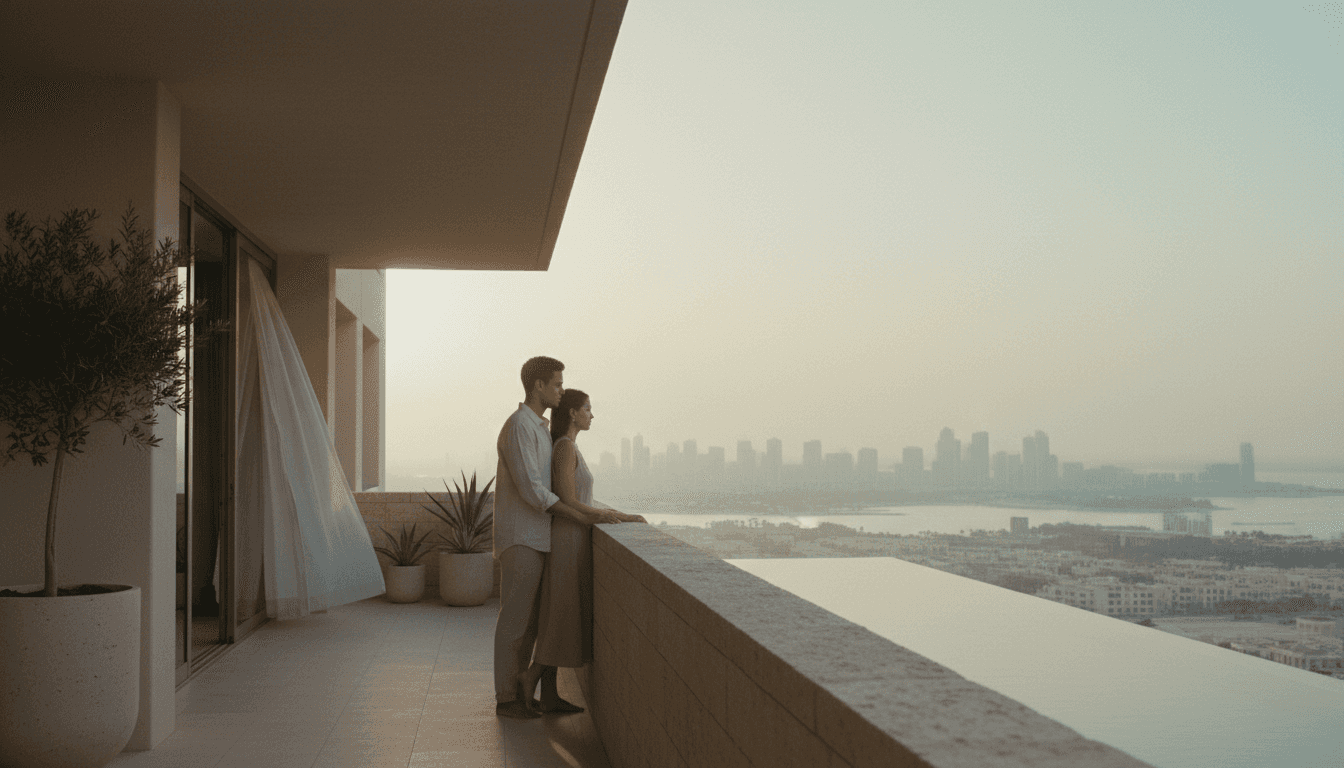
The Power of Place: Architecture & Identity in Dubai
Discover how Dubai's master-planned communities use architectural identity to shape a resident's entire lifestyle, from Mediterranean villas to sleek city towers. It’s about more than just aesthetics; it's about the life you live.

More than anywhere I have worked, Dubai understands that a home is not an island. The four walls you buy are just the start; the real product is the world outside your front door. This is why the architectural identity of Dubai's master communities isn't just cosmetic. It's the blueprint for a life.
Here’s what I'll explore in this deep dive into Dubai's lifestyle architecture:
- The philosophy behind master-planning in Dubai.
- How specific architectural themes translate into daily life.
- A case study on the enduring appeal of Mediterranean and Arabian design.
- A look at life inside the ultra-modern vertical communities.
- The rise of the 'green escape' and biophilic architecture.
- The financial impact: how design identity affects property value.
- My take on the future of community design in Dubai.
The Philosophy of Place-Making in Dubai
When clients first arrive in Dubai, they are often struck by how curated the city feels. Unlike ancient cities that grew organically over centuries, much of modern Dubai was conceived on a grand scale by visionary master developers. This is not an accident; it's a deliberate strategy of place-making. The goal of a developer like Emaar Properties or Nakheel isn't just to build and sell a block of flats or a row of villas. Their ambition is to create a complete, self-contained world with a distinct character. This is the essence of the `master-planned communities Dubai` model.
This approach gives developers total control over the living experience. They design the roads, the parks, the retail centres, the schools, and of course, the homes. Every element is intended to work in harmony to support a specific lifestyle. When you buy into a community like Dubai Marina, you aren't just buying an apartment with a sea view. You are buying into a walkable, high-energy, waterfront lifestyle, complete with promenades, yacht clubs, and al fresco dining. The `community design Dubai property` is the primary product, and the individual home is your entry ticket. This level of control allows for the creation of powerful, immersive environments that would be impossible in a city that grew piece by piece.
In my experience, this is a key reason why so many people find it easy to settle in Dubai. Instead of navigating a chaotic and disparate urban landscape, they can choose a neighbourhood that feels instantly familiar and aligned with their personal tastes. Whether you want the quiet, suburban feel of a gated villa community or the buzz of a downtown arts district, there is a master plan designed for you. The architecture is the most visible expression of this intent. It sets the tone for everything that follows, signalling the kind of life one can expect to live there. It's a powerful form of communication that speaks directly to our aspirations.
Decoding the Architectural DNA
 Featured project
The choice of `architectural styles Dubai homes` is far from arbitrary. A developer's decision to opt for Andalusian-inspired villas over minimalist cubes is a calculated one, designed to evoke a particular feeling and attract a specific demographic. This is what I call a community's 'architectural DNA'. It’s the code that shapes the social fabric and daily rhythms of a neighbourhood. A low-rise community with private gardens, winding streets, and earthy tones fosters a different kind of life than a district of gleaming glass towers connected by air-conditioned walkways.
Consider the practical implications. The layout of streets in a community like Arabian Ranches, with its cul-de-sacs and gentle curves, is designed to slow down traffic and encourage children to play outside. The architecture, with its terracotta roofs and arched windows, creates a warm, rustic atmosphere that feels a world away from the city's commercial hubs. Contrast this with DIFC, where the sleek, corporate architecture and direct link to the Metro reflect a fast-paced, professional lifestyle. Here, convenience and efficiency are paramount. Residents can move from their apartment to their office to a fine-dining restaurant without ever stepping outside into the summer heat.
This is the core of `lifestyle architecture Dubai`. The physical form of the buildings and the spaces between them directly enables and encourages certain behaviours. Walkability, for instance, is not a happy accident. It is a deliberate design choice. In communities like Bluewaters Island or Creek Harbour, the placement of retail, dining, and leisure attractions along pedestrian-friendly boulevards is intended to foster a spontaneous, street-level energy. You are more likely to bump into neighbours, discover a new café, or simply enjoy a stroll when the environment is designed to invite you out of your home. The architecture is the silent partner in your daily routine.
Case Study 1: The Mediterranean & Arabian Dream
Perhaps no aesthetic is more synonymous with Dubai's villa communities than the blend of Mediterranean and traditional Arabian design. Communities like Arabian Ranches, The Meadows, and parts of Al Furjan have become enduringly popular by tapping into a powerful archetype: the tranquil, family-centric oasis. These are some of the most sought-after `distinctive neighbourhoods Dubai` has to offer, and their architectural identity is central to their success. The use of sand-coloured stucco, decorative mashrabiya, and terracotta roof tiles immediately creates a sense of warmth, history, and permanence.
This architectural language does more than just look good. It creates a specific living experience. The typical layout of these homes, with their focus on private gardens and shaded patios, encourages an indoor-outdoor lifestyle that is perfect for families. The community pools, parks, and barbeque areas become natural extensions of the home, fostering a strong sense of community. When I speak with residents in The Meadows, they often talk about the simple pleasure of evening walks, children cycling safely in the streets, and the familiar faces they see at the community centre. This is the lifestyle the architecture was designed to produce, and it works.
Of course, this lifestyle comes at a price. The demand for these established, family-friendly `Dubai themed communities` keeps resale values strong. A four-bedroom villa in Arabian Ranches can easily range from AED 5 million to over AED 8 million, depending on its location, condition, and views. Buyers are paying not just for the square footage, but for the mature landscaping, the established community spirit, and the proven success of the master plan. The architectural theme acts as a guarantee of a certain quality of life, and buyers are willing to pay a premium for that certainty. It is a sign of the idea that great design is not just an expense, but a long-term investment in both lifestyle and value.
Case Study 2: Ultra-Modern Vertical Living
At the other end of the spectrum is the architectural identity of Dubai's vertical communities. Here, the language is one of glass, steel, and ambition. Areas like Business Bay, Dubai Marina, and the newer Emaar Beachfront project are defined by their striking skylines and high-density living. The `lifestyle architecture Dubai` in these zones is about maximising views, convenience, and access to the city's vibrant energy. Life is lived upwards, with panoramic vistas of the sea, the canal, or the city lights forming the backdrop to daily life.
The design of these buildings prioritises efficiency and luxury. Floor-to-ceiling windows, open-plan layouts, and high-tech smart home features are standard. The amenities are often spectacular, moving beyond a simple pool and gym to include private cinemas, residents' lounges, and concierge services. This is a lifestyle built around convenience. Everything you need is within the building or a short walk away. For the young professionals and global executives who are drawn to these areas, this is a powerful proposition. Time is their most valuable commodity, and the architecture is designed to help them make the most of it. There's a reason a developer like Omniyat has built its brand on creating iconic, high-design towers in this part of the city.
Living in a modern tower also creates a unique social dynamic. While you may not know your neighbours in the same way you would in a villa community, you share a common identity as a resident of a landmark building. The shared amenities become social hubs, and a sense of community is often forged in the elevator or the residents' lounge. The architecture creates a tribe. For investors, the appeal is clear. Properties in well-designed, well-located towers in areas like Business Bay offer strong rental yields and the potential for capital appreciation, driven by the constant demand for this modern, urban lifestyle. The architectural 'wow' factor is not just for show; it's a key driver of financial performance.
Case Study 3: The 'Green Escape' and Biophilic Design
A third, and increasingly influential, architectural identity in Dubai is what I call the 'Green Escape'. This is a response to the inherent stresses of modern urban life, a deliberate attempt to create sanctuaries of calm and well-being within the city. The pioneer of this philosophy is Al Barari, a community that dedicates over 60% of its area to green space, landscaped gardens, and waterways. The architecture here is integrated with nature. Villas are designed with huge windows and terraces to blur the line between inside and out, and the entire community is threaded with walking trails and lush foliage.
This is biophilic design in practice — the idea that humans have an innate need to connect with nature, and that our built environment should facilitate that connection. The effect on lifestyle is profound. Residents of Al Barari speak of a sense of tranquillity that is hard to find elsewhere in Dubai. The air feels cleaner, the environment is quieter, and the constant presence of nature has a tangible impact on mental and physical well-being. Developers like Sobha Realty are embracing this ethos in projects like Sobha Hartland, which balances its proximity to Downtown with vast green parks and a waterfront setting.
This approach is shaping the next generation of `master-planned communities Dubai` is building. We are seeing a move away from purely thematic design towards a more authentic and sustainable integration with the natural landscape. Projects like AlJurf Gardens by IMKAN, located between Dubai and Abu Dhabi, are taking this concept to a new level, creating a community of villas and land plots set within a nature reserve. This represents a maturation of the market. Buyers are no longer just looking for a specific style; they are looking for a holistic environment that supports a healthier, more balanced lifestyle. The architecture is becoming a tool for wellness, and in my view, this is one of the most exciting trends in Dubai property today.
“In Dubai, you don't just choose a home; you choose a tribe. The architecture of your community is your tribe's flag, signalling a shared set of values and a specific way of life.”
The Financials: Does Identity Command a Premium?
So, does a strong and cohesive architectural identity actually translate into higher property values? In my professional experience, the answer is an unequivocal yes. The market consistently shows that well-designed, thematically strong communities outperform those with a confused or generic identity. This premium is not just about aesthetics; it’s a reflection of the tangible value that good design creates. A strong identity helps to build a powerful brand for a community, making it more desirable and resilient to market fluctuations.
Let's break down the real-world costs. Buying a property in a premium master-planned community involves more than just the sticker price. Understanding the full financial picture is crucial. Here is a typical cost breakdown for purchasing a secondary market villa valued at AED 5,000,000 in an established themed community like Arabian Ranches:
- Purchase Price: AED 5,000,000
- Dubai Land Department (DLD) Transfer Fee: 4% of the purchase price = AED 200,000
- DLD Registration Fee: AED 4,200 (for properties over AED 500k)
- Real Estate Agency Fee: 2% of the purchase price + 5% VAT = AED 105,000
- Mortgage Registration Fee (if applicable): 0.25% of the loan amount + AED 290
- No Objection Certificate (NOC) Fee: Typically AED 1,000 - AED 5,000 (paid to the developer)
- Trustee Office Fee: Approximately AED 4,200
- Initial Service Charge Pro-rata Payment: Varies, but budget for a few thousand dirhams.
In addition to these upfront costs, homeowners must budget for annual service charges. These fees cover the maintenance of the beautiful landscaping, community pools, security, and other amenities that define the lifestyle. In a premium villa community, service charges can range from AED 3 to AED 6 per square foot of the plot area annually. For a 4,000 sq. Ft. villa, this could mean an annual bill of AED 12,000 to AED 24,000. While this is a significant ongoing cost, it's what preserves the quality of the environment and, ultimately, protects the value of your investment. A community with a strong identity and well-maintained amenities will always command higher rents and resale prices, justifying the premium.
This premium is also evident in the off-plan market. When a developer with a strong track record for creating distinct communities, such as Emaar or Aldar, launches a new project, they can command higher prices from day one. Buyers are willing to pay more because they trust the developer's ability to deliver not just a building, but a fully realised lifestyle. The architectural renderings and master plan are a promise of future value, and in Dubai's mature market, that promise has a quantifiable price tag.
The Future of Community Design in Dubai
Looking ahead, the evolution of `community design Dubai property` is moving in a very clear direction. While the grand themed communities will always be part of Dubai's DNA, the focus is shifting towards more nuanced and resident-centric principles. The next wave of master plans is all about wellness, sustainability, and technology. We are seeing a conscious move away from car-dependent suburbs towards more walkable, mixed-use neighbourhoods where residents can live, work, and play within a smaller radius.
Expo City is a prime example of this future-facing approach. It is being developed as a model for sustainable urban living, retaining 80% of the Expo 2020 infrastructure to create a clean, green, tech-enabled city. It is designed to be a 15-minute city, where all essential amenities are accessible via a short walk or cycle. This human-centric design philosophy is a game-changer. It represents a fundamental shift in how we think about urban planning, prioritising the well-being of residents over the movement of vehicles.
Another key trend is the rise of hyper-specialised or 'niche' communities. Instead of trying to be everything to everyone, new projects are targeting specific interests and lifestyles. We see this with communities built around world-class golf courses, equestrian facilities, or even specific cultural hubs like the Dubai Design District (d3). This specialisation allows for a much deeper and more authentic architectural and social identity. The buildings, public spaces, and amenities can all be finely tuned to serve the needs of a particular group, creating an incredibly strong sense of belonging. As the city continues to grow and diversify, I believe we will see more of these highly targeted, passion-driven `distinctive neighbourhoods Dubai` is becoming known for.
Finally, technology will be smoothly integrated into the fabric of future communities. This goes beyond simple smart home features. We are talking about integrated community apps for booking amenities and paying service charges, smart grids for efficient energy management, and data-driven infrastructure that responds to the needs of residents in real time. The architecture itself will become smarter, with buildings designed for greater energy efficiency and adaptability. The goal is to create a frictionless living experience where technology works silently in the background to make life easier, healthier, and more connected. This fusion of thoughtful design, sustainable principles, and smart technology is the future of `lifestyle architecture Dubai`.
The architectural identity of a Dubai community is its most important feature. It is the single biggest factor that dictates the lifestyle of its residents, fosters its social character, and ultimately, underpins its long-term financial value. When choosing a home here, look beyond the floor plan and ask yourself: what world am I buying into?
Sources
- Dubai Land Department (DLD): dubailand.gov.ae
- Real Estate Regulatory Agency (RERA): rera.gov.ae
- UAE Government Portal (Property Laws): u.ae
Questions, answered
- What are master-planned communities in Dubai?
- Master-planned communities in Dubai are large-scale residential developments conceived and built by a single developer, like Emaar or Nakheel. They are designed with a cohesive architectural theme and include a full suite of amenities such as parks, schools, retail, and clinics, creating a self-contained lifestyle.
- Do themed communities in Dubai cost more?
- Yes, communities with a strong, well-executed architectural identity and mature landscaping, like Al Barari or Arabian Ranches, often command a price premium. This premium reflects the high demand for the specific lifestyle, quality of construction, and comprehensive amenities they offer.
- What are the most popular architectural styles for homes in Dubai?
- Popular architectural styles in Dubai range from traditional Arabian and Mediterranean designs in villa communities to ultra-modern and minimalist aesthetics in high-rise towers. We are also seeing a rise in biophilic design, which integrates nature into buildings, particularly in newer luxury projects.
- How does community design affect my daily life in Dubai?
- The community design dictates everything from your morning routine to your weekend activities. A walkable, high-density area like Dubai Marina encourages a spontaneous, urban lifestyle, whereas a sprawling, green community like The Meadows is designed for quiet family life centred around parks and private gardens.
- Are there service charges in Dubai's master communities?
- Yes, all master communities have annual service charges, which are paid by homeowners to cover the maintenance of common areas, security, landscaping, and amenities. These fees are regulated by the Dubai Land Department (DLD) and vary significantly depending on the community, building, and developer.
- What is the next big trend in Dubai's community architecture?
- The next major trend is a focus on wellness and sustainability. Developers are increasingly designing communities that prioritise resident well-being through biophilic architecture, extensive green spaces, walkable layouts, and sustainable building materials. Projects like AlJurf Gardens and Expo City are leading this charge.

Yusuf writes about how Dubai actually lives — waterfront mornings, community dining, walkability, and the lifestyle premium built into an address.
Related stories
Parking: The Unsung Hero of Dubai Apartment Value
I explore how apartment parking allocation, from basement quality to visitor access, is a critical and often overlooked driver of property value and livability in Dubai.
Selling in a Dubai Boom: Your Strategic Playbook
A seller's market in Dubai offers immense opportunity, but achieving a record price requires more than just listing your property. This is your strategic guide to preparing, pricing, and positioning for peak demand.
How to Own Dubai Property: A Guide to Ownership Structures
Choosing the right ownership structure is one of the most critical, yet overlooked, decisions when buying Dubai property. This guide breaks down your options, from individual title to joint and corporate setups.
Echoes, in your inbox
One thoughtful email a month. Market insight, new launches, no spam.