

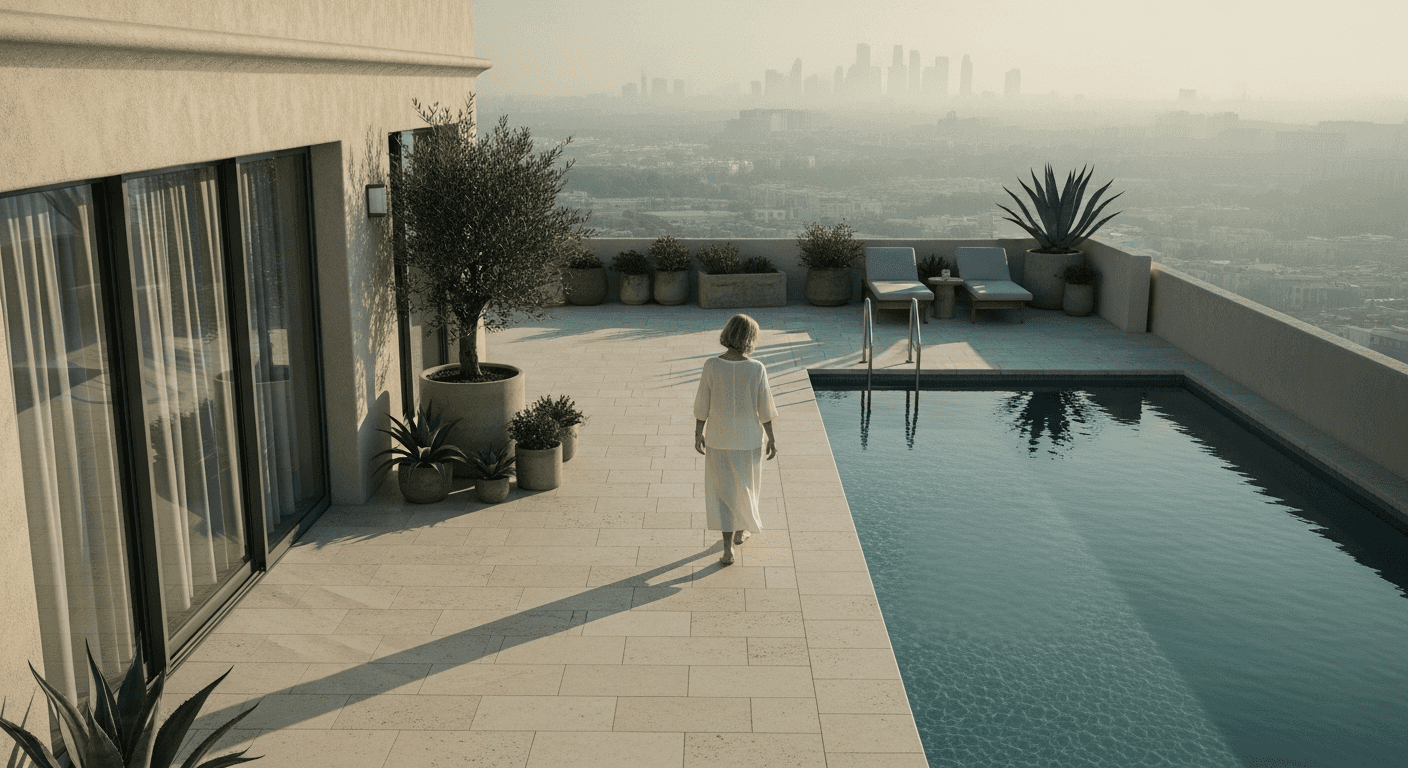
The Material Difference: Judging Dubai's Luxury Finishes
As an apartment specialist, I've learned that true luxury is written in the details. This is my guide to evaluating the premium finishes and build quality that separate exceptional Dubai properties from the merely expensive.

In my years specialising in Dubai's apartment market, I've walked through thousands of properties, from gleaming new launches to established towers. The one lesson that stands out is that 'luxury' is one of the most overused words in real estate. True, lasting quality isn't about a fancy lobby or a brochure filled with glossy renders. It's about tangible, measurable details — the weight of a door, the precision of a cabinet fitting, the choice of stone under your feet. Understanding this difference is the single most important skill for any serious buyer or investor in this city. It’s the line between a property that holds its value and one that costs you a fortune in upkeep.
Here's what we'll explore in this detailed guide:
- The real definition of luxury quality, beyond marketing claims.
- A direct comparison of build quality across Dubai's major and boutique developers.
- The specific materials that define high-end apartment interiors.
- A case study on the enduring quality standards in Downtown Dubai.
- A look at boutique excellence in communities like Palm Jumeirah and Al Barari.
- The critical link between build quality, service charges, and long-term maintenance.
- How superior materials directly impact property value, rent, and your bottom line.
- My personal checklist for inspecting a property's build quality yourself.
- My final verdict on where to find the best build quality in Dubai's market today.
Beyond the Brochure: What Defines True Luxury Quality?
Anyone looking to buy a property in Dubai will quickly become familiar with the marketing lexicon. Words like 'opulent', 'exquisite', and 'unparalleled' are used so frequently they lose all meaning. To get past the fluff, you have to train your eye, and your other senses, to spot genuine quality. The first indicator I look for is substance over spectacle. A flashy lobby with a giant chandelier is impressive, but if the apartment doors are hollow-core and the hallway walls are scuffed after six months, the developer's priorities are clear. True luxury is holistic. It extends from the common areas into every square foot of the private residence and even into the parts you can't see, like the MEP (Mechanical, Electrical, and Plumbing) systems.
I often tell my clients to start with the 'touch test'. How does the apartment feel? Open and close a kitchen cabinet. Is it particleboard with a laminate wrap, or is it solid wood or high-quality MDF with a durable veneer? Does it close silently with a soft-close mechanism, or does it slam shut? Turn on a tap. Is the water pressure robust and consistent? Is the tap itself a weighty, solid piece of metal from a reputable brand like Grohe, Gessi, or Dornbracht, or is it a lightweight, unbranded fitting? The collective weight and solidity of these small components signal a developer's commitment to quality over cost-cutting. These details dictate your daily experience of living in the home.
Another critical, often overlooked aspect is the quality of the building's infrastructure. This is where the long-term value is truly built. It includes the quality of the elevators (brands like Schindler and KONE are a good sign), the efficiency and silence of the HVAC system, the standard of the waterproofing and insulation, and the robustness of the electrical wiring. You can't easily see these things, but you can ask about them. A reputable developer will have detailed specifications and will be proud to share the brands they've used. Poor choices here lead to the most expensive and disruptive problems down the line — leaks, high DEWA bills, and constant breakdowns. In my experience, a building that is quiet, with stable temperatures and reliable services, is a hallmark of superior construction.
The Developer Spectrum: A Comparison of Build Quality
 Featured project
Dubai's property market is defined by its developers, and their reputations for quality vary significantly. This is not a simple good/bad binary; it's a spectrum of different philosophies, target markets, and price points. At one end, you have the master developers who have effectively built entire districts. Emaar Properties is the prime example. Their key strength is consistency. Whether you are in an older tower in Dubai Marina or a brand-new one in Creek Harbour, you will find a baseline of quality that is reliable. The finishes might not always be the most avant-garde, but the construction is solid, the master planning is excellent, and the long-term community management is generally best-in-class. For many buyers, this reliability is worth more than flashy, unproven design.
Occupying a similar top-tier space, especially in recent years, is Meraas. Their focus is more on design-led, contemporary urban living. Projects like City Walk and Bluewaters Island showcase a distinct aesthetic with high-quality public realms and an emphasis on lifestyle. The interior finishes in Meraas projects often feel more modern and bespoke than some of the larger developers. They tend to use interesting textures, superior glazing, and thoughtful layouts that appeal to a discerning, style-conscious buyer. The trade-off can sometimes be a higher price per square foot, but for those who value unique design, it's a premium they are willing to pay.
Further along the spectrum, you find developers like Damac. They are masters of marketing and branded residences, often collaborating with high-fashion and luxury brands like de GRISOGONO and Cavalli. This can result in spectacular lobbies and amenity spaces. However, in my professional observation, the execution within the apartments themselves can be inconsistent across their vast portfolio. Some projects are finished to an excellent standard, while others, particularly in the affordable luxury segment, show signs of cost-saving in materials and workmanship. The key for a buyer considering a Damac property is to do their due diligence on that specific tower or project, not just the brand name. It's crucial to inspect the actual unit rather than relying solely on the marketing of the brand collaboration.
Finally, at the ultra-luxury end, you have boutique developers like AHS Properties, Omniyat, and Zaya, the developer behind the much-admired Al Barari. These firms typically build a much smaller number of projects but with an almost fanatical attention to detail and cost-is-no-object approach to materials. Here you'll find the book-matched marble, the Gaggenau kitchens, and the custom joinery that is simply not feasible in a 70-storey tower. These properties command the highest prices in the city for good reason. They are closer to commissioned works of art than mass-produced homes. The buyer for this type of property is not just buying a location; they are buying a guarantee of uncompromising material quality.
Material Matters: The Specifics of High-End Apartment Interiors
The difference between a standard apartment and a true luxury one is written in the specification sheet. Let's break down the key areas where premium building materials make a tangible difference. Flooring is one of the most immediate indicators of quality. Standard-grade apartments will typically use ceramic or basic porcelain tiles. They are functional but lack the character and durability of high-end options. A step up brings you to high-quality, large-format porcelain, often from Italian or Spanish brands, which offers a sleeker look with fewer grout lines. True luxury, however, is often defined by the use of natural stone. Marble (like Carrara, Calacatta, or Statuario), travertine, and limestone bring a unique, organic beauty to a space that porcelain cannot replicate. In bedrooms, engineered wood flooring offers a warmth and feel underfoot that laminate simply can't match. These choices are not just aesthetic; natural stone and quality wood are incredibly durable and can be refinished, giving them a lifespan of decades.
Kitchens are the heart of the home, and also a place where developers can choose to save or spend. A luxury kitchen is a symphony of top-tier components. The gold standard for appliances comes from German brands like Miele and Gaggenau, or sometimes high-end Italian brands like Smeg. These are chosen for their performance, reliability, and smooth integration. Cheaper projects might use brands like Beko, Bosch or Teka — good, reliable brands, but in a different league. Countertops are another tell. Quartz is a popular and durable man-made option, but in the premium segment, I expect to see natural quartzite (which is harder than granite) or a single, stunning slab of marble. Finally, the cabinetry. Look for full-height cabinets for maximum storage, integrated lighting, and the aforementioned soft-close hinges and drawer runners from brands like Blum or Hettich. The quality of the joinery is a dead giveaway of a developer's attention to detail.
Bathrooms are a sanctuary, and the finishes should reflect that. In this space, I look for floor-to-ceiling tiling or stone, which creates a smooth and opulent feel. The quality of the sanitary ware and brassware is paramount. Brands like Villeroy & Boch, Duravit, or Toto for toilets and basins, and Gessi, Hansgrohe's Axor line, or Dornbracht for taps and showers, signal a no-compromise approach. A key detail is the type of shower: a simple wall-mounted fixture versus an immersive rain shower, perhaps with additional body jets. Other luxury indicators include wall-hung toilets with concealed cisterns (easier to clean), heated towel rails, and integrated vanity lighting. The quality of the sealant and grout work is also a crucial micro-indicator. Is it neat, even, and mould-resistant, or is it sloppy and already discolouring? This small detail speaks volumes about the overall standard of workmanship.
“The weight of a door, the sound it makes when it closes, the cold touch of real marble underfoot — these are the details that anchor the concept of 'luxury' in physical reality.”
Case Study 1: The Enduring Quality of Downtown Dubai and Emaar
When we talk about developer build quality comparison, there's no better place to start than Downtown Dubai. Developed almost entirely by Emaar, it serves as a living museum of their construction philosophy over the past two decades. The key takeaway from Downtown is Emaar’s commitment to a high baseline. Even in the older towers, built in the mid-to-late 2000s, the fundamental construction is exceptionally solid. The layouts are practical, the common areas are well-maintained, and the infrastructure is robust. This is a primary reason why properties in Downtown have held their value so well compared to other areas from the same era. The initial investment in quality pays dividends in longevity.
Let’s get specific. Consider a classic building like The Residences or a slightly newer one like Burj Vista. The finishes, by today’s ultra-luxury standards, might seem conservative. You’ll find high-quality porcelain, solid-core doors, and well-fitted kitchens with brands like Bosch. It may not be the book-matched Italian marble of a brand-new boutique project, but it was specified to last. The joinery is well-made, the windows provide good acoustic insulation, and the MEP systems are reliable. This is the Emaar formula: focus on the 90% of what makes a home livable and durable, rather than chasing the most fashionable 10% of finishes that might date quickly. This approach has created a deeply loyal market of end-users and long-term investors.
The evolution of Emaar’s quality can be seen in their newer projects like the Opera Grand tower or those in the Opera District. Here, you see an updated materials palette. The developer has responded to market demand for more contemporary and luxurious interiors. You'll find more natural stone, sleeker kitchen designs, and more sophisticated smart home integration. However, the underlying philosophy remains the same: solid construction, functional layouts, and world-class community management. This combination ensures that the service charges, while not cheap, represent good value for the level of amenity and upkeep provided. The material impact property value is crystal clear here; the perception of Emaar's quality and reliability creates a price floor and a rental premium that is the envy of many other developers.
Case Study 2: Boutique Excellence in Palm Jumeirah and Al Barari
At the other end of the scale from the master developer is the boutique, ultra-luxury specialist. These developers build for a much smaller, wealthier client base and their approach to materials is fundamentally different. Two areas where this is most evident are Palm Jumeirah and the lush enclave of Al Barari. On the Palm, you have iconic projects like One at Palm Jumeirah by Omniyat or the upcoming SLS Residences. In these developments, the conversation about finishes moves into a different realm. It's not about 'good' or 'bad'; it's about 'bespoke' and 'curated'. The kitchens are often designed by high-end Italian firms like Poliform or Boffi. The appliances are Gaggenau as a standard. The marble is not just marble; it's a specific type, sourced from a specific quarry, and often book-matched so the veins flow smoothly across a wall or floor.
What truly sets these projects apart is the integration of design and material. The architecture is often handled by a world-renowned firm, and the interior design is a named concept. This creates a cohesive, total work of art. In my experience inspecting these units, the level of craftsmanship is extraordinary. The tolerances on joinery are millimetre-perfect. The lighting is designed by specialist consultants to create mood and highlight textures. The smart home systems control everything from the curtains to the climate with flawless integration. Of course, this comes at a significant price premium, often two to three times the per-square-foot price of a standard luxury building. The buyer is paying for a level of exclusivity and material perfection that is impossible to deliver at mass-market scale.
Al Barari, developed by Zaya, offers a different flavour of this boutique excellence. Here, the luxury is as much about the environment as it is the interiors. The developer’s philosophy is to blend the homes into the incredibly lush, green landscape. The material palette reflects this, with extensive use of natural wood, stone, and water features. Inside the apartments and villas, you find a commitment to space and light. Soaring ceiling heights, vast glass walls, and enormous terraces are standard. The interior finishes complement this with a focus on natural, textural materials. While the brand names are all top-tier, the overall feeling is one of understated, organic luxury rather than high-gloss urban glamour. This approach demonstrates that the choice of materials is not just about brand-dropping; it's about creating a specific atmosphere and living experience. It’s a masterclass in how premium building materials can be used to execute a powerful design vision.
The Hidden Costs: Service Charges and Long-Term Maintenance
One of the most direct, year-on-year financial impacts of build quality comes from service charges. Many buyers, especially first-timers, focus on the purchase price and overlook this crucial ongoing expense. Service charges are calculated in AED per square foot of your property's area and are levied annually to cover the cost of maintaining the building's common areas and amenities. According to regulations from Dubai's Real Estate Regulatory Agency (RERA), these fees must be approved and are audited. But the amount you pay is directly linked to the cost of running the building.
A building constructed with lower-quality materials and systems will inevitably cost more to maintain. Cheaper HVAC systems are less energy-efficient and break down more often. Poor quality pumps for the swimming pool and water features require frequent and expensive repairs. Façades with inferior cladding or sealant may need extensive work after just a few years of exposure to the Dubai sun. All these costs are passed directly on to the homeowners through service charges. Conversely, a developer who invests in high-quality, durable infrastructure is effectively future-proofing the building against high maintenance bills. Better insulation means lower common area electricity costs for cooling. More reliable elevators mean fewer emergency call-out fees. The initial higher investment in quality pays a long-term dividend in the form of more stable and predictable service charges.
Let’s run a simple, illustrative calculation. Consider two hypothetical 1,500 sq. Ft. two-bedroom apartments. One is in a high-quality building with service charges at AED 22 per sq. Ft. The other is in a building with lower build quality where corners were cut, and service charges are AED 30 per sq. Ft. due to higher maintenance needs.
- Building A (High Quality): 1,500 sq. Ft. x AED 22/sq. Ft. = AED 33,000 per year
- Building B (Lower Quality): 1,500 sq. Ft. x AED 30/sq. Ft. = AED 45,000 per year
That AED 12,000 annual difference is a significant sum. Over a five-year period, that's an extra AED 60,000 spent just on maintaining a lower-quality building. This is why, when we at Gaia Living advise our clients, we always insist on examining the service charge history of a building. A consistently low and stable charge is often a strong indicator of good build quality and management. A charge that is creeping up year after year should be a red flag, prompting deeper investigation into what is driving the costs.
The Financial Equation: How Material Quality Impacts Property Value and Yield
The impact of build quality and finishes on a property’s financial performance is profound. It affects everything from the initial purchase price to its long-term capital appreciation and rental yield. The most immediate effect is on rental value. As an investor, the quality of your apartment directly determines the calibre of tenant you can attract and the rent you can command. A property with high-end apartment interiors — a modern kitchen with European appliances, elegant bathrooms, and durable flooring, will always achieve a higher rent than a tired, basic unit in the same area. Tenants, especially in the premium and corporate segments, are discerning. They will pay more for a home that is well-maintained, aesthetically pleasing, and trouble-free.
This rental premium has a direct effect on your net yield. While a higher quality apartment will have a higher purchase price, the stronger rental income often more than compensates for it, leading to a healthier return on investment. Beyond that, tenants in high-quality properties tend to be more stable. They appreciate the quality of their home and are more likely to renew their lease, reducing void periods and the associated costs of finding new tenants. This consistency of income is a cornerstone of a successful property investment strategy. In my experience, the headache of dealing with constant maintenance requests and tenant turnover in a low-quality unit is a hidden cost that many investors underestimate.
Looking at the bigger picture, the material impact on property value over the long term is even more significant. Well-constructed buildings age gracefully. Buildings made with inferior materials begin to look dated and worn very quickly. Peeling paint, cracked tiles, failing systems — these issues not only cost money to fix but also erode the capital value of your asset. When it comes time to sell, a property in a meticulously maintained, high-quality building will always stand out. It will attract more buyers, spend less time on the market, and ultimately achieve a higher sales price. In a competitive resale market, quality is the ultimate differentiator. Two apartments in the same neighbourhood can have vastly different valuations based almost entirely on the reputation of the developer and the visible quality of the building and the unit itself.
Your Inspection Checklist: How to Assess Quality for Yourself
When you are viewing a property, it's easy to be swayed by staging or a spectacular view. As an apartment specialist, I've developed a mental checklist to stay focused on the fundamentals of build quality. I encourage all our clients to adopt a similar systematic approach. It empowers you to see beyond the surface and make a truly informed decision. You don't need to be a construction expert, you just need to be observant and know what to look for. Think of it as a physical audit of your potential investment.
Here is a practical checklist you can use on your next viewing:
- Doors and Windows:
- Feel the weight of the interior doors. Are they solid-core (heavy and sound-dampening) or hollow-core (light and flimsy)?
- Check the seals around windows and balcony doors. Are they thick, properly fitted, and free of gaps? This is crucial for thermal and acoustic insulation.
- Open and close all windows and doors. Do they operate smoothly and lock securely?
- Joinery (Kitchens and Wardrobes):
- Look at the alignment of cabinet doors and drawers. Are the gaps between them even and consistent?
- Open a drawer fully. Does it glide smoothly on a metal runner, or is it a simple wood-on-wood construction?
- Check the finish on the edges. Is it a solid, durable edge band, or a thin laminate that is likely to peel?
- Bathrooms and Kitchens:
- Turn on every tap and shower to its maximum setting. Is the water pressure strong and steady? Does it take a long time for hot water to arrive?
- Look closely at the sealant (silicone) around sinks, baths, and shower trays. Is it neatly applied, clean, and free of any mould?
- Tap lightly on the tiles. Does it sound solid everywhere, or are there hollow sounds that might indicate poor adhesion?
- Floors, Walls, and Ceilings:
- Look at the point where the floor meets the wall. Is the skirting board fitted neatly, or are there gaps?
- Examine the quality of the paint finish. Look at the walls from an angle in good light. Is the surface smooth, or can you see roller marks, drips, and imperfections?
- Check the ceilings for any signs of past leaks, such as water stains or patched-up areas, especially under bathrooms or AC units.
This is not an exhaustive list, but it covers the key indicators that I look for. Taking ten minutes to perform these checks can tell you more about the true quality of a property than any marketing brochure. It helps you quantify the 'feel' of a home and provides concrete points for negotiation or comparison with other properties. Don't be shy about it; a good agent will understand that a serious buyer needs to conduct these checks. This is your due diligence.
My Verdict: Where to Find the Best Build Quality in Dubai Today
After years of dissecting the Dubai apartment market, my conclusion is that 'best' is subjective and depends entirely on your priorities and budget. However, clear tiers of quality have emerged. For the majority of buyers seeking a reliable, high-quality home or a solid long-term investment, my recommendation often leans towards the top master developers, particularly Emaar. Their track record is unmatched, their communities are mature and well-managed, and their product is consistently strong. You are buying into a proven ecosystem, and for many, that peace of mind is the ultimate luxury.
For those with a higher budget and a greater appetite for cutting-edge design, developers like Meraas and Select Group are delivering some of the most exciting projects in the city. Their focus on unique architecture and contemporary high-end apartment interiors at projects like those in Jumeirah Beach Residence offers a compelling alternative to the more traditional luxury of Emaar. These are excellent choices for design-conscious end-users who want their home to be a statement.
Finally, for the 1% of the market, the boutique and ultra-luxury developers like AHS, Omniyat, and Zaya operate in a league of their own. If your budget allows, this is where you will find true, uncompromising quality in every single material and finish. The price is astronomical, but so is the standard of living. These properties are more than homes; they are legacy assets. The key takeaway is this: do not be swayed by branding alone. The Dubai market is sophisticated enough now that you have choices at every level. The smartest buyers are those who learn to read the material evidence for themselves, to look past the marketing and identify the tangible quality that will deliver value for years to come.
The true value of a luxury Dubai apartment lies not in the branding, but in the verifiable quality of its materials and construction. A thorough personal inspection, focusing on details like the weight of doors, the quality of joinery, and the brands of fixtures, is the most reliable way to assess long-term value and avoid the hidden costs of poor build quality.
Sources
- Dubai Land Department (DLD): dubailand.gov.ae
- Real Estate Regulatory Agency (RERA) Service Charge Index: dubailand.gov.ae
- UAE Government Portal: u.ae
Questions, answered
- Which developers in Dubai are known for the best build quality?
- Developers like Emaar and Meraas are known for consistent quality and master community planning. Boutique developers such as AHS Properties and Zaya often deliver uncompromising, ultra-luxury finishes in more exclusive projects.
- What specific materials should I look for in a luxury Dubai apartment?
- Look for natural stone countertops and flooring like marble or quartzite, solid wood joinery, high-end European appliance brands (Miele, Gaggenau), and reputable fixture brands in bathrooms (Gessi, Dornbracht).
- How does build quality affect service charges?
- Higher quality construction and materials generally lead to lower long-term maintenance costs. Better insulation, durable components, and efficient systems can result in more stable or lower service charges over time as the building requires fewer repairs.
- Does the quality of finishes really impact my property's value?
- Yes, significantly. Superior finishes and build quality justify higher rental prices, attract a better calibre of tenant, and lead to stronger capital appreciation. Well-built properties tend to hold their value better, especially in a competitive market.
- What are the key things to check when inspecting a property's quality?
- Check for consistent gaps in cabinetry and doors, feel the weight of interior doors, test water pressure in all taps and showers, and look at the quality of grout and sealant work in bathrooms and kitchens. Also, inspect window and door seals for sound and thermal insulation.
- Are branded residences in Dubai always better quality?
- Branded residences usually adhere to the brand's global standards, which often guarantees a high level of finishes and service. However, you pay a premium for the name, and it's still crucial to compare the actual material specifications against a non-branded but high-quality alternative.

Ravi lives and breathes apartment living — from studio yields in JVC to branded residences on the Palm. Floor plans, service charges, and view lines are his love language.
Related stories
Calculating ROI on Dubai Rental Upgrades
As a landlord in Dubai, you can't just follow trends. I'll show you how to calculate the precise ROI of minor property upgrades to genuinely increase your rental yield.
Off-Plan vs Ready: The Real Cost of Capital
I analyse the fundamental trade-off every Dubai investor faces: the lure of off-plan capital growth versus the security of immediate rental income from a ready property.
Beyond the Gates: Dubai's Boutique Villa Sanctuaries
I'm exploring the small, exclusive villa communities that offer a real sense of place, moving beyond the well-trodden path of Dubai's famous megaprojects to find homes with genuine character.
Echoes, in your inbox
One thoughtful email a month. Market insight, new launches, no spam.