

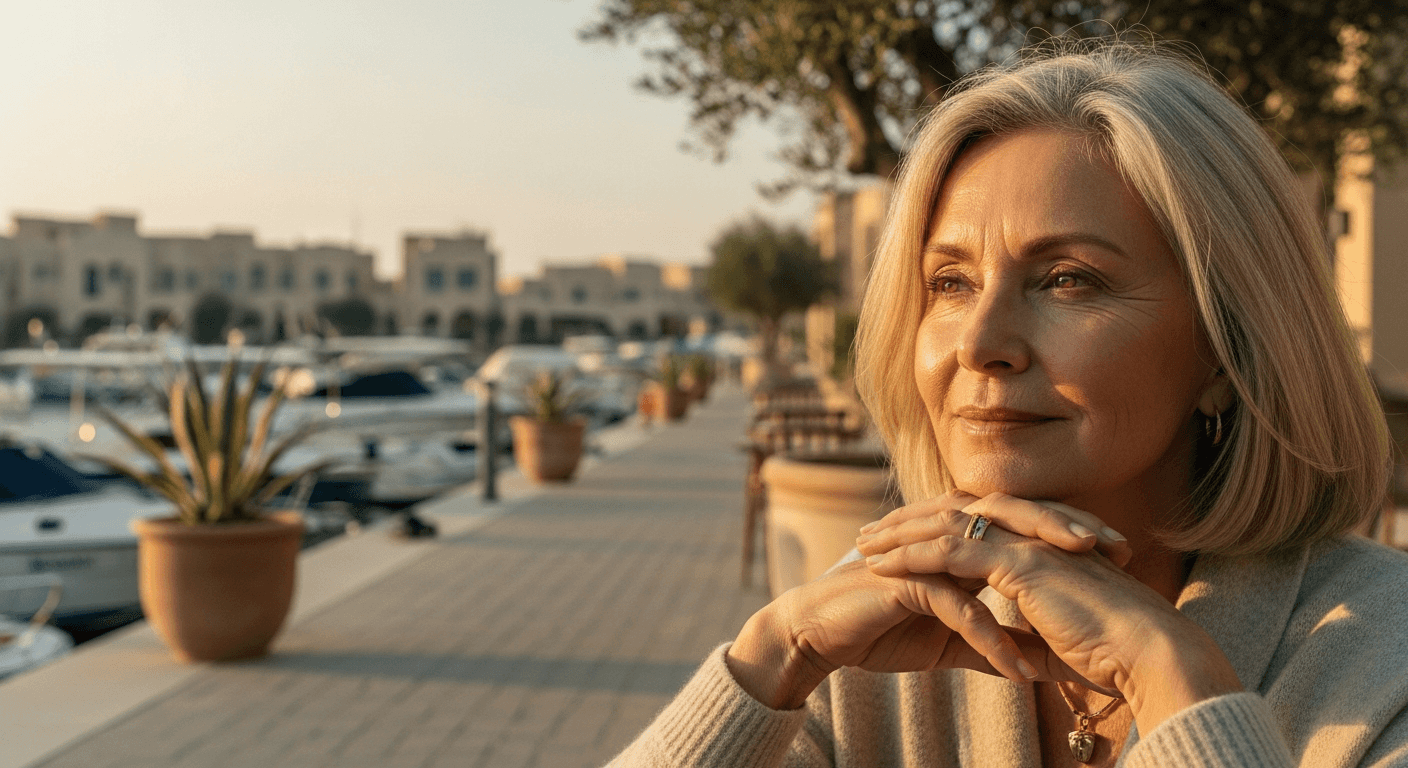
The Heartbeat of the Neighbourhood
I explore the Dubai communities that master the art of public space, moving beyond simple amenities to create genuine, vibrant neighbourhood life—and what that lifestyle truly costs.

For years, the gold standard for a Dubai 'community' was a gated collection of villas with a shared pool and a tired-looking tennis court. It was a private, quiet, and perfectly pleasant way to live, but it wasn't truly communal. The real living happened behind high walls, in private gardens. I believe that definition is now profoundly outdated. A new generation of buyers, and indeed the city itself, has matured. We are now asking for something more: a genuine public life.
Here's what we'll explore:
- The real meaning of a 'communal' neighbourhood beyond just a shared pool.
- How pioneering developers like Meraas and Emaar design for public life.
- A spotlight on established hubs: Jumeirah Beach Residence and City Walk.
- An analysis of newer communities like Dubai Hills Estate and Creek Harbour.
- The financial reality: Does a great public realm command a premium price?
- The hidden costs and trade-offs of choosing a walkable lifestyle.
- My verdict on where to find the best balance of community, cost, and comfort in Dubai.
What We Mean by 'Public Life'
When I talk about public life, I'm not referring to tourist attractions or grand civic monuments. I’m talking about the small, everyday interactions that form the invisible fabric of a neighbourhood. It’s the ability to walk out of your front door and grab a coffee without getting in a car. It’s the spontaneous conversation with a neighbour you bump into at the local grocer. It’s watching your children play with others in a safe, well-designed plaza while you sit on a bench nearby. These are the moments that turn a collection of buildings into a community, and they only happen when a place is designed for people first, not just for cars.
For a long time, Dubai’s development pattern prioritized the car. Communities were often islands, connected by highways but internally disconnected. You would drive from your garage to an underground car park at a mall, then back again. This model delivered privacy and convenience of a sort, but it starved us of casual, un-planned social connection. The community pool was an appointment. A barbecue was an event. There were few spaces for the serendipity of daily life to unfold. At Gaia Living, we've seen a marked shift in what our clients are looking for, especially over the last few years. The request for 'walkability' is no longer a niche preference; it's a primary driver for many buyers, from young professionals to growing families.
This desire is for what I call 'soft infrastructure'. It’s not about having the biggest gym or the most swimming pools. It’s about shaded pathways, human-scaled streets, buildings that meet the pavement with an active storefront instead of a blank wall, and a thoughtful mix of homes, offices, shops, and cafes. These elements create `neighbourhood gathering spots` organically. They give you a reason to be outside and to linger. A property that offers this connection to a wider social ecosystem provides a different kind of value — one that’s harder to quantify than square footage but is, in my opinion, far more impactful on your quality of life. These are `local interaction homes` in the truest sense.
The Pioneers of Place: JBR and The Walk
 Featured project
It’s impossible to discuss this topic without starting with Jumeirah Beach Residence (JBR). When it launched in the mid-2000s, it was a radical concept for Dubai. A dense wall of high-rise towers set right on the beach was ambitious enough, but the masterstroke was The Walk. This 1.7-kilometre promenade at the foot of the buildings created a ready-made street culture that the city hadn’t really seen before at this scale. Suddenly, tens of thousands of residents had a bustling, pedestrian-first boulevard as their collective front yard. It was, and still is, a masterclass in activating the ground floor.
Developer Dubai Properties (part of Dubai Holding) understood that to make high-density living desirable, you had to offer an unparalleled lifestyle right outside the lobby. The Walk at JBR and the subsequent development of The Beach opposite it became a template. It demonstrated that a well-designed public realm could become the primary amenity. Residents of JBR might have smaller living spaces than in a sprawling villa, but they trade that for immediate access to the sea, dozens of restaurants, a cinema, and an ever-present social buzz. It’s a trade-off that, for the right person, is overwhelmingly positive.
Of course, this lifestyle comes with its own set of challenges and costs. JBR is not for those seeking quiet solitude. The energy is constant, traffic in and out can be heavy, and the area is a major draw for tourists. This vibrancy is precisely what its residents pay a premium for. A standard two-bedroom apartment in a JBR tower might trade for between AED 2.8 million and AED 4.5 million, depending on the tower, view, and condition. A similar-sized apartment in a less walkable, more conventional tower community might be 30-40% less. Service charges also reflect the intensive management of this public space, often ranging from AED 18 to AED 25 per square foot per year. You are paying for the 24/7 security, the immaculate landscaping, and the constant upkeep of one of Dubai's most popular promenades.
Meraas and the 'Boutique Urbanism' of City Walk
If JBR was the bold, large-scale experiment in public life, then Meraas is the developer that refined the concept into a fine art. Their approach can be described as 'boutique urbanism'. They create entire districts that feel curated, stylish, and meticulously planned for the pedestrian experience. The flagship example is, without a doubt, City Walk. It represents a different philosophy from the high-rise density of JBR. Here, the architecture is low to mid-rise, reminiscent of European city centres, with a focus on high-quality materials, public art, and an intimate street-level experience.
Walking through City Walk, you forget you are just minutes from the Sheikh Zayed Road superhighway. The design language is all about human scale. Shaded, walkable laneways connect `family-friendly plazas Dubai` where fountains play and children run free. The ground floors of the residential buildings are smoothly integrated with high-end boutiques, unique concept restaurants, and cafes. This creates a powerful sense of place. It feels less like a residential project with some shops attached and more like a living, breathing part of the city. Meraas understood that the quality of the spaces *between* the buildings is just as important as the apartments themselves.
This curated lifestyle attracts a specific demographic and commands one of the highest price points in the city for non-beachfront property. It’s for the design-conscious buyer who values aesthetics and convenience over sheer size. The premium is significant. You are buying into a `vibrant public spaces property` where every detail has been considered. Meraas has replicated this successful formula in other key locations, each with its own unique flavour. Bluewaters Island offers a similar walkable, mixed-use environment but with the spectacle of Ain Dubai and stunning sea views. Meanwhile, Madinat Jumeirah Living (MJL) applies the same principles but with a traditional Arabian architectural style, creating a modern community that feels rooted in heritage, all connected by air-conditioned walkways to the Souk Madinat Jumeirah. In each case, Meraas sells a complete lifestyle, not just an apartment.
Emaar's Evolution: From Downtown to Dubai Hills
No developer has shaped Dubai's skyline more than Emaar Properties, and their approach to community-building has evolved significantly over time. Their flagship project, Downtown Dubai, is arguably the most famous public space in the emirate. The Sheikh Mohammed bin Rashid Boulevard, the Burj Khalifa, and the Dubai Fountain create an iconic global centrepiece. For its residents, living on the Boulevard offers incredible walkability and access. However, in my view, Downtown often feels more like a grand stage for the world than an intimate neighbourhood for its residents. The sheer scale and volume of visitors can sometimes overwhelm the sense of local community.
This is why I find the evolution to Dubai Hills Estate so fascinating. With this vast master community, Emaar seems to have taken the lessons from Downtown and applied them to a more suburban, family-focused context. Dubai Hills represents a hybrid model that tries to offer the best of both worlds: the space and greenery of a traditional villa community combined with the walkability and integrated amenities of an urban district. The result is, in my opinion, one of the most successful large-scale communities in Dubai today. The backbone of its public life is the 18-hole championship golf course and, more importantly, the enormous Dubai Hills Park.
This park, along with the retail and dining along the boulevards and at the Dubai Hills Mall, acts as the community's town square. On any given weekend, you see the vision realised: families picnicking, residents jogging, and teenagers playing basketball. It’s a self-contained world where you can live in a spacious villa with a private garden, yet still be able to walk or cycle to a cafe, a supermarket, or the cinema. This addresses a core desire for many families who previously had to choose between a large home in a car-dependent suburb or a smaller apartment in a walkable urban area. Emaar created a third option. This `communal living areas` approach is also present in their other major projects, like Creek Harbour, which is being built around a massive central park and waterfront promenade, signalling that this is the clear direction for all future Emaar master plans.
“Great public spaces aren't just built; they are curated, programmed, and ultimately, inhabited. The concrete is the stage, but the people are the play.”
The Financials: Quantifying the 'Community Premium'
As a real estate advisor, my job is to translate lifestyle benefits into financial realities. The question my clients always ask is: what does this enhanced community life actually cost? The 'community premium' is very real, and it shows up in both the initial purchase price and the ongoing running costs. A property situated within a well-designed, walkable master plan with `vibrant public spaces property` will always command a higher price than a standalone building in an area without these features, even if the apartment itself is identical.
Let's run a simplified comparison to illustrate the point. Imagine we are looking at two similar-quality, 1,500 sq ft two-bedroom apartments. One is in a prime part of JBR, the epicentre of walkable beach life. The other is in a newer, developing area like Arjan, which has good quality buildings but is largely car-dependent with a less developed public realm.
Hypothetical Purchase Cost Breakdown (for a UAE Resident Buyer)
- Property A: JBR Apartment (Prime Walkable Community)
- Purchase Price: AED 3,200,000
- Down Payment (20%): AED 640,000
- Dubai Land Department Fee (4% of price): AED 128,000
- Real Estate Agency Fee (2% + 5% VAT): AED 67,200
- Mortgage Registration Fee (0.25% of loan amount of AED 2.56M): AED 6,400
- Trustee Office Fee: ~AED 4,200
- Estimated Total Upfront Cost: AED 845,800
- Property B: Arjan Apartment (Car-Dependent Community)
- Purchase Price: AED 1,800,000
- Down Payment (20%): AED 360,000
- Dubai Land Department Fee (4% of price): AED 72,000
- Real Estate Agency Fee (2% + 5% VAT): AED 37,800
- Mortgage Registration Fee (0.25% of loan amount of AED 1.44M): AED 3,600
- Trustee Office Fee: ~AED 4,200
- Estimated Total Upfront Cost: AED 477,600
This initial outlay is substantially different. But the cost difference doesn't stop there. Ongoing service charges, which cover the maintenance of all common areas including parks, pools, security, and landscaping, are also higher. For our 1,500 sq ft apartment, the annual cost might be around AED 33,000 in JBR (at AED 22/sqft), versus AED 21,000 in Arjan (at AED 14/sqft). That's an extra AED 12,000 per year. So, is it worth it? For many, the answer is yes. That premium buys you a lifestyle that reduces reliance on a car, saves commuting time, and provides daily access to recreation and social opportunities. It’s an investment in quality of life, and in Dubai's most desirable locations, this premium has also historically translated into stronger capital appreciation and rental demand.
Emerging Hubs: Where Is the Next Great Community Square?
The success of these integrated communities has created a clear blueprint for the future of development in Dubai and across the UAE. The question is no longer *if* a new project will include public spaces, but *how well* they will be executed. Several emerging projects are poised to become the next generation of great `Dubai community squares`. The most ambitious of these is undoubtedly Emaar's Dubai Creek Harbour. It is being developed on a scale that rivals Downtown, but with a design philosophy that feels more akin to Dubai Hills. The entire community is oriented around a massive waterfront promenade and a lush central park, creating a green heart for the district. The early phases already demonstrate a commitment to pedestrian-friendly pathways and neighbourhood-level retail, suggesting a vibrant community life is central to its DNA.
Beyond Emaar, other developers are making significant strides. Nakheel, the original developer behind Palm Jumeirah, is continuously adding new layers of public life to its portfolio. The development of Palm West Beach has transformed a quiet stretch of the trunk into one of the city's most popular promenades, directly benefiting the residents of the shoreline apartments. In communities like Al Furjan, Nakheel's introduction of the 'Pavilion' concept — a local community centre with a supermarket, gym, and cafes, has created a much-needed focal point for residents, reducing their need to drive for daily essentials.
This trend extends beyond Dubai. In the capital, Aldar Properties has been a leader in creating integrated communities. Yas Island is a prime example of a destination that blends residential living with world-class entertainment and a growing number of parks and public spaces like Yas Bay Waterfront. Their Saadiyat Grove project promises to create a cultural heart for Saadiyat Island, linking museums with residences through a network of walkable, curated spaces. Even in the Northern Emirates, developers like Al Hamra in Ras Al Khaimah are focusing on enhancing the public realm within their master communities, recognising that today's buyers and renters are looking for a complete living experience. This is the new benchmark for premium real estate development in the region.
The Human Factor: Design Is Only Half the Story
A beautifully designed plaza is just an empty space until people fill it with life. This is a critical point that is sometimes missed in the rush to build. The most successful communities understand that the physical design — the 'hardware', is only half the equation. The other half is the 'software': the programming and management that encourages people to use the spaces. This is what truly fosters local interaction and transforms a sterile square into a beloved `neighbourhood gathering spot`.
Think about what makes these spaces come alive. It's the weekend farmers' markets at Dubai Hills Park. It's the outdoor fitness classes on the lawns at JBR. It's the festive decorations and events that pop up in City Walk during holidays. It’s the simple but brilliant inclusion of a well-located splash pad that becomes a magnet for families on a warm afternoon. These activities don't happen by accident. They are the result of proactive community management, usually handled by the master developer's own management arm, like Emaar Community Management. They play a vital role in curating a calendar of events that gives residents a reason to come out and connect.
Beyond that, the mix of uses is crucial. A public space surrounded only by residential towers will be busy in the evenings and on weekends but can feel desolate during a weekday. By contrast, a community that integrates offices, a hotel, or a school will have a more consistent buzz throughout the day. This creates a safer, more vibrant environment and supports the local cafes and retailers who rely on steady foot traffic. The human factor is also about permissive design. Are there plenty of places to sit in the shade for free? Can children run around without being told off? Is the space flexible enough to host a community yoga class one day and a small concert the next? The best public realms are not overly prescriptive; they provide a high-quality canvas and empower the community to paint its own picture.
My Verdict: Finding Your Perfect Balance
After years of observing Dubai’s evolution and guiding clients through their property journeys, my conviction is stronger than ever: the future of residential living in this city lies in communities built around people and public life. The era of the isolated villa or the standalone tower is waning. The most desirable — and, from an investment perspective, the most resilient, properties will be those that are part of a larger, walkable, and vibrant ecosystem. However, there is no one-size-fits-all answer. The 'best' community is deeply personal and depends entirely on your priorities, lifestyle, and budget.
To help navigate this choice, here's how I break down the options for my clients:
- For the quintessential urbanite: If you thrive on energy and want a curated, high-fashion lifestyle at your doorstep, City Walk and Bluewaters Island are unparalleled. Be prepared for the highest price premium and a lifestyle that feels more like living in a luxury resort than a quiet suburb.
- For the sun and sea lover: Jumeirah Beach Residence remains the classic choice. It offers an unbeatable combination of beach access and urban vibrancy. It’s ideal for young professionals, couples, and families with older children who can embrace the constant buzz.
- For the 'best of both worlds' family: Dubai Hills Estate is, in my view, the reigning champion. It masterfully balances the desire for a spacious home and green surroundings with the modern need for walkable access to parks, schools, and retail. It's the new model for the Dubai family dream.
- For the forward-thinking pioneer: If you have a longer-term horizon and want to get in on the ground floor of what could be the city's next great hub, Dubai Creek Harbour presents a compelling opportunity. You are investing in a grand vision, which comes with both immense potential and the patience required to see it fully realised.
Choosing one of these communities means consciously deciding to pay a premium for a lifestyle. You are buying back time you would have spent in traffic, investing in your physical and mental well-being through easy access to recreation, and giving yourself and your family the gift of community. At Gaia Living, our role is to help you analyse that premium, understand the long-term value, and find the perfect place where the heartbeat of the community matches your own.
The most sought-after Dubai properties are no longer defined just by their four walls, but by the quality of the public life just beyond their front door. This 'community premium' is a real financial commitment, but it's an investment in a richer, more connected, and more convenient way of life that is defining the city's future.
Sources
- Dubai Land Department (DLD) for transfer fees and registration procedures: dubailand.gov.ae
- UAE Government Portal for residency and visa rules: u.ae
- Central Bank of the UAE for mortgage regulations: centralbank.ae
Questions, answered
- Which Dubai communities are best for walkability and public life?
- Communities like Jumeirah Beach Residence (JBR), City Walk, Bluewaters Island, and Dubai Hills Estate are renowned for their excellent walkability and vibrant public spaces. They integrate residential buildings with retail, dining, and parks to encourage an active, outdoor lifestyle.
- Do properties in communities with better public spaces cost more?
- Yes, there is a clear price premium. Expect to pay more for a property in a highly walkable, master-planned community compared to a similar-sized unit in a more car-dependent area. This premium covers the lifestyle, convenience, and higher demand for these neighbourhood gathering spots.
- What are service charges like in these community-focused areas?
- Service charges are typically higher in areas with extensive public realms, landscaping, and amenities. For example, you might see fees of AED 18-25 per square foot annually in places like JBR or Downtown, compared to AED 12-16 in communities with fewer communal features.
- Are there any new developments focusing on community squares?
- Absolutely. Developers are increasingly focused on this model. Emaar's Dubai Creek Harbour is a prime example, designed around a large central park and extensive waterfront promenade. This trend towards creating integrated, communal living areas is shaping the future of Dubai real estate.
- What makes a public space in Dubai successful?
- A successful public space requires more than just good design; it needs 'programming'. This includes farmers' markets, community events, children's play areas, and a good mix of cafes and shops. This curation by the developer or community management is what transforms a plaza into a true neighbourhood hub.

Yusuf writes about how Dubai actually lives — waterfront mornings, community dining, walkability, and the lifestyle premium built into an address.
Related stories
Calculating ROI on Dubai Rental Upgrades
As a landlord in Dubai, you can't just follow trends. I'll show you how to calculate the precise ROI of minor property upgrades to genuinely increase your rental yield.
Off-Plan vs Ready: The Real Cost of Capital
I analyse the fundamental trade-off every Dubai investor faces: the lure of off-plan capital growth versus the security of immediate rental income from a ready property.
Beyond the Gates: Dubai's Boutique Villa Sanctuaries
I'm exploring the small, exclusive villa communities that offer a real sense of place, moving beyond the well-trodden path of Dubai's famous megaprojects to find homes with genuine character.
Echoes, in your inbox
One thoughtful email a month. Market insight, new launches, no spam.