

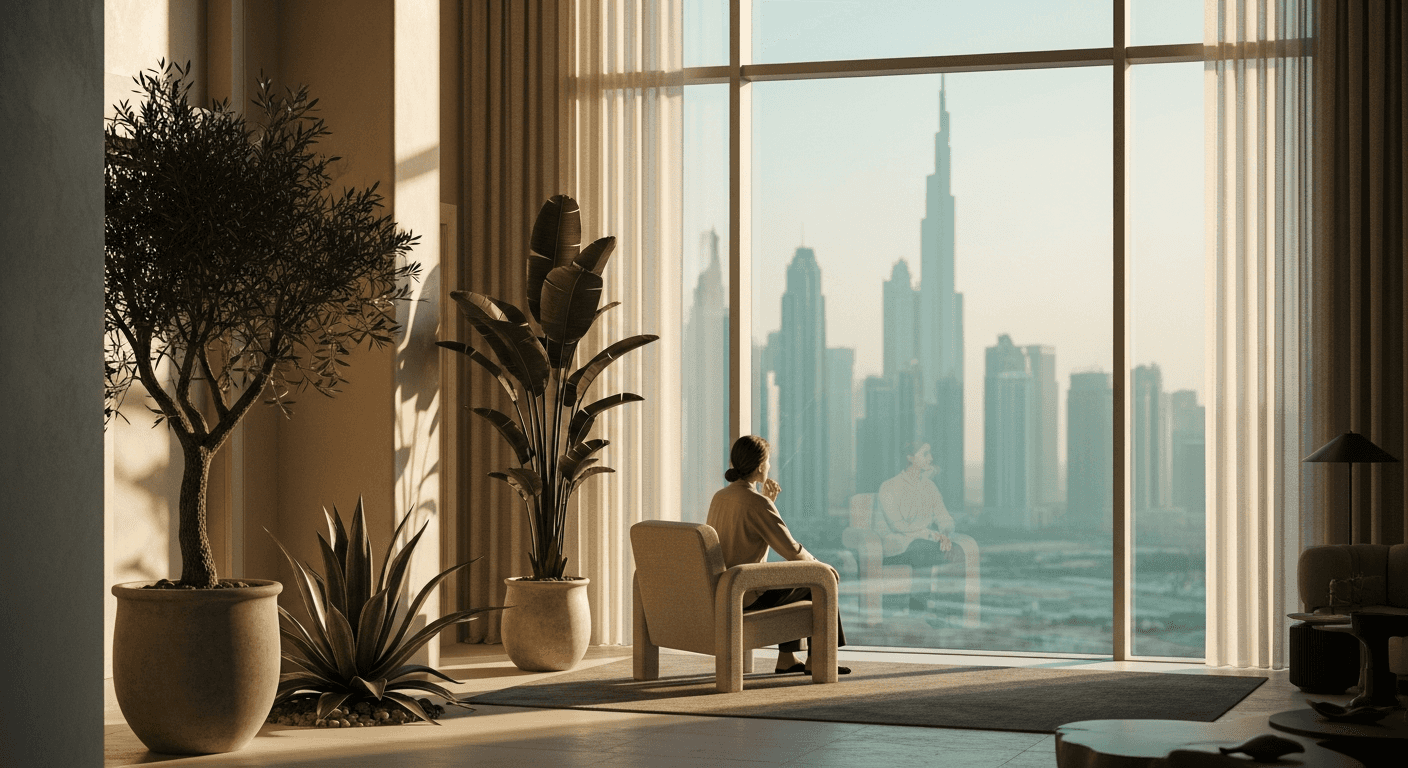
The Gulf's Gravitational Pull
While global money captures headlines, the most structural shift in Dubai's property market is coming from closer to home. I explore how deepening GCC capital flows are creating a new, more sustainable foundation for growth.

In the constant analysis of Dubai's real estate market, international capital from Europe, Asia, and the Americas often dominates the conversation. Yet, in my view, the most profound and structural shift happening right now isn't from thousands of miles away. It's flowing from just next door. The deepening of GCC capital flows is reshaping demand patterns, influencing developer strategies, and providing a powerful, stabilizing anchor for the market's long-term trajectory.
Here’s the argument I’ll unpack in this report:
- The historical context and recent evolution of GCC investment in Dubai.
- Why the surge in Saudi investment is a structural change, not a cyclical trend.
- The distinct investment drivers from Kuwait, Qatar, and Oman.
- How this regional demand is shaping the types of properties being built.
- A costed breakdown of a typical GCC investor's property purchase.
- The regulatory frameworks that make cross-border GCC investment so efficient.
- My final verdict on the long-term implications for the market.
Beyond the Headlines: The Understated Power of GCC Capital
For decades, investment from neighbouring Gulf Cooperation Council nations has been a constant, if sometimes quiet, presence in Dubai's property market. The shared cultural fabric, geographic proximity, and pegged currencies created a natural corridor for capital. Historically, this flow was often characterized by ultra-high-net-worth families making discreet, large-scale acquisitions or securing legacy assets in prime locations like Emirates Hills or the fronds of Palm Jumeirah. It was seen as a safe, familiar haven for wealth preservation, a dollar-denominated asset class just a short flight away.
However, what we at Gaia Living have observed over the past few years is a fundamental evolution. The base of investors has broadened dramatically. It's no longer just the domain of a select few; we're now seeing a much wider demographic of professionals, entrepreneurs, and mid-to-high-income families entering the market. This isn't just passive capital seeking a quiet home; it's active capital seeking a blend of lifestyle, utility, and growth. The motivations have become more diverse and, I would argue, more embedded in the real-world use of the asset. This shift transforms regional investment from a simple portfolio diversifier into a core component of many families' and businesses' regional footprint.
The appeal is multilayered. Dubai offers a level of social and recreational infrastructure that is unique in the region. For a family in Riyadh, Jeddah, or Kuwait City, a weekend in Dubai offers a complete change of scenery, with world-class dining, entertainment, and shopping. Owning a property here moves from being an abstract investment to a tangible lifestyle upgrade. The ease of access — with dozens of daily flights connecting GCC capitals in under two hours, makes the concept of a 'weekend home' not just possible, but practical. This utility factor provides a floor to the investment, grounding its value in personal use as much as in market appreciation or rental yield. This is a crucial distinction from capital arriving from more distant continents, where the investment is almost purely financial.
Beyond that, the economic and social reforms sweeping across the region, especially in Saudi Arabia, are a powerful catalyst. As new wealth is created and societies become more mobile and outward-looking, Dubai stands as the most immediate and accessible beneficiary. It is the established, mature metropolis on the doorstep of a region undergoing profound transformation. This confluence of proximity, lifestyle, and economic tailwinds is turning the steady stream of historical GCC investment into a powerful and sustained river of capital, influencing everything from apartment layouts in Business Bay to the master plans of new villa communities.
The Saudi Factor: A Structural Shift, Not Just a Trend
 Featured project
Nowhere is this dynamic more pronounced than with Saudi investment in Dubai property. The scale and nature of capital flows from the Kingdom represent, in my analysis, a permanent structural shift. To understand this, one has to look at the intended and unintended consequences of Saudi Arabia's Vision 2030. The primary goal of the vision is, of course, the diversification and modernization of the Saudi economy itself. This ambitious program is creating a new, highly skilled, and increasingly affluent professional class. As incomes rise and a new generation of entrepreneurs and executives emerges, so does the desire for asset diversification and lifestyle experiences beyond the Kingdom's borders.
Dubai is the natural and primary recipient of this ambition. It’s not a case of capital flight; it is a case of portfolio expansion. A successful Saudi professional or business owner sees a Dubai property as a complementary asset. It's a weekend retreat, a base for regional business, a potential future home for their university-aged children, and a stable, dollar-denominated investment. The short flight time makes it feasible to leave Riyadh on a Thursday afternoon and be in a Downtown Dubai apartment overlooking the Burj Khalifa by evening. This use-case is incredibly powerful and cements Dubai’s role as the de facto recreational and lifestyle capital for the wider region.
We see this reflected in the types of properties that are in high demand from this demographic. Branded residences, managed by five-star hotel operators, are exceptionally popular. They offer a turnkey, hassle-free ownership experience — perfect for a second home that needs to be 'lock-and-leave'. Projects by developers like Emaar Properties and Meraas in prime locations with high-end amenities resonate strongly. Similarly, there is strong demand for spacious villas and townhouses in self-contained communities like Dubai Hills and Arabian Ranches. These offer the space, security, and family-friendly environment that mirrors, and in some cases surpasses, the lifestyle they are accustomed to at home.
This is more than just a trend. The demographic and economic forces driving it are long-term. As Vision 2030 continues to generate wealth and expand the Saudi middle and upper classes, the pool of potential Dubai property investors will only grow. This creates a sustainable, long-term demand profile that is less susceptible to global economic headwinds. It’s a symbiotic relationship: as Saudi Arabia transforms, Dubai property becomes an increasingly logical and attractive asset for its citizens. This reliable demand from a neighbouring economic powerhouse provides a level of stability that is invaluable to the long-term health of the market.
Kuwait, Qatar, and Oman: Nuanced Drivers and Diverse Appetites
While Saudi Arabia is the largest engine of regional capital flows Dubai, it's crucial to understand the distinct dynamics driving investment from other GCC nations. Each market has its own profile, risk appetite, and property preferences, contributing to the rich texture of demand in Dubai. Investors from Kuwait, for example, have long been a cornerstone of the Dubai market. Their investment patterns are often more traditional and yield-focused. Many Kuwaiti investors are seasoned, with portfolios built over decades, and they view Dubai as a stable and mature market for generating rental income.
In my experience, Kuwaiti buyers often favour established communities with a proven track record of strong occupancy and rental returns. Areas like Dubai Marina, with its perennial appeal to tenants, and Jumeirah Village Circle (JVC) for its attractive entry prices and high yields, are consistently popular. They are sophisticated buyers who understand the numbers, from service charges to net yields, and their presence adds a layer of pragmatic, income-driven demand to the market. This contrasts slightly with the more lifestyle-driven purchases we often see from other parts of the GCC. The Kuwaiti investor is frequently building a multi-unit portfolio for long-term, multi-generational wealth.
Investment from Qatar, meanwhile, has its own unique narrative. Following the Al-Ula Declaration in 2021, which restored diplomatic and economic ties, we have witnessed a significant and confident return of Qatari capital to the Dubai market. This capital is often substantial, targeting the upper echelons of the property ladder. There is a strong appetite for trophy assets, penthouses with panoramic views, and expansive villas in the most exclusive postcodes. We see significant interest in ultra-luxury projects on Palm Jumeirah, Bluewaters Island, and within private enclaves developed by firms known for exclusivity, like AHS Properties. For many Qatari high-net-worth individuals, these are not just investments; they are statements, re-establishing a presence in a key regional hub.
Omani investment, while typically more modest in volume, is also a noteworthy component of the cross-border real estate GCC landscape. Given the geographical proximity, many Omanis view Dubai as an extension of their own backyard. The demand is often for practical, accessible properties. This can range from smaller apartments in areas like Al Furjan, which offer easy access to Sheikh Zayed Road for those who drive between the countries, to mid-market villas. For many Omani families, a Dubai property serves as a convenient holiday home and a base for shopping and entertainment, representing an accessible luxury rather than a complex international investment. Together, these varied streams of capital from Kuwait, Qatar, and Oman create a diverse and resilient demand base, each with its own logic and preferred market segments.
“The most stable demand doesn't come from the furthest away; it comes from neighbours who use the city as an extension of their own lives.”
How Regional Capital is Shaping Development Trends
The sustained and growing influx of GCC capital is not just a passive force; it is actively shaping the supply side of Dubai's real estate equation. Developers are keenly aware of the preferences of this core buyer demographic and are tailoring their projects accordingly. This influence is visible across the board, from the master plan of new communities to the floor plans of individual apartments. At Gaia Living, when we review new off-plan launches, we can often identify the target audience simply by looking at the product specifications.
One of the most prominent trends is the proliferation of branded residences. Developers like Emaar, Select Group, and Damac have accelerated their partnerships with luxury hospitality brands like Dorchester Collection, Four Seasons, and Bvlgari. This model is perfectly suited to the GCC buyer, particularly the frequent visitor from Saudi Arabia or Qatar. It combines the prestige of a luxury brand with the convenience of hotel-style services — concierge, housekeeping, and property management, making ownership effortless. For an investor who may only use their property a few weekends a month, this turnkey solution is immensely appealing. It removes the logistical headaches of managing a second home from abroad.
Another key trend is the focus on larger, family-oriented homes. While the image of Dubai is often one of sleek city apartments, the demand from GCC families has reinforced the market for spacious villas and townhouses. Developers are responding with master-planned communities that prioritize green space, privacy, and family-friendly amenities. A prime example is Dubai Hills Estate, with its central park, golf course, and high-quality schools. This type of environment is exactly what a family from Kuwait or Saudi Arabia looks for in a second home or potential primary residence. We are also seeing developers offer larger three- and four-bedroom apartments and even full-floor penthouses in prime towers, a direct response to demand from regional buyers who travel with extended family and staff.
Finally, there's a renewed emphasis on build quality and premium finishes. The GCC buyer is typically discerning and has high expectations. They are not just buying a space; they are buying into a certain standard of living. This has pushed developers to elevate their game, incorporating high-end materials, smart home technology, and world-class amenities as standard, even in mid-to-upper market projects. The fierce competition for this buyer segment means developers cannot afford to cut corners. This focus on quality benefits the entire market, raising the baseline standard and ensuring that new supply is not just plentiful, but also desirable and built to last. It’s a clear case of demand-side expectations driving supply-side excellence.
The "Second Home" vs. "Investment" Dichotomy
When analysing Dubai property foreign investment sources, a critical distinction for the GCC buyer is the blurring line between a pure investment and a functional second home. Unlike a European or Asian investor who may never personally use their property, the regional buyer's calculus is different. For them, the asset often serves a dual purpose, a concept I refer to as the 'lifestyle-yield blend'. This unique motivation fundamentally alters the investment thesis and contributes to market stability.
First, consider the 'second home' aspect. Proximity is the key enabler. A flight from Riyadh to Dubai is shorter than a drive from London to Manchester. This makes it genuinely practical for a family to own a property for personal use during holidays, long weekends, and school breaks. The property becomes part of their lifestyle infrastructure. Its value is measured not just in potential capital appreciation, but in memories created and convenience gained. This personal utility provides a strong emotional anchor to the investment, making the owner less likely to sell during minor market fluctuations. They have a reason to hold the asset beyond its immediate financial performance.
Second, the 'investment' aspect remains potent. Dubai's mature and regulated rental market allows owners to generate income from their property when they are not using it. The rise of regulated short-term rental management companies has made this easier than ever. A Saudi family might use their two-bedroom apartment in Jumeirah Beach Residence for a total of six to eight weeks a year. For the remaining 44 weeks, the property can be placed on the short-let market, generating a significant yield that covers service charges, and other running costs, and often provides a healthy net return. This hybrid model is the sweet spot for many GCC investors. It allows them to own a luxury lifestyle asset, effectively for free, or even at a profit.
This blend changes the risk profile. A pure investor is beholden to market rents and occupancy rates. If yields dip, they may be tempted to exit the market. An owner-user, however, has a different perspective. If the short-term rental market softens, the property's primary value as a family vacation home remains intact. The opportunity cost is lower. This creates a stickier, more resilient class of investor. They are less speculative and more invested — both financially and emotionally, in the long-term success of their community and the city. This dual-purpose ownership is a key reason why communities popular with GCC nationals, such as those on the Palm Jumeirah or in Dubai Hills, tend to exhibit strong price resilience and well-maintained common areas.
A Worked Example: The True Cost of a GCC Investor's Dubai Apartment
To make this tangible, let's walk through the numbers for a hypothetical but realistic scenario. Imagine a Kuwaiti investor looking to buy a two-bedroom apartment in a premium building in Dubai Marina. The property has a strong track record of rental demand and is in a location they enjoy visiting personally. This example illustrates the full scope of upfront costs, which we always detail for our clients at Gaia Living.
Let's assume the agreed purchase price for the apartment is AED 3,500,000. Here is a line-by-line breakdown of the initial acquisition costs, based on standard Dubai regulations and market practices:
- Purchase Price: AED 3,500,000
- Dubai Land Department (DLD) Transfer Fee: 4% of purchase price = AED 140,000
- DLD Administrative Fee: Approximately AED 4,200 (this is a fixed fee)
- Real Estate Agency Fee: 2% of purchase price + 5% VAT = AED 70,000 + AED 3,500 = AED 73,500
- Property Registration / Trustee Fee: Approximately AED 4,200 (for properties above AED 500,000)
- Developer's No Objection Certificate (NOC) Fee: This varies, but a typical range is AED 500 to AED 5,000. Let's budget AED 1,500.
Adding these up gives us the total upfront cash required:
- Total Upfront Cost: AED 3,500,000 + 140,000 + 4,200 + 73,500 + 4,200 + 1,500 = AED 3,723,400
As you can see, the total cost is roughly 6.4% above the property's ticket price. We advise clients to budget for approximately 7-8% to be safe, accounting for any miscellaneous costs or bank fees. It's also important to note that if the investor were to use a mortgage, the Central Bank of the UAE's regulations typically require a minimum down payment of 20-25% for non-residents or second-time buyers, plus the associated fees.
Beyond the initial purchase, the investor must also budget for ongoing running costs. The most significant of these is the annual service charge, which covers the maintenance of the building's common areas, security, swimming pool, gym, etc. For a premium building in Dubai Marina, a realistic service charge would be in the range of AED 18-25 per square foot per year. If our 1,400 sq. Ft. apartment has a service charge of AED 22 per sq. Ft., the annual cost would be 1,400 * 22 = AED 30,800. This is the figure that must be offset by rental income (if any) to calculate the property's true net yield. Understanding these non-negotiable costs, both upfront and recurring, is fundamental to making a sound investment decision, a process we guide every investor through in our buyer & investor guides.
The Regulatory and Financial Plumbing: Facilitating Cross-Border Flows
The smooth flow of capital from neighbouring GCC countries into Dubai's property market is no accident. It is underpinned by a robust, investor-friendly regulatory and financial infrastructure that has been meticulously developed over two decades. This 'plumbing' is what gives regional investors the confidence to deploy significant capital, knowing their rights are protected and the process is transparent.
The cornerstone of this framework is the legal recognition of freehold property ownership for foreign nationals, including all GCC citizens, in designated zones. This was a game-changing policy that put Dubai on the global map. The Dubai Land Department (DLD) and its regulatory arm, the Real Estate Regulatory Agency (RERA), provide a clear and mature legal system for registering property titles and resolving disputes. The process is efficient and transparent, with digital services like the Dubai REST app allowing investors to manage their portfolio and transactions remotely. This level of governance is a powerful draw for investors accustomed to more opaque or bureaucratic systems elsewhere.
Here is a simplified checklist of the key legal and procedural steps that facilitate this smooth process for a GCC buyer:
1. Agreement & Memorandum of Understanding (MOU): The buyer and seller sign a formal agreement (Form F), which outlines the terms of the sale. A deposit, typically 10% of the purchase price, is held by a RERA-registered trustee. 2. Developer's No Objection Certificate (NOC): The seller must obtain an NOC from the master developer to confirm that all service charges and community fees are paid up to date. 3. Transfer Appointment at Trustee Office: Both buyer and seller (or their legally appointed representatives) meet at a registered Trustee Office to sign the final transfer documents. 4. Payment of Fees: The buyer provides manager's cheques for the seller, the DLD transfer fee, and the agency and trustee fees. 5. Issuance of New Title Deed: Upon completion of the transfer, the DLD issues a new Title Deed in the buyer's name, usually within a matter of hours or days. The process is remarkably swift and secure.
Beyond the property-specific regulations, the broader economic environment is a huge advantage. The UAE Dirham's peg to the US Dollar eliminates currency risk for investors whose wealth is often dollar-denominated, including those from other GCC nations with pegged currencies. The absence of property or capital gains taxes means that returns, whether from rent or sale, are kept by the investor. Finally, the introduction and expansion of the Golden Visa program has been a masterstroke. A property investment of AED 2 million or more makes the owner eligible for a 10-year residency visa. This provides long-term security and simplifies banking, travel, and business setup, turning a property purchase into a gateway for deeper integration with the UAE economy. This combination of legal clarity, financial stability, and long-term residency incentives creates an ecosystem that is almost perfectly designed to attract and retain regional capital.
My Verdict: What This Means for the Future of Dubai's Market
Looking at the interplay of these factors, my conclusion is clear: the deepening and broadening of GCC capital flows represent one of the most significant positive developments for the Dubai property market in the last decade. This is not a fleeting, speculative wave. It is a structural realignment, creating a new layer of foundational demand that is more resilient, more predictable, and more integrated with the city's real-world economy.
This regional demand acts as a powerful stabilizing force. While Dubai will always be a global city, attracting investment from all corners of the world, this strong regional anchor makes the market less vulnerable to economic shocks or policy changes in any single far-flung country. The motivations of a Saudi family buying a weekend home or a Kuwaiti investor building a rental portfolio are fundamentally different from those of a currency-play investor from a volatile market. The GCC investor's thesis is built on proximity, lifestyle, business links, and cultural affinity — factors that are not subject to the same volatility as global financial markets.
For buyers and existing owners, this is overwhelmingly positive news. It suggests that the demand for well-located, high-quality properties will remain robust. It underpins property values in established, family-friendly communities and premium waterfront locations. For those looking to browse properties for sale, it means that investing in quality is the most prudent long-term strategy. The preferences of this discerning regional buyer are elevating standards across the market, which ultimately benefits all stakeholders. The focus on quality amenities, professional management, and strong community infrastructure will continue to be a key driver of value.
Of course, no market is without risks. A significant global economic downturn would inevitably have an impact. However, the nature of this regional investment provides a substantial cushion. It is less about hot money and more about building a second home, a business base, and a multi-generational asset. In my view, this gravitational pull from a prospering and dynamic Gulf region will be the defining and stabilising feature of Dubai's property market for years to come. It ensures the city's role not just as a global hub, but as the enduring and indispensable capital of its own neighbourhood.
The increasing flow of capital from GCC nations, especially Saudi Arabia, is not just another demand driver for Dubai's property market; it's a structural anchor. This investment is less speculative and more tied to long-term lifestyle, business, and family use, creating a resilient foundation that supports stable, quality-driven growth for the entire market.
Sources
- Dubai Land Department (DLD): https://dubailand.gov.ae/
- UAE Government Portal (Golden Visa information): https://u.ae/
- Central Bank of the UAE (Mortgage Regulations): https://www.centralbank.ae/
Questions, answered
- Why are so many people from Saudi Arabia buying property in Dubai?
- Saudi investment in Dubai property is driven by economic diversification under Vision 2030, a desire for lifestyle assets, proximity for weekend use, and Dubai's stable, tax-efficient environment. It's both a wealth preservation play and a practical second-home strategy.
- What kind of properties do GCC investors prefer in Dubai?
- Preferences vary, but common choices include luxury branded residences, waterfront apartments in areas like Dubai Marina and Palm Jumeirah, and large family villas in master-planned communities like Dubai Hills. The focus is often on quality, amenities, and ease of management.
- Is it easy for a GCC citizen to buy property in Dubai?
- Yes, the process is very straightforward. GCC nationals can purchase property in Dubai's freehold zones with the same rights as Emirati citizens, and the transaction process is well-regulated by the Dubai Land Department (DLD). The legal framework is clear and designed to protect foreign investors.
- What are the main costs when a GCC investor buys property in Dubai?
- The primary upfront costs include the property price, a 4% Dubai Land Department (DLD) transfer fee, a 2% real estate agency fee, and smaller administrative fees for the trustee and No Objection Certificate (NOC). These typically add up to around 7-8% of the property's value.
- Does buying property in Dubai give GCC citizens a Golden Visa?
- Yes, investing at least AED 2 million in property can make a GCC citizen eligible for a 10-year Golden Visa in the UAE. This provides long-term residency and further simplifies living, working, and travelling to and from Dubai, making it a significant incentive for many regional investors.
- How do regional capital flows affect Dubai's real estate market stability?
- Strong and sustained investment from neighbouring GCC countries provides a stable demand anchor for Dubai's market. This regional capital is often less speculative and more tied to long-term lifestyle and business use, which helps cushion the market from the volatility of more distant global capital flows.

Amara translates DLD transaction data, supply pipelines, and macro signals into clear calls on where Dubai's market is heading. She writes the numbers most brokers only feel.
Related stories
Clearing Disputes for a Smooth Dubai Sale
Unseen property disputes or financial encumbrances can derail your Dubai property sale. I'll share my strategic playbook for identifying and resolving these issues before they cost you time and money.
Selling Inherited Property in Dubai: The Complete Guide
Navigating the sale of an inherited property in Dubai requires a clear understanding of the specific legal and financial steps. This guide covers the entire process, from obtaining a succession certificate to the final transfer.
Gauging the Heat: Dubai's Apartment Absorption Rate
I analyse the current absorption rates for new 1- and 2-bedroom apartments, offering a data-led health check on whether market demand is truly keeping pace with the new supply.
Echoes, in your inbox
One thoughtful email a month. Market insight, new launches, no spam.