

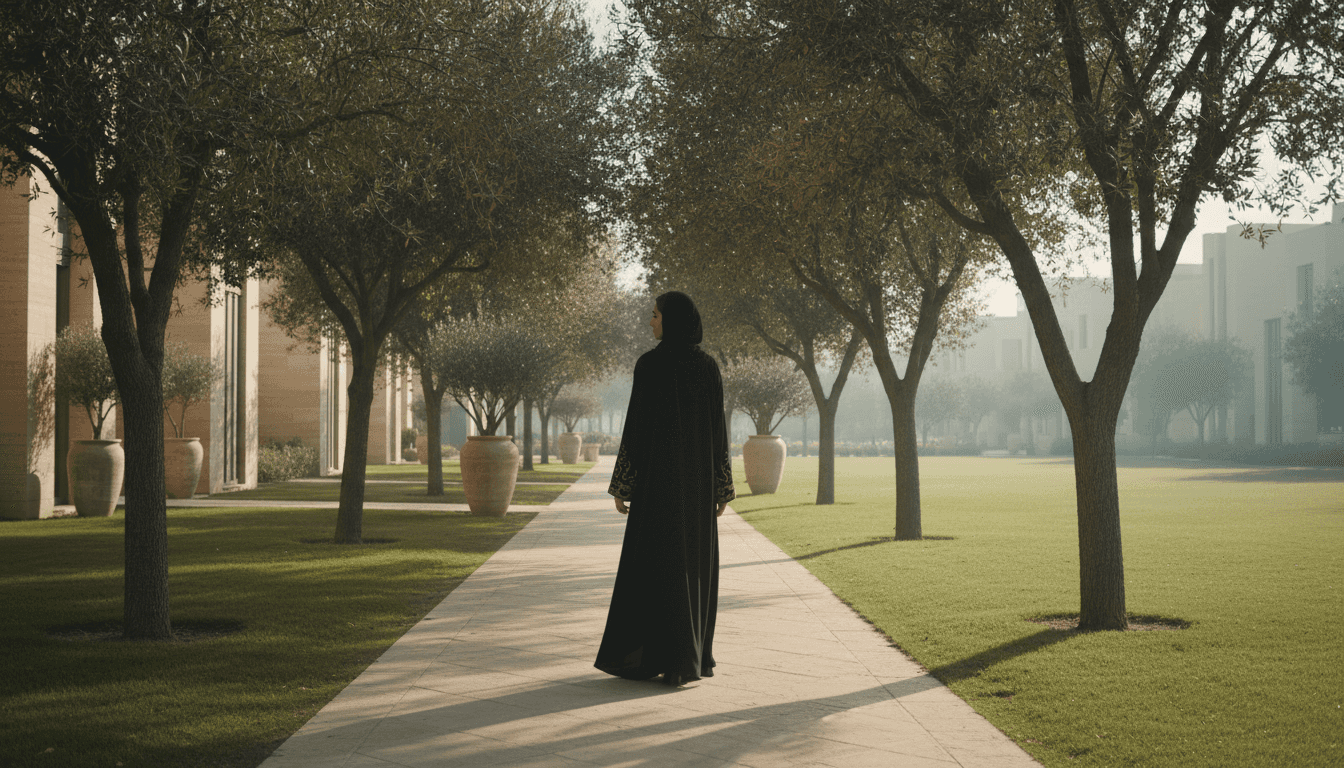
The Active Home: Dubai's Wellness Neighbourhoods
More than just a gym, a true wellness lifestyle is built into the design of Dubai's best communities. I'll explore which neighbourhoods deliver on the promise of active living and what it costs to buy into them.

For years, the definition of a 'luxury' property in Dubai was simple: a great view, a high floor, and a marble-clad lobby. A gym and a pool were standard, but often felt like an afterthought. Today, that definition feels hopelessly outdated. My conversations with clients at Gaia Living have shifted; they're no longer just asking about square footage, but about air quality, walkability, and access to green space. They want a home that actively contributes to their well-being, creating a genuine wellness lifestyle Dubai has become increasingly known for.
Here's what we'll explore in this deep dive into Dubai's active living landscape:
- Redefining the 'Active Home' beyond a simple gym and pool.
- The Waterfront Champions: Where running tracks meet the sea.
- The Green Lungs: Communities designed around nature.
- Master-Planned for Movement: The suburban fitness model.
- The Urban Core Athletes: Finding wellness in the city's heart.
- Emerging Hubs: The next generation of healthy communities.
- The True Cost of a Healthy Lifestyle: A detailed cost breakdown.
- My Verdict: Is the wellness premium worth paying?
Redefining the 'Active Home'
The term 'wellness' has been co-opted by marketing departments to the point of exhaustion. A building that adds a yoga deck to its roof is suddenly a 'wellness hub'. In my view, this misses the point entirely. A true Dubai health community isn't about a single amenity; it’s about a holistic design philosophy that makes healthy choices the easy choices. It’s about a built environment that encourages you to move, to breathe clean air, and to connect with your neighbours and with nature. This is the new benchmark for luxury living, and it's far more difficult for a developer to fake.
So what are the non-negotiable elements? First, exceptional walkability. This means wide, shaded pavements, safe pedestrian crossings, and a layout where daily needs — a grocery store, a coffee shop, a nursery, are a pleasant stroll away, not a mandatory car journey. Second, integrated fitness infrastructure. I'm not talking about a small, windowless gym in the basement. I mean homes near running tracks, dedicated cycle paths that are separated from traffic, outdoor calisthenics parks, and sports courts that are well-maintained and accessible. It's about providing the hardware for an active life, right on your doorstep.
Finally, and perhaps most importantly, it's about access to nature. This can be the 'blue' space of the sea or a canal, or the 'green' space of a mature park. The psychological and physical benefits of being near nature are well-documented. In a desert city, creating and maintaining this is a developer's biggest challenge and, when done right, their greatest achievement. Communities like Al Barari didn't just plant a few trees; they cultivated an entire ecosystem. This is the difference between a building with amenities and a genuine wellness community. It's the thoughtful integration of these elements that creates a foundation for healthy living Dubai property buyers are now seeking above all else.
The Waterfront Champions: A Runner's Paradise
 Featured project
When clients ask for a ready-made active lifestyle, my mind immediately goes to the water. There's something elemental about starting your day with a run alongside the sea. Two communities have perfected this model: Dubai Marina and Palm Jumeirah. The Marina offers its famous 7km pedestrian promenade, a loop that is constantly alive with runners, cyclists, and families out for a walk. The energy is palpable. You can live in a tower like Cayan or Princess Tower and be on the track within a two-minute elevator ride. The convenience is unbeatable. This immediate access is what makes the Marina one of the city's original and most enduring fitness-friendly neighbourhoods.
Palm Jumeirah, on the other hand, offers a different flavour of waterfront activity. The fronds themselves are surprisingly quiet and ideal for cycling, but the star of the show is the 11km crescent boardwalk. It provides a long, uninterrupted stretch for serious runners and cyclists, with the iconic backdrop of the Atlantis and the Dubai skyline. More recently, the development of Palm West Beach has added a vibrant, walkable beachfront strip with restaurants and beach clubs, blending social life with active pursuits. For residents of shoreline apartments or villas on the fronds, the entire Palm becomes a private fitness park. The sheer scale of the infrastructure here, a legacy of Nakheel's ambitious vision, is hard to replicate.
Of course, this accessibility comes at a price. Properties in both locations command a significant premium. A two-bedroom apartment in Dubai Marina with a full sea view can easily trade for AED 3.5 to 5 million, while a similar unit on the Palm shoreline might range from AED 4 to 6 million. Villas are in another stratosphere entirely. The service charges also reflect the high cost of maintaining these pristine public realms, often ranging from AED 18 to AED 25 per sqft annually. You are paying not just for your apartment but for the privilege of living within this managed, active ecosystem. For many of my clients, the ability to leave their car keys behind and integrate movement smoothly into their day is a premium worth paying.
The Green Lungs: Communities Built Around Nature
While the coast offers invigorating 'blue' space, some of Dubai's most ambitious wellness communities have focused on creating 'green' space in the heart of the desert. The undisputed pioneer and champion in this category is Al Barari. To call it a development with parks is to do it a disservice; it is a botanical garden that you can live in. With over 80% of its area dedicated to landscaped gardens, freshwater streams, and themed parks, Al Barari offers a living experience unlike any other in the region. The air feels cleaner, the temperature feels a few degrees cooler, and the soundscape is dominated by birdsong, not traffic. For residents, this isn't just a visual amenity; it’s a functional part of their life, with kilometres of shaded, winding paths for walking and running.
Another major player in this space is Sobha Hartland and Sobha Hartland II. Located in Meydan, Sobha has committed a vast percentage of its master plan to green space, a strategy that resonates strongly with families. They are creating a community with a genuine sense of nature at its core, including lagoons and extensive parklands. This provides a crucial 'third space' for residents, an area that is neither home nor work, where they can decompress, exercise, and connect. What Sobha does exceptionally well is integrate this green philosophy across different property types, from high-end villas to more accessible apartments, making the wellness lifestyle available to a broader audience than the ultra-exclusive Al Barari.
The commitment to creating these green lungs is immense. The cost of water, soil, and the army of gardeners required to maintain these verdant landscapes is significant, and it's reflected in the purchase price and service fees. A villa in Al Barari is a significant investment, often starting from AED 8 million and going much higher. Service charges here are at the top end of the market for good reason. In Sobha Hartland, a two-bedroom apartment might range from AED 2.5 to 3.5 million. The premium is tangible, but for those prioritising a serene, nature-infused environment for their family, the value proposition is compelling. It’s a choice for a quieter, more grounded version of active living Dubai style.
Master-Planned for Movement: The Suburban Fitness Model
Beyond the headline-grabbing green communities, a quieter revolution in active living has been taking place in Dubai's suburbs. Developers like Emaar Properties and Damac pioneered the concept of the self-contained, master-planned community, and fitness has always been part of their DNA. Arabian Ranches, one of Dubai's most established and beloved family communities, is a perfect example. It was designed from the outset with an intricate network of shaded pathways, parks, and community pools. You can run or cycle for kilometres without ever crossing a major road. The community centres feature gyms, tennis courts, and basketball courts, all fostering a strong sense of local community.
Similarly, Damac Hills and Damac Hills II have made sports and recreation a central pillar of their offering. Damac Hills is famously home to the Trump International Golf Club, but the wellness infrastructure goes far beyond golf. It incorporates themed sports parks for tennis, football, and cricket, a skate park, and extensive jogging tracks. This isn't just about providing facilities; it's about curating a lifestyle where kids and adults alike have a multitude of reasons to get outside and be active. This model has proven incredibly successful, creating strong, stable communities where families put down roots.
What makes these communities so attractive is that they offer a more accessible entry point into the healthy living Dubai property market compared to the ultra-premium beach and forest communities. A three-bedroom townhouse in Arabian Ranches 3 or Damac Hills 2 might be found in the AED 2.2 to 3.5 million range, offering significant space for the money. The trade-off is location; these communities are further from the city's central business districts, requiring a commute. However, for many families, the benefit of a safe, contained environment where children can play outside freely, and where a healthy lifestyle is built into the urban fabric, far outweighs the longer drive to the office.
“The best wellness communities aren't the ones with the most features, but the ones where the healthy choice becomes the default choice, smoothly woven into the fabric of your day.”
The Urban Core Athletes: Wellness in the City's Heart
It’s a common misconception that to lead an active lifestyle in Dubai, you must retreat to the suburbs or the waterfront. While these areas offer obvious advantages, a new breed of urbanist is finding ways to thrive in the city's dense core. Communities like DIFC and Business Bay are surprisingly conducive to an active life, provided you know how to use them. DIFC's master plan, with its pedestrianised walkways and air-conditioned connections through Gate Avenue, creates a highly walkable urban island. You can live, work, and socialise within a 15-minute walk, drastically reducing car dependency.
The real game-changer for the urban core has been the development of the Dubai Water Canal. Its 12km of pedestrian and cycling tracks have created a vital green and blue artery through the heart of the city, connecting Business Bay, Jumeirah, and beyond. Suddenly, residents of towers in Business Bay, once isolated by highways, have direct access to a world-class piece of fitness infrastructure. I've seen clients specifically request apartments in buildings like Volante or The Peninsula for their proximity to the canal path. It has fundamentally transformed the lifestyle proposition of the entire area.
Of course, living in the core requires a different approach. Your 'park' might be the canal path, and your 'community centre' might be a high-end commercial gym like Barry's or 1Rebel. But the trade-off is unparalleled access to the city's best restaurants, cultural venues, and workplaces. This is a lifestyle for those who feed off the city's energy. Property prices reflect this prime location, with a one-bedroom in a good quality Business Bay tower ranging from AED 1.5 to 2.5 million, while DIFC commands a premium on top of that. It proves that a wellness lifestyle Dubai offers is not one-size-fits-all; it can be tailored to the pace and preference of the urban professional just as effectively as the suburban family.
Emerging Hubs: The Next Generation of Healthy Communities
While established neighbourhoods have retrofitted wellness into their offering, the most exciting developments are happening in the communities being designed with health as a primary goal from day one. The standout example, in my professional opinion, is Expo City. As the legacy site of Expo 2020, its infrastructure was built around sustainability and human-centric design. It offers a 10km cycling track, a 5km running track, and vast pedestrianised spaces. It's a '15-minute city' where residences, offices, and amenities are all within a short walk or cycle, making it arguably the most forward-thinking Dubai health community in development.
Another area to watch is the continued evolution of master plans by developers who have learned from the past. Projects in the pipeline are going beyond just tracks and parks. We're now seeing a focus on biophilic design (integrating natural elements into buildings), community farming, and dedicated wellness centres that offer everything from preventative health screenings to mental wellness workshops. Developers are partnering with hospitality and wellness brands to curate the 'software' of the community — the classes, events, and services, not just the 'hardware'.
These emerging hubs represent the future of healthy living Dubai property. They understand that wellness is multi-faceted, encompassing physical, mental, and social well-being. They are moving away from the car as the primary mode of transport and toward creating vibrant, walkable, and green public realms. As these communities mature, they will set a new standard for urban development in the region. For buyers and investors, getting in at the early stages of these projects offers the potential to buy into a next-generation lifestyle before it commands the premium of an established wellness neighbourhood.
The True Cost of a Healthy Lifestyle
Embracing a wellness-focused address in Dubai is an investment in your quality of life, but it's essential to understand the financial implications. The premium is not just in the sticker price; it's also in the recurring costs that sustain the very amenities you're buying into. Let's break down the real costs for a hypothetical two-bedroom apartment in a premium, fitness-friendly community.
First, the upfront purchase costs. Let's assume a purchase price of AED 3,000,000. Here’s a typical breakdown of what you'll need to pay upfront, based on regulations from the Dubai Land Department (DLD):
- Purchase Price: AED 3,000,000
- DLD Transfer Fee: 4% of purchase price = AED 120,000
- DLD Admin Fee: AED 4,200 (fixed fee)
- Property Registration Fee: AED 4,000
- Agency Fee: 2% of purchase price + 5% VAT = AED 63,000
- Mortgage Arrangement Fee (if applicable): Typically 1% of loan amount + 5% VAT
- Mortgage Registration Fee (if applicable): 0.25% of loan amount (paid to DLD)
- Initial Service Charge & Sinking Fund Payment: Often requires a pro-rata payment for the first quarter upfront.
This brings the immediate, non-recoverable closing costs to over AED 187,000, even before considering mortgage fees. It's a substantial sum that buyers must budget for. The second, and arguably more critical, long-term cost is the annual service charge. These fees, regulated by RERA, cover the maintenance of all common areas: the pools, the parks, the running tracks, the security, and the building itself. In a community with extensive green spaces and amenities, these are naturally higher. You can expect a range of AED 16 to AED 25 per square foot per year. For a 1,500 sqft two-bedroom apartment, this translates to:
- Annual Service Charge: 1,500 sqft * AED 20/sqft = AED 30,000 per year.
This AED 30,000 is the price of keeping the neighbourhood pristine and the facilities running. When you compare two properties, a lower service charge might seem appealing, but it often means fewer or poorly maintained amenities. In a true wellness community, you are paying for the upkeep of the lifestyle, and this fee is the primary mechanism for it.
Investing in a wellness community isn't just buying property; it's buying into a lifestyle infrastructure. The higher service charges are a direct reflection of the cost to maintain the parks, tracks, and pools that define these neighbourhoods. Buyers should see this not as a burden, but as their contribution to the very environment they seek.
My Verdict: Is the Wellness Premium Worth It?
After guiding countless clients through this decision-making process, my conclusion is a firm yes — with a caveat. The premium is only worth it if you genuinely use the lifestyle on offer. Paying an extra 20% for a villa in a community with a championship golf course is a poor investment if you never pick up a club. Likewise, paying high service charges for access to an 11km running track is a waste if you never put on your running shoes. The value is realised through participation. When you do engage, the returns on your well-being are immense.
The ability to finish work and be on a shaded, landscaped path within minutes, to have safe places for your children to play outside, to walk to a local café on a Saturday morning — these are the intangible benefits that don't appear on a balance sheet but profoundly impact your quality of life. In my experience, residents of well-designed, active communities are happier, more connected to their neighbours, and more settled. They feel like part of something, not just occupants of a building.
From an investment perspective, these properties have also shown remarkable resilience. During market fluctuations, demand for homes in prime, well-managed communities with superior lifestyles remains strong. They attract a stable base of end-user families and long-term residents, which supports rental yields and capital values. So, while the initial outlay and running costs are higher, you are buying a more desirable, defensible asset. My advice is to be honest with yourself about your lifestyle priorities. If health, nature, and community are at the top of your list, then investing in a Dubai health community is one of the soundest decisions you can make, for both your portfolio and your personal well-being.
Sources
- Dubai Land Department (DLD): https://dubailand.gov.ae/en/
- Real Estate Regulatory Agency (RERA): Part of the DLD website.
- UAE Government Portal (u.ae): For information on visa and residency rules.
Questions, answered
- Which Dubai neighbourhood is best for running and cycling?
- For dedicated running tracks, Dubai Marina offers a 7km promenade, Palm Jumeirah has an 11km track, and communities like Arabian Ranches and Damac Hills have extensive internal trail networks. Expo City also offers a 10km cycling track and a 5km running track.
- Are 'wellness communities' in Dubai more expensive?
- Yes, there is often a premium. This is due to higher development costs for extensive landscaping, premium facilities (like those in Al Barari), and the high demand for this lifestyle. Expect to pay higher service charges, averaging AED 18-25 per sqft in such communities.
- Can I find fitness-friendly apartments, not just villas?
- Absolutely. Dubai Marina, Palm Jumeirah, and City Walk are prime examples of apartment-living with excellent walkability and direct access to promenades and fitness facilities. Newer projects in Creek Harbour and Business Bay are also integrating wellness more effectively.
- What are the hidden costs of buying in a wellness community?
- The main ongoing cost is the service charge, which funds the maintenance of pools, parks, and tracks. These can be significantly higher than in standard buildings. You should also budget for club memberships if certain high-end facilities (like Al Barari's Heart & Soul spa) are not included.
- What is a good emerging neighbourhood for an active lifestyle?
- Expo City Dubai is a standout. It's designed with a 10km cycling track, a 5km running track, and car-free zones, making it a pedestrian-first community. It represents the next generation of urban planning focused on a healthy, active lifestyle from the ground up.
- How much are service charges in a typical wellness community?
- Service charges in communities with extensive amenities like lush parks, multiple pools, and running tracks typically range from AED 16 to AED 25 per square foot per year. For ultra-premium communities like Al Barari, charges can be at the higher end of this range or even exceed it.

Yusuf writes about how Dubai actually lives — waterfront mornings, community dining, walkability, and the lifestyle premium built into an address.
Related stories
AI in Dubai Property: Hype vs. Reality
Automated valuation models are changing how we price property in Dubai, but their algorithms often miss the nuances that define true market value. Here's how to separate genuine data insight from the hype.
The Teen-Friendly Villa in Dubai
Finding a Dubai villa community that truly caters to teenagers can be a challenge. I explore the neighbourhoods that offer the independence, amenities, and social life that older kids need.
Dubai Owners Associations: Your Guide to Power & Control
Understand how Owners Associations in Dubai work, from service charges to community rules. This guide explains your rights and how effective building management impacts your apartment's value.
Echoes, in your inbox
One thoughtful email a month. Market insight, new launches, no spam.