

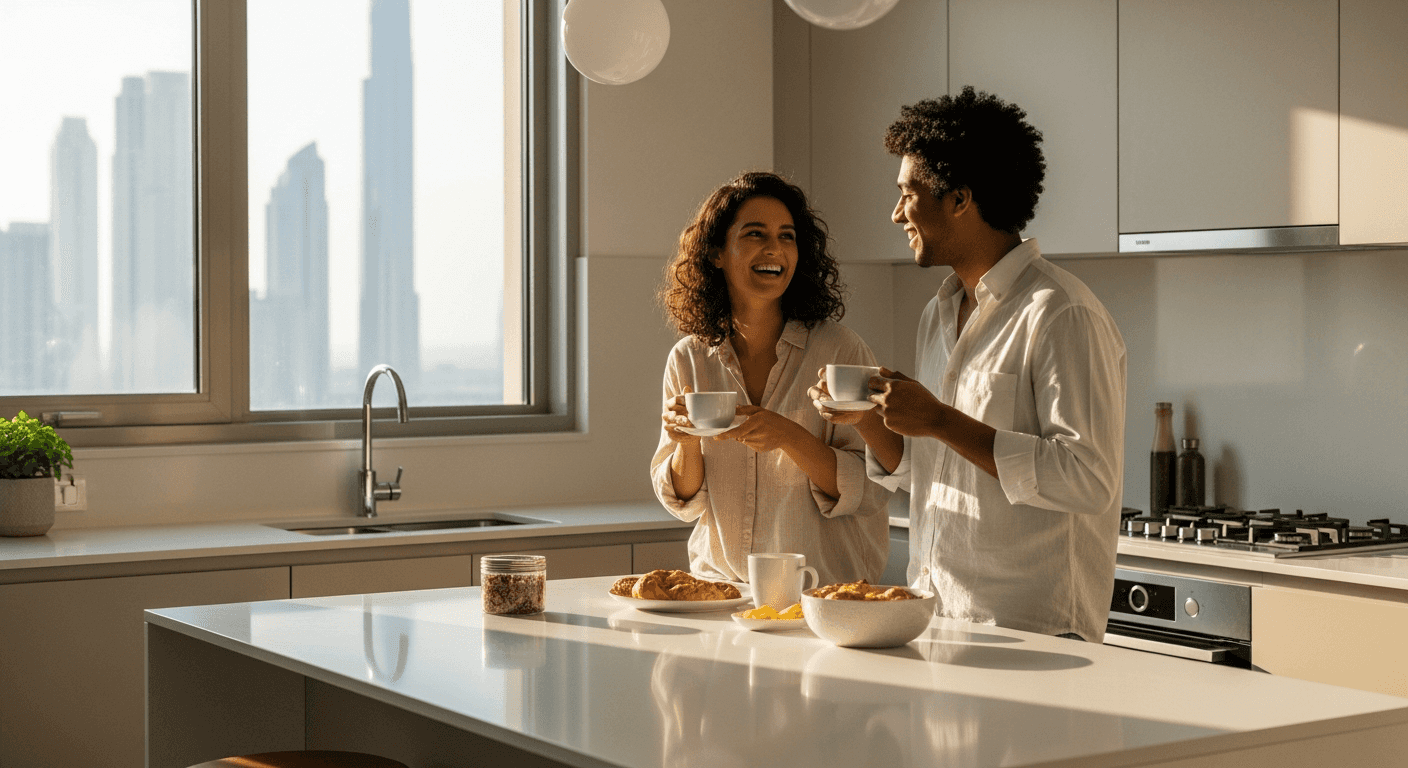
Smart Upgrades: Which Renovations Boost a Dubai Sale Price?
As a seller's strategist, I see many owners waste money on the wrong upgrades. This guide outlines the specific, cost-effective renovations that actually increase your Dubai property's value and attract serious buyers.

Every week, I meet sellers in Dubai who are ready to list their homes. And almost every week, I have to have a difficult conversation about renovation. Many owners, with the best of intentions, pour tens or even hundreds of thousands of dirhams into upgrades they love, only to find buyers aren't willing to pay a premium for them. My role as a seller’s strategist is to prevent that from happening. It’s about shifting your perspective from a homeowner to a market-savvy investor, focusing every dirham on generating the highest possible return when you sell.
Here's what we'll explore:
- The crucial difference between personal taste and market appeal
- The two rooms that deliver the highest ROI: kitchens and bathrooms
- Foundational upgrades that create a premium feel for minimal cost
- How to use Dubai's love for the outdoors to your advantage
- When to consider major changes like extensions or smart home tech
- The renovation traps that can actively hurt your sale price
- Why staging is the most important final step in your strategy
The Seller's Mindset: ROI vs. Personal Taste
Before you call a single contractor or pick out a single tile, we need to establish the ground rules. The moment you decide to sell, your property is no longer your home; it's a product. The goal of any pre-sale renovation is not to create your dream space, but to create a space that appeals to the widest possible pool of qualified buyers. This is the single most important concept for understanding Dubai property renovation ROI. It means detaching emotionally and focusing purely on market-driven decisions. What does the target buyer for a two-bedroom apartment in Downtown Dubai want? What is the non-negotiable for a family looking at a five-bedroom villa in Dubai Hills? The answers are very different.
In my experience, buyers in Dubai are incredibly discerning. They are often purchasing a second or third home, or are relocating with high standards. They are buying a lifestyle, and a key part of that is convenience and the absence of foreseeable problems. A freshly and thoughtfully updated property signals that it has been well-maintained and is 'move-in ready'. This is a powerful psychological trigger that reduces a buyer's perceived risk and effort, making them more likely to pay your asking price without aggressive negotiation. Your renovation should whisper 'quality and care', not shout 'niche personal taste'.
This is where many sellers go wrong. They install the kitchen they always wanted, with bold-coloured cabinets and a very specific style of imported Italian tile. They spend a fortune, and it might look fantastic to them, but it can be a major turn-off for a buyer who now sees the additional cost and hassle of re-renovating to suit their own style. The sweet spot is what I call 'neutral-premium'. This means using a palette of warm whites, soft greys, and natural tones. It involves choosing materials that feel high-quality and contemporary but are not stylistically aggressive. Think brushed nickel or matte black fixtures, not polished gold. Think light oak-effect flooring, not dark cherry wood. The aim is to create a sophisticated, clean, and bright canvas that allows buyers to project their own lives and tastes onto the space.
Consider the context of your property's community. In an established, family-focused area like Arabian Ranches, a practical, durable, and large kitchen with plenty of storage is a must. In a sleek, modern tower in Business Bay, buyers might be more impressed by smart home features and a minimalist, high-gloss aesthetic. Before spending a single dirham, we at Gaia Living analyse the comparable properties on the market. What do the best-selling, highest-priced properties in your exact building or cluster have in common? This data-led approach removes guesswork and ensures your investment is targeted, strategic, and ultimately profitable.
The High-Impact Duo: Kitchens and Bathrooms
 Featured project
If you have a limited budget and want to know where to spend it for maximum impact, the answer is unequivocal: the kitchen and the bathrooms. These 'functional' rooms have an outsized emotional impact on buyers. A dated, grimy kitchen or a tired-looking bathroom can make an entire property feel old and neglected, even if the rest of it is in good shape. Conversely, a sparkling, modern kitchen and a fresh, clean bathroom can elevate the perceived value of the whole home, often adding far more to the sale price than their renovation cost.
Let's start with the kitchen. In Dubai, especially in more modern apartments and villas, the kitchen is often the social heart of the home. The trend is overwhelmingly towards open-plan or semi-open-plan living. If you own an older property, perhaps a Type 3M in The Springs or an early JBR apartment, with a small, closed-off kitchen, the single most powerful renovation you can undertake is to remove a non-structural wall to open it up to the living area. This instantly makes the entire space feel larger, brighter, and more aligned with modern living. Of course, this requires an NOC from the developer like Emaar Properties and a qualified contractor, but the ROI can be phenomenal.
For most sellers, however, a full kitchen demolition isn't necessary. A strategic refresh can be incredibly effective. Instead of ripping out entire cabinets, which is costly, consider having them professionally spray-painted. A dated dark wood or peeling laminate can be transformed with a contemporary light grey or off-white for a fraction of the cost of new joinery. Swap out old-fashioned handles and knobs for sleek, modern hardware. This is a tiny change that makes a huge difference. The biggest visual upgrade comes from countertops and backsplashes. Replacing a worn laminate or a dated, busy granite with a clean, light quartz countertop instantly says 'premium'. A simple, elegant subway tile or large-format porcelain slab for the backsplash completes the look. Finally, don't forget appliances. They don't have to be the most expensive brand, but they should be clean, modern, and consistent (e.g., all stainless steel). A new, integrated appliance set can seal the deal for a buyer who wants a turnkey solution.
Bathrooms follow a similar logic. The goal is to create a clean, bright, and serene 'spa-like' environment. The biggest culprits in dated Dubai bathrooms are often bulky vanity units, old-fashioned tilework (especially with wide, discoloured grout lines), and clunky shower-over-bath setups. Replacing a floor-standing vanity with a modern, wall-hung unit instantly creates a sense of space. If the master bathroom has a tub that is rarely used, consider replacing it with a large, walk-in shower with a frameless glass screen and a rainfall showerhead. This is a highly desirable feature. For tiling, choose large-format, light-coloured porcelain tiles for both walls and floors. Fewer grout lines mean a cleaner look that is easier to maintain — a key selling point. Update all the taps, fixtures, and showerheads to a single, consistent modern finish. Good lighting is critical; replace any single, dim overhead light with brighter, layered lighting, such as spotlights over the shower and vanity lights around the mirror. You're not just renovating a bathroom; you're removing a potential objection from a buyer's mind.
Let's look at a realistic cost-benefit analysis for a mid-range kitchen refresh in a two-bedroom apartment in a community like Jumeirah Beach Residence:
- Professional Cabinet Repainting: AED 6,000 - 9,000
- New Quartz Countertops (mid-range): AED 12,000 - 20,000
- New Backsplash Tiling (supply & install): AED 3,000 - 5,000
- New Sink, Tap & Modern Hardware: AED 2,000 - 4,000
- Upgraded LED Lighting: AED 1,000 - 2,000
- Total Estimated Cost: AED 24,000 - 40,000
For an investment of around AED 30,000, a seller can resolve a major buyer objection (a dated kitchen) and potentially add AED 75,000 to AED 125,000 to the final sale price, not to mention drastically shortening the time the property sits on the market. This is the definition of a smart upgrade and a core part of achieving the best renovations for a higher sale price in Dubai.
The Foundation: Flooring, Paint, and Lighting
While kitchens and bathrooms provide the 'wow' factor, it's the foundational elements of your property that create the cohesive, premium backdrop. I'm talking about paint, flooring, and lighting. Getting these three things right is one of the most cost-effective property upgrades in Dubai. It’s the equivalent of dressing in a well-tailored suit — it creates an immediate impression of quality and care before anyone even looks at the details. Buyers may not consciously notice perfect paintwork or consistent flooring, but they will absolutely notice scuffed walls, mismatched tiles, and dark, gloomy rooms. These foundational elements set the entire tone for a viewing.
Paint is, without a doubt, the number one cheapest, fastest, and most impactful upgrade you can make. A fresh, professional paint job throughout the entire property is non-negotiable in my book. It erases years of wear and tear, covers minor imperfections, and makes the whole space smell clean and new. The key is colour choice. I steer my clients away from clinical, brilliant white, which can feel cold and stark. Instead, we opt for warm, soft whites (like Jotun's 'Smooth White' or 'Classic White') or very light, neutral greys. The goal is a colour that reflects light beautifully and provides a blank canvas. It's also crucial to use the same colour throughout all the main living areas and hallways to create a sense of flow and spaciousness. Don't forget the ceilings, doors, and trim — painting them a crisp, clean white makes the wall colour pop and looks incredibly polished.
Next is flooring. Inconsistent or dated flooring can make a property feel disjointed and cheap. Many older Dubai apartments and villas suffer from a patchwork of different tiles from room to room or worn-out, stained carpets. Replacing this with a single, continuous type of flooring throughout the main living areas is a game-changer. For apartments, high-quality Luxury Vinyl Tile (LVT) is an excellent choice. It's durable, water-resistant, and comes in very realistic wood-look finishes that add warmth and sophistication. For villas, large-format porcelain tiles (60x120cm or larger) in a neutral, matte finish are extremely popular. They create a smooth, modern, and expansive feel. While the upfront cost is higher than painting (expect to pay AED 80 - 180 per square metre, including installation, for good quality LVT or porcelain), the return on investment is significant. It's a major capital improvement that buyers recognise and value.
Finally, let's talk about lighting. It’s an element that is so often overlooked by sellers, yet it has a profound effect on the mood and perceived size of a space. Many properties in Dubai, especially those built 10-15 years ago, have basic, builder-grade light fixtures that are often inadequate and unattractive. The strategy here is two-fold. First, replace any dated chandeliers, 'boob' lights, or fluorescent strips with modern alternatives. For general lighting, recessed LED spotlights on a dimmer switch provide clean, flexible illumination. Second, think about adding layers of light. In the living room, a stylish floor lamp can create a cosy reading corner. In the dining area, a contemporary pendant light over the table defines the space. In the kitchen, under-cabinet LED strips are a relatively cheap addition that provides excellent task lighting and makes the kitchen look far more expensive. The total cost of upgrading all the light fixtures in a two-bedroom apartment might only be a few thousand dirhams, but the difference it makes during an evening viewing is immense. It transforms the property from a functional space into an inviting home.
Maximising Outdoor Space: The Dubai Lifestyle Upgrade
In a city blessed with months of beautiful weather, outdoor space isn't an afterthought — it's a primary living area. For many buyers, it's a critical part of the Dubai lifestyle they are looking to purchase. Adding value to a Dubai property for sale means treating your balcony, terrace, or garden with the same strategic attention you give your interior. A neglected, empty outdoor area is a wasted opportunity. A well-presented one can be a powerful tool to secure a premium price. The approach differs significantly between apartments and villas, but the principle is the same: show buyers how this space enhances their life.
For apartment owners, even a small balcony can be a major selling point. Too often, I see balconies used as storage for junk or left completely bare. This is a mistake. The goal is to sell a vision. A buyer looking at an apartment in Dubai Marina wants to imagine themselves having their morning coffee while watching the boats go by. Your job is to make that vision easy for them. A simple, cost-effective makeover can do just that. Start by cleaning the area thoroughly. Then, lay down some attractive interlocking deck tiles (available from stores like IKEA or ACE) to cover the standard concrete floor. Add a small, stylish bistro table and two chairs. Place a few low-maintenance potted plants in the corners. It's a minimal investment that transforms the balcony from a forgotten space into a functional and desirable outdoor room, effectively increasing the usable square footage of the property in a buyer's mind.
“The moment you decide to sell, your property is no longer your home; it's a product. The goal is to create a space that appeals to the widest possible pool of buyers, not just you.”
For villa owners, particularly in communities like Jumeirah Golf Estates or the newer phases of Damac Hills and Damac Hills II, the garden and outdoor entertaining areas are paramount. A scraggly, unkempt garden can drag down the value of the entire property. A full, professional landscaping job can be expensive, but a strategic tidy-up often suffices. This means ensuring the lawn is green and healthy, bushes are neatly trimmed, and flower beds are clearly defined and mulched. The patio area should be clean and furnished to show its potential for dining or lounging. A pergola or retractable awning is a highly valued addition as it provides crucial shade, making the space usable for more of the day and more of the year.
The big question for villa owners is often about adding a swimming pool. This is a major expense, with costs for a basic, good-quality pool starting around AED 80,000 and easily reaching AED 150,000 or more with features like temperature control (a must in Dubai). Is it worth it? The answer is highly location-dependent. In premium family villa communities, a pool is often considered a standard feature. If most of the comparable homes in your area have pools and yours doesn't, you are at a distinct disadvantage. In this context, adding a pool is less about generating a positive ROI and more about bringing your property up to the expected market standard, allowing you to compete at the right price point. In these areas, a pool can certainly add more than its cost to the final sale price. However, for a smaller townhouse or in a community where pools are not the norm, you are unlikely to recoup the full investment. It's a calculated decision that requires careful analysis of your local market, something we guide our clients on every day.
Smart Tech & Structural Changes: When to Go Big
While cosmetic upgrades deliver the most reliable ROI, there are times when more substantial investments, like smart home technology or structural alterations, make strategic sense. These are bigger, more complex projects that carry higher costs and risks, but in the right circumstances, they can deliver a significant premium and set your property apart from the competition. This is where moving beyond simple renovations for a higher sale price in Dubai becomes a serious consideration, requiring careful planning and professional advice.
Let's tackle smart home technology first. There's a lot of hype, but what do buyers actually value and pay for? My advice is to focus on simple, intuitive, and universally appealing tech. Complicated, proprietary systems that control everything from a single, custom-coded iPad are often a turn-off for buyers who fear maintenance issues and obsolescence. Instead, focus on a few key areas. A smart thermostat, like a Nest or Ecobee, is a fantastic upgrade. It's relatively inexpensive to install, looks modern, and tangibly demonstrates energy savings and convenience — a big plus in Dubai. Smart lighting, using systems like Philips Hue in key areas (living room, master bedroom), allows you to create impressive 'moods' for viewings and adds a touch of sophistication. A smart lock on the front door offers keyless entry and enhanced security, which is another valued feature. These small additions, costing a few thousand dirhams in total, can make an older property feel much more current and appeal to tech-savvy buyers.
Structural changes are a much bigger commitment, requiring significant capital, time, and a raft of approvals. You cannot simply knock down a wall or build an extension in Dubai. The process requires a No Objection Certificate (NOC) from the master developer — be it Nakheel for Palm Jumeirah properties or a smaller developer for a single tower, and often a building permit from the Dubai Municipality, managed through the Dubai Building Permit System. This process ensures all work is safe, compliant with regulations, and properly recorded. Despite the hurdles, the ROI can be immense when the change addresses a fundamental flaw or unlocks new potential in the property. The classic example is extending a villa. In a community where the price per square foot is high and demand for larger family homes is strong, adding a family room or an extra bedroom can create enormous value. For instance, extending a three-bedroom villa in a desirable location to a four-bedroom could increase its value by far more than the construction cost.
Layout changes within the existing footprint can also be powerful. I've already mentioned opening up a closed kitchen. Another common and effective change is reconfiguring a poorly designed master suite to create a walk-in wardrobe and a larger, more luxurious bathroom. In older apartments with a large, somewhat useless closed balcony, enclosing it (with all necessary approvals) to create a home office or a small sunroom can add valuable, climate-controlled living space. Similarly, a small, windowless maid's room might be better repurposed as a dedicated laundry and storage room, which can be more appealing to some buyer demographics. These decisions should never be made in a vacuum. They require a deep understanding of what buyers in your specific micro-market are looking for, what the planning constraints are, and a realistic budget. This is not a DIY project; it's a strategic investment that demands collaboration with architects, trusted contractors, and an experienced real estate advisor.
Renovation Traps: Upgrades That Rarely Pay Off
Just as important as knowing what to upgrade is knowing what to avoid. I’ve seen countless sellers fall into renovation traps, spending significant money on 'improvements' that not only fail to add value but can actively deter potential buyers. Understanding these common pitfalls is key to a successful pre-sale strategy and is a crucial part of my advice on adding value to a Dubai property for sale. The core principle is to avoid anything that is overly personal, niche, or difficult for a new owner to change.
One of the biggest traps is over-the-top, taste-specific luxury. A seller might love the idea of a bathroom with floor-to-ceiling black marble and gold-plated taps, and in their mind, it's a premium upgrade. They spend a fortune importing materials. But for 9 out of 10 buyers, it's a nightmare. It's stylistically aggressive and feels like a massive project to undo. The buyer doesn't see a luxury bathroom; they see a AED 50,000 renovation bill. Unless you are selling a palace in Emirates Hills where such opulence might be expected, stick to a neutral-premium aesthetic. You will never recoup the cost of hyper-personalisation. The goal is to appeal to the market, not to build a monument to your own taste.
Another common mistake is converting rooms for highly specific hobbies. I once visited a villa where the owner had beautifully converted the double garage into a soundproofed music studio. It was his pride and joy. The problem? Every family that viewed the property saw a house with no covered parking in a city where temperatures hit 45°C. It was an immediate deal-breaker. The same goes for converting a spare bedroom into a dedicated home cinema with fixed seating or a walk-in humidor. While these might be great for your lifestyle, they reduce the flexibility of the space for a new owner. If you make such changes, ensure they are easily and cheaply reversible before you list the property for sale.
Here's a quick checklist of upgrades I generally advise sellers to avoid:
- Extremely High-End Appliances: A professional-grade, six-burner Wolf range is fantastic for a passionate chef, but most buyers won't pay the AED 50,000 premium over a good quality Bosch or Siemens appliance set.
- Elaborate, Built-in Furniture: Custom-built wall units, beds, or desks can be problematic. They are fixed to the seller's specific needs and can make rooms feel smaller and less flexible for the buyer's own furniture.
- 'Invisible' Upgrades: Spending a lot of money on re-plumbing the entire house or installing a top-of-the-line water filtration system is great for peace of mind, but it's not a marketable feature that adds to the sale price. Buyers expect the plumbing to work; they won't pay extra for it.
- Hot Tubs or Jacuzzis: Unlike swimming pools in villas, hot tubs often have a negative ROI. They are seen as a maintenance hassle and can take up valuable balcony or garden space. They are also very taste-specific.
- Bold Feature Walls: A deep red or dark blue accent wall might have been your favourite feature, but it’s the first thing a buyer will mentally earmark for repainting. It's better to neutralise the entire space before viewings.
Finally, a critical error is ignoring the property's inherent character and the neighbourhood context. Don't put an ultra-minimalist, high-gloss German kitchen into a rustic, Mediterranean-style villa in The Springs. The aesthetic clash is jarring. The best renovations feel like a natural, elevated version of the property's original style. They should feel cohesive and harmonious, not like a collection of random, trendy ideas. A thoughtful, context-aware renovation will always deliver a better result than just chasing the latest fads.
The Final Polish: Staging is Not a Renovation, It's a Strategy
After all the dust from the renovation has settled, there is one final, critical step that many sellers overlook: professional staging. Let me be clear: staging is not just decorating. It is the most powerful marketing tool at your disposal for a finished property. You could have the most beautifully renovated kitchen and bathrooms, but if the property is empty, cluttered, or poorly furnished, buyers will struggle to connect with it emotionally. All your investment in upgrades can fall flat at the final hurdle. Staging is the strategy that brings your renovated property to life and translates its features into a compelling vision for buyers.
An empty property is a particularly tough sell. Buyers walking into a vacant apartment or villa find it surprisingly difficult to judge the size of rooms. Without furniture to provide scale, bedrooms can feel small and living areas can seem awkwardly shaped. More importantly, an empty space feels cold and sterile. It doesn't feel like a home. Buyers need to be able to envision their life there, and staging does that work for them. It shows them where the sofa could go, that the spare room makes a perfect home office, and that the balcony is ideal for entertaining. It creates an emotional connection, transforming a set of rooms into a desirable lifestyle.
Conversely, a property that is cluttered with the owner's personal belongings is just as problematic. Too much furniture can make rooms feel cramped. Family photos, collections, and personal trinkets, while precious to you, are a distraction for buyers. They make it harder for them to mentally 'move in' and can even make them feel like they are intruding in someone else's space. Professional stagers are experts in depersonalizing and decluttering. They will often recommend removing up to half of the owner's furniture and belongings and then strategically rearranging what's left, supplementing with rented pieces, art, and accessories to create a clean, elegant, and inviting look.
The impact on the sale process is dramatic. From my experience at Gaia Living, professionally staged properties consistently sell faster and for a higher price than their unstaged counterparts. The investment in staging — which can range from AED 10,000 to AED 30,000 or more for a 6-8 week contract, depending on the property size, almost always pays for itself multiple times over in the final offer. The difference is most pronounced in the online listing. Professional photographs of a beautifully staged home are magnetic. They generate more clicks, more interest, and more requests for viewings from serious buyers before they even step through the door. This increased demand creates a competitive environment, which is the key to achieving a premium price.
The most successful property sellers in Dubai understand that adding value is a two-step process. First, make strategic, market-aware renovations focusing on kitchens, bathrooms, and core finishes. Second, invest in professional staging and photography to merchandise those upgrades effectively. Skipping the second step is like designing a luxury car and forgetting to paint it.
If you are considering selling and want to ensure every dirham you spend is a smart investment toward a higher sale price, this strategic approach is essential. Our role at Gaia Living extends beyond simply listing a property; we partner with our clients to create a bespoke plan for maximising its value, from initial renovation advice to the final staging touches. Explore our browse properties for sale to see the difference this approach makes, or consult our other buyer & investor guides for more insights.
Sources
- Dubai Land Department (DLD): dubailand.gov.ae
- Real Estate Regulatory Agency (RERA): Part of the DLD, sets rules for brokers and developers.
- Dubai Municipality: For information on building permits and regulations.
Questions, answered
- What is the single best renovation for ROI when selling a Dubai property?
- A modern kitchen refresh almost always provides the best return on investment. This includes upgrading countertops, repainting cabinets, and installing contemporary hardware and lighting. It's a high-impact change that strongly influences buyer perception.
- Do I need a permit for minor renovations in Dubai?
- Yes, for almost all renovation work beyond simple painting, you need a No Objection Certificate (NOC) from your building's management or the master developer (like Emaar or Nakheel). For structural changes, a permit from the Dubai Municipality is also required.
- How much should I budget for pre-sale renovations in Dubai?
- I advise clients to budget between 1-3% of their property's estimated market value for strategic upgrades. For a property valued at AED 2 million, this would be AED 20,000 to AED 60,000, focused on high-ROI areas like the kitchen, bathrooms, and overall presentation.
- Is adding a swimming pool to my Dubai villa a good investment before selling?
- It depends entirely on the location and property type. For a family villa in a community like Arabian Ranches or Dubai Hills, a pool is often expected and can significantly boost value. For a smaller townhouse or in less premium communities, you may not recoup the full cost.
- Is professional home staging worth the cost in Dubai?
- In my professional experience, absolutely. Staging helps a property sell faster and for a higher price by allowing buyers to visualize the lifestyle. The return is often many times the initial investment, which is typically between AED 10,000 and AED 30,000 for a standard apartment.
- Should I upgrade my AC system before selling my property?
- You should only replace the AC system if it is old, inefficient, or faulty. Buyers expect functional air conditioning as a basic necessity and won't pay a premium for a new unit, but they will be deterred by a problematic one. It's a defensive repair, not a value-add investment.

Lena writes exclusively for owners looking to sell. Staging, listing timing, agent selection, and how to read a lowball offer — she's in the seller's corner.
Related stories
Dubai's AC Dilemma: The Real Cost of Cooling
Your apartment's air conditioning is more than just a utility—it's a major factor in your monthly budget and comfort. I'll break down the real costs and benefits of Dubai's two main cooling systems, helping you choose your next home wisely.
Managing Multiple Offers: A Dubai Seller's Playbook
Receiving multiple offers on your Dubai property is an excellent problem to have, but handling it incorrectly can cost you time and money. Here’s my strategic playbook for managing competitive bids to secure the best possible outcome.
Gifting Property to Family in Dubai
Thinking of transferring a Dubai property to a family member? Learn how to navigate the DLD's rules for gifting to first-degree relatives and significantly reduce your transfer costs.
Echoes, in your inbox
One thoughtful email a month. Market insight, new launches, no spam.