

Smart Homes in Dubai: Which Developers Actually Deliver
Smart homes in Dubai fill the brochures, but which developers actually deliver? Here's how to tell real tech from a sticker, and what's worth paying for.
The tour of any development in Dubai includes the phrase smart home being mentioned in virtually any brochure, hoarding, or even the sales pitch itself. A house with an app that turns its lights on and off, a villa fitted with a system that controls all operations in the place – these two cannot be equated, yet the title makes no differentiation between them.
The reason why is because today, in Dubai, there is such a problem with smart homes: the title does not denote anything anymore. There are developers who have really put some effort into constructing houses that make use of reliable technologies and operate perfectly throughout many years. And there are those that just add a couple of gadgets and call it a "smart home." You will need to know the difference since, whatever the case, you pay for it in both instances.
What we offer here is an attempt to shed some light. What makes a house a truly smart one? How many gadgets do you need for it? How can you understand the difference between the truth and deception? Who are the developers whose reputation guarantees serious work done? Which features worth it to install and which ones should be avoided?
First of all, there will be no simple list with top developers. There are a number of things that affect smart-home construction including the project itself, the building and year it was built in. We will present you with something that is way more useful than any rating, and that is the checklist. Let us get started.
What a Smart Home Actually Means, and What It Does Not
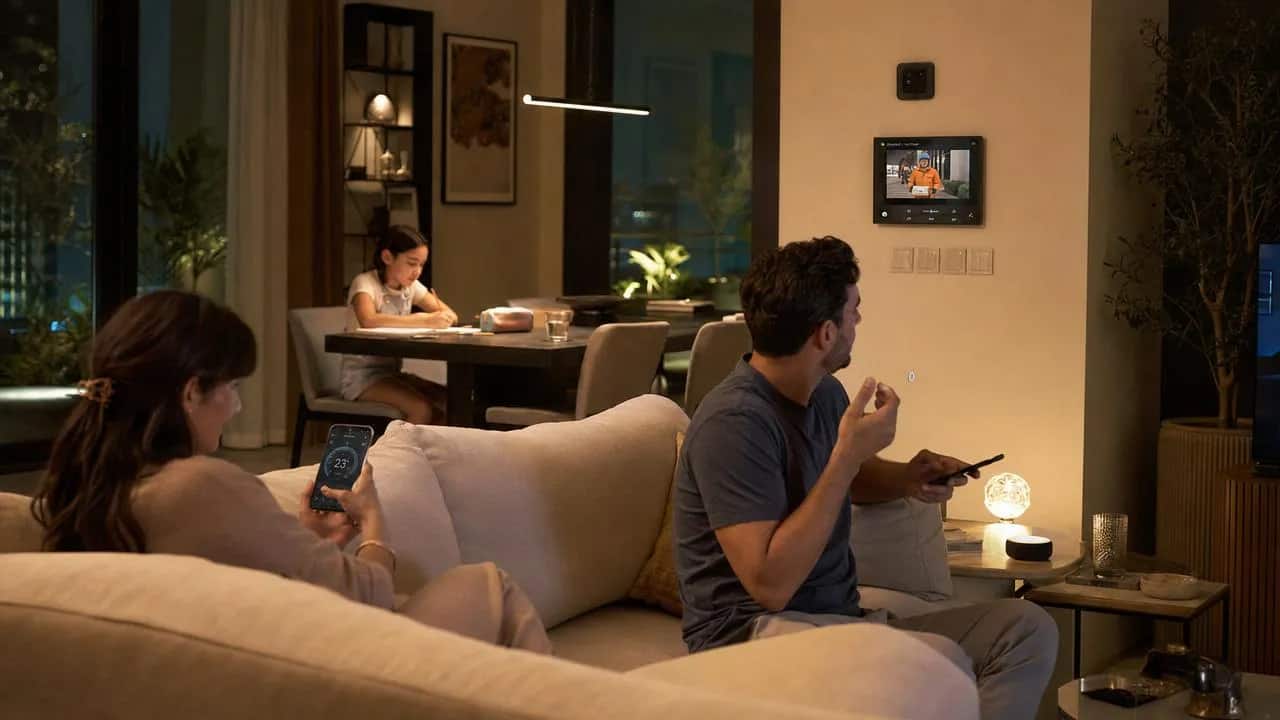
Let's set a baseline, because the word gets thrown at everything. A real smart home is one where the systems talk to each other and to you, through a single controller or app, in a way that genuinely changes how you live in the space. The lights, the air conditioning, the locks, the blinds, the security, all working together rather than as separate gadgets you juggle across six different apps.
At the other end, a lot of what gets called smart is just a connected device or two. A bulb you can dim from your phone is nice. It is not a smart home. You could buy the same bulb yourself for a few dirhams and screw it in this afternoon.
So picture it as a scale rather than a yes or no:
- Basic: a few connected gadgets, like app-controlled lights or a video doorbell, added on top of an ordinary home.
- Middle: several systems you can control from one app, such as climate, lighting, and access, but not deeply linked.
- Full: a single integrated system running the whole home, with scenes, automation, and often voice control, designed in from the start.
- Branded: a developer's own system, fitted across a building or community, where every unit runs the same setup.
- Retrofitted: smart tech added to an older property after the fact, which works but rarely as cleanly as something built in.
The distinction matters for one simple reason. Price. Developers charge a premium for the smart-home label across all of these, but the value gap between a fully integrated villa and a flat with a clever doorbell is enormous. You can easily pay for the first and receive the second if you do not ask the right questions.
The other thing worth saying plainly. In Dubai's climate, the smart feature that earns its keep is climate control. A system that manages your air conditioning intelligently can shave a real amount off your cooling bill, which is the biggest utility cost in most homes here. A lot of the rest is convenience. Useful, pleasant, but not the thing that pays you back. If you only ever upgrade one thing in a Dubai home, make it the cooling, because that is where the money actually leaks, summer after summer, whether the system is smart or not.
How to Tell a Real Smart Home From a Sticker
This is the section that does the work the headline promises. You cannot rely on the brochure, so here is how to check for yourself whether a home is actually smart or just labelled that way.
Ask these questions, and watch how confidently they get answered. Vague answers are the tell:
- What exactly is included? Get a written list of the smart systems and devices, not "fully smart" on a flyer. If they cannot list it, it is thin.
- Does it run from one app or several? One properly integrated app is the mark of a real system. Five separate apps from five brands is just gadgets.
- Who made the system? A known platform is easier to fix and upgrade than a developer's own one-off setup that nobody else supports.
- Can it be upgraded? Technology ages fast. A system you can update beats one frozen at the year the building went up.
- Who fixes it when it breaks? Find out before you buy, because a dead smart system you cannot service is worse than no smart system at all.
- Does it cover climate control? In Dubai this is the feature that pays for itself, so if the "smart home" does not manage the air conditioning, question what you are paying for.
- Is it actually installed, or just promised? On off-plan, smart features are sometimes quietly cut before handover, so get it in the contract.
That last point catches a lot of off-plan buyers. The show apartment is wired to impress, and the unit you receive two years later quietly has less. If a smart system is part of why you are buying, it needs to be written into the sales agreement, with the specifics, not just implied by the marketing.
Dubai itself has pushed hard on the smart-city idea for years, through Digital Dubai and its wider plans, so the appetite for connected living is real and official. You can read about the city's smart strategy via Digital Dubai. But a city-level vision does not guarantee that the specific flat you are viewing delivers on it. That part you still have to check yourself, one question at a time.
The Developers Known for Taking Smart Homes Seriously
We promised no league table, and we meant it. But some developers have built more of a reputation around technology and finish than others, so here is the honest lay of the land, with the caveat that you should always check the specific project rather than trust the brand.
At the premium end, Emaar, the developer behind Downtown, Dubai Hills, and Creek Harbour, founded by Mohamed Alabbar, has steadily built more smart features into its newer homes, alongside the build quality it is known for. It is rarely the cheapest, but its delivery record is among the most reliable in the city. You can see its projects on the Emaar developer page.
Danube, founded by Rizwan Sajan, has made smart and fully furnished homes a core part of its pitch, often at more accessible prices than the premium names. If smart features on a mid-market budget are the goal, it is one of the first names worth a look, and its record sits on the Danube developer page.
Sobha, founded by PNC Menon and known for obsessive build quality through its in-house construction, sits at the high end where technology comes wrapped in genuinely good finishing. For buyers who care as much about how a home is built as what gadgets it has, it earns its reputation, and you can explore it on the Sobha developer page.
A few patterns worth holding in mind as you compare:
- Premium developers tend to integrate smart tech more deeply, but you pay for it in the price.
- Mid-market developers often lead hardest on the smart-home label, which can mean real value or mostly marketing, so check closely.
- Branded and luxury towers may run their own systems, which look impressive but can be harder to service later.
- A strong delivery record matters more than a flashy demo, because a smart home only counts if it is actually built and works.
- The same developer can deliver beautifully on one project and thinly on another, so the project beats the brand every time.
The takeaway is not "buy from developer X." It is "judge the project, not the logo." A reliable developer raises your odds, but it does not replace the checks from the last section. Even the best names have projects where the smart-home story is thinner than the brochure suggests. Trust the written spec over the reputation, always.
Which Smart Features Are Actually Worth It
Not every smart feature deserves your money, and in Dubai specifically some matter far more than others. We rated the common ones by how much they actually earn their place, each on one line:
- Smart climate and air-conditioning control: the big one here, because cooling is the largest utility cost, so a system that manages it well genuinely pays you back.
- Smart security, cameras, and video intercom: high value, real peace of mind, and useful whether you live in the home or rent it out.
- Smart locks and keyless entry: very useful, and close to essential if you ever plan to run the place as a short-term rental.
- Energy and water monitoring: quietly worthwhile, since it shows you where the money goes and helps you cut it.
- Smart lighting: pleasant and cheap to add yourself, so nice to have but not a reason to pay a big premium.
- Smart blinds and curtains: convenient and good for managing heat and light, but firmly in the luxury-extra column.
- Voice control and scenes: handy once set up, but the novelty fades, and it is not what you should buy a home for.
- A single integrated app for everything: high value when it works properly, high risk when the system is a proprietary one-off nobody can fix.
The pattern is clear once you separate the useful from the impressive. The features that save money or improve security tend to be worth paying for. The ones that mostly impress visitors are nice, but you should not pay a fortune for them, and many you can add yourself for far less than a developer's premium.
One honest piece of advice. If a home has great bones, a good location, and solid build quality but only basic smart features, that is a far better buy than a poorly built flat stuffed with gadgets. You can always add smart tech to a good home. You cannot retrofit a good home around bad bones. Buy the property first, the technology second.
The Catch: Maintenance, Upgrades, and Lock-In
Smart homes have a downside the sales team rarely mentions, and for once it is not the price. It is what happens after you move in. Technology dates, breaks, and sometimes traps you. Go in with your eyes open.
- Tech ages fast. The system that feels current at handover can feel dated in five years, the way a phone does, and a home locked into one frozen setup is a problem in waiting.
- Proprietary systems can trap you. If a developer built its own one-off platform, you may be stuck with their parts, their fixes, and their timeline, with nobody else able to help.
- Repairs can be slow and pricey. A failed smart panel that runs your whole home is a far bigger headache than a normal switch you can swap in minutes.
- Updates may stop. Software needs support, and if the provider walks away, your clever system slowly turns into expensive, unsupported hardware.
- Reselling adds a wrinkle. The next buyer may not value, or may not trust, a complicated system they did not choose, so do not assume it adds resale value automatically.
- Privacy is part of the deal. Connected cameras, locks, and sensors collect data, so it is worth knowing where that goes before you wire your home up.
None of this means avoid smart homes. It means buy ones built on systems that can be serviced and updated, not sealed boxes you cannot open. Ask who supports the system in ten years, not just who installed it this year. On the privacy side, the UAE has brought in its own data-protection rules in recent years, and the basics are set out on the UAE government portal. It is worth a look before you fill a home with connected cameras and sensors that quietly gather data.
If you are looking at off-plan and want to see what is launching with genuine smart features rather than just the label, our property launches page is the place to compare what is actually coming to market.
And whatever you are weighing up, our property buying service can help you separate the homes that truly deliver from the ones that just say so on the banner.
What We Would Actually Do
To put it succinctly, the definition of a “smart home” covers many realities in Dubai, which vary with each seller. While some houses are indeed built with durable and functional technologies in mind, most just have this term associated with them. The amount of money spent will depend on whether you notice the difference.
Our advice for our colleague who seeks recommendations is clear: understand the requirements for the home, starting with the need to regulate the temperature. Then ask for an explanation of the home systems in writing, including the name of the system, maintenance company, and upgrade capabilities. The reputation of the developer should serve as an indicator, but not a guarantee since the project is more important than any logo. Do not let a multitude of gadgets distract from the main criteria, such as location, house build quality, and price.
The best approach here involves focusing on the information rather than labeling. An explanation about the systems of your future home will always be more valuable than the term “smart,” and if the developer is prepared to give all necessary information in writing, then it can speak for itself.
A properly selected smart home in Dubai can greatly simplify people’s life and save money. Conversely, choosing a smart home because of its label will only mean buying extra gadgets at an inflated price.
If you want a straight, no-spin read on which homes and which developers are actually delivering on the smart-home promise right now, we look at these projects every week and are happy to tell you what we see. Get in touch and we will take it from there.
Related stories
Dubai's Established Charm: The Case for Older Homes
In a city focused on the future, I believe the smartest move for many buyers is to look back. Dubai's seasoned communities offer space, character, and surprising value that new builds often can't match.

The True Cost of Owning a Dubai Property
Beyond the purchase price, your annual budget for a Dubai home must account for service charges, utilities, and maintenance. I'll break down every ongoing expense you need to plan for.
Calculating ROI on Dubai Rental Upgrades
As a landlord in Dubai, you can't just follow trends. I'll show you how to calculate the precise ROI of minor property upgrades to genuinely increase your rental yield.
Echoes, in your inbox
One thoughtful email a month. Market insight, new launches, no spam.