

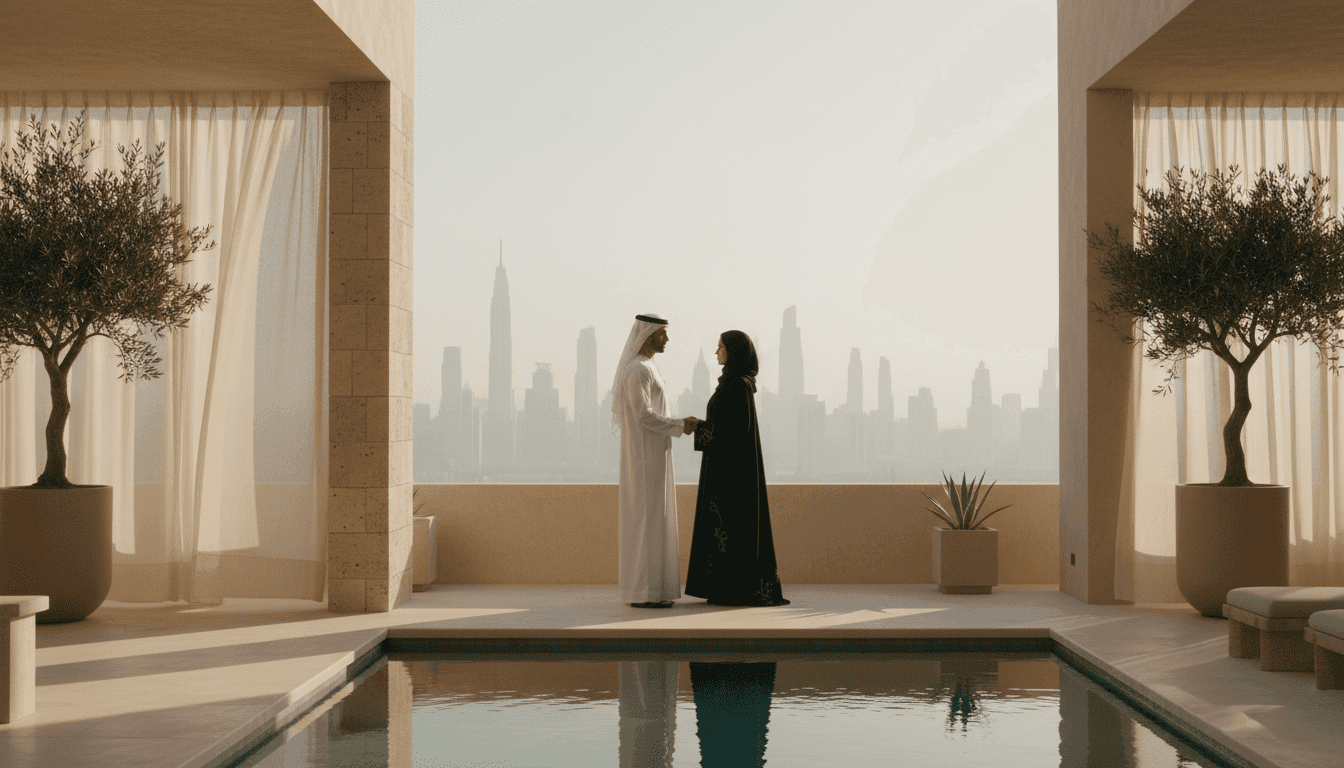
Short vs. Long-Term Rentals in Dubai: A Strategic Guide
A deep dive into whether short-term holiday lets or traditional long-term tenancies offer the best return for Dubai apartment investors. We break down the costs, yields, and management demands for each strategy.

The debate between short-term holiday lets and traditional long-term tenancies is one of the most frequent conversations I have with apartment investors in Dubai. The lure of high nightly rates is powerful, but the stability of a 12-month contract is a compelling counterpoint. Choosing the right path is not about which is universally 'better', but which is the optimal strategic fit for your specific property, financial goals, and appetite for hands-on management.
Here’s the framework we’ll use to dissect this decision:
- The Core Proposition: Gross Yield vs. Net Income
- Regulations and Licensing: The DET Holiday Home Permit
- Cost Breakdown: The True Price of Each Model
- Location, Location, Location: Where Each Strategy Wins
- The Management Burden: DIY vs. Professional Help
- Occupancy and Seasonality: The Investor's Risk Profile
- The Final Verdict: Building Your Personalised Strategy
The Core Proposition: Gross Yield vs. Net Income
At first glance, the mathematics of short-term rentals appear unbeatable. An apartment in a prime location like Dubai Marina that might rent for AED 120,000 per year on a long-term contract could, in theory, generate significantly more as a holiday home. If it commands an average of AED 800 per night, a 75% annual occupancy rate would produce a gross revenue of approximately AED 219,000. This is the headline figure that attracts so many investors to the short-let model, promising a spectacular short-term rental Dubai ROI. However, this is where the analysis must begin, not end. Gross revenue is a vanity metric; net income is sanity.
The fundamental difference lies in the cost structure. With a long-term tenancy, the owner's primary running costs are the annual service charges and any ad-hoc major maintenance. The tenant is responsible for their own utility bills (DEWA), internet, and cooling charges where applicable. The income is fixed and predictable for the duration of the contract. The process is simple: find a tenant, sign the Ejari-registered contract, and collect post-dated cheques or direct debit payments. The operational lift is minimal, making it a passive form of investment that many international owners, in particular, prefer.
Conversely, a short-term rental places the owner in the hospitality business. You are responsible for *all* operational costs. This includes electricity, water, high-speed internet, premium TV packages, and often a full set of furnishings and equipment, right down to the last teaspoon. These expenses, which are borne by the tenant in a long-term lease, now come directly off your top-line revenue. Add to this the higher management fees and the costs of constant cleaning and minor repairs between guests, and the gap between the gross and net figures narrows considerably. The potential for higher returns is absolutely real, but it is earned through higher risk, greater expense, and more intensive management.
In my experience, investors should model their forecasts conservatively. Assuming 90% occupancy and peak season rates year-round is a recipe for disappointment. A more realistic approach is to budget for 65-75% occupancy, factor in the lower rates of the summer months, and meticulously subtract every single line item of cost. Only then can you make a true apples-to-apples comparison with the predictable, lower-cost model of a long-term lease. The decision is a trade-off: are you seeking the highest possible *potential* return and are willing to manage the associated costs and volatility, or do you prioritise stable, predictable cash flow with minimal operational hassle?
Regulations and Licensing: The DET Holiday Home Permit
 Featured project
Operating a short-term rental in Dubai is a regulated activity, and compliance is non-negotiable. You cannot simply list your apartment on Airbnb or other portals without the proper permissions. The entire framework is governed by Dubai’s Department of Economy and Tourism (DET), formerly known as DTCM. The key to operating legally is securing a Holiday Home permit for your specific unit. This system was put in place to ensure quality, safety, and standardisation across the market, protecting both guests and the reputation of Dubai as a world-class tourist destination.
An owner has two primary paths to getting a permit. First, you can register as an individual owner-operator. This involves setting up an account on the DET's online portal, submitting the required documentation for yourself and the property, and managing the unit directly. The second, and far more common, route is to engage a DET-licensed holiday home operator. These are professional management companies that handle the entire process on your behalf — from securing the permit under their own company license to marketing the property, managing bookings, and handling all guest interactions. For most investors, especially those based overseas, using a professional operator is the only practical option.
The process for securing a permit involves several key documents and steps:
- Title Deed/Oqood: Proof of ownership of the property.
- Owner's Passport/Emirates ID: Identification for the property owner.
- Building NOC: A No Objection Certificate from the building's management or developer may be required, confirming they permit short-term letting activity in the tower.
- Property Details: You'll need to provide specifics like the DEWA number and details of the unit's size and layout.
- Management Contract: If using an operator, you'll need a signed agreement with the DET-licensed company.
Once the permit is issued, it must be displayed in the property, and the permit number must be shown on all online listings. It's also crucial to understand that with this permit comes responsibility. You are required to log all guest passports and IDs through the DET portal for security purposes and remit the 'Tourism Dirham' fee for each night of occupancy. This fee is tiered based on the property classification (e.g., AED 10 per bedroom per night for a Standard Holiday Home). A professional operator handles all this administration automatically, but if you self-manage, the burden of compliance falls squarely on you. Failure to comply can result in significant fines.
Cost Breakdown: The True Price of Each Model
To truly understand the financial implications, we need to move beyond percentages and look at a concrete, line-by-line cost comparison. Let's model a typical one-bedroom apartment in a popular mid-to-high-end community like JVC or Business Bay. Assume the apartment has a market value of AED 1.5 million and could achieve an annual long-term rent of AED 90,000.
Scenario 1: Long-Term Tenancy (12-Month Contract) This model is defined by its simplicity and predictable costs. The owner's financial obligations are clear and minimal.
- Gross Annual Income: AED 90,000
- Owner's Annual Costs:
- Service Charges: Let's assume AED 18 per sqft for a 750 sqft apartment = AED 13,500
- Property Management Fee (optional, at 5% of rent): AED 4,500
- Contingency for Maintenance (e.g., AC servicing): AED 2,000
- Total Annual Costs: AED 20,000
- Net Annual Income: AED 70,000
- Net Yield: (70,000 / 1,500,000) = 4.67%
Scenario 2: Short-Term Rental (Holiday Home) This model has a much longer list of expenses that eat into the higher gross revenue. We'll use a conservative but realistic 70% occupancy rate and an average daily rate (ADR) of AED 500.
- Gross Annual Income: (365 days * 70% occupancy * AED 500 ADR) = AED 127,750
- Owner's Upfront (One-Time) Costs:
- Furnishing & Equipping: A quality fit-out for a one-bed can easily be AED 50,000 - AED 70,000.
- Permit & Registration Fees: Approximately AED 2,000 - AED 3,000.
- Owner's Annual Costs:
- Holiday Home Management Fee (at 20% of gross revenue): AED 25,550
- DEWA & Empower (Utilities): AED 1,200/month = AED 14,400
- Internet & TV Package: AED 450/month = AED 5,400
- Service Charges: AED 13,500 (same as long-term)
- Cleaning & Consumables (between guests): Estimated at AED 6,000 annually
- Maintenance & Repairs (higher wear and tear): Estimated at AED 4,000 annually
- Total Annual Costs: AED 68,850
- Net Annual Income: AED 58,900
- Net Yield: (58,900 / 1,500,000) = 3.93%
As you can see, in this realistic scenario, the stable long-term tenancy actually produces a higher net yield. For the Dubai Airbnb income potential to surpass the long-term model, you would need to achieve a higher occupancy rate, a higher average daily rate, or both. For instance, pushing the occupancy to 80% and the ADR to AED 600 would generate a gross income of AED 175,200. After the 20% management fee (AED 35,040) and other running costs (approx. AED 43,300), the net income would be around AED 96,860, resulting in a much healthier 6.45% net yield. This illustrates the knife-edge on which the short-term model operates: success is dependent on sustained high performance, whereas the long-term model provides a solid, predictable floor.
Location, Location, Location: Where Each Strategy Wins
The viability of your chosen rental strategy is intrinsically linked to your apartment’s location. A property that excels as a holiday home might be merely average as a long-term rental, and vice versa. The key is to match the strategy to the area's dominant demand drivers. As an investor, you must analyse a neighbourhood through the eyes of both a tourist and a resident.
For short-term rentals, proximity to tourist infrastructure is everything. The undeniable champions are areas that offer a 'resort' lifestyle straight out of the box. Palm Jumeirah is the quintessential example, with its direct beach access, five-star hotels, and vibrant dining scene. Tourists come here specifically for that experience. Similarly, Downtown Dubai, with the Burj Khalifa and Dubai Mall, and Dubai Marina, with its waterfront promenade and easy access to JBR beach, are perennial favourites. Newer destinations like Bluewaters Island and Emaar Beachfront were practically purpose-built for the high-end holiday let market. In these zones, the Dubai holiday home investment strategy is clear: an apartment with a sea view, balcony, and good building amenities will almost always perform better on the short-term market than as a standard lease. The premium tourists are willing to pay for the location and lifestyle more than compensates for the higher running costs.
On the other hand, some areas are fundamentally residential communities, driven by the needs of people who live and work in Dubai. These neighbourhoods are the heartland of the long-term rental market. Think of communities like Town Square by Nshama, with its family-friendly parks and amenities, or Arabian Ranches. While these are villa communities, the same principle applies to apartment-focused areas like Jumeirah Village Circle (JVC), Arjan, or Dubai Science Park. These locations offer great value, strong community infrastructure, and good road access, making them highly attractive to Dubai's professional and family population. A tourist, however, would likely find them too far from the main attractions and lacking the 'wow' factor they seek on vacation. In these areas, opting for a long-term tenancy provides stability and aligns with the primary source of demand, ensuring low vacancy and consistent returns.
“The best short-term rentals are in places people dream of visiting; the best long-term rentals are in places people love living.”
There are also hybrid areas where both models can work, such as Business Bay and DIFC. These districts attract a mix of business travellers (short-term) and finance professionals seeking proximity to work (long-term). In these locations, the choice often comes down to the specific building and unit. A stylish, high-floor apartment in a premium tower with hotel-like amenities might succeed as a short-let, while a more standard unit in a mid-range building could be better suited for a stable, long-term tenant. The decision requires a nuanced understanding of the micro-market and the asset itself.
The Management Burden: DIY vs. Professional Help
One of the most underestimated factors in the short-term versus long-term debate is the sheer operational workload. The two models represent vastly different levels of personal involvement for an investor, and choosing a path that doesn't align with your available time and expertise can lead to significant stress and financial loss.
The long-term tenancy model is inherently passive. Once a tenant is secured and the contract is signed, the owner's involvement is minimal. The rent is collected via cheques or direct debit, and the tenant manages their day-to-day life in the property. Your primary responsibility is to address major maintenance issues, like a failed AC unit, which are typically infrequent. For a modest fee, usually around 5-8% of the annual rent, you can hire a property management company to handle everything — from marketing the property and vetting tenants to collecting rent and coordinating repairs. This makes it a truly 'hands-off' investment, ideal for busy professionals or overseas investors who want a steady income stream without the hassle of being a landlord.
In stark contrast, running a short-term rental is an active business. If you choose to self-manage, you are the hotelier, concierge, marketing manager, and maintenance person all in one. The daily tasks are relentless: responding to booking enquiries across multiple platforms, adjusting pricing based on seasonality and demand, coordinating check-ins and check-outs, arranging cleaning between every single stay, replenishing supplies, and being on-call 24/7 to handle guest issues, from a lost key to a faulty Wi-Fi connection. The Dubai Airbnb income potential is directly tied to your ability to provide a smooth, hotel-quality experience, which means glowing reviews. A few bad reviews can severely damage your listing's visibility and earning potential.
This is why the vast majority of successful short-let investors in Dubai use a specialist property management short stay Dubai company. These firms take the entire operational burden off your shoulders. Their services typically include:
- Listing & Marketing: Professional photography and optimised listings on platforms like Airbnb, Booking.com, and Vrbo.
- Dynamic Pricing: Using software to adjust nightly rates to maximise revenue and occupancy.
- Guest Management: Handling all communication, from initial enquiry to post-stay reviews.
- Operations: Managing check-ins, cleaning, laundry, maintenance, and restocking.
- Compliance: Ensuring all DET regulations are met, including guest registration and Tourism Dirham remittance.
This comprehensive service comes at a cost, with management fees for short-term rentals ranging from 15% to as high as 25% of the gross booking revenue. This is significantly higher than long-term management fees, but it reflects the exponentially greater workload. When you factor this in, you must be confident that the property's location and quality can generate enough revenue to absorb this cost and still deliver a superior net return. For most people, the question is not *if* they should use a short-let manager, but *which* one to choose.
Occupancy and Seasonality: The Investor's Risk Profile
Perhaps the biggest strategic difference between the two models is how they deal with risk, specifically vacancy and market fluctuation. A long-term tenancy is a low-risk proposition. By signing a 12-month contract, you have effectively eliminated vacancy risk for an entire year. Your income is contractually guaranteed, barring the rare and unfortunate event of a tenant default. This stability is highly valued by conservative investors and those who rely on rental income to cover mortgage payments. You know exactly what your income will be month after month, making financial planning simple and secure.
Short-term rentals, by their very nature, are a higher-risk, higher-reward game. There is no guaranteed income. Your revenue is entirely dependent on securing a constant stream of bookings, and your property will inevitably have void periods. The goal is to manage this vacancy to an absolute minimum. A successful holiday home might achieve 80-90% occupancy during the peak season (October to April), when Dubai's weather is idyllic and major events like the F1 in nearby Abu Dhabi or conferences at Expo City drive tourism. During these months, nightly rates can soar, and the returns can be exceptional.
However, the Dubai market is highly seasonal. During the hotter summer months (June to August), tourist numbers dip, and the holiday home market becomes intensely competitive. To maintain occupancy, operators are forced to slash nightly rates, sometimes by 50% or more. A well-managed property will still attract guests, particularly from regional markets, but the profitability per booking is significantly lower. An inexperienced or poorly located property can sit empty for weeks on end, generating zero income while fixed costs like service charges and utilities continue to accrue. Your annual performance is therefore an average of the highs of winter and the lows of summer. A successful investment depends on maximising peak season revenue to a degree that it carries the property through the leaner months.
This is where an investor's risk profile becomes critical. If you are risk-averse or have tight financial margins, the volatility of the short-term market can be stressful. An unexpected dip in tourism or the entry of new hotel supply in your area can directly impact your bottom line. The long-term tenancy Dubai benefits of predictability and stability are a powerful hedge against this kind of market flux. If, however, you have a strong financial buffer, a prime property in a resilient location, and a long-term investment horizon, you may be comfortable weathering the seasonal fluctuations in pursuit of a higher average annual return.
The Final Verdict: Building Your Personalised Strategy
After weighing the yields, costs, regulations, and management demands, it's clear there is no single 'best' answer. The optimal strategy is deeply personal and depends on a clear-eyed assessment of your property, your financial situation, and your personal goals. The right choice is the one that aligns with your definition of a successful investment.
For the hands-off, risk-averse investor seeking predictable cash flow, the long-term tenancy remains an outstanding choice. It is the bedrock of Dubai's residential investment market for a reason. It offers simplicity, stability, and a solid, manageable return with minimal personal effort. It is the ideal strategy for investors who are building a portfolio for long-term capital appreciation and want a reliable income stream to cover costs along the way. If your apartment is in a residential, community-focused area like Al Furjan or Dubai Hills Estate by Emaar Properties, this is almost certainly the most logical and profitable path.
For the more active, commercially-minded investor with a prime property in a top-tier tourist location, the short-term rental model offers an undeniable potential for superior returns. If you own an apartment with a sea view on Palm Jumeirah or a fountain-view unit in Downtown, you are leaving money on the table by not at least exploring the holiday home market. However, you must go into it with your eyes open. This is not a passive investment; it is a hospitality business. You must be prepared for higher costs, greater volatility, and the necessity of professional management. The key to success is to buy in a location with proven, year-round tourist demand and to partner with a top-tier holiday home operator who can maximise your revenue.
At Gaia Living, we often advise a hybrid approach for clients with diverse portfolios. It can be very effective to balance the stability of several long-term lets with the high-yield potential of one or two carefully selected short-term rentals. This creates a blended return profile that captures the upside of the tourism market while being anchored by the security of traditional leases. The first step is always a candid conversation about your goals. From there, we can analyse your specific property and its micro-market to model the net returns for each scenario, helping you make an informed, strategic decision.
The choice between short-term and long-term rentals is a classic risk vs. Reward calculation. Long-term offers stability and predictable net income with minimal effort. Short-term offers higher gross revenue potential but comes with significant operational costs, seasonality risks, and a mandatory reliance on professional management. Your decision should be dictated by your property's location and your personal appetite for active involvement in your investment.
Sources
- Dubai Land Department (DLD): dubailand.gov.ae
- Dubai's Department of Economy and Tourism (DET) for Holiday Home regulations: visitdubai.com
- UAE Central Bank for mortgage regulations: centralbank.ae
- UAE Government Portal for tenancy laws: u.ae
Questions, answered
- Which is more profitable in Dubai, short-term or long-term rentals?
- Short-term rentals can offer higher gross yields, especially in prime tourist areas during peak season. However, they also come with higher costs (utilities, management, furnishings) and vacancy risks, so the net profit may not always be higher than a stable long-term tenancy.
- What are the main costs for running a short-term rental in Dubai?
- Key costs include a DTCM holiday home permit, higher property management fees (15-25% of revenue), all utility bills (DEWA, internet), furnishing costs (often AED 50,000+ for a one-bed), and regular maintenance and cleaning between guests.
- What are the benefits of a long-term rental in Dubai?
- The primary benefits are stability and predictability. You secure a consistent income for 12 months, have lower operational costs as the tenant pays for utilities, and face significantly less management effort compared to a short-term let.
- Do I need a special license for Airbnb in Dubai?
- Yes, you must obtain a Holiday Home permit from Dubai's Department of Economy and Tourism (DET). You can apply as an individual owner or use a licensed holiday home operator to manage the process and the property on your behalf.
- Which areas in Dubai are best for short-term rentals?
- Prime tourist hotspots like Dubai Marina, Downtown Dubai, Palm Jumeirah, and Bluewaters Island generally perform best due to their proximity to attractions, beaches, and transport links. These areas command higher nightly rates.
- How much are property management fees in Dubai?
- For long-term rentals, standard property management fees are typically 5-8% of the annual rent. For short-term rentals, management fees are much higher, usually ranging from 15% to 25% of the gross booking revenue, as the service is far more intensive.

Ravi lives and breathes apartment living — from studio yields in JVC to branded residences on the Palm. Floor plans, service charges, and view lines are his love language.
Related stories

The New Landlords: Dubai's Build-to-Rent Shift
A new class of institutional landlord is building entire communities just for renters. I'll explain what this means for tenants seeking stability and investors facing a new kind of competition.

Apartment to Villa: Your Dubai Upgrade Guide
Making the jump from a high-rise apartment to a spacious villa is a classic Dubai milestone. I'll walk you through the real costs, community choices, and lifestyle shifts involved in this major family upgrade.

The Pre-Offer Power Play
A successful sale isn't about waiting for offers; it's about actively shaping buyer perception long before they sign. Here's my strategic playbook for influencing buyers to submit their best and highest offer from the start.
Echoes, in your inbox
One thoughtful email a month. Market insight, new launches, no spam.