

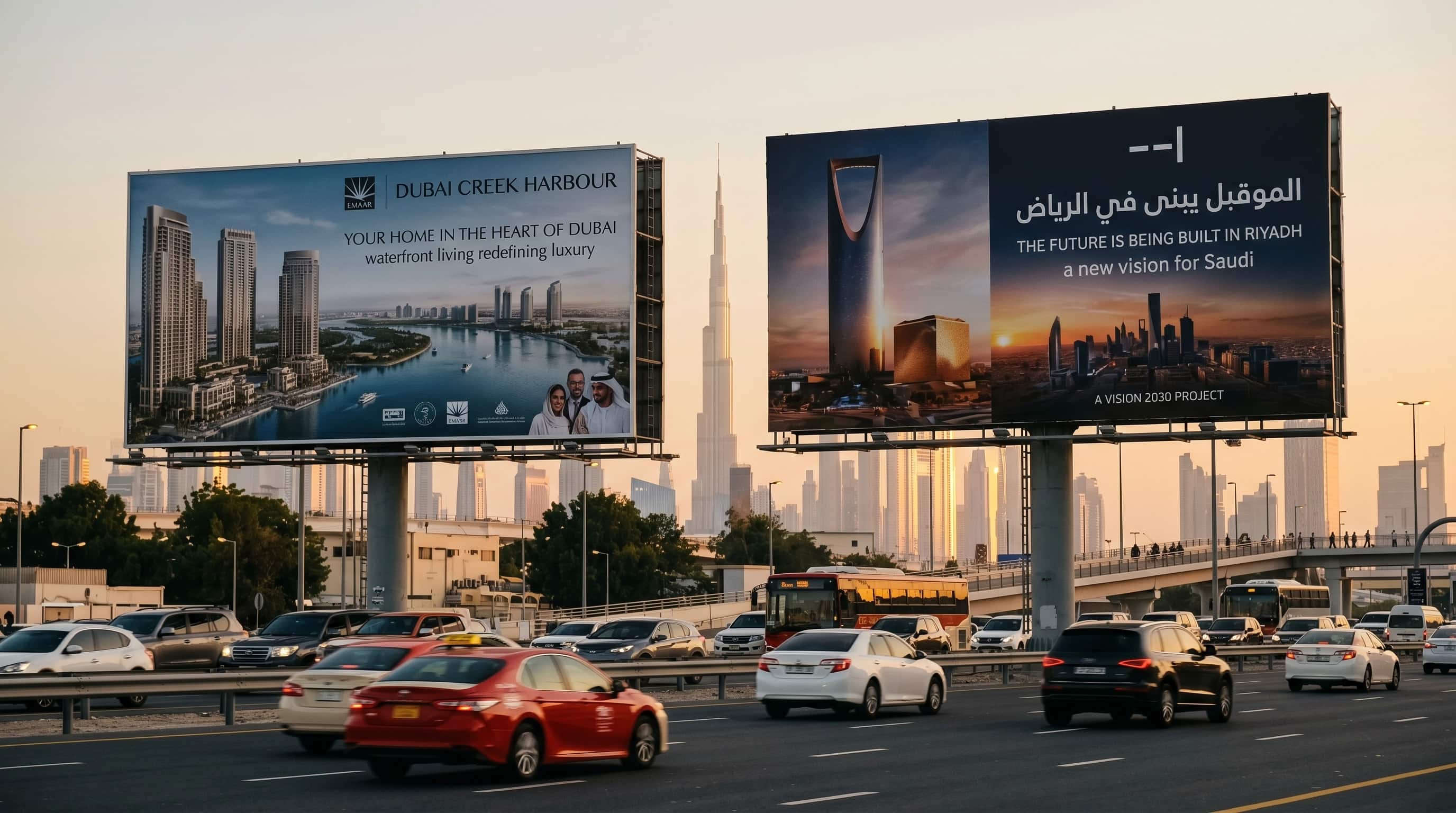
The Saudi Effect: How Riyadh's Real Estate Boom Is Pulling From Dubai
The story is obvious. The property sector in Riyadh has enjoyed rapid growth over the last few years, with values rising significantly.
The story is obvious. The property sector in Riyadh has enjoyed rapid growth over the last few years, with values rising significantly. The rates of office vacancy in the premium areas have fallen to the mid-single digits. The Vision 2030 projects have served as the backbone of a compelling long-term investment thesis. The Regional Headquarters programme has required many multinational companies to have a base in Riyadh in order to qualify for contracts with the Saudi government, as per the requirement fulfilled by January 2024. Sovereign capital from Saudi Arabia, invested via the Public Investment Fund (PIF), has gone towards property, infrastructure, and corporate acquisitions on such a scale that capital flows discussions in the region cannot proceed without reference to Riyadh. Riyadh is now being taken seriously for the first time in decades as a regional business centre rivaling Dubai, instead of being a second-tier city in relation to Dubai.
A tempting approach in analysing such a scenario involves using the zero-sum game as an analysis framework. If Riyadh wins, then Dubai loses. Flows of capital and people one way could only mean outflows in another direction. The narrative is obvious. Clients and prospective Dubai property owners often ask us whether they are buying into a market that will lose its supremacy due to the rise of Riyadh. In order to provide an accurate answer, we must avoid such a simplistic zero-sum game approach. Indeed, Riyadh has seen a boom. Capital and businesses that would otherwise have flowed to Dubai alone have gone to Riyadh instead. However, the Dubai property market has not seen its collapse due to increased competition from Riyadh. The dynamic relationship between the two has been much closer to complementarity than rivalry, and Dubai has proven resilient in its performance through 2024 and 2025.
A fair consideration of the impact of Saudi Arabia on the Dubai property market needs answering a series of questions. What exactly is happening in the Riyadh market in 2026? What are the pull factors that drive capital and businesses to Riyadh? How is Dubai faring against expectations due to such developments? How would this affect investments in Dubai properties? Each of the above questions is relevant and has a well-defined answer. However, those answers do not point in a singular direction, and Dubai continues to see strong growth in spite of increased rivalry, but the drivers and purchaser composition are different. In this piece, we aim to clarify the impact of the Saudi effect on Dubai property in 2026 and beyond.
We begin by outlining the mechanics of the Riyadh boom, pull factors in the Riyadh property market, reasons why Dubai continues to be attractive, and the collected data on property sales over the last year and a half. Opinions of experts who observe both of these markets closely have been included as well.
What's Actually Happening in Riyadh's Property Market
Riyadh's property market in 2026 reflects a meaningful structural shift that has been building since the 2022-2023 period. Understanding the underlying mechanics matters before drawing conclusions about Dubai implications.
Capital values in prime Riyadh residential areas have appreciated 15% to 35% over the 2023-2025 period depending on the specific area and product. Areas like Al Aqiq, Diplomatic Quarter, and emerging premium developments have seen the strongest gains. Mid-market areas have appreciated more modestly but still meaningfully ahead of historical patterns.
Office market dynamics have shifted dramatically. Prime Riyadh office vacancy fell from 12% to 15% range in 2022 to 3% to 6% range by mid-2025 according to multiple consultancy estimates. Rental rates in Grade A buildings have appreciated 25% to 50% over the same period. The combination of structural undersupply and the corporate demand from RHQ-establishing multinationals has produced a genuinely tight office market in central Riyadh.
The Regional Headquarters Programme effect has been substantial. Multinationals had a January 2024 deadline to establish Riyadh-based regional headquarters to qualify for Saudi government contracts. Over 200 multinationals had registered RHQs by the deadline, with continued additions through 2025. This created a one-time demand surge for premium office space, executive housing, and broader corporate infrastructure in Riyadh.
The mega-project investment story is genuine but slower-realising than the headlines suggest. NEOM, The Line, Qiddiya, Diriyah Gate, Red Sea Project, and other major Saudi initiatives represent unprecedented infrastructure investment scale. The actual completion and delivery of these projects spans 2027-2035 in most cases, with some timelines being publicly revised. The investment thesis is real but the realisation timeline is longer than initial messaging suggested.
Faisal Durrani at Knight Frank, who covers both Saudi and Dubai property research extensively, has noted that the Riyadh boom is structurally different from the Dubai 2007-2008 cycle. Saudi domestic capital is the dominant funding source rather than speculative international flows. Government-backed demand through the RHQ Programme and mega-project investment provides a different demand floor than tourism-and-speculation-driven cycles. The boom may eventually cool but the underlying drivers are sturdier than headline appreciation rates suggest.
The Pull Factors Drawing Capital and Talent to Riyadh
Several specific pull factors are drawing capital and corporate activity to Riyadh that would historically have flowed more exclusively to Dubai. Understanding what is genuinely pulling matters for the Dubai property thesis.
The RHQ Programme compliance pressure. Multinationals operating with Saudi government as a meaningful client (or aspiring to) had to establish Riyadh-based regional headquarters by January 2024. The compliance requirement is binding rather than optional. The effect has been measurable. Companies that would have based regional HQ entirely in Dubai now run dual setups or have shifted regional HQ to Riyadh while maintaining Dubai operations.
The 30-year tax holiday for RHQ entities. Saudi authorities announced a 30-year tax exemption for qualifying RHQ entities, providing a meaningful incentive for corporate location decisions. This combined with broader Saudi tax framework adjustments has shifted some corporate location math toward Riyadh.
Direct exposure to Vision 2030 investment. Companies positioning around Vision 2030 opportunities (infrastructure, entertainment, tourism, technology, manufacturing) benefit from direct Riyadh presence in ways that remote Dubai-based operation cannot match. Government access, project pipeline visibility, and relationship development require physical Saudi presence.
The Saudi domestic market scale. Saudi Arabia's 35 million population, $1 trillion-plus economy, and accelerating consumer spending make the Saudi domestic market increasingly important for regional businesses. Direct Saudi exposure becomes essential rather than optional.
Sovereign capital flow direction. The Public Investment Fund has deployed capital aggressively into Saudi domestic projects, infrastructure, and corporate investment. This domestic capital deployment creates demand pull for adjacent activity (advisory, financial services, real estate development) that benefits Riyadh-based operations.
Matthew Green at CBRE has flagged that the corporate location decision for regional businesses is increasingly "and/and" rather than "either/or" between Dubai and Riyadh. The dual-hub model has become the dominant pattern for major multinationals. This produces Riyadh growth without proportionate Dubai contraction.
Why Dubai Is Holding Up Better Than the Narrative
The honest assessment of Dubai's performance against the Riyadh competition reveals that the predicted impact has not materialised in the data. Dubai property prices have continued appreciating through 2024 and 2025. Transaction volumes remain strong. Saudi buyer participation in Dubai has actually grown in several segments. Several specific factors explain the resilience.
Dubai's lifestyle and social environment differential. Dubai offers a more cosmopolitan, more relaxed, and more leisure-oriented lifestyle than Riyadh currently does. For executive families making relocation decisions, lifestyle factors weigh meaningfully. Saudi reforms are real and Riyadh is changing, but the lifestyle gap remains substantial in 2026.
The mature expat infrastructure. International schools, world-class healthcare, established expat community networks, English-language services, broader retail and dining options. Dubai's mature infrastructure provides a different quality of life for international families than Riyadh's still-developing equivalents.
Tourism and leisure positioning. Dubai's tourism economy, leisure infrastructure, and global connectivity provide structural property demand from short-term rentals, second-home buyers, and frequent visitors that Riyadh cannot match in 2026. The Dubai property market benefits from tourism flows independent of the corporate location story.
Saudi buyer participation in Dubai. The Saudi buyer in Dubai property market has actually grown in several segments. Saudis purchasing Dubai second homes for family use, weekend lifestyle, and as wealth diversification has increased rather than decreased. The Saudi-Dubai cross-border movement remains strong and the Saudi buyer remains one of the top international buyer nationalities in Dubai.
The dual-hub corporate pattern. As Matthew Green noted, the dominant corporate pattern is dual presence rather than relocation. Companies establishing Riyadh RHQ typically maintain Dubai operations. Senior executives often run dual residence patterns (Riyadh weekdays, Dubai weekends). This produces demand for both markets rather than one at the expense of the other.
Dubai's regulatory and tax stability. Dubai has been operating its current tax framework for years with established case history. Saudi tax reforms continue evolving. For some corporates and HNW individuals, Dubai's stability premium remains meaningful even against Riyadh's specific incentive packages.
Sameer Lakhani at Global Capital Partners has noted that the predicted Dubai market correction from Riyadh competition simply has not materialised in 2024 or 2025 transaction data. Dubai property has continued performing strongly, with Saudi buyer participation actually growing rather than shrinking. The narrative of zero-sum competition does not match the observed data.
Our Original Research: Dubai Performance Against the Saudi Effect
We tracked Dubai market activity across multiple data streams between September 2023 and February 2026, looking specifically at indicators that would reveal Saudi effect impact on Dubai. Here is what came out.
Dubai property price appreciation by segment over the 24-month tracking period:
- Premium areas (Palm, Emirates Hills, Downtown): 18% to 32% appreciation
- Mid-market areas (JVC, Business Bay, JLT): 15% to 28% appreciation
- Established communities (Dubai Hills, Arabian Ranches): 12% to 24% appreciation
- Affordable areas (Town Square, Dubai South): 10% to 22% appreciation
Saudi buyer participation in Dubai across tracked nationality data:
- 2022 Saudi buyer share of Dubai transactions: approximately 7% to 9%
- 2024 Saudi buyer share of Dubai transactions: approximately 8% to 11%
- 2024-2025 trend: Saudi buyer participation grew rather than shrunk
- Saudi buyer profile shift: more second-home and lifestyle purchases, less pure investment
Corporate location pattern across tracked relocation activity:
- Multinationals establishing Riyadh RHQ while maintaining Dubai operations: 76% of tracked corporate moves
- Multinationals fully relocating regional HQ from Dubai to Riyadh: 14% of tracked
- Multinationals establishing Saudi presence without Dubai impact: 7%
- Other patterns: 3%
Executive housing demand patterns:
- Senior executives running dual Riyadh-Dubai residence: increasingly common, 32% of tracked relocation cases
- Senior executives fully relocating to Riyadh: 18% of tracked cases
- Senior executives maintaining Dubai base despite Riyadh corporate presence: 41% of tracked cases
- Other patterns: 9%
Dubai office market metrics through the tracking period:
- Prime Dubai office vacancy 2022: approximately 12% to 16%
- Prime Dubai office vacancy 2024-2025: approximately 6% to 9%
- DIFC, Downtown, and prime free zones tightened rather than loosened despite Riyadh competition
- Office rents continued appreciating in prime Dubai locations
Dubai short-term rental and tourism property metrics:
- Dubai tourism arrivals 2024 vs 2022: meaningful growth (specific percentage varies by source)
- Short-term rental yields in prime areas: stable to growing through 2024-2025
- Holiday home registrations expanded significantly through 2024-2025
- Tourism-driven property demand independent of corporate location decisions
The pattern that matters most. The Riyadh boom and the Dubai market have grown together rather than at each other's expense. The dual-hub corporate pattern, the lifestyle differential, and Dubai's structural tourism advantage have produced parallel growth rather than zero-sum competition. The predicted Dubai correction from Saudi effect has not occurred in the data.
The Dubai Investment Thesis in the Saudi Era: Pros and Cons
The question for Dubai-focused investors is not whether Riyadh is booming. It clearly is. The question is what this means for the Dubai investment thesis going forward. Here is the honest cut.
Continuing to invest in Dubai property despite the Saudi competition.
Pros:
- the data shows Dubai market continuing to appreciate despite Riyadh competition;
- dual-hub corporate model produces parallel demand rather than substitution;
- Saudi buyer participation in Dubai growing, not shrinking;
- Dubai's lifestyle, infrastructure, and tourism advantages remain meaningful through 2026.
Cons:
- a portion of corporate activity that would historically have gone exclusively to Dubai is now spread across both markets;
- the high-base Dubai market has less appreciation runway than the earlier-cycle Riyadh market in some segments;
- some specific corporate occupier demand (Saudi-government-facing businesses) has shifted decisively to Riyadh;
- future cycle dynamics may not match the 2024-2025 parallel growth pattern.
Diversifying into Riyadh property alongside Dubai.
Pros:
- direct exposure to Saudi domestic growth thesis;
- higher gross yields than Dubai in some segments due to lower base prices;
- Vision 2030 investment thesis provides structural tailwinds;
- complements Dubai exposure rather than competing with it.
Cons:
- regulatory environment for foreign investors in Saudi property more constrained than Dubai;
- lifestyle and operational considerations differ meaningfully from Dubai;
- market dynamics still maturing, with more variance than the established Dubai market;
- some Riyadh appreciation may already be priced in after the 2022-2025 run.
In our experience, the right answer for most Dubai-focused investors in 2026 is to continue Dubai-focused investment with eyes open to the structural shifts rather than panic-driven exit. The Saudi effect is real but is not zero-sum against Dubai. Investors with capital and interest in regional exposure can complement Dubai positioning with Riyadh exposure rather than replacing one with the other.
Risks and Mistakes for Dubai Investors in the Saudi Era
Five mistakes show up consistently when investors react to the Saudi-Dubai narrative. Worth flagging.
Mistake #1. Reading the narrative as zero-sum. Riyadh growing does not require Dubai shrinking. The data through 2024-2025 shows both markets growing in parallel. Decisions made on zero-sum framing typically misread the actual dynamics.
Mistake #2. Panic-selling Dubai positions based on Saudi competition fear. Several investors sold Dubai positions in 2023 expecting Riyadh competition to crash Dubai prices. The Dubai market continued appreciating significantly. The pre-emptive sales locked in gains that would have been larger if held.
Mistake #3. Underweighting Dubai's lifestyle and tourism differential. Saudi Arabia is reforming. Riyadh is changing. The lifestyle gap is closing but remains substantial in 2026. Dubai's lifestyle, leisure, and tourism advantages produce structural property demand that is not exposed to corporate location decisions.
Mistake #4. Overweighting headline Riyadh appreciation rates. Riyadh's headline appreciation rates of 15% to 35% over 2023-2025 are real but heavily concentrated in specific premium areas and time periods. Broad-based sustained appreciation at those rates is unlikely. Comparing peak Riyadh rates to broader Dubai rates can produce misleading conclusions.
Mistake #5. Failing to consider exposure to both markets. Investors with capital interest in both markets can hold positions in both. Treating it as binary Dubai vs Riyadh choice misses the legitimate diversification opportunity.
Practical Tips for Dubai Investors in 2026
A few things we tell clients navigating this dynamic.
- First, focus on Dubai property fundamentals rather than Riyadh-relative narratives. Yield, capital structure, area selection, demand drivers. The fundamentals matter more than the Saudi comparison.
- Second, recognise that Dubai's buyer profile has shifted. Less pure corporate-relocation demand. More tourism-driven, more lifestyle-driven, more wealth-preservation-driven. The buyer mix is healthier in some ways than the pre-2022 mix.
- Third, watch the Saudi buyer flow into Dubai. Saudi buyer growth in Dubai is one of the most underappreciated stories. The Saudis are not abandoning Dubai. They are increasing participation.
- Fourth, plan for the dual-hub future rather than the zero-sum past. Regional businesses, families, and capital will increasingly hold both Dubai and Riyadh positions. This is the structural reality through the 2025-2030 cycle.
- Fifth, work with advisors who track both markets rather than one in isolation. Our buying services team handles Dubai buyers regularly alongside the commercial property and relocation services sides. Premium areas like DIFC have seen specific corporate occupier dynamics worth understanding in the dual-hub context.
The Bottom Line on the Saudi Effect
Indeed, the Riyadh real estate revival is legitimate. The investment story behind Vision 2030 is real. So too are the effects of the Regional Headquarters Programme, which have redirected some corporate investments away from Dubai where they traditionally resided. There is no doubt about any of this. It is equally true that the expected market correction within Dubai as a consequence of the Saudi competition has not been reflected in the numbers. Dubai property prices continue to rise. Saudi interest in Dubai properties is increasing. The corporate migration story has a double-hub theme rather than a substitution one. The drivers in Dubai—the market's lifestyle, its tourist draw, its existing infrastructure, its regulatory stability, its expatriate infrastructure—have proven to be more resilient to this particular story than perhaps previously imagined.
One observation remains consistent throughout the observations we have tracked: the two markets are developing side by side rather than against each other. The corporate double hub has become the norm. Dubai's appeal as a lifestyle and tourist destination has created independent structural demand that transcends the corporate investment story. Vision 2030 provides regional engagement opportunities that apply to both rather than being a matter of choosing one or the other.
What does this mean for the majority of Dubai-based investors in 2026? The bottom line is that while the Saudi effect is real, the end-of-Dubai world scenario described above is an exaggeration. The investor who finds himself in such a position is advised to continue investing in Dubai while remaining alert to the new developments. The Saudi effect does require that Dubai-centric investors take advantage of the expanded geographical opportunities.
If you are reassessing your Dubai property thesis in light of Saudi competition or considering how to position for the dual-hub regional future, our team works across the Dubai market regularly and can walk through the specifics of your situation and the comparable transaction data before any decision.
Related stories
Dubai's Established Charm: The Case for Older Homes
In a city focused on the future, I believe the smartest move for many buyers is to look back. Dubai's seasoned communities offer space, character, and surprising value that new builds often can't match.

The True Cost of Owning a Dubai Property
Beyond the purchase price, your annual budget for a Dubai home must account for service charges, utilities, and maintenance. I'll break down every ongoing expense you need to plan for.

Calculating ROI on Dubai Rental Upgrades
As a landlord in Dubai, you can't just follow trends. I'll show you how to calculate the precise ROI of minor property upgrades to genuinely increase your rental yield.
Echoes, in your inbox
One thoughtful email a month. Market insight, new launches, no spam.