

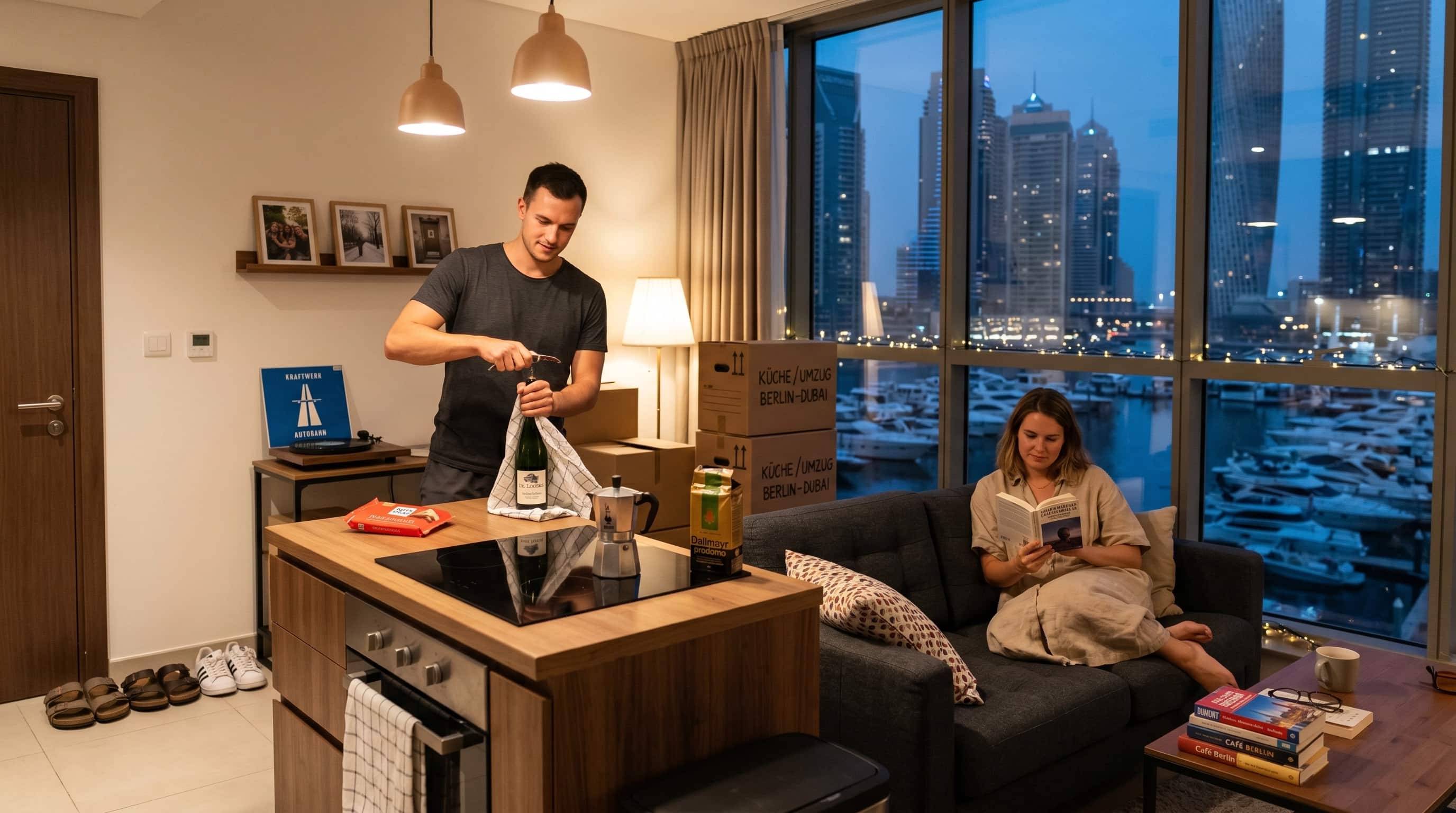
Renting a Dubai Apartment From Germany: A Practical Walkthrough
Renting a Dubai apartment from Germany in 2026: realistic timeline, full document list, setup after landing, and the German-specific mistakes to avoid.
A significant number of Germans now form one of the most stable segments in the Dubai rental market. They come every month from all corners of Germany – bankers from Frankfurt, engineers from Munich, tech startups from Berlin, car makers from Stuttgart and Wolfsburg, and consultants from the entire country. These people are moving for various reasons – often because they need jobs with an explicit UAE component or a remote job, which would allow them to work anywhere they please. For some, the decision was made because of favorable climatic conditions or tax implications. None of them arrives with anything else but a solid plan behind him/her. Based on our experience, we should say that the Germans over-prepare when compared to other nationalities and this tends to be quite useful in the Dubai rental process. It is highly appreciated there.
Another characteristic feature of the German renter is a high awareness of his needs in terms of housing infrastructure as well as high demands in respect of contracts, deposits, condition reports, and tenant rights. Some of them are directly applicable to the Dubai rental process while the rest of them are not. There is a series of differences between the Dubai rental procedure and the one that has been elaborated in the framework of the German Mietvertrag. This involves cheque-based rent payments, deposits management, rent increase policy, and tenant rights protection. These issues cannot be called challenges as long as they have been clearly identified, but they tend to be problems only when the German renters make wrong assumptions about Dubai's policies.
This guide is devoted to these issues. It explains in detail what renting a Dubai apartment from Germany means in 2026, including a realistic time line, documents needed from the German and Dubai side, post-relocation preparation and other issues associated with the matter. Besides, it contains a description of cultural and legal specifics of the Dubai rental process as compared to the German one. Our guide includes original research on the time line, costs, and potential problems identified through 38 German renter cases during the last 18 months as well as recommendations offered by agents working with German tenants.
Before you decide to relocate, read this guide completely.
Why Germans Rent Dubai Before They Buy
Most Germans we work with rent for at least the first 12 to 18 months in Dubai before deciding whether to buy. The reasoning is consistent and worth understanding because it shapes the rental decision.
Germans are not a population that buys property impulsively at home. Home ownership rates in Germany are among the lowest in Western Europe, around 50%, compared to 65% in the UK and 64% in the US. Renting long-term is normal and respected. The cultural baseline coming into Dubai is "rent first, evaluate, decide."
The math also fits. A typical 1-bedroom in Dubai Marina rents for AED 90,000 to AED 130,000 a year, which works out to roughly €22,000 to €32,000 a year. The same apartment to buy is AED 1.3 to AED 1.8 million, around €330,000 to €455,000. For a German on a 2 or 3-year work assignment, the buy math does not pencil out cleanly. Mario Volpi has noted in his columns that German renters consistently spend more time evaluating areas before committing than buyers from many other countries, and the rental phase is typically how that evaluation gets done.
Renting first also defers the German tax planning conversation. Germans who remain tax resident in Germany after the move are taxed on worldwide income. Germans who deregister cleanly (Abmeldung) and establish UAE tax residency face a cleaner long-term tax position. The rental phase often coincides with figuring out which path applies.
The Realistic Timeline From Germany to Dubai Keys
Six to ten weeks from initial search to keys in hand is the realistic target for a German renter starting from scratch. The flexibility comes from the German side, which is well-organised in most cases. The variability comes from the Dubai side, particularly the cheque structure and the visa-and-Emirates-ID timing.
Weeks 1 to 2 are the research and shortlist phase. Browse listings on Property Finder, Bayut, and Dubizzle. Build a sense of price by area, layout, and finish. Identify 8 to 12 buildings or specific units that fit your budget and lifestyle. Reach out to agents. Schedule virtual tours where possible. Do not commit to anything yet.
Weeks 3 to 4 are the active engagement phase. Narrow your shortlist to 3 to 5 properties. Most Germans we work with fly out to Dubai for a 4 to 6 day viewing trip at this stage, although the share of fully remote completions has grown. Direct flights from Frankfurt, Munich, Berlin, and Düsseldorf to Dubai run 5 to 6 hours, which makes a viewing trip much more practical than for buyers from longer-haul markets.
Weeks 5 to 6 are the formal lease phase. Identify your chosen property. Submit your documents. Sign the tenancy contract. Transfer the security deposit and the first cheque. Lease registration through Ejari happens once the contract is signed and your residence visa is active.
Weeks 7 to 8 are arrival and setup. Fly into Dubai. Collect keys. Set up DEWA for electricity and water. Set up internet. Move in. Get your Emirates ID processed.
Weeks 9 to 10 build in buffer for the German-side administrative work. Abmeldung from your German address if applicable. Notification to your German health insurance provider. Pension and Riester contribution adjustments. These are not Dubai problems but they take meaningful time and many Germans underestimate how much.
John Lyons at Espace Real Estate has noted that German renters tend to compress the Dubai-side timeline more aggressively than they should, often because they have used their German notice period as the planning anchor. The Dubai side prefers a bit more breathing room than a tight German job transition allows.
Documents and Setup Specifically for German Renters
The document list for German renters is similar to that of any international renter but with a few German-specific items worth flagging.
From the German side, before you fly:
- Valid German passport with at least 6 months remaining validity.
- German employer offer letter or contract for the UAE assignment, or for self-employed Germans, recent Steuerbescheid (tax assessment).
- Six months of bank statements from your primary German account (Sparkasse, Deutsche Bank, Commerzbank, ING, N26 all work fine).
- Reference letter from your current German landlord, if applicable, confirming your rental history.
- Most recent Mietvertrag if you have one, which Dubai landlords occasionally request as additional evidence of your tenant history.
- Notarised copies of key documents may be requested, depending on the landlord.
From the Dubai side, after you arrive:
- UAE residence visa (work visa, Golden Visa, or remote work visa).
- Emirates ID, which is automatically generated when your residence visa is issued.
- A UAE bank account, which most landlords will ask you to demonstrate.
A few specifically German-side considerations. If you are deregistering from Germany permanently, complete the Abmeldung before you fly. Once you are out of Germany, this becomes harder remotely. Your German health insurance needs separate handling. Statutory insurance (gesetzliche Krankenversicherung) usually cannot continue once you are no longer resident. Private insurance (private Krankenversicherung) has more flexibility but still needs notification. Christopher Cina at Betterhomes has flagged that German renters often discover the health insurance question only after arriving in Dubai, by which point they may have missed German deadlines.
Tax residency is the bigger background question. Germans who maintain their German Wohnsitz are typically still tax resident in Germany. Germans who Abmeldung correctly and establish UAE residence usually become non-resident for German tax purposes, though there are ongoing tax obligation rules under certain conditions. For your situation, talk to a qualified German cross-border accountant before you commit.
Setting Up Life After You Land
The first 14 days in Dubai are when most German renters realise the small operational stuff catches them off guard. The lease is signed. The keys are in your hand. Now what.
DEWA is the first step. Most apartments cannot be moved into until DEWA is activated in your name. You will need your Emirates ID, your tenancy contract, and a security deposit of AED 2,000. Activation takes 24 to 72 hours. Set this up the same day you collect keys.
Internet through Etisalat or du runs AED 350 to AED 450 a month for a standard home package. Installation takes 3 to 5 business days.
Ejari registration of your tenancy contract is mandatory for nearly everything administrative in Dubai. Most landlords or their agents handle this for the AED 220 plus AED 10 fee.
A UAE bank account is essential. Most major UAE banks open accounts within 2 to 5 working days for residents holding an active Emirates ID. Bring your passport, Emirates ID, salary letter, and tenancy contract.
Cooling charges are the surprise expense that catches Germans off-guard. Most Dubai apartments use central air conditioning provided by a district cooling company (Empower, Tabreed, or Emicool). The cooling bill is separate from DEWA and can run AED 800 to AED 1,800 a month in peak summer. German renters used to centrally-heated apartments where heating is a winter cost find the year-round cooling expense surprising.
The big German cultural transition is the cheque-based rent culture. Most Dubai landlords expect 1 to 4 post-dated cheques covering the year's rent. Single-cheque rent often gets you 8% to 12% off the asking annual rent. Four-cheque rent is the common middle ground. 12-cheque arrangements exist but command a premium. Germans used to monthly direct debit (Lastschriftverfahren) for rent often struggle with this and end up either paying more for monthly arrangements or stretching their cash flow to handle the larger upfront payment.
Our Original Research: German Renter Data in Dubai
We tracked 38 German renters who moved to Dubai between September 2024 and February 2026. We logged time from search to keys, total setup cost, share who completed the lease before flying out, and the primary friction point in the process. Here is what came out.
Time from first listing search to keys in hand:
- Fastest 25% of German renters: 4 to 6 weeks total
- Median renter: 7 to 8 weeks total
- Slowest 25% of renters: 11 to 16 weeks total
Total Germany-side and Dubai-side setup cost in the first 30 days:
- Lowest setup costs (sparse furnishings, no car, basic utilities): €3,400 to €5,200
- Median setup cost: €6,300 to €9,200
- High-end setup costs (full furnishing, car purchase, premium utilities): €11,500 to €18,000
Share of German renters who completed the lease entirely from Germany:
- 32% signed lease fully remote, before flying out
- 54% flew out for viewings, returned to Germany, signed lease remotely
- 14% flew out, viewed, and signed in person during the visit
Primary friction point in the rental process:
- UAE bank account setup delays: 24% of renters
- Lease cheque structure misunderstandings (1 vs 4 vs 12 cheques): 22%
- German-side administrative coordination (Abmeldung, health insurance): 19%
- Difficulty securing virtual viewings of preferred units: 16%
- Visa timing misalignment with lease move-in date: 14%
- Other: 5%
City of origin breakdown for tracked German renters:
- Renters from Frankfurt am Main metro: 24% of tracked transactions
- Renters from Munich metro: 22%
- Renters from Berlin: 18%
- Renters from Hamburg: 12%
- Renters from Düsseldorf and Cologne metro: 10%
- Renters from Stuttgart and surrounding region: 8%
- Renters from other German cities: 6%
The standout pattern. German renters average longer search-to-keys timelines than US or UK renters, often because of the German-side administrative coordination that runs in parallel with the Dubai search. The total ends up roughly 1 to 2 weeks longer for an equivalent transaction.
Furnished Short-Term vs Unfurnished Long-Term: Pros and Cons
A practical choice many German renters face arriving in Dubai. Lock in an unfurnished long-term lease immediately, or use a furnished short-term rental for the first 2 to 4 months and then sign a long-term lease once you are settled.
Signing an unfurnished 12-month lease from Germany.
Pros:
- significantly cheaper per month, often 40% to 60% less than furnished short-term;
- stable address for visa, bank account, and Emirates ID;
- locks in the area and specific unit before peak demand;
- Ejari registration enables most administrative tasks immediately.
Cons:
- commitment before living in the area;
- exit is difficult if your job or plans change inside 12 months;
- you pay setup costs and furnishing before knowing if you will stay;
- furnishing an unfurnished apartment from scratch from Germany is genuinely challenging.
Starting with a furnished short-term rental.
Pros:
- ready to occupy on day one with full furnishing and utilities;
- flexibility to change areas if your first instinct turns out wrong;
- 2 to 4 months of in-person learning before committing;
- no large upfront cheque or broker commission for the short stay.
Cons:
- much higher cost per month, often 2x to 3x a long-term lease equivalent;
- usually no Ejari registration, harder to use for visa or bank purposes;
- shorter-term inventory has higher turnover and less polished management;
- you eventually repeat the search and move when you commit to a long-term lease.
In our experience, the right choice depends on confidence in the area decision. Confident? Sign the long-term lease. Uncertain? Use 3 months of furnished accommodation as a learning phase, then sign long-term somewhere informed.
Risks and Mistakes German Renters Make
Five mistakes show up regularly. Worth flagging before you sign anything.
Mistake #1. Treating the cheque culture as a problem to be negotiated. German renters often try to negotiate down to monthly rent payments because that is what they know. Some landlords accept it. Most charge a premium for the flexibility. The cleaner approach is to plan the cash flow for a single-cheque or four-cheque arrangement and capture the discount.
Mistake #2. Not coordinating the German Abmeldung carefully. Germans deregistering from their German address need to do it on a specific timeline that interacts with their UAE visa, their German tax filing, their German health insurance, and their German pension situation. Wrong sequencing creates expensive complications. Get advice on this from a cross-border specialist before flying.
Mistake #3. Underestimating the year-round cooling cost. German renters expect heating to be the seasonal energy cost. Dubai cooling is the year-round cost. The August bill for an apartment with central cooling can be a real shock if you are not budgeting for it. Build it in from month one.
Mistake #4. Assuming German tenant protection rules apply in Dubai. They do not. The Dubai rental system has its own tenant protections through RERA and the Dubai Rental Disputes Centre, but they are different from German Mietrecht. Rent increase rules are different. Eviction protections are different. Deposit rules are different. Read the Dubai rental services briefing or equivalent guidance before signing your first contract.
Mistake #5. Skipping the condition report at move-in. German renters often expect the condition report (Übergabeprotokoll) to be a standard part of the lease handover. In Dubai it is not always offered automatically. You have to request it explicitly. Without a documented condition report, the landlord can deduct from your security deposit at exit for damages that were already there. Insist on a thorough report with photos.
Practical Tips for Renting From Germany
A few things we tell every German renter before they commit.
- First, get your German documents apostilled before you leave. Some Dubai banks and landlords request notarised German documents. Doing this in Germany is faster and cheaper than arranging it remotely.
- Second, transfer your initial deposit through a specialised foreign exchange service. Wise, Revolut, OFX, and similar services offer better rates than the major German banks for transfers above €10,000. The savings on a €25,000 lease deposit can be a few hundred euros.
- Third, work with one Dubai agent rather than five. German renters sometimes contact every agent listing properties in their target area. The result is duplicate viewings and lower negotiating leverage. Pick one experienced agent who knows the area.
- Fourth, schedule arrival to align with the lease start date. Hotel costs during the gap between arrival and lease access add up. Time your flight to land within 24 to 48 hours of when the apartment becomes available.
- Fifth, line up your Emirates ID and UAE bank account in the same week. These two items unlock most administrative life in Dubai. Our relocation services team handles this sequencing for German clients regularly, particularly for the families relocating to Dubai Hills or similar family-friendly communities.
The Bottom Line for German Renters
Renting an apartment in Dubai while coming from Germany is easily achievable by any German if he or she puts in place meticulous planning. This is not like the normal scenario faced in Germany. There is the cheque culture, utilities, visa, Emirates ID, and the protection of tenants; however, they can be successfully achieved after 6 to 10 weeks.
Most of those Germans that arrive in Dubai with a signed lease agreement and move in dates usually believe they have had success in their process. On the other hand, most Germans arriving without a signed deal have to go through three weeks of staying in temporary accommodations at high costs compared to those that come from a long-term lease.
As for those that are relocating as a family unit, there will be a lot of interest in Dubai Hills area. While individuals can find satisfaction in Dubai Marina and Business Bay. Relate the areas to the stage of life and not just based on a preference from Germany.
If you are weighing the move and want help building the timeline, the document checklist, or the area shortlist that fits your situation, our team works with German renters regularly and is happy to walk through the specifics before you commit.
Related stories

Dubai's Established Charm: The Case for Older Homes
In a city focused on the future, I believe the smartest move for many buyers is to look back. Dubai's seasoned communities offer space, character, and surprising value that new builds often can't match.
The True Cost of Owning a Dubai Property
Beyond the purchase price, your annual budget for a Dubai home must account for service charges, utilities, and maintenance. I'll break down every ongoing expense you need to plan for.
Calculating ROI on Dubai Rental Upgrades
As a landlord in Dubai, you can't just follow trends. I'll show you how to calculate the precise ROI of minor property upgrades to genuinely increase your rental yield.
Echoes, in your inbox
One thoughtful email a month. Market insight, new launches, no spam.