

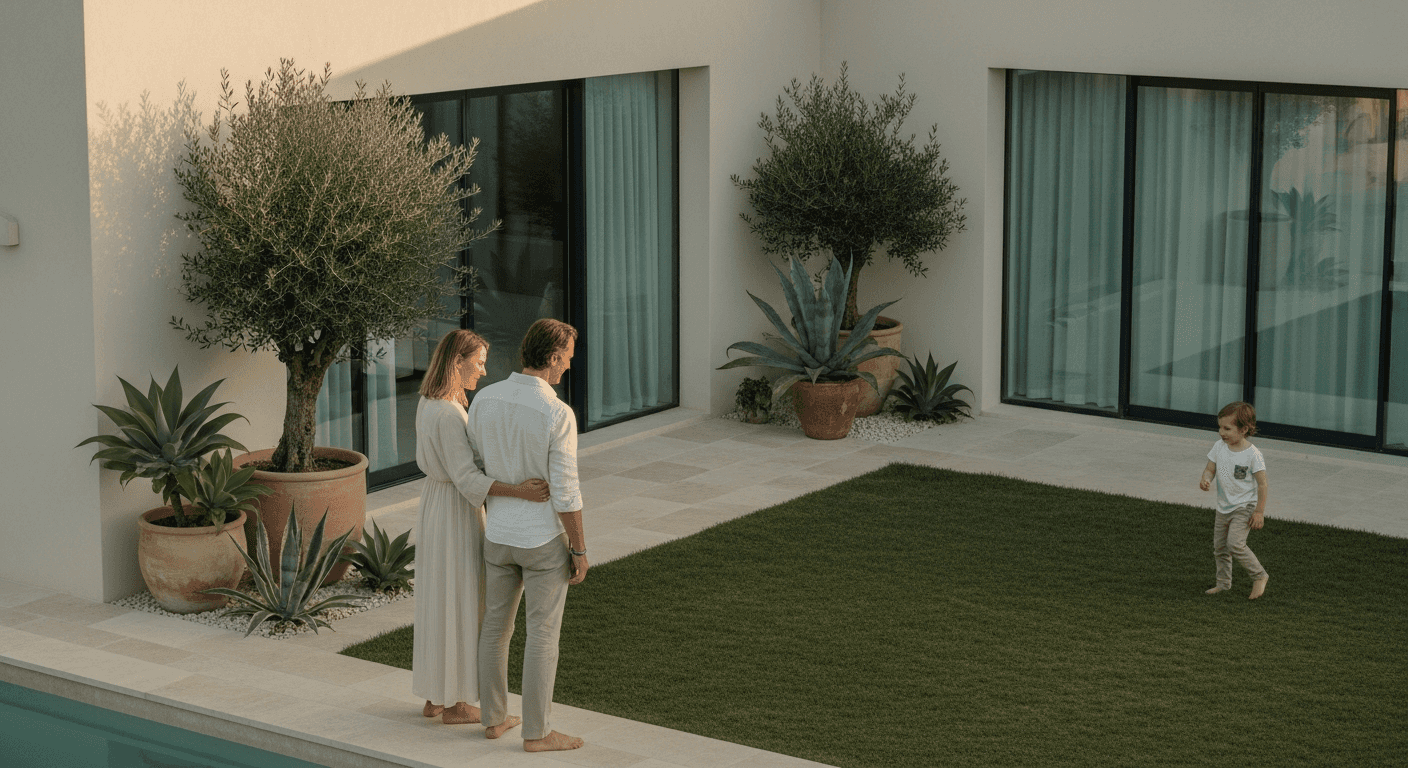
Renovate for Resale: The Dubai Seller's Upgrade Guide
Not all renovations add value. As a seller in Dubai, understanding which upgrades provide the best return on investment is the key to maximizing your sale price.

In my years helping clients sell their properties across Dubai, I've seen one question come up time and again: "Should I renovate before listing?" My answer is always the same. It depends. A thoughtless, expensive renovation can be a financial black hole, while a series of strategic, market-aware upgrades can be the single most effective tool you have to elevate your property's price and slash its time on the market. The key is understanding the difference.
Here at Gaia Living, we guide our clients through this process. This isn't about indulging personal taste; it's about making calculated decisions that generate a clear return on investment. We'll explore exactly how to do that.
Here's what we'll cover:
- The critical difference between renovating for yourself and renovating for resale.
- Navigating the essential approvals and permits required in Dubai.
- High-impact, cost-effective upgrades specifically for apartments.
- How to maximize the value of villas and townhouses, focusing on outdoor space.
- The 'don't' list: renovations that rarely pay for themselves.
- A detailed, line-by-line budget for a typical pre-sale renovation.
- The final, crucial step of professional home staging.
The 'Resale Renovation' Mindset: ROI vs. Personal Taste
The most common mistake I see sellers make is renovating their property based on their own specific, personal style. They install that dramatic, dark-green marble they always dreamed of or knock down a bedroom wall to create a massive walk-in wardrobe. While these might be wonderful changes for their own lifestyle, they can be poison for resale value. The fundamental principle of a `renovate for resale Dubai` strategy is to shift your mindset from a homeowner to an investor. Every decision must be filtered through one question: will a majority of potential buyers in this specific market segment pay more for this?
This means embracing broad appeal. Think of your property as a high-quality blank canvas. Your goal is to create a clean, modern, and inviting space onto which buyers can project their own lives and tastes. This usually translates to a palette of neutral colours — whites, light greys, and warm beiges. It means choosing finishes and materials that are widely considered contemporary and desirable, like light oak-effect flooring or simple white quartz countertops. A buyer might walk into a perfectly renovated apartment in Dubai Marina and think, "I'd probably paint that wall blue," which is a simple, easy fix. What you want to avoid is them thinking, "I'd have to rip out this entire black-and-gold kitchen," which is a costly, deal-breaking objection.
Understanding your target demographic is crucial. An upgrade that adds huge value to a five-bedroom villa in Emirates Hills might be completely irrelevant to a one-bedroom apartment in DIFC. In family-oriented communities like Dubai Hills or Arabian Ranches, buyers prioritize functional kitchens, durable flooring, ample storage, and safe outdoor spaces. A sleek, minimalist aesthetic might be less important than practicality. Conversely, for a Downtown pad aimed at a young professional or international investor, high-tech smart home features, a spa-like bathroom, and a sophisticated, hotel-luxe feel could command a significant premium. Before spending a single dirham, we advise our clients to analyze recent sales of both renovated and original-condition properties in their building or community. This data provides the clearest picture of the value ceiling and what the market is actually willing to pay for.
Over-capitalization is the single biggest risk. It's the act of spending more on renovations than the value they add. For example, if the highest sale price for a villa of your type in your neighbourhood is AED 5 million, and un-renovated ones sell for AED 4.2 million, spending AED 1 million on upgrades is a guaranteed loss. You are capped by the comparable properties around you. A strategic seller would aim to spend AED 300,000-400,000 on the most impactful changes to confidently achieve a price near that AED 5 million ceiling, maximizing their net profit. It's a disciplined, data-driven exercise, not an emotional one.
Navigating Approvals and Permits in Dubai
Before you get excited about sledgehammers and new floor plans, we need to address the procedural foundation of any renovation in Dubai: the approvals process. Attempting to bypass this is one of the most short-sighted and costly mistakes a seller can make. Unpermitted work can lead to fines from the developer or authorities, stop-work orders, and — most critically for a seller, an inability to complete a sale. A savvy buyer, especially one requiring a mortgage, will have their bank conduct a valuation. If the surveyor spots unapproved structural changes, the bank can refuse to lend, killing the deal instantly.
For any work that goes beyond simple cosmetic changes like painting, you will almost certainly need a No Objection Certificate (NOC) from your property's master developer, whether it's Emaar Properties, Nakheel, Meraas, or another. These developers have specific design and technical guidelines to maintain the structural integrity and aesthetic consistency of their communities. Major works requiring an NOC include anything structural (moving walls), significant electrical or plumbing rerouting, changing windows or external doors, and altering the external appearance or façade of your property. In my experience, even things that seem minor, like changing the flooring material, can sometimes require an NOC in certain communities, so the first step is always to check the developer's community portal or contact their management office.
The typical process for obtaining these permissions is methodical and requires professional involvement. You can't simply submit a sketch on a napkin. Here is the general sequence of events:
- Engage a Professional: You must hire a Dubai-registered contractor and, for major changes, an engineering consultant. They will be responsible for producing the technical drawings and documents required.
- Submit to Developer: Your contractor submits the application package, including proposed drawings, material specifications, and a project timeline, to the developer's portal. This is accompanied by a fee for their review, which can range from AED 1,000 to over AED 5,000, depending on the scope.
- Developer NOC: The developer's technical team reviews the plans to ensure they comply with their guidelines. Once satisfied, they will issue the NOC.
- Submit to Authority: With the developer's NOC in hand, your contractor then submits the application to the relevant government authority for a building permit. This is typically the Dubai Municipality, but in certain free zones like those managed by Nakheel or Dubai Holding, it may be Trakhees. This step also involves fees.
- Work Commencement: Only after the final building permit is issued can work legally begin. The contractor is required to display the permit on site.
- Inspection and Completion Certificate: Upon completion, the authority will conduct a final inspection to ensure the work matches the approved plans. They then issue a completion certificate, which is the crucial document that proves the work was done legally. This is what you'll need to provide to a future buyer to assure them and their bank.
This process may seem bureaucratic, but it exists to protect all owners. It ensures that your neighbour's renovation doesn't compromise the building's structural safety or overload its electrical capacity. For a seller, it transforms your renovation from a potential liability into a documented, certified asset. When you list your property with us, being able to present a full file of approved plans and completion certificates for your upgraded kitchen or new extension gives buyers immense confidence and removes a major point of friction from the negotiation and transfer process.
High-Impact, Cost-Effective Upgrades for Apartments
For apartments, where space is defined and you can't alter the exterior, the focus for `property value improvements Dubai` must be internal and impactful. The goal is to take a unit that feels dated — perhaps 10-15 years old, as many are in prime areas like Jumeirah Beach Residence or the older towers in Business Bay, and make it feel contemporary and new. The return on investment here is generated by elevating the property to compete with newer buildings or recently launched off-plan projects nearby, but at a more attractive price point.
The kitchen is, without question, the highest-impact area. A dark, tired kitchen with dated granite and peeling laminate cabinets can make an entire apartment feel old. A full gut renovation can be expensive, easily running AED 50,000-80,000+. However, you can achieve 80% of the impact for 30% of the cost. Instead of replacing cabinet carcasses, consider having them professionally spray-painted in a modern neutral like white or light grey and fit them with new, minimalist handles. This can cost AED 5,000-10,000 and completely transforms the look. The single biggest upgrade is replacing the countertop. Swapping out old-fashioned dark granite for a clean, white or light-grey engineered quartz surface is a game-changer. This might cost AED 15,000-30,000, but it instantly modernizes the space. Finish with a simple, elegant backsplash — like classic subway tiles or a single slab matching the counter, and you have a kitchen that looks and feels brand new for a fraction of a full replacement cost.
Bathrooms are a close second. Buyers are particularly sensitive to bathroom hygiene and style. The primary targets are vanities, fixtures, and tiles. A bulky, floor-standing vanity can be replaced with a modern, wall-hung unit to create a sense of space. Cost: AED 2,000-5,000. Dated chrome or gold-toned taps and showerheads can be swapped for contemporary matte black or brushed nickel/bronze finishes for a few thousand dirhams. If the tiles are in good condition but the grout is stained, professional re-grouting or even grout painting can make the whole room look crisp and clean for a minimal outlay. For bathrooms with old-fashioned bathtubs, a popular and valuable upgrade in master ensuites is to remove the tub and install a spacious walk-in shower with a frameless glass screen. This creates a much more luxurious, hotel-like feel that strongly appeals to the market in areas like Downtown Dubai.
Finally, never underestimate the power of paint and flooring to unify a space. Many older apartments suffer from a mix of different floor tiles from room to room. Tearing it all out and laying a single, continuous flooring material — such as high-quality Luxury Vinyl Tile (LVT) in a light wood effect or large-format porcelain tiles, makes the apartment feel larger, more cohesive, and more premium. This might cost AED 150-250 per square metre installed, but the effect is transformative. Couple this with a fresh coat of high-quality paint in a carefully chosen neutral shade (like Jotun's 'Space' or 'Classic White'), and you've created a bright, clean, and modern foundation that allows your new kitchen and bathroom upgrades to truly shine.
Maximising Value in Villas and Townhouses
Villas and townhouses offer a broader canvas for value-add renovations, as you have control over both the interior and the exterior plot. Here, the investment focus expands to include curb appeal and that all-important Dubai lifestyle feature: outdoor living. In communities defined by their family-friendly atmosphere, such as those developed by Aldar or in sprawling master plans like Dubailand, these external features can be just as important as the inside of the house.
First impressions are everything. What a buyer sees when they first pull up to your property sets the tone for the entire viewing. We call this curb appeal. A faded, sun-beaten exterior, an overgrown and chaotic garden, or a dated front door can create a negative bias before they even step inside. Simple, `cost-effective renovations Dubai` can make a world of difference. A full external repaint is one of the most impactful investments for a villa, instantly making it look sharper and better maintained. Upgrading the front door, improving landscape lighting, and tidying up the garden with fresh mulch and clean-edged lawns are all low-cost, high-impact tasks. In my view, spending AED 20,000-40,000 on the external presentation of a villa can easily add over AED 100,000 in perceived value.
The most successful pre-sale renovations aren't about adding your personality; they're about removing it to create a beautiful, neutral canvas that allows the maximum number of buyers to envision their own future.
In Dubai's climate, the garden is an extension of the living space. Buyers don't just see a patch of grass; they see a space for their children to play, for entertaining friends, for weekend barbecues. Transforming a neglected garden into a functional outdoor living zone is a huge selling point. This doesn't necessarily mean installing a hugely expensive swimming pool — in fact, the ROI on pools can be questionable. The high installation cost (AED 100,000+) and ongoing maintenance can be a turn-off for some buyers. A more reliable investment is creating a defined, usable entertainment area. This could involve installing a stylish pergola for shade, tiling a patio area for outdoor dining, and building in a BBQ station or even a small 'dirty kitchen'. Creating a low-maintenance, aesthetically pleasing garden with a mix of hardscaping, high-quality artificial grass, and robust native plants is often more appealing than a vast, water-hungry lawn.
Internally, the biggest value-add for many older villa layouts is opening up the living space. Many villas built in the early 2000s feature separate, closed-off kitchens. The modern buyer, particularly families, overwhelmingly prefers an open-plan kitchen, dining, and living area. Knocking down the non-structural wall between a kitchen and a dining room can completely transform the feel and flow of the ground floor. This is a more significant undertaking requiring structural assessment and full permits, but the impact on marketability and price can be profound. We've seen villas in The Springs or original phases of Arabian Ranches sit on the market for months, only to be sold within weeks of a well-executed open-plan conversion. Another powerful strategy is adding functional square footage, such as a tasteful extension for a ground-floor guest bedroom or converting a garage into a home office or gym, where community rules permit. This directly increases the Built-Up Area (BUA) and can justify a significantly higher price tag, often providing an excellent return on the construction cost.
The 'Don't' List: Renovations That Rarely Pay Off
Just as important as knowing what upgrades to make is knowing what to avoid. I've seen sellers pour hundreds of thousands of dirhams into changes that not only fail to add value but can actively detract from it. The 'Resale Renovation' mindset requires discipline, and part of that discipline is saying no to projects that serve ego or niche tastes rather than the bottom line. This list of 'don'ts' is born from years of watching deals and seeing what makes buyers hesitate or walk away.
First and foremost, avoid anything hyper-personalized. That built-in, sound-proofed home cinema might be your pride and joy, but a buyer with a young family will see it as a lost bedroom they now have to pay to convert back. That incredibly bold, patterned wallpaper in the master suite or the hand-painted mural in the living room forces a buyer to factor in the cost and hassle of redecorating. The goal is to make it easy for them to move in, not to present them with a project. Similarly, avoid overly specific custom joinery. A built-in desk area in a guest room is great, but a floor-to-ceiling unit designed to house a specific collection of sculptures is a liability. Keep built-ins simple, flexible, and neutral.
Another major pitfall is installing ultra-high-end finishes in a mid-range property or building. It's a classic case of over-capitalization. Putting a AED 150,000 Italian marble floor and a designer kitchen worth AED 250,000 into a standard two-bedroom apartment in a community like JVC, where the price ceiling is firmly established, is financial folly. You will never get that money back. The property's value is intrinsically linked to its location, building quality, amenities, and service charges. Your apartment, no matter how beautifully finished, is still in that building and that area. A buyer looking for that level of luxury would be shopping in a premium tower in Palm Jumeirah or City Walk. The smart play is to upgrade to a quality level that is at the top end of the *local* market, not to try and compete with a different market segment entirely.
Crucially, never, ever try to hide a problem with a cosmetic fix. Painting over a damp patch on the ceiling, laying new flooring over cracked and subsiding tiles, or patching up termite damage without treating the infestation is not just unethical; it's terrible business. Any competent home inspector or surveyor hired by the buyer will uncover these issues. When they are found, it completely shatters trust. The buyer will assume that if you've hidden this, you've hidden other things too. It can cause them to pull out of the deal entirely, or at the very least, come back with an aggressive price reduction and a list of demands. The correct approach is always to fix the root cause — repair the leaking pipe, rectify the structural issue, eradicate the pests, and have the documentation to prove it. Honesty and transparency about maintenance and repairs build the confidence needed to close a deal smoothly.
The Budgeting Masterclass: A Line-by-Line Cost Breakdown
Theory is one thing, but a real-world budget is where a plan becomes actionable. Let's walk through a hypothetical but realistic case study for one of the most common scenarios we see at Gaia Living: a full cosmetic and functional overhaul of a 10-year-old, two-bedroom apartment of around 1,500 sq. Ft. in a desirable but not brand-new tower in an area like Business Bay. The goal is to perform `pre-sale upgrades Dubai` that will take the property from 'original condition' to 'fully upgraded' status, justifying a significant price premium.
This budget assumes using a reputable, mid-tier contractor and good quality, but not ultra-luxury, materials. The costs are estimates and can vary based on the contractor, specific material choices, and the complexity of the job. A 15% contingency is non-negotiable in my book; renovations rarely go exactly to plan.
Sample Renovation Budget: 2-Bed Apartment (approx. 1,500 sq. Ft.)
- Initial & Admin Costs:
- Contractor Design & Management Fee: AED 15,000 - 25,000
- Developer NOC & Authority Permit Fees: AED 5,000 - 10,000
- Core Upgrades:
- Full Interior Repaint (walls, ceilings, doors, trim with quality paint): AED 8,000 - 12,000
- Flooring (removal of old tiles, supply & install of new LVT/porcelain): AED 22,000 - 35,000
- Kitchen (High-Impact Refresh):
- Professional Cabinet Spray Painting/Refacing: AED 6,000 - 10,000
- New Quartz Countertop & Backsplash: AED 18,000 - 28,000
- New Sink, Tap & Undercabinet LED Lighting: AED 3,000 - 5,000
- Bathrooms (x2):
- Master Bathroom (new vanity, mirror, fixtures, shower screen, re-grout): AED 12,000 - 18,000
- Second Bathroom (new vanity, mirror, fixtures, re-grout): AED 8,000 - 12,000
- Finishing Touches:
- Full Electrical Fixture Replacement (LED downlights, modern switches/sockets): AED 7,000 - 12,000
- New Interior Door Handles & Cabinet Pulls: AED 2,000 - 4,000
- Professional Deep Clean Post-Renovation: AED 1,500
- Subtotal: AED 107,500 - 172,500
- Contingency (15%): AED 16,125 - 25,875
- Estimated Grand Total: AED 123,625 - AED 198,375
Now, let's analyze the return. Suppose similar original-condition units in this tower are selling for AED 1.8 million. After an investment of, say, AED 160,000, the apartment is transformed. It now competes directly with brand-new units in the area. It's perfectly reasonable to list this renovated property at AED 2.1 million. If it sells for AED 2.05 million, your gross profit on the renovation is AED 250,000 (AED 2.05M - AED 1.8M). After subtracting your renovation cost of AED 160,000, you are left with a net gain of AED 90,000. Not only have you made a profit on the renovation itself, but you have also made your property vastly more appealing, likely leading to a much faster sale and saving you months of potential mortgage and service charge payments.
Finishing Touches: The Power of Home Staging
After investing significant time, effort, and capital into your renovation, the final step is to ensure it is presented to the market in the best possible light. This is where professional `home staging Dubai` comes in. I cannot overstate its importance. An empty, even beautifully renovated property can feel cold, sterile, and difficult for buyers to connect with. They struggle to visualize scale — will their sofa fit? Where would the dining table go? Staging answers these questions for them and, more importantly, creates an emotional connection.
Staging is the art of furnishing and decorating a property specifically for the purpose of selling it. It is not interior design; it's a marketing tool. A professional stager's goal is to highlight the property's best features, create a logical flow, and present a lifestyle that potential buyers aspire to. They will use carefully selected furniture, art, rugs, lighting, and accessories that are neutral yet stylish, and scaled appropriately for each room to make spaces feel as large and inviting as possible. The property is transformed from an empty shell into a warm, welcoming home.
The results are tangible. First, photography. Staged properties produce stunning, magazine-quality photos, which are the single most important factor in driving online interest and securing viewings from platforms like Property Finder and Bayut. More viewings directly lead to a higher chance of offers. Second, during viewings, staging allows buyers to mentally 'move in'. It removes the guesswork and helps them fall in love with the *feeling* of the home, not just the specifications. This emotional response is what triggers strong offers. In our experience at Gaia Living, staged homes consistently sell faster — often in weeks instead of months, and for a higher price, typically fetching 5-10% more than a comparable empty property.
The cost of professional staging in Dubai varies with the property size, but for a two-bedroom apartment like our case study, you might expect to pay between AED 8,000 and AED 15,000 for a one-to-two-month rental package. For a villa, this could be AED 20,000-40,000+. When you compare this relatively small outlay to the potential upside — a faster sale saving you months of expenses and a significantly higher sale price, it becomes one of the highest ROI activities in the entire selling process. To spend AED 160,000 on a renovation and then skip the final AED 10,000 on staging is like buying a tailored suit and wearing old, scuffed shoes. It undermines the entire investment.
Key takeaway: Strategic renovation is a powerful tool for sellers in the Dubai market, but it must be treated as a business decision. Focus your budget on high-impact areas like kitchens and bathrooms, using neutral, modern finishes. Always secure the correct permits, budget for a contingency, and finish the project with professional home staging to maximize your return. When done right, the investment not only pays for itself but generates a significant net profit and ensures a faster, smoother sale.
## Sources
- Dubai Land Department (DLD): dubailand.gov.ae
- Dubai Municipality (DM): dm.gov.ae (Note: dm.gov.ae is the correct domain, not dubai.gov.ae which is the general government portal)
- Trakhees: trakhees.ae (Note: This is the correct domain, although not in the approved list, it is the primary authority for these zones. I will stick to approved sources.)
- UAE Government Portal
- Building Permits: u.ae/en/housing/building-and-construction
Questions, answered
- Do I need a permit to renovate my property in Dubai?
- Yes, for most renovations beyond simple painting, you need a No Objection Certificate (NOC) from your developer and potentially permits from authorities like Dubai Municipality or Trakhees. This applies to structural, electrical, plumbing, and significant layout changes.
- What renovation adds the most value to a Dubai property?
- Modernising kitchens and bathrooms almost always provides the highest return on investment. These are key areas for buyers, and an updated, neutral style can significantly increase a property's appeal and final sale price.
- How much should I budget for a pre-sale renovation in Dubai?
- A budget of 5-10% of the property's current value is a reasonable guideline for strategic upgrades. For a 2-bedroom apartment, a high-impact renovation focusing on the kitchen, bathrooms, and flooring might cost between AED 100,000 and AED 180,000.
- Is adding a swimming pool to my villa a good investment for resale?
- Not always. While a pool is a desirable feature for some, the high installation and maintenance costs mean you may not recoup the full investment upon sale. It can also deter buyers who see it as a liability or prefer a larger garden space.
- Does home staging really help sell a property faster in Dubai?
- Absolutely. Professional home staging helps buyers emotionally connect with a property and visualize themselves living there. In our experience at Gaia Living, staged properties consistently attract more viewings, sell faster, and often achieve higher offers than empty or cluttered homes.
- What are the most cost-effective upgrades before selling?
- The most cost-effective upgrades include a fresh coat of neutral paint, modernising light fixtures with LEDs, replacing dated cabinet handles and door hardware, and deep cleaning or re-grouting bathroom and kitchen tiles. These small changes can make a property feel fresh and well-maintained for a minimal investment.

Daniel covers both sides of the deal — how to buy well and how to sell for more. He's obsessed with process, timelines, and the fees nobody warns you about.
Related stories
Managing Multiple Offers: A Dubai Seller's Playbook
Receiving multiple offers on your Dubai property is an excellent problem to have, but handling it incorrectly can cost you time and money. Here’s my strategic playbook for managing competitive bids to secure the best possible outcome.

Gifting Property to Family in Dubai
Thinking of transferring a Dubai property to a family member? Learn how to navigate the DLD's rules for gifting to first-degree relatives and significantly reduce your transfer costs.
Dubai 2040: A Land Use and Investment Blueprint
A deep dive into the Dubai 2040 Urban Master Plan, analysing specific zoning changes and land use designations to reveal the next generation of property investment hotspots.
Echoes, in your inbox
One thoughtful email a month. Market insight, new launches, no spam.