

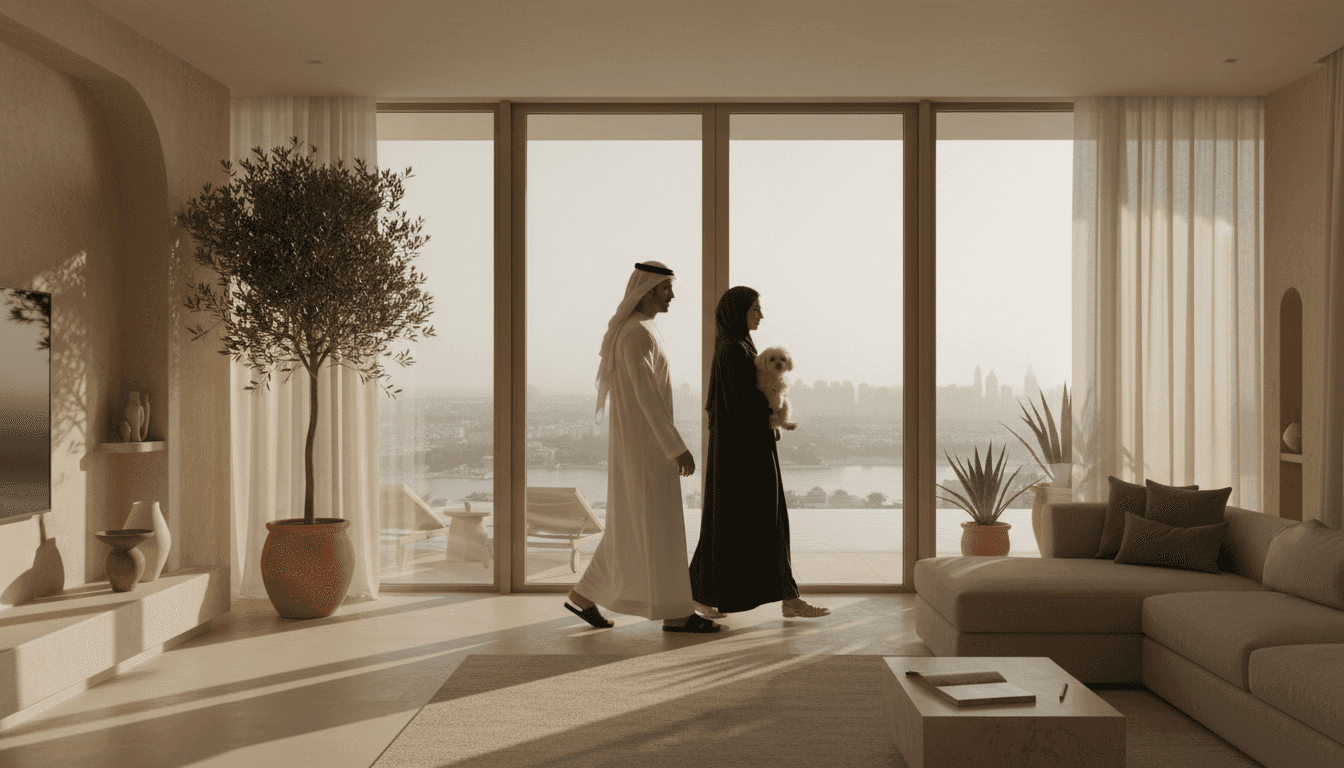
Pet-Friendly Apartments in Dubai: The Definitive Guide
Finding a pet-friendly apartment in Dubai requires navigating a complex web of building rules, community bylaws, and tenancy contracts. Here’s my professional guide to securing the perfect home for you and your furry companion.

As the Apartments Editor at Gaia Living, one question lands in my inbox more than almost any other: “Ravi, where can I actually live with my dog?” It seems simple, but finding truly pet-friendly apartments in Dubai is one of the most stressful parts of moving for many of my clients. The city has an undeserved reputation for being hostile to pets, which isn't true. The reality is more complex. It's a city of micro-rules, where permission can change from one lift lobby to the next.
Here's what I'll explore in this definitive guide:
- The three layers of rules you must navigate: Government, Community, and Building.
- What “pet-friendly” really means on a property listing (and what it doesn't).
- A complete, line-by-line breakdown of the costs associated with renting with a pet.
- My personal shortlist of the best communities and specific buildings for apartment living with pets.
- A step-by-step checklist for tenants to secure a pet-friendly lease without any surprises.
- How to be the kind of pet-owning tenant that landlords and building managers love.
- Future trends: Are new developments becoming more or less accommodating to our four-legged friends?
The Three Tiers of Pet Rules in Dubai
Many newcomers to Dubai assume there's a single, city-wide law governing pets in residential buildings. This is the first, and most critical, misunderstanding. In my experience, navigating the system requires understanding a hierarchy of three distinct sets of regulations. Getting approval on one level means nothing if you fall foul of another. It's this tiered system that creates so much confusion and frustration for residents looking to rent with pets in Dubai.
First, you have the top-level government regulations. These are primarily set by the Dubai Municipality and focus on public health, safety, and animal welfare. They dictate things like which breeds are permitted or restricted in the UAE, the requirement for all pets to be registered and microchipped, and the rules about leashing in public spaces. According to a circular from the UAE Government Portal (u.ae), pets must be kept on a leash in public and owners are responsible for cleaning up after them. Fines for violations can be significant. This level of rules isn't about whether your dog can live in your apartment; it's about your responsibilities as a pet owner in the emirate at large.
Second, you encounter the Master Community rules. This layer is set by the master developer of a large, multi-building community. Think of developers like Emaar Properties in Downtown Dubai or Dubai Creek Harbour, or Nakheel for areas like Palm Jumeirah. These master developers establish the overall ethos and regulations for the shared spaces within their communities — the parks, the promenades, the walkways. For example, Emaar has historically been very clear about allowing pets on the boulevard walkways in Downtown and on the promenades in Dubai Marina, provided they are leashed. This is a huge factor. A building can be pet-friendly, but if the entire surrounding neighbourhood is a 'no-go' zone for dogs, your quality of life (and your pet's) will be severely compromised. These master community rules are usually outlined in the Master Community Declaration and can be enforced by the developer's own security or management teams.
Finally, and most importantly for apartment dwellers, is the third tier: the individual Building Rules. This is where the real battle is won or lost. Each residential tower is governed by its own Owners' Association (OA), which is managed by an OA management company. The OA, comprised of the individual apartment owners in that building, has the authority to set specific rules for their building, including a policy on pets. These rules are legally binding within that specific property and can override the more permissive stance of a master developer. This is the source of the classic Dubai paradox: you can walk your dog along the Marina Walk (thanks to the master developer), but the building right next to it might have a strict 'no pets' sign at the door, enforced by its own OA. The building's rules are what determine whether you can physically keep a pet inside your apartment.
Deconstructing the “Pet-Friendly” Label
 Featured project
On property portals, the “pet-friendly” filter seems like a simple solution. In reality, it’s often a misleading and unreliable starting point. I always advise my clients to treat it as a very loose indicator, not a guarantee. The term is used so inconsistently that relying on it can lead to wasted time, money, and emotional energy. The core issue is that there's no official, RERA-sanctioned definition of “pet-friendly.” An agent might label a building as such simply because the master community allows pets, while completely ignoring the strict 'no pets' policy of the building's Owners' Association.
So, what can “pet-friendly” actually mean in a Dubai property listing? It can mean several different things, and you must clarify which applies. In its best and truest form, it means the building management and the Owners' Association have an explicit, written policy permitting residents to keep pets, subject to reasonable conditions. This is the gold standard. It might mean the building provides specific amenities, like a designated pet relief area. In other cases, it might simply mean the building management 'looks the other way' and doesn't actively enforce a 'no pets' rule that technically exists in the building's bylaws. This is a precarious situation. A single complaint from a neighbour or a change in building management can lead to the sudden enforcement of the rule, leaving you in a terrible position.
Worst of all, it can sometimes mean the agent simply doesn’t know the rules and has ticked the box to attract more leads. This is why you must take matters into your own hands. The single most important piece of advice I can give you is this: get it in writing. Not from the agent, but from the source. Before you even think about signing a tenancy contract, you or your agent must secure a formal No Objection Certificate (NOC) from the building management company that explicitly states you are permitted to keep your specific pet (mentioning type and breed) in the specific apartment you intend to rent. This document, along with a specific pet clause in your Ejari-registered tenancy contract, is your only real protection. A verbal assurance from a security guard, a watchman, or even a real estate agent is worthless.
I’ve seen heartbreaking cases where tenants were told an apartment was pet-friendly, only to receive an eviction notice from the building management weeks after moving in. They had a valid tenancy contract, but because it didn’t mention the pet and they didn't have a building NOC, they were found to be in breach of the building's internal rules. The landlord might be fine with the pet, but if the building's OA is not, their rules supersede the landlord's individual preference. Always remember: the contract is between you and the landlord, but the building rules are what allow you to live peacefully within the community. You must satisfy both.
The Real Cost of Renting with a Pet
Beyond the monthly rent, budgeting for an apartment with a pet in Dubai involves several specific costs that are easy to overlook. Landlords and building managers see pets as an additional risk for wear and tear, noise, or potential damage, and they mitigate this risk financially. Being prepared for these expenses is crucial for a smooth and transparent rental process. From my experience, here’s a realistic breakdown of what you should expect to pay when securing a one-bedroom apartment with a small dog.
First, the pet deposit. This is separate from your standard security deposit. While the regular deposit (typically 5% of the annual rent) covers general wear and tear, a landlord will often request an additional, specific 'pet deposit'. This is not a formal government fee but a private negotiation. In my experience, a typical pet deposit ranges from AED 1,000 to AED 3,000. It is often a flat fee rather than being tied to the rent. Crucially, you must ensure your contract clearly states the conditions under which this deposit will be fully refunded. It should be treated like a security deposit, returnable at the end of the tenancy assuming no specific pet-related damage has occurred, like scratched doors or stained carpets.
Some landlords, though this is less common in Dubai than in other markets, may ask for 'pet rent' — a small, non-refundable amount added to your monthly rent, perhaps AED 100-200. I generally advise tenants to push for a one-off, refundable deposit instead, as pet rent can add up significantly over a year with no benefit to you. Here’s a sample cost breakdown for a one-bedroom apartment in a pet-friendly building in a community like JVC:
- Annual Rent: AED 75,000
- Standard Security Deposit (5%): AED 3,750
- Agency Fee (5%): AED 3,750
- Ejari Registration Fee: AED 220
- Refundable Pet Deposit (negotiated): AED 2,000
- Pet-Specific Cleaning Fee (contract clause): AED 500 (often deducted from deposit upon move-out)
- Initial Building Access Card Fees: AED 250
- Total Upfront Cost (excluding pet acquisition/transport): AED 10,570
Beyond these initial contractual costs, you must also factor in the ongoing expenses. Dubai Municipality requires all pets to be registered annually. This involves a fee and is linked to your pet’s microchip and vaccination records. There are also potential fines to consider. Failure to clean up after your pet in a public area or having a dog off-leash can result in penalties. Within a building, the Owners’ Association can also levy its own fines for breaches of pet-related rules, such as letting your pet foul a common area. These fines can range from AED 200 to AED 1,000 and can be added directly to your service charge bill if you are an owner, or passed on to you by your landlord if you are a tenant. Thinking through these potential costs helps you budget realistically and underscores the importance of being a responsible pet owner.
My Shortlist: Best Buildings & Communities for Pet Owners
After years of helping clients navigate this landscape, I’ve developed a mental map of Dubai’s most genuinely pet-welcoming zones. This isn’t just about buildings that tick a box; it’s about entire ecosystems that make life with a pet easier and more enjoyable. My recommendations are based on a combination of consistently permissive building management, proximity to essential pet services, and the availability of green, walkable spaces.
Jumeirah Village Circle (JVC): In my opinion, JVC is arguably the most pet-friendly apartment community in Dubai right now. The area is characterized by low- to mid-rise buildings, and a significant percentage of them have favourable pet policies. What makes JVC stand out is the sheer number of parks and green patches scattered throughout the district. Almost every block has a small community park, making quick walks easy. The area is teeming with vets, groomers (like Petsville and The Pet Shop), and pet-friendly cafes. Developers like Binghatti and many of the individual towers managed by various OAs here have a long-standing reputation for being accommodating. However, it's still essential to check tower by tower. Some buildings may have weight or breed restrictions, but the general culture is very welcoming.
Downtown Dubai & Business Bay: While more high-rise and dense, these areas, particularly those developed by Emaar Properties, are surprisingly good for pet owners who value an urban lifestyle. The key is the infrastructure. The wide boulevards of Downtown and the stunning canal promenade in Business Bay provide fantastic, long walking routes. Emaar has a clear and positive policy for pets in the outdoor common areas of its master communities. Many towers, especially the Emaar-managed ones like the Burj Vista or The Address Residences, are known to be pet-friendly. The catch? The cost. Rents and purchase prices are higher here, and you'll often find stricter rules regarding service elevators for pets. Proximity to Dubai Mall Zabeel's pet-friendly entrance and numerous pet boutiques adds to the appeal for those with the budget.
Dubai Hills Estate: Another master-planned community by Emaar, Dubai Hills is a haven for pet owners, though it’s better known for its villas. That said, the apartment complexes within the community, such as Park Heights and Collective, benefit from the same incredible infrastructure. The vast Dubai Hills Park is the star attraction, offering endless space for dogs to run and play (on a leash, of course). The entire community is designed for walkability, with beautiful landscaping and a strong sense of security. It feels suburban and spacious while being centrally located. For apartment dwellers who want the benefits of a villa community's green space, this is a top-tier choice.
“The most important amenity for a pet owner isn't a fancy gym or a pool; it's a clear, written 'Yes' from the building management and a park within a five-minute walk.”
Other Strong Contenders: I also frequently recommend my clients look into these areas:
- Town Square by [Nshama](/developers/nshama): Designed from the ground up as a family- and pet-friendly community. It has a fantastic central park, dedicated dog parks, and a very welcoming atmosphere. It's further out, but the value and lifestyle are exceptional.
- [Dubai Creek Harbour](/areas/creek-harbour): The wide, beautiful promenade overlooking the mangroves and skyline is a dog walker's dream. As an Emaar community, the outdoor spaces are very permissive, and many of the new towers are adopting pet-friendly policies.
- The Greens & Views: An older, established Emaar community, this area has long been a favourite for pet owners due to its beautiful central lake, lush greenery, and established pet-friendly culture. It remains one of the most reliable choices.
The Tenant's Checklist: Securing Your Pet-Friendly Lease
Finding and securing a genuinely pet-friendly apartment requires a systematic and diligent approach. You cannot afford to make assumptions or accept verbal promises. To help my clients, I've developed a checklist that we work through together to ensure there are no surprises after the contract is signed and the moving trucks have left. Following these steps will protect you, your pet, and your deposit.
First, start your search with the right mindset. Use the “pet-friendly” filter on property portals as a preliminary guide, but immediately begin your own verification process. When you contact an agent about a listing, your first question should be: “I see this is listed as pet-friendly. Can you please confirm the specific pet policy of the building's Owners’ Association?” Ask if they have a copy of the building rules or can get you the contact details for the building management. An experienced, professional agent will have this information ready or will know exactly how to get it. If the agent is vague or dismissive, it's a red flag. Move on.
Once you’ve identified a promising apartment, the real due diligence begins. Before you commit to anything, you need to get written confirmation. Here is the step-by-step process I insist on:
1. Request the Building's Community Rules: Ask the agent or the landlord for a copy of the official building rules (sometimes called the Community Rules or Conduct Code). Read the section on pets carefully. Does it explicitly permit them? Are there restrictions on size, weight, or breed? Are there specific rules about using service elevators? 2. Contact Building Management Directly: Even with the rules in hand, I recommend a direct approach. Get the email address for the official building management company. Send them a polite email introducing yourself as a prospective tenant for a specific apartment number. State clearly the type, breed, and approximate size of your pet and ask them to confirm in writing that your pet would be welcome. 3. Secure a Formal NOC: If the response is positive, your next step is to request a formal No Objection Certificate (NOC). This is the most important document in the entire process. The building management will issue this letter, which you will need to present to the landlord. 4. Negotiate the Tenancy Contract Addendum: Now, turn to the landlord and your tenancy contract. The standard Dubai tenancy contract doesn't have a dedicated space for pets. You must insist on a specific addendum or clause. This clause should state that the landlord grants you permission to keep your pet (identified by name, breed, etc.) in the apartment for the duration of the lease, referencing the building management's NOC. 5. Clarify the Pet Deposit: The pet deposit amount and its conditions for refund must be explicitly detailed in this addendum. It should state that the deposit is refundable, minus any deductions for specific, proven pet-related damages, and should not be conflated with the general security deposit.
Completing this checklist may seem like a lot of work, but it is the only way to achieve true peace of mind. It creates a clear paper trail of approval from every level of authority — the building management, the landlord, and the tenancy contract registered with Ejari. This robust documentation is your shield against any future disputes, complaints from neighbours, or changes in your landlord's attitude.
Being a Model Pet-Owning Tenant
Securing a pet-friendly apartment is only half the journey. Keeping it, and ensuring the community remains welcoming to pets in the future, depends entirely on being a responsible and considerate resident. Every negative incident involving a pet gives ammunition to those in a building who would prefer an outright ban. As a pet owner in a shared apartment building, you are an ambassador for all other pet owners. In my view, landlords and Owners’ Associations aren't anti-pet; they are anti-problem. By proving you and your pet are not a problem, you protect your own tenancy and make it easier for the next person.
The fundamentals are simple but crucial. Always adhere to the building's specific rules. If the policy states that pets must use the service elevator, then that is the only elevator you should use with your pet, without exception. If there are designated pet relief areas, use them. Never allow your pet to relieve itself in planters, lobby entrances, or basement car parks. Always, always carry waste bags with you and clean up immediately. This is non-negotiable and is the number one source of complaints against pet owners. A single failure to clean up can sour relations with neighbours and management instantly.
Noise is the second major issue in apartment living. A dog that barks incessantly when left alone is a legitimate problem for neighbours. If you know your pet suffers from separation anxiety, you need to address it proactively. Invest in training, anti-anxiety toys, or dog-walking services to ensure your pet is calm and quiet while you're away. If you receive a complaint, address it respectfully and immediately. Speak to your neighbour, apologise for the disturbance, and explain the steps you are taking to rectify the situation. Showing that you are a proactive and considerate owner goes a long way with both neighbours and building management.
Finally, maintain your apartment meticulously. When it’s time to move out, go above and beyond to ensure the property is returned in pristine condition. This is key to getting your pet deposit back. I recommend a professional deep cleaning service that specializes in pet-related issues, including steam cleaning carpets and upholstery to remove any lingering odours or hair. Taking photos of the apartment's condition when you move in and when you move out is also a wise precaution. By being a model tenant, you build a positive reputation for pet owners, making landlords less hesitant to rent to them in the future. You are not just renting an apartment; you are contributing to the culture of the building.
The Future of Pet-Friendly Living in Dubai
Looking ahead, I am optimistic about the future for pet owners in Dubai's apartment market. The demographic shifts in the city are a major driver of this change. As Dubai attracts more long-term residents, expats who see the city as a home rather than a temporary workplace, the demand for a more holistic lifestyle — one that includes pets, is growing stronger. Developers are responding to this. They are beginning to understand that for a significant segment of the market, pet-friendliness is not a luxury but a necessity, as important as parking or a gym.
We are seeing this trend play out in the design of new communities. Developers like Nshama with Town Square and Emaar with Dubai Hills Estate didn't just build apartments and villas; they designed a lifestyle. This includes dog parks, extensive walking trails, and community events that often involve pets. These features are now major selling points. At Gaia Living, we see more and more clients listing “pet-friendly” as a non-negotiable requirement when searching for a home to buy or rent. This feedback loop to developers is powerful and is influencing the design of the next generation of master-planned communities.
Beyond that, the legal framework is slowly becoming clearer. While the three-tiered system of rules still exists, there's a growing professionalism among Owners' Association management companies. They are creating more detailed and transparent community rulebooks, which makes it easier for prospective residents to get a clear answer on pet policies. The proliferation of pet-centric businesses — from high-end groomers and daycare centres to specialized pet relocation services and pet-friendly cafes, is another indicator of a mature and growing market. This ecosystem provides the essential support network that pet owners need, making Dubai an increasingly viable and enjoyable city for them.
While navigating Dubai's rental market with a pet still requires diligence, the trend is positive. The key is to shift your perspective: don't just look for an apartment that 'allows' pets. Seek out a community and a building that actively 'welcomes' them. Your success hinges on meticulous research, securing written approvals, and being a responsible, considerate neighbour. Choose a building known for its pro-pet culture, and you're not just finding a home; you're joining a community that understands a family isn't always just human.
Sources
- UAE Government Portal - Animal Welfare: u.ae/en/information-and-services/environment-and-energy/animal-welfare
- Dubai Land Department (DLD): dubailand.gov.ae
- Real Estate Regulatory Agency (RERA): rera.gov.ae
Questions, answered
- Is it difficult to find a pet-friendly apartment in Dubai?
- It can be challenging but is certainly not impossible. Success depends on knowing which communities and buildings are historically more welcoming, being prepared with the right documentation, and getting explicit permission in your tenancy contract.
- Can a landlord in Dubai legally refuse pets?
- Yes, a landlord can specify a 'no pets' clause in the tenancy contract, which is legally binding. Even if a building is pet-friendly, an individual landlord has the right to refuse pets in their specific unit.
- Which areas in Dubai are best for living with pets?
- Communities with ample green spaces and walking paths like JVC, Dubai Hills Estate, Town Square, and parts of Business Bay (near the canal) are excellent. Established areas like Dubai Marina also offer many options, though you need to check tower-by-tower.
- What is a 'pet deposit' in Dubai and is it refundable?
- A pet deposit is an extra security amount, typically around AED 1,000 to AED 2,000, requested by landlords to cover potential pet-related damage. Its refundability depends on the terms of your contract and the condition of the property when you move out.
- Can a building change its pet policy after I move in?
- Yes, Owners' Associations can and do change building rules. While your tenancy contract provides some protection for its duration, a new 'no-pets' rule can create significant issues upon renewal. This is why choosing a community with a long-standing pet-friendly culture is so important.
- What documents do I need to rent an apartment with a pet in Dubai?
- You will need your pet's UAE registration/municipality tag, an up-to-date vaccination book, and often a No Objection Certificate (NOC) from the building management. The landlord will add a specific pet clause or addendum to your tenancy contract.

Ravi lives and breathes apartment living — from studio yields in JVC to branded residences on the Palm. Floor plans, service charges, and view lines are his love language.
Related stories
Right-Sizing Your Dubai Villa for a New Chapter
As an empty nester or active retiree, your idea of the perfect Dubai home shifts. I explore the best villa communities that prioritise lifestyle and low-maintenance living over sheer size.

Dubai's AC Dilemma: The Real Cost of Cooling
Your apartment's air conditioning is more than just a utility—it's a major factor in your monthly budget and comfort. I'll break down the real costs and benefits of Dubai's two main cooling systems, helping you choose your next home wisely.
Managing Multiple Offers: A Dubai Seller's Playbook
Receiving multiple offers on your Dubai property is an excellent problem to have, but handling it incorrectly can cost you time and money. Here’s my strategic playbook for managing competitive bids to secure the best possible outcome.
Echoes, in your inbox
One thoughtful email a month. Market insight, new launches, no spam.