

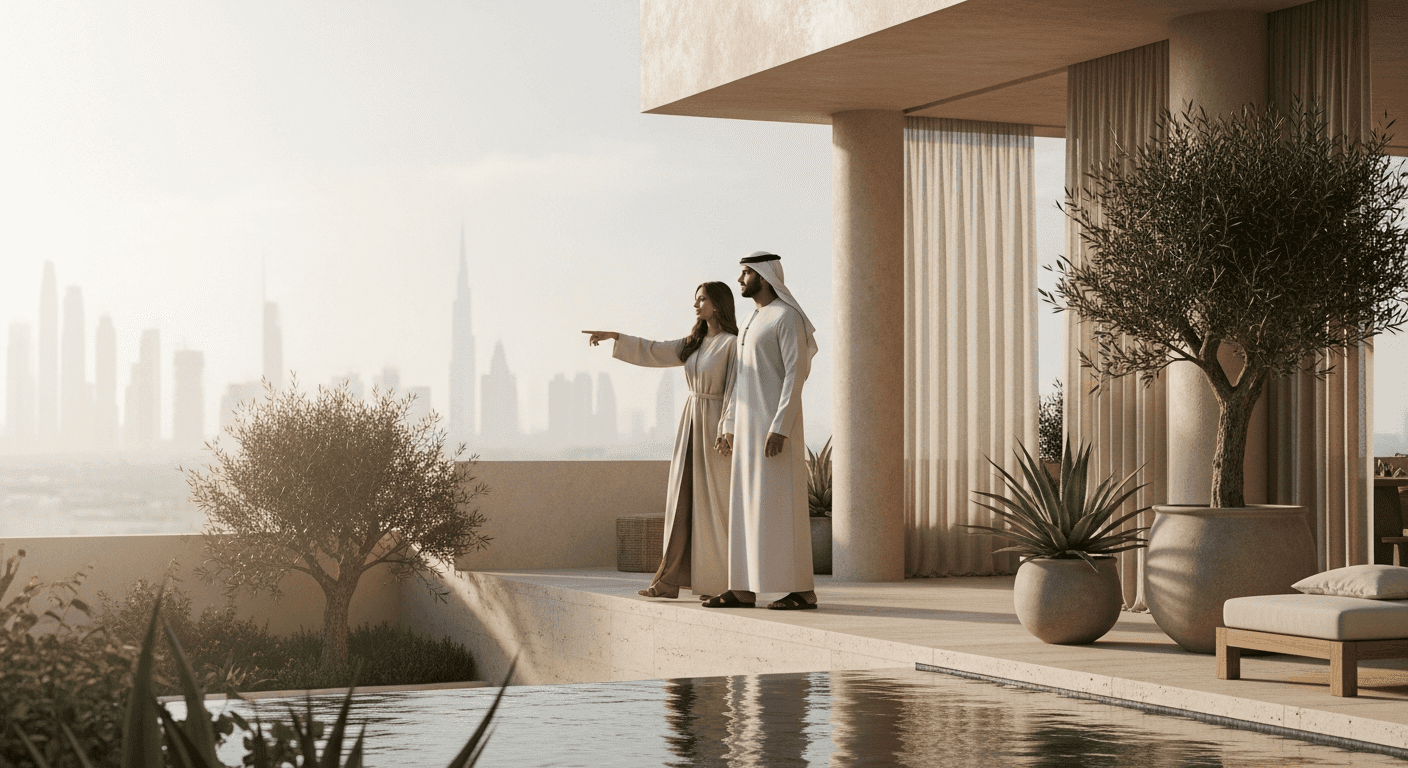
Off-Plan vs. Ready: A Practical Dubai Buying Guide
The definitive choice for Dubai property buyers: off-plan potential versus the certainty of a ready home. I'll break down the real costs, risks, and rewards of each path to help you decide.

It's the first, and most fundamental, question every person looking to buy property in Dubai must answer. Do you buy off-plan, investing in a vision of the future straight from a developer? Or do you buy a ready property, a tangible asset that exists today on the secondary market? There is no single correct answer, but there is a correct answer for *you*. Your timeline, your budget, your appetite for risk, and your ultimate goal — whether a home or an investment, will dictate the right path. As someone who navigates these deals daily, I see clients weigh this choice constantly. My goal here is not to declare a winner, but to arm you with the practical knowledge to make your own informed decision.
Here’s a breakdown of what I'll cover in this guide:
- The core proposition: Future value vs. Present certainty.
- Cost structures: A line-by-line breakdown for both off-plan and ready properties.
- Timelines and access: When you get the keys and what happens before.
- Risk and reward profiles: Developer risk, market risk, and potential returns.
- Financing options: Mortgages, developer payment plans, and cash.
- The end-user vs. Investor lens: How your primary goal changes the entire equation.
- My final verdict: A framework to help you choose the right path for your circumstances.
The Fundamental Choice: Future Value vs. Present Certainty
At its heart, the `off-plan vs secondary market` debate is a choice between two different value propositions. Buying a Dubai off plan property is an act of faith in a developer and in the future of a specific location. You are buying a concept, a floor plan, and a set of computer-generated images. You are paying for the promise of a brand-new asset that will be delivered in two to four years, with the hope that its value will have increased by the time you get the keys. The appeal is rooted in potential: the potential for capital appreciation during construction, the potential for a modern home with the latest amenities, and the potential to secure a property with a more manageable, staggered payment structure.
Conversely, buying a ready property Dubai is a transaction grounded in the present. It’s about certainty. You can walk through the exact apartment or villa. You can stand on the balcony and see the actual view. You can touch the kitchen countertops, inspect the quality of the finishing, and feel the atmosphere of the community. You know exactly what you are getting, where it is, and what condition it's in. The transaction is faster, and the utility is immediate — you can move in or rent it out the day after the title deed is in your name. You are buying a known quantity at today's market price.
This distinction is more than just financial; it's psychological. The off-plan journey is one of anticipation and patience. It involves tracking construction updates and trusting a process over a long period. Many buyers, especially those new to Dubai, find this abstraction difficult. The ready property journey is more direct and tangible. It provides the security of seeing and touching your investment. At Gaia Living, we guide clients through both paths, and the first step is always to clarify their comfort level. Are you a person who needs to see it to believe it, or are you comfortable investing in a well-researched blueprint from a trusted developer like Emaar Properties or Nakheel? Answering that question honestly is the starting point for everything that follows.
Deconstructing the Costs: Off-Plan vs. Secondary Market
This is where the theoretical choice becomes a real-world calculation. The cost structures for buying off-plan and ready properties are significantly different, and understanding them is critical. Many buyers are drawn to off-plan because the initial outlay appears smaller, but it's crucial to compare the total, all-in costs for both scenarios. Let's break it down with a realistic example: a property with a sale price of AED 2,000,000.
First, let's look at the typical `buying off plan Dubai costs`. One of the biggest advantages is that the buyer does not pay the 2% real estate agency commission; this is covered by the developer. This is a significant saving upfront.
Worked Example: AED 2M Off-Plan Property
- Purchase Price: AED 2,000,000
- Booking Fee / Down Payment (10-20%): Let's assume 20%, so AED 400,000 is due upon signing the Sale and Purchase Agreement (SPA).
- Dubai Land Department (DLD) Fee (4% of SPA): AED 80,000
- Oqood (Initial Registration) Fee: Approximately AED 5,250 (this registers the off-plan sale with the DLD).
- Developer Admin Fees: This can vary, but let's budget AED 5,000.
- Agency Fee: AED 0 (Paid by the developer)
Total Upfront Cost (Off-Plan): ~AED 490,250
The remaining AED 1,600,000 of the property's price is then paid in instalments according to the developer's payment plan, typically linked to construction milestones (e.g., 10% on 20% completion, 10% on 40% completion, etc.), with a final chunk due on handover.
Now, let's compare this to buying a ready property on the secondary market for the same price. Here, you have more fees to consider, and if you're using a mortgage, the bank's requirements come into play.
Worked Example: AED 2M Ready Property (with mortgage)
- Purchase Price: AED 2,000,000
- Mortgage Down Payment (20% for residents): AED 400,000 (As per Central Bank of the UAE regulations, non-residents often need 25% or more).
- Dubai Land Department (DLD) Transfer Fee (4% of price): AED 80,000
- Real Estate Agency Fee (2% of price): AED 40,000
- VAT on Agency Fee (5%): AED 2,000
- Trustee Office Fee: Approximately AED 4,200 (for properties over AED 500k).
- Developer No Objection Certificate (NOC) Fee: Varies widely, from AED 500 to AED 5,000. Let's budget AED 1,500.
- Mortgage Registration Fee (0.25% of loan amount): 0.25% of AED 1.6M loan = AED 4,000.
- Bank Fees (Valuation & Processing): Approximately AED 5,000.
Total Upfront Cost (Ready Property): ~AED 532,700
As you can see, the initial cash required for the ready property is higher, primarily due to the 2% agency fee and various administrative and bank charges. For a cash buyer, the mortgage-related fees disappear, but the DLD, agency, trustee, and NOC fees remain. The key takeaway is that while off-plan seems cheaper upfront due to the payment plan, the total government and administrative fees are broadly similar. The real difference lies in who pays the agent and how the bulk of the property's value is paid — in stages over years, or largely upfront through a mortgage or cash.
Timelines, Handover, and Getting the Keys
Beyond the cost, the timeline to possession is a major differentiating factor. The process and duration for acquiring an off-plan property versus a ready one are worlds apart. For an off-plan purchase, the journey begins the moment you pay a booking fee to reserve a unit. This is followed by the signing of the Sale and Purchase Agreement (SPA) and paying the DLD fees to get your Oqood certificate, which is the official proof of your registered ownership of the property under construction.
From there, it's a waiting game. The timeline is dictated by the developer's construction schedule, which can range from two to four years, or sometimes longer for very large master-planned communities like Dubai South or Dubai Hills. During this period, you will make instalment payments tied to construction progress, which is verified by RERA. For example, a payment might be due when the developer completes 40% of the project, then another at 60%, and so on. The final, and usually largest, single payment is due upon handover, when the building is complete, you've conducted your inspection (snagging), and you are ready to receive the keys. While Dubai's regulatory environment is strong, construction delays can and do happen. Reputable developers typically have a 12-month grace period built into the SPA. Choosing a developer with a long and consistent history of on-time delivery, such as Meraas, is one of the best ways to mitigate this risk.
In stark contrast, the timeline for a ready property is swift and predictable. From the moment a buyer and seller agree on a price and sign a Memorandum of Understanding (MOU), the clock starts ticking. The entire process typically takes between 30 and 60 days. The key steps include:
- Mortgage Pre-Approval: The buyer secures financing from a bank (if not a cash buyer).
- Property Valuation: The bank conducts a valuation to confirm the property's worth.
- Final Offer Letter: The bank issues the final loan agreement.
- Apply for NOC: The seller applies for the No Objection Certificate from the master developer to confirm there are no outstanding service charges.
- Transfer Appointment: Buyer and seller (along with their agents and the bank's representative) meet at a DLD-approved Trustee Office.
- Final Payments & Transfer: The final payments are made via manager's cheques, and the DLD issues the new Title Deed in the buyer's name on the same day.
This speed is one of the primary `advantages of ready property Dubai`. If you are relocating to Dubai and need a home for your family, or you're an investor who wants to start generating rental income immediately, you simply cannot afford to wait several years for an off-plan project to complete. The ability to inspect a property in a community like Jumeirah Beach Residence on a Monday, make an offer on Tuesday, and potentially have the keys within six weeks is a powerful motivator for many buyers.
The Risk & Reward Profile of Each Path
Every investment involves a balance of risk and reward, and the choice between off-plan and ready property is a classic example of this principle. The potential for higher rewards with off-plan property comes hand-in-hand with a different set of risks compared to the more stable, predictable nature of the secondary market.
Let's start with the risks of buying off-plan. The most cited concern is Developer Risk. This is the risk that the project is significantly delayed or, in a worst-case scenario, cancelled. It's important to state that Dubai's real estate regulations, overseen by RERA and the Dubai Land Department, are designed to heavily mitigate this. All buyer payments must be held in a project-specific, RERA-approved escrow account, and funds can only be released to the developer upon proving construction progress. This prevents developers from using your money for other purposes. However, delays can still impact your financial planning. The second risk is Market Risk. If you buy at the peak of a cycle and the market softens over the 3-year construction period, you could end up with a property worth less than you paid upon handover. Finally, there's Specification Risk — the risk that the final finishing, view, or build quality doesn't quite match the glossy brochure and pristine show home. This is why developer reputation is paramount.
The rewards, however, are what make the `Dubai off plan property` market so compelling. The primary driver is Capital Appreciation. By buying at the initial launch price, you are positioned to benefit from any increase in market value during the construction phase. In a rising market, it's not uncommon for early buyers in successful projects in areas like Emaar Beachfront or Creek Harbour to see the value of their asset increase by 20-30% or more by the time of handover. Another huge reward is the Payment Plan, which provides financial use. You are controlling a valuable asset while having only paid a fraction of its total cost. This allows investors to enter the market without needing a large lump sum of capital or a mortgage.
Off-plan sells you a story about the future; a ready property gives you the keys to the present. Your choice depends on which book you want to read.
Ready properties have a different risk/reward profile. The risks are more tangible. An older property might have Maintenance Issues like outdated A/C systems or plumbing problems, which a thorough inspection can help identify but not always eliminate. You also face the Opportunity Cost of having missed the construction-phase appreciation. You are buying at the current market value, which includes the profit made by the original owner or off-plan investor. However, the rewards are equally tangible. The biggest is Certainty. What you see is exactly what you get. You can assess the build quality, the natural light, the noise levels, and the overall feel of the building and community, like in established neighbourhoods such as Arabian Ranches or Downtown Dubai. The second major reward is Immediate Returns. The day the title deed is in your name, you can list the property on the rental market. This means you can calculate your net rental yield with a high degree of accuracy from day one, making it a more predictable, income-generating investment.
Financing Your Purchase: Mortgages vs. Developer Plans
The method of financing is another crucial dividing line between the off-plan and ready property markets. How you pay for your property dramatically influences your cash flow, your level of risk, and your overall investment strategy.
For off-plan properties, the dominant financing tool is the Developer Payment Plan. These plans are a core part of the marketing for new launches and are a huge draw for buyers. They allow you to pay for the property over a period of several years, directly to the developer, without involving a bank. A common structure is a “60/40” plan: you pay 60% of the property's price in instalments during the construction period, and the final 40% is due upon handover. Another popular variant is the Post-Handover Payment Plan (PHPP). For example, a “60/40” plan where the 40% is payable over 2-3 years *after* handover. This is an incredibly powerful tool, as it allows you to take possession of the property, rent it out, and use the rental income to help pay off the remaining balance. These plans effectively mean the developer is acting as your lender for a period, and it makes the purchase accessible to a much wider range of investors who may not have the full purchase price or mortgage deposit ready.
Getting a traditional mortgage for an off-plan property is possible, but it's more complex and less common. Banks are generally hesitant to lend against an asset that isn't built yet. Some banks have partnerships with major developers like Emaar and will offer financing, but often only when the project is, say, 50-70% complete. For the most part, off-plan buyers should assume they will be using the developer's payment plan and will need to have the funds for the final handover payment ready, either in cash or by securing a mortgage closer to the completion date.
For the `ready property Dubai` market, the situation is reversed. Mortgages are the primary financing method. The process is well-established and efficient. For a UAE resident buying their first home, banks will typically lend up to 80% of the property's value (a 20% down payment). For non-residents, this is usually capped at 75% loan-to-value, and for properties over AED 5 million, the minimum down payment increases. The first step for any serious buyer is to get a mortgage pre-approval. This involves submitting your financial documents to a bank to get a clear picture of how much you can borrow. Having this pre-approval in hand makes you a serious contender when you make an offer on a property. The documentation needed is standard:
- Passport, Visa, and Emirates ID copies
- Salary Certificate from your employer
- Six months of personal bank statements showing salary credits
- Proof of address (e.g., a utility bill)
This clear and trodden path to financing provides security and predictability for buyers of ready properties. You know your budget, your monthly payments, and the total cost of borrowing before you even commit to a specific home.
The End-User vs. The Investor: Different Goals, Different Choices
Ultimately, the right choice between off-plan and ready hinges on your answer to one simple question: what is this property for? The ideal choice for an investor seeking financial returns is often very different from the ideal choice for a family looking for a home to live in. At Gaia Living, we always begin our advisory process by understanding this core motivation.
Let's consider the End-User: a couple or family planning to live in the property. For this buyer profile, certainty and immediate usability are paramount. They are buying a home, not just a financial asset. The `advantages of ready property Dubai` are therefore extremely compelling. A family relocating to Dubai needs a place to live *now*, not in three years. They need to assess school runs, proximity to parks, and the general safety and atmosphere of a community. Being able to visit a ready villa in Jumeirah Golf Estates or an apartment on Palm Jumeirah allows them to make a life decision, not just a financial one. They can see if their furniture will fit, check the water pressure, and meet the neighbours. This emotional and practical due diligence is only possible with a physical, existing property.
That isn't to say off-plan is never right for an end-user. For those with a flexible timeline — perhaps they are already renting happily and can afford to wait, off-plan can be an opportunity to get a brand-new home, often with more modern amenities and design than older stock, and potentially at a more attractive price point. Imagine being able to select a unit in a new tower in Business Bay with a specific layout and view that perfectly suits your needs. For a patient end-user, this can be a great way to secure their dream home before it even exists.
Now, let's look at the Investor. Their primary goal is return on investment, which can come from two sources: capital appreciation (the property's value increasing) and rental yield (income from rent). For an investor focused on capital appreciation, especially one with a higher risk tolerance, the `Dubai off plan property` market is often the preferred playground. The use of developer payment plans creates immense use. By putting down just 20-30% of the property's value during construction, they control a 100% asset. If the market rises 20% by handover, their return on the cash they've actually invested is magnified significantly. The strategy for many is to buy in a high-demand launch, wait for the value to increase, and then sell the contract on to another buyer before handover (a practice known as flipping, which is subject to developer and DLD permissions and fees).
For an investor focused on rental yield and stable, immediate income, a ready property is almost always the superior choice. They can analyze the actual, current rental rates in a building or community, subtract the known service charges and maintenance costs, and calculate a precise net yield before they even make an offer. An investor could buy a two-bedroom apartment in a high-demand rental area like Dubai Marina, have a tenant in place within a month of the transfer, and enjoy positive cash flow from day one. This strategy is less speculative and provides a steady, predictable income stream, which is highly attractive to more conservative investors or those looking to fund their own lifestyle in Dubai.
My Verdict: How to Choose the Right Path for You
After walking through the costs, timelines, risks, and motivations, the path forward should be clearer. There is no universal "better" option. The off-plan market and the secondary market serve different needs, and both can be the right choice under the right circumstances. As an advisor, my role is to help clients match their personal situation to the right strategy.
In my view, the decision boils down to an honest assessment of three key factors:
- Your Timeline & Urgency: If you need a home to live in within the next six months, the choice is made for you. A ready property is your only viable path. If you have the flexibility to wait two to four years, the off-plan market becomes a serious option.
- Your Risk Tolerance & Financial Position: Are you comfortable with the inherent market and construction risks of an unbuilt asset in exchange for potentially higher capital gains? Do you prefer the use of a payment plan over a traditional mortgage? If so, off-plan is a strong contender. If you value certainty, want to see exactly what you're buying, and prefer a straightforward, bank-financed transaction, the secondary market is your safe harbour.
- Your Primary Goal (Home vs. Investment): If you are buying a home for your family, the emotional and practical benefits of a ready property are hard to overstate. The ability to experience a community firsthand is invaluable. If you are a pure investor, the question becomes more nuanced. For aggressive, growth-focused investors, the use and appreciation potential of a well-chosen off-plan project from a top-tier developer is unmatched. For income-focused investors, the immediate cash flow from a tenanted or easily rentable ready property is the more logical and prudent choice.
Key takeaway: My final advice is this: For most end-users, especially families and those new to Dubai, a ready property offers a level of certainty and practicality that is usually worth the premium. For investors, the choice is strategic. If you have a high risk tolerance and a medium-term horizon, a carefully selected off-plan property can generate superior returns. If your priority is stable, immediate income, a ready property in a mature, high-demand community is the smarter play. Whichever path you choose, work with an experienced advisor who understands the intricacies of both markets and can provide transparent, unbiased guidance tailored to you.
Sources
- Dubai Land Department (DLD): https://dubailand.gov.ae/
- Central Bank of the UAE (CBUAE): https://www.centralbank.ae/
- UAE Government Portal: https://u.ae/
Questions, answered
- Is it better to buy off-plan or ready property in Dubai?
- It depends entirely on your goals. Off-plan offers potential for higher capital appreciation and attractive payment plans, suiting investors with a higher risk tolerance. Ready properties provide certainty and immediate rental income, which is often better for end-users or conservative investors.
- What are the main risks of buying off-plan property in Dubai?
- The primary risks are project delays, the final quality not matching the brochure, and market risk (the property's value could fall before completion). You can mitigate these by choosing reputable developers with a strong track record and understanding that Dubai's RERA regulations and mandatory escrow accounts offer significant buyer protection.
- Are there hidden costs when buying a ready property in Dubai?
- The costs are well-defined but numerous. Beyond the price, you must budget for a 4% DLD transfer fee, 2% agency fee, a trustee office fee (around AED 4,200), an NOC fee from the developer (AED 500-5,000), and mortgage-related fees if applicable. A good agent will provide a complete, line-by-line cost statement upfront.
- Can I get a mortgage for an off-plan property in Dubai?
- Yes, but it's less common and typically banks will only lend when the property is near completion. Most off-plan purchases are financed through developer payment plans. For ready properties, mortgages are the standard financing route, with banks offering up to 80% loan-to-value for resident first-time buyers.
- Do I pay agency fees when buying an off-plan property directly from a developer?
- No, when you buy a new off-plan property, the developer pays the agent's commission. As a buyer, you typically do not pay any agency fees. For ready properties on the secondary market, the buyer is expected to pay an agency fee of 2% of the purchase price, plus 5% VAT.
- What happens if a developer delays an off-plan project in Dubai?
- RERA regulations provide a framework for this. Typically, a developer has a grace period (often 12 months) after the anticipated completion date. If delays exceed this, the buyer may be entitled to compensation or, in extreme cases of non-performance, can file a case to terminate the contract and seek a refund through the Dubai courts.

Daniel covers both sides of the deal — how to buy well and how to sell for more. He's obsessed with process, timelines, and the fees nobody warns you about.
Related stories
Managing Multiple Offers: A Dubai Seller's Playbook
Receiving multiple offers on your Dubai property is an excellent problem to have, but handling it incorrectly can cost you time and money. Here’s my strategic playbook for managing competitive bids to secure the best possible outcome.

Gifting Property to Family in Dubai
Thinking of transferring a Dubai property to a family member? Learn how to navigate the DLD's rules for gifting to first-degree relatives and significantly reduce your transfer costs.
Dubai 2040: A Land Use and Investment Blueprint
A deep dive into the Dubai 2040 Urban Master Plan, analysing specific zoning changes and land use designations to reveal the next generation of property investment hotspots.
Echoes, in your inbox
One thoughtful email a month. Market insight, new launches, no spam.