

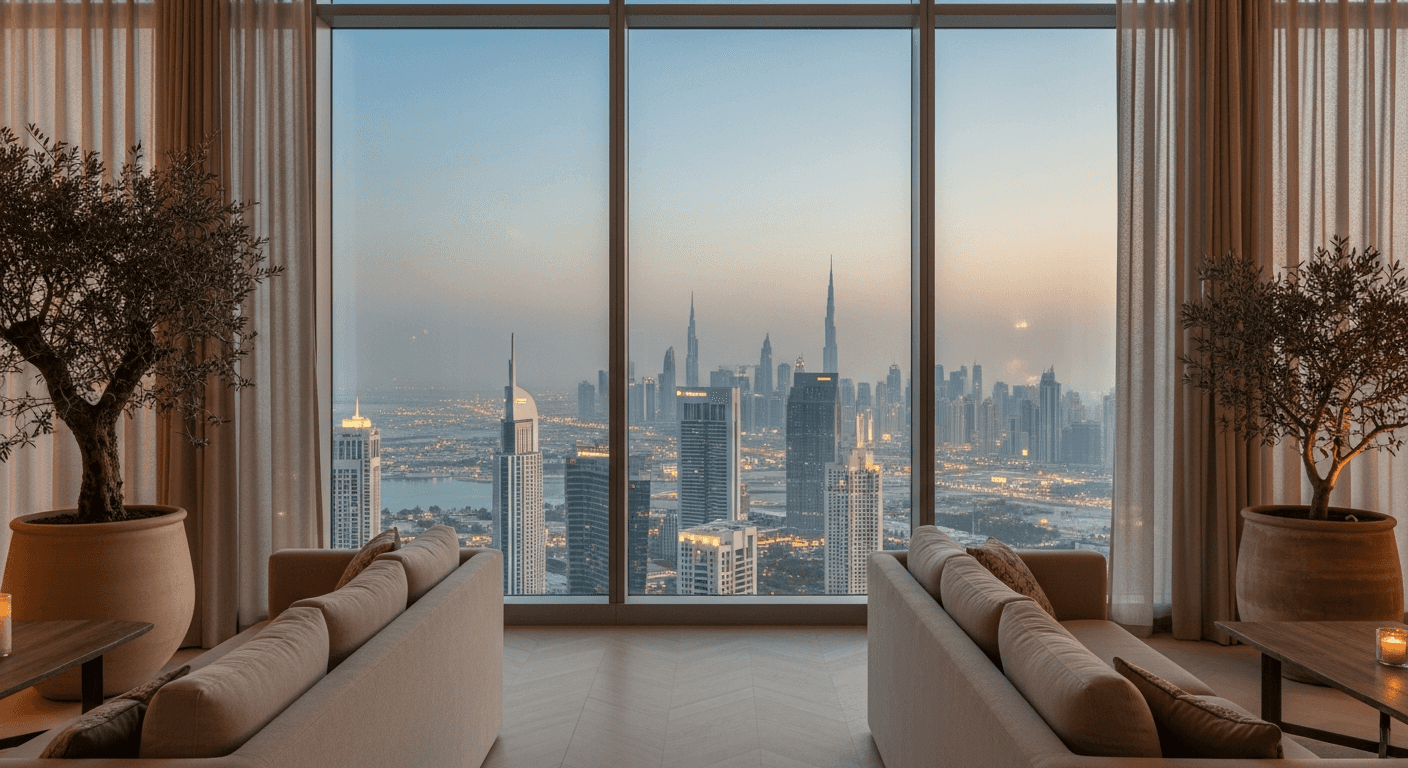
Niche Sectors: The New Map of Dubai Property Demand
Beyond the prime-location headlines, Dubai's emerging economic sectors are quietly creating hyper-localized property markets. As Head of Research, I argue that understanding this link is the key to identifying future growth.

For the past decade, the story of Dubai's property market has often been told through the lens of iconic mega-projects and prime waterfront postcodes. Yet, beneath this familiar narrative, a more granular and, in my view, more significant trend is taking hold. The city's focused economic diversification is creating powerful, localized demand engines that are reshaping the real estate map district by district.
Here's what we'll explore in this report:
- The fundamental link between Dubai's economic strategy and its property market's future.
- The Tech Effect: How hubs like Dubai Internet City are fuelling demand in nearby communities.
- Healthcare & Wellness: The growing real estate ecosystem around Dubai Science Park and Dubai Healthcare City.
- Creative Economies: Analyzing the property trends driven by d3 and media production hubs.
- The Aerotropolis: The immense, long-term impact of Dubai South and its aviation-logistics nexus.
- The DIFC Template: What the city's premier financial centre teaches us about successful zone-based development.
- A practical investor framework for capitalizing on these niche opportunities.
- A forward look at the next wave of sectors poised to influence property demand.
The New Geography of Demand
Dubai's economic playbook, particularly the ambitious Dubai Economic Agenda (D33), is not just an abstract policy document; it's a blueprint for the future of the city's real estate market. The strategy aims to double the size of Dubai's economy over the next decade by focusing on high-growth, knowledge-based sectors. This isn't about building more of the same; it's about attracting specific industries and, crucially, the specialized global talent required to power them. This deliberate cultivation of economic clusters — in technology, finance, design, healthcare, and logistics, is creating a polycentric city, where multiple economic hubs act as gravitational centers for employment and, consequently, for housing.
This marks a profound shift from the market dynamics of the past. Previously, demand was often broad and sentiment-driven, tied to macro factors like oil prices or general global investor appetite. An investor might have bought an apartment in a popular area like Dubai Marina simply because it was a well-known, desirable address. Today, while prime locations certainly retain their appeal, a more sophisticated dynamic is at play. The decision-making process for a growing number of residents is becoming hyperlocal. A fintech engineer wants a short commute to DIFC. A biomedical researcher looks for a family home near Dubai Science Park. A creative director wants to live in a community that reflects the aesthetic of Dubai Design District (d3).
This creates what I call 'sticky' demand. It's resilient because it's tied to employment and lifestyle, not just speculation. When a critical mass of high-skilled professionals from a single industry clusters around a workplace, it generates a consistent and predictable need for housing nearby. This tenant pool is often well-qualified and stable, making the surrounding residential districts attractive propositions for buy-to-let investors. Over time, as these professionals put down roots — supported by initiatives like the Golden Visa, they transition from renters to buyers, creating a secondary wave of demand that drives capital appreciation. Understanding this direct line between economic sector growth and localized property demand is, in my professional opinion, the single most important skill for navigating the Dubai market today.
The Tech Effect: Code, Community, and Condos
 Featured project
The most visible example of this trend is the powerful `Dubai tech sector property demand`. For over two decades, the ecosystem anchored by Dubai Internet City (DIC), Dubai Media City, and the surrounding TECOM Group free zones has been a magnet for global technology firms and talent. What began as a strategic initiative has matured into a thriving hub, attracting everyone from multinational corporations to nimble startups. This concentration of well-compensated, highly skilled professionals has had a direct and measurable impact on the residential real estate in its immediate vicinity.
The demographic drawn to the tech sector — often young, international, and valuing convenience, has a distinct set of housing preferences. Their priorities typically include modern apartments (studios and one-bedrooms are particularly popular), high-quality building amenities like gyms and pools, and a vibrant local community with walkable access to cafes, restaurants, and retail. Above all, they value proximity to the office. This has created a clear hierarchy of demand in the areas surrounding the DIC/DMC cluster. The most direct beneficiaries have been communities like The Greens and The Views, master-planned by Emaar Properties with exactly this demographic in mind. Their mature landscaping, community feel, and direct access to the tech hubs keep them perennially popular, commanding stable rents and strong occupancy.
Just beyond this core, areas like Barsha Heights (formerly TECOM) offer a more affordable but equally convenient option, with a vast stock of apartment buildings that directly serve the local workforce. Further out, but still within a very manageable commute, the `specific industry property growth` effect is clearly visible in the explosive development of JVC (Jumeirah Village Circle). Its lower entry price point for both sales and rentals has made it a go-to for junior to mid-level tech employees. An investor purchasing a one-bedroom apartment in JVC can often achieve a gross rental yield of 7-8%, a compelling figure driven by the constant influx of tenants working in the nearby tech and media hubs. Developers like Binghatti and Azizi have capitalized on this, delivering thousands of units tailored to this market segment. The pattern is clear: the economic gravity of the tech cluster creates concentric circles of property demand, with different price points and offerings at each level.
Healthcare and a Mandate for Wellness
Another powerful, though perhaps less discussed, driver of localized property demand is Dubai's rapidly expanding healthcare and life sciences sector. The `healthcare innovation real estate impact` is most evident around two key hubs: the established Dubai Healthcare City (DHCC) near Oud Metha and the fast-growing Dubai Science Park (DSP) in Al Barsha South. These zones are central to Dubai's goal of becoming a leading destination for medical treatment and research, attracting a highly specialized workforce of doctors, surgeons, lab technicians, pharmaceutical executives, and researchers.
The housing needs of this demographic differ significantly from the tech crowd. Healthcare professionals are often more established in their careers, frequently moving with families. This translates into demand for larger properties — two, three, and four-bedroom apartments or villas, in communities that offer family-friendly amenities and proximity to good schools. For those working in DHCC, this has historically meant looking to established neighbourhoods in Bur Dubai or across the creek in Deira. However, the development of newer master communities a short drive away, like Creek Harbour by Emaar, has provided a premium, modern alternative that appeals to senior medical staff.
The growth of Dubai Science Park, which focuses on R&D and the life sciences, has had a transformative effect on Al Barsha South and its surroundings. The most significant beneficiary has been Dubai Hills Estate, a master-planned community by Emaar Properties. Its mix of high-end apartments, townhouses, and luxury villas, combined with world-class amenities like the Dubai Hills Mall, a championship golf course, and excellent schools, makes it the perfect address for the senior executives and medical specialists working at DSP. Just next door, communities like Arjan and Motor City offer more accessibly priced apartments and townhouses, capturing the demand from a broader range of healthcare sector employees. For an investor, buying a two-bedroom apartment in Arjan presents a clear value proposition: catering to the steady stream of professionals from the adjacent Science Park. Let's look at the numbers for such a purchase:
Sample Upfront Cost for a 2-Bed Apartment in Arjan - Property Purchase Price: AED 1,500,000 - Down Payment (20% for expatriate mortgage): AED 300,000 - Dubai Land Department (DLD) Transfer Fee (4% of price): AED 60,000 - DLD Admin Fee: AED 580 - Real Estate Agency Fee (2% of price + 5% VAT): AED 31,500 - Mortgage Registration Fee (0.25% of loan amount of AED 1,200,000): AED 3,000 - Property Trustee Registration Fee: Approx. AED 4,200 (incl. VAT) - Bank Mortgage Arrangement & Valuation Fees: Approx. AED 8,000 - Total Estimated Upfront Cost: AED 407,280
This breakdown shows that the initial outlay is significant, but it's grounded in a solid investment thesis: owning an asset in a location with a clear, identifiable, and growing source of tenant demand.
The Creative Corridor: Design, Media, and Lifestyle
Dubai's ambition to be a global hub for creativity and culture is another key driver of `creative economy property trends Dubai`. This isn't just about museums and galleries; it's an economic strategy centered on high-value industries like design, fashion, art, and media production. The physical epicenters of this movement are the Dubai Design District (d3), Dubai Production City, and Dubai Studio City. Each of these zones attracts a specific sub-set of creative professionals, and their presence is sculpting the character and demand profile of nearby residential areas.
D3 is the most high-profile of these hubs. It has successfully curated a vibrant community of fashion designers, architects, and marketing agencies. The workforce here is style-conscious and places a high value on aesthetics, community, and lifestyle. While d3 itself has limited residential offerings, its gravitational pull is immense, driving significant demand in adjacent and nearby districts. The most obvious beneficiary is Business Bay, with its forest of modern residential towers. However, for those seeking a more curated lifestyle experience that matches the d3 ethos, communities developed by Meraas like City Walk and even Bluewaters Island are particularly appealing. These areas offer high-end, design-led apartments and a pedestrian-friendly environment rich with boutiques and independent cafes, perfectly aligning with the tastes of the creative class.
Meanwhile, Dubai Production City and Dubai Studio City, located further inland, form a critical hub for the film, television, and print media industries. The thousands of people who work in these zones create a steady demand for housing in the surrounding areas. This has been a primary catalyst for the growth of communities like Jumeirah Village Circle (JVC), Dubai Sports City, and Damac Hills and Damac Hills II. These neighborhoods offer a wide variety of affordable to mid-range apartments and townhouses that are ideal for the diverse workforce in the production sector, from camera operators and editors to producers and marketing staff. An investor who understands that a new soundstage opening in Studio City will directly translate into more tenants looking for one-bedroom apartments in JVC is an investor who is thinking strategically. This is the essence of tracking `specific industry property growth`.
“The lazy capital of the past, which bought 'anywhere in Dubai' and waited for the tide to rise, is being replaced by intelligent capital that maps economic policy to specific postcodes.”
The Aerotropolis Effect: Dubai South's Long Game
Perhaps the most ambitious and long-term example of a sector-driven real estate story is the development of Dubai South. This 145-square-kilometer master-planned city, anchored by the expanding Al Maktoum International Airport (DWC), is the physical embodiment of Dubai's future as a global hub for aviation, logistics, and trade. The 'Aerotropolis' concept — a city where the layout, infrastructure, and economy are centered on an airport, is being realized here on a scale unmatched anywhere in the world. The recent confirmation of the government's plans to expand DWC to a capacity of 260 million passengers and concentrate all of the emirate's airline operations there is not just an aviation story; it's the single biggest catalyst for real estate demand in the southern corridor for the next two decades.
The ecosystem of Dubai South is designed to be self-sustaining. Its Logistics District leverages proximity to Jebel Ali Port to create an unparalleled sea-to-air transport corridor. Its Aviation District hosts MROs (Maintenance, Repair, and Overhaul) and aerospace manufacturing. And its residential district, along with the legacy site of Expo City, is designed to house the hundreds of thousands of people who will eventually work here. This creates demand across the entire property spectrum. Senior aviation executives will look for high-end villas and townhouses, while logistics managers, cabin crew, and ground staff will require affordable, high-quality apartments. This creates a multi-layered investment opportunity.
The impact extends far beyond the boundaries of Dubai South itself. We are already seeing a ripple effect in established communities along the E311 and E611 transport arteries. Areas like Al Furjan, developed by Nakheel, are experiencing renewed interest due to their strategic location between the old and new centers of Dubai. The ambitious relaunch of Palm Jebel Ali, also by Nakheel, is timed perfectly to capitalize on the southward shift of the city's economic center of gravity. For investors with a long-term horizon, this is where the most significant potential for capital appreciation lies. Buying land or an off-plan villa in this corridor is a bet on the full realization of Dubai's 'Aerotropolis' vision.
Key Factors Underpinning the Dubai South Ecosystem:
- Al Maktoum Airport (DWC) Expansion: A government-mandated project to create the world's largest airport, consolidating all Dubai air traffic.
- Proximity to Jebel Ali Port: Creating a smooth, integrated logistics hub that is one of the most efficient in the world.
- Expo City Legacy: The repurposed Expo 2020 site is now a human-centric city and economic hub in its own right, adding to the critical mass of the area.
- Dedicated Economic Zones: Specialized districts for logistics, aviation, and commerce attract major international companies.
- Infrastructure Investment: Massive public spending on new metro lines (the Route 2020 extension is just the start) and road networks is making the area more accessible.
The DIFC Template: A Study in Success
While we focus on emerging sectors, it's instructive to analyze the original and most successful example of a sector-specific real estate ecosystem in Dubai: the Dubai International Financial Centre (DIFC). Established in 2004, DIFC is more than just a collection of office buildings; it's a 'city within a city' with its own internationally benchmarked legal system, regulator, and registrar of companies. This unique framework has been instrumental in attracting the world's leading banks, law firms, and wealth management companies, creating one of the highest concentrations of high-net-worth professionals in the region.
The real estate market in and around DIFC is a direct reflection of its workforce. The demand is for ultimate convenience, luxury, and prestige. This has led to the development of world-class residential towers within the DIFC's 'Gate' district itself, such as the Index Tower and Central Park Towers, as well as plenty of branded residences. For the financiers, lawyers, and consultants who work punishing hours, the ability to walk from their desk to their apartment, or to a Michelin-starred restaurant, is not a luxury but a necessity. This demand for hyper-convenience gives properties within DIFC's boundaries a significant rental and price premium over comparable properties elsewhere.
The influence of DIFC extends to the immediately surrounding areas. The continued strength of the Downtown market, for instance, is inextricably linked to its proximity to the financial center. Many senior executives who work in DIFC choose to live in the premium towers around the Burj Khalifa and Dubai Mall. This symbiotic relationship demonstrates the power of a successful economic hub to anchor real estate values in its vicinity. For investors, the DIFC market offers a different proposition compared to the high-yield plays in emerging areas. While gross rental yields might be more compressed (typically in the 4-6% range) due to very high capital values, the investment is underpinned by blue-chip tenants, low vacancy rates, and the potential for steady, long-term asset appreciation. It serves as the perfect case study for the value that can be unlocked by creating a world-class, sector-specific ecosystem.
Investor Strategy: How to Play the Niches
Understanding these localized demand drivers is one thing; translating that knowledge into a coherent investment strategy is another. At Gaia Living, our advice to clients is increasingly nuanced, moving away from broad market generalizations towards a district-specific, thesis-driven approach. The key is to first define your investment objective — are you primarily seeking rental income (yield) or long-term price increases (capital growth)? The answer will guide you to different sectors and different locations.
For an investor focused on maximizing rental yield, the strategy often involves targeting more affordable communities that serve as catchment areas for large employment hubs. A prime example is buying a studio or one-bedroom apartment in JVC or Arjan. These areas benefit from the constant tenant demand from the tech, media, and science parks but have a lower purchase price compared to prime districts. This mathematical relationship between a lower denominator (purchase price) and a stable numerator (rental income) results in higher gross yields, often exceeding 7%. The trade-off is that these areas have a large supply pipeline, which can temper rapid capital appreciation. The investment is a cash-flow play, reliant on maintaining high occupancy.
Conversely, an investor focused on capital growth might take a longer-term view, targeting areas poised to benefit from major infrastructure projects or the maturation of a new economic zone. Buying an off-plan townhouse in a well-planned sub-community within Dubai South fits this profile. The initial rental yield may be modest, but the investment thesis is built on the future transformation of the entire district as the airport expands and the population grows. Similarly, buying a premium apartment in a new tower overlooking the expansion of Dubai Healthcare City Phase 2 is a bet on the increasing prestige and demand in that specific node. This strategy requires patience and a belief in the city's long-term strategic vision.
Regardless of the strategy, due diligence becomes paramount. It's no longer enough to know the city; you need to know the district. At Gaia Living, we guide our clients through a rigorous checklist.
Due Diligence Checklist for Niche Area Investing
- Verify the Anchor: Confirm the status and growth plans of the target employment hub (e.g., DIFC, DSP, Dubai South). Is it expanding? Are new companies moving in?
- Analyze Connectivity: Check current and future transport links on the Roads & Transport Authority (RTA) website. A future metro station can be a game-changer for a community's value.
- Assess the Master Plan: For newer communities, study the master developer's plan. Is there a good mix of residential, retail, and green space? Does the developer, be it Emaar, Nakheel, or another, have a strong track record of delivery and quality?
- Investigate Service Charges: Obtain the service charge history for the specific building or community. High or rapidly increasing charges, which can be checked on the Dubai REST app, can significantly erode your net yield.
- Quantify Rental Demand: Work with an experienced brokerage like ours to get real-time data on current rental prices, demand levels, and vacancy rates for your target property type in that specific area.
The Next Frontier: Future Demand in Dubai Niche Areas
Looking ahead, the strategy of linking economic development to real estate will only intensify. The `future demand Dubai niche areas` will be shaped by the next wave of industries the city is actively cultivating. One clear area is the digital economy, encompassing everything from gaming and esports to AI and blockchain development. As Dubai attracts talent in these fields, we can anticipate the emergence of new residential preferences, perhaps favoring communities with cutting-edge digital infrastructure and collaborative living spaces.
Another sector to watch is advanced manufacturing and green technology. As Dubai pushes for sustainability and a circular economy, we may see demand coalesce around areas that champion these principles, like The Sustainable City, or in new industrial zones focused on green production. The government's focus on food security through agri-tech could similarly create a unique property ecosystem around vertical farms and research centers, likely located on the city's periphery.
The role of government policy in anchoring this talent cannot be overstated. The expansion and refinement of the Golden Visa program, which grants long-term residency to investors, entrepreneurs, and highly skilled professionals, is a critical piece of the puzzle. According to official UAE government portals, this visa provides a clear path for talented individuals to move beyond a transient mindset. It encourages them to see Dubai as a permanent home, to bring their families, and, ultimately, to invest in the property market. This policy directly supports the transition from a renter-dominated market to one with a healthier, more stable base of owner-occupiers.
The most successful property investors in Dubai over the next decade will be those who think like urban economists. They will look past the marketing brochures and study the city's economic agenda, mapping the flow of talent and industry to identify specific postcodes and communities where real, sustainable demand is being created. The monolithic market of the past is giving way to a dynamic collection of micro-markets, and navigating them requires a new level of insight and specialization.
## Sources - Dubai Land Department (DLD): dubailand.gov.ae - Dubai REST App Information: dubairest.gov.ae - UAE Government Portal (Golden Visa): u.ae - Dubai Economic Agenda (D33): dubai.ae - Central Bank of the UAE (Mortgage Regulations): centralbank.ae
Questions, answered
- Which areas are seeing property demand from Dubai's tech sector?
- Areas near Dubai Internet City and Dubai Media City, such as The Greens, Barsha Heights, and Jumeirah Village Circle (JVC), are popular. These communities offer a mix of modern apartments, amenities, and good connectivity, appealing to tech professionals.
- How does the healthcare sector impact Dubai real estate?
- Hubs like Dubai Healthcare City and Dubai Science Park create demand for nearby housing. This ranges from apartments in Arjan to family villas in Dubai Hills, catering to doctors, researchers, and executives who value proximity to their specialized workplaces.
- Is it a good investment to buy property near a Dubai free zone?
- It can be a very effective strategy. A large, concentrated workforce in a free zone creates a constant 'tenant pool' for nearby residential areas, which can lead to resilient rental demand and potential for long-term capital appreciation as the zone matures.
- What is the 'Aerotropolis' effect in Dubai South?
- The Aerotropolis concept refers to building a city-like ecosystem around a major airport. In Dubai South, the expansion of Al Maktoum International Airport is designed to create a massive hub for logistics, aviation, and commerce, which in turn drives demand for a wide spectrum of residential property in the surrounding area.
- What are the typical upfront costs when buying a property in Dubai?
- Beyond the property price, you should budget for a 20-25% down payment for a mortgage, a 4% Dubai Land Department (DLD) transfer fee, a 2% real estate agency fee, and various smaller administrative and mortgage registration fees. In total, these upfront costs typically amount to around 27-32% of the property's value.
- How is the Golden Visa influencing Dubai's property market?
- The Golden Visa program provides long-term residency for investors, entrepreneurs, and skilled professionals. This policy encourages them to view Dubai as a long-term home, shifting their mindset from renting to buying property and contributing to a more stable, owner-occupied market.

Amara translates DLD transaction data, supply pipelines, and macro signals into clear calls on where Dubai's market is heading. She writes the numbers most brokers only feel.
Related stories
Calculating ROI on Dubai Rental Upgrades
As a landlord in Dubai, you can't just follow trends. I'll show you how to calculate the precise ROI of minor property upgrades to genuinely increase your rental yield.
Off-Plan vs Ready: The Real Cost of Capital
I analyse the fundamental trade-off every Dubai investor faces: the lure of off-plan capital growth versus the security of immediate rental income from a ready property.
Beyond the Gates: Dubai's Boutique Villa Sanctuaries
I'm exploring the small, exclusive villa communities that offer a real sense of place, moving beyond the well-trodden path of Dubai's famous megaprojects to find homes with genuine character.
Echoes, in your inbox
One thoughtful email a month. Market insight, new launches, no spam.