

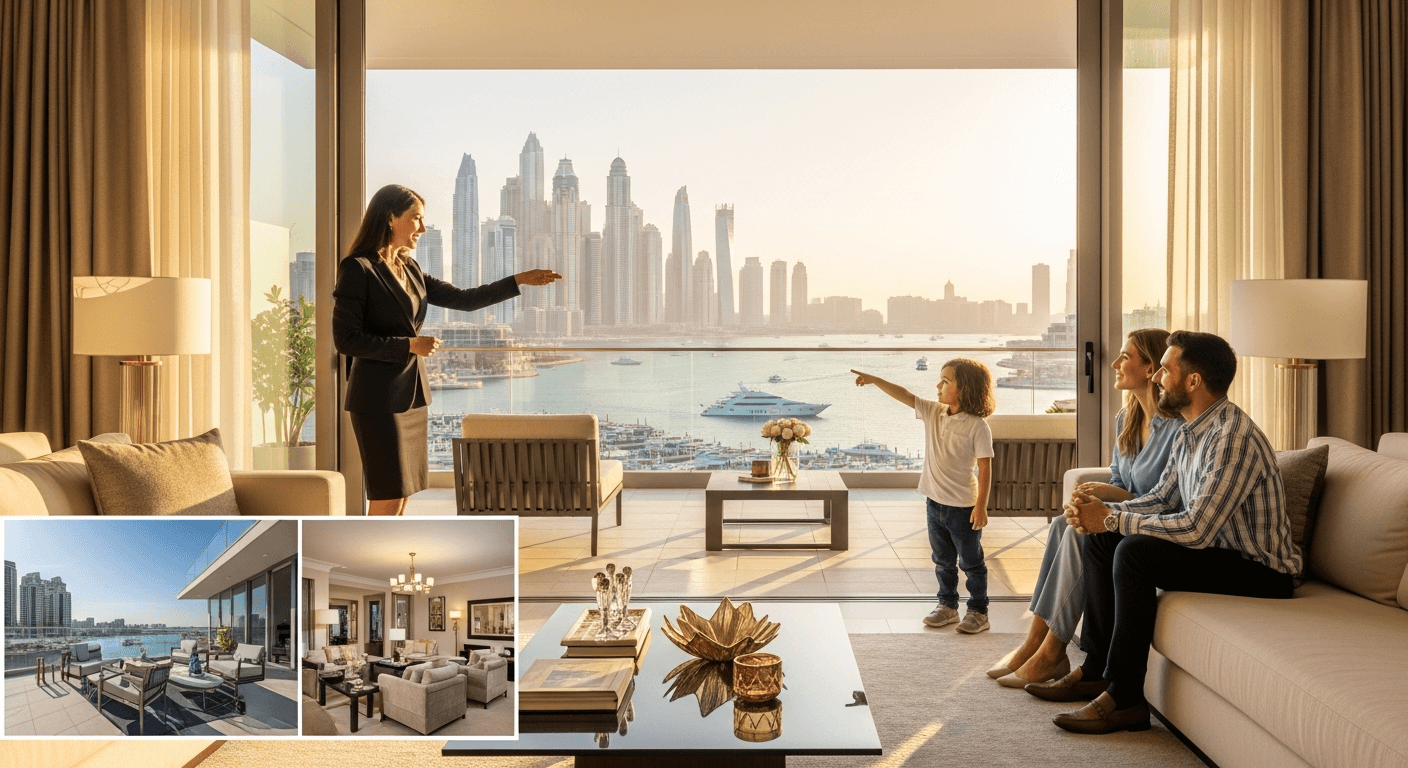
Mastering the Showing: An Irresistible Viewing Guide
As a seller's strategist, I'll show you how to prepare your Dubai property for viewings that don't just impress buyers, but compel them to make an offer.

Your property has been listed. The photography is stunning, the marketing is live, and the first viewing request has arrived. This is the moment of truth. All the preparation, strategy, and investment in marketing lead to this single, critical event: the showing. In my years as a seller's strategist, I have seen countless deals made or broken in the 20 minutes a potential buyer spends inside a home. The viewing is not a passive tour; it is the final, most persuasive piece of marketing you have. It's where a buyer moves from seeing a property online to picturing a life within its walls. Creating an irresistible experience is an art, and for sellers in Dubai's competitive market, it is an absolute necessity.
Here's what we'll explore to transform your property from merely 'for sale' to 'sold':
- The critical first impression and the psychology of the buyer's first 30 seconds.
- The non-negotiable art of decluttering and depersonalising for a global audience.
- Strategic staging: how to furnish for desire, not just for function.
- Engaging all five senses to create an unforgettable emotional connection.
- The 'flawless finish' deep clean and why minor repairs yield major returns.
- The seller's role during the viewing (hint: it's a hands-off one).
- A clear-eyed look at the open house strategy and when it works in Dubai.
- How we use post-viewing feedback to secure the best possible offer.
The Psychology of the First 30 Seconds
The moment a potential buyer steps out of their car or the elevator, the clock starts. You do not have ten minutes to win them over; you have less than one. This initial impression, often called 'curb appeal', sets the emotional tone for the entire viewing. A positive first encounter creates a halo effect, making a buyer more forgiving of minor imperfections inside. A negative one puts them on the defensive, actively looking for reasons to justify their initial disappointment. In Dubai, where standards of presentation are exceptionally high, you cannot afford to fail this first test. Buyers here are often viewing multiple properties in a single day, from immaculate penthouses in Downtown Dubai to pristine villas in Dubai Hills. Yours must stand out from the very first glance.
For a villa, this experience starts at the street. Is the exterior wall clean and freshly painted? Is the gate functioning smoothly, free of rust or squeaks? Are the plants in the front garden healthy and watered, or are they wilting in the heat? Simple fixes like pressure-washing the driveway, planting fresh flowers, and ensuring the entryway lighting is clean and working can dramatically alter perception. Consider the front door itself. A freshly painted or newly varnished door with polished, modern hardware sends a powerful message of quality and care before they even step inside. These small details aggregate into a powerful statement about how well the property has been maintained. It tells a story of pride of ownership, which a new buyer subconsciously wishes to inherit.
In an apartment building, your control is more limited, but the principle is the same. The journey from the lobby to your front door is part of the viewing. While you can't renovate the building's hallway, you can ensure your own front door and the area immediately surrounding it are impeccable. A high-quality doormat, a clean, stylish apartment number, and a door that looks and feels solid all contribute. Once that door opens, the entryway is your stage. It must be bright, clear, and welcoming. Too often, I see entryways in Dubai apartments used as a dumping ground for shoes, bags, and keys. This immediately creates a sense of clutter and confinement. Before any viewing, this area must be cleared completely. A slim console table with a single, elegant piece of decor — a vase of fresh orchids, a piece of sculpture, and a mirror to reflect light and create a sense of space is all you need. The goal is to create a moment of calm transition, allowing the buyer's eyes to adjust and their mind to open to what lies beyond.
The Art of Depersonalisation & Decluttering
 Featured project
Once a buyer is inside, your next objective is to help them mentally move in. This is impossible if they feel like they are intruding on your private life. The single biggest obstacle to this is personal clutter. This is one of the most crucial of all Dubai property viewing tips. Buyers need to see the space, the light, and the architecture; they need to project their own lives and their own possessions onto the canvas you provide. They cannot do this if every surface is covered with your family photos, your children's artwork, your personal mail, and your collection of souvenirs. Depersonalisation is not about erasing your identity; it's about creating a neutral, aspirational backdrop that appeals to the widest possible audience. In a global hub like Dubai, that audience is incredibly diverse, so a neutral palette is always the most commercially astute choice.
My process for clients is methodical. We go room by room with three boxes: Keep, Store, and Donate. Anything that is intensely personal — family portraits, religious icons, diplomas, bold and specific artwork, should be packed away. This isn't a judgement on your taste; it's a strategic business decision. You want a buyer to say, "I can see *my* family living here," not "I see the family that lives here now." The same goes for clutter. Clutter eats equity. It makes rooms feel smaller, darker, and disorganised. It signals a lack of storage, which is a major red flag for buyers. Every horizontal surface, kitchen counters, bathroom vanities, coffee tables, desks, should be almost entirely clear. In the kitchen, this means putting away the toaster, the coffee machine, the knife block, and the spice rack. Leave only one or two stylish, impersonal items, like a bowl of fresh lemons or a high-end cookbook on a stand.
I always advise clients to be ruthless. Remove at least 50% of the items from every closet and cupboard. Buyers *will* open closets. When they see tightly packed, overflowing storage, they don't think, 'This person has a lot of clothes'; they think, 'There is not enough storage in this apartment.' Conversely, when they open a closet and see neatly organised clothes with empty space on the shelves and hangers, it creates a feeling of abundance and ample storage. This is a powerful psychological trick. If you're living in the property while selling, this can be challenging. I strongly recommend budgeting for a short-term storage unit. For a few hundred dirhams a month, you can store everything that isn't essential for daily life, creating the minimalist, show-home look that sells. It is the best money you will spend in the preparation process.
“The goal of a viewing isn't to show a buyer your home; it's to help them discover their own.”
Strategic Staging: Furnishing for Fantasy
Decluttering and depersonalising create a blank canvas. Staging is the art of painting a masterpiece on it. Professional staging is no longer an optional extra for serious sellers in Dubai's premium property market; it is a fundamental part of a successful sales strategy. The statistics are overwhelming: staged homes sell faster and for higher prices than their unstaged or poorly furnished counterparts. Why? Because most buyers lack imagination. They cannot visualise how an empty, sterile space could feel warm and inviting. Nor can they see past dated, oversized, or poorly arranged furniture. Staging solves this problem. It defines each space, showcases the property's best features, and creates an emotional connection that makes a buyer fall in love.
Staging is not interior design. It's not about the seller's personal taste. It is a marketing tool designed to appeal to a target demographic. When we at Gaia Living list a family villa in Arabian Ranches, the staging will be different from a chic apartment in City Walk. For the villa, we would create warm, family-oriented spaces: a comfortable living area for movie nights, a defined dining area for entertaining, a home office, and charming children's rooms. For the urban apartment, the focus might be on sophistication and lifestyle: a sleek entertainment zone, a stylish bar cart, and a luxurious master suite that feels like a five-star hotel. The key is to sell a fantasy, a lifestyle that the potential buyer aspires to.
For vacant properties, staging is even more critical. An empty room looks smaller and colder than a furnished one. Buyers struggle with scale and can't figure out if their own furniture will fit. Staging answers these questions for them. The cost of staging can feel significant, but the return on investment is almost always positive. Here's a realistic look at potential costs in Dubai:
Sample Staging Budget: 2-Bedroom Apartment (approx. 1,500 sqft)
- Initial Consultation & Design Plan: AED 1,500 - AED 3,000
- Furniture & Accessory Rental (3-month contract): AED 12,000 - AED 25,000
- Art & Rug Rental: AED 2,000 - AED 5,000
- Delivery, Installation & De-staging: AED 2,500 - AED 4,000
- Total Estimated Investment: AED 18,000 - AED 37,000
This investment can often add 5-10% to the final selling price, translating to a gain of AED 100,000 - AED 200,000 on a AED 2 million apartment, making it an incredibly profitable exercise. It also helps your property stand out online. The stunning photos of a beautifully staged home will generate more clicks, more inquiries, and ultimately, more high-quality viewings. It's an upfront cost that pays for itself many times over, both in final price and in a shorter time on the market.
Engaging the Senses: Light, Scent, and Sound
An exceptional viewing experience goes beyond what buyers see; it engages all their senses. People make decisions emotionally and then justify them logically. By creating a subtle but powerful multi-sensory environment, you can forge a deep, positive emotional connection to the property. This is where you can truly impress buyers Dubai property seekers who are often accustomed to luxury experiences. It's about creating an atmosphere that feels calm, sophisticated, and aspirational.
Light is your most powerful tool. Dubai is blessed with sunshine, and your property should celebrate it. Before any viewing, all curtains and blinds should be fully opened to flood the space with natural light. This makes rooms feel larger, cleaner, and more energetic. Clean the windows until they are invisible, especially if you have a premium view of the sea from Palm Jumeirah or the skyline from Business Bay. The view is a primary asset, and a dirty window is like putting a filter over it. For evening viewings, lighting is even more critical. Turn on every single light in the house — lamps, overheads, under-cabinet lighting, even closet lights. Use warm white bulbs (2700K-3000K) to create a cozy, inviting glow. Avoid harsh, cool-white bulbs, which can make a space feel clinical and sterile. A few well-placed floor and table lamps can add layers of light and eliminate dark corners, making the entire home feel more welcoming.
Scent is the sense most closely linked to memory and emotion. The goal is a scent that is barely noticeable but creates a feeling of clean luxury. The worst mistake a seller can make is to overwhelm buyers with a strong, artificial fragrance. This immediately makes them suspicious — 'What are they trying to hide?' Avoid plug-in air fresheners, strong incense like Bakhoor (which can be too specific for a diverse audience), and heavily scented candles. Instead, aim for subtle and natural. A high-quality reed diffuser with a light, sophisticated scent like white tea, sandalwood, or a gentle citrus, placed in the entryway, is an excellent choice. A few hours before a viewing, you can also simmer a pot of water with a cinnamon stick and a few slices of orange. The absolute best scent, however, is the scent of 'clean'. A home that has been professionally deep-cleaned has a fresh, neutral aroma that no artificial fragrance can replicate.
Finally, consider sound. Silence can be unsettling during a viewing. It allows buyers to focus on tiny, inconsequential noises. On the other hand, a blaring TV or radio is distracting. The solution is subtle, low-volume ambient music. A curated playlist of soft instrumental jazz, classical, or chill-out lounge music playing from a discreet Bluetooth speaker can create a sophisticated, relaxed atmosphere. It fills the silence, masks minor background noise, and makes the experience feel more like visiting a luxury hotel than just touring a house. The goal is to create a complete sensory package that makes the buyer feel relaxed, happy, and at home.
The Deep Clean & Flawless Finishes
There is no substitute for clean. This is not about a quick tidy-up before a viewing. I'm talking about a deep, forensic-level clean that leaves the property looking and feeling as close to new as possible. Buyers, especially those looking at premium properties, have an eagle eye for detail. A grimy shower screen, dusty skirting boards, or fingerprints on light switches can instantly shatter the illusion of a well-maintained home. These small details collectively suggest neglect, which can lead a buyer to wonder what larger, hidden problems might exist. A flawless clean is one of the pillars of successful property viewings in Dubai, a market where buyers expect perfection.
I recommend all my clients hire a professional deep-cleaning company a few days before photography and the first viewings. This typically costs between AED 500 and AED 2,000 for an apartment or villa, and it is money well spent. Their work goes far beyond a regular maid service. They will tackle the areas you might overlook but that a buyer will absolutely notice. Here is a checklist of what a proper deep clean should cover:
- Windows and Glass: All windows, glass doors, and mirrors cleaned inside and out until they are streak-free.
- Kitchen: Degreasing of all surfaces, including inside the oven, hood filter, microwave, and refrigerator. Cabinet fronts wiped down, and all stainless steel polished.
- Bathrooms: Descaling of all taps, showerheads, and glass screens. Grout and sealant scrubbed to remove any hint of mildew or discoloration. Sinks, toilets, and tubs should sparkle.
- Floors and Walls: All flooring mopped, vacuumed, or polished. Skirting boards wiped down. Any scuffs or marks on walls should be removed or painted over.
- Fixtures: Light switches, door handles, and cabinet pulls should be wiped free of fingerprints. Light fixtures and ceiling fans should be dusted.
- Outdoor Areas: Balconies and terraces should be swept and mopped. Outdoor glass railings should be crystal clear.
Concurrent with the deep clean is the 'flawless finish' audit. Walk through your property with the critical eye of a buyer. Make a list of all the small, nagging maintenance issues you've been meaning to fix. A squeaky door, a dripping tap, a cracked tile, a patch of peeling paint — these are all red flags. A buyer sees these as problems they will have to inherit and pay to fix. The cost of a handyman for a day (typically AED 400-800 in Dubai) to resolve all these minor issues is trivial compared to the negative impact they can have on a buyer's perception of value. When a buyer sees a home where everything works perfectly, it builds immense confidence and trust. It tells them this is a 'turnkey' property they can move into without hassle, a powerful selling point that often translates directly into a stronger offer.
Conducting the Viewing: The Seller's Role
We have meticulously prepared the stage. The lighting is perfect, the scent is sublime, and the property is immaculate. Now, the audience arrives. What is your role as the seller during this crucial performance? My advice is unequivocal and is perhaps the most important I can give: you should not be there. Your presence, no matter how well-intentioned, is almost always a detriment to a successful viewing. It introduces an awkward social dynamic that prevents the buyer from truly connecting with the home. It is a classic mistake I see sellers make when trying to manage their own sale, and it consistently undermines their efforts.
Buyers need the freedom to explore at their own pace. They want to open closets, look inside cabinets, and visualise their furniture in each room. They need to be able to speak candidly with their agent, discussing a room's potential, its drawbacks, or their budget concerns. When the owner is present, this entire process is stifled. Buyers feel like guests in your home, not potential owners of their future home. They rush through, are hesitant to look closely at things, and will never voice a negative opinion for fear of offending you. This is a disaster. As agents, we *need* to hear their honest feedback. If a buyer thinks the master bedroom is too small, I need to know that so I can address the objection, perhaps by pointing out the large walk-in closet or the spacious ensuite. If they are concerned about the service charges, I need to have that conversation and provide the necessary documentation. These crucial interactions cannot happen with the seller hovering nearby.
Your professional agent is trained to conduct a viewing. At Gaia Living, our role is to be a knowledgeable and unobtrusive guide. We arrive early to perform a final check — turning on lights, opening blinds, ensuring everything is perfect. We greet the buyer and their agent, provide a brief overview, and then allow them the space to discover the property for themselves while remaining available to answer any questions. We know the property's key selling points, we have the answers to technical questions about the DEWA bills and service charges, and we understand the community. More importantly, we are trained to read the buyer's signals, listen to their comments, and steer the conversation constructively. We are a neutral third party, and this professional distance is essential for effective negotiation. Your job is to prepare the property to perfection. Our job is to sell it. Trust your agent to do their work.
The Open House Strategy in Dubai
The concept of an open house — opening your property to the public for a set period on a weekend, is a staple of some real estate markets, but its effectiveness in Dubai is nuanced. An `open house strategy Dubai seller`s` should adopt must be carefully considered. It is not a universal solution and can, in some cases, be counterproductive. The decision to hold an open house depends entirely on the property type, its location, and the target market. When executed strategically, it can be a powerful tool to generate excitement and a sense of urgency. When misapplied, it can attract unqualified visitors, pose security risks, and fail to attract serious offers.
In my experience, open houses work best for properties with broad appeal in high-demand, family-oriented communities. A well-priced four-bedroom villa in Jumeirah Golf Estates or a townhouse in Town Square are prime candidates. In these areas, there are often many families actively looking for a similar type of home. An open house can consolidate a large number of viewings into a single afternoon, creating a competitive atmosphere. When potential buyers see other families walking through the home, it validates their interest and can trigger a fear of missing out, often leading to faster, stronger offers. A successful open house requires significant marketing in the days leading up to it, targeting potential buyers and agents who specialise in that community.
However, for other property types, the open house model is less effective and can even be detrimental. For ultra-luxury properties, such as a signature villa on Palm Jumeirah or a full-floor penthouse, privacy and exclusivity are key selling points. The target audience for these assets is small and discerning. A public open house would devalue the property's exclusive status and attract 'property tourists' with no real intention or capacity to buy. For these listings, all viewings should be private, pre-scheduled, and only for financially qualified buyers. Similarly, for tenanted properties, an open house is often impractical and unfair to the tenant. In these cases, coordinating a block of private viewings back-to-back is a more respectful and effective approach. It still creates a sense of activity but maintains privacy and security. The decision should always be a strategic one, made in consultation with your agent, rather than a default action.
Post-Viewing Follow-up and Feedback Loop
The viewing may be over, but the work is not. The period immediately following a showing is a critical window for gathering intelligence and moving a potential buyer towards a decision. A passive 'wait and see' approach is a recipe for missed opportunities. An active and strategic follow-up process, managed by a skilled agent, is essential to maintaining momentum. This is a core part of the service we provide at Gaia Living and is a key component in preparing a home for showing Dubai buyers and converting that interest into a tangible offer.
Immediately after a viewing, your agent should be engaging with the buyer's agent to gather honest, detailed feedback. This is not just a simple 'Did they like it?'. A professional agent will ask specific, probing questions: What were their initial impressions? Which features did they respond to most positively? Were there any areas of concern or objections? How does this property compare to others they have seen? Are they in a position to make an offer, and what is their timeline? This feedback is invaluable. If the feedback is overwhelmingly positive, it signals an opportunity to encourage an offer. If there are specific objections, it provides a chance to address them.
For example, if a buyer loved the apartment but was concerned about the service charges, we can immediately provide them with a detailed breakdown of what the charges cover — premium facilities, 24/7 security, high-end maintenance, to reframe the cost as a value proposition. If they felt a room was too small, we can send over a floor plan with furniture dimensions to demonstrate its usability. This proactive problem-solving can overcome hurdles that might otherwise cause a buyer to dismiss the property. The feedback also creates a vital loop for our overall sales strategy. If we hear from multiple viewers that the property feels overpriced compared to a recent sale in the building, it gives us concrete data to discuss a potential price adjustment with you, the seller. Or, if viewers consistently comment on the dated kitchen, it might strengthen the case for a minor cosmetic upgrade. This data-driven approach allows us to be agile, responsive, and ultimately more effective in securing the best possible price for your home.
The most successful property viewings in Dubai are not a matter of luck; they are the result of a deliberate, multi-layered strategy. By meticulously preparing the physical space — from deep cleaning to professional staging, and by managing the viewing process with psychological acuity, you transform your property from a simple listing into a compelling product. It requires an investment of time and resources, but this upfront effort is what separates a property that sells quickly at a premium price from one that lingers on the market. Trust the process, and trust the professionals guiding you through it.
## Sources - Dubai Land Department (DLD): https://dubailand.gov.ae/ - UAE Government Portal (Fees and Procedures): https://u.ae/
Questions, answered
- Should I be present for viewings of my own property?
- In my professional opinion, no. Buyers feel uncomfortable inspecting a home with the owner present, and it prevents them from speaking candidly with the agent. Let your agent manage the viewing to ensure a professional and pressure-free experience.
- How much does it cost to professionally stage a home in Dubai?
- Costs vary widely. For a basic furniture rental and styling package for a one-bedroom apartment, you might budget AED 10,000 — 15,000 for a few months. For a large luxury villa, a comprehensive staging project can cost AED 50,000 or more, but the return on investment through a higher sale price is often significant.
- Is an open house a good idea for selling property in Dubai?
- It can be, but it must be strategic. Open houses work best for properties with broad appeal, like family villas in sought-after communities. For ultra-luxury or niche properties, private, pre-qualified viewings are almost always more effective and secure.
- What is the single most important thing to do before a viewing?
- A thorough, professional deep clean is non-negotiable. Buyers have a keen eye for dirt and grime, which they interpret as a sign of a poorly maintained property. Clean windows, sparkling bathrooms, and immaculate floors create a powerful first impression of quality and care.
- How can I make my property smell good for a viewing without it being overpowering?
- Aim for a subtle, clean, and luxurious scent. Avoid strong Bakhoor or air freshener sprays. Instead, use high-quality reed diffusers with light scents like white tea, citrus, or sandalwood. A faint, natural aroma is far more appealing than a heavy perfume.
- What documents should I have ready for a serious buyer?
- A serious buyer, via their agent, will want to see the Title Deed, your passport/EID, and recent service charge receipts. Having a No-Objection Certificate (NOC) from the developer in process can also signal you are a prepared and serious seller, though it's typically finalised after a sales agreement (MOU) is signed.

Lena writes exclusively for owners looking to sell. Staging, listing timing, agent selection, and how to read a lowball offer — she's in the seller's corner.
Related stories
Dubai's AC Dilemma: The Real Cost of Cooling
Your apartment's air conditioning is more than just a utility—it's a major factor in your monthly budget and comfort. I'll break down the real costs and benefits of Dubai's two main cooling systems, helping you choose your next home wisely.
Managing Multiple Offers: A Dubai Seller's Playbook
Receiving multiple offers on your Dubai property is an excellent problem to have, but handling it incorrectly can cost you time and money. Here’s my strategic playbook for managing competitive bids to secure the best possible outcome.
Gifting Property to Family in Dubai
Thinking of transferring a Dubai property to a family member? Learn how to navigate the DLD's rules for gifting to first-degree relatives and significantly reduce your transfer costs.
Echoes, in your inbox
One thoughtful email a month. Market insight, new launches, no spam.