

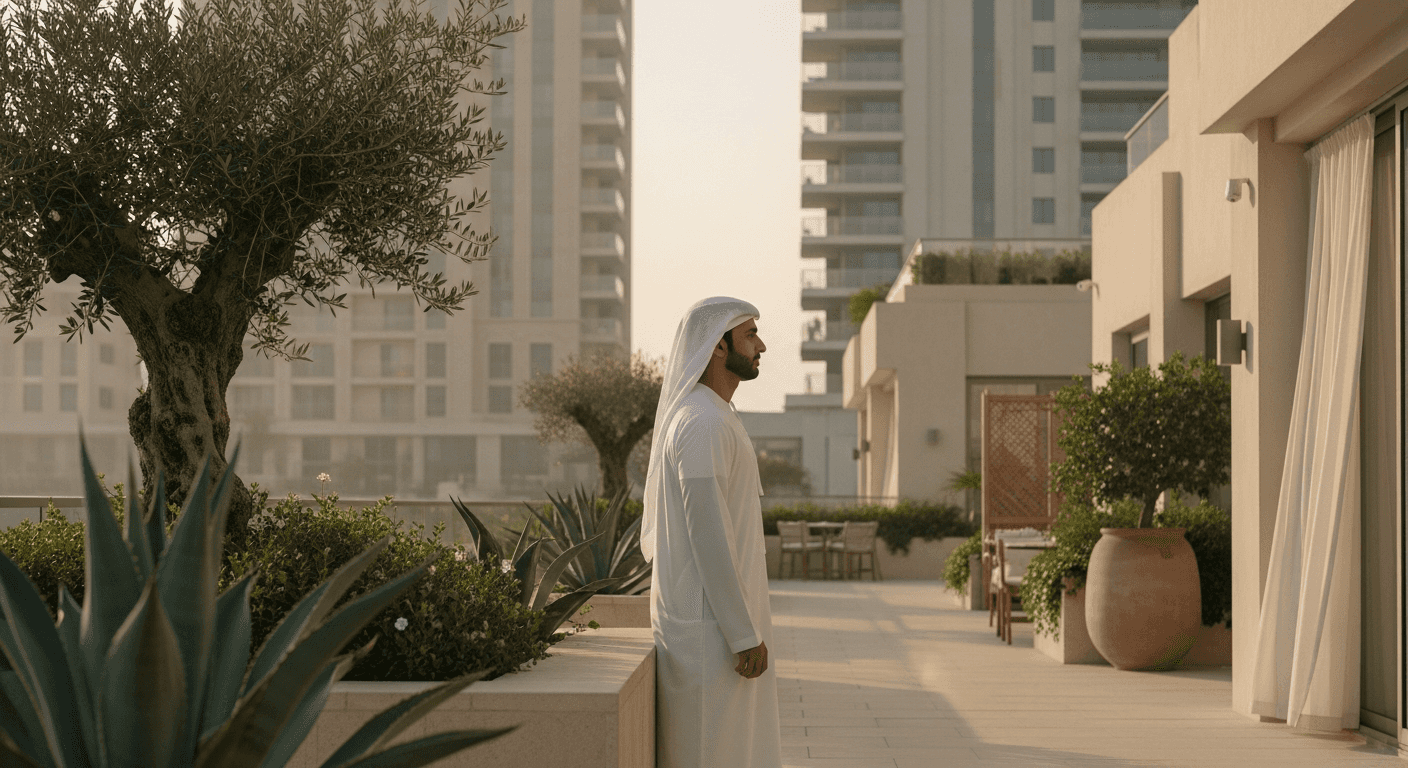
Living on the Runway: Dubai's Top Fashion Addresses
For those who see shopping as a sport, living at the heart of Dubai's retail scene is the ultimate prize. I explore what it truly means, and costs, to own a home where global fashion is your neighbour.

In a city that has perfected the art of retail, where you live says as much about your style as the watch on your wrist. For a certain resident, the ultimate luxury isn't a sea view or a golf course fairway; it's the sheer, unadulterated convenience of being footsteps from the world's most coveted brands. This is about more than just shopping — it's about a lifestyle built around the energy, glamour, and culture of high fashion.
Here's what we'll explore:
- The concept of 'retail proximity' as a new benchmark for prime real estate.
- A deep dive into Downtown and the ecosystem around The Dubai Mall.
- The boutique, open-air alternative offered by City Walk.
- Other fashion-forward micro-neighbourhoods carving their own niche.
- The rise of designer brand homes and what it means to live inside the label.
- A full, line-by-line breakdown of what it costs to buy into this world.
- My verdict on whether the premium for a retail-centric address is truly worth it.
The New Definition of Prime: Proximity to Purchase
For decades, the definition of a prime address in Dubai was tied to its natural assets: the glittering coastline of the Arabian Gulf or the lush green of its championship golf courses. These are still, of course, immensely powerful draws. But a new metric of desirability has firmly established itself, one that is entirely man-made and speaks directly to the city's modern identity: proximity to premier retail. This isn't just about convenience; it's a fundamental lifestyle choice. Owning one of the city's signature `Dubai shopping district homes` is a statement that you value access, energy, and the cultural pulse of the city as much as you do tranquility.
I’ve watched this evolution firsthand. What started as a simple convenience — living near a supermarket, has morphed into a status symbol. The ability to decide on a whim to browse the new collection at Chanel, meet a friend for coffee at the Armani/Caffè, or have a last-minute dinner at LPM without ever getting in a car is a form of luxury that is tangible and, for many, addictive. These are what I call `fashionista neighbourhoods`, and they have a distinct gravitational pull. They attract a clientele that is globally-minded, professionally successful, and for whom fashion and design are not hobbies, but integral parts of their identity. This creates a vibrant, cosmopolitan atmosphere that is palpable on the streets, in the cafes, and in the building lobbies.
The appeal goes beyond the individual. Developers understand this shift intimately. Master plans are now conceived with retail as the anchor, the heart around which the residential, commercial, and hospitality components orbit. A world-class mall or a curated high street is no longer an afterthought but the foundational element that guarantees footfall, creates energy, and ultimately drives real estate value. This synergy is what transforms a collection of buildings into a destination. The real estate becomes part of a larger, curated experience. You aren't just buying an apartment; you are buying into a managed ecosystem of style, dining, and entertainment that begins the moment you step out of your front door.
The Epicentre: Life Connected to The Dubai Mall
 Featured project
When you talk about living at the heart of Dubai's retail world, one address stands above all others: Downtown Dubai. It is the undisputed epicentre, a master-planned community by Emaar Properties that is entirely oriented around the colossal gravity of The Dubai Mall. The concept of `proximity to Dubai Mall` isn't just a selling point here; it is the area's entire reason for being. This is the gold standard against which all other retail-centric communities are measured, offering a level of integration that remains unmatched. The promise is simple and profound: smooth, climate-controlled access to over 1,200 stores, hundreds of dining venues, and world-class entertainment.
Living here means the mall is less a destination and more an extension of your home. For residents of towers like Burj Vista, The Address Fountain Views, or The Address Dubai Mall, a short walk through an air-conditioned link bridge is all that separates them from Fashion Avenue's glittering collection of haute couture. There is a certain effortlessness to this lifestyle. A dinner reservation at a hot new restaurant inside the mall doesn't require military-grade traffic planning. A forgotten ingredient for a dinner party is a quick stroll away. For families, the proximity to attractions like the Dubai Aquarium, KidZania, and the ice rink is a game-changer. This seamlessness is the core of the value proposition, and it commands a significant premium.
A two-bedroom apartment with a Burj Khalifa view in one of the premier Downtown towers can easily command prices upwards of AED 4 million to AED 7 million, with square foot prices often in the AED 2,500 to AED 3,500 range, sometimes higher for unique layouts or penthouses. Compare this to excellent, but less-connected, communities further out, and you see the premium clearly. What you are paying for is the removal of friction from your daily life. It’s the ability to access a world of luxury without the hassle of driving, parking, or even stepping outside into the summer heat. The level of service in these buildings — from concierges who can handle shopping deliveries to valet services that whisk your car away, is designed to complement this lifestyle of ultimate convenience.
This ecosystem is what makes Downtown such a powerful magnet for both end-users and investors. For residents, it offers a dynamic, walkable urban life that is rare in Dubai. For investors, the global brand recognition of the Burj Khalifa and The Dubai Mall provides a level of security and sustained rental demand that is hard to replicate. The tenant pool is blue-chip, consisting of highly-paid professionals and executives who are willing to pay for the location and lifestyle. It's a self-reinforcing cycle: the prestige of the address attracts high-value residents, which in turn supports the high-end retail and dining, which further enhances the prestige of the address. This is the Emaar master plan in its most potent form, and it continues to define what `high-end shopping property` means in this city.
The Urban Runway: City Walk's Boutique Appeal
If Downtown Dubai is the grand, operatic theatre of retail, then City Walk is the intimate, avant-garde gallery. Developed by Meraas, this district presents a compelling counter-narrative to the enclosed mall experience. It trades the verticality and sheer scale of Downtown for a low-rise, open-air design that feels more like a sophisticated European capital than a typical Dubai neighbourhood. Here, the focus is on curation, design, and atmosphere. It's a place for strolling, for discovering, for seeing and being seen. For residents, it offers a different, yet equally potent, version of a fashion-forward lifestyle.
The residential buildings at City Walk are integrated directly into this urban fabric. They are sleek, modern, and low-rise, with clean lines and high-quality finishes that reflect the area's design-led ethos. Living here means your 'local high street' is a collection of unique concept stores, edgy fashion boutiques, and some of the city's most Instagrammable cafes and restaurants. The experience is fundamentally different from being connected to a mall. It's more organic, more spontaneous. You step out of your apartment and are immediately immersed in the street-level energy of the city. The wide, pedestrian-friendly boulevards, the public art installations, and the constant buzz of people create a dynamic environment that feels both chic and alive.
This atmosphere attracts a specific psychographic. The City Walk resident often values aesthetics and a curated experience over sheer volume. They might prefer discovering an independent designer to navigating a sprawling department store. The appeal lies in the quality of the mix. You'll find high-end brands, yes, but they sit alongside unique F&B concepts, a luxury cinema, and entertainment venues like the Coca-Cola Arena. It feels less like a place to transact and more like a place to spend time. This makes it one of Dubai's most compelling `fashionista neighbourhoods`, a place where style is expressed not just in the shops, but in the architecture, the public spaces, and the people themselves.
From a property perspective, City Walk also commands a premium, though the metrics are slightly different. A two-bedroom apartment might trade in the AED 3 million to AED 5 million range, with prices per square foot often comparable to many Downtown towers. The rental market is strong, attracting tenants who want that blend of urban walkability and contemporary design. In my experience, the choice between Downtown and City Walk is rarely about budget; it's about personality. The Downtown buyer prioritizes ultimate convenience and connection to a globally recognized icon. The City Walk buyer, in contrast, is often looking for a more nuanced, design-conscious urban experience. They are buying into an atmosphere, a sense of place that feels distinct and carefully crafted.
Beyond the Obvious: Emerging Fashion Hubs
While Downtown and City Walk are the headline acts, Dubai's retail-residential landscape is far more diverse. Several other districts offer their own unique flavour of fashion-forward living, catering to different tastes and lifestyles. Understanding these nuances is key to finding the perfect fit. One of the most compelling examples is the Dubai International Financial Centre (DIFC). Once seen purely as a business hub, its evolution has been remarkable. The introduction of Gate Avenue has stitched the district together with a sophisticated, climate-controlled retail spine that connects offices, residences, and world-class restaurants.
Living in DIFC, in towers like those within Central Park Towers or the Index Tower, offers a lifestyle tailored to the high-flying professional. The retail here is curated and convenient, featuring a mix of bespoke tailors, art galleries, and high-end cafes. It's less about a weekend shopping spree and more about grabbing a perfect coffee on the way to a meeting, or having a world-class dinner at Zuma or Coya just an elevator ride away from home. The residential population here values efficiency and quality. The premium they pay is for a smooth work-life-style integration, where their office, home, gym, and favourite social spots are all within a five-minute walk. It’s a dense, vertical, and intensely urban experience that feels very connected to global financial hubs like London or Hong Kong.
Another fascinating case study is Bluewaters Island, another masterstroke from Meraas. While its retail offering, The Wharf, is more lifestyle-focused than high-fashion, it embodies the principle of a curated living environment. The residences on Bluewaters are some of the most sought-after in Dubai, offering stunning views and a resort-like feel, despite being moments from the mainland. The retail is part of this resort experience — a collection of boutiques, eateries, and attractions (including the Ain Dubai) that serve the residents and create a self-contained world. This isn't where you'd go for haute couture, but it's a prime example of how integrated, high-quality retail can create a powerful sense of place and drive significant property value. Living here is about choosing a specific, idyllic lifestyle where convenience and beauty are paramount.
Finally, we can't ignore the enduring appeal of areas like Dubai Marina and Jumeirah Beach Residence (JBR). These districts offer a more accessible, high-street version of retail-centric living. Dubai Marina Mall provides a convenient core of popular brands, while The Beach at JBR offers a vibrant, open-air destination that buzzes with energy day and night. The sheer density of shops, cafes, salons, and restaurants packed into these communities is staggering. For many residents, this is the ultimate convenience. You can do your weekly shop, get a haircut, buy a new outfit, and meet friends for dinner all within a few blocks. While it may lack the exclusive gloss of Downtown or the curated chic of City Walk, the lifestyle it offers is undeniably dynamic and remains one of the most popular choices for those seeking a walkable, amenity-rich urban life in Dubai.
The Ultimate Statement: Living Inside the Brand
The integration of luxury living and high fashion reaches its zenith with the phenomenon of `designer brand homes`. This is where the line between your home and your favourite luxury label dissolves completely. These are not merely apartments with a fancy logo; they are holistic living experiences, conceived and executed in partnership with some of the world's most iconic brands. This is the super-prime end of the market, where a property becomes a trophy asset, a statement of taste, and an immersion into a branded universe. The concept of `luxury retail residences` is taken to its logical and most extravagant conclusion.
Take, for instance, the Bvlgari Residences on Jumeirah Bay Island. This is more than a collection of apartments; it’s an entire ecosystem of elegance. The architecture, the materials, and the meticulous detailing all echo the timeless aesthetic of the Roman jeweller. Residents don't just get a beautifully designed home; they gain access to the services and amenities of the adjacent Bvlgari Resort, including the exclusive yacht club, the spa, and the fine-dining restaurants. The brand's DNA is infused into every aspect of the service culture. It’s a promise of a certain standard of living, underwritten by a globally respected luxury name. Similarly, the Armani Residences within the Burj Khalifa offer a masterclass in minimalist sophistication, with every detail personally overseen by Giorgio Armani himself. The colour palette, the textures, the very flow of the spaces — it all speaks the language of Armani.
More recently, developers like Damac have pushed this concept further into the mainstream of luxury with collaborations like the Cavalli-branded towers. Here, the exuberant and glamorous style of Roberto Cavalli is translated into bold interior design, lavish amenities, and a palpable sense of drama. These developments are aimed squarely at a buyer who wants their home to be an unapologetic expression of high fashion. The value proposition is multifaceted. First, there's the assurance of quality and design. A respected brand will not attach its name to a substandard product. Second, there's the power of brand recognition, which can provide a sense of security and potentially enhance value retention and rental appeal, particularly in the international market. An investor in Moscow or Shanghai knows the name Cavalli, and that has inherent marketing power.
Of course, this level of exclusivity comes at a price. These branded residences sit at the apex of the market, with entry points often starting in the multi-millions of dollars. They are competing for a global pool of ultra-high-net-worth individuals who collect homes the way they collect art or watches. For this buyer, the premium is justified by the rarity, the prestige, and the turnkey nature of the lifestyle. It’s a way of buying into a world of curated luxury where every detail has been considered, from the scent in the lobby to the thread count of the sheets. It’s the ultimate fashion-forward address, where you don’t just live near the brands you love — you live inside one.
Deconstructing the Cost: The Price of a Fashion-Forward Address
A lifestyle of supreme convenience and style comes with a premium price tag. It's crucial for any prospective buyer to understand not just the sticker price, but the full spectrum of costs associated with acquiring and holding a `high-end shopping property` in one of Dubai's prime zones. Let's break down the numbers for a tangible example: a two-bedroom apartment in a sought-after Downtown Dubai tower, purchased on the secondary market for AED 4.5 million. This analysis is vital for realistic budgeting and avoiding surprises.
The initial, one-time costs are significant. The largest of these is the Dubai Land Department (DLD) transfer fee, which is a mandatory 4% of the purchase price. According to the DLD's official fee structure, this is the standard rate for property registration. There are also smaller administrative fees associated with the transfer. Beyond the government fees, you have professional service costs. Agency fees are typically 2% of the purchase price, plus 5% Value Added Tax (VAT) on that fee. It is essential to account for these as they form a substantial part of the upfront capital required. Let's put this into a clear, line-by-line breakdown:
Example: Upfront Costs for a AED 4,500,000 Property Purchase - Purchase Price: AED 4,500,000 - DLD Transfer Fee (4%): AED 180,000 - DLD Admin Fees: approx. AED 4,200 - Property Registration Trustee Fee: AED 4,200 - Real Estate Agency Fee (2% + 5% VAT): AED 94,500 - Developer's No Objection Certificate (NOC): AED 1,000 (This can vary from AED 500 to AED 5,000) - Total Upfront Costs (Cash Buyer): Approximately AED 4,779,900
This calculation doesn't even include mortgage-related fees. If you're financing the purchase, you'll need to add mortgage registration fees (0.25% of the loan amount, paid to the DLD) and bank arrangement fees (often up to 1% of the loan). It's also critical to remember the Central Bank of the UAE's mortgage caps. For a non-national buying their first property in the UAE for under AED 5 million, the maximum loan-to-value (LTV) is 80%. This means you would need a minimum cash down payment of 20% (AED 900,000 in our example), plus all the fees mentioned above. In reality, a buyer would need to have over AED 1.1 million in cash ready to complete this transaction.
After the purchase, the ongoing costs begin. The most significant of these are the community service charges. In premium buildings in Downtown, these can range from AED 25 to over AED 40 per square foot of the property's area per year. For a 1,500 sq. Ft. apartment, that's an annual bill of AED 37,500 to AED 60,000 or more. These fees cover the maintenance of the lavish lobbies, swimming pools, state-of-the-art gyms, security, and the pristine common areas that define these luxury buildings. While high, these charges are what maintain the building's value and ensure the lifestyle you paid for is delivered. Understanding these ongoing financial commitments is just as important as the initial purchase price when evaluating the true cost of living on Dubai's fashion frontline.
The Investment Angle: Does Proximity to Retail Hold its Value?
Beyond the undeniable lifestyle benefits, a critical question for any buyer is whether these prime, retail-centric properties make for a sound investment. The glamour is one thing, but the numbers must also make sense. In my experience advising clients at Gaia Living, the investment thesis for a `high-end shopping property` hinges on stability, tenant quality, and long-term value preservation rather than speculative, high-octane returns. These are the blue-chip stocks of the Dubai property market.
Let’s look at rental yields. Gross yields in prime Downtown or City Walk might hover in the 4-6% range. On paper, this might seem lower than the 7-9% or more that can sometimes be achieved in up-and-coming, less central neighbourhoods. However, this simple calculation misses the bigger picture. Occupancy rates in these prime zones are consistently among the highest in the city. The demand for apartments with `proximity to Dubai Mall` or a similar lifestyle hub is deep and resilient. This means less void periods between tenants and a more reliable income stream. The tenant profile is also typically stronger — corporate executives, professionals, and well-to-do individuals who are less likely to default and more likely to maintain the property well.
“You're not just buying square footage; you're buying a front-row seat to the daily theatre of one of the world's great fashion cities.”
From a capital appreciation perspective, these established areas offer a different dynamic than off-plan launches in new master communities. While you may not see the explosive percentage growth of an emerging area, you benefit from a powerful downside protection. The constant investment by master developers like Emaar and Meraas in enhancing the infrastructure, expanding the retail offerings, and maintaining the public realm acts as a perpetual catalyst for value. These areas are considered a safe haven for capital, particularly for international investors seeking a stable asset in a global city. They tend to hold their value better during market downturns and show steady, sustainable growth over the long term. This makes them less of a speculative play and more of a wealth preservation strategy.
Beyond that, the short-term rental market adds another dimension. A well-furnished apartment in Downtown is a prime asset for platforms like Airbnb. Tourists and business travellers are willing to pay a significant premium for the location and convenience, leading to potentially higher net returns for landlords who are willing to manage the property actively. Of course, this must be done in compliance with regulations from Dubai's Department of Economy and Tourism (DET), but for many owners, it provides a lucrative way to maximize the income potential of their fashion-forward address. It transforms a home into a high-performance asset, tapping directly into the city's powerful tourism economy.
My Verdict: Is the Premium for a Retail-Centric Address Justified?
So, we arrive at the ultimate question: after considering the lifestyle, the costs, and the investment potential, is the significant premium for a home at the epicentre of Dubai's retail world worth it? As with most things in property, there is no single right answer. My verdict is that it depends entirely on what you are buying for. The justification for the price is found not in a spreadsheet, but in your personal definition of value.
For the pure, numbers-driven investor focused solely on maximizing gross rental yield, there may be more compelling opportunities in other parts of Dubai. A smaller apartment in an area like JVC or Arjan might generate a higher percentage return on a smaller capital outlay. However, this perspective overlooks the critical elements of risk, tenant quality, and long-term stability. The investor who chooses Downtown or City Walk is buying peace of mind. They are acquiring a trophy asset with global recognition, consistent demand from a high-quality tenant pool, and a lower risk of long-term value erosion. It's a strategy geared towards wealth preservation and steady, reliable income, not speculative gains.
For the end-user, the person who will actually live this life, my view is that the premium is almost always justified. What you are purchasing is not just real estate; you are buying a lifestyle. You are buying back time — the hours you would otherwise spend in traffic. You are buying convenience, the ability to live a more spontaneous and integrated life. You are buying energy, the buzz and excitement of being at the centre of it all. How do you put a price on being able to walk to a Michelin-starred dinner, see the latest blockbuster in a VIP cinema, and browse the world's most luxurious brands, all within a ten-minute radius of your front door? For those who thrive on this dynamism, the value is immeasurable and deeply personal.
The choice between these `fashionista neighbourhoods` is also a reflection of personal taste. The Downtown resident wants the scale, the spectacle, and the direct connection to the heart of the action. The City Walk resident prefers a more curated, boutique, and street-level experience. The DIFC resident prioritizes a smooth fusion of work and leisure. In each case, the real estate is a facilitator for a chosen way of life. The future of luxury living in Dubai is heading further in this direction — towards ever-more integrated, curated, and experience-driven communities. The home is no longer just a private sanctuary; it is the key that unlocks a wider world of curated experiences.
For the right buyer, a home in one of Dubai's premier shopping districts is an investment in a lifestyle of unparalleled convenience and vibrancy. The financial premium is significant, but it purchases access to a world-class ecosystem of retail, dining, and entertainment that is, for many, the very essence of modern Dubai living.
## Sources - Dubai Land Department (DLD): dubailand.gov.ae - Central Bank of the UAE: centralbank.ae
Questions, answered
- What are the most popular Dubai neighbourhoods for proximity to high-end shopping?
- Downtown Dubai is the premier choice due to its direct connection to The Dubai Mall. City Walk offers a boutique, open-air alternative, while DIFC's Gate Avenue and Bluewaters Island provide more curated, lifestyle-oriented retail experiences.
- Are properties near major shopping malls in Dubai a good investment?
- They are generally considered a stable, blue-chip investment. While gross rental yields might be slightly lower than in emerging areas, they benefit from high occupancy, strong tenant demand, and potential for steady capital appreciation, making them a reliable store of value.
- How much are service charges for apartments in Downtown Dubai?
- Service charges in Downtown Dubai are at the higher end, typically ranging from AED 25 to over AED 40 per square foot annually. For a 1,500 sq. Ft. two-bedroom apartment, this could amount to AED 37,500 to AED 60,000+ per year, covering premium amenities and maintenance.
- What is a 'designer branded residence' in Dubai?
- A designer branded residence is a luxury property developed in partnership with a high-end fashion, jewelry, or automotive brand, like Armani, Bvlgari, or Cavalli. These homes feature interiors, services, and amenities that reflect the brand's specific aesthetic and standard of luxury.
- What are the main upfront costs when buying a property in Dubai?
- The primary upfront cost is the Dubai Land Department (DLD) transfer fee, which is 4% of the property's purchase price. You should also budget for agency fees (typically 2% + VAT), trustee fees (around AED 4,200), and a developer's No Objection Certificate (NOC) fee, which can range from AED 500 to AED 5,000.
- What is the difference between the shopping experience in Downtown Dubai and City Walk?
- Downtown offers an all-encompassing, climate-controlled experience centered on The Dubai Mall, one of the world's largest malls. City Walk, by contrast, is a low-rise, open-air boulevard with a more curated, boutique feel, blending high-end retail with dining and entertainment in a walkable, European-style setting.

Yusuf writes about how Dubai actually lives — waterfront mornings, community dining, walkability, and the lifestyle premium built into an address.
Related stories
Calculating ROI on Dubai Rental Upgrades
As a landlord in Dubai, you can't just follow trends. I'll show you how to calculate the precise ROI of minor property upgrades to genuinely increase your rental yield.
Off-Plan vs Ready: The Real Cost of Capital
I analyse the fundamental trade-off every Dubai investor faces: the lure of off-plan capital growth versus the security of immediate rental income from a ready property.
Beyond the Gates: Dubai's Boutique Villa Sanctuaries
I'm exploring the small, exclusive villa communities that offer a real sense of place, moving beyond the well-trodden path of Dubai's famous megaprojects to find homes with genuine character.
Echoes, in your inbox
One thoughtful email a month. Market insight, new launches, no spam.