

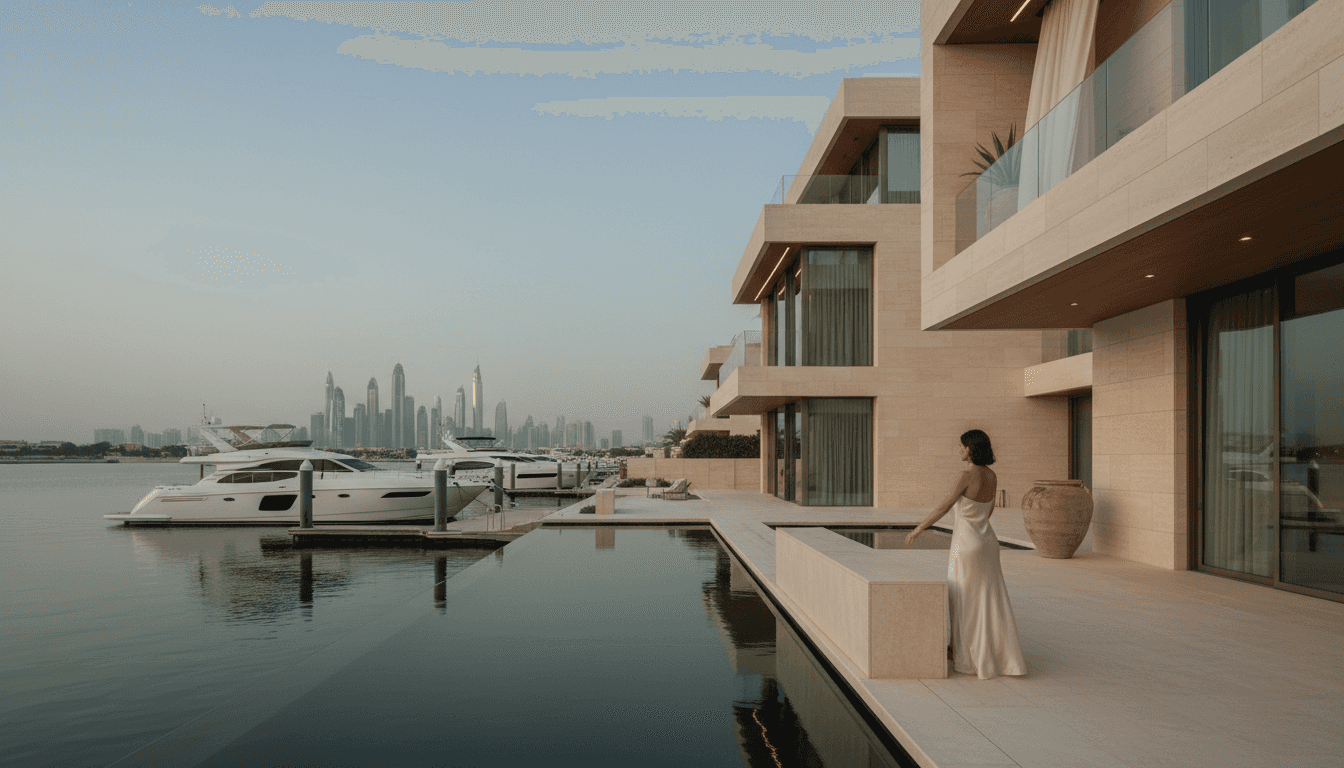
Hedging Inflation: A Dubai Real Estate Investor's Playbook
In an era of persistent inflation, Dubai real estate offers a compelling strategy for capital preservation and growth. Here's a detailed playbook for long-term investors seeking to protect and build wealth.

In my work analysing market cycles, one question from investors has become perennial: how do I protect my capital from being eroded by inflation? While cash reserves are essential for liquidity, holding too much in a high-inflation environment is a guaranteed way to lose purchasing power. This is where real assets, and specifically Dubai real estate, enter the conversation not as a speculative play, but as a core component of a defensive, long-term wealth preservation strategy.
Here's the playbook we'll explore for using Dubai property to build resilience into your portfolio:
- The fundamental mechanics of real estate as an inflation hedge.
- Selecting the right asset: which property types are built for resilience.
- The dual engine of returns: balancing rental yield and capital appreciation.
- Mastering the numbers: a transparent look at the total cost of ownership.
- The crucial role of service charges in your long-term returns.
- Using use intelligently with Dubai's mortgage framework.
- Identifying resilient communities for long-term holds.
- The long view: patience as the ultimate investment strategy.
Why Real Estate Is a Classic Inflation Hedge
At its core, the logic is simple. Inflation is the rate at which the general level of prices for goods and services is rising, and subsequently, purchasing power of currency is falling. Hard assets — physical, tangible things, tend to hold their value far better than paper assets or cash during these periods. Real estate is arguably the most accessible and well-understood hard asset for most investors. Its value is tied to land (which is finite), construction costs (which rise with inflation), and its ability to generate income through rent.
The relationship works in two primary ways. First, as the cost of labour and materials like steel, concrete, and glass increases, the cost to build new properties rises. This increase in replacement cost puts upward pressure on the values of existing properties. A villa that cost AED 3 million to build a few years ago might cost AED 4 million to replicate today. This automatically provides a floor for the value of the existing, comparable villa. An investor who bought the original property effectively captures that inflationary value gain within their asset.
Second, and more directly, real estate provides an inflation-linked income stream through rent. As the cost of living rises, wages and, consequently, rents tend to follow. In Dubai, tenancy contracts are typically annual, allowing for periodic rent adjustments in line with the market and the RERA Rental Increase Calculator. This means your rental income can grow over time, protecting your returns from being devalued. Unlike a fixed-income bond that pays the same coupon year after year, a well-managed property can produce a growing cash flow, making it a dynamic and responsive part of your portfolio. This is a critical mechanism for anyone building a long-term real estate investment Dubai strategy.
Selecting the Right Asset for Resilience
 Featured project
Not all properties are created equal for serving as a Dubai property inflation hedge. The key is to prioritise assets with intrinsic, durable demand over those reliant on short-term market hype. My focus for a defensive, long-term portfolio is almost always on properties that cater to the real, functional needs of the city's residents. This means looking for homes in well-connected communities that appeal to the end-user or long-term tenant.
In my view, the most resilient assets often fall into these categories:
- Mid-market apartments: One and two-bedroom apartments in established, centrally located communities like Jumeirah Village Circle (JVC) or Arjan offer a powerful combination of affordability for tenants and attractive yields for landlords. These areas attract a vast demographic of young professionals and families who form the bedrock of Dubai's workforce. The rental demand is deep and consistent, meaning vacancy periods are typically short. Because the price point is accessible, the pool of potential buyers is also wider, providing liquidity if you ever need to sell.
- Family-oriented townhouses and villas: Communities designed around family life, such as Arabian Ranches, Sobha Hartland and Sobha Hartland II, and Meadows, are perennial favourites. They offer schools, parks, community centres, and a sense of neighbourhood that is difficult to replicate. Families tend to be 'stickier' tenants, staying for longer periods to avoid disrupting their children's schooling and social lives. This translates into lower tenant turnover, fewer void periods, and more predictable income for investors. These properties have proven their ability to hold value even through market downturns.
Conversely, I would be more cautious about overly niche or ultra-specialised properties as a core inflation hedge. While a hyper-exclusive branded residence on Palm Jumeirah can deliver spectacular returns, its demand profile is narrower and can be more sensitive to shifts in global wealth flows. For a foundational asset, the goal is resilience and predictability. You want a property that will be in demand in almost any economic climate because it serves a fundamental need for a large segment of the population. The ideal asset for protecting capital in Dubai property is one that is, above all, useful.
The Dual Engine: Rental Yield vs. Capital Growth
When evaluating a real estate investment, investors often fixate on one metric: either the immediate rental yield or the potential for long-term capital appreciation. A sophisticated approach to protecting capital requires balancing both. These two forces — income and growth, are the twin engines of your investment. In an inflationary environment, their interplay becomes even more critical.
Rental yield is your frontline defence. It's the cash flow your property generates, expressed as a percentage of its value. A healthy gross yield in Dubai can range from 6% to 8% for apartments in areas like JVC or Al Furjan, while prime locations like Dubai Marina might offer lower yields of 4-6% but promise stronger capital preservation. This income is your immediate, tangible return. It covers your running costs (service charges, maintenance) and provides a profit. More importantly, as we've discussed, this income stream has the potential to grow annually, directly counteracting the effects of inflation on your cash returns.
Capital appreciation is the long-term prize. It's the increase in the property's market value over time. This growth is driven by a combination of factors: inflation increasing replacement costs, Dubai's population and economic growth driving up demand, and specific improvements to a neighbourhood's infrastructure or appeal. While less predictable year-to-year than rental income, capital growth is where significant wealth is built. Holding an asset in a growing city like Dubai means you are, in effect, a shareholder in its success. As the city expands and prospers, the value of your well-located piece of it should increase. This growth is the primary way a real estate asset's value keeps pace with and often outpaces inflation over a multi-year horizon.
“The mistake many investors make is chasing one at the expense of the other. An asset with a sky-high 10% yield in a remote, undesirable location might generate cash but see its capital value stagnate or even decline. Conversely, a non-rentable plot of land offers only the hope of appreciation, with no income to offset costs while you wait. The sweet spot for a Dubai property inflation hedge is an asset that delivers a solid, sustainable yield (say, 6%+) from a high-quality tenant base, located in a community with clear drivers for long-term growth. This dual focus creates a robust and resilient investment.”
Mastering the Numbers: The Total Cost of Ownership
To truly understand if an investment is working as an inflation hedge, you must have an unflinching view of your total costs. Gross rental yield is a useful starting point, but it's the net yield — after all expenses are paid, that determines your true cash flow and return. Many first-time investors underestimate the ancillary costs associated with buying and holding property in Dubai. A clear-eyed budget is the foundation of any successful real asset investment strategy.
Let's break down the costs for a hypothetical ready (secondary market) property with a purchase price of AED 2,000,000. These are the figures you must account for beyond the sticker price:
- Purchase Price: AED 2,000,000
- Dubai Land Department (DLD) Transfer Fee: 4% of purchase price = AED 80,000. This is the largest single closing cost.
- Agency Fee: Typically 2% of purchase price + 5% VAT = AED 42,000
- Trustee Office Fee: A fixed fee for handling the title deed transfer, around AED 4,200 (including VAT).
- No Objection Certificate (NOC) Fee: Paid to the developer to certify there are no outstanding liabilities. This varies but is typically between AED 500 and AED 5,000. Let's estimate AED 1,000.
- Title Deed Issuance Fee: A small administrative fee, approximately AED 580.
- Mortgage Fees (if applicable): If you are financing the purchase, you will also have bank arrangement fees (up to 1% of the loan amount) and a property valuation fee (around AED 3,000).
Total Upfront Cost (Cash Purchase): AED 2,000,000 (Property) + AED 80,000 (DLD) + AED 42,000 (Agency) + AED 4,200 (Trustee) + AED 1,000 (NOC) + AED 580 (Title Deed) = AED 2,127,780
This calculation shows that your initial cash outlay is nearly 6.4% higher than the property's price. Forgetting to budget for this can be a serious shock. Once you own the property, you have ongoing costs that affect your net yield. The most significant of these is the annual service charge, which we will cover in detail next.
When we talk about protecting capital, this level of detail is non-negotiable. You need to know your exact entry cost and your ongoing carrying costs to accurately measure your investment's performance against inflation. Only by tracking your net return can you be confident that your capital is not just being preserved, but is actively growing in real terms. At Gaia Living, our advisors make it a point to provide this complete financial picture upfront, ensuring our clients enter every transaction with full transparency.
The Critical Role of Service Charges
If upfront costs are the first hurdle, then annual service charges are the marathon you must be prepared to run for the entire life of the investment. Service charges are mandatory fees levied on homeowners by the developer or an owners' association management company. They cover the cost of maintaining the building's or community's common areas, including landscaping, security, swimming pools, gyms, cleaning, and utilities for shared spaces. In Dubai, these charges are regulated by the Real Estate Regulatory Agency (RERA) and are calculated on a per-square-foot basis.
Their impact on your net rental yield is direct and significant. A property might advertise a high gross yield, but if it's in a building with exorbitant service charges, the net return could be disappointing. For example, two identical apartments might both rent for AED 120,000 per year. If Apartment A has annual service charges of AED 15,000 and Apartment B has charges of AED 25,000, the net rental income is AED 10,000 higher for Apartment A. Over a decade, that's AED 100,000 in lost returns. This is why scrutinising the service charge history and budget is a crucial part of your due diligence.
Service charges in Dubai can vary dramatically. You might see rates as low as AED 10-14 per sq. Ft. in more basic communities like Dubai Production City or International City. In mid-range towers in areas like JVC or Business Bay, charges of AED 16-22 per sq. Ft. are common. For premium and luxury developments, especially those with extensive amenities like private beaches or high-end concierge services in places like Emaar Beachfront or Palm Jumeirah, charges can easily exceed AED 25-35 per sq. Ft. It's essential to understand that higher charges are not necessarily bad if they support amenities that command a higher rent and contribute to capital value. The key is value for money. Are the charges justified by the quality of the maintenance and the facilities on offer? A run-down building with low charges is often a worse investment than a pristine one with higher, but fair, charges.
When assessing a potential investment, always ask for the past two years of service charge statements and the approved budget for the upcoming year. This allows you to see the trend and identify any sudden spikes. A well-managed building will have a transparent budget and a healthy 'sinking fund' — a reserve set aside for major future capital expenditures like replacing lifts or facade refurbishment. A building without an adequate sinking fund is a red flag, as it may lead to large, unexpected special assessments for owners down the line. A core part of building Dubai property portfolio resilience is choosing buildings and communities that are managed professionally for the long term.
Using Use Intelligently: The Mortgage Factor
Use — using borrowed capital to increase the potential return of an investment, is a powerful tool in real estate, but it's a double-edged sword. When used prudently, a mortgage can amplify your returns and allow you to acquire a more valuable asset than you could with cash alone. However, it also introduces risk and a fixed cost that must be managed carefully, especially in a fluctuating economic climate.
In the UAE, the mortgage market is well-regulated by the Central Bank of the UAE (CBUAE). For expatriate non-resident investors, the typical loan-to-value (LTV) limit is 50%, meaning you need a 50% cash down payment. For residents, the limits are more generous: you can generally borrow up to 80% of the property value for your first property (if under AED 5 million), requiring a 20% down payment. These regulations are designed to prevent over-using and maintain stability in the market.
Here’s how use can magnify returns. Imagine you have AED 500,000 in cash. You could buy a AED 500,000 property outright. If it appreciates by 5% in a year, you've made AED 25,000 — a 5% return on your cash. Alternatively, you could use that AED 500,000 as a 25% down payment on a AED 2,000,000 property. If that property also appreciates by 5%, its value increases by AED 100,000. After accounting for mortgage interest, your return on your initial AED 500,000 cash investment will be significantly higher than 5%. This amplification of your return on equity is the primary appeal of use.
However, the risks are equally amplified. If the property's value falls by 5%, a leveraged investor loses a much larger percentage of their invested cash. Beyond that, the mortgage payment is a fixed monthly outgoing. During a vacancy period with no rental income, you are still responsible for this payment, which can strain your finances. This is why I advise investors using use to maintain a healthy cash buffer — enough to cover at least six months of mortgage payments and service charges, to ride out any potential voids. In the context of an inflation hedge, your rental income must comfortably exceed your mortgage payment and other costs. If your rent is AED 120,000 per year and your total costs (mortgage, service charges) are AED 100,000, you have a positive cash flow of AED 20,000 that can also grow with inflation.
Identifying Resilient Communities for the Long Haul
Theory and financial models are essential, but investment success ultimately comes down to choosing the right location. For a long-term, inflation-hedging strategy, I consistently look for communities with a clear and sustainable reason for being. This means strong infrastructure, established amenities, and a demographic profile that ensures consistent demand. My focus is less on chasing the 'next hot neighbourhood' and more on identifying areas with proven resilience.
Master-planned communities by top-tier developers like Emaar Properties, Nakheel, and Aldar (in Abu Dhabi) are often a sound choice. These developers have a track record of not just building properties, but creating entire ecosystems. Arabian Ranches is a prime example. Decades after its launch, it remains one of Dubai's most desirable family communities because of its excellent schools, retail centres, and green spaces. The master plan was so successful that it created a durable competitive advantage. An investment here is not just in a house, but in a well-oiled suburban machine that attracts stable, high-quality tenants.
Another category of resilient communities are those anchored by major economic or transport hubs. Areas like Jabal Ali and the surrounding residential zones benefit from proximity to the port and the industrial free zone, providing housing for a huge workforce. Newer hubs like Expo City are evolving into self-contained cities with a focus on innovation and sustainability, attracting both businesses and residents. An investment in an area like this is a direct bet on the long-term economic activity of its anchor. As long as the port thrives or the innovation campus grows, there will be demand for homes nearby.
Finally, we are seeing the rise of 'affordable quality' as a key driver of resilience. Communities like JVC, Arjan, and even parts of Damac Hills and Damac Hills II have matured significantly, now offering a compelling lifestyle with parks, new malls, and good road connectivity, but at a more accessible price point than prime central districts. These areas have become the destination of choice for a large portion of Dubai's middle-income residents. This depth of demand provides a strong floor for both rental and sales values, making them a cornerstone of many of the inflation-hedging portfolios we help construct at Gaia Living.
The Long View: Patience Is Your Ultimate Strategy
The final, and perhaps most important, component of this playbook has nothing to do with numbers or locations, but with mindset. Real estate is not a 'get rich quick' scheme. It is a long-term game, and its effectiveness as an inflation hedge is most powerful when viewed over a horizon of seven years or more. Property markets move in cycles. There will be periods of rapid growth, periods of stability, and periods of correction. The emotional investor buys at the peak of the hype and sells in a panic at the bottom. The strategic investor buys based on fundamentals and has the patience to hold through the cycles.
Holding a property long-term allows the compounding of returns to work its magic. Each year your rent increases, it does so from a higher base. Each year the property appreciates, that growth is also on a larger capital value. Beyond that, if you have a mortgage, each payment you make increases your equity in the property. Over a decade or two, these incremental gains accumulate into substantial wealth. This process is slow, steady, and often unspectacular — and that is precisely why it is so effective at protecting and growing capital in real terms.
This long-term perspective is supported by Dubai's own strategic vision. Initiatives like the UAE Golden Visa, which grants long-term residency to property investors who meet a certain threshold (currently AED 2 million), are explicitly designed to encourage long-term commitment. This policy helps to mature the market, shifting the buyer pool away from short-term speculators and towards long-term stakeholders. This creates a more stable, less volatile market environment, which is ideal for the patient investor. Protecting capital with Dubai property isn't about timing the market perfectly; it's about time *in* the market, allowing the city's fundamental growth story to lift the value of your asset.
Ultimately, using Dubai real estate as an inflation hedge is a strategy of fundamentals. It requires selecting a quality asset in a resilient community, managing your costs with discipline, using use with caution, and having the patience to let the dual engines of rental income and capital growth do their work over time. It is a deliberate, researched approach that moves beyond speculation and into the realm of true long-term investment.
Sources
- Dubai Land Department (DLD): dubailand.gov.ae
- Real Estate Regulatory Agency (RERA) Rental Calculator: dubailand.gov.ae/en/eservices/rental-index/rental-index/#/
- RERA Service Charge Index: dubailand.gov.ae/en/eservices/service-charges-index/service-charge-index-status-search/#/
- Central Bank of the UAE (CBUAE): centralbank.ae
- UAE Government Portal - Golden Visa: u.ae/en/information-and-services/visa-and-emirates-id/residence-visas/golden-visa
Questions, answered
- Is buying property in Dubai a good hedge against inflation?
- Yes, Dubai real estate can be an effective inflation hedge. Tangible assets tend to hold their value, and rental income can be adjusted to keep pace with rising costs, providing a dual mechanism for protecting your capital's purchasing power.
- Which type of property is best for a long-term investment in Dubai?
- For long-term holds focused on inflation hedging, I often favour properties with strong, consistent rental demand and controlled supply. Well-located apartments in established mid-market communities or family-oriented villas in master-planned neighbourhoods are excellent candidates.
- How does rental income help protect against inflation?
- Rental income provides a direct hedge. As inflation pushes up the cost of living, rents generally follow suit. This allows you, as a landlord, to increase your income stream over time, ensuring your investment returns don't lose value in real terms.
- What are the main costs to consider when buying an investment property in Dubai?
- Beyond the property price, budget for the 4% Dubai Land Department transfer fee, around 2% for agency fees, a Trustee fee of AED 4,200 for ready properties, and the initial service charges. For a AED 2 million property, these upfront costs can add up to approximately AED 126,200.
- What is a good rental yield in Dubai?
- A healthy gross rental yield in Dubai for a long-term rental property typically falls between 6% and 8%. Prime areas may offer lower yields (3-5%) but stronger capital appreciation potential, while some emerging areas might exceed 8% with higher associated risks.
- How does the UAE Golden Visa support real estate investment?
- The UAE Golden Visa programme provides a 10-year renewable residency visa for investors who purchase a property worth at least AED 2 million. This creates a powerful incentive for long-term commitment, stabilising the market and increasing the pool of owner-occupiers and long-stay residents.

Amara translates DLD transaction data, supply pipelines, and macro signals into clear calls on where Dubai's market is heading. She writes the numbers most brokers only feel.
Related stories

Dubai Off-Plan: The Due Diligence Beyond the SPA
Signing the Sales and Purchase Agreement for a Dubai off-plan property is a milestone, not the finish line. True investor security comes from rigorous pre-purchase legal checks that look far beyond the contract's pages.

A Buyer's Guide to Community Management in Dubai
When you buy property in Dubai, you're also buying into a community with its own rules and costs. This guide demystifies Owners Associations, service charges, and your rights and responsibilities as a homeowner.

Dubai Apartments: Tower vs. Community—Which Holds More Value?
Choosing between a standalone apartment tower and a master-planned community is a core decision for any Dubai buyer. I'll break down the real-world differences in lifestyle, costs, and long-term value to help you decide.
Echoes, in your inbox
One thoughtful email a month. Market insight, new launches, no spam.