

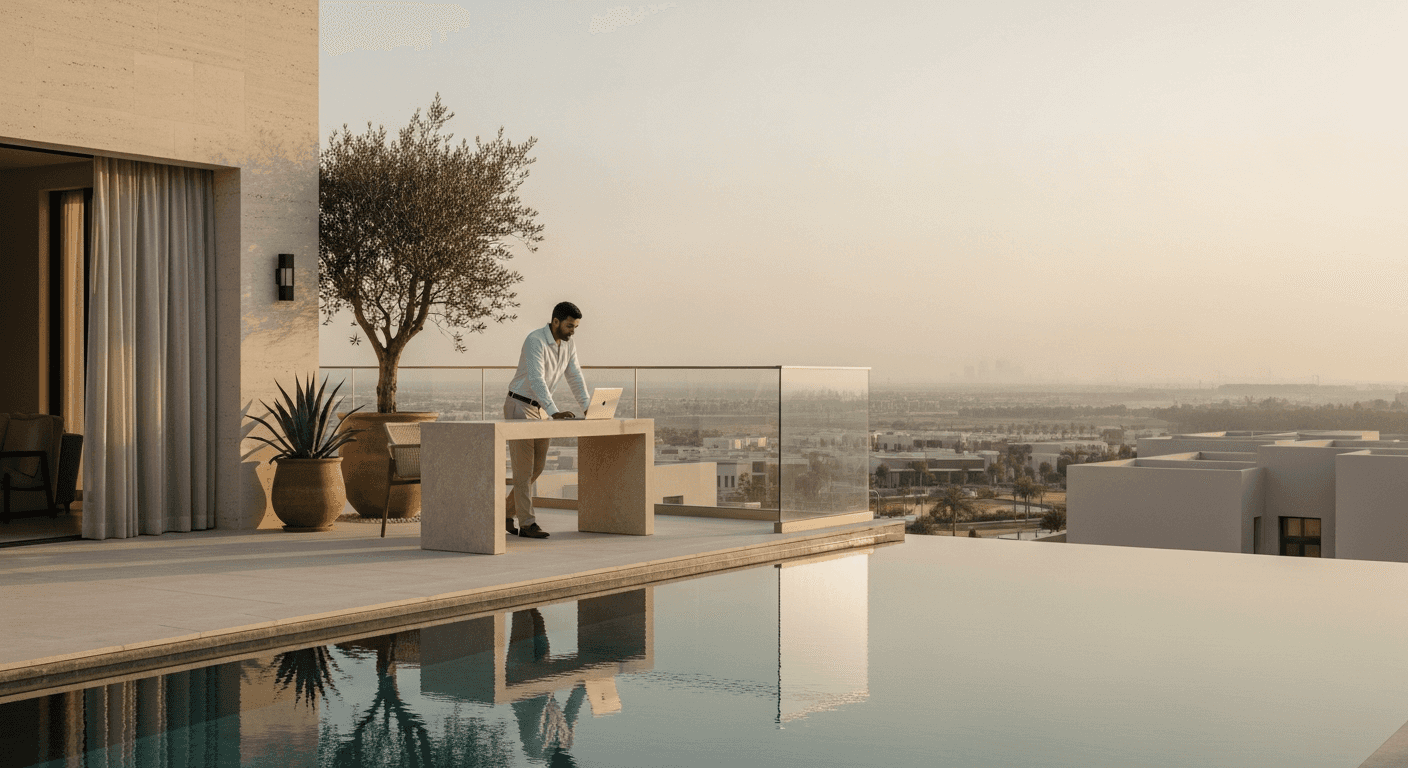
Healthcare at Your Doorstep in Dubai
For families choosing a Dubai villa, proximity to quality healthcare isn't a luxury—it's essential. I'll guide you through the communities that truly put wellness and peace of mind first.

When my clients, particularly families, start their search for a villa in Dubai, the conversation always goes beyond the number of bedrooms and the size of the garden. After we’ve covered schools, the talk inevitably turns to a crucial, non-negotiable factor: healthcare. Where is the nearest clinic for a late-night fever? How fast can an ambulance arrive? Where is the best paediatrician? This isn't just about planning for emergencies; it's about choosing a community that supports your family's long-term wellbeing.
Here’s what we’ll explore in this guide:
- Defining what makes for truly 'excellent' medical access in a villa community.
- The gold standard: A deep dive into Emaar's master-planned ecosystems.
- The Al Qudra corridor and its rapidly expanding healthcare infrastructure.
- The established prime areas of Jumeirah and their legacy of medical excellence.
- The emerging medical hub around Dubai Science Park and its impact on nearby villas.
- A practical look at the costs and realities of health insurance in Dubai.
What Constitutes 'Excellent' Medical Access?
For many years, the prime villa lifestyle was concentrated in Jumeirah and Umm Suqeim, where you were never more than five minutes from a clinic on Jumeirah Beach Road. As Dubai expanded, new, sprawling villa communities offered larger homes and more modern amenities, but sometimes at the cost of immediate access to services. That has changed dramatically. Today, the best developers understand that a robust wellness infrastructure is a key selling point. But what does that mean in practice? It’s more than just having a hospital on the map somewhere in the vicinity.
In my view, excellent healthcare access for Dubai villas rests on three pillars. The first is Proximity and Speed. This means having a high-quality family clinic or polyclinic located directly within your community or less than a five-minute drive away. This is your first port of call for routine check-ups, vaccinations, and minor illnesses. It also means being within a 15-minute 'golden window' drive to a full-service, 24/7 hospital with an emergency department. I’ve timed these drives myself from dozens of communities, and a clear run to the ER provides immeasurable peace of mind.
Second is the Quality and Specialisation of care available. It’s one thing to have a clinic nearby; it’s another to have a trusted institution. This is where big names like Mediclinic, King’s College, Aster, and Medcare make a difference. Their presence in or near a community is a strong signal of quality. Beyond that, for families, access to specialists is paramount. This includes paediatricians, OB/GYNs, dentists, and orthodontists. The best communities are those that either have these specialists in their local polyclinics or are situated within a short drive of major medical hubs like Dubai Science Park or Dubai Healthcare City.
Finally, there's the broader concept of Wellness Infrastructure. This goes beyond reactive medical care. It includes facilities that promote a healthy lifestyle: well-maintained parks for exercise, safe cycling and jogging tracks, community swimming pools, and even things like air quality and low noise pollution. A community that invests in green spaces and recreational amenities is one that is fundamentally invested in its residents' health. When I evaluate a community's healthcare provision, I look at this complete picture — the smooth integration of clinical care and a health-conscious environment.
The Gold Standard: Emaar's Master-Planned Ecosystems
 Featured project
When you talk about integrated community living in Dubai, Emaar Properties wrote the playbook. Their success stems from a deep understanding that they aren't just building houses; they are creating self-contained neighbourhoods where residents can live, work, and play. A core part of this philosophy has always been the integration of essential services, with healthcare at the forefront. This is most evident in two of their flagship villa communities: the classic Arabian Ranches and the newer, sprawling Dubai Hills Estate.
Arabian Ranches, one of Dubai's first and most beloved suburban villa developments, is a perfect case study. From its inception, Emaar planned for a community centre that was more than just a supermarket. The Ranches Souk is home to a branch of Mediclinic, one of the most respected healthcare providers in the UAE. This facility isn't a tiny satellite office; it's a fully-fledged family medical centre with general practitioners, paediatricians, dentists, and other specialists on rotation. For the thousands of families living in the Ranches, this means doctor's appointments are a short walk or golf-cart ride away. This incredible doctor proximity for villa communities is a major reason why the Ranches remains so popular despite being nearly two decades old.
Emaar took this concept and amplified it at Dubai Hills Estate. This vast 'city within a city' was planned on an even grander scale, and its healthcare provision reflects that. The community is anchored by the magnificent Dubai Hills Hospital, a state-of-the-art, 100-bed facility by King's College Hospital London. It's located right at the entrance of the development, providing world-class emergency, specialist, and maternity care literally on the doorstep of the villas and apartments within. Beyond the hospital, there are smaller clinics within the community retail areas, ensuring that even for a minor issue, residents don't need to travel far. This level of integrated healthcare access in Dubai villas is simply unparalleled and sets a benchmark for all other developers.
What Emaar mastered is the 'hub and spoke' model. The central hospital or large clinic acts as the hub, providing comprehensive care. Smaller, more accessible clinics in the various sub-communities act as the spokes, handling day-to-day needs. This creates a powerful network that provides residents with both convenience and confidence. It's a key reason why Emaar communities command a premium and attract a high proportion of end-user families who prioritise stability and quality of life. They have effectively transformed healthcare from a destination you drive to, into a service that is woven into the fabric of the community itself.
The Al Qudra Corridor: DAMAC Hills and Beyond
Stretching out from the base of the Palm Jumeirah, Al Qudra Road has become one of Dubai's most important development arteries. What was once a quiet road leading to a cycling track is now a bustling corridor lined with some of the city's largest and fastest-growing villa communities. I’m talking about places like DAMAC Hills and DAMAC Hills II, Tilal Al Ghaf by Majid Al Futtaim, and a host of others. For a long time, the main drawback of these areas was their perceived distance from the city's core infrastructure. Early residents often faced a significant drive for everything from a supermarket to a doctor's appointment. But the pace of development here has been staggering, and the healthcare landscape has transformed along with it.
The game-changer for this entire corridor was the establishment of major hospitals in close proximity. The Saudi German Hospital on Hessa Street and Mediclinic Parkview Hospital on Umm Suqeim Street (a short drive away) created two major poles of medical excellence. This immediately provided residents with top-tier emergency and inpatient care. But what I find more interesting is how the community-level healthcare is now catching up and, in some cases, innovating. In DAMAC Hills, for instance, a large Aster Clinic has opened, providing a comprehensive polyclinic service right inside the community. This was a critical milestone, moving the area from being 'near' a hospital to having high-quality healthcare 'inside' the gates.
>The evolution of healthcare along the Al Qudra corridor shows how Dubai's infrastructure follows population. First came the homes, then the hospitals, and now the hyper-local clinics — completing the wellness ecosystem for thousands of families.
Beyond that, the sheer scale of these new communities allows for specialisation. As thousands of families have moved in, the demand for specific services like paediatrics, dentistry, and physiotherapy has soared. This has attracted smaller, specialised clinics to the retail hubs that are popping up all over the area. It creates a virtuous cycle: more residents create more demand, which attracts more and better medical facilities near villas, making the area even more attractive to new families. This rapid development of wellness infrastructure is a key factor I advise clients to consider when looking at newer communities. You are not just buying a villa; you are investing in a neighbourhood that is actively growing its amenities.
I often get asked about the trade-off. Is the healthcare access in a newer community like DAMAC Hills as good as an established one like Arabian Ranches? My answer is that it's different, but rapidly converging. While the Ranches has the advantage of a long-established, perfectly integrated clinic, the Al Qudra communities benefit from newer hospital facilities nearby and a competitive, growing market for local clinics. For a family moving in today, the practical difference is becoming smaller every year. The key is to look at the specific location of a villa within these vast communities and map the drive time to both the local clinic and the nearest major hospital.
Jumeirah & Umm Suqeim: The Original 'Prime' with Legacy Healthcare
Long before the master-planned communities rose from the desert, the heart of Dubai's family life was in the leafy, low-rise villas of Jumeirah and Umm Suqeim. This is where Dubai's established families lived, and where the city's healthcare infrastructure first took root. To this day, the density and quality of medical facilities in this coastal strip are arguably the highest in the city. For residents here, excellent healthcare isn't a planned amenity; it's an organic feature of the neighbourhood's DNA.
Driving down Jumeirah Beach Road or Al Wasl Road is like taking a tour of Dubai's top healthcare brands. You'll pass Emirates Hospital, Medcare, and a staggering number of high-end specialist and family clinics villa communities have come to expect. From world-renowned dentists to boutique paediatric practices and advanced dermatology centres, almost every medical speciality is represented. The competition is fierce, which drives up the quality of care and the level of service. For a villa resident in Jumeirah 1 or Umm Suqeim 3, there are likely half a dozen excellent GP options within a one-kilometre radius. This is a level of choice and convenience that even the best new master communities struggle to replicate.
This 'legacy' access has a different feel to it. In a newer planned community, you might have one designated, excellent clinic. In Jumeirah, you have a whole marketplace of them. This allows residents to build long-term relationships with specific doctors and practices that perfectly suit their needs. I have clients who have been seeing the same family doctor in a small Jumeirah clinic for over 20 years. This continuity of care is a powerful, often-overlooked aspect of family wellness. It’s the comfort of having a doctor who knows your family’s history, who has seen your children grow up. That kind of relationship is hard to put a price on.
Of course, this comes with a trade-off. The villas in Jumeirah and Umm Suqeim are often older, and while many are beautifully renovated, they don't always have the uniform, modern feel of a new development. The road network can be more congested, and while the clinics are numerous, they aren't 'inside the gate' in the same way as a community like Arabian Ranches. However, for those who value choice, proximity to the beach, and the charm of an established neighbourhood, the unparalleled medical access remains a huge draw. It's a classic Dubai choice: the integrated, all-in-one convenience of a new master plan versus the rich, organic mix of services in the city's original prime districts.
The Emerging Hub: Dubai Science Park & Al Barsha South
One of the most exciting and, in my opinion, underrated stories in Dubai's healthcare evolution is happening in and around Dubai Science Park. Located in Al Barsha South, this area has quietly become one of the city's most important medical hubs, creating a fantastic halo effect for the surrounding villa communities. This isn't just about one or two hospitals; it's a purpose-built ecosystem designed to foster medical innovation, research, and high-level patient care. For villa buyers in communities like Al Barari, and even those in Arabian Ranches and Motor City, this development has significantly enhanced their access to world-class specialist care.
The anchor of this hub is the Mediclinic Parkview Hospital on Umm Suqeim Street, a large, modern facility that opened a few years ago to serve the new population growth in the area. But the real depth comes from the specialist centres within Dubai Science Park itself. This includes the Neuro Spinal Hospital, a leading institution for complex neurological and spinal treatments, and a growing number of biotechnology firms and research labs. This concentration of medical expertise is creating a powerful centre of gravity, attracting top doctors and investment, which directly benefits residents living nearby.
This has been a game-changer for villa communities that were once considered a bit further out. Al Barari, known for its lush, green, and incredibly private villas, always had an air of seclusion. Now, it's just a 10-minute drive from some of the best medical facilities in the country. This has added a strong layer of practicality to the community's romantic appeal. Similarly, residents in the established communities of Motor City and Arabian Ranches now have another set of top-tier hospital options to choose from, adding resilience to their healthcare access. The doctor proximity for villa communities in this entire quadrant of Dubai has improved immeasurably.
What I find particularly compelling is the forward-looking nature of this hub. By co-locating hospitals with research facilities and life science companies, Dubai is building a sustainable medical ecosystem for the future. This is the kind of strategic planning that gives me, and my clients, long-term confidence. When you buy a villa in a nearby community, you're not just buying into the current facilities; you're buying into a future where cutting-edge treatments and top medical talent will be right on your doorstep. It's a prime example of how thoughtful urban planning can directly enhance the wellness and security of residents.
The Financials of Healthcare: Insurance, Costs, and Planning
Having fantastic medical facilities nearby is one thing; being able to affordably access them is another. This is where Dubai's mandatory health insurance system comes into play. Since the law was passed, every resident is required to have health insurance, with employers obligated to provide a basic plan for their employees. This has been a transformative policy, ensuring a baseline of care for everyone. However, for families living in premium villa communities and expecting access to top-tier hospitals like King's College or Mediclinic, the basic plan is often just the starting point.
Understanding the tiers of insurance is crucial. The essential benefits plan (EBP) provides good, basic coverage, but it often comes with a restricted network of clinics and hospitals, higher co-payments, and lower annual limits. For a family, especially with young children or elderly parents, upgrading to a more comprehensive plan is something I always recommend budgeting for. These premium plans offer direct access to the best hospitals, lower or zero co-payments, higher annual claim limits, and often include benefits like dental and wellness screenings. The difference in cost can be significant, but so is the difference in access and peace of mind.
Let’s look at a practical, hypothetical example to see how this plays out. Imagine your child develops a high fever on a Friday evening. With a basic insurance plan, you might be restricted to a specific network of clinics, some of which may be closed or a longer drive away. With a premium plan, you can confidently walk into the 24/7 emergency room at a top-tier hospital like Mediclinic Parkview or Dubai Hills Hospital, knowing your visit will be covered.
Here’s a simple cost comparison for a standard GP visit and follow-up tests, to illustrate the financial reality:
Scenario: Child with a persistent cough and fever
- Out-of-Pocket (No Insurance):
- GP Consultation: AED 400
- Strep Test & Basic Blood Panel: AED 950
- Prescription Antibiotics & Paracetamol: AED 180
- Total Cost: AED 1,530
- With a Comprehensive Insurance Plan:
- GP Consultation Co-payment: AED 75
- Lab Tests: 100% Covered
- Prescription Medication (20% co-payment): AED 36
- Total Cost: AED 111
This stark difference highlights why choosing the right insurance plan is as important as choosing the right community. When we at Gaia Living help families relocate, providing guidance on budgeting for a comprehensive family health insurance plan is a key part of our service. It’s an essential, non-negotiable part of the cost of living for those who want to take full advantage of Dubai's exceptional healthcare infrastructure.
When choosing your family's villa in Dubai, look beyond the floor plan. The true measure of a community's value lies in its 'wellness infrastructure' — the smooth blend of on-site family clinics, rapid access to world-class hospitals, and green spaces that encourage a healthy life. Your peace of mind is the ultimate luxury.
Sources
- UAE Government Portal (u.ae) - Health Insurance Regulations
- Dubai Land Department (dubailand.gov.ae) - Real Estate Regulations
- Dubai Health Authority (via dubai.ae) - Healthcare Standards and Licensing
Questions, answered
- Is health insurance mandatory for residents in Dubai?
- Yes, health insurance is mandatory for all residents in Dubai. Your employer is legally required to provide you with a basic level of cover, but many residents choose to upgrade for more comprehensive benefits.
- Which villa community has the best on-site medical facilities?
- In my experience, Arabian Ranches sets a high standard with its dedicated Mediclinic branch within the community retail centre. Dubai Hills Estate is also exceptional, with the full-service Dubai Hills Hospital located directly within the master development.
- What is the average emergency response time in Dubai's villa communities?
- Dubai Ambulance aims for an impressively rapid response time, often under 8 minutes in most urban areas. The grid layout of newer villa communities is often designed to facilitate quick access for emergency vehicles.
- Are international hospitals well-represented in Dubai?
- Absolutely. Dubai is a major hub for internationally renowned healthcare brands. You'll find branches of King's College Hospital London, Mediclinic (from South Africa/Switzerland), and Moorfields Eye Hospital, alongside top-tier local and regional providers.
- Can I find specialist doctors easily in these communities?
- Yes. The communities discussed are either home to polyclinics with a range of specialists (paediatrics, gynaecology, dermatology) or are a short drive from major hospitals and specialist hubs like Dubai Healthcare City or Dubai Science Park.
- How do I find out about the service quality of a clinic or hospital?
- The Dubai Health Authority (DHA) regulates all medical facilities, and you can often find community reviews online. However, I always recommend visiting a community's local clinic to get a personal feel for the staff and facility before you move.

Sophia profiles Dubai's villa communities — schools, commute times, green space, and the intangible feel of a neighbourhood. She writes for families putting down roots.
Related stories
Calculating ROI on Dubai Rental Upgrades
As a landlord in Dubai, you can't just follow trends. I'll show you how to calculate the precise ROI of minor property upgrades to genuinely increase your rental yield.
Off-Plan vs Ready: The Real Cost of Capital
I analyse the fundamental trade-off every Dubai investor faces: the lure of off-plan capital growth versus the security of immediate rental income from a ready property.
Beyond the Gates: Dubai's Boutique Villa Sanctuaries
I'm exploring the small, exclusive villa communities that offer a real sense of place, moving beyond the well-trodden path of Dubai's famous megaprojects to find homes with genuine character.
Echoes, in your inbox
One thoughtful email a month. Market insight, new launches, no spam.