

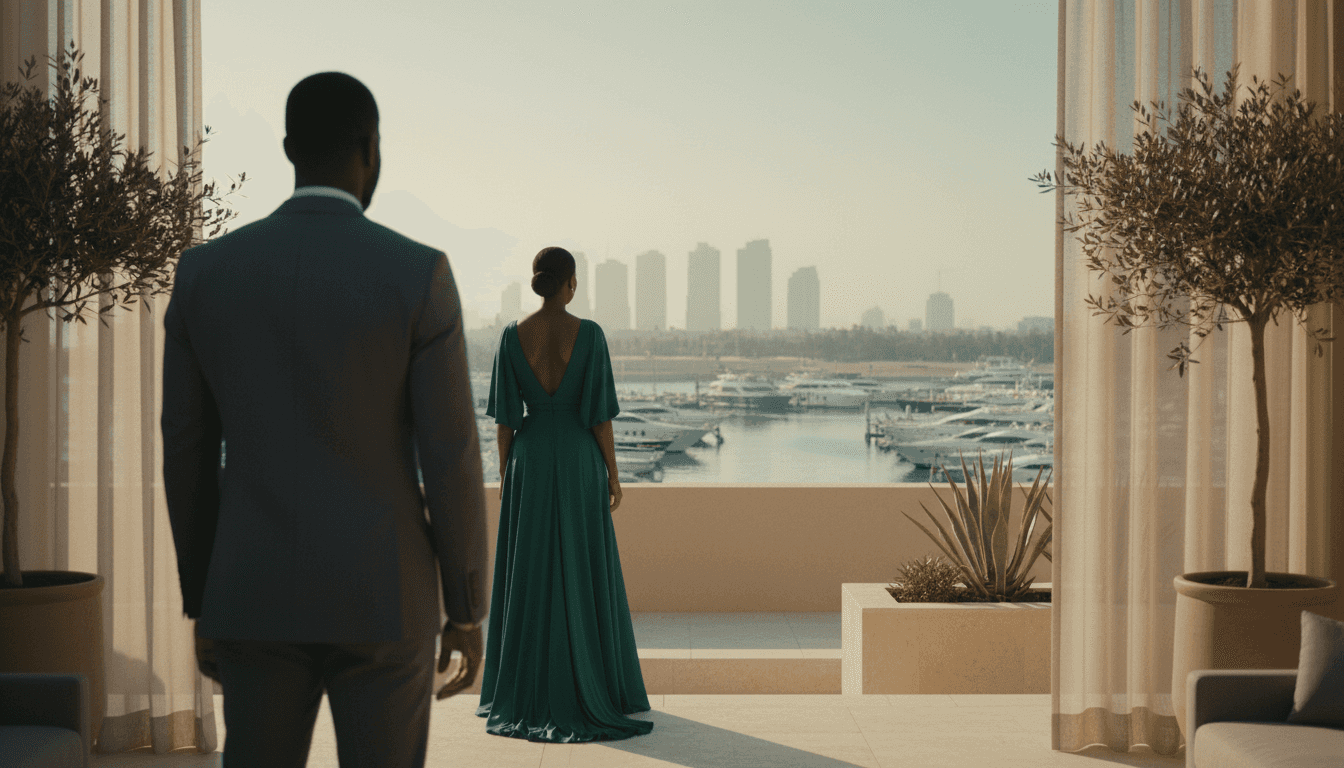
Finding Your Home in Dubai: Global Lifestyles, Local Address
Dubai’s genius lies in its diverse neighbourhoods that mirror global lifestyles. I'll guide you through finding a corner of the city that feels like coming home, from London-style villages to Manhattan-esque high-rises.

One of the most common questions I get from clients moving to Dubai is not about yield or capital appreciation, but something far more personal: “Where will I feel at home?” It’s a question that cuts through the spreadsheets, a search for familiar comforts in a city known for its futuristic ambition. They’re asking if Dubai’s gleaming surfaces have soul, if its sprawling map contains a corner that mirrors the life they’re leaving behind, only better.
My answer, after more than a decade of navigating these streets and markets for our clients at Gaia Living, is an emphatic yes. The true genius of Dubai isn't just its ambition to build the tallest and the grandest; it's the quiet, organic emergence of global lifestyle neighbourhoods. These are expat communities Dubai has cultivated not by grand design alone, but through the magnetic pull of like-minded people creating pockets of home. You don't have to give up your favourite parts of living in London, Los Angeles, or Mumbai to live here. You just need to know where to look.
Here's what we'll explore:
- The London Parallel: Finding walkable village life in historic Dubai.
- The Manhattan Vibe: High-rise density and the energy of a global hub.
- The Californian Dream: Spacious suburban living under the Dubai sun.
- The European Riviera: Waterfront elegance and resort-style living.
- The Mumbai Mix: Vibrant, multi-generational communities.
- The Creative Enclave: For the artists, designers, and innovators.
- The Practical Costs: A real-world breakdown of buying your lifestyle.
- My Verdict: Which lifestyle truly defines modern Dubai?
The London Parallel: Walkable Village Life
For many of our British and European clients, the idea of home is tied to a certain intimacy of scale. They talk about quiet, tree-lined streets, the ability to walk to a favourite bakery, a local park where neighbours greet each other, and schools that are part of the community fabric. They are, in essence, describing the village life found in London's leafier postcodes like Chiswick or Richmond. In Dubai, the closest and most authentic parallel to this is found in the established, low-rise elegance of Jumeirah and parts of the adjoining Al Sufouh.
This is old Dubai, relatively speaking. The properties here are not the glass-and-steel towers of the skyline but sprawling, often unique villas and low-rise apartment blocks, many built decades ago. What they lack in modern amenities like integrated smart-home systems, they more than make up for in character, plot size, and an unbeatable location. Walking through Jumeirah 1 on a Friday morning, with the scent of saltwater from the public beaches mixing with the aroma of fresh bread from independent bakeries, you understand the appeal. It feels settled, lived-in, and distinctly neighbourhood-centric. This is where you find some of the city's most established international schools, like Jumeirah English Speaking School (JESS) and Kings' School Dubai, making it prime territory for expat family living Dubai style.
However, this lifestyle comes at a significant premium, and the market mechanics are different. Many of the original villas are leasehold and not available for foreign ownership. The freehold opportunities are concentrated in newer, ultra-exclusive pockets like Jumeirah Bay Island, home to the Bvlgari Resort and Residences, where prices are among the highest in the city. For those seeking freehold titles with a similar vibe, the City Walk development by Meraas offers a modern, urban interpretation of this low-rise, walkable ideal, blending residential apartments with high-end retail and dining. It’s a compelling, if pricier, alternative. The real challenge for buyers here is scarcity. Unlike the vast new master communities, prime Jumeirah stock is limited and tightly held, meaning when a good property comes to market, you need to be ready to act decisively.
The Manhattan Vibe: High-Rise Density and Energy
 Featured project
At the complete opposite end of the spectrum is the lifestyle that mimics the vertical, high-energy thrum of Manhattan or the smooth efficiency of Singapore. This is for the person who wants to be in the heart of the action, valuing convenience, connectivity, and the buzz of a 24/7 city. In Dubai, this archetype finds its purest expression in two key districts: Dubai Marina and the Dubai International Financial Centre (DIFC). These aren't just places to live; they are ecosystems designed for a certain kind of urban professional.
Dubai Marina, developed largely by Emaar Properties, is a masterclass in waterfront, high-rise living. It's a forest of towers clustered around a man-made canal, flanked by a 7km pedestrian promenade lined with cafes and restaurants. The appeal is immediate: you can leave your apartment and be walking by the water in minutes, head to the beach, or jump on the Dubai Tram or Metro. It’s one of the most walkable districts in the city, offering a sheer density of amenities that few other areas can match. For a young professional or couple moving from a major global city, the transition feels almost smooth. The trade-off, of course, is space. Apartments are the norm, and while many are spacious and offer stunning views, a private garden is out of the question. It’s a vertical community where your neighbours are above, below, and beside you.
If the Marina is Dubai’s answer to a vibrant, social city district, then DIFC is its Wall Street. This special economic zone is a global financial hub, but it has evolved into a premier lifestyle destination in its own right. Living in DIFC, particularly in towers like the Index Tower or Central Park Towers, offers the ultimate walk-to-work lifestyle for those in finance, law, or consulting. The district is a curated experience, with a globally recognised concentration of fine-dining restaurants, art galleries, and exclusive social clubs. It’s sophisticated, polished, and operates with a palpable sense of ambition. The residential offerings here, from developers like Omniyat and Emaar, are aimed squarely at the high-net-worth individual who values discretion, quality, and proximity. It’s less about a community beach day and more about a post-work gallery opening. Both Marina and DIFC are prime examples of how Dubai provides familiar comforts Dubai homes for those accustomed to the thrilling pace of a metropolis.
The Californian Dream: Suburban Bliss
Many families arrive in Dubai chasing a different dream — one of space, safety, and a sun-drenched suburban lifestyle that echoes the sprawling, family-centric communities of Southern California or the American Sun Belt. They envision weekends spent by the pool, children cycling on quiet cul-de-sacs, and a strong sense of community anchored by schools and sports clubs. For these buyers, Dubai delivers spectacularly with its master-planned villa communities, and the original, enduring template for this is Arabian Ranches.
Developed by Emaar, Arabian Ranches was a game-changer when it launched. It perfected the formula of self-contained, gated communities offering a variety of villa types set around a championship golf course. It’s a world away from the high-rise density of the coast. Here, the defining features are wide, landscaped boulevards, communal pools and parks within each sub-community, and a central community centre with a supermarket, clinics, and restaurants. It is the quintessential expat family living Dubai experience. The presence of top-tier schools within the community itself, like Jumeirah English Speaking School (JESS) Arabian Ranches, is a huge draw, creating a bubble of convenience where the school run doesn't involve navigating major highways.
Over the years, this successful model has been replicated and refined across the city. The Meadows, another Emaar project, offers a similar but slightly more central alternative, with beautiful lakes and mature landscaping giving it a settled, established feel. Newer communities like Dubai Hills Estate have taken the concept and elevated it, integrating a world-class golf course, a massive central park, and the Dubai Hills Mall into a fully integrated 'city within a city'. For families prioritising a specific educational curriculum, proximity to the right school is often the deciding factor, and these communities are ringed by some of the best international schools Dubai property buyers can find. The trade-off for this space and serenity is a reliance on the car. While the communities themselves are walkable, getting anywhere else requires driving, a fact of life that will feel very familiar to anyone from Los Angeles or Houston.
“The real test of a neighbourhood is not its gloss or its launch-day promises, but what it feels like on a quiet Tuesday evening. Does it feel like a resort, or does it feel like home?”
The European Riviera: Waterfront Elegance
There's a particular flavour of luxury living synonymous with the French Riviera or Italy's Amalfi Coast — a life lived in direct conversation with the sea. It's about an effortless, resort-style elegance where the boundaries between home, holiday, and high society blur. In Dubai, this lifestyle finds its most potent and globally recognised expression on the Palm Jumeirah. This audacious, man-made archipelago isn't just an engineering marvel; it's a global address that signifies a certain kind of achievement.
Living on the Palm is an immersive waterfront experience. For residents in the signature villas that line the 'fronds', this means a private beach and the Persian Gulf at the end of your garden. For those in the high-end apartment buildings on the 'trunk' or the crescent, it means panoramic sea views and access to five-star hotel amenities. The entire island is a curated resort. The fronds are surprisingly tranquil, residential enclaves, while the trunk and crescent are alive with world-famous beach clubs, Michelin-starred restaurants, and luxury hotels. It's a lifestyle that can be as private or as public as you wish. You can spend a quiet weekend at home with family or step out into a glamorous, international social scene.
This Riviera model has inspired a new generation of waterfront communities, each with its own distinct character. Emaar Beachfront offers a slice of Miami-style living, with sleek apartment towers enjoying private beach access and views of both the Palm and the Marina skyline. Bluewaters Island by Meraas is a more intimate, pedestrian-focused island with a distinctly chic, urban-beach feel, anchored by the Ain Dubai. And looking to the future, projects like Palm Jebel Ali and Dubai Islands by master developer Nakheel promise to expand this waterfront dream on an even grander scale. This is a core part of the global lifestyle neighbourhoods Dubai offers, attracting buyers who see the water not just as a view, but as an essential part of their daily lives.
The Mumbai Mix: Vibrant, Multi-Generational Communities
One of Dubai’s foundational strengths is its deep and historic connection to the Indian subcontinent. For decades, families from Mumbai, Delhi, Karachi, and Lahore have been integral to building the city, and they have sought cultural enclaves Dubai has in abundance, places that offer the familiar rhythms of home. This lifestyle is often characterised by multi-generational living, a vibrant community social life, proximity to cultural and religious centres, and access to the specific flavours and products of home. It’s a rich, dense, and deeply interconnected way of life.
Historically, the neighbourhoods of Bur Dubai and Deira were the heart of this community. Here, the streets are alive with the sounds and smells of the subcontinent, from textile souks to spice shops and beloved canteens serving authentic cuisine. While foreign ownership is not possible in most of these areas, their cultural gravity is undeniable. For freehold buyers seeking a similar atmosphere, communities like Dubai International City were specifically designed with affordability and cultural clustering in mind, featuring 'country clusters' that nod to different architectural styles. Further out, developments in areas like Liwan and Dubai Silicon Oasis have become incredibly popular with South Asian families, offering modern apartments with excellent community facilities and, crucially, a price point that allows for prudent investment and savings.
More recently, developers have recognised this powerful demographic with more targeted, upscale offerings. A prime example is what we're seeing in Sobha Hartland in Meydan. Developed by the Indian-owned Sobha Group, this community has a deep understanding of the priorities of the discerning Indian buyer. The layouts often accommodate larger families, the quality of the finishes is exceptionally high, and the inclusion of top-tier international schools right within the masterplan is a non-negotiable feature. It blends the spaciousness of a modern Dubai community with a cultural understanding that resonates deeply. It’s a sophisticated evolution, offering the familiar comforts of home within a premium, globally competitive property.
The Creative Enclave: Artsy & Bohemian Hubs
Every major global city has its creative quarter — a Shoreditch in London, a Wynwood in Miami, a 798 Art District in Beijing. These are the places where artists, designers, and innovators congregate, transforming industrial areas into vibrant cultural hubs. They are characterised by studios, galleries, independent coffee shops, and a raw, authentic energy. For a long time, Dubai was perceived as lacking such a space, but that has changed dramatically. The city now has a thriving creative heart, offering a lifestyle for those who value aesthetics, innovation, and a sense of being part of a cultural movement.
The epicentre of this world is the Dubai Design District, universally known as d3. It’s not just a collection of office buildings; it's a curated ecosystem for the fashion, art, and design industries. The architecture is sharp and contemporary, the public spaces are filled with art installations, and the ground-floor retail is a mix of avant-garde boutiques, design showrooms, and seriously good cafes. Living in or near d3, such as in the new residential offerings popping up on its periphery in areas like Al Jaddaf, means being immersed in this creative energy. It's a place that hosts major cultural events like Dubai Design Week and is a hub for the region's creative talent.
For a more organic, industrial-chic vibe, the true bohemian heart of Dubai is Alserkal Avenue in the Al Quoz industrial area. What started as a single warehouse has grown into a sprawling complex of contemporary art galleries, performance spaces, a arthouse cinema, and workshops for local artisans. It's a genuinely exciting and dynamic place, a world away from the polish of the financial district. While Al Quoz has traditionally been industrial, a new wave of residential projects is now capitalising on its cultural cachet. Developers are creating loft-style apartments and live-work spaces aimed at the creative class who want to be close to their studios and the gallery scene. This represents a maturing of the Dubai property market, recognizing that 'lifestyle' isn't just about beaches and golf courses; it's also about culture, community, and creative expression.
The Practical Costs: A Real-World Breakdown
It’s wonderful to dream about these lifestyles, but at Gaia Living, we believe the best decisions are grounded in financial reality. Finding your spiritual home in Dubai is one thing; affording it is another. The price disparity between these lifestyle archetypes is immense, and it’s crucial to understand the total cost of acquisition, not just the sticker price. Let's run through a realistic, line-by-line example for a mid-range family home — a three-bedroom apartment in Dubai Marina, which offers a blend of the high-rise and family-friendly lifestyles.
Let's assume a purchase price of AED 3,500,000. Here’s what the upfront costs would look like:
- Purchase Price: AED 3,500,000
- Down Payment (20% for residents): AED 700,000
- Dubai Land Department (DLD) Fee (4% of price): AED 140,000
- DLD Registration Fee: AED 4,200 (for properties over AED 500k)
- Agency Fee (2% of price + 5% VAT): AED 73,500
- No Objection Certificate (NOC) Fee: Typically AED 1,000 - AED 5,000 (paid to the developer to issue the letter stating there are no outstanding dues)
- Mortgage Arrangement & Valuation Fees (if applicable): approx. 1% of loan amount, AED 28,000
Total Upfront Cash Required: Approximately AED 945,700
This is a critical calculation. Many first-time buyers in Dubai focus only on the down payment, but the associated government and agency fees add nearly 7-8% to the total cash you need on hand. And the costs don't stop there. Annual service charges are a major factor in Dubai property ownership. For our AED 3.5M apartment in the Marina, service charges could range from AED 18-25 per square foot. On a 2,000 sq. Ft. apartment, that’s an annual bill of AED 36,000 to AED 50,000, payable for the upkeep of the pool, gym, security, and common areas. In a villa community like Arabian Ranches, service charges are lower on a per-square-foot basis (perhaps AED 8-12), but you are paying for a much larger built-up area and plot. Understanding these recurring costs is essential for sustainable ownership. The government portal u.ae and the Dubai Land Department (DLD) website provide official calculators and fee structures that we always advise our clients to consult.
The key to finding your 'home' in Dubai is to first honestly define the non-negotiable elements of your current or desired lifestyle, then map them to the city’s diverse neighbourhood archetypes. Don't chase a trend; invest in the community that genuinely reflects how you want to live.
My Verdict: Dubai's Ultimate Lifestyle is Choice
After walking you through these global mirrors, from the quiet lanes of Jumeirah to the pulsating heart of DIFC, what is my ultimate verdict? What is the quintessential Dubai lifestyle? For me, the defining characteristic of living in Dubai in 2026 and beyond is not one single archetype, but the sheer freedom of choice. The city has reached a level of maturity where it no longer just offers a generic 'expat lifestyle'. Instead, it presents a rich menu of highly specific, deeply realised ways of living.
This is a profound shift. It means that whether you are a young tech founder seeking a creative loft, a banker needing smooth work-life integration, a family looking for a suburban haven, or a retiree wanting waterfront serenity, there is a place for you here. The market is sophisticated enough to cater to these distinct demands with nuance and quality. You can find your tribe. The growth of these cultural enclaves and global lifestyle neighbourhoods is the most compelling evidence that Dubai has transcended its image as a transient hub and become a genuine 'home' city for a global population.
My advice to any prospective buyer is to experience these places firsthand. Spend a Saturday morning in The Meadows, have dinner on a Tuesday night in Business Bay, and walk the length of the Marina promenade. At Gaia Living, we don't just show properties; we curate experiences of the neighbourhoods themselves. Because buying a home is never just a transaction about square feet and service charges. It's an investment in a lifestyle, a community, and a feeling. It's about finding that corner of this dynamic, global city that finally makes you say, “This is it. This is home.”
## Sources - Dubai Land Department (DLD): https://dubailand.gov.ae/ - UAE Government Portal (Fees and Procedures): https://u.ae/ - Central Bank of the UAE (Mortgage Regulations): https://www.centralbank.ae/
Questions, answered
- Which Dubai neighbourhood is best for a London-like lifestyle?
- Jumeirah and parts of Al Sufouh offer a walkable, low-rise 'village' feel reminiscent of London's leafy suburbs. They feature independent cafes, established schools, and a strong sense of community, though properties are older and command a premium.
- Where can I find a New York or Singapore style of living in Dubai?
- For a dense, high-rise, 'work-live-play' environment, look to Dubai Marina for vibrant waterfront living or DIFC for a sophisticated financial hub lifestyle. Both offer exceptional connectivity, dining, and walkability.
- Are there American-style suburban communities in Dubai?
- Yes, communities like Arabian Ranches and The Meadows are modelled on American suburban living. They offer spacious villas with gardens, community pools, golf courses, and highly-regarded international schools, making them popular for expat family living.
- What are the typical property prices in these lifestyle-driven neighbourhoods?
- Prices vary widely. A two-bedroom apartment in Dubai Marina can range from AED 2.5M to 5M+, while a four-bedroom villa in Arabian Ranches might be AED 5M to 8M. Ultra-luxury areas like Palm Jumeirah see villas starting from AED 25M and climbing significantly.
- What are the key costs to consider when buying a property in Dubai?
- Beyond the property price, budget for the 4% Dubai Land Department (DLD) transfer fee, 2% agency fee, a Trustee Office fee (approx. AED 4,200), and the cost of your No Objection Certificate (NOC). If getting a mortgage, you'll also need a 20-25% down payment.
- Can I find a bohemian or creative neighbourhood in Dubai?
- Yes, the Dubai Design District (d3) is the city's hub for fashion and design, offering a creative, workshop-style atmosphere. For a more established, artsy residential feel with independent galleries, Al Quoz's Alserkal Avenue district is the cultural heart, with new residential projects emerging nearby.

Yusuf writes about how Dubai actually lives — waterfront mornings, community dining, walkability, and the lifestyle premium built into an address.
Related stories
Parking: The Unsung Hero of Dubai Apartment Value
I explore how apartment parking allocation, from basement quality to visitor access, is a critical and often overlooked driver of property value and livability in Dubai.
Selling in a Dubai Boom: Your Strategic Playbook
A seller's market in Dubai offers immense opportunity, but achieving a record price requires more than just listing your property. This is your strategic guide to preparing, pricing, and positioning for peak demand.
How to Own Dubai Property: A Guide to Ownership Structures
Choosing the right ownership structure is one of the most critical, yet overlooked, decisions when buying Dubai property. This guide breaks down your options, from individual title to joint and corporate setups.
Echoes, in your inbox
One thoughtful email a month. Market insight, new launches, no spam.