

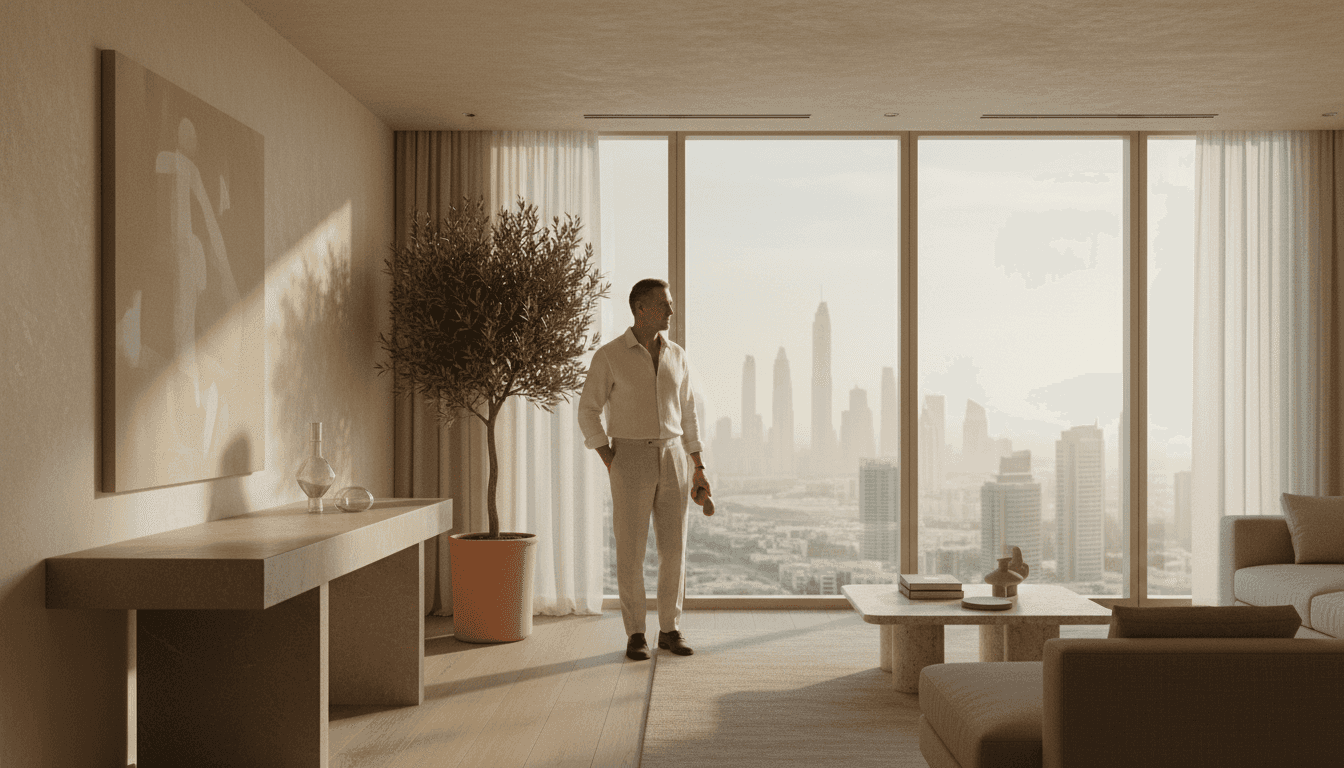
Dubai's Prime Rental Market: A New Era?
A deep dive into the forces shaping Dubai's luxury long-term rental market, analysing the demand from HNWIs and the surprising elasticity of prime residential lease prices.

The top tier of Dubai's rental market is no longer just a transient stopover; it's becoming a long-term destination. I'll dissect the structural shifts driving this change and explore just how much tenants are willing to pay for the best addresses.
Here's what we'll explore:
- The fundamental shift from transient stopover to long-term base for HNWIs.
- How macroeconomic factors and policy changes are fuelling high-end rental demand in Dubai.
- The key attributes that define 'luxury' for today's discerning tenant.
- A deep dive into the price elasticity of Dubai's most desirable communities.
- The crucial differences in tenant profiles between apartments and villas.
- The rising significance of branded residences in the rental ecosystem.
- A practical breakdown of the true, all-in cost of securing a prime Dubai rental property.
A Structural Shift in Demand
For years, the narrative surrounding Dubai’s rental market, particularly at the premium end, was one of transience. Executives on two-year contracts, families on temporary assignments — these were the typical tenants. The luxury lease was a placeholder, a comfortable stopgap before either moving on or buying. In my analysis, that paradigm has fundamentally and perhaps permanently shifted. The core driver of today's Dubai luxury rental market trends is no longer temporary relocation, but strategic repositioning by global wealth. We are witnessing a large-scale migration of capital and talent for whom Dubai is the destination, not a layover. A significant portion of this cohort chooses to rent long-term, even when they possess the capital to buy outright.
This isn't a cyclical high; it's a structural change. The catalyst has been a perfect storm of global uncertainty and proactive local policy. Geopolitical instability in other parts of the world, coupled with less-than-favourable tax regimes, has made Dubai’s combination of safety, security, and zero personal income tax exceptionally attractive. This pull factor was amplified by the government's visionary visa reforms, most notably the expansion of the Golden Visa programme. This scheme provides long-term residency for investors, entrepreneurs, and exceptional talents, decoupling residency from a specific employer and giving individuals a tangible stake in the country. For a high-net-worth individual (HNWI) moving their family and potentially their business headquarters, this long-term certainty is invaluable. Renting becomes a strategic choice: a way to 'test drive' the city's lifestyle and various neighbourhoods for one or two years before committing hundreds of millions of dirhams to a property purchase.
At Gaia Living, we observe this pattern daily. Clients who could easily purchase a AED 50 million villa on Palm Jumeirah will often opt to rent a similar property for AED 2 million a year first. Why? Flexibility is the primary reason. It allows them to understand the city's rhythm, the school runs, the traffic patterns, and the social fabric of a community like Arabian Ranches versus the beachfront lifestyle of Jumeirah Bay. This period of acclimatisation is a luxury in itself, de-risking the eventual, much larger, capital decision of buying a home. The demand is therefore not just for a property, but for an extended, high-fidelity experience of Dubai life. This elevates the nature of the rental transaction from a simple housing need to a strategic lifestyle decision, underpinning the resilience we now see in prime rental rates.
Beyond that, this new cohort of tenants has different expectations. They are not just looking for a large space; they are seeking a smooth, curated lifestyle. This has profound implications for landlords and developers. The property itself is just the starting point. The quality of management, the level of service, the exclusivity of amenities, and the sense of community are now critical factors in securing and retaining a high-value tenant. This shift explains the remarkable performance of well-managed, high-spec properties in prime locations, which continue to command premium rents even as the broader market sees more varied performance. The high-end rental demand Dubai is experiencing is sophisticated, discerning, and willing to pay a premium for demonstrable quality and hassle-free living.
Macro Winds and Policy Tailwinds
 Featured project
The robustness of the luxury rental sector isn't an isolated phenomenon; it's deeply intertwined with the UAE's macroeconomic health and strategic policy direction. The nation's decisive handling of the global pandemic set the stage, showcasing its resilience and capacity for effective governance. This created a 'safe harbour' effect that continues to draw in capital and talent. The subsequent economic rebound has been broad-based, with non-oil sectors like finance, technology, and tourism flourishing. This creates high-paying executive roles, and the people filling them are the primary demographic for prime residential leases Dubai.
Consider the growth of financial hubs like the Dubai International Financial Centre (DIFC) and Abu Dhabi Global Market (ADGM). These zones have attracted a wave of hedge funds, private equity firms, and family offices setting up substantial operations. A senior partner moving to Dubai to establish a new fund is a prime candidate for a luxury rental. They need a prestigious address immediately but may not have the time or inclination to navigate the property purchase process amidst setting up their business. They will happily sign a two-year lease for a penthouse in DIFC or a villa in Emirates Hills to ensure their family is settled and comfortable from day one. This corporate and financial migration is a powerful, ongoing demand driver.
Policy has been the other crucial pillar. Beyond the Golden Visa, initiatives like 100% foreign ownership of mainland companies have been game-changers, encouraging entrepreneurs to move their entire operational base to Dubai. This creates a stickier form of expatriate demand. These are not just employees; they are business owners invested in the long-term success of their enterprise within the UAE. Their housing decisions reflect this longer-term outlook. They might rent for a few years to maintain capital liquidity for their business before eventually buying. This nuanced demand profile explains why the market can sustain both a booming sales market and a robust high-end rental market simultaneously; they serve different, but sometimes overlapping, needs of the same demographic.
Finally, we cannot ignore the wealth effect. Dubai's own property market boom has created significant paper wealth for existing owners. Some use this by upgrading their lifestyle, selling their current home for a profit and moving into a more luxurious rental property while they decide on their next purchase. While a smaller driver, it adds another layer to the demand structure. The key takeaway is that the forces supporting the luxury rental market are not fleeting. They are tied to the long-term economic and social strategy of Dubai and the UAE. As long as the city remains a globally competitive hub for business, finance, and talent, the demand for high-quality rental accommodation will remain structurally sound.
Anatomy of a 'Prime' Rental
What exactly qualifies a property for the 'prime' or 'luxury' rental bracket in Dubai today? The definition has evolved significantly. A decade ago, size and location were the primary determinants. Today, while those factors remain essential, the criteria are far more granular and sophisticated, reflecting the matured tastes of HNWI rental preferences Dubai. The modern luxury tenant is purchasing a lifestyle package, not just renting square footage. My analysis of top-tier leases reveals a consistent hierarchy of value drivers.
First and foremost is location, but with a new emphasis on community and context. It’s not enough to be in a 'good area'; the property must be in the *right* part of that area. On the Palm Jumeirah, for instance, a villa on a high-numbered frond with an open sea view and a view of the Marina skyline commands a substantial premium over an identical villa on a lower frond with a closer, more obstructed view. In communities like Al Barari, properties that back directly onto the lush, mature gardens or waterways are in a different league from those on the periphery. Tenants are paying for privacy, tranquillity, and a specific sensory experience. This hyper-local premium is a defining feature of the current market.
Second is the quality of the build and finish. The market has zero tolerance for mediocrity at this level. We're talking about natural stone floors, European kitchens with integrated high-end appliances (Gaggenau, Miele), smart home automation systems that actually work, and meticulous craftsmanship in every detail. Landlords who have invested in substantive, high-quality upgrades are achieving the highest rents and the lowest vacancy rates. A 'landlord finish' — code for basic and cheap, is immediately discernible to this class of tenant and will cause a property to languish on the market, even in a prime location. The demand is for turn-key perfection.
Third, and increasingly important, are amenities and services. This is where we see the most significant shift. A private pool and garden are standard expectations for a villa. The new differentiators are the amenities that support a smooth lifestyle. This includes access to five-star facilities: residents-only beach clubs, state-of-the-art gyms with professional equipment, exclusive spa and wellness centres, and concierge services that can handle everything from restaurant bookings to housekeeping. This is why branded residences, which I will discuss in more detail later, are performing so exceptionally well. They bundle this service layer directly into the residential offering. For a busy executive or family, the value of having these services on-tap is immense, and they are willing to pay the associated premium.
Here’s a checklist of attributes that consistently define a top-tier rental property in today's market:
- Location Primacy: Best-in-class location within an already prime area (e.g., tip of a Palm frond, direct park-facing in Dubai Hills Estate).
- Architectural Merit: A unique or superior design, often by a renowned architect, with excellent natural light and logical flow.
- Superior Finishes: Use of premium, authentic materials like marble, solid wood, and high-end European fixtures and appliances.
- Turn-key Condition: Immaculately maintained, often fully and tastefully furnished, requiring no work from the tenant.
- Privacy and Security: Excellent soundproofing, private elevators for penthouses, secluded gardens for villas, and robust 24/7 security.
- Lifestyle Amenities: Access to exclusive, well-managed facilities such as private beaches, high-spec gyms, spas, and residents' lounges.
- Professional Management: A responsive and professional landlord or management company that handles issues promptly.
Price Elasticity: The Palm vs. The Hills
One of the most fascinating aspects of the current market is the varying price elasticity across different prime communities. In simple terms, how much does rental demand fall as prices rise? My observation is that in Dubai's absolute top-tier, 'trophy' locations, demand has become remarkably inelastic. This means that even as rents have soared, the pool of potential tenants has not significantly diminished. This is a classic symptom of a market driven by wealth rather than income. For a tenant with a net worth in the hundreds of millions, the difference between a AED 2 million and a AED 2.5 million annual rent is functionally irrelevant if the property meets their exacting standards. The decision is driven by availability and quality, not budget constraints.
Palm Jumeirah is the quintessential example of this phenomenon. The supply of high-quality, well-located signature villas and penthouses is finite. The global demand from HNWIs wanting that iconic address and lifestyle is immense. This creates intense competition for the best properties. Landlords with premium, upgraded villas on the fronds have been able to increase rents by significant margins without seeing any drop-off in interest. We have seen cases where a desirable villa comes to market and receives multiple offers above the asking price within 48 hours. This is not a normal rental market dynamic; it's more akin to a collectable asset class where price is secondary to acquiring the item.
“The conversation at the very top of the market is no longer about price per square foot. It's about securing the irreplaceable view, the perfect finish, and the ultimate lifestyle — and tenants are willing to pay whatever it takes.”
Contrast this with another excellent, highly desirable, yet more accessible luxury community like Dubai Hills Estate. While it attracts a wealthy demographic, including many end-users and families, its rental market exhibits greater price elasticity. A four-bedroom villa here might rent for AED 400,000 to AED 600,000 per year. If a landlord tries to push this to AED 800,000, they will likely see a sharp drop in enquiries. Why? The tenant profile here, while affluent, is more likely to be a senior executive or successful business owner for whom that extra AED 200,000 is a meaningful sum. They are more budget-conscious and have more comparable alternatives. They could look at a similar property in Arabian Ranches, a townhouse in a different community, or even decide that at that price point, it makes more sense to buy. The availability of substitutes creates a natural ceiling on rental prices.
This distinction is crucial for both landlords and tenants. For landlords, it means that pricing strategy must be hyper-specific to the micro-location and asset type. An owner on the Palm can be aggressive; an owner in Dubai Hills needs to be more attuned to comparable market data. For tenants, it means that while the 'trophy' market may feel impenetrable, there is relative value to be found in other excellent prime communities if they are willing to be flexible on the exact address. This long-term luxury rentals analysis shows that while the entire premium segment has performed well, the dynamics can be very different from one kilometre to the next.
Villa vs. Apartment: Two Distinct Tenant Profiles
Within the broader luxury market, a clear divergence exists between the demand for villas and the demand for apartments. They cater to two fundamentally different tenant profiles with distinct needs and priorities. Understanding this split is key to interpreting HNWI rental preferences Dubai. While both tenants are affluent, their lifestyle requirements and decision-making drivers are often worlds apart, leading to different rental dynamics for each property type.
Demand for large, luxury villas is overwhelmingly driven by families. The primary consideration for these tenants is space — both internal and external. They require multiple bedrooms, separate living areas for formal and informal gatherings, private gardens for children to play in, and often, accommodation for domestic staff. Proximity to top-tier international schools is a non-negotiable factor. This is why communities like Emirates Hills, Umm Suqeim, Dubai Hills Estate, and certain parts of the Palm Jumeirah are perennial favourites. A family relocating with three children will immediately filter their search to focus on these school corridors. Their decision matrix is built around family logistics. They value privacy, security, and a sense of community with other families.
These villa tenants are often taking a longer-term view. They are settling their family for a multi-year period, even if they are renting. As such, they are more willing to sign two- or even three-year leases to secure the right home in the right location, providing stability for their children's schooling. They are also more likely to be what we call 'nesters' — tenants who, even in a rental, invest time and effort in personalising the space and garden to make it feel like a true home. From a landlord's perspective, these are often ideal tenants: they are stable, treat the property with care, and provide predictable income over a longer horizon. The trade-off is that they are also highly demanding about the condition of the property and expect immediate resolution of any maintenance issues.
The tenant profile for luxury apartments and penthouses is distinctly different. Here, the demand is skewed towards couples, singles, and business-focused individuals. The primary driver is not space in the same way, but lifestyle, convenience, and prestige. A banker working in DIFC wants a stunning two-bedroom apartment within a five-minute walk of their office, with access to a world-class gym and a rooftop pool. They are optimising for time and lifestyle efficiency. The 'lock up and leave' aspect is a huge selling point; they can travel for weeks on end without worrying about garden maintenance or security. Their social life revolves around the high-end restaurants and lounges in areas like Downtown Dubai, DIFC, and Bluewaters Island.
These tenants are paying for the view, the address, and the built-in amenities. A sprawling penthouse at the top of a signature tower is a statement. The rental price is justified by the exclusivity and the panoramic vistas of the city skyline or the Arabian Gulf. Lease terms can be more flexible, with one-year contracts remaining common, though we are seeing a trend towards longer leases here as well. The tenant is less likely to be a 'nester' and more likely to be a 'consumer' of the lifestyle the building provides. They value the 24/7 concierge, the valet parking, and the direct access to retail and dining. For this profile, the building *is* the community, and the services it provides are a critical part of the value proposition.
The Branded Residence Premium
No analysis of the Dubai luxury rental market is complete without a dedicated look at the rise of branded residences. This sector has exploded in recent years and represents the pinnacle of the convergence between hospitality and residential living. In my view, branded residences are not just a niche; they are a powerful force shaping the expectations and price ceiling of the entire high-end rental market. They offer a tangible solution to the demand for a smooth, service-led lifestyle that I highlighted earlier.
What is a branded residence? It's a property, usually an apartment or penthouse, that is associated with a luxury hospitality brand — think Four Seasons, Ritz-Carlton, Bvlgari, or Dorchester Collection. Residents of these properties get to live in a private home but have access to the five-star services and amenities of the associated hotel. This can include everything from in-residence dining and housekeeping to a dedicated residential concierge and access to the hotel's spa and pool facilities. This model effectively outsources the hassle of high-end living, providing a turn-key luxury experience managed by a world-class operator. The leading developers in this space, such as Omniyat, have perfected this integrated model.
For a specific segment of the rental market, this is an irresistible proposition. The target tenant is often a globetrotting HNWI, a C-suite executive, or a public figure who values privacy and flawless service above all else. They are accustomed to five-star hotel living and want to replicate that experience in a more permanent, private setting. They are not just renting an apartment; they are buying into a trusted brand promise of quality and service. This allows them to feel instantly at home, with a team on hand to manage their every need. The brand acts as a guarantee, removing the uncertainty that can come with renting from a private, unknown landlord.
This guarantee comes at a significant price. Branded residences command a substantial rental premium over even the highest-quality non-branded buildings in the same location. This premium can range from 20% to over 50%, depending on the strength of the brand and the scope of the services offered. A three-bedroom apartment in a top-tier branded residence in Business Bay or along the canal might rent for AED 1.2 million per year, while a stunning, high-spec but unbranded apartment of the same size nearby might achieve AED 800,000. Tenants are explicitly paying for the service layer and the brand association. The market data is clear: this premium is not only being achieved but is proving to be sustainable, as the demand from the ultra-wealthy for this type of product continues to outstrip the limited supply.
The All-In Cost of a Prime Lease
For prospective tenants, especially those new to Dubai, it is critical to understand the full, upfront cost of securing a prime residential lease. The annual rent is the headline figure, but it is far from the only expense. The process is transparent and regulated by the Dubai Land Department (DLD) and its regulatory arm, RERA, but the initial cash outlay can be surprising if you're not prepared. A clear understanding of these costs is essential for proper financial planning.
Let's break down the typical upfront costs for a luxury villa with an annual rent of AED 1,000,000. The figures are illustrative but represent a realistic scenario in today's market.
- Annual Rent: AED 1,000,000. This is typically paid in one cheque upfront in the luxury market. While some landlords may accept two or four cheques, a single-cheque payment is often a powerful negotiating tool that can sometimes secure a better price. For this example, we'll assume one cheque.
- Security Deposit: This is typically 5% of the annual rent for an unfurnished property and 10% for a furnished one. It is refundable at the end of the tenancy, provided the property is returned in good condition. For an unfurnished villa: AED 50,000 (5% of 1,000,000).
- Agency Fee: The standard real estate agency fee is 5% of the annual rent. This is payable to the brokerage that facilitated the deal. AED 50,000 (5% of 1,000,000).
- Ejari Registration Fee: Ejari means 'my rent' in Arabic and is the mandatory government system for registering all tenancy contracts. The registration legitimises the contract and is required for setting up utilities. The cost is approximately AED 220, payable by the tenant.
- Utility Deposits (DEWA): You will need to set up your electricity and water account with the Dubai Electricity and Water Authority (DEWA). This requires a refundable security deposit. For a villa, this is AED 4,000.
- Connection Fees (DEWA): There are also non-refundable connection fees, which total approximately AED 230.
Let's add it all up:
| Item | Cost (AED) | |---|---| | Annual Rent (1 Cheque) | 1,000,000 | | Security Deposit (5%, refundable) | 50,000 | | Agency Fee (5% + VAT) | 52,500 (50,000 + 5% VAT) | | Ejari Registration Fee | 220 | | DEWA Security Deposit (refundable) | 4,000 | | DEWA Connection Fees | 230 | | Total Initial Outlay | 1,106,950 |
So, to secure a villa with a AED 1 million annual rent, the tenant needs to have over AED 1.1 million in liquid funds ready on day one. Of this, AED 54,000 is refundable at the end of the tenancy. It is also important to budget for moving costs, any initial furnishing or personalisation, and the monthly utility bills and housing fees (if applicable, though usually paid by the landlord). This clear financial picture is essential for anyone entering the prime residential leases Dubai market.
The summit of Dubai's rental market is no longer driven by necessity but by choice. It has transformed into a strategic tool for global HNWIs to de-risk their relocation, offering flexibility and a curated lifestyle that, for many, is worth the significant premium. The demand is sophisticated, service-oriented, and remarkably price-inelastic for the very best trophy assets. For landlords, this means quality and management are paramount; for tenants, it means being prepared for a competitive landscape where the best properties are secured with speed and significant upfront capital.
Sources
- Dubai Land Department (DLD): https://dubailand.gov.ae
- Real Estate Regulatory Agency (RERA): https://dubailand.gov.ae/en/tera/
- UAE Government Portal (Visa Information): https://u.ae
- Dubai Statistics Center: https://www.dsc.gov.ae
Questions, answered
- What is driving the demand for luxury rentals in Dubai?
- Demand is primarily driven by the influx of High-Net-Worth Individuals (HNWIs) and senior executives relocating to Dubai for its economic stability, favourable tax environment, and high quality of life. Many use long-term rentals to 'test drive' the city or specific communities before purchasing property.
- Which areas in Dubai have the most expensive rental properties?
- The most expensive rentals are concentrated in ultra-prime locations like Palm Jumeirah (especially Frond villas), Jumeirah Bay Island, Emirates Hills, and Al Barari. Penthouses and branded residences in areas like DIFC and Downtown Dubai also command top-tier rents.
- How much does it cost to rent a luxury property in Dubai?
- Annual rents for luxury properties vary widely. A high-end apartment in Dubai Marina might be AED 300,000-500,000, while a villa in Palm Jumeirah can range from AED 1 million to over AED 3 million per year. Upfront costs include the annual rent, a 5-10% security deposit, and a 5% agency fee.
- Are long-term luxury rentals a good option in Dubai?
- For many HNWIs, renting offers flexibility that purchasing does not. It allows them to experience Dubai without committing capital, especially if their residency is tied to a specific job or if they are exploring different neighbourhoods before buying. It avoids exposure to market fluctuations and the costs of property ownership.
- What are the key trends in Dubai's high-end rental market?
- Key trends include a 'flight to quality' with tenants prioritising amenities, service, and brand. We're also seeing a preference for turn-key, fully-furnished properties, longer lease terms (2-3 years), and a growing demand for branded residences that offer a hotel-like living experience.
- What is the role of the Golden Visa in the luxury rental market?
- The UAE Golden Visa programme has been a significant catalyst. While it's often linked to property purchase, many initial recipients rent while they establish their lives and businesses. It gives them a long-term residency horizon, making a one- or two-year luxury lease a logical and secure first step in their relocation journey.

Amara translates DLD transaction data, supply pipelines, and macro signals into clear calls on where Dubai's market is heading. She writes the numbers most brokers only feel.
Related stories
Dubai Owners Associations: Your Guide to Power & Control
Understand how Owners Associations in Dubai work, from service charges to community rules. This guide explains your rights and how effective building management impacts your apartment's value.
Optimising Sale Proceeds: Reinvesting in Dubai
You've successfully sold your Dubai property. This is a guide on how to strategically reinvest those proceeds to build long-term wealth, from upgrading your home to building a rental portfolio.
Buying a Vacant Resale Home in Dubai
A vacant resale property offers a quick move-in, but it comes with its own set of checks and costs. Here’s my complete guide to navigating the process, from due diligence to getting the keys.
Echoes, in your inbox
One thoughtful email a month. Market insight, new launches, no spam.