


Dubai's New Billionaire Coastline
A new wave of UHNWI buyers is reshaping Dubai's shoreline, seeking privacy and exclusivity on a scale never seen before. I'll break down where they are buying, what they're paying, and why this signals a new era for Dubai's property market.

For years, the pinnacle of Dubai real estate was a sprawling villa in Emirates Hills overlooking a golf course. That era is definitively over. Today, the gravitational centre of the Dubai ultra-luxury property market has shifted, pulled inexorably towards the water. We're witnessing the rapid creation of a new billionaire coastline, a string of hyper-exclusive enclaves where the price of entry is not just eight or nine figures, but a fundamental desire for absolute privacy and a direct connection to the sea. These are not just homes; they are legacy assets, and their emergence is redefining the very meaning of luxury in the Middle East.
In this analysis, I'll take you inside this rarified market. We're going beyond the headlines to examine the real drivers and dynamics at play. Here's what we'll explore:
- The fundamental forces propelling the UHNWI waterfront boom.
- The anatomy of a modern Dubai trophy home, from architecture to amenities.
- A deep dive into the key exclusive island developments at the heart of the action.
- The powerful multiplier effect of branded residences in this segment.
- A line-by-line breakdown of the true cost to acquire one of these waterfront mansions.
- The ongoing financial commitments and long-term value proposition.
- My final verdict on where the smart money is, and should be, looking next.
The New Gravity: Why Waterfront, Why Now?
The recent surge in demand for waterfront property isn't an accident; it's the result of several powerful currents converging at once. The global pandemic was a clear accelerator, fundamentally recalibrating the priorities of the world's wealthiest individuals. Confined to their primary residences, UHNWIs globally developed an acute appreciation for space, security, and a tangible connection to the natural world. A view of the sea and a private stretch of sand became the ultimate luxury, a non-negotiable amenity for those who can afford anything. This psychological shift dovetailed perfectly with Dubai's enhanced status as a global safe-haven, attracting an unprecedented influx of capital and talent seeking stability, a pro-business environment, and an exceptional quality of life. The UAE's Golden Visa program has been instrumental here, providing a clear pathway to long-term residency for investors and their families, cementing their commitment to the city.
This isn't just about a nice view. The appeal of waterfront living is deeply rooted in the economic principle of scarcity. As I often tell our clients at Gaia Living, they're not making any more coastline. This finite supply, especially in a geographically constrained city like Dubai, creates a powerful long-term value proposition. Unlike a golf course view, which can be replicated, a prime beachfront plot on a secure, low-density island is a truly limited resource. This inherent scarcity transforms a property from a mere residence into a collectible asset, a piece of trophy homes Dubai real estate that holds its value with remarkable resilience against broader market cycles. The demand is for a location that is, by its very nature, irreplaceable. We're seeing this play out in real-time, with land plot prices on islands like Jumeirah Bay reaching astronomical figures, driven by buyers who understand that securing the right location is the most critical part of the investment.
This marks a significant evolution from Dubai's previous luxury cycles. For two decades, developers like Emaar Properties and Nakheel set the standard with master-planned communities that offered green, suburban comforts. Emirates Hills was the original 'Beverly Hills of Dubai', and its appeal was based on large plots and manicured fairways. While still a prestigious address, the new generation of UHNWI buyers, particularly those from Europe and Asia, are demonstrating a clear preference for a different kind of lifestyle. They want the vibrancy of the city within easy reach, but a home that feels like a private resort. This has opened the door for developers like Meraas and a host of boutique firms specializing in the ultra-high-end segment, who are crafting projects with a laser focus on privacy, architectural distinction, and the unique experiential quality of living by the sea.
Anatomy of an AED 200M+ Trophy Home
 Featured project
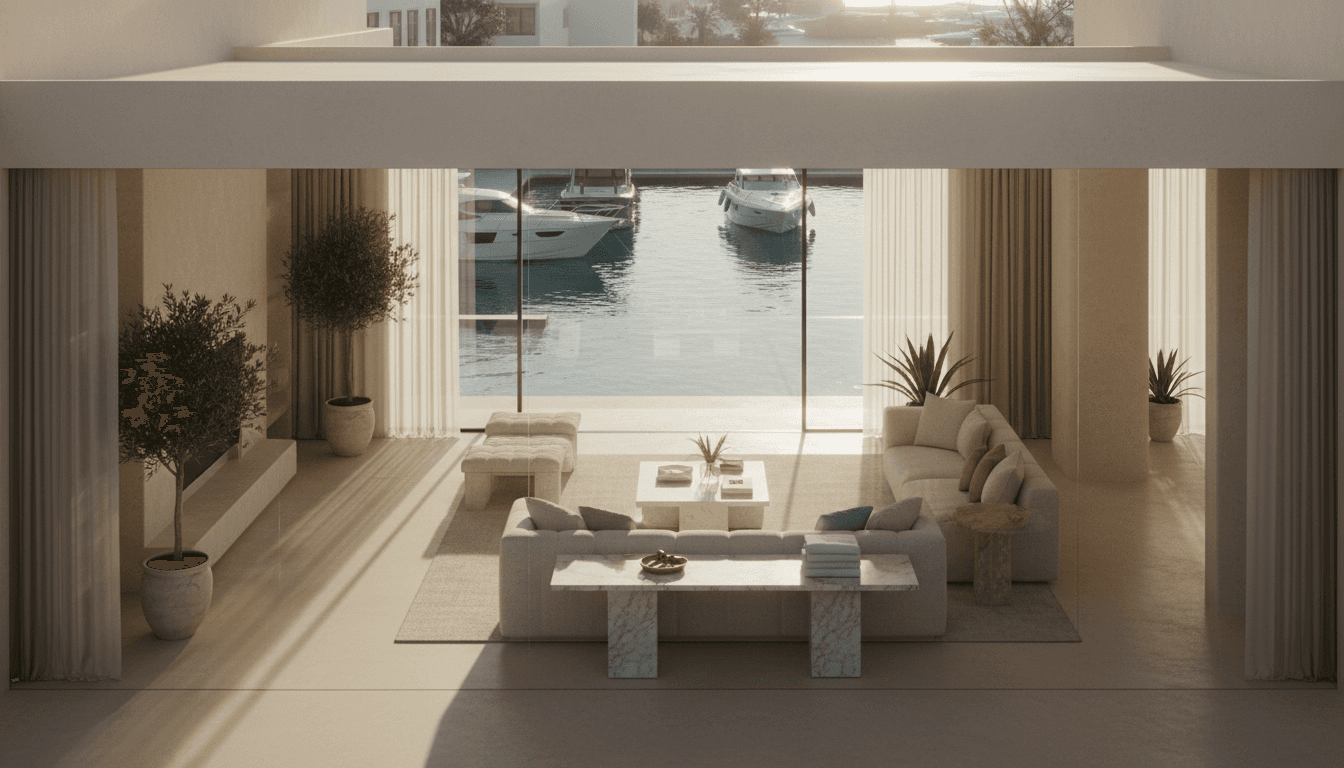
When we discuss properties in the nine-figure range, the conversation moves beyond traditional metrics like price per square foot. These homes are not commodities; they are singular creations, and their value is derived from a confluence of factors that together create an unparalleled living experience. The first and most important is architectural significance. The new wave of waterfront villas Dubai are often designed by internationally acclaimed architects, or 'starchitects', whose name alone adds a premium. The design is bespoke, tailored not only to the plot's unique characteristics but to the owner's specific lifestyle. This is not about choosing from a set of floor plans; it's about commissioning a piece of livable art. The exteriors are statements, and the interiors are masterclasses in spatial design, light, and flow, often blurring the lines between indoor and outdoor living with vast retractable glass walls and integrated water features.
Secondly, the amenities package is designed to create a self-contained private resort. A private, pristine beach and a berth for a yacht are often the starting points. Beyond that, the standard for a home in this class includes features that were once the exclusive domain of five-star hotels. We're talking about basement levels with climate-controlled parking for a collection of 10-20 supercars, professional-grade cinemas with tiered seating and D-BOX motion technology, and comprehensive wellness suites that include a private gym, yoga studio, sauna, steam room, and treatment rooms for massages. Outdoor spaces are equally elaborate, featuring multiple pools, expansive outdoor kitchens, sunken lounges with fire pits, and meticulously landscaped gardens that provide both beauty and an essential layer of privacy from neighbours.
Finally, privacy and materiality are paramount. Security is multi-layered, beginning with the gated access to the island or community itself, followed by private security for the residence, and underpinned by sophisticated surveillance and access control systems. The goal is to create a sanctuary where the owner and their family can feel completely secure and unobserved. This sense of sanctuary is reinforced by the choice of materials. We see developers and owners sourcing the rarest materials from across the globe: entire walls clad in book-matched marble from single quarry blocks in Italy, bespoke joinery from master craftsmen in Europe, custom-designed lighting fixtures, and kitchens and bathrooms outfitted by the world's most exclusive brands. These are not just buildings; they are curated collections of the finest craftsmanship and design, and it is this obsessive attention to detail that elevates a mansion into the realm of a true trophy home.
Spotlight: The Billionaire Islands
The epicentre of this ultra-luxury boom can be found on a handful of man-made islands, each with its own distinct character and appeal. While Palm Jumeirah is Dubai's original icon of waterfront living, it's currently experiencing a remarkable second coming. The so-called 'Billionaire's Row' on Frond G has become a global headline-generator, with a string of record-breaking sales for custom-built mega-villas. What makes it so compelling is the combination of its established reputation, generous plot sizes, and panoramic views of the Dubai Marina skyline. Buyers here are often acquiring older villas simply to demolish them and build new, contemporary masterpieces. It’s a sign of the enduring power of the Palm's brand, now being supercharged by a new generation of wealth that demands the best location on this world-famous landmark.
Perhaps the most exclusive address in Dubai right now, however, is Jumeirah Bay Island. Developed by Meraas, its seahorse shape and extremely low density have earned it the moniker 'Billionaire's Island'. Home to the Bvlgari Resort and Residences, the island offers a level of privacy and prestige that is unmatched. The plots are limited, the views of the Downtown Dubai skyline are protected, and the entire island is a fortress of quiet luxury. The sale of a single vacant plot here for over AED 125 million sent shockwaves through the market, but to those of us watching closely, it made perfect sense. The buyer wasn't just purchasing sand; they were acquiring the right to build a legacy home in the most exclusive enclave in the city, surrounded by a peer group of fellow UHNWIs. The Bvlgari brand adds another layer of cachet and provides residents with access to world-class dining and spa facilities right on their doorstep.
Looking further out, we see the long-awaited maturation of The World Islands project. After years of speculation, tangible progress is visible, most notably with the 'Heart of Europe' development, which aims to create a cluster of European-themed islands with unique hospitality and residential offerings. While logistically more complex, the appeal is undeniable: the chance to own a private estate on an island themed like Sweden or Germany, offering a vacation experience unlike anything else. Beyond this, a handful of the larger islands are being developed as single, private estates for royalty and the world's wealthiest individuals, representing the absolute pinnacle of the UHNWI real estate dream. The ultimate trophy asset is no longer just a home on an island, but the island itself. This is the new frontier of luxury, pushing the boundaries of what is possible in Dubai real estate.
The Branded Residence Multiplier
A crucial factor supercharging the ultra-luxury segment is the rise of branded residences. In my experience, UHNWI buyers are willing to pay a significant premium — often 20-30% or more, for a property associated with a globally respected luxury brand like Bvlgari, Four Seasons, or Armani. Why? Because the brand acts as a powerful multiplier, adding value across several key dimensions. First and foremost is the promise of service. Owning a branded residence is the closest one can get to living in a five-star hotel. Residents have access to a full suite of à la carte services, from a dedicated concierge who can secure impossible reservations to in-residence dining from the hotel's acclaimed chefs, professional housekeeping, and valet services. This 'lock-and-leave' convenience is a huge draw for global citizens who may use their Dubai home for only part of the year. It removes all the traditional hassles of property ownership.
“The value of a branded residence isn't just in the marble and mortar; it's in the promise that your every need will be anticipated and met to a five-star standard, 24 hours a day.”
Second is the implicit guarantee of quality. A luxury brand puts its own reputation on the line with every project. This provides buyers with a level of assurance that the build quality, finishing, and ongoing maintenance will adhere to the highest international standards. The developer is held accountable not just by the buyers, but by their brand partner. This de-risks the investment, particularly in off-plan projects. At Gaia Living, we see that our clients find great comfort in knowing that a brand like Four Seasons or Dorchester Collection has been involved in every decision, from the architectural design down to the choice of door handles. It's a powerful stamp of approval that a non-branded project simply cannot offer.
The third factor is the lifestyle and community ecosystem. These projects are not just residential towers; they are integrated resorts. Residents gain membership and access to the brand's world-class facilities, including private beach clubs, state-of-the-art spas, and a curated calendar of exclusive events. This creates a vibrant community of like-minded individuals. For many buyers, the network is as valuable as the real estate. Finally, for those who see the property as part of a broader investment portfolio, the brand offers a clear advantage. The global recognition and marketing power of the hotel operator can make the property more desirable on the secondary market and, if desired, allows for easy entry into a professionally managed rental pool, generating yield with zero effort from the owner.
Deconstructing the True Cost of Acquisition
The headline price of a trophy home is just the beginning of the story. For any serious buyer or investor, understanding the full, landed cost of acquisition is critical. Dubai's transaction costs are transparent and regulated by entities like the Dubai Land Department (DLD), but they add a significant amount to the final bill. Many first-time buyers in the city are surprised by how these fees accumulate. Let's walk through a realistic, albeit hypothetical, cost breakdown for the acquisition of a secondary market waterfront villa with a purchase price of AED 150,000,000.
First, the agreed-upon purchase price forms the base of the calculation. On top of this comes the single largest fee: the DLD Transfer Fee, which is set at 4% of the property's value. This fee is mandated by the government for registering the title deed in the new owner's name. In addition to the 4%, there are smaller DLD administrative fees for issuing the title deed, which typically amount to around AED 4,200. Next is the Real Estate Agency Fee. In Dubai, this is customarily 2% of the purchase price, payable by the buyer. It's important to remember that this service is subject to a 5% Value Added Tax (VAT). Then, for any secondary market transaction, the deal must be processed through a licensed Real Estate Trustee's office, which acts as a neutral third party to ensure the secure transfer of funds and title. The Trustee's fee is a fixed amount, generally around AED 4,200.
Finally, before the transfer can take place, the seller must obtain a No Objection Certificate (NOC) from the master developer of the community (e.g., Nakheel for Palm Jumeirah or Meraas for Jumeirah Bay). This certificate confirms that all service charges and community fees are paid up to date. The developer charges a fee to issue this document, which can range from AED 500 to AED 5,000. Let's put it all together for our example:
- Purchase Price: AED 150,000,000
- DLD Transfer Fee (4%): AED 6,000,000
- Real Estate Agency Fee (2%): AED 3,000,000
- VAT on Agency Fee (5%): AED 150,000
- Trustee Office Fee: AED 4,200
- NOC Fee (estimate): AED 5,000
- DLD Admin Fees: AED 4,200
- Total Upfront Acquisition Cost: AED 159,163,400
As you can see, the 'all-in' cost is over AED 9.1 million higher than the sticker price. This 6.1% premium is a crucial figure to factor into any investment analysis. For cash buyers, which is common in this segment, this is the total capital outlay. For those using financing, additional costs like the Central Bank's mandated mortgage registration fee (0.25% of the loan amount) and bank arrangement fees would also apply.
The Ongoing Commitment: Beyond the Purchase Price
Acquiring the asset is only the first step. The total cost of ownership for a Dubai trophy home includes significant ongoing financial commitments that UHNWI buyers must factor into their planning. The most substantial of these are the annual community service charges. These fees are levied by the developer or an owner's association management company and cover the entire operating cost of the community's common areas. This is a critical expense that directly impacts the quality of the living environment and, by extension, the property's long-term value. A well-managed community with immaculate landscaping, pristine beaches, and robust security will command higher service charges, but it also protects the investment.
What do these charges cover? The list is extensive:
- Security: 24/7 personnel at gates and patrolling the community.
- Landscaping: Maintenance of all common area greenery, parks, and pathways.
- Beach & Waterway Maintenance: Cleaning of private beaches and maintenance of any marinas or canals.
- Common Area Utilities: Electricity and water for street lighting, community pools, and facilities.
- Waste Management: Refuse collection for the community.
- Infrastructure Maintenance: Upkeep of roads, drainage, and other common infrastructure.
- Management Fees: The cost of the company hired to manage all of the above.
Service charges are calculated in AED per square foot of the property's built-up area (BUA) and are approved annually by Dubai's Real Estate Regulatory Agency (RERA). For ultra-luxury waterfront communities, these charges can range from AED 25 to as high as AED 50 per square foot per year. For a 25,000 sq. Ft. mansion, this translates into a substantial annual bill. For instance, at a mid-range rate of AED 35 per sq. Ft., the annual service charge would be AED 875,000. This is a non-negotiable cost of owning property in these exclusive enclaves. Beyond service charges, owners must also budget for DEWA (utilities), home insurance, and the costs associated with private staff, such as housekeepers, gardeners, and security personnel, which can easily run into hundreds ofthousands of AED per year.
The Long-Term Value Proposition (and Risks)
From an investment perspective, the case for acquiring one of these waterfront trophy homes rests on a compelling bull thesis grounded in scarcity and Dubai's macroeconomic trajectory. The core argument, as I mentioned earlier, is the finite nature of prime coastal land. You simply cannot create more of it. As Dubai's population and its UHNWI contingent continue to grow, the competition for these premier locations will only intensify, providing a strong pillar for price appreciation. These assets are the real estate equivalent of a blue-chip stock in a growth market; they are less susceptible to short-term market volatility and are seen as a safe store of wealth for generations. The UAE's long-term vision, its continued investment in world-class infrastructure, and its status as a global business and lifestyle hub all support this long-term value proposition.
However, it's my job to provide a balanced view, and there are risks to consider. The primary risk in this segment is not oversupply, but illiquidity. The pool of potential buyers for a property worth over AED 200 million is, by definition, extremely small. Selling such an asset is not a quick process; it can take months, or even years, to find the right buyer at the right price. This is not a market for those who might need to exit their investment in a hurry. The performance of this segment is also highly correlated with the health of the global economy and the free movement of capital. Geopolitical shifts or economic downturns in key source markets could dampen demand from the international UHNWI community that fuels this market.
For off-plan projects, even from top-tier developers, delivery risk is always a factor. While Dubai's escrow account system and robust regulatory framework from RERA provide strong protections for buyer funds, delays can still happen. Finally, there's the question of market saturation at the very top. While I believe the demand for truly unique, irreplaceable assets remains robust, one must question if the pace of new launches can be sustained indefinitely. In my professional opinion, the greatest risk is not that too many AED 100M+ homes are being built, but that a global shock could temporarily reduce the number of buyers in the world who are willing and able to make such a commitment. Discerning buyers should therefore focus on assets that possess truly unique attributes — location, architecture, and service, that will ensure their desirability even in a softer market.
My Verdict: Hedging Bets on Irreplaceable Assets
After analyzing the trends, the projects, and the financials, my conclusion is clear. The rise of Dubai's billionaire coastline is not a fleeting trend but a structural shift in the city's real estate landscape. The smart money is no longer just chasing square footage; it's chasing scarcity, privacy, and an unparalleled lifestyle proposition. For the UHNWI buyer, the decision-making calculus has evolved. A property is no longer just an investment in a physical building but an investment in an experience, a community, and a legacy.
So, where are the smartest bets being placed? In my view, the most resilient and valuable assets in this new era will be those that successfully combine three key elements. First, an irreplaceable location. This means true, prime waterfront positioning on a low-density, highly secure island like Jumeirah Bay or a premium frond on Palm Jumeirah. Second, architectural merit. A home designed by a globally recognized architect with a distinct and timeless aesthetic will always hold its value better and command more attention than a generic, oversized mansion. It becomes a collectible in its own right. Third, an optional, integrated layer of five-star service, typically through a branded residence model. The ability to have the privacy of a home with the smooth service of a world-class hotel is the ultimate modern luxury.
While the headlines will continue to be dominated by staggering sale prices, the real story is the increasing sophistication of the market. Buyers are more discerning than ever, and developers are responding with products of unprecedented quality. Projects that master the trifecta of location, design, and service will become the new legends of Dubai real estate, setting benchmarks for decades to come. The message is clear: in the new Dubai, the ultimate luxury is not just living by the water, but owning a piece of the coastline that can never be replicated.
The future of Dubai's ultra-luxury market lies in hyper-exclusive, low-density waterfront enclaves. Investors should prioritize assets that combine irreplaceable locations, significant architectural design, and access to five-star branded services, as these are the properties that will define long-term value and legacy.
Sources
- Dubai Land Department (DLD): dubailand.gov.ae
- Real Estate Regulatory Agency (RERA): dubailand.gov.ae/en/eservices/real-estate-regulatory-agency/
- Central Bank of the UAE: centralbank.ae
- The UAE Government Portal (Golden Visa Information): u.ae
Questions, answered
- Where are the most exclusive waterfront properties in Dubai?
- The most exclusive waterfront properties are currently concentrated in ultra-private enclaves like Jumeirah Bay Island and specific fronds on Palm Jumeirah, often called 'Billionaire's Row'. These areas offer unparalleled privacy, security, and direct beach access, commanding the highest prices in the city.
- How much does a waterfront villa in Dubai cost?
- Prices vary dramatically, but entry-level luxury waterfront villas start around AED 25-35 million. For the trophy homes favoured by UHNWIs on exclusive islands, prices range from AED 100 million to over AED 500 million, depending on the plot size, location, and level of bespoke finishing.
- What are the extra costs when buying a luxury property in Dubai?
- On top of the purchase price, you must budget for a 4% Dubai Land Department (DLD) transfer fee, a 2% real estate agency fee (+5% VAT), and smaller trustee and administrative fees. These upfront costs typically add 6-7% to the total acquisition price.
- Are branded residences a good investment?
- Branded residences often command a 20-30% price premium, but for many UHNWI buyers, the value is justified. They offer hotel-level services, quality assurance, and hassle-free management, which enhances the lifestyle proposition and can support long-term asset value, making them a compelling choice in the ultra-luxury segment.
- What is a 'trophy home' in the Dubai context?
- A trophy home in Dubai is an asset whose value transcends typical real estate metrics. It is defined by its unique location (e.g., prime waterfront), architectural significance, extreme privacy, and bespoke amenities. These properties are acquired as much for their status and rarity as for their function as a residence.
- Is there a risk of oversupply in Dubai's ultra-luxury market?
- In my view, the risk of traditional oversupply is low in the true 'trophy home' segment (AED 100M+). The scarcity of prime waterfront land and the bespoke nature of these properties create a natural barrier. The primary risk is a potential dip in demand from the very small, global pool of qualified buyers, rather than too much product being built.
Omar tracks the announcements that move the market — new launches, regulation, mega-projects, and developer moves — and tells you what they actually mean for buyers.
Related stories
Calculating ROI on Dubai Rental Upgrades
As a landlord in Dubai, you can't just follow trends. I'll show you how to calculate the precise ROI of minor property upgrades to genuinely increase your rental yield.
Off-Plan vs Ready: The Real Cost of Capital
I analyse the fundamental trade-off every Dubai investor faces: the lure of off-plan capital growth versus the security of immediate rental income from a ready property.

Beyond the Gates: Dubai's Boutique Villa Sanctuaries
I'm exploring the small, exclusive villa communities that offer a real sense of place, moving beyond the well-trodden path of Dubai's famous megaprojects to find homes with genuine character.
Echoes, in your inbox
One thoughtful email a month. Market insight, new launches, no spam.