

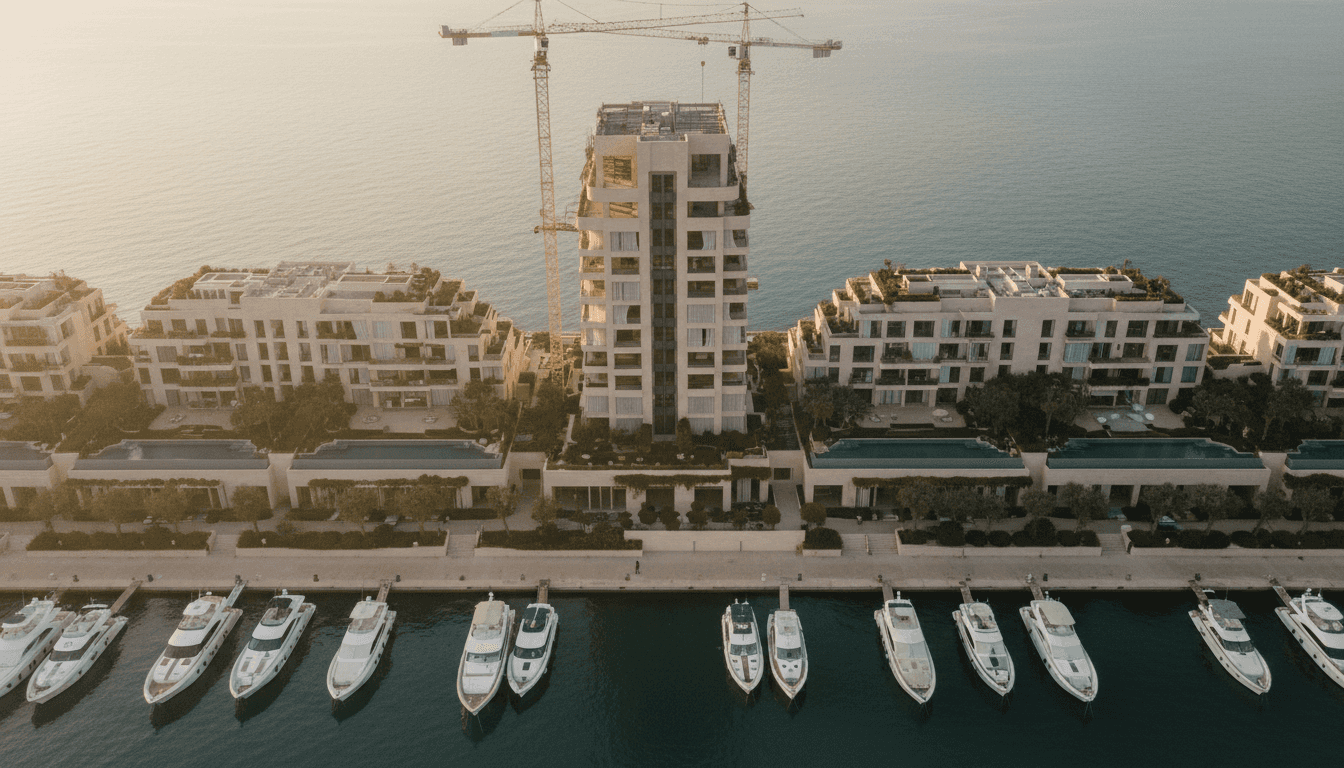
Dubai Off-Plan: Forecasting the Real Handover Timeline
For off-plan investors, the completion date is everything. I'll break down how to assess real project timelines, account for potential delays, and protect your capital.

For an off-plan investor in Dubai, the most important date on the calendar isn't the launch day; it's the handover day. It's the moment your paper asset becomes a physical one, ready to generate rent or be sold for a profit. But this date is often a moving target.
Here’s a detailed breakdown of how we'll approach this critical topic:
- The Contractual Handover Date: Understanding the SPA and its clauses.
- Deconstructing the Construction Timeline: The phases of a build and where delays happen.
- The Financial Impact of Delays: How waiting affects your ROI and cash flow.
- Developer Due Diligence: Beyond the glossy brochure.
- Using DLD Tools for Real-Time Tracking: Your objective data source.
- Macro-Economic Factors: The external forces that shift timelines.
- Building a Resilient Investment Plan: How to factor in a buffer.
The Contractual Handover Date: More Than Just a Date
When you sign a Sales and Purchase Agreement (SPA) for an off-plan property, the anticipated completion date is a headline figure. It's the developer's promise, the foundation of your investment timeline. However, my first piece of advice to any client is to read beyond that single date and find the clauses that surround it. The SPA is a detailed legal document, and the nuances of its wording on completion are paramount. The most critical clause to identify is the 'longstop date' or the 'grace period'. This provision legally grants the developer an extension, typically 12 months, beyond the initially stated handover date. This is not a sign of bad faith; it’s a standard contractual protection for the developer against unforeseen circumstances. But for your financial planning, this longstop date, not the marketing date, should be considered your worst-case scenario handover.
It is crucial to understand that this 12-month buffer is the developer's right. You have little to no recourse if the project is delivered within this extended period. Your investment plan must therefore be built around this possibility. If the marketing material says Q4 2026, your conservative financial model should work with a Q4 2027 completion. This simple shift in perspective is the first step in robust risk management. It transforms a potential delay from a crisis into a calculated variable. A developer who delivers before the longstop date is then a source of upside, not merely meeting a fragile expectation.
Beyond that, the SPA details the conditions for handover itself. It isn’t just about the building being finished. It involves the developer securing a Building Completion Certificate (BCC) from the relevant authorities, like Dubai Municipality or Trakhees. It also involves connecting utilities via DEWA. These are administrative hurdles that can add weeks or even months to the timeline *after* construction is physically complete. An investor forecasting their timeline must account for this final administrative leg of the journey. The day you get the keys is not necessarily the day construction stopped, and understanding this distinction helps in forecasting off-plan delivery dates with greater accuracy.
At Gaia Living, when we review an SPA with a client, we highlight these clauses specifically. We model the financial impact of both the anticipated completion date and the longstop date. This allows the investor to see two clear paths: the optimistic one and the conservative one. A sound investment should be viable even on the conservative path. If the entire strategy hinges on hitting the earliest possible date, the risk profile is, in my view, unacceptably high. The contract is your single source of truth, and its fine print is where you find the real parameters of your investment timeline.
Deconstructing the Construction Timeline
 Featured project
To truly grasp why delays happen, you need to understand what's happening on the ground. A high-rise tower or a villa community doesn't just appear. It's a complex, sequential process with numerous dependencies. A delay in one early phase can create a significant domino effect. The process generally begins long before any cranes appear on the skyline, with enabling and shoring works. This foundational stage secures the site, and any unexpected geological issues or dewatering requirements can introduce early delays. This phase can take anywhere from 3 to 6 months for a standard project.
Next comes the structural work: the substructure (foundations, basement levels) and the superstructure (the main frame of the building). This is often the most visible and, for many developers, the most predictable part of the process. You can see physical progress week by week. In Dubai, many major contractors are exceptionally efficient at this stage. However, it's also where supply chain issues for core materials like steel and concrete can first bite. A global price spike or a shipping disruption can force a developer to either pause or accept a higher cost, which can strain project finances. For a typical 40-storey tower, the structural work can easily take 18-24 months.
“The most common source of significant, multi-month delays isn't the concrete structure; it's the complex web of MEP, facade, and interior fit-out work that follows.”
The real complexity, and the most common source of frustrating delays, comes in the subsequent phases. Mechanical, Electrical, and Plumbing (MEP) works involve a labyrinth of wiring, pipes, and ductwork. This is followed by the facade and cladding, which define the building's external appearance. Finally, the interior fit-out — plastering, tiling, painting, joinery, and installation of kitchens and bathrooms, is the last major construction step. These stages are incredibly labour-intensive and reliant on dozens of subcontractors and suppliers. A delay in sourcing specific tiles from Italy or elevators from Germany can halt progress on multiple floors. This is where a developer's project management skill and their relationship with their main contractor are truly tested. This final 20% of the work can often take 40% of the time, and it's where forecasting off-plan delivery dates becomes most challenging.
The Financial Impact of Delays
The most obvious off-plan investment delay impact is the deferral of rental income. If you planned to have a tenant in place by a certain date, every month of delay is a month of lost revenue. Let's run a simple scenario for an apartment in a community like JVC, a popular area for investors due to its attractive yields. Assume you purchased a one-bedroom apartment for AED 1 million.
Here is a simplified look at the cost of a six-month delay: - Property Price: AED 1,000,000 - Anticipated Annual Rent: AED 80,000 (a 8% gross yield) - Anticipated Monthly Rent: AED 6,667 - Lost Rental Income (6-month delay): AED 40,002
This lost income directly impacts your net yield calculation for the first year of ownership. But the financial drag goes deeper. During the delay, your capital is non-productive. You've made payments according to the developer's plan — perhaps 50% or more of the property's value, but that capital is locked. It cannot be reinvested elsewhere, nor is the asset appreciating in the same way a completed, rentable property would. This is the opportunity cost, and it's a significant factor. If you had that AED 500,000 invested in another asset generating even a modest 4% return, a six-month delay costs you an additional AED 10,000 in lost opportunity.
For buyers using a post-handover payment plan, the direct financial hit is less severe as a large portion of the payment is deferred. However, for those planning to secure a mortgage upon completion, a delay can be particularly problematic. Mortgage pre-approvals from UAE banks are typically valid for 60-90 days. A significant delay could mean your approval expires, forcing you to re-apply. If your financial circumstances have changed, or if the Central Bank of the UAE has altered its lending regulations or interest rates in the interim, you might find yourself facing less favourable terms or, in a worst-case scenario, unable to secure the required financing at all. This turns a timeline issue into a potential capital crisis.
Finally, there is the market risk. Real estate markets are cyclical. A delay might cause you to take possession of the property in a different market environment than the one in which you bought. If you purchased during a strong market upswing with the intention of selling on completion, a 12-month delay might see you receiving the keys in a slower, more corrected market. Your projected capital appreciation could evaporate. This is why your investment thesis must be robust enough to withstand not just a timeline shift, but a potential market shift as well. A good investment should work as a long-term rental hold, not just a short-term flip.
Developer Due Diligence: Track Record Analysis
This brings me to what I consider the single most important factor in any off-plan investment: the developer. The brand on the brochure is more than just marketing; it is an indicator of reliability, quality, and, crucially, the likelihood of on-time delivery. A thorough developer completion track record analysis is non-negotiable. At Gaia Living, our guidance always starts here. We categorise developers into tiers based not on their marketing budget, but on their proven history of delivering projects in Dubai.
Top-tier, master developers like Emaar Properties, for example, have a decades-long history of delivering not just towers but entire communities like Arabian Ranches or Dubai Marina. Their scale allows them to command priority from contractors and suppliers, and their reputation is a powerful incentive to deliver on time. Delays can still happen, but their track record provides a strong degree of confidence. Similarly, established private developers with a deep portfolio of completed projects, such as Sobha Realty or Nakheel, offer a high level of assurance. Their business model depends on a continuous cycle of launching, selling, and delivering.
Where investors need to apply greater scrutiny is with newer or smaller developers. This isn't to say they should be avoided; many deliver fantastic projects and offer compelling entry points. However, your due diligence must be more intensive. Look at their first one or two completed projects. Did they meet their timelines? Visit those buildings. Talk to residents. What is the build quality like? How are the common areas maintained? A developer who cut corners on their last project is likely to do so again. If a developer has no completed projects in Dubai, you are not just buying a property; you are betting on their ability to execute. The risk is inherently higher, and the price should reflect that.
Here is a checklist for assessing a developer's track record:
- Portfolio Depth: How many projects have they completed in the UAE? Over what period?
- Delivery History: Analyse the promised vs actual handover dates for their last 3-5 projects. Was there a consistent pattern of delays?
- Quality Audit: Visit a completed project. Check the finishing in the lobby, hallways, and amenities. Does it feel premium or value-engineered?
- Contractor Relationship: Who is the main contractor for the new project? Does this contractor have a strong reputation for quality and timely execution on similar projects?
- Financial Stability: While hard to ascertain for private firms, look for signs of financial health. Are they launching multiple projects simultaneously without a history of completing any? This can be a red flag for over-using.
- Market Reputation: What is the consensus among experienced brokers and property managers? A developer's reputation within the industry is often a very accurate leading indicator.
Using DLD Tools for Real-Time Tracking
In the past, investors were almost entirely reliant on developer-provided updates, which could be sporadic and optimistic. Today, the Dubai Land Department (DLD) provides powerful digital tools that offer a far more objective view of a project's status. The primary tool here is the Dubai REST (Real Estate Self Transaction) app. Every off-plan project must be registered with the DLD, and its progress is tracked against specific milestones.
Within the app, you can search for your project and view its official status. This includes the escrow account details — crucial for ensuring your payments are protected, and, most importantly, the project's completion percentage. This percentage is not just an estimate; it is based on inspections by RERA-approved consultants who visit the site and verify the stage of construction. If a developer tells you they are at 60% completion, you can cross-reference this against the official DLD data. Any major discrepancy is an immediate red flag and warrants a direct question to the developer.
This real-time data is invaluable for project handover timeline assessment. You can track the velocity of construction. For instance, if the project's completion percentage increases by 3-4% per month for a consistent period and then suddenly flatlines for several months, it indicates a stall. This could be due to a change in contractor, a supply chain issue, or a financing problem. Armed with this data, you can have a more informed conversation with the developer and adjust your own financial planning accordingly. It moves you from a position of passive waiting to active monitoring.
Beyond that, the DLD's open data portal, Dubai Pulse, offers macro-level insights into construction activity and project registrations across the city. While not specific to your project, it can help you gauge the overall health of the construction sector. Understanding these tools is a key part of modern real estate investment in Dubai. They provide a layer of transparency that significantly de-risks the process compared to a decade ago. Relying solely on the developer's marketing updates is no longer necessary or wise.
Macro-Economic Factors: The External Forces
Even the best developer with the most robust plan can be impacted by forces beyond their control. A project timeline is not set in a vacuum; it exists within a dynamic global and local economic context. Understanding these macro risks is essential for any serious investor. One of the most significant factors we've seen in recent years is global supply chain disruption. A pandemic, a major geopolitical conflict, or even a single blocked shipping lane can have cascading effects on the availability and cost of everything from high-grade steel and facade glass to specific types of marble and smart home systems. These disruptions can add months to a timeline and increase costs, squeezing the developer's margins and potentially pausing work.
Changes in government regulations can also impact timelines. This could be a revision to the building code that requires design alterations mid-project, or new environmental standards that necessitate different materials or construction techniques. While Dubai's regulatory environment is generally stable and pro-business, investors should be aware that such shifts are possible. The introduction of corporate tax in the UAE, for example, is a major structural change that contractors and developers must factor into their long-term financial models. While unlikely to delay a project directly, it's an example of the evolving economic landscape.
A sharp and sustained increase in the cost of borrowing can also have an effect. If a developer is relying on construction financing, rising interest rates increase their costs, which can strain the project's budget. This is particularly relevant for smaller or more leveraged developers. If their initial financial modelling was based on low interest rates, a sudden spike could create a funding gap. As an investor, you are insulated from their financing arrangements, but not from the potential consequences if they lead to a slowdown or halt in construction. This is another reason why choosing a well-capitalised developer with a strong balance sheet is a critical risk mitigation strategy.
Finally, labour availability and cost are a key variable. Dubai's construction boom is powered by a vast workforce. A surge in new project launches across the city, like the recent wave of developments in areas like Palm Jebel Ali or Dubai Islands, can create intense competition for skilled labour and experienced contractors. This can lead to labour shortages or wage inflation, impacting project timelines and budgets. An experienced developer with long-standing relationships with top-tier contractors is better positioned to navigate these market pressures than a new entrant trying to assemble a team from scratch.
Building a Resilient Investment Plan
So, how do you synthesize all this information into a workable investment strategy? The key is to move from a position of hope to one of calculated planning. You must build a financial model that is resilient to delays.
First, as discussed, use the contractual longstop date (typically handover date + 12 months) as your primary planning horizon for rental income and mortgage activation. Do not use the marketing date. If the project is delivered early, consider it a bonus that enhances your returns.
Second, conduct a thorough sensitivity analysis on your expected returns. How does a 6-month, 12-month, or even 18-month delay affect your total ROI? Model the lost rental income and the opportunity cost of your tied-up capital. This exercise will reveal the true risk profile of the investment. If a 12-month delay turns a great investment into a poor one, you should perhaps reconsider the deal or the amount of use you are using. A strong off-plan investment should still look acceptable even with a significant delay.
Third, maintain a liquidity buffer. Unexpected events happen. If you are relying on a mortgage, having extra cash on hand can be a lifesaver if your approval expires and you need to bridge a small gap or cover costs while you re-apply. For cash buyers, a liquidity buffer gives you peace of mind and prevents a project delay from causing personal financial stress. I generally advise clients to have at least 6 months of their own living expenses, plus any anticipated property-related costs for the first year (like service charges), set aside in a liquid account.
The best way to mitigate the risk of Dubai off-plan completion delays is through rigorous due diligence on the developer's track record and by building your financial plan around the contract's longstop date, not the advertised handover date. This conservative approach transforms a potential delay from a crisis into a manageable variable.
Ultimately, investing in off-plan property is a calculated risk that offers significant rewards in the form of capital appreciation and payment plan use. The goal is not to eliminate all risk — that's impossible, but to understand, quantify, and mitigate it. By combining deep developer analysis, a clear-eyed reading of the SPA, objective tracking using DLD tools, and conservative financial planning, you can navigate the path to handover with confidence. The off-plan investment delay impact can be substantial, but with the right preparation, it does not have to be devastating.
## Sources - Dubai Land Department (DLD): https://dubailand.gov.ae - Dubai REST App Information: https://dubairest.gov.ae - Central Bank of the UAE (CBUAE): https://www.centralbank.ae - UAE Government Portal (u.ae): https://u.ae/en/
Questions, answered
- What is a typical delay for an off-plan project in Dubai?
- While top-tier developers often deliver on time, it's prudent for investors to factor in a potential buffer of 6-12 months. This grace period is often built into the Sales and Purchase Agreement (SPA), so always check your contract's specific clauses.
- How can I check a developer's track record for on-time completion?
- Analyse their past projects using the Dubai Land Department's REST app, which shows the historical timeline from launch to completion. We also advise visiting their completed communities to assess build quality and speaking with an experienced agent who has a long-term view of the developer's history.
- What is the biggest financial impact of an off-plan delay?
- The primary impact is on your opportunity cost. The capital you've paid is tied up without generating rental income or being available for capital appreciation upon sale. For leveraged buyers, it can also mean extending financing arrangements or having a mortgage approval expire.
- Does RERA offer protection against significant project delays?
- Yes, RERA provides a framework for project oversight. If a project is cancelled, funds held in the DLD-regulated escrow account are meant to be returned to buyers. For severe delays without justification, RERA can intervene, but the legal process can be lengthy, making due diligence your best first line of defence.
- Is the handover date in the SPA legally binding?
- The handover date in the Sales and Purchase Agreement (SPA) is the core contractual commitment. However, most SPAs include a 'longstop date' or a grace period clause, typically 12 months, which gives the developer a legal extension before they are in breach of contract. Always read this clause carefully.
- Can I sell my off-plan property before it's completed?
- Yes, you can sell your off-plan property on the secondary market, a transaction known as an Oqood sale or assignment sale. You typically need to have paid a certain percentage of the property price (often 30-40%) and receive a No Objection Certificate (NOC) from the developer to proceed.

Isabelle covers off-plan and investment strategy — payment plans, handover risk, developer track records, and the maths of buying before completion.
Related stories

The Productive Address in Dubai
The line between home and work has blurred for good. Discover the Dubai properties and communities designed for the focus, flexibility, and balance that modern professionals demand.

The Mortgage Effect: Your Guide to Dubai Rental Yields
Financing is the engine of your property investment. As a yield analyst, I'll walk you through how different mortgage structures can either supercharge your net cash flow or quietly erode your returns in the Dubai market.

Dubai Off-Plan Delays: Your Legal Rights
When your Dubai off-plan property is delayed, understanding your legal rights is critical. This guide details RERA's framework, options for contract breaches, and practical steps to protect your investment.
Echoes, in your inbox
One thoughtful email a month. Market insight, new launches, no spam.