

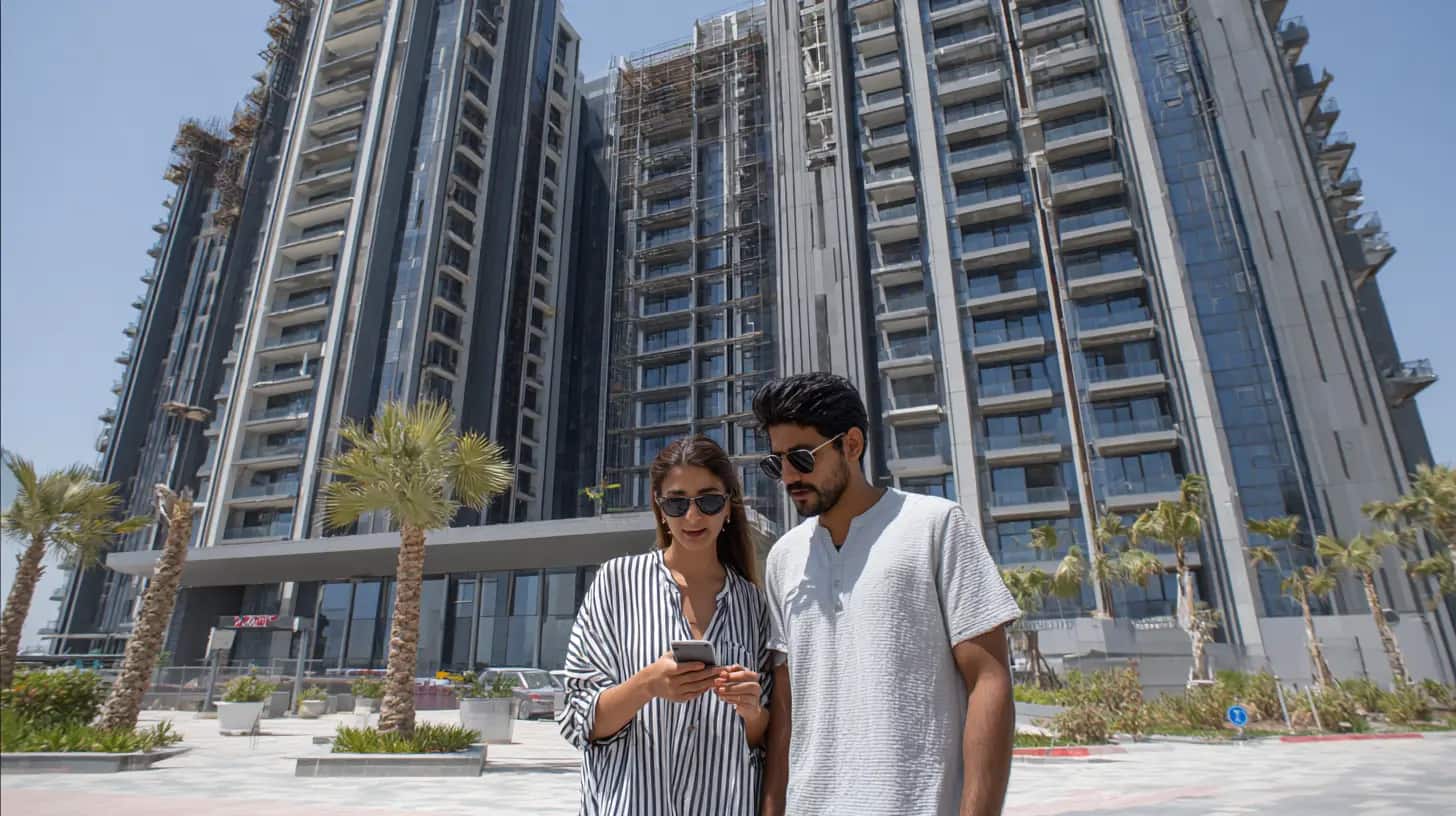
New Developments Handing Over in 2026: The Full Pipeline
Dubai 2026 handover pipeline: the major projects delivering this year, the geographic concentration, slippage realities, and what it means for buyers.
The upcoming year of 2026 marks the start of another substantial year of property delivery in Dubai. Major developers were quite active in project launches in the years 2021-2024, delivering launches well-above the 2015-2020 levels. Most launches carried construction timelines of 36-48 months resulting in a peak of 2026 delivery of residential supply. According to projections, 2026 will bring significantly more supply than any of the following years since the previous peak was reached back in 2017-2018. The buyer, seller, and rental decisions to consider before buying or renting an apartment in Dubai in 2026 cannot be ignored.
As usual, the figures of announced handover need to be understood with the standard delivery caveats attached to them. By the end of 2025, the total number of handovers announced by the majority of Dubai developers for 2026 is around 100,000 to 130,000 residential properties, both apartments, townhouses, and villas. As per historical trends, usually around 15% to 30% of the announced handover fails to happen as scheduled and gets delivered the next year. Therefore, the actual number of deliveries is expected to fall somewhere between 75,000 and 105,000 units. Scheduled deliveries will enter ready stock immediately, while unscheduled handover deliveries are shifted to 2027. Whatever way it goes, the years 2026-2028 will witness more supply absorbed by Dubai than average for 2020-2024.
The geography and segment distribution of the announced 2026 handover figures should not be overlooked as well. Apis supply is mainly clustered in Business Bay, Dubai Creek Harbour, Sobha Hartland 2 and surrounding areas, Dubai South, Expo City extensions, and some of the MBR City sub-areas. The villa/townhouse supply is relatively low overall in volume, however, concentrated in newer masterplanned communities. Areas with an unusually high number of deliveries for 2026 will have different absorption scenarios than those with limited 2026 supply. This impacts pricing dynamics and potential rentability, thus helping with identifying where to invest into buying or renting a property.
The above article discusses the actual numbers behind the announced 2026 Dubai property handover schedule, including the figures, potential slippage, major developer pipelines, geographic concentrations, and implications for buyers and renters deciding to make their property investment in this particular year. The article relies on our original pipeline tracking data and expert opinion from respected Dubai property researchers. Please note that annual delivery schedules across major developers change throughout the year, meaning the scenario for Q4 2026 may somewhat differ from the one for Q2 2026.
The 2026 Handover Pipeline by the Numbers
The announced 2026 Dubai handover pipeline can be broken down across several dimensions worth understanding.
Total units expected to deliver in 2026 (announced as of late 2025): approximately 100,000 to 130,000 residential units across apartments, townhouses, and villas, plus material commercial supply. After typical Dubai slippage discount of 15% to 30%, realistic actual 2026 delivery: 75,000 to 105,000 units.
Comparison to historical annual deliveries:
- 2015: approximately 30,000 units
- 2017: approximately 35,000 units (prior peak)
- 2018: approximately 33,000 units
- 2020: approximately 20,000 units (COVID-affected)
- 2022: approximately 25,000 units
- 2024: approximately 35,000 units
- 2025 (preliminary estimate): approximately 60,000 units
- 2026 (announced pipeline): 100,000 to 130,000 units
- 2027 (announced pipeline): also expected to be heavy, in the 90,000 to 120,000 range
The 2026 pipeline represents a step-change in annual delivery volume that the Dubai market has not seen since before the 2008-2009 crash. The market's ability to absorb this supply depends on continued demand strength from population growth, expat arrivals, Golden Visa flows, and investor capital.
Faisal Durrani at Knight Frank has consistently flagged that the 2026 pipeline by itself is not necessarily problematic. Dubai's population has been growing at 2.5% to 3.5% annually, meaning organic demand for roughly 80,000 to 100,000 new residences per year. The challenge is whether the supply lines up with demand on a unit-type and area basis. Mismatch in specific segments produces local soft spots even when overall absorption is adequate.
Sameer Lakhani at Global Capital Partners has noted that the announced numbers should not be confused with actual handover dates. Slippage in Dubai delivery is the norm rather than the exception. Buyers and investors should treat any specific handover date as a target rather than a commitment, even for projects 80% complete heading into the handover year.
Major Developer Pipelines for 2026
The 2026 delivery pipeline is concentrated across several major developers. The pipeline composition matters because each developer's delivery track record varies and the buyer's exposure to specific developers shapes risk.
Emaar Properties pipeline for 2026. Continued deliveries from Emaar's major districts. Dubai Creek Harbour phases across Address Harbour Point, Creek Beach, The Cove, and adjacent clusters. Dubai Hills extensions including Golf Place, Maple, Sidra, and additional villa phases. Downtown additions including Burj Crown completion and adjacent towers. Emaar Beachfront phases. Various Marina extensions. Address Residences Dubai Hills phases. Emaar's delivery track record is among the strongest in the Dubai market and the 2026 Emaar pipeline is generally expected to deliver closer to schedule than industry average.
DAMAC pipeline for 2026. Multiple DAMAC phases delivering. DAMAC Lagoons sub-clusters including Costa Brava, Marbella, Mykonos, and Portofino in various stages. DAMAC Hills 2 phases. Business Bay towers including Safa One and Safa Two phases. Cavalli Tower. Aykon City phases. Damac Bay by Cavalli. DAMAC's delivery track record has been mixed historically, with some phases delivering on schedule and others facing extended timelines. Buyers in DAMAC projects should verify the specific phase's current construction status rather than relying on the announced handover date.
Sobha pipeline for 2026. Sobha Hartland 2 major phases delivering. Creek Vistas Reserve. One Park Avenue. Sobha Reserve villas. Sobha's reputation for build quality is consistently strong. Delivery timing has been generally close to announced schedules.
Nakheel pipeline for 2026. Palm Jebel Ali villa phases beginning to deliver (the earliest phases only, since most Palm Jebel Ali supply is scheduled for 2027 through 2030). Palm Jumeirah additions. Various Deira Islands progress.
Ellington Properties pipeline. Multiple boutique projects across JLT, JVC, Business Bay, and Al Jaddaf. Ellington's smaller-scale delivery model produces typically reliable handover timing.
Binghatti pipeline. Multiple JVC, Business Bay, and Al Jaddaf towers in various stages. Some delivering in 2026, others slipping to 2027.
Azizi pipeline. Riviera (Meydan area) phases delivering. Other phases at various stages.
Meraas pipeline. Bluewaters extensions. City Walk additions. Port de La Mer phases.
Smaller and newer developers including Imtiaz, Object One, Reportage Properties, LEOS, Tiger Properties, and others all have specific 2026 deliveries with varying track records.
Geographic Concentration of 2026 Deliveries
The 2026 supply is not evenly distributed across Dubai. Understanding the geographic concentration matters for assessing area-specific dynamics.
Heavy 2026 delivery areas:
Business Bay. Substantial apartment supply delivering across multiple buildings. Mid-market segment particularly heavy. Business Bay has been one of the most active developer launch districts of the 2020-2024 period and many of those launches deliver in 2026.
Dubai Creek Harbour. Multiple Emaar phases delivering across Address Harbour Point, Creek Beach, The Cove, and adjacent. Significant addition to a district that was largely sub-scale through 2023.
Sobha Hartland 2 and adjacent. Sobha's master-planned district sees substantial 2026 deliveries. The area is being effectively built out in this delivery cycle.
Dubai South. Multiple phases from various developers. The area's transformation continues with 2026 supply meaningfully expanding the inhabited footprint.
MBR City sub-areas (Meydan, Sobha Hartland, and other clusters). Significant 2026 deliveries across multiple sub-districts.
JVC (Jumeirah Village Circle). Continued 2026 deliveries from multiple developers, though JVC's pipeline has been more spread across years than the heavier-2026 areas.
Light 2026 delivery areas:
Downtown Dubai. Limited new supply delivering. Most Downtown stock is already delivered. New launches are at higher price points and tend to deliver later.
Established Palm Jumeirah. Limited additions. Palm Jebel Ali supply is in 2027 and beyond.
Established Dubai Marina. Limited new supply. The Marina is essentially built out.
Established villa communities (Arabian Ranches, Emirates Hills, Dubai Hills Estate proper as opposed to extensions). Limited 2026 villa supply.
Prathyusha Gurrapu at Cushman & Wakefield Core has noted that the geographic concentration of 2026 supply produces meaningful divergence in area-specific dynamics. Areas with heavy supply face absorption challenges. Areas with limited supply continue to benefit from supply tightness. The Dubai average masks substantial variation across specific areas.
Our Original Research: 2026 Pipeline Tracking and Price Impact
We tracked the pipeline projection and area-specific dynamics across Dubai through 2024 and 2025 to model the likely 2026 outcomes. Here is what came out.
Pipeline confirmation vs slippage observed in recent years (as guide to 2026 likely actual delivery):
- 2023 announced pipeline delivered approximately 78% within the announced year
- 2024 announced pipeline delivered approximately 82% within the announced year
- 2025 announced pipeline tracking at approximately 75% to 85% within-year delivery based on Q3 2025 progress
- 2026 announced pipeline likely tracking 70% to 85% within-year delivery based on historical patterns
Apartment delivery concentration by area in the 2026 pipeline:
- Business Bay apartments: approximately 22% of 2026 apartment pipeline
- Dubai Creek Harbour: approximately 14% of pipeline
- Sobha Hartland 2 and adjacent: approximately 11%
- Dubai South and Expo City: approximately 9%
- MBR City sub-areas: approximately 8%
- JVC: approximately 7%
- Other areas combined: approximately 29%
Villa and townhouse pipeline by community:
- Damac Hills and Damac Lagoons combined: approximately 18% of villa/townhouse pipeline
- Dubai Hills extensions: approximately 14%
- Tilal Al Ghaf remaining phases: approximately 8%
- The Valley: approximately 9%
- Arabian Ranches III: approximately 6%
- Newer master-planned communities: approximately 25%
- Other: approximately 20%
Asking price gap between off-plan units (in 2026 pipeline) and comparable ready stock:
- Premium areas with limited supply: off-plan typically 5% to 15% discount to ready
- Mid-market areas with heavy supply: off-plan typically 10% to 30% discount to ready
- Newer areas with very heavy supply: off-plan often 25% to 40% discount to ready
Price impact patterns observed during prior heavy delivery years (as guide to 2026):
- Heavy-supply areas typically saw price growth moderate or pause during peak delivery years
- Limited-supply areas saw continued price growth largely unaffected by the broader supply wave
- The dispersion between heavy-supply and limited-supply areas often expanded by 8 to 15 percentage points during heavy delivery years
- Recovery in moderating areas typically took 12 to 24 months after the peak delivery wave passed
Buyer behaviour patterns observed in current data through Q3 2025:
- Investor share moderately declining as supply expectations rise: from 41% in early 2024 to 35% in Q3 2025
- End-user share rising correspondingly: from 49% to 56% over same period
- Off-plan launches in supply-heavy areas seeing slower absorption: from 65-80% first-90-day absorption to 38-58% in current launches
- Off-plan launches in supply-tight areas maintaining strong absorption: 78-92% absorption in premium branded products
The pattern that matters most. The 2026 delivery wave is real but its impact is segmented. Premium and supply-tight segments are likely to continue performing well. Supply-heavy mid-market segments are likely to face the most absorption pressure. Buyers and investors who understand the segment-specific dynamics make better decisions than those treating Dubai as a uniform market.
Off-Plan vs Ready Buying During a Heavy Delivery Year: Pros and Cons
A real choice that becomes more important in 2026 given the supply context.
Buying off-plan during a heavy delivery year.
Pros:
- entry prices typically discount to ready stock, often 10% to 30% in supply-heavy areas;
- payment plans spread the capital outlay over construction;
- ability to negotiate harder on price given softer market conditions in some segments;
- selection of better units within new launches as developers want to drive momentum.
Cons:
- additional supply joining the market through 2026 and 2027 creates absorption uncertainty;
- newer launches in supply-heavy areas face the most risk of underperformance;
- specific developer delivery slippage adds additional timing risk;
- comparison to ready stock often shows ready stock offers better immediate value in some segments.
Buying ready property during a heavy delivery year.
Pros:
- immediate ownership and no delivery risk;
- direct exposure to limited-supply premium segments;
- existing rental income for investors;
- can purchase in established areas where 2026 supply pressure is minimal.
Cons:
- prices fully reflect current market with no discount;
- competing with end-users for the same limited supply-tight stock;
- some segments where ready stock is approaching supply-side stress (heavy delivery areas);
- full capital outlay required at close.
In our experience, the right answer in 2026 depends heavily on the target area. Off-plan in supply-tight premium districts remains attractive. Off-plan in supply-heavy mid-market districts carries more risk than usual. Ready property in supply-tight areas is competitive but rewarding. Ready property in supply-heavy areas faces some absorption pressure even on the existing stock.
Risks and Mistakes Buyers Should Avoid in a Heavy Pipeline Year
Five mistakes show up consistently. Worth flagging.
Mistake #1. Assuming the headline pipeline number is what actually delivers. The 100,000 to 130,000 announced units will not all deliver in 2026. Historical slippage of 15% to 30% means actual delivery is more likely in the 75,000 to 105,000 range. Decisions based on the announced number rather than the realistic delivery may overestimate the supply pressure.
Mistake #2. Treating supply-heavy and supply-tight areas as comparable. A Dubai apartment in Downtown faces materially different supply dynamics than an apartment in Sobha Hartland 2 in 2026. Treating them as substitutes leads to wrong decisions in both directions.
Mistake #3. Buying off-plan in supply-heavy areas at prices close to ready secondary stock. When off-plan launches are pricing at only 5% to 10% below ready comparable in a supply-heavy area, the off-plan discount has been eroded and the delivery risk is no longer compensated. Buyers should verify the off-plan vs ready gap before committing.
Mistake #4. Ignoring the developer's specific delivery track record. Major developers have meaningfully different historical delivery records. Emaar's track record is generally strong. Some smaller developers have weaker records. Buyer due diligence should include the specific developer's past delivery performance.
Mistake #5. Anchoring on broker assurances about handover timing. Specific handover dates communicated by sales agents are projections, not commitments. Real handover timing depends on construction progress that is verifiable through site visits and DLD records. Verify rather than rely on broker statements.
Practical Tips for Navigating the 2026 Supply Wave
A few things we tell every buyer entering the market in this period.
- First, focus on supply-tight areas for new commitments. Areas with limited 2026 delivery are likely to outperform areas with heavy delivery, particularly through 2027 as absorption plays out.
- Second, pull the specific area's pipeline data before any commitment. Browse current property launches and pull recent transaction data for your target area. The DLD records and broker data show actual recent closings rather than asking prices.
- Third, weight developer delivery track record heavily. Verified completion history matters more than marketing claims about future delivery. Established developers with multiple completed projects of similar scale provide more reliable delivery confidence.
- Fourth, model the realistic 2027 absorption picture for any 2026-delivery property. A unit handing over in 2026 needs to find its tenant or buyer in an environment where more supply continues delivering through 2027. Plan for this rather than assuming 2024-style absorption rates.
- Fifth, work with specialists who track the pipeline data weekly. Generic market commentary will be misleading in a divergent market like 2026's. Specific area and building-level intelligence matters more than ever. Our buying services team tracks pipeline progress across all major developers and can pull current data on any specific project you are considering.
The Bottom Line on the 2026 Dubai Handover Pipeline
2026 Dubai deliveries will mark the highest volume of activity seen since more than ten years ago. According to our announcements, there will be about 100,000 to 130,000 units, but realistic deliveries are expected to range from 75,000 to 105,000, even allowing for usual slippages. This supply is forecasted to be taken up by continued population growth, expat influx, and demand by end-users and investors, though not equally among all categories. In a supply-constraint market, we expect the winners versus losers dynamic to define the Dubai market in 2026 and even in 2027.
Our research reveals that the relevance of area choice increases in a high-delivery year compared to a balanced one. Overall, the Dubai market is forecasted to post positive gains in 2026 according to our modelling of delivery pipeline data, but variance among areas will be considerable. If the buyer chooses correctly in 2026, he/she will benefit greatly, whereas if he/she makes the wrong choice, the prices of his/her units will not appreciate despite an overall market gain in the headline market.
In 2026, most buyers should choose an area with relatively low supply for their commitment, give much thought to the delivery record of the developers before buying off-plan property, consider a realistic rate of property absorption in 2027 instead of 2024, and take a look at pipeline details for each area before making a decision. These details are available but it is only consistency in using this information that distinguishes successful buyers in this cycle.
If you are weighing a Dubai property decision in 2026 and want help pulling the specific pipeline data for your target area or developer, our team tracks the market data weekly and can walk through the area and product specifics before you commit to any specific decision.
Related stories

Dubai's Established Charm: The Case for Older Homes
In a city focused on the future, I believe the smartest move for many buyers is to look back. Dubai's seasoned communities offer space, character, and surprising value that new builds often can't match.

The True Cost of Owning a Dubai Property
Beyond the purchase price, your annual budget for a Dubai home must account for service charges, utilities, and maintenance. I'll break down every ongoing expense you need to plan for.

Calculating ROI on Dubai Rental Upgrades
As a landlord in Dubai, you can't just follow trends. I'll show you how to calculate the precise ROI of minor property upgrades to genuinely increase your rental yield.
Echoes, in your inbox
One thoughtful email a month. Market insight, new launches, no spam.