

Dubai's Newest Master-Planned Communities: What's Coming by 2028
Dubai keeps building whole new communities. Here's what's coming by 2028, how to think about Dubai's master-planned communities, and how to buy in safely.
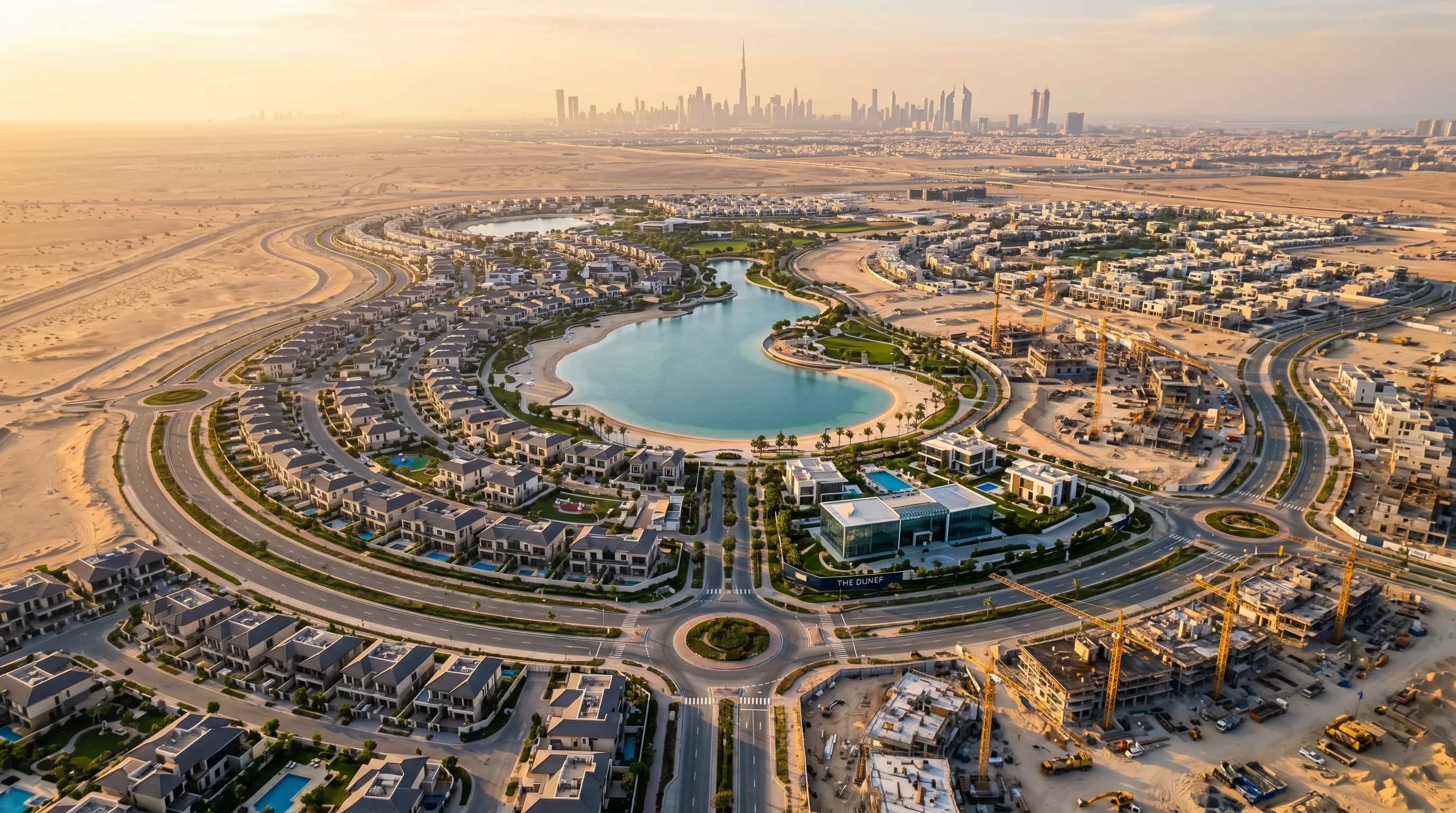
Dubai builds more than just buildings; it creates communities from scratch. Communities with their own houses, apartments, educational facilities, recreational spaces, malls, and identity are created on the basis of a master plan long before the first residents arrive. There are always new projects coming, leading buyers to ask themselves questions about what's next and what's going to be available in 2028?
And this is a legitimate question to pose as Dubai’s next generation of master-planned communities will be largely responsible for shaping the city's future value and lifestyle. But here is a vital point to note right away: it is a fluid and forward-looking field. Master-planned communities get launched, upgraded, revamped, and stalled from time to time; completion deadlines are goals to be met; and new projects are constantly announced. This means that while this guide is designed to give an outline and an idea, the most essential practice is to clarify the current state of affairs in any particular community before making your decision.
But there is much to know: why Dubai keeps on building communities from the ground up; what can be said about the promise of 2028 and off-plan purchases; what kind of new communities appear on the market, who makes them, and what should you expect from buying one as a purchaser; and how to become a member of such a project safely and securely.
A preliminary note: in this piece, we take a look at the general trend and initiatives within Dubai's development process. Particular projects, dates, prices, and specifications are not fixed and subject to change, even since publishing this document. Therefore, please clarify all the details for yourself through the developer, the land department, and our listings launches, rather than taking names and dates from us as final. This article gives an overall picture, but does not constitute investment advice. Having made this clarification, let's proceed to what Dubai is building.
Why Dubai Keeps Building Whole Communities
To understand what is coming, it helps to understand why Dubai builds the way it does. Most cities grow by filling in gaps, a tower here, a development there. Dubai grows by master plan, designing and building entire communities at once, complete with their homes, roads, schools, retail, parks, and amenities, so that a whole neighbourhood arrives more or less finished rather than evolving over generations.
There are real reasons for this. The city has grown fast and keeps growing, so it needs housing and infrastructure delivered at scale, not piecemeal. Planned communities let developers create a coherent lifestyle and identity, a family villa community here, a waterfront district there, which is easier to market and to live in than a patchwork. And building from a master plan lets the city add amenities, transport, and services as a package, so a new community can offer a complete way of life from a relatively early stage. The broad vision for the city's growth and planning is reflected through the UAE government portal, and master-planned communities are the main vehicle for delivering it.
Here is what defines a master-planned community:
- Built from a plan. The whole neighbourhood is designed up front, not assembled piece by piece.
- A complete lifestyle. Homes, schools, retail, parks, and amenities are planned together as a package.
- A clear identity. Each community is designed around a theme, family villas, waterfront living, and so on.
- Delivered in phases. Big communities are built in stages over years, not all at once.
- Developer-led. A master developer plans, builds, and often manages the whole community.
- Scale. These are large, sometimes enormous, developments housing thousands of residents.
The phased nature is worth holding onto, because it shapes everything about buying into a new community. A master plan promises a finished neighbourhood, but that neighbourhood arrives over years, in stages, and the gap between the rendered vision and the lived reality at any given moment is a phasing question, which we will come back to. Early phases can feel like a building site with a great future, later ones like a finished community.
So the reason Dubai keeps building whole communities is that it is the city's chosen way to grow, fast, planned, and at scale. For a buyer, that means there is always a new community to consider, and always the same core question to ask, not just is this a nice plan, but how, when, and how reliably will the plan actually arrive.
What 'Coming by 2028' Really Means
Before naming anything, it is worth being honest about what a delivery date means here. A date like 2028 attached to a community is a target, a plan, not a promise, and treating it as a guarantee is the single biggest mistake a buyer can make with new developments.
Buying into a community that is coming by 2028 almost always means buying off-plan, purchasing something that does not yet physically exist, on the strength of a plan and a developer's commitment to deliver it. That is a perfectly normal and well-protected way to buy in Dubai, but it carries off-plan realities. Completion dates can and do slip, sometimes by a lot. Phases can be delayed or resequenced. Designs and amenities can change between the brochure and the build. And the community you move into in the early years may be a fraction of the finished vision, surrounded by ongoing construction. None of this means do not buy, it means buy with clear eyes, and verify rather than trust the timeline. You can check whether a project is properly registered and on track through the Dubai Land Department, which is the authoritative source rather than a marketing date.
Here is what coming by 2028 really involves:
- It usually means off-plan. You are buying a plan, not a finished home, with all that implies.
- Dates are targets. A completion year is a plan that can slip, not a guarantee.
- Phasing is real. The community arrives in stages, so early buyers live amid construction for a while.
- Plans can change. Designs, amenities, and layouts can shift between launch and delivery.
- Protections apply. Off-plan escrow and registration protect your money, which is why they matter.
- Verify the status. Confirm a project's registration and progress through official channels, not the brochure.
The reassuring side is that Dubai's off-plan framework is built precisely for this. Registered projects, escrow accounts that release money against construction progress, and a regulator overseeing it all mean that buying into something not yet built is far safer here than the idea might suggest, as long as you use those protections. The risk is not usually that your money vanishes, it is that the timeline and the final product differ from the glossy promise.
So when you read that a community is coming by 2028, read it as a plan to verify, not a fact to bank on. The communities are real, the developers are serious, and the protections work, but the date is the softest part of the whole proposition, and the buyer who treats it as firm is the one most likely to be disappointed when a phase slips.
The Kinds of Communities Taking Shape
Rather than pretend to a definitive list with fixed dates, which would be out of date almost immediately, it is more useful to understand the kinds of new communities Dubai keeps developing, and who builds them. The names and timelines move, but the categories are stable.
Broadly, the new developments fall into a few types. There are the big waterfront and island projects, ambitious developments out over the water or along the coast, which tend to be enormous, multi-year, and headline-grabbing. There are master villa and family communities, planned neighbourhoods of villas and townhouses built around schools, parks, and family life, which have been a huge part of recent growth. There are mixed-use districts, dense, walkable areas blending homes, offices, and retail. And there is the continued build-out of established large communities and emerging districts that keep expanding in phases. For a grounded, current read on which segments and locations are actually performing, market research from firms like Knight Frank tracks the development pipeline and is a better guide to the present than any fixed list.
Here are the broad types taking shape:
- Waterfront and island projects. Large, ambitious coastal and over-water developments, built over many years.
- Master villa communities. Planned family neighbourhoods of villas and townhouses around schools and parks.
- Mixed-use districts. Walkable areas combining homes, workplaces, and retail in one place.
- Expanding established communities. Big existing communities that keep adding new phases and districts.
- Emerging districts. Areas built or repurposed around major sites that keep growing over time.
- Outer-area growth. New communities pushing into developing parts of the city at more accessible prices.
Who builds these matters as much as what they are, because the master developer determines whether the plan becomes reality. Dubai's large master developers, the well-known names behind most of the city's communities, have the track records, the scale, and the long-term commitment that big phased projects demand, and the developer behind a community is one of the strongest signals of whether it will deliver. Our developers overview helps you get a sense of who the major players are and what they are known for, which is the right lens for judging any new community.
The honest framing is that the specific communities will keep changing, new launches, new phases, new names, but the types and the major developers behind them are stable enough to understand. Rather than chasing a list of names that may be out of date by the time you read it, understand the categories, know the serious developers, and then check what is genuinely current and registered when you are ready to look.
How to Evaluate a New Master-Planned Community
This is the genuinely useful, durable part, because however the specific communities change, the way you judge one stays the same. Here is how to size up any new master-planned community, whether it launches this year or in three years.
The first thing is location, because a community's long-term value rests on where it is and how connected it will be. A great master plan in a poorly connected spot is a harder proposition than a modest one in a well-placed area, so look at the planned roads, transport, and proximity to the parts of the city that matter to you. Then the developer, whose track record of actually delivering communities on time and to standard tells you whether the plan is likely to become reality. Then the master plan and phasing, understanding what is being built, in what order, and most of all when the amenities you are paying for, the schools, the parks, the retail, actually arrive, because buying into phase one of a community whose amenities come in phase four means years of living in a promise. And then value, whether the price reflects realistic future worth or simply hope, because whether a unit is AED 1 million or AED 5 million, the test is the same.
Here is how to evaluate a new community:
- Location and connectivity. Judge where it is and how well-connected it will be, not just the renders.
- The developer's record. Check whether they actually deliver communities on time and to standard.
- The master plan. Understand what is being built and how it all fits together.
- The phasing. Know which phase you are in and when your amenities actually arrive.
- The surrounding maturity. Consider how built-up and serviced the area around it already is.
- The price versus value. Make sure the price reflects realistic future worth, not marketing hope.
The phasing and amenities point is the one buyers most often underestimate. A community sold on its future parks, schools, and retail is only as good as the phase those things arrive in, and an early-phase buyer can spend years in what is effectively a construction site before the promised lifestyle materializes. That is not necessarily a bad buy, early phases can be cheaper and appreciate as the community completes, but it is a trade-off to go in knowing, not to discover. Comparing a new community against established ones helps calibrate this, and our areas guide lets you see what finished, mature communities actually offer, which is a useful benchmark for judging what a new one is promising.
The honest takeaway is that evaluating a new community is mostly about seeing past the master plan's polish to its practical reality, where it is, who is building it, when it truly arrives, and whether the price makes sense. Get those right, and a new community can be an excellent buy. Judge only on the renders, and you are buying a feeling.
Buying Into What's Coming, Safely
If you do decide to buy into a new community, you are buying off-plan, so the off-plan rules apply in full, plus a few extra considerations specific to brand-new communities. Doing it safely is mostly about applying those checks and not letting the excitement of a shiny master plan override them.
We lined up the key factors against what to check, each on one line:
- The developer: check their track record of actually delivering communities on time and to standard.
- The registration and escrow: confirm the project is registered and your payments go into escrow.
- The completion date: treat it as a target, not a guarantee, and read the contract on delays.
- The phasing: understand which phase you are in and when the amenities you are paying for arrive.
- The location: judge it on the area's planned connectivity and maturity, not just the renders.
- The price versus the area: make sure the off-plan price reflects realistic future value, not hype.
The single most important safeguard is the same one that protects any off-plan purchase, buying a registered project where your money goes into escrow. That is what stands between you and the rare but real risk of a project that stalls, so it is never the corner to cut, however trusted the developer or exciting the launch. Beyond that, the brand-new-community considerations are mostly about phasing and patience, being honest with yourself about how long you will be living amid construction and whether the early-buyer price compensates for that.
There is a genuine upside to buying early, which is worth saying. Early-phase buyers in a community that delivers well can get in at lower prices and see real appreciation as the community completes and matures around them. That is the reward for taking on the timing and phasing risk. The key is that it depends entirely on the community actually delivering, which loops back to the developer and the verification, the early-buyer upside is real only if the plan becomes reality.
The starting point for all of it is a genuine, registered project, so rather than chasing a name you read somewhere, our property launches page lists current registered off-plan projects, which is the right place to see what is actually launching now rather than what was announced at some point in the past. From there, apply the checks, verify the specifics, and buy on the reality rather than the rendering.
What We Would Actually Do
The newest master-planned communities in Dubai are really interesting, and there will be no end to the development of new master-planned communities. It should be approached with balanced caution and interest. On one hand, the whole neighborhoods are developed from scratch here, but on another, their promotion starts several years ahead of the construction even started. Both things work at once.
So here are our recommendations to a friend thinking about moving into a new community in Dubai. First, appreciate the vision, but try to look into the reality behind the pictures. What developer offers the project, and what are his credentials? Is the project registered and does he keep your money in escrow? What stage are you buying, and when are all those promised amenities going to become real? Finally, does the offer look expensive enough for the place that currently exists, or for some other future place? When all these questions are answered, a new community is a good choice for purchasing.
Another thing that we would definitely tell about this article is that only a single thing could not be reliably guaranteed: the exact list of features to be completed by the exact year, 2028. The industry moves too fast for that. Communities come and go, change their schedules and priorities, so such detailed information quickly turns useless. However, learning how to evaluate them, you will be able to make a decision based on the facts of the moment.
What happens to buyers too often is trusting in a master plan and taking all the timeline and the renders as absolute truth. While they are just visions and plans. Check all the facts, take all guarantees offered by the legislation of off-plan purchases, and you will be able to move safely.
If you want help looking at what is genuinely launching now, checking a community and its developer properly, and buying into it on sound terms, that is exactly what we do. Our property buying service brings a clear eye to the plans behind the promises.
And if you want a straight, current conversation about which new communities are actually worth a look for your goals, we are glad to help with what is real today rather than what was announced years ago. Get in touch and we will take it from there.
Related stories
Dubai's Established Charm: The Case for Older Homes
In a city focused on the future, I believe the smartest move for many buyers is to look back. Dubai's seasoned communities offer space, character, and surprising value that new builds often can't match.

The True Cost of Owning a Dubai Property
Beyond the purchase price, your annual budget for a Dubai home must account for service charges, utilities, and maintenance. I'll break down every ongoing expense you need to plan for.

Calculating ROI on Dubai Rental Upgrades
As a landlord in Dubai, you can't just follow trends. I'll show you how to calculate the precise ROI of minor property upgrades to genuinely increase your rental yield.
Echoes, in your inbox
One thoughtful email a month. Market insight, new launches, no spam.