

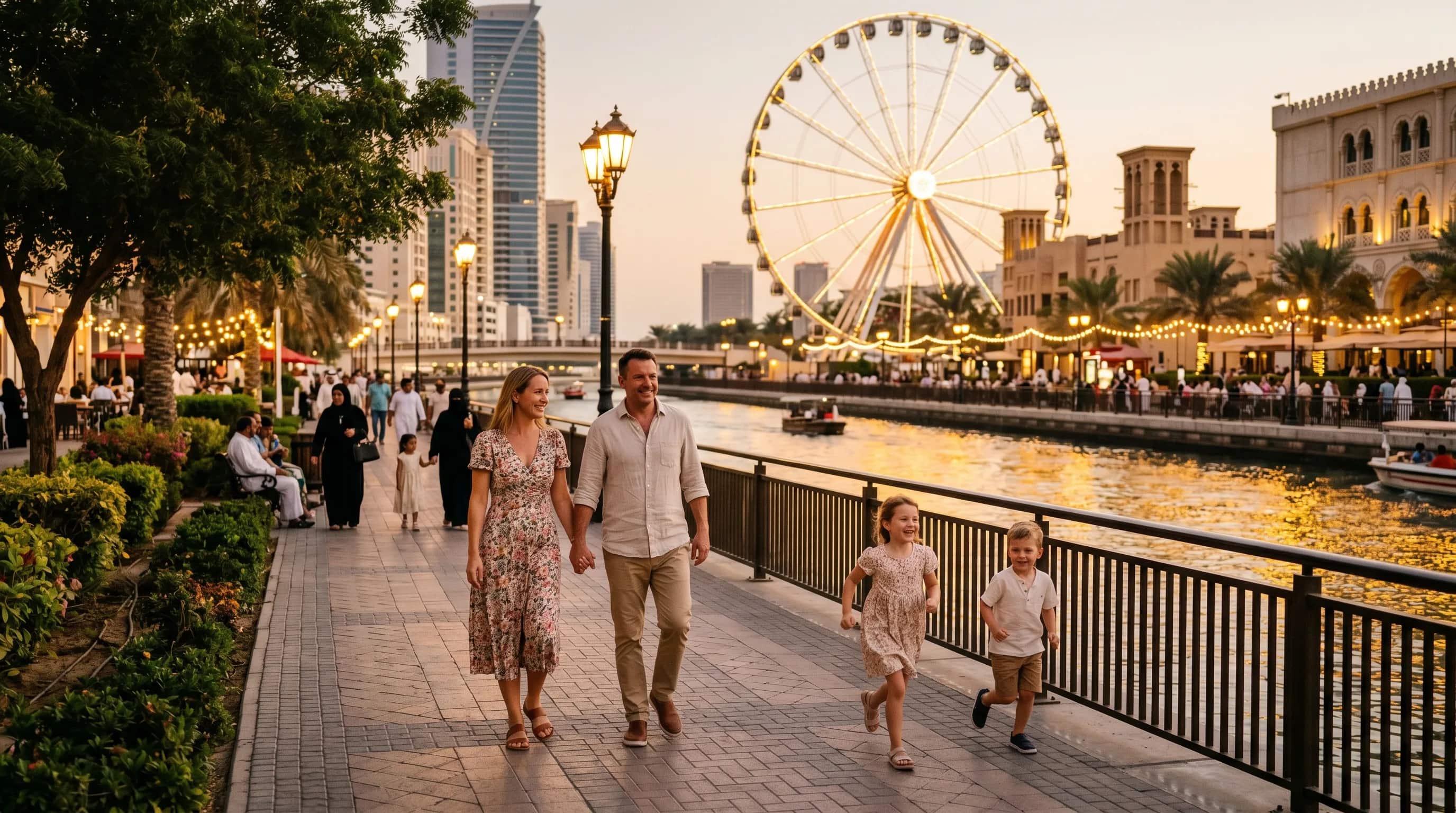
Buying Property in Sharjah for Foreigners: New Freehold Rules Explained
Sharjah is opening up to foreign buyers. Here's buying property in Sharjah for foreigners, the new freehold rules, freehold vs usufruct, and the process.
The story about Sharjah for many years was simple enough – it offered more affordable real estate, better family living conditions, convenient distance from Dubai, but no chance of getting anything there for foreign ownership. Expats would rent properties there, at best leasing them, but not purchase them like in Dubai. In recent years, however, this has been changing, explaining why more and more people have become interested in property purchases in Sharjah.
In today's world, it is no longer true that foreign ownership is not possible in Sharjah. On the contrary, the emirate has introduced a lot of liberalization in terms of ownership rights for its expatriate population, with different parts and developments allowing foreign ownership in various ways – ranging from long-term leases to freehold. For foreign buyers looking for alternatives to Dubai, this is a very important change.
However, it should be noted that the rules in Sharjah are not as clear as they are in Dubai, and they are still evolving to some extent, depending on many factors. It is not always clear whether foreign owners are allowed in this or that part of Sharjah, under this or that development. This guide aims to provide the general framework, but you need to make sure that you know your options regarding ownership and current laws.
The guide will cover reasons why one should look into Sharjah; difference between freehold and leasehold; who can own what and where in Sharjah; procedure of purchasing and differences between Sharjah and Dubai.
Preliminary remark: We are a real estate company, not a legal one, so the issue of ownership rules and restrictions in Sharjah is the kind of information that changes according to the particular project. Always check the current situation in Sharjah Real Estate Registration Department and make sure you learn about the nature of ownership before buying. Consider this article your guide to buying property in Sharjah.
Why Sharjah Is Getting Attention
Before the rules, let's understand the pull, because it is real. Sharjah sits right next to Dubai, sharing a border, yet it costs noticeably less and offers more space for the money. For a lot of buyers, that combination is the whole appeal.
Sharjah has long been the more affordable, family-oriented emirate. It is known for its culture, its calmer pace, and its larger, better-value homes, and it is close enough to Dubai that plenty of people live in Sharjah and work across the border. As ownership has opened up, all of that value has become accessible to foreign buyers in a way it largely was not before, and that is what is driving the new interest.
Here is why foreigners are looking at Sharjah:
- Lower prices. Sharjah is generally cheaper than Dubai, so your money buys more home or a lower entry point.
- More space. Larger apartments and villas for the same budget are a real draw, especially for families.
- Family-oriented living. Sharjah is known as a quieter, more family-focused, culturally rich emirate.
- Close to Dubai. It shares a border, so many residents enjoy Sharjah's value while working in Dubai.
- Strong rental demand. Plenty of people who work in Dubai rent in Sharjah for the value, supporting investors.
- Opening ownership. New rules and developments have made buying genuinely accessible to expats in ways it was not before.
It is worth being honest about the trade-offs too. Sharjah is a more conservative, family-oriented emirate than Dubai, with a different lifestyle character, which suits some buyers perfectly and others less so. And the border crossing into Dubai can get busy at peak times, so if you would commute, factor that in. Neither is a dealbreaker, but both are worth knowing going in.
The general framework around property ownership and residency across the UAE is set out on the UAE government portal, which is a useful starting point. But the heart of the Sharjah question is the ownership rules, because they work differently here than in Dubai, and getting them right is everything. That is what the next section tackles, starting with a distinction that matters more in Sharjah than almost anywhere.
Freehold vs Usufruct: Know the Difference
Here is the single most important thing to understand about owning in Sharjah, and it is something many buyers miss. There are different kinds of ownership, and what you are actually buying is not always full freehold. Getting this right is the difference between owning a property outright and holding a long lease on it.
Freehold means full, permanent ownership of the property, registered in your name, yours to keep, sell, or pass on. It is the strongest form of ownership and what most people picture when they think of buying. Usufruct, on the other hand, is a long-term right to use and occupy a property for a fixed period, commonly very long, such as around a hundred years, but still a lease rather than outright permanent ownership. Historically, this long leasehold was what many expat buyers got in Sharjah, in designated areas, while full freehold was reserved for certain nationalities.
Here is the distinction that matters:
- Freehold. Full, permanent ownership of the property, registered in your name, the strongest form.
- Usufruct or long leasehold. A long-term right to use the property for a fixed term, such as around a hundred years, not permanent ownership.
- The Sharjah history. Expat buyers have often held usufruct in designated areas, with freehold more limited.
- The recent shift. Some areas and developments now offer freehold or expanded ownership to expats, a real change.
- It varies by project. Whether a specific property is freehold or leasehold depends on the area and the development.
- Always check the type. The ownership type of the exact property is the first thing to confirm before buying.
The reason this matters so much is that two properties can look identical and be sold very differently, one as freehold, one as a long lease. Neither is necessarily wrong, but they are not the same thing, and the price and your rights differ accordingly. A long leasehold can still be a perfectly good buy, especially over a hundred-year horizon, but you should know exactly what you are getting and pay accordingly.
The recent opening up of freehold to expats in certain Sharjah areas is genuine and significant, but it is area and project-specific, and it is still developing. So never assume a Sharjah property is freehold just because it is being sold to you. Confirm the exact ownership type in writing, and check the current rules through official Sharjah channels, including the Sharjah government portal and the Sharjah Real Estate Registration Department, before you commit a single dirham.
Who Can Own What, and Where
So who can own what in Sharjah? The honest answer is that it depends on three things, your nationality, the specific area, and the specific development, and the picture is still shifting. Let's lay out the framework, with the firm reminder to verify the current position for any property you are looking at.
Traditionally, the rules split by nationality. GCC nationals have been able to own freehold in Sharjah more broadly. Non-GCC expats have generally been limited to designated investment areas and developments, often on a long leasehold or usufruct basis rather than full freehold. The recent change is that certain areas and new developments have started offering freehold, or expanded ownership, to expats of more nationalities, which is what the new rules are about. But this is happening area by area and project by project, not as a blanket change across the whole emirate.
Here is how to think about who can own what:
- GCC nationals. Have generally enjoyed broader freehold ownership rights across Sharjah.
- Non-GCC expats, traditionally. Were often limited to designated areas, frequently on long leasehold rather than freehold.
- The newer freehold areas. Certain developments now offer freehold or expanded ownership to expats, a recent and real shift.
- It is area-specific. What you can own depends heavily on the exact area and development, not a single emirate-wide rule.
- New developments lead the way. Much of the expat-accessible ownership is in newer master developments.
- Verify every time. The only reliable answer for a specific property comes from the official registrar and the developer.
In practice, much of the foreign-accessible property is in Sharjah's newer master developments, the large, planned communities built in recent years specifically to attract residents and investors. These are where you are most likely to find expat-accessible ownership, whether freehold or long leasehold. Our Sharjah area overview gives a feel for what the emirate offers and where buyers tend to look.
Because so much of the expat-accessible stock is in new developments, off-plan launches are a common way in, often with payment plans. Just apply the same rule, confirm the exact ownership type before you buy. You can see current launches on our property launches page, and we can tell you which Sharjah projects are open to your nationality and on what ownership basis.
The Buying Process and Costs
Once you have confirmed you can own a specific property and on what basis, the buying process in Sharjah is broadly similar to Dubai, with one key difference, it runs through Sharjah's own registrar rather than Dubai's. Here is the rough shape, though the exact steps and fees depend on the development and your situation, so confirm the specifics.
- Confirm the ownership type and your eligibility. Before anything else, verify the property is available to you and whether it is freehold or leasehold.
- Choose your property and agree terms. Pick the unit, agree the price, and get the terms in writing.
- Sign the sale agreement and pay a deposit. As in any purchase, you sign the contract and put down a deposit to secure it.
- Handle any developer requirements. For new developments, the developer has its own process and any approvals needed.
- Register the property. Ownership is registered with Sharjah's real estate registration authority, which issues the ownership document.
- Set up and move in. With ownership registered, you sort out utilities and anything else, and the property is yours to use.
For an off-plan purchase in one of Sharjah's new developments, you sign directly with the developer, pay along an agreed plan, and ownership is registered at handover once the building is complete and paid for. Payment plans are common and can make a Sharjah purchase very accessible. If you want the process explained properly for your situation, our property buying service covers Sharjah as well as Dubai and can walk you through it.
On costs, expect registration and transfer fees, which differ from Dubai's, plus the usual agent and any developer fees, so budget beyond the headline price and confirm the exact figures for your purchase. On financing, mortgages are available, including for residents buying in Sharjah, though terms depend on the property type and your situation. If a mortgage is part of your plan, our mortgage team can tell you what is realistic, including any differences from a Dubai purchase.
The honest point is that the mechanics are not the hard part. The hard part, and the part that is genuinely different from Dubai, is confirming what you can own and on what basis. Get that right first, and the rest of the process is familiar territory.
Sharjah vs Dubai: Is It Worth It?
The real question for many buyers is not just whether they can buy in Sharjah, but whether they should, instead of or as well as Dubai. The two are neighbours but quite different propositions. We compared them, each on one line:
- Price: Sharjah is generally cheaper and a lower entry point, while Dubai costs more for a comparable property.
- Space: Sharjah tends to offer more space for the money, while the same budget buys less in Dubai.
- Ownership: Sharjah's ownership is more nuanced and area-specific, while Dubai offers broad, well-established freehold.
- Lifestyle: Sharjah is more family-oriented and conservative, while Dubai is more cosmopolitan and fast-paced.
- Rental demand: Sharjah draws steady tenants, many working in Dubai for the value, while Dubai has a deeper, larger market.
- Commute: Sharjah means crossing the Dubai border, which can be busy at peak, while living in Dubai avoids that.
The pattern is clear once you see it. Sharjah wins on value and space and suits buyers who want more home for less money and a calmer, family-focused setting. Dubai wins on simpler, broader ownership, a deeper market, and a more cosmopolitan lifestyle, at a higher price. Neither is the right answer for everyone. It depends on your budget, your lifestyle, and whether the value and space of Sharjah outweigh the simplicity and breadth of Dubai for you.
For investors, Sharjah's appeal is the value and the steady rental demand from people who work in Dubai but rent in Sharjah for the lower cost. That can make for solid, reliable yields, though as always you should run the numbers on the specific property. A Sharjah investment, like any, needs looking after, especially if you do not live there, and our property management team can keep a Sharjah property tenanted and maintained for you.
The honest summary is that Sharjah is no longer just Dubai's cheaper neighbour you cannot buy into. It is a genuine option, with real value, as long as you go in clear about the ownership rules. For the right buyer, especially a value-focused family or a yield-focused investor, it can make a lot of sense.
What We Would Actually Do
In other words, buying in Sharjah as a foreigner is now possible rather than nearly impossible because the value can be found in the understanding of ownership laws. The emirate provides a cheaper cost of living compared to Dubai, more space, and more opportunities of freehold and ownership for expatriates in some locations. However, what you can actually own and where differs a bit from what can be found in Dubai and will continue changing. Thus, it becomes vital to understand the ownership laws.
In case, our colleague asked us how to deal with Sharjah property purchases, we would offer the following tips and make sure that he hears them twice. First, get to know exactly what you can buy and under which terms prior to falling in love with any apartment. Find out whether it is a freehold apartment or a long lease. Additionally, make sure that you have the right to own this type of apartment as a representative of your nation. You need a certificate from both the official registrar and the developer to get it correctly. In this case, you might consider Sharjah as a smart investment choice. Otherwise, you run the risk of owning something completely different.
Finally, we would recommend considering Dubai against Sharjah seriously. Should you seek a place with more space and value where it would be easier to raise your family, and should you feel comfortable with the laws of ownership and with commuting, then Sharjah can become your next home. On the contrary, in case you want simple and wide-ranging ownership, Dubai still remains a preferable option. Both choices can be correct depending on the buyer.
However, at this point, a strong note should be made as its importance is greater here than anywhere else. Namely, we are not a law firm and the laws in question are likely to change depending on the project in Sharjah. Thus, always double check the current situation and the types of ownership allowed at present.
If you want a straight, honest conversation about whether a Sharjah property is right for you, and help confirming exactly what you would be buying and on what basis, we cover Sharjah as well as Dubai and are glad to help. Get in touch and we will take it from there.
Related stories
Buying in Dubai By Selling Assets Abroad
A detailed guide on how to strategically sell your international property or investments to fund your home purchase in Dubai. I'll walk you through the entire process, from legal and tax considerations to transferring funds and proving their origin.

Exit Strategy: The Key to Total Return in Dubai Property
Many investors focus only on annual rental yield. I'll explain why your exit strategy and understanding total return are far more critical for a successful Dubai property investment.

The Professional's Retreat: Dubai Villas for Work & Family
For professionals balancing careers and family, finding the right Dubai villa is crucial. I explore the communities that masterfully blend dedicated home offices with exceptional family living.
Echoes, in your inbox
One thoughtful email a month. Market insight, new launches, no spam.