

Buying Dubai Property for Retirement: Best Areas, Visa Options, and Realistic Budgets
Thinking of buying Dubai property for retirement? Here's the best areas, the retirement and Golden Visa routes, and realistic AED budgets to plan around.
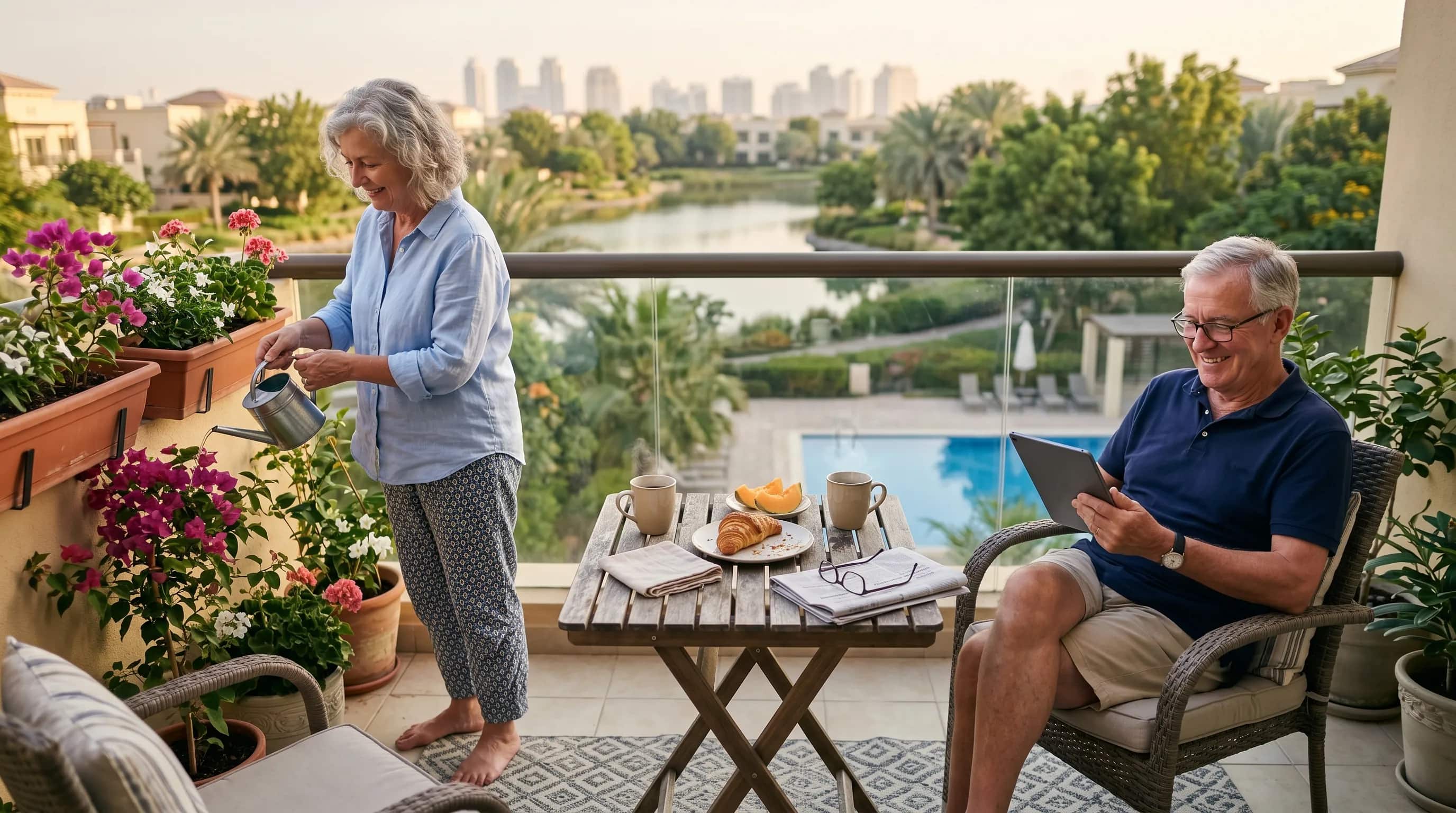
Dubai is not the typical place that comes to mind when thinking of a retirement destination. Spain, Portugal, or some other place where one could live with fewer expenses and less hustle are usually considered. However, buying property in Dubai for retirement purposes has become a more feasible solution lately, and after looking into finances, one might easily figure out why this option attracts increasingly more retirees.
First of all, the country's main feature – no taxes at all. No income tax, no tax on pension income, and savings are not taxed either. Along with this, Dubai provides a city that is completely safe, high quality healthcare services, sunshine almost throughout the year, and good connections all around the world. The launch of special visa for the retired population, which has never existed until recently, also makes things easier.
So, the issue is not whether you can buy property in Dubai and retire – you can. What really matters is where to do it and how. This paper attempts to answer these questions, providing information on which areas are more favorable, what visas to obtain, and how much money you need to start a new life.
We will tell you why this area might fit you, even though there are some things that should be taken into account as well. Also, we will describe different visas and their requirements and consider the right areas for your needs instead of blindly trusting the advertisements. Finally, real figures will help to understand how much money you would spend and what outcomes to expect.
Why Dubai Works for Retirement, and Where It Does Not
Let's be even-handed, because retirement is too big a decision for a sales pitch.
Here is the case for it. No income tax means your pension and savings stretch further than they would in most of Europe. The city is safe in a way that genuinely surprises people, and walking home late is a non-event. Private healthcare is excellent, with major hospitals across the city and specialists for almost anything. The weather is reliable for most of the year. English is spoken everywhere, so you are not locked out by a language barrier. And the place is built for convenience, with everything from groceries to pharmacies a tap and a short drive away.
What draws retirees here, in plain terms:
- No tax on pension income, investment income, or savings.
- A safety record that lets you live and travel without constant worry.
- Strong private hospitals and clinics, with short waiting times.
- A large international community, so you are unlikely to feel isolated.
- Easy flights home, with two major airports and direct routes worldwide.
- A lifestyle of beaches, golf, dining, and culture, as busy or as quiet as you want.
Now the honest other side, because it is not paradise for everyone. The summers are brutally hot, roughly June to September, and some retirees split the year and leave during the worst of it. Healthcare is excellent but private, so health insurance is a real and rising cost as you age, not an afterthought. You are a flight away from grandchildren rather than a drive. And while there is no income tax, the cost of living is not cheap, so the tax saving can get partly eaten by everyday spending if you are not careful.
The summary is simple. Dubai suits an active, reasonably well-resourced retiree who wants sun, safety, and convenience and does not mind being a flight from home. It suits less well someone on a tight fixed income who wants a sleepy village and cool summers. Be honest with yourself about which one you are before you buy.
The Visa Options: Retirement Visa vs Golden Visa
You do not get residency just by buying property. You get it through a visa, and for retirees there are two routes worth knowing. The right one depends on your age, your budget, and how long you want to be locked in.
The retirement visa is the one built for this. Dubai's Retire in Dubai programme, run through the residency authority, the GDRFA, is open to applicants aged 55 and over, and it runs for five years, renewable. To qualify you generally need to meet one of a few financial tests. Owning a property worth around AED 1 million or more is one route. Holding savings of around AED 1 million is another. Or showing an active monthly income in the region of AED 15,000 to 20,000. You also need valid health insurance. If the property is mortgaged, the criteria usually look at the equity you actually hold rather than the headline value, so check where you stand before you assume you qualify. The exact thresholds get adjusted, so confirm the current ones before you plan around them.
The Golden Visa is the longer, bigger-budget option. It runs for ten years, renewable, and the most common property route requires a home worth at least AED 2 million. It has become more flexible over time, with mortgaged and off-plan properties now counting in many cases. For a retiree with the budget to buy at that level, it is usually the stronger choice, because ten years gives you far more stability than five, and the threshold is just a higher property value rather than an age cutoff.
Here is how to think about which fits:
- Under the AED 2 million property level: the retirement visa is your main route, via property, savings, or income.
- At or above AED 2 million in property: the Golden Visa is usually the better deal for the longer term it gives you.
- Buying mainly to live, on a moderate budget: the retirement visa, with a one-bedroom or small apartment clearing the threshold.
- Buying bigger, with investment in mind: the Golden Visa, since the property value does double duty.
- Still drawing a strong pension or working part-time: the income route on the retirement visa can work without tying up a million in property.
Both visas can usually cover a spouse, which matters if you are retiring as a couple. The official criteria, including the latest figures and documents, are set out on the UAE government portal. Read the current version there before you commit to a number, because visa rules move faster than property prices.
Best Areas for Retirement in Dubai
This is where it gets personal, because the right area depends on the life you want. A beach walker, a golfer, and a city lover should not buy in the same place. Here are the areas that actually work for retirement, and who each one suits.
For green, calm, and convenience, Dubai Hills Estate is hard to beat. It is built around a big central park and a golf course, it has its own mall and a hospital close by, and it strikes a balance between quiet and connected that retirees tend to love. Apartments and townhouses sit alongside larger villas, so the budget range is wide. If this sounds like your pace, our Dubai Hills area guide covers what is there and what it costs.
If you want a proper villa community with space and maturity, Arabian Ranches is the classic choice. It is established, leafy, low-rise, and quiet, with golf, schools, and a real neighbourhood feel rather than a building full of strangers. It draws families and retirees who want a house and a garden over a tower and a lift. The Arabian Ranches guide is the place to start if a villa is the dream.
A few more worth a look, depending on what you are after:
- Jumeirah Golf Estates: for golfers, green and upscale, two championship courses and a calm, low-density feel.
- Palm Jumeirah: for the beach-and-water lifestyle, pricier, but unbeatable if you want the sea on your doorstep.
- Dubai Marina: for those who want to walk everywhere, with cafes, the promenade, and a lively scene at street level.
- Downtown Dubai: for culture, dining, and convenience, busy but endlessly walkable, with everything on hand.
- Creek Harbour: for newer waterfront living, green and well planned, with a quieter feel than the older hubs.
- The Valley or Dubailand: for value and space further out, newer communities at gentler prices, if you are happy to drive.
The pattern most retirees settle into is some version of green, quiet, and close to a hospital, with a few cafes within reach. The big-name party districts look great on a weekend visit and wear thin as a permanent base. Buy for the Tuesday morning, not the Saturday night. The everyday is what you are actually purchasing.
One more practical filter. Wherever you look, check how close the nearest good hospital is, how walkable the area is when it is not 45 degrees outside, and how the community feels midweek rather than at the weekend. Those three checks separate the areas that photograph well from the ones that actually live well.
Realistic Budgets: What Your Dirhams Actually Buy
Time for real numbers, because "it depends" helps nobody plan. These are rough market ranges, not quotes, and prices move, so you can sanity-check recent sale prices against the official records from the Dubai Land Department before you commit to anything.
We mapped the main budget levels to what they get you and what they unlock, each on one line:
- Around AED 1 million: a studio or one-bedroom in areas like JVC, Dubai South, or Dubailand, which also clears the property route for the retirement visa.
- AED 1.5 million to 2 million: a comfortable two-bedroom apartment in a solid community such as Dubai Hills or Creek Harbour, with room for visitors.
- AED 2 million and up: the level that unlocks the ten-year Golden Visa, and the entry point for townhouses in greener communities.
- AED 2.5 million to 4 million: a townhouse or smaller villa in Arabian Ranches or Dubai Hills, the sweet spot for a lot of villa-seeking retirees.
- AED 4 million and beyond: larger villas, golf-course homes, and beachfront on the Palm, for those with the budget to match.
- Every year, on top: service charges billed per square foot, plus utilities and maintenance, which belong in the retirement budget, not just the purchase price.
Two honest warnings on budgeting for retirement specifically. First, do not spend every last dirham on the property itself. You want a cushion left over, because a fixed income and a surprise bill do not mix well. Second, factor the running costs properly. Service charges on an apartment can run into the tens of thousands of dirhams a year on larger or more luxurious buildings, and they do not stop when your income does.
If you are buying to part-fund your retirement through rental income rather than to live in, the maths flips toward yield and tenant demand rather than personal taste, and the right area can look quite different. Either way, our property buying service can match a real shortlist to your budget and your plan, so you are working from actual listings rather than round numbers.
The Costs and Catches to Plan For
The purchase price is the headline. The ongoing reality is what makes or breaks a retirement budget. Here is what to plan for beyond the sticker.
- Health insurance. It is required for residency and it gets more expensive with age and pre-existing conditions. Get quotes before you commit, because for older retirees this can be one of the biggest annual costs.
- Service charges. Charged per square foot, every year, for the life of the property. Bigger and fancier buildings cost more to run. Check the rate before you buy, not after.
- The summer plan. If you intend to leave during the hottest months, you are effectively running two bases for part of the year, which has its own cost.
- Currency movement. If your pension is paid in pounds, euros, or another currency, the exchange rate swings your real budget around. A weak home currency can quietly shrink your spending power.
- Estate planning. As with any property here, register a will covering your UAE assets so the home passes the way you intend. We are not lawyers, so get proper advice, but do not skip this step.
- Maintenance and furnishing. Older buyers often underestimate the one-off cost of fitting out and the ongoing cost of upkeep. Budget for both.
Two of these deserve a closer look. Insurance, because it is the cost that rises exactly as you age, so price it honestly for your seventies, not just your fifties. And the will, because a property is usually the largest thing you own, and sorting the paperwork early saves the people you leave behind a great deal of trouble.
If part of the plan is moving here properly rather than splitting your time, our relocation service handles the practical side of settling in.
And if you are buying an income property to support your retirement from afar, our property management team runs the letting and upkeep so you are not managing it from another country.
What We Would Actually Do
All in all, it is worth saying that settling down in Dubai may be an absolutely good decision for a certain person and quite the opposite for some other individual. Tax benefits exist, but the security, health care, and heat, as well as being far away from home, do also exist. Moreover, nothing has been kept hidden and needs to be weighed honestly with regard to the kind of life one wants to have.
In case my colleague would ask me how one should act in this situation, I would answer as follows. Firstly, one has to choose a visa program, which depends on the budget: retirement visas start at AED 1 million, whereas Golden Visas begin at AED 2 million. It is better to buy real estate in a quiet area where people enjoy their days without having noisy holidays, which leads to the conclusion that it has to be green, quiet, and close to a hospital, not to the very center of the city. One has to keep extra money for some emergency, instead of spending everything on the house. Furthermore, one has to calculate additional expenses like health insurance, which would concern a person in one's seventies.
One has to visit the country, preferably in summer, to make sure what a person is buying. It is much more efficient to be here for a while and to get acquainted with life in the country, instead of reading only some guides. In addition, it may be useful to rent an apartment beforehand.
If you want to see what your budget actually buys in the areas that suit retirement, we live and work in these communities and can put together a shortlist that fits the life you are planning, not just the price. Get in touch and we will take it from there.
Related stories
Dubai's Established Charm: The Case for Older Homes
In a city focused on the future, I believe the smartest move for many buyers is to look back. Dubai's seasoned communities offer space, character, and surprising value that new builds often can't match.
The True Cost of Owning a Dubai Property
Beyond the purchase price, your annual budget for a Dubai home must account for service charges, utilities, and maintenance. I'll break down every ongoing expense you need to plan for.

Calculating ROI on Dubai Rental Upgrades
As a landlord in Dubai, you can't just follow trends. I'll show you how to calculate the precise ROI of minor property upgrades to genuinely increase your rental yield.
Echoes, in your inbox
One thoughtful email a month. Market insight, new launches, no spam.