

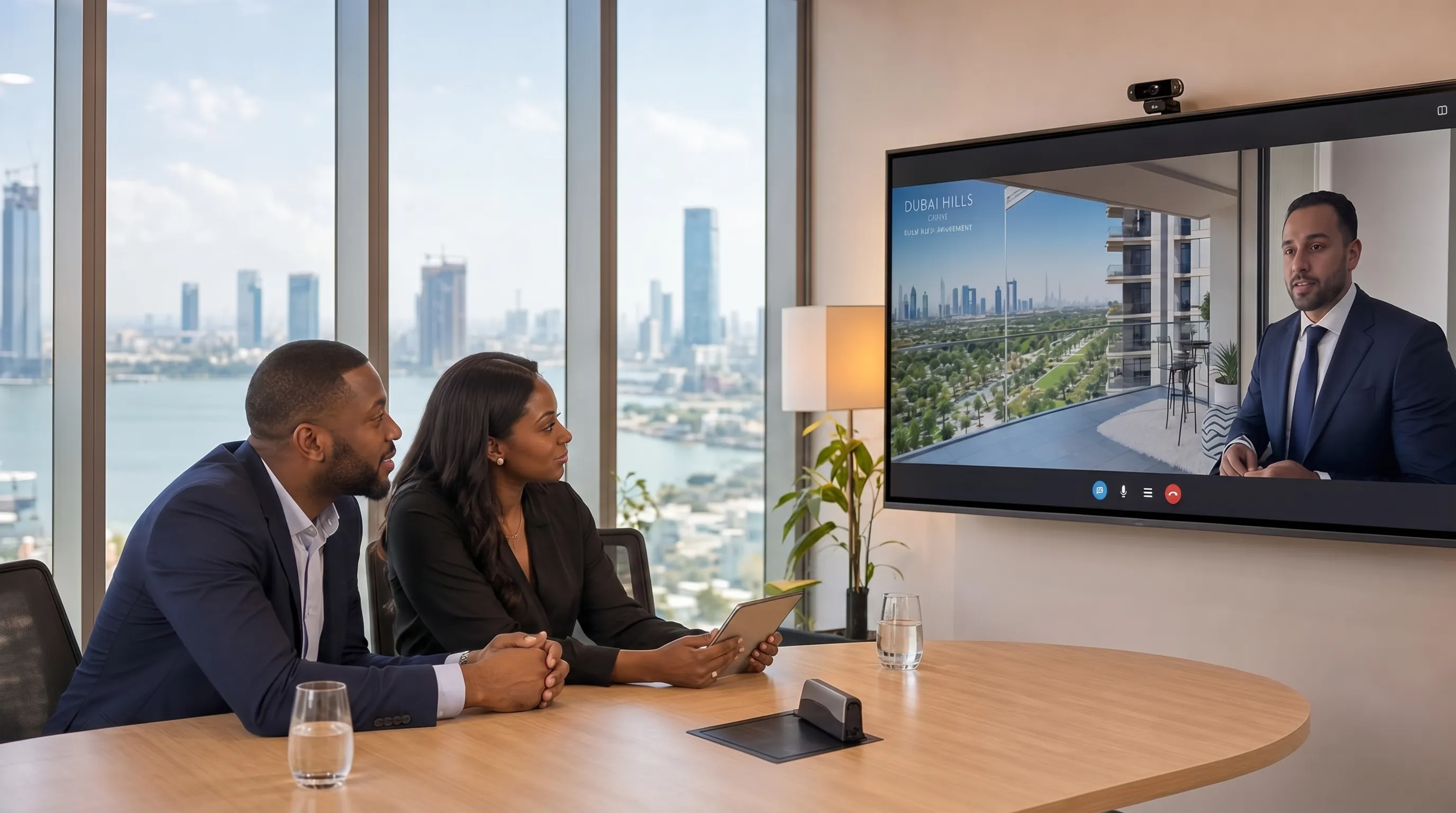
Buying Dubai Property as a Nigerian Citizen: Banking, Process, and Timelines
Dubai is an attractive location for potential Nigerian investors, serving as a means of protecting against a weakening naira, as a stable environment abroad, offering high rental yields…
Dubai is an attractive location for potential Nigerian investors, serving as a means of protecting against a weakening naira, as a stable environment abroad, offering high rental yields, and as a city directly reachable by flight from Lagos, filled with like-minded people interested in achieving the same goals. The attraction is genuine and growing.
As far as rights go, there are none to discuss here. Buying Dubai real estate as a Nigerian citizen is perfectly possible. No limitations will be imposed upon you based on national status, and it will be perfectly fine to buy a piece of real estate in Dubai in your own name, without any problems. All of this is easy enough to do.
However, it is the other side of things—namely, banking—that makes the process more complicated. Sending money to Dubai, converting foreign currency, passing the required due diligence checks—all of these can make up the main part of the process. As a result, timelines can become an issue because the process will be limited by finances.
In the following lines, we will tell about your rights, the attractiveness of Dubai for Nigerian investors, about banking issues, such as transferring and documenting money, the buying process, and realistic timelines.
Please take note of one extremely important thing: Transfer money via official channels, keep track of the sources of your funds, and consult a professional before taking action. We offer no consulting services, and laws in Nigeria are subject to change, which is why our information can serve as merely a basis for further actions. Having said that, let us begin.
Yes, You Can Buy: Nigerians and Dubai Property
Let's settle the rights first. Nigerians can buy freehold property in Dubai's designated areas, hold the title deed in their own name, and do it without a local sponsor or partner. There is no rule that treats a Nigerian buyer differently from a British, Indian, or any other foreign one. Your right to buy is complete.
And Nigerian buyers are a growing, well-recognised part of Dubai's market. Agencies, banks, and developers here have handled plenty of Nigerian clients, so this is established ground, not new territory. Lagos to Dubai is a direct flight, and the African presence in the city keeps growing.
Here is why Dubai appeals so strongly to Nigerian buyers:
- A hedge against the naira. With the naira having lost a lot of value, a property priced in dirhams pegged to the US dollar is a way to hold wealth in a hard currency.
- A stable base abroad. Owning here gives you a foothold in a safe, stable city, useful for family, business, or simply peace of mind.
- Residency and mobility. Buying can lead to UAE residency, which adds a base and easier travel for those who value mobility.
- Strong returns. Dubai's rental yields and growth have been attractive, so the property can earn while it holds its value.
- Proximity and community. Direct flights and a growing community make it easy to use a home or check on an investment.
- A trusted, transparent market. Compared with some options, Dubai offers clear rules, published data, and strong legal protection for owners.
That first point, the hedge against the naira, is doing a lot of the work right now. For many Nigerian buyers, this is not only about a home or a yield. It is about moving some wealth into a currency and an asset that holds its value, which is harder to do at home. That motivation is genuine and widely shared. The residency that can come with a larger purchase is set out on the UAE government portal if you want to understand that side.
So the rights are simple and the appeal is clear. The real work, and where careful planning pays off, is the banking and the money. That is next, and we are going to be honest and practical about it.
The Banking Side: Moving Money and Source of Funds
This is the part that matters most for Nigerian buyers, so let's be clear and practical about it. Two things shape the money side. Getting funds out of Nigeria, and documenting where those funds come from. Handle both well and the rest is smooth. Handle them badly and a purchase stalls.
Start with moving money. Nigeria's foreign-exchange rules and the pressure on the naira mean getting larger sums out can be involved, with limits and procedures to follow. That is exactly why many Nigerian buyers fund purchases from money already held abroad, or spread payments over time. Whatever route you use, use legitimate banking channels and follow the rules on both sides.
Then there is source of funds, which is routine but worth preparing for:
- Any large international property purchase involves standard anti-money-laundering and know-your-customer checks, applied by banks and developers everywhere, not just to Nigerians.
- You will likely be asked to document where your money comes from, such as business income, salary, a property sale, or an inheritance.
- Having that documentation ready and clear makes the whole process faster, while scrambling for it later is what causes delays.
- Funds held in a foreign account already, with a clear history, are usually the simplest to use.
- Off-plan payment plans spread the money over time, which can ease both the transfer and the documentation at any single point.
- Proper advice from your bank and a financial adviser, before you commit, keeps the funding route clean from the start.
We want to be very clear on two things. First, source-of-funds checks are normal and apply broadly, so do not take them personally, just come prepared with clean documentation. Second, always move money legally, through official channels, and never use informal or unofficial routes to get around currency rules, because that creates real legal and financial risk no property is worth. If you are unsure what is allowed, check with your bank and the Central Bank of Nigeria, and take qualified advice before moving anything.
The single best thing a Nigerian buyer can do is sort the money first. Work out, legally and with advice, exactly how you will fund the purchase and document it, before you fall for a property. Buyers who do that have smooth, quick completions. Buyers who leave it to the end are the ones who hit delays. Sort the banking, then go shopping.
The Buying Process, Step by Step
Once the money is sorted, the process is the same one every foreign buyer follows. Nothing changes because you are Nigerian. Here it is, start to finish.
- Sort your funding and documentation first. Know exactly how the money will flow and have your source-of-funds papers ready, because this is the step that decides your timeline.
- Choose your area and property. Decide whether you are buying to live, to rent out, or to hold as a store of value, since that shapes where and what you buy.
- Make an offer and agree terms. Once you and the seller agree, you sign a Form F, the standard sale contract, and pay a deposit, usually 10%.
- Get a No Objection Certificate. The seller obtains this from the developer, confirming there are no unpaid charges on the property.
- Transfer the property. You complete the transfer at a Dubai Land Department trustee office, pay the balance and fees, and the title deed is issued in your name.
- Set up and register. The deed is yours, and you sort out utilities, community registration, and any management you need, especially if you are based in Nigeria.
For an off-plan purchase, which suits a lot of Nigerian buyers for the payment-plan and timing reasons, the shape is a little different. You sign the sales agreement directly with the developer, pay along the agreed plan, and the deed transfers at handover once the building is finished and the payments are complete.
A few things make it smoother. You do not need to be resident in the UAE to buy, and much of the process can be handled remotely with a trusted agent and the right paperwork, so a lot of it can be done from Lagos or Abuja. Use a registered agent and a registered conveyancer. Keep your own copies of everything. And budget for the full costs, including the 4% transfer fee and agent commission, not just the property price.
If you want the full version of how a purchase runs from search to handover, our property buying service lays it out in detail, including for buyers based outside the UAE.
Timelines: How Long It Actually Takes
Nigerian buyers ask about timing more than almost anything, usually because of the money side. So here is an honest breakdown of how long each stage takes, with the part that actually varies flagged clearly.
We mapped the typical timeline, stage by stage, each on one line:
- Finding and choosing a property: the most variable stage, anywhere from a few days to a few months, depending on you.
- Offer to signed contract: fast once you decide, often just a day or two to agree terms and sign the Form F.
- No Objection Certificate from the developer: usually a few days to a couple of weeks, depending on the developer.
- The actual transfer at the Land Department: quick once everything is ready, often a single appointment on one day.
- Getting funds from Nigeria and clearing source-of-funds checks: the real variable, which can add days or weeks depending on how prepared you are.
- An off-plan purchase: paid in stages over the construction period, so the full timeline runs to years until handover.
- A ready-property cash purchase, all in: commonly a couple of weeks to a couple of months, decided mostly by the money side, not the paperwork.
See the pattern? The official steps are fast. Dubai's process is built to move quickly, and the transfer itself can happen in a day. What stretches a Nigerian buyer's timeline is almost always the banking, getting the funds across and the documentation cleared. That is the lever you control.
So if you want a fast completion, the answer is simple. Prepare the money side early. Have your funds and your source-of-funds documents ready before you start, and a ready-property purchase can complete in a few weeks. Leave the banking to the last minute and the same purchase can drag on for months, not because of Dubai, but because of the transfer. The official side is quick. Your preparation decides the rest. You can see the formal steps and requirements on the Dubai Land Department side, but the timeline is mostly in your hands.
Financing and Practical Tips
A few more things round out the picture, from how you pay to the small moves that make it smoother.
On financing, it depends on where you live:
- If you live and work in the UAE, you can get a mortgage like any other resident, assessed on your income, with the usual deposit and terms.
- If you are based in Nigeria, non-resident mortgages exist but are harder to get and need a bigger deposit, so many buyers pay cash from funds abroad.
- Off-plan payment plans are popular, since they spread the cost over time and ease both the budget and the transfers.
- A mix is common, such as a deposit from funds held abroad and a payment plan for the balance.
- Whatever route you choose, factor the ongoing costs, service charges, fees, and maintenance, into the plan from the start.
If a mortgage is part of your thinking, find out what you can realistically borrow before you start looking, which our mortgage team can help with.
And if you are buying off-plan to ease the money side, our property launches page shows what is currently available with payment plans.
A few practical tips that matter for Nigerian buyers specifically:
- Prepare your source-of-funds documentation early, because it is the single biggest thing that speeds up or slows down a purchase.
- Consider residency, since a property worth AED 2 million or more can lead to the ten-year Golden Visa, which suits buyers who value a base and mobility.
- Buy remotely with the right help, since you can handle most of the process from Nigeria with a trusted agent and proper paperwork.
- If you are buying as an investment from afar, line up management before you complete, so the property is looked after the moment it is yours.
That last point is worth acting on. If you are buying from Nigeria as an investment, you cannot manage a tenant or a repair from Lagos, so getting professional management lined up before you complete makes all the difference between passive income and a long-distance headache.
What We Would Actually Do
In conclusion, buying property in Dubai by a Nigerian citizen in terms of suitability is quite simple; it becomes complex when it comes to banking issues since everything depends here. The right to purchase property is entirely granted. The procedure is the one known everywhere and performed efficiently from the official side. The problem is connected with finances because moving money officially and proving their origin is what matters here.
What we could advise our colleague from Lagos regarding the issue of his acquisition of property in Dubai would sound as follows. It is important to think about the banking side first. Getting qualified advice in advance, it will become clear how much the purchase can be funded and how its financing can be proven before starting searching for it. Source-of-funds proof should be prepared in advance, which will be the major impediment to fast completion of the transaction. Further, choose the property considering whether it will be used as a place of residence or will provide income, and buy it at a price suitable for getting citizenship.
At last, there is an urgent warning. One should never use any illegal ways to avoid legal rules of money transactions; never evade any checks on sources of funds since such checks are common for all purchasers and well-documented information is beneficial rather than harmful. Everything will go smoothly if done properly.
A well-conducted purchase of property in Dubai can provide a Nigerian citizen with an asset and shelter against naira, a good base in another country, an investment which brings profit and maintains value. Quite many people from Nigeria made it already.
If you are buying as an investment from afar, our property management team can run the property for you once it is yours, so it is looked after from day one.
And if you want a straight, practical conversation about doing it from Nigeria, including the banking and the timeline, we work with Nigerian buyers regularly and are happy to help you plan it properly. Get in touch and we will take it from there.
Related stories

Dubai's Established Charm: The Case for Older Homes
In a city focused on the future, I believe the smartest move for many buyers is to look back. Dubai's seasoned communities offer space, character, and surprising value that new builds often can't match.
The True Cost of Owning a Dubai Property
Beyond the purchase price, your annual budget for a Dubai home must account for service charges, utilities, and maintenance. I'll break down every ongoing expense you need to plan for.

Calculating ROI on Dubai Rental Upgrades
As a landlord in Dubai, you can't just follow trends. I'll show you how to calculate the precise ROI of minor property upgrades to genuinely increase your rental yield.
Echoes, in your inbox
One thoughtful email a month. Market insight, new launches, no spam.