

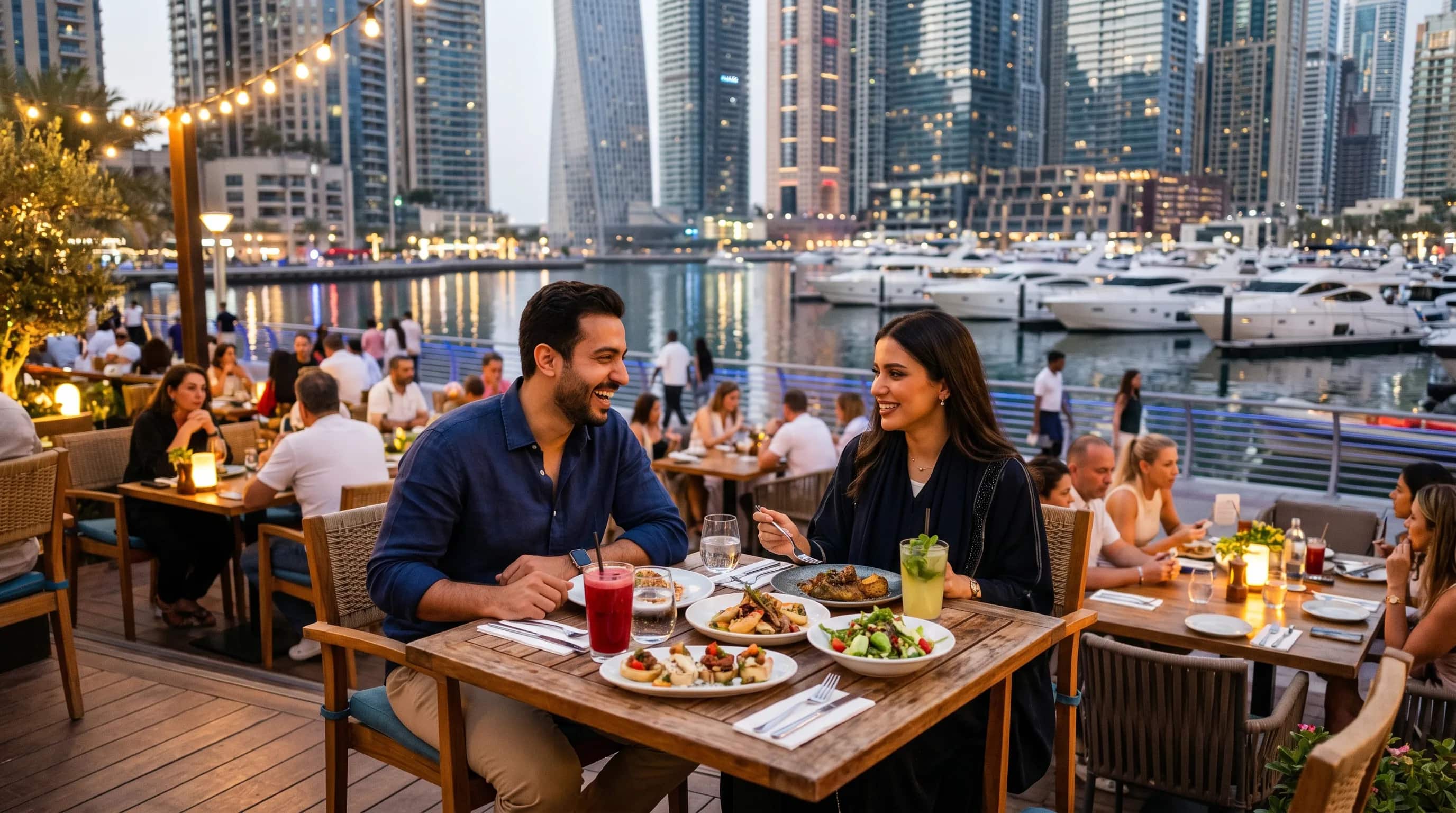
Buying Dubai Property From Saudi Arabia: Why Saudis Are Buying in Dubai
Buying Dubai property from Saudi Arabia is easier than you think. Here's why so many Saudis are buying in Dubai, what they buy, and how the process works.
Saudi citizens have always played an important role in Dubai’s real estate market, and their share of the market still remains high. They are the largest group of property buyers in the city, purchasing everything from luxurious beachfront apartments to family homes. If you’ve visited Dubai for a weekend or two and thought about owning your own property here, you’re not alone.
Why do Saudis buy property in Dubai? How easy is the process? Buying Dubai property from Saudi Arabia is one of the easiest things a Gulf buyer can do. The country is close by, the procedure is simple, money flows freely, and the list of reasons goes on and on.
This guide is about precisely this topic: why Saudis buy property in Dubai; the benefits of buying property in Dubai for Saudi citizens; what kind of property Saudi people buy and where; the process of making the purchase; and, finally, how to decide if you need to buy a vacation home or invest. As usual, there are no complicated details involved, which only increases its attractiveness. While foreign buyers usually face currency restrictions and other complications when trying to transfer funds from their bank accounts, this is not the case here. Riyal and dirham exchange rates stay steady and tied to the dollar, and moving money around the Gulf is quite easy. It makes all the difference when considering why to choose this type of real estate investment.
Why Saudis Are Buying in Dubai
Let's start with the obvious question, because the reasons are strong and worth laying out. Saudis buy in Dubai for a mix of lifestyle, proximity, and money, and usually more than one at once.
The biggest single reason is how close it is. Dubai is a short flight from Riyadh or Jeddah, and an easy drive from the Eastern Province. That closeness changes everything, because a Dubai home is genuinely usable. You can be there for the weekend, drop in for a few days, or send the family for the holidays without it being a major trip. It is near enough to feel like a second home rather than a distant investment.
Here is the full picture of why Saudis keep buying:
- Proximity. A short flight or drive means a Dubai property is something you actually use, not just own on paper.
- Lifestyle. Dubai offers beaches, dining, shopping, entertainment, and a cosmopolitan, international feel that makes it a favourite getaway.
- A weekend and holiday base. Many Saudis buy specifically for short breaks and family holidays, which the closeness makes practical.
- Strong investment returns. Dubai's rental yields and price growth have been attractive, so a home here can earn as well as please.
- Diversifying assets. Owning in Dubai spreads your wealth across a stable, mature, dollar-pegged market alongside your holdings at home.
- Familiar yet different. Arabic, the culture, and the region are familiar, while Dubai's international scene offers a change of pace.
That last pairing, familiar yet different, is part of the appeal for Saudi buyers. Dubai is close enough and culturally familiar enough to feel comfortable from day one, while offering an international, leisure-focused lifestyle that makes it feel like a proper getaway. You get the ease of the neighbourhood with the change of scene of somewhere abroad.
Saudi Arabia is, of course, building plenty of its own at home, and the country is changing fast. But for proximity, a mature property market, and a ready-made international lifestyle a short hop away, Dubai keeps its pull. That is why the Saudi buyer is such a familiar face here, and why the numbers keep climbing.
The GCC Advantage: How Easy It Is for Saudis
Here is something Saudi buyers sometimes do not realise. You have it even easier than most foreign buyers, because as a GCC national you sit in a special category in the UAE.
The first big advantage is that your money is not a problem. The riyal and the dirham are both pegged to the US dollar and trade at a stable, near-fixed rate, and money moves freely across the Gulf. There are no currency controls to wrestle with, no hard-to-source dollars, none of the banking headaches that buyers from many other countries face. You transfer riyals, they become dirhams at a steady rate, and you buy. It is about as simple as cross-border buying gets.
On top of that, GCC nationals enjoy a smoother path in several ways:
- No visa hassle to visit. As a GCC citizen you can enter the UAE easily, so viewing properties and managing a home is simple.
- Free movement of money. Funds move across the Gulf without the controls and limits that slow buyers from outside the region.
- Broader ownership rights. GCC nationals can own property in the UAE on favourable terms, often with more flexibility than other foreign buyers.
- Cultural and language ease. Arabic and shared customs mean nothing about the process feels foreign or hard to follow.
- Drivable for some. From the Eastern Province, you can simply drive over, which makes using and checking on a home effortless.
- A familiar legal and banking system. The Gulf's systems have a lot in common, so the paperwork and banking feel familiar rather than strange.
Put all of that together and the contrast with buyers from further afield is stark. Where someone from Egypt, Nigeria, or beyond has to plan carefully around moving money and documentation, a Saudi buyer largely skips that whole chapter. Your main decisions are about what to buy and where, not how to get the money there. The official framework, including the rules for GCC nationals, is on the UAE government portal if you want the detail.
So if anything has held you back, it is unlikely to be the practicalities, because those are genuinely easy for you. It is far more likely to be simply deciding what you want from a Dubai property. That is the good kind of problem to have, and the rest of this guide helps you solve it.
What Saudis Tend to Buy, and Where
Saudi buyers are not all the same, but some patterns show up again and again. What you buy depends mostly on whether it is a getaway, an investment, or both.
For a weekend or holiday home, Saudis tend to gravitate toward the prestige, lifestyle areas, the parts of Dubai that feel like a proper escape. Beachfront and waterfront living is a big draw, as are the central, well-known addresses with everything on the doorstep. The Palm and the Marina come up constantly for exactly this reason. If a lifestyle base by the water appeals, our Palm Jumeirah area guide is a good place to start.
For an everyday central base or a prestige home, Downtown is the classic pick, with the Burj Khalifa, the dining, and the walkable buzz that defines Dubai for a lot of visitors. Our Downtown area guide covers what is there and what it costs.
Here is the rough split of what Saudi buyers go for:
- Beachfront and waterfront apartments, for the getaway feel, on the Palm, the Marina, and similar.
- Prestige central addresses like Downtown, for the lifestyle, the views, and the convenience.
- Larger family villas, for those buying a proper second home to bring the family to regularly.
- High-end and branded residences, for buyers who want luxury and a recognisable name.
- Investment apartments in strong rental areas, for those buying mainly for returns rather than personal use.
- A blend, such as a lifestyle apartment used some weekends and rented out the rest of the time.
The key thing is to match the property to the plan. A beautiful beachfront flat you use ten weekends a year is a lifestyle purchase, and that is fine if that is what you want. An apartment chosen for yield in a high-demand area is an investment, and it may not be where you would personally choose to stay. Trouble starts when buyers expect one property to be both the dream getaway and the top-performing investment, because those are often different homes in different places.
So decide first what the property is really for. That single decision shapes the area, the type, and the budget more than anything else, and it is the question we always ask a Saudi buyer before anything else.
The Buying Process for a Saudi Buyer
The process is the same one every buyer follows, and for you it tends to run smoothly thanks to the GCC ease. Here it is, start to finish.
- Decide what you are buying and set your budget. Weekend home, investment, or both, because that shapes everything that follows.
- Choose your area and property. Pick to match the plan, lifestyle areas for a getaway, strong rental areas for an investment.
- Make an offer and agree terms. Once you and the seller agree, you sign a Form F, the standard sale contract, and pay a deposit, usually 10%.
- Get a No Objection Certificate. The seller obtains this from the developer, confirming there are no unpaid charges on the property.
- Transfer the property. You complete the transfer at a Dubai Land Department trustee office, pay the balance and fees, and the title deed is issued in your name.
- Set up and register. The deed is yours, and you sort out utilities, community registration, and any management you need.
For an off-plan purchase, you sign the sales agreement directly with the developer, pay along the agreed plan, and the deed transfers at handover once the building is finished and the payments are complete. Payment plans suit plenty of Saudi buyers too, spreading the cost over the build.
A few things make it especially easy for you. Your money moves freely, so funding is rarely the bottleneck it is for buyers from outside the Gulf. You can visit easily to view in person, or handle much of it remotely with a trusted agent. Use a registered agent and a registered conveyancer, keep your own copies of everything, and budget for the full costs, including the 4% transfer fee charged by the Dubai Land Department, not just the property price.
If you want the full version of how a purchase runs from search to handover, our property buying service lays it out in detail, whether you are buying in person or from Riyadh.
Weekend Home or Investment? Making It Work
This is the decision that matters most for a Saudi buyer, because so many are weighing a getaway against an investment. They pull in different directions, so it helps to see them side by side. We compared the two, each consideration on one line:
- Who uses it: a weekend home is for you and your family, an investment is for tenants.
- Income: a weekend home earns nothing while you keep it for yourself, an investment earns rent year-round.
- Area choice: a weekend home points you to lifestyle and beachfront areas, an investment points you to high-demand rental areas.
- Cost reality: a weekend home is a lifestyle expense you pay for, an investment should largely pay for itself.
- Management: a weekend home still needs upkeep while you are away, an investment needs full letting and management.
- The blend: a holiday-let model lets you use it some weekends and rent it out the rest, capturing a bit of both.
That last option is the one a lot of Saudi buyers love once they understand it. You buy a lifestyle apartment, use it for the weekends and holidays you want, and let it out as a short-term rental the rest of the time, so it earns its keep instead of sitting empty. It is the closest thing to having the getaway and the income at once. Our holiday homes and short-term rental service handles exactly that, the licensing, the guests, and the turnaround, so the place earns when you are not using it.
Either way, a home you are not living in needs looking after, and managing it from Saudi Arabia is not something to do off the side of your desk. Whether it is a pure investment or a second home that sits empty between visits, our property management team keeps it maintained, tenanted where you want it, and ready for you whenever you come.
The honest advice is simple. Be clear about which of these you are doing, or how you want to blend them, before you buy. A weekend home and an investment are often different properties in different places, and the buyers who are happiest are the ones who decided what they wanted first.
What We Would Actually Do
Brief overview: Purchasing property in Dubai from Saudi Arabia can be one of the easiest cross-border acquisitions to make. Accessible processes, free capital flow, and the motivation behind it, which may range from having a place to spend weekend in Dubai to securing an investment, accumulate into a process with little practical hurdles to you coming from another nationality.
In case your buddy from Riyadh or Jeddah asks how to go about the process, we recommend first figuring out exactly why you are buying property: either for the sake of relaxation, investment, or a combination of both, as this single factor dictates where and what kind of property you should purchase as well as the cost range. Should you want a weekend escape, look for a place close to water or in the downtown, and be prepared to invest in a lifestyle experience. In case your motive is investment, aim at good yields in the active rental market even if you do not see the place suitable for living. In case of combination, opt for a holiday let.
Moreover, considering how much you gain in finances, it is easy to hurry. Take your time considering the property properly. Easy access to money does not mean that easy is the right selection of property to buy, and you need to consider that properly. Making a wrong selection in property, while making quick transactions, is still doing something wrong.
With due care, a Dubai property purchase will allow you to enjoy an easy weekend escape from Saudi Arabia, an opportunity to enter the market successfully, and a relatively stable currency. It comes with less hurdles than some other nationality will face. It is no wonder then why many Saudis bought property in Dubai already.
If you want a straight, friendly conversation about what fits your plans, whether that is a beachfront weekend home or a yield-focused investment, we work with Saudi buyers all the time and would be glad to help. Get in touch and we will take it from there.
Related stories
Dubai's Established Charm: The Case for Older Homes
In a city focused on the future, I believe the smartest move for many buyers is to look back. Dubai's seasoned communities offer space, character, and surprising value that new builds often can't match.
The True Cost of Owning a Dubai Property
Beyond the purchase price, your annual budget for a Dubai home must account for service charges, utilities, and maintenance. I'll break down every ongoing expense you need to plan for.
Calculating ROI on Dubai Rental Upgrades
As a landlord in Dubai, you can't just follow trends. I'll show you how to calculate the precise ROI of minor property upgrades to genuinely increase your rental yield.
Echoes, in your inbox
One thoughtful email a month. Market insight, new launches, no spam.