


Buying a Ready Home Direct from a Dubai Developer
A direct purchase of a new, ready property from a developer can seem simple, but it has unique processes and pitfalls. I'll break down the real costs, the negotiation tactics, and whether it's the right move for you.

The idea is tempting: buying a brand-new, untouched apartment or villa directly from the people who built it. No secondary market haggling, no previous owner's taste to contend with, just the clean, simple process of being the first name on the title deed. In my experience as a transactions advisor, I've seen countless clients drawn to this path. The allure of **developer direct sales Dubai** is powerful, offering a seemingly straightforward route to owning a piece of the city.
But a direct purchase of a ready property is a distinct transaction type with its own set of rules, benefits, and very real risks. It’s not the same as buying off-plan, and it’s certainly not the same as buying from a private seller on the secondary market. Understanding this unique landscape is the key to making a smart decision, not an emotional one. This is a choice that requires careful calculation.
Here's what we'll explore:
- What 'developer ready stock' really means
- The typical process for developer direct sales in Dubai
- Key differences: off-plan vs. Ready developer purchases
- The truth about "special developer offers" and incentives
- Negotiating with a developer's sales team vs. A private seller
- A full breakdown of the costs involved
- Potential pitfalls and how to avoid them
- My verdict: when a direct developer purchase makes sense
The Lure of 'Brand New': Understanding Developer Ready Stock
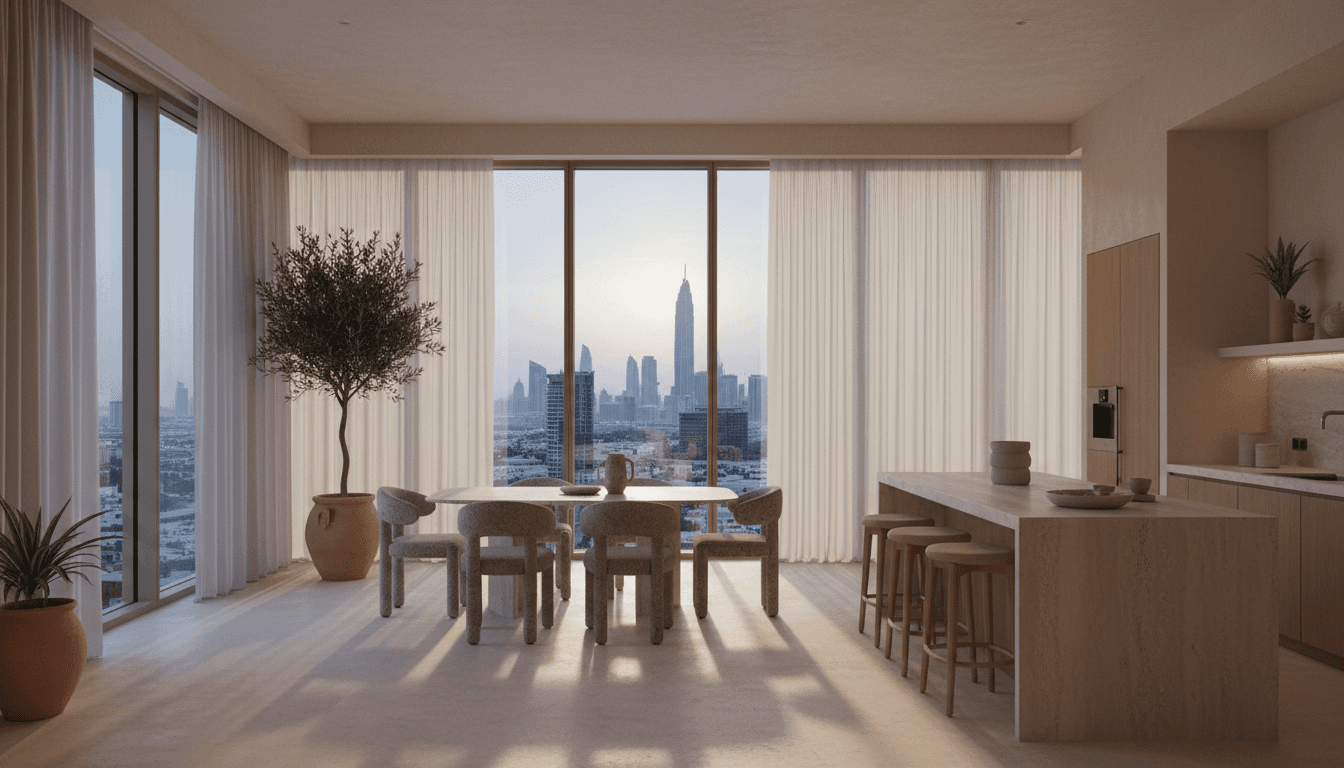
First, let's be clear about what we're discussing. When we talk about ready property from developer Dubai, we mean units that are complete, have received their Building Completion Certificate (BCC) from the authorities, and are ready for immediate handover. This isn't an off-plan launches property where you're buying a promise on a floor plan; you can physically walk through the exact apartment or villa you intend to purchase. This is a critical distinction and the primary reason buyers consider this route — it eliminates construction risk entirely.
So why does this 'ready stock' exist? It's rarely an accident. Developers might hold back a certain percentage of units to sell upon completion, often at a higher price than the off-plan launch. This allows them to capitalize on market appreciation that occurred during the construction period. In other instances, it's unsold inventory from the initial sales phases. This could be due to a slower-than-anticipated market during the launch, or simply the less desirable units being left until last. Finally, some ready stock comes from original off-plan buyers who defaulted on their payments, leading the developer to terminate the contract (known as an Oqood cancellation) and retake possession of the unit.
The appeal is undeniable. You are buying a home in mint condition. There's no tenant you need to give notice to, no mysterious scuffs on the walls, and no outdated fixtures to replace. Everything is pristine, and more importantly, everything is under warranty. The mandatory one-year Defects Liability Period (DLP) starts from your handover date, giving you a safety net for any construction issues. This is a huge psychological comfort. For example, in a newly handed over tower in Business Bay or a fresh villa community in Arabian Ranches, you get to experience the property at its absolute best, a privilege the second or third owner will never have.
This desire for a 'clean slate' is a powerful motivator for many buyers we at Gaia Living work with, especially end-users. They envision their family being the first to live in the space, creating its history from scratch. This emotional pull is something developers understand and often factor into their pricing. You are not just buying a property; you are paying a premium for the 'first owner' experience. The key is to be aware of this premium and decide, with a clear head, whether the tangible benefits — like the warranty and immediate availability, justify the cost compared to the secondary market.
The Step-by-Step Process for a Direct Developer Purchase
 Featured project
While simpler in some respects than a secondary market deal, buying directly from a developer follows a specific, rigid process. There's less back-and-forth than with a private seller, but also less flexibility. It’s a corporate transaction, and you must follow the developer's established procedure. Deviations are rare. Here’s the typical path from inquiry to getting your keys.
1. Discovery and Viewing: Unlike the secondary market, developer-held ready stock isn't always listed on major property portals. The best way to find it is to contact the developer directly or work with a well-connected agency like ours. Once you identify a project, you'll schedule a viewing through the developer's sales centre. Their on-site sales representatives will show you the available units.
2. Reservation Agreement: If you find a unit you love, the first financial step is to sign a Reservation Agreement or Booking Form and pay a token deposit. This fee can range from AED 25,000 to 5% of the property value, depending on the developer. This takes the unit off the market and freezes the price while the contracts are prepared. This is a commitment, and the deposit is often non-refundable if you back out, so be certain before you sign.
3. Sale and Purchase Agreement (SPA): Within a week or two, the developer will issue the formal Sale and Purchase Agreement. This is the master legal document for your purchase. I cannot stress this enough: developer SPAs are drafted to protect the developer. They are not the balanced, government-issued 'Form F' (MOU) you use in a secondary transaction. Have an experienced property lawyer or a seasoned agent review this document with you. Pay special attention to payment schedules, penalty clauses for late payments, handover conditions, and DLP terms.
4. Making Payment: For a ready property, the bulk of the payment is due. If you're a cash buyer, you'll typically transfer the funds directly to the developer's specified account. If you're using a mortgage, your bank will coordinate with the developer to settle the payment after the SPA is signed and the loan is approved. If there's a post-handover payment plan, you'll pay the initial down payment (e.g., 20%) and the SPA will outline the schedule for the remaining installments.
5. No Objection Certificate (NOC): To transfer the title deed at the Dubai Land Department (DLD), an NOC from the developer is required, confirming that all dues are settled. Since the developer is both the seller and the master developer, this is a streamlined internal process, much faster than getting an NOC in a secondary sale where the seller has to clear their own service charge accounts first.
6. Title Deed Transfer: You, your mortgage bank's representative (if applicable), and the developer’s representative will meet at a DLD-approved Registration Trustee office. Here, all documents are checked, the final DLD fees are paid, and the new title deed is issued in your name. This is the moment you legally become the owner of the property.
7. Handover and Move-In: With the new title deed in hand, the developer will schedule the official handover. This involves a final walkthrough, a snagging inspection (which you should do with a professional), and finally, receiving the keys. You'll also get the necessary documents to register for utilities like DEWA and cooling. The one-year Defects Liability Period officially begins on this date.
Off-Plan vs. Ready from Developer: A Critical Comparison
The choice between off-plan vs ready developer Dubai properties is one of the most fundamental decisions an investor or homebuyer can make. Both involve buying directly from a developer like Emaar Properties or Damac, but they represent vastly different propositions in terms of risk, finance, and potential reward. Choosing incorrectly for your circumstances can be a costly mistake.
Let’s start with the most obvious difference: risk. A ready property has zero construction risk. You can see, touch, and inspect the finished product. The view, the quality of the finishing, the noise from the street — it’s all known. An off-plan property, by contrast, carries inherent risks. While Dubai's RERA regulations and mandatory escrow accounts have made the market much safer, delays are still possible. The final quality might not match the glossy brochure, and the market could shift dramatically during the two-to-four-year construction period. With a ready unit, what you see is what you get, today.
Next is the payment structure. Off-plan is famous for its attractive payment plans, allowing you to pay in small increments (e.g., 10% down, then 5-10% every six months). This makes it accessible to buyers with less upfront capital. A ready developer unit typically requires the full payment upfront, either in cash or through a mortgage, which necessitates a significant down payment — at least 20% for residents as per Central Bank of the UAE rules. Some developers try to bridge this gap by offering post-handover payment plans on ready units, but the entry cost is still higher than off-plan.
The investment rationale also differs completely. Off-plan is largely a play on capital appreciation. The goal is to buy at the lowest possible price and benefit from the property's value increasing as construction progresses and the community matures. It’s a medium-term growth strategy. A ready property, on the other hand, is an income-generating asset from day one. You can move in and save on rent or lease it out immediately. For an investor focused on yield, a ready unit in a high-demand area like Dubai Marina or JVC provides instant cash flow, whereas an off-plan unit is a cash drain until handover.
Finally, consider the element of choice. When a project launches off-plan, you get the pick of the litter. The best views, the most desirable layouts, and the premium corner units are all available. By the time a project is completed and the developer is selling its leftover ready stock, your options are inherently limited. You are choosing from what remains. This might mean a lower-floor unit, one facing a less desirable direction, or a layout that proved less popular during the initial sales. The price for eliminating construction risk is often a compromise on the unit's specific attributes.
Decoding Developer Offers: What's Real and What's Marketing?
Developers are masters of marketing, and when they have ready stock to move, they often roll out a series of enticing promotions. These developer offers Dubai are designed to create urgency and make their properties seem more attractive than the secondary market. Some of these offers provide genuine, substantial value. Others are more marketing fluff than real savings. The trick is knowing the difference.
Here’s a breakdown of the most common incentives and my take on their true worth:
- DLD Fee Waivers: This is arguably the most valuable and straightforward offer. The Dubai Land Department transfer fee is a mandatory 4% of the purchase price. When a developer offers a “100% DLD Waiver” or “4% DLD Waiver,” they are agreeing to pay this substantial cost on your behalf. On a AED 2 million property, that’s an AED 80,000 direct saving for you. A “50% DLD Waiver” (meaning you and the developer split the fee 2% each) is also common and still represents a significant saving of AED 40,000. This is real cash that stays in your pocket. It is the gold standard of developer incentives.
- Service Charge Waivers: Another common offer is waiving community service charges for a set period, typically two to five years. This is also a real saving, but you need to do the math. For a 1,500 sq. Ft. apartment in a premium community like Downtown Dubai with service charges at AED 22/sq. Ft., the annual cost is AED 33,000. A three-year waiver is worth nearly AED 100,000. However, in more affordable communities where charges might be AED 12/sq. Ft., the saving is more modest. Always ask for the approved service charge rate per square foot to calculate the exact value of this offer.
- Post-Handover Payment Plans (PHPP): This is the most complex and transformative offer. A PHPP allows you to pay a down payment (e.g., 20-25%), take possession of the ready property, and then pay the remaining 75-80% in installments directly to the developer over a period of 3, 5, or even 10 years. This is essentially developer-provided financing, and it’s a game-changer for buyers who can't get or don't want a conventional mortgage. However, there is no free lunch. Properties sold with a PHPP are often priced at a 10-20% premium over their cash-purchase or secondary-market equivalents. The developer is pricing in the cost and risk of financing. You are trading a lower upfront cost for a higher total purchase price.
- Furniture Vouchers and Included Appliances: These are the least valuable offers, in my professional opinion. A “AED 100,000 furniture package” rarely contains goods worth that retail value. The developer sources the furniture in bulk at a deep discount, and the style may not be to your taste. You are almost always better off negotiating for a cash discount or a DLD waiver and choosing your own furniture. Included kitchen appliances are a nice touch but are a standard expectation when buying new build Dubai property anyway.
“The premium you pay a developer for a ready unit isn't for the bricks and mortar — it's for the privilege of being the first owner, a full warranty, and potentially, developer financing. Your job is to calculate if that premium is worth it.”
The Art of Negotiation: Can You Haggle with a Developer?
In Dubai's bustling secondary market, negotiation is a fluid dance between buyer and seller, driven by emotion, urgency, and personal finance. When you step into a developer's gleaming sales centre, the dynamic changes completely. You are no longer dealing with an individual; you are facing a corporate entity with price lists, sales targets, and a brand reputation to protect. So, can you negotiate? The answer is yes, but you must change your strategy.
Forget about lowballing the asking price. Major developers like Nakheel or Aldar simply will not entertain an offer that is 15% below their list price on a ready unit. They have a responsibility to all the off-plan buyers who paid full price, and discounting heavily would devalue the entire project. The list price is generally firm, especially for prime units. On the last few remaining, less-desirable units, you might achieve a very small discount of 1-3%, but don't count on it. The developer's sales team is salaried and bonused on hitting targets, not on giving away margin.
So, where is the flexibility? The real negotiation happens around the *terms* of the deal, not the sticker price. This is where a savvy buyer or a good agent can create significant value. Instead of asking “Can you do AED 1.8M instead of AED 2M?”, you should be asking, “If I pay the full AED 2M, can you include a 4% DLD waiver?” or “Can you extend the post-handover payment plan from three years to five years?”. These are the levers you can pull. The developer’s cost for these concessions is often less than a direct price cut, making them more agreeable.
Here’s a practical checklist for your negotiation strategy:
- Know the Market: Before you talk to the developer, research the prices of identical units for sale on the secondary market within the same building. If a private owner is selling the same 2-bedroom layout five floors up for 10% less, that is your single most powerful piece of use. You can present this data and argue that for you to choose their unit, they need to bridge that value gap with incentives.
- Target the Fees: Always start by asking for the DLD waiver. It's the most common and valuable concession. If they say no, ask for a 50% waiver. Follow up by asking them to cover the DLD admin fees and the Trustee registration fees.
- Push on the Payment Plan: If a PHPP is offered, try to negotiate better terms. Ask for a lower down payment, a longer payment term, or a waiver of any associated admin fees. This improves your cash flow, which has real financial value.
- Be Ready to Commit: Developers are more likely to offer concessions to a buyer who is serious and ready to sign the reservation form on the spot. If you seem hesitant or are just fishing for prices, you won't be taken seriously. Having your initial deposit funds ready shows you mean business.
The Full Cost Breakdown: No Surprises
One of my biggest frustrations is when buyers are surprised by the closing costs. The sticker price is just one part of the equation. To make an informed decision, you must budget for the total cash required to complete the transaction. Buying from a developer simplifies some things (no seller's agent commission), but there are still significant ancillary costs. Let’s walk through a realistic example for a ready two-bedroom apartment in a community like Dubai Hills, purchased directly from the developer for a list price of AED 2,500,000.
Here's how the numbers stack up in two different scenarios.
Scenario 1: Standard Purchase (No Developer Offers) This is the baseline cost if you are buying the property with a mortgage and no incentives.
- Purchase Price: AED 2,500,000
- Mortgage Down Payment (20% for residents): AED 500,000
- Dubai Land Department (DLD) Fee (4% of price): AED 100,000
- DLD Admin Fee: AED 4,200
- Mortgage Registration Fee (0.25% of loan amount): AED 5,000
- Registration Trustee Fee (for mortgage): AED 5,250
- Bank Processing Fee (up to 1% of loan, let's use 0.5%): AED 10,000
- Bank Valuation Fee: AED 3,150
- Developer's Internal Admin/NOC Fee: AED 5,250
- Total Upfront Cash Required: AED 632,850
Scenario 2: Purchase with a 4% DLD Waiver and 2-Year Service Charge Waiver This illustrates the powerful impact of good developer incentives.
- Purchase Price: AED 2,500,000
- Mortgage Down Payment (20%): AED 500,000
- Dubai Land Department (DLD) Fee (4%): AED 0 (Paid by developer)
- DLD Admin Fee: AED 4,200
- Mortgage Registration Fee: AED 5,000
- Registration Trustee Fee: AED 5,250
- Bank Processing Fee: AED 10,000
- Bank Valuation Fee: AED 3,150
- Developer's Internal Admin/NOC Fee: AED 5,250
- Total Upfront Cash Required: AED 532,850
In this comparison, the developer's DLD waiver offer results in a direct, day-one cash saving of AED 100,000. Also, the service charge waiver provides further savings. If the service charge is AED 20/sq.ft. On a 1,600 sq.ft. Apartment, that's an annual cost of AED 32,000. A two-year waiver saves you another AED 64,000 over 24 months. These are not trivial sums, and they must be factored into your total cost of ownership analysis.
Navigating the Pitfalls: What Can Go Wrong?
While the path to buying a ready unit from a developer can be smooth, it's not without its potential traps. In my role, a large part of what we do at Gaia Living is helping clients sidestep these issues before they become costly problems. Awareness is your best defence.
The single biggest pitfall is overpaying relative to the secondary market. Developers price their ready units with a built-in premium for being 'brand new'. This premium can be anywhere from 5% to 20% over an identical unit being sold by a private owner in the same building. Before you even think about signing a reservation form, you or your agent must conduct a thorough comparative market analysis (CMA). If the developer's price for a 3-bedroom villa in a community by Meraas is AED 5M, but three other identical villas are listed on the secondary market for AED 4.6M, you need a very good reason — like an incredible post-handover payment plan, to justify that AED 400,000 premium.
Another significant issue is the inflexible and one-sided Sale and Purchase Agreement (SPA). These lengthy legal documents are drafted by the developer's lawyers with the developer's interests at heart. They will contain strict clauses on payment defaults, and the handover conditions might be vaguely worded. Unlike a secondary market transaction where you can negotiate clauses in the MOU (Form F), a developer will almost never amend their standard SPA. It's presented on a take-it-or-leave-it basis. This makes it absolutely critical to read and understand every single clause before signing. If a clause seems unfair or unclear, and the developer refuses to amend it, you must be prepared to walk away.
Then there's the reality of snagging and defects. The term 'brand new' doesn't always mean 'perfect'. I have seen newly handed-over luxury properties with plumbing leaks, faulty air conditioning, cracked tiles, and poorly fitted doors. This is why a professional snagging inspection before you accept the handover is not optional; it's essential. Your snagging report forms the basis of your claim under the one-year Defects Liability Period (DLP). While developers are legally obligated to fix these issues, the process can be slow and frustrating. Getting a maintenance team to attend can take weeks of follow-up, a far cry from the attentive service you received from the sales team.
Finally, there's what I call the 'what's left' problem. The very best units in any project — the penthouses, the corner units with panoramic views, the villas on the largest plots, are almost always the first to be sold during the off-plan phase. The ready stock a developer is selling years later is, by definition, the inventory that was not picked first. It might be a unit on a low floor overlooking the car park entrance, an apartment next to the noisy garbage chute, or a villa backing onto a busy road. You are trading premier selection for the certainty of a finished product. You must be realistic about the quality of the inventory that is likely to be available and inspect it with a critical eye.
Buying a ready property direct from a developer is a transaction of convenience and certainty, but this comes at a price. The most successful buyers are those who quantify that price premium against the value of the incentives offered, comparing it rigorously to the secondary market before making a commitment.
My Verdict: When Does Buying Direct Make Sense?
After weighing the process, the costs, and the potential pitfalls, the question remains: when is it actually a smart move to buy a ready property directly from a developer? In my experience, this path is not for everyone, but for certain buyer profiles, it can be the ideal solution. It all comes down to your personal priorities and financial situation.
Buying direct from a developer makes the most sense in these four scenarios:
1. You Need or Want Developer Financing. The Post-Handover Payment Plan (PHPP) is the number one reason to buy direct. For buyers who don't have a 20-25% down payment saved, are self-employed and find it hard to get a conventional mortgage, or simply want to preserve their cash, a PHPP is a powerful, enabling tool. It opens the door to property ownership for a segment of the market that banks might not serve. If this is your situation, the price premium associated with a PHPP can be a worthwhile trade-off for the ability to acquire the asset.
2. You Place the Highest Value on 'Brand New'. For some buyers, particularly end-users, the psychological value of being the first and only owner is immense. They want the pristine condition, the full one-year warranty on all fixtures, and the peace of mind that comes with an untouched property. They are willing to pay a premium for this experience, and for them, it's money well spent. This is a personal preference, and if it's your top priority, the developer's sales centre is the place to go.
3. The Incentives Create Unbeatable Value. Sometimes, the math just works. If a developer is highly motivated to clear their final inventory, they might offer a combination of incentives — like a 4% DLD waiver, a 3-year service charge waiver, and an attractive PHPP, that makes the total cost of ownership significantly lower than a comparable unit on the secondary market. This requires careful analysis, but when these 'perfect storm' deals appear, they are excellent opportunities.
4. You're Seeking a Streamlined Golden Visa Path. A ready property with a net value of AED 2 million or more is a direct route to the 10-year UAE Golden Visa. Buying directly from a major developer can make this process exceptionally smooth. The paperwork is clean, the developer's staff are experienced in the process, and it avoids any potential complications that can arise in a secondary market transaction. For international investors focused on securing this visa, the simplicity of a direct developer purchase can be a major advantage.
Conversely, if you are a bargain hunter, a determined negotiator on price, or want the absolute best selection of views and layouts, the secondary market is almost certainly a better fit for you. It offers more variety, more room for price negotiation, and often, better value on a pure price-per-square-foot basis.
Ultimately, the role of a trusted advisor is to lay out these options clearly. At Gaia Living, we don't just show properties; we help you analyze the deal from every angle. We'll run the numbers on a developer's offer side-by-side with a secondary market alternative from our properties for sale listings, so you can see the true net cost, the long-term implications, and make a decision that's right for your unique goals. That unbiased perspective is something you will only get from an agent who works for you.
Sources
- Dubai Land Department (DLD): https://dubailand.gov.ae/
- Central Bank of the UAE: https://www.centralbank.ae/
- UAE Government Portal: https://u.ae/
Questions, answered
- Can I use a real estate agent when buying directly from a developer?
- Yes, and it's highly recommended. The developer pays the agent's commission, so it costs you nothing. A good agent provides unbiased advice, helps compare the deal to the secondary market, and assists with paperwork.
- Is the price negotiable when buying a ready property from a developer?
- The list price is rarely negotiable with major developers. However, you can often negotiate on payment terms, like post-handover plans, and incentives, such as waivers for DLD fees or service charges.
- What is a Post-Handover Payment Plan (PHPP)?
- This is a financing option where you pay a portion of the price upfront (e.g., 20%) to move in, and then pay the remaining balance in installments directly to the developer over several years. It's an alternative to a traditional bank mortgage.
- Are developer-ready properties more expensive than secondary market ones?
- Often, yes. You typically pay a premium for a brand-new, never-lived-in property with a full warranty period. It is crucial to compare the developer's price to similar units for sale by private owners in the same building.
- What is a Defects Liability Period (DLP)?
- The DLP is a one-year warranty period starting from handover, during which the developer is legally responsible for fixing any construction defects (snagging issues) in your property. This is mandated by UAE law.
- Do I pay the 4% DLD fee on a direct developer purchase?
- Yes, the 4% Dubai Land Department transfer fee is always applicable. However, a common incentive in developer direct sales in Dubai is a 'DLD waiver', where the developer agrees to pay this fee on your behalf, representing a significant saving.

Daniel covers both sides of the deal — how to buy well and how to sell for more. He's obsessed with process, timelines, and the fees nobody warns you about.
Related stories

Managing Multiple Offers: A Dubai Seller's Playbook
Receiving multiple offers on your Dubai property is an excellent problem to have, but handling it incorrectly can cost you time and money. Here’s my strategic playbook for managing competitive bids to secure the best possible outcome.

Gifting Property to Family in Dubai
Thinking of transferring a Dubai property to a family member? Learn how to navigate the DLD's rules for gifting to first-degree relatives and significantly reduce your transfer costs.
Dubai 2040: A Land Use and Investment Blueprint
A deep dive into the Dubai 2040 Urban Master Plan, analysing specific zoning changes and land use designations to reveal the next generation of property investment hotspots.
Echoes, in your inbox
One thoughtful email a month. Market insight, new launches, no spam.