

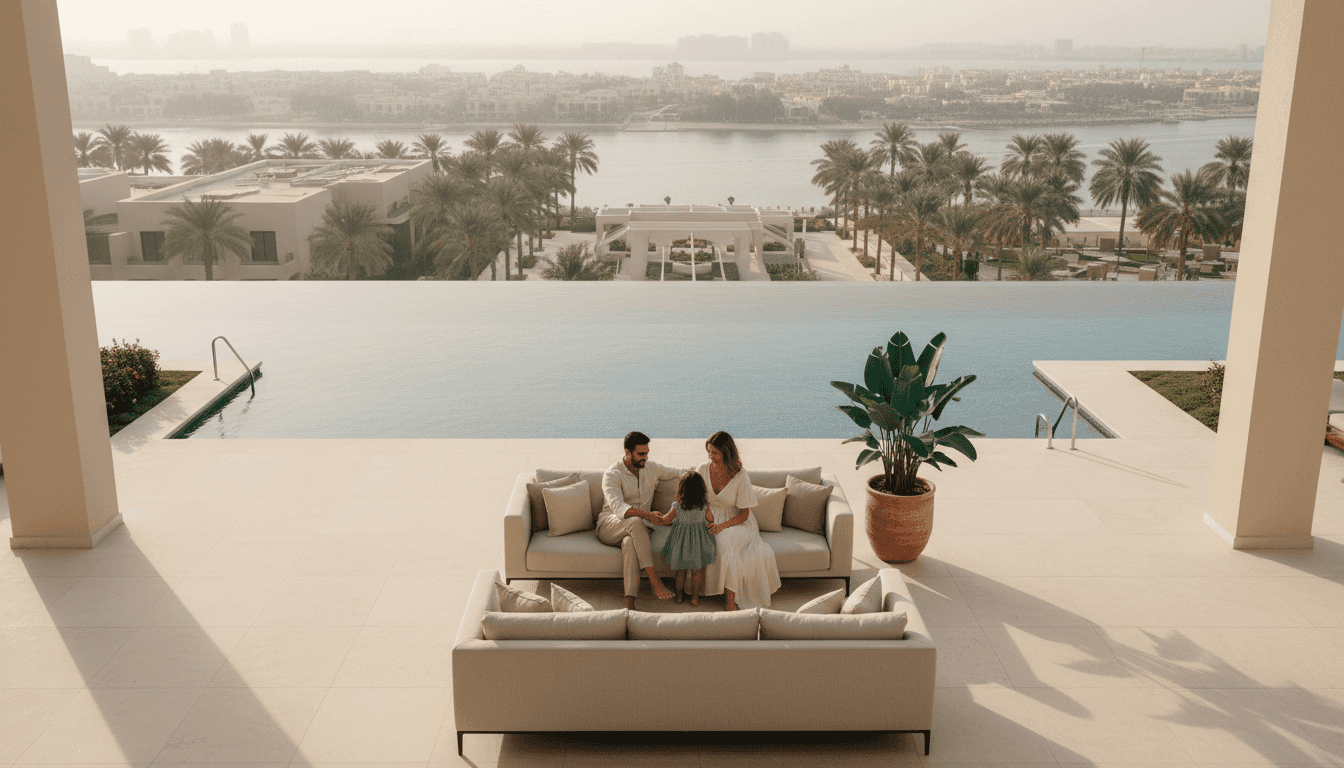
Breathing Easy: Dubai's Brightest Homes
Beyond the glass façade, a new generation of Dubai properties are championing natural light and airflow. I explore the communities and designs defining this wellness-led architectural shift.

For years, the definition of luxury in Dubai real estate felt one-dimensional, measured in square feet and proximity to a landmark. But a quiet revolution has been reshaping what we seek in a home. It’s a shift from the purely material to the experiential, a growing understanding that the four walls we inhabit profoundly affect our wellbeing. This is the new luxury: the luxury of breathing easy.
Here's what we will explore:
- The shift from sealed glass boxes to homes designed for wellness.
- Key architectural principles that invite in light and air.
- The communities and developers leading this movement.
- The true cost of a 'wellness' property and a detailed breakdown.
- The premium developers pioneering biophilic design.
- The practicalities of living in a home open to the elements.
- My verdict on whether this premium is a worthwhile investment.
From Glass Towers to Green Sanctuaries
I remember the mid-2000s boom vividly. The skyline was a forest of cranes, and the architectural statement of choice was the all-glass tower. It was a powerful symbol of a city arriving on the world stage, shimmering and futuristic. We sold apartments in these towers by the dozen. Clients were mesmerised by the views, the feeling of living in the sky. But after a few years, a different story began to emerge. The reality of living in a sealed glass box in a desert climate started to set in. The reliance on air conditioning was absolute. The heat gain through single-glazed windows was immense, sending DEWA bills soaring. Balconies were often token gestures, too hot or windy to be truly used. The promise of a view came at the cost of genuine connection to the outside world.
That era taught us a valuable lesson. A home needs to be more than a vantage point; it needs to be a sanctuary. This realisation has been the catalyst for a significant change in the market for healthy living homes Dubai. Both buyers and the more forward-thinking developers are now prioritising elements that were once afterthoughts: natural light, cross-ventilation, and a tangible connection to nature. This isn't about rejecting modernity; it's about refining it. It’s about creating sophisticated homes that work with our climate, not just fight against it. We're moving from a paradigm of insulation to one of integration.
The demand we see at Gaia Living now is far more nuanced. Clients ask about building orientation. They inquire about the U-value of the glass. They want to know if they can open a window and hear birdsong instead of the hum of a chiller. This shift is most evident in the success of communities like Al Barari, a project that was, in many ways, years ahead of its time. When it launched, its emphasis on dense foliage, streams, and low-rise living was an outlier. Today, it’s the blueprint. Its success demonstrated a clear market appetite for homes that offer serenity and a sense of wellbeing, proving that a different vision of Dubai living was not only possible, but profitable.
This movement has now gone mainstream. You can see its influence in the masterplans of new communities and the design briefs of the latest off-plan launches. Developers are realising that a large, usable terrace shaded by a deep overhang can be a more powerful selling point than a marble-clad lobby. The concept of 'wellness focused residences Dubai' has evolved from a niche marketing term into a core design philosophy, influencing everything from the layout of a villa to the landscaping of an entire neighbourhood.
The Architecture of Air and Light
 Featured project
Creating a home that feels bright and airy is not a matter of luck; it’s a science. Several key architectural principles must work in harmony, especially in a climate as demanding as Dubai's. When we evaluate a property for these qualities at Gaia Living, we look beyond the superficial gloss and analyse the core design. First and foremost is orientation. A building's position relative to the sun is the single most important factor determining natural light and heat gain. In Dubai, a north-facing aspect is the prize, offering consistent, soft light throughout the day without the harsh glare and heat of direct sun. South-facing homes get sun all day, which can be brutal unless mitigated by sophisticated shading. East and west are the most challenging, receiving intense, low-angle sun in the morning and afternoon, respectively, which heats up interiors dramatically.
A classic mistake of older buildings was placing huge, unshaded windows on western-facing walls, essentially turning living rooms into ovens every afternoon. Sophisticated architects now use this knowledge to their advantage. They might place service areas (laundry rooms, storage) along the western edge and orient the main living spaces and bedrooms to the north and east. The second principle is fenestration — the design and placement of windows. Simply having large windows isn't enough. The mantra is now 'floor-to-ceiling', creating a smooth visual connection to the outside. But the quality of the glass is paramount. High-performance, double-glazed panels with a low-emissivity (Low-E) coating are the standard for any quality project. This technology reflects thermal energy, keeping heat out in the summer while allowing visible light to pass through. It's the difference between a comfortable, sunlit room and a greenhouse.
Cross-ventilation is the third, and perhaps most overlooked, principle. This is the simple, age-old technique of creating airflow by placing openings on opposite sides of a space. In a villa, this could be a large sliding door to the garden and a high window (a clerestory) on the opposing wall. As hot air rises, it escapes through the high window, drawing cooler air in from the shaded garden below. Many older apartments in Dubai are single-aspect, meaning they only have windows on one side, making natural ventilation impossible. The best 'airy apartments Dubai' are often corner units or 'through-apartments' that span the depth of the building, allowing for this vital airflow. This simple design choice can dramatically reduce the need for air conditioning during the cooler months, from November to March, and create a much healthier living environment.
Finally, there's the intelligent use of shading. This is where modern design meets traditional wisdom. Deep roof overhangs, brise-soleils (permanent sun-shading structures), and even simple pergolas can block the high-angle summer sun from hitting the glass, while still allowing the lower-angle winter sun to penetrate and warm the space. Developers like Muraba have mastered this, with their eponymous Palm Jumeirah project featuring balconies and fins precisely angled to provide shade without obstructing the view. These elements aren't just functional; they create architectural interest, casting dynamic shadows that animate the façade throughout the day. They are the hallmarks of a property designed with thought and intention.
Pioneers of Biophilic Design: Beyond the Balcony
The most forward-thinking developers are taking these principles a step further, embracing a concept called 'biophilic design'. This is the idea that humans have an innate tendency to seek connections with nature, and that incorporating natural elements into our built environment can reduce stress and improve cognitive function and creativity. It’s about more than just a few pot plants. It’s a holistic approach that blurs the line between inside and out. Al Barari is the undisputed master of this in Dubai. Living there is a completely different sensory experience. You are enveloped by the sound of water and birdsong, surrounded by mature, dense greenery. The homes themselves are designed to maximise this connection, with vast retractable glass walls that open living rooms directly onto lush gardens and private pools.
This philosophy is now being translated into high-rise living. Omniyat, a developer known for its boundary-pushing designs, has consistently championed this. Their project, The Lana Residences, managed by Dorchester Collection in Business Bay, is a prime example. The apartments are designed as individual 'sky villas', each with extensive outdoor terraces, many featuring private pools, at height. The architecture prioritises the outdoor space as a primary living area, not an afterthought. Similarly, their previous collaboration with Zaha Hadid, The Opus, broke the mould with its organic form and integration of interior and exterior spaces, demonstrating that an apartment building can be as architecturally significant and connected to its environment as a sprawling villa.
Another standout, in my opinion, is Muraba Residence on the Palm Jumeirah. I’ve shown this building to discerning clients for years, and it never fails to impress. It’s the antithesis of the glitzy, overwrought properties that surround it. The developer, Muraba, focused on a minimalist aesthetic, but the real luxury is in the details you feel rather than see. Every apartment is designed to have a view of both the sunrise over the city and the sunset over the sea. The floor-to-ceiling windows are sourced from a specialist German firm, and they slide away so smoothly that the living room and balcony become one continuous space. The building's orientation and louvered shutters are calibrated to manage the sun, creating an environment of serene, diffused light. It’s a masterclass in 'sustainable home design Dubai' that prioritises the resident's experience above all else.
We are also seeing this philosophy take root in new, large-scale communities. Sobha Hartland and Sobha Hartland II, for instance, dedicate a huge proportion of their masterplan to green space, lagoons, and parks. The developer, Sobha Realty, understands that modern buyers are purchasing a lifestyle, not just a property. They want to be able to step out of their front door and go for a walk or a run in a pleasant, green environment. This integration of nature into the urban fabric is a key tenet of biophilic design and is becoming a powerful differentiator in a competitive market. It improves air quality, reduces the urban heat island effect, and fosters a stronger sense of community. These are the intangible assets that create long-term value.
The Green Premium: What is the Real Cost?
It’s an unavoidable question my clients always ask: does all this light, air, and wellness come at a premium? The short answer is yes. A property that is thoughtfully designed, uses high-quality materials, and is situated in a green, low-density environment will almost always command a higher price per square foot than a standard, mass-market equivalent. But to dismiss it as simply 'more expensive' is to miss the point. You are paying for a superior product that offers tangible benefits in terms of lifestyle, running costs, and, in my view, long-term value retention.
Let’s break down where the extra cost comes from. First, the land itself. A community like Al Barari or a villa in Jumeirah with a large garden has a much lower floor area ratio (FAR) than a dense tower block in Dubai Marina. This means the developer has built less sellable area on a given plot of land, so the cost of that land must be distributed over fewer units, increasing the price of each. Second, construction quality. The high-performance glazing, advanced insulation, and precision-engineered sliding door systems I mentioned earlier are significantly more expensive than standard building materials. A developer focused on wellness is also more likely to use non-toxic paints, sustainably sourced woods, and high-spec air filtration systems, all of which add to the base cost.
Third, the amenities and landscaping. Creating and maintaining the lush botanical gardens of Al Barari or the swimmable crystal lagoons in a community like Tilal Al Ghaf is a significant, ongoing operational expense. This is reflected not only in the purchase price but also in the annual service charges. While service charges in a standard apartment tower might be AED 16-22 per square foot, a premium villa community with extensive landscaping and water features could be AED 6-10 per square foot on the plot area, which can add up to a significant annual sum. It's crucial for buyers to factor this into their budget. However, there is an offset to these higher costs. A well-designed, naturally ventilated home will have substantially lower utility bills. The reduction in air conditioning usage, particularly in the milder months, can lead to savings of thousands of dirhams per year, clawing back some of that premium over time.
“The true value isn't just in the lower DEWA bill; it's in the unquantifiable daily dividend of living in a space that makes you feel good.”
Beyond that, these properties tend to be more resilient in fluctuating market conditions. During downturns, it's often the generic, cookie-cutter properties that see the sharpest price drops. Unique, high-quality homes in desirable, green communities hold their value far better because their supply is inherently limited. They attract a discerning pool of end-users who are less swayed by short-term market sentiment and are buying a home for the long term. This makes them a more stable, if less speculative, asset. The 'green premium' is not just for aesthetics; it's an investment in quality, durability, and a superior living experience.
A Worked Example: The Cost of Wellness
To make this tangible, let's compare the potential costs of acquiring a property that embodies these wellness principles. Imagine a hypothetical (but realistic) four-bedroom villa in a community like Sobha Hartland or a similar new green development. These homes are known for their quality construction, generous glazing, and integration with the surrounding parklands. Let's assume a purchase price of AED 8,000,000.
For an international cash buyer, the upfront costs would look something like this. Remember that these are mandatory government and agency fees that apply to any property transaction in Dubai.
Upfront Purchase Costs (Cash Buyer): AED 8M Villa
- Purchase Price: AED 8,000,000
- Dubai Land Department (DLD) Transfer Fee (4% of price): AED 320,000
- DLD Registration Fee: AED 4,200
- Agency Fee (2% of price + 5% VAT): AED 168,000
- No Objection Certificate (NOC) Fee (paid to developer): ~AED 5,250 (can vary)
- Total Upfront Cost: AED 8,497,450
As you can see, the transaction costs add up to nearly AED 500,000, or about 6.2% of the property's value. This is a crucial figure for any buyer to budget for. Now, let's consider a mortgage scenario, which is more common for end-users. The Central Bank of the UAE has strict regulations. For a non-national buying a property over AED 5 million, the maximum loan-to-value (LTV) ratio is 75% for a first property. This means you must have a minimum cash down payment of 25%.
Upfront Purchase Costs (Mortgage Buyer): AED 8M Villa
- Purchase Price: AED 8,000,000
- Down Payment (25%): AED 2,000,000
- Mortgage Amount (75%): AED 6,000,000
- DLD Transfer Fee (4%): AED 320,000
- DLD Registration Fee: AED 4,200
- Mortgage Registration Fee (0.25% of loan amount): AED 15,000
- Bank Processing & Valuation Fees: ~AED 10,500 (variable)
- Agency Fee (2% + VAT): AED 168,000
- NOC Fee: ~AED 5,250
- Total Cash Required Upfront: AED 2,522,950
This is a significant cash outlay. The total cash needed is well over the 25% down payment once you include all the mandatory fees. This is a detail that often surprises first-time buyers in Dubai. On top of this, you have the ongoing costs. For a villa like this, annual service charges might be around AED 7 per square foot on a 5,000 sq ft plot, equating to AED 35,000 per year. And of course, there's the mortgage itself. An AED 6M loan over 25 years at a hypothetical 4.5% interest rate would result in monthly payments of approximately AED 33,500. It's a substantial financial commitment, but for those who can afford it, they are securing not just an asset, but a home designed for a healthier, more pleasant quality of life.
Living with the Elements: Practical Considerations
Embracing a lifestyle of open windows and indoor-outdoor living in Dubai requires a few practical adjustments. While the benefits are immense, it’s my job to give clients the full picture. The first consideration is dust. Dubai is a city in the desert, and with open windows comes fine dust, especially during shamal winds. A home with good cross-ventilation helps, as the airflow prevents dust from settling, but more frequent cleaning is an undeniable reality. High-quality door and window seals are essential to keep the dust out when everything is closed up during a sandstorm. Many of my clients with these homes invest in high-quality air purifiers to run alongside the central AC, giving them the best of both worlds.
Secondly, there's humidity. During the summer months, particularly July and August, the humidity can be intense. This is the time of year when even the most ardent fan of natural ventilation will close the windows and turn on the AC. This is where the quality of the building envelope becomes critical. The high-performance glazing and insulation I mentioned earlier are not just for keeping heat out; they are vital for managing humidity and preventing condensation issues when the powerful AC is running. In a poorly constructed building, the temperature difference between the cold interior and the hot, humid exterior can lead to condensation, which in turn can cause mould. This is why investing in a property from a reputable developer like Emaar Properties or Sobha is so important; their construction standards are designed to handle these climatic extremes.
Maintenance is another key factor. Those beautiful floor-to-ceiling windows need to be kept clean to be enjoyed. In a high-rise apartment, this is handled by the building management and covered by your service charges. In a villa, it's your responsibility, and it's a recurring cost to budget for. Similarly, the wooden decks, pergolas, and landscaped gardens that make these homes so appealing require regular upkeep. Landscaping services, irrigation system maintenance, and periodic treatment of outdoor wood are all part of the cost of ownership. It’s a trade-off: the very elements that enhance the lifestyle also require more care than a sterile, maintenance-free apartment. For my clients who choose this path, the joy they get from their beautiful surroundings far outweighs the extra effort.
Finally, one must consider acoustics. In a dense urban area like DIFC or the Marina, opening your windows means inviting in the sounds of the city. For some, that's part of the appeal — the vibrant energy of urban life. For others, it's a distraction. This is where community selection becomes crucial. A villa in a quiet, gated community like Arabian Ranches will have a very different soundscape to an apartment overlooking the Sheikh Zayed Road. The best 'ventilation property Dubai' designs consider this, using landscaping, water features, and smart building orientation to buffer unwanted noise while still allowing for airflow. It’s a delicate balancing act that the best architects and urban planners manage to perfection.
My Verdict: An Investment in Your Own Wellbeing
After years of guiding clients through the vast landscape of Dubai real estate, my perspective has crystallised. A home is the most personal investment you can make, and its returns should be measured not just in financial appreciation, but in the quality of your daily life. The market's pivot towards 'natural light homes Dubai' and wellness-focused design is, in my opinion, the most positive and enduring trend we've seen in a generation. It represents a maturation of the market, a move away from transient glitz towards permanent, life-enhancing quality.
Are these homes more expensive? Yes. Do they require more thoughtful maintenance? Often, yes. But the premium you pay is for a fundamentally better product. It’s for a home that can lower your stress levels, improve your sleep, and reduce your reliance on artificial environments. It’s for a space that allows you to connect with the seasons, to feel the cool breeze of a December morning, and to watch the light change across your living room floor. These are not quantifiable metrics on a spreadsheet, but they are the very essence of what makes a house a home.
For those with the means, investing in a home that prioritises natural light and airflow is not an indulgence; it's one of the soundest investments you can make in your own wellbeing and long-term happiness. These are the properties that will not only hold their financial value but will also pay you a daily dividend in health and serenity. They are the future classics of Dubai real estate.
As a professional, I see the clear financial logic. These homes are more resilient assets and attract a higher-calibre tenant if you choose to rent it out. They are what the most discerning buyers — both local and international, are now seeking. But as someone who lives in and loves this city, my advice is simpler. Find a space that makes you feel good. Find a room where you can sit with a cup of coffee and feel the morning sun on your face. That's the real luxury, and in Dubai, it's finally within reach.
Sources
- Dubai Land Department (DLD): dubailand.gov.ae
- Central Bank of the UAE: centralbank.ae
- UAE Government Portal: u.ae
Questions, answered
- Which Dubai communities are best for natural light and airflow?
- Communities like Al Barari, with its low density and lush greenery, and developments like Muraba Residence on Palm Jumeirah are exceptional. Newer masterplans like Sobha Hartland and Wasl 1 are also designed with better orientation and green spaces to enhance light and ventilation.
- Do homes with better light and ventilation cost more in Dubai?
- Yes, there is often a 'green premium'. These properties command higher prices due to superior design, higher quality materials (like performance glazing), larger plots, and more extensive landscaping. However, they can also offer savings through lower energy bills.
- What are the key features of a 'healthy living home' in Dubai?
- Key features include floor-to-ceiling windows with high-performance glazing, cross-ventilation design, deep balconies for shade, non-toxic building materials, and integration with green spaces. The focus is on creating an environment that enhances resident wellbeing.
- How does building orientation affect natural light in Dubai?
- Orientation is crucial. North-facing windows provide consistent, soft light without direct sun, while south-facing windows get intense sun all day, requiring significant shading. East and west-facing windows receive strong morning and afternoon sun, respectively, which can cause significant heat gain.
- Are there apartments in Dubai designed for good airflow?
- Yes, though they are rarer. Look for corner units, through-apartments (with windows on opposite sides), and buildings with operable windows and well-designed balconies. Developers like Muraba and Omniyat have pioneered this in apartment buildings.
- What is 'biophilic design' in Dubai real estate?
- Biophilic design is an architectural approach that connects building occupants more closely to nature. In Dubai, this translates to homes with indoor-outdoor living spaces, views of water or gardens, use of natural materials like wood and stone, and integrated plant life, as seen in communities like AlJurf Gardens and Al Barari.

Yusuf writes about how Dubai actually lives — waterfront mornings, community dining, walkability, and the lifestyle premium built into an address.
Related stories
Reading the Dubai Market: A First-Time Buyer's Guide
I'll help you cut through the noise and understand the key indicators that truly matter when analysing the Dubai property market. Learn how to spot trends, assess value, and make an informed decision on your first home.
Timing the Market: Dubai Off-Plan Entry & Exit Strategy
Timing the Dubai property market is notoriously difficult, but understanding its cycles is crucial for any off-plan investor. I'll break down how to identify optimal entry points and plan your exit for capital appreciation.
Smart Home ROI: A Dubai Yield Analysis
I analyse whether smart home technology in Dubai rental properties is a genuine investment or just an expensive gimmick. Here’s a pragmatic breakdown of the costs, rental premiums, and the real impact on your bottom line.
Echoes, in your inbox
One thoughtful email a month. Market insight, new launches, no spam.